

A competitive quotation for a production line can become far less attractive if its customs classification, declared value or origin documents are not properly established before shipment. For investors, contractors and procurement managers importing into Syria, such discrepancies can lead to unexpected duties, delayed customs clearance and disrupted project schedules. The new Syrian customs law, issued under Decree No. 109 of 2026, provides the legal framework for handling these customs requirements.
Before approving a purchase or arranging shipment, what should you verify to avoid these risks? This guide explains how the new Syrian customs law applies to machinery, production lines, building materials and industrial inputs, including customs valuation, classification and the choice between final import and temporary admission. It also considers the separate customs tariff and its 2026 amendments, showing where Qiwaa Advance’s trading and supply services can help you plan sourcing and deliveries around your project’s requirements
What importers must confirm under the new Syrian customs law?
Before shipping equipment or materials into Syria, importers should establish five key elements of the customs file. Each affects how the goods are assessed or processed, and the supporting requirements depend on the product and its intended use:
- Technical description: Identify each item’s function, composition, model, condition and state of assembly, including how it will be presented at import, where relevant.
- Customs classification: Determine the applicable tariff heading and verify the corresponding duty rate and any product-specific conditions under the current tariff schedule.
- Country of origin: Establish where the goods originate under the applicable rules, rather than assuming that the supplier’s location or country of shipment determines their origin.
- Customs value: Ensure that the declared value is supported by the commercial invoice, purchase terms and relevant cost documents, with adjustments assessed under the applicable valuation rules.
- Customs procedure: Determine whether the goods should be imported for home use, placed under temporary admission or handled through a customs warehouse or free-zone arrangement, where the relevant conditions are met.
These decisions should be reflected consistently in the procurement and shipping documents before the goods reach the border.

Machinery and and equipment imports under the New Syrian Customs Law
Equipment purchased for permanent factory operations and machinery brought into Syria for a time-limited construction project do not necessarily follow the same customs procedure.
Under the new Syrian customs law, companies importing equipment into Syria must determine whether their machinery should enter for permanent use or qualify for temporary admission. This decision affects customs obligations, guarantees, project costs and what happens to the equipment when the project ends.
Final import of equipment
For machinery, industrial equipment or production lines intended to remain in Syria, final import (entry for home use) is generally the appropriate procedure. Applicable customs duties and taxes are assessed according to the goods’ classification and the tariff in force, unless a specific legal exemption applies.
Before confirming the purchase, ensure the supplier’s technical and commercial documentation identifies the equipment accurately:
- Individual machines: Specify their function, production capacity, manufacturer, model, serial number and relevant accessories.
- Production lines: Identify the main machines, control systems, auxiliary equipment and how the components will be shipped.
- Used machinery: Document the year of manufacture, technical condition, inspection findings and any refurbishment that may affect its description or valuation.
Production lines shipped in separate consignments require particular attention. Do not assume that equipment described commercially as a single production line will automatically receive the same customs classification when its components arrive separately. Review the composition and presentation of each shipment with your customs broker before finalizing the shipping documents.
Temporary admission of equipment
Article 123 of Decree No. 109 of 2026 allows the Customs Administration to authorize temporary admission for machinery and equipment required for state, public-sector, joint-sector and private-sector projects. This can be relevant to contractors importing machinery into Syria for a defined project with plans to re-export it after completion.
However, temporary admission in Syria is not automatic. It requires authorization under the applicable customs rules, with guarantees and procedures determined by the Customs Administration.
Article 123 provides a six-month period for re-export, which Customs may extend. Before selecting this procedure, confirm the equipment’s intended use, the required guarantees, the expected project duration and the arrangements for re-export. If the equipment is later needed permanently in Syria, Article 133 allows Customs to authorize its entry for home use, subject to applicable legal requirements.
Final import vs. temporary admission
The right choice depends on the equipment’s intended use and the total cost of meeting each procedure’s requirements, not simply the initial customs payment.
| Decision factor | Final import | Temporary admission |
|---|---|---|
| Intended use | Permanent factory operations or long-term use in Syria | Temporary project use followed by re-export |
| Customs costs | Applicable duties and taxes, subject to any valid exemption | Guarantees, administrative costs and applicable customs obligations under the authorized procedure |
| Project planning | Equipment remains available for future operations | Re-export deadlines, possible extensions and compliance with authorization conditions |
| Future retention | No later conversion from temporary admission is needed | Retaining the equipment requires lawful regularization and authorization |
For a production line that will become part of a permanent facility, final import will generally align better with the investment plan. Temporary admission may be more suitable for equipment deployed on a time-limited project, provided the required authorization can be obtained and the equipment can be re-exported within the permitted period.
Before committing to machinery imports into Syria, compare the full financial and operational implications of both procedures and confirm the applicable customs treatment with an authorized customs professional.
If your project requires machinery, production lines or specialized construction equipment, contact Qiwaa Advance with your equipment list, technical specifications, quantities and expected delivery schedule. Our team can discuss suitable sourcing and supply arrangements aligned with your project’s requirements.
Determining customs value in Syria
A supplier’s invoice may not reflect the full cost of importing machinery, building materials or industrial inputs into Syria. Freight, customs duties, clearance charges and inland delivery can all affect your procurement budget, but they do not necessarily form part of the same customs valuation basis. Under the new Syrian customs law, distinguishing customs value from total landed cost is essential for estimating import expenses accurately and comparing supplier quotations on a consistent basis.
How Is customs value calculated in Syria?
Under Article 50 of Decree No. 109 of 2026, the declared value for imports entered for home use or under duty-suspension procedures is based on the price actually paid or payable for the goods, plus applicable costs and expenses, including freight, up to their arrival in Syrian territory.
For customs valuation in Syria, procurement teams should therefore verify:
- Purchase price: The amount payable under the supply contract, including what the quoted price actually covers.
- Freight and related expenses: Transport and other applicable costs up to arrival in Syria, accounting for amounts already included in the supplier’s price.
- Currency conversion: When the value is expressed in foreign currency, Article 50 requires conversion into Syrian pounds using the Central Bank of Syria’s approved exchange-rate bulletin on the date the customs declaration is registered.
Import duties, domestic delivery and customs brokerage charges should not automatically be added to the customs value. Their treatment must be distinguished from expenses included in the valuation basis.
How to calculate total landed cost
For project budgeting, landed cost extends beyond customs value to include the applicable duties, taxes and expenses required to deliver the goods to the designated warehouse or project site.
A practical landed-cost estimate should account for:
- The customs value established for the shipment.
- Applicable customs duties and other import taxes or fees.
- Port handling, clearance and brokerage charges not already included in the customs value.
- Storage costs, where delays or additional handling are expected.
- Inland transportation to the project site or warehouse.
Avoid counting the same expense twice. For example, if the supplier’s quotation already includes freight to the Syrian border, that freight should not be added again when preparing the import-cost estimate.
For machinery or large material orders, compare quotations using the same delivery destination, shipping terms and currency assumptions. Allow for possible exchange-rate changes between the initial estimate and the declaration date, rather than treating exchange-rate movements as a separate statutory customs charge.
Documents supporting customs value and origin
Article 51 of Decree No. 109 of 2026 generally requires an original commercial invoice certified by a chamber of commerce or another designated authority to support the declared prices and origin. Customs may request additional contracts, correspondence or supporting documents and is not bound to accept the invoice value without review.
The law also permits the Customs Administration, where applicable, to waive certification requirements in whole or in part or accept separate documents proving origin and value under the relevant decision. The invoice date must also be reasonably consistent with the shipment date, unless a significant difference can be satisfactorily explained.
For equipment and project-material imports, organize the supporting file around:
- Commercial documents: Purchase contract, itemized invoice, agreed payment terms and supplier correspondence relevant to the transaction.
- Shipping and cost records: Packing list, transport document and evidence of freight, insurance or other relevant charges.
- Origin documentation: Certificate of origin and supporting records, as applicable to the shipment.
- Technical evidence: Equipment specifications, catalogs, model and serial numbers, and inspection or refurbishment records for used machinery where relevant.
These records should describe the same goods consistently. For example, a production line listed as one item in the contract but divided into individual machines on the packing list may require additional documentation to reconcile the shipment with its declared value.
Before approving a major equipment or material purchase, reconcile the supplier’s quotation, technical scope and shipping terms with the estimated import and delivery costs. For assistance with sourcing, supplier coordination and delivery planning, contact Qiwaa Advance with your equipment list, specifications and supplier quotations.
Origin and customs classification in Syria
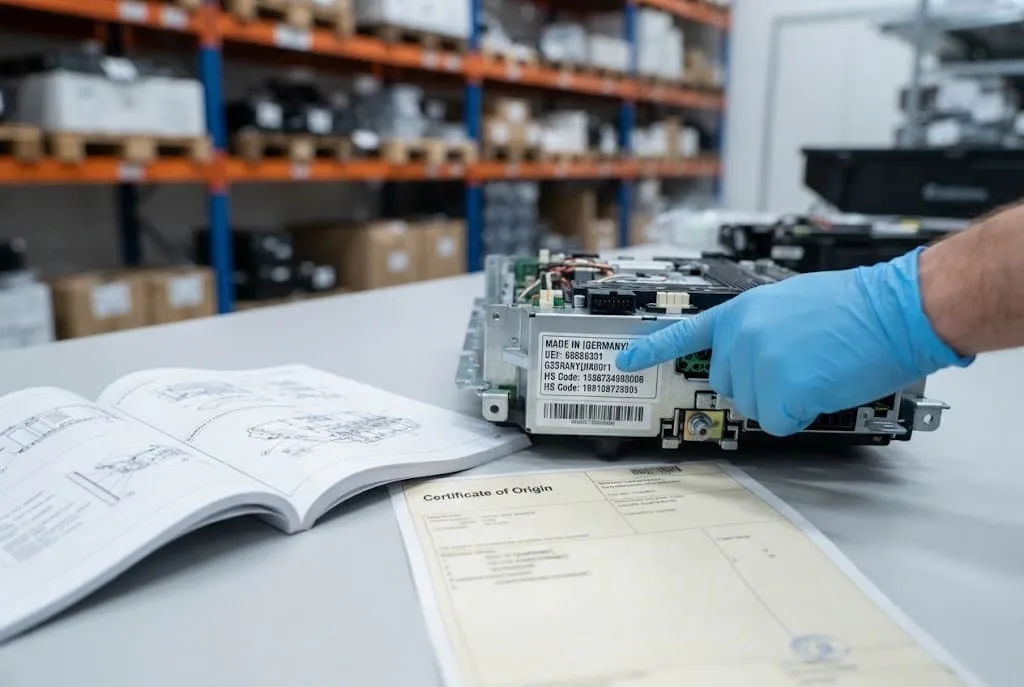
An incorrect tariff classification can affect the duties assessed on imported goods, while an unsupported country-of-origin declaration may lead to different tariff treatment or additional customs scrutiny. Under the new Syrian customs law, companies importing machinery, building materials and industrial inputs should verify both before finalizing supplier quotations and shipping arrangements.
Country of origin vs. country of shipment
The country of origin is determined under the applicable rules of origin, while the country of shipment identifies where the goods were dispatched from. Machinery manufactured in one country does not automatically acquire the origin of another country simply because it is purchased from a distributor or shipped through that country.
Article 47 of Decree No. 109 of 2026 requires imported goods to be supported by proof of origin, subject to the applicable rules, conditions and exemptions determined by the competent authority.
Article 48 introduces an important consideration for imports routed through intermediary countries. Where goods are imported from a country other than their country of origin after being entered for domestic consumption in that country, the higher of the tariffs applicable to the country of origin or the exporting country applies. Goods that undergo further manufacturing in another country are subject to separate treatment based on the degree of processing and applicable rules.
For procurement teams sourcing through regional distributors, this makes it important to establish not only where the goods were manufactured, but also whether they were previously entered for consumption or processed in an intermediary country. Transit through another country should not automatically be treated as equivalent to these situations.
How customs classification works in Syria
Customs classification in Syria depends on the characteristics and presentation of the imported goods, not simply the product name or HS code provided by the supplier. A complete machine, a replacement component and an unassembled production line may require different classification assessments.
Under Article 49, the Customs Administration may issue classification decisions for goods not specifically listed in the tariff schedule and classification memoranda for products that could fall under more than one heading.
Before confirming the applicable tariff heading, establish the product’s principal function, constituent materials, degree of manufacture and condition at import. For production equipment, clarify whether components arrive as a complete unit, separately packaged parts or independent machines.
Use the Syrian tariff schedule adopted under Decree No. 110 of 2026, accounting for subsequent amendments, including the October 2026 changes under Decree No. 188. A supplier’s classification from another market should not be accepted as confirmation of the applicable Syrian duty rate.
When to request written customs clarification
Where classification, origin, valuation or eligibility for an exemption remains uncertain, Article 37 of Decree No. 109 of 2026 allows an interested party to submit a written inquiry to the Customs Administration. The competent customs authorities must respond within 10 days of registering the request, subject to restrictions on disclosing confidential or third-party information.
A written inquiry is particularly relevant when:
- A production line or high-value machine has an uncertain tariff classification.
- Equipment arrives in several consignments or contains components that may fall under different headings.
- Goods are purchased through an intermediary country and their origin affects tariff treatment.
- The purchase decision depends on a disputed duty rate, valuation issue or potential exemption.
Support the inquiry with the technical specifications, product composition, catalogs, photographs, shipment configuration and available origin documentation needed to explain the issue. Identify the specific customs question rather than submitting a general request for confirmation.
Article 37 provides for a written response to an inquiry; it should not be presented as an automatic guarantee of a binding advance ruling or customs approval.
For major equipment purchases, resolve material classification and origin uncertainties before issuing the final purchase or shipping order. If supplier descriptions or equipment specifications require coordination, Qiwaa Advance’s trading and supply services can support sourcing and supplier coordination, while formal customs determinations remain with the competent authorities.
Read also: Importing Building Materials to Syria and Key Customs Procedures in 2026
Customs clearance procedures under the new Syrian customs law
For companies importing machinery, production lines or building materials, customs clearance delays can affect installation schedules and site operations. Under the new Syrian customs law, preparing the shipment is only the first stage; the declaration must also pass the applicable registration, inspection and release requirements. Procurement teams should coordinate these stages with their customs broker and suppliers before the goods arrive.
Customs clearance procedures in Syria
Customs clearance in Syria involves four main stages, with additional checks depending on the goods and the applicable customs procedure:
- Complete the pre-shipment review. Confirm that the classification, origin and declared value established earlier are consistent with the final shipping documents. Identify any product-specific permits, conformity certificates or technical approvals and confirm when they must be presented.
- Submit and register the customs declaration. Under Article 69 of Decree No. 109 of 2026, a detailed declaration is generally required even for duty-exempt goods, subject to specified exceptions. Arrange for submission by a legally authorized party, using a licensed customs broker where applicable.
- Complete inspection and any required testing. Article 77 allows Customs to inspect goods fully or partially under its procedures. Article 81 also permits laboratory analysis to verify the goods’ nature or compliance. Where testing or another authority’s approval is required, clearance may depend on the relevant results or authorization.
- Complete payment and release requirements. Settle the applicable duties, taxes and fees or fulfill the requirements of the authorized customs procedure. Once the required checks and approvals are completed, obtain customs release before arranging onward delivery to the project site or warehouse.
Can a customs declaration be corrected after registration?
Article 73 of Decree No. 109 of 2026 permits the declarant to request corrections to the quantity, measurements, weight or value within 24 hours of submitting the declaration, provided the request is made before the declaration is referred to the inspection unit.
This is a limited correction procedure, not a general right to revise any declaration detail after registration. If a discrepancy is identified, the declarant should act immediately rather than assuming it can be resolved during inspection.
For projects involving multiple equipment shipments or time-sensitive material deliveries, align the customs documentation and expected clearance requirements with the delivery schedule. Qiwaa Advance’s trading and supply team can help coordinate supplier information, shipment planning and delivery requirements. Contact us with your equipment list, specifications and planned shipment dates to discuss your project’s supply needs.
Customs rules for building materials and industrial inputs
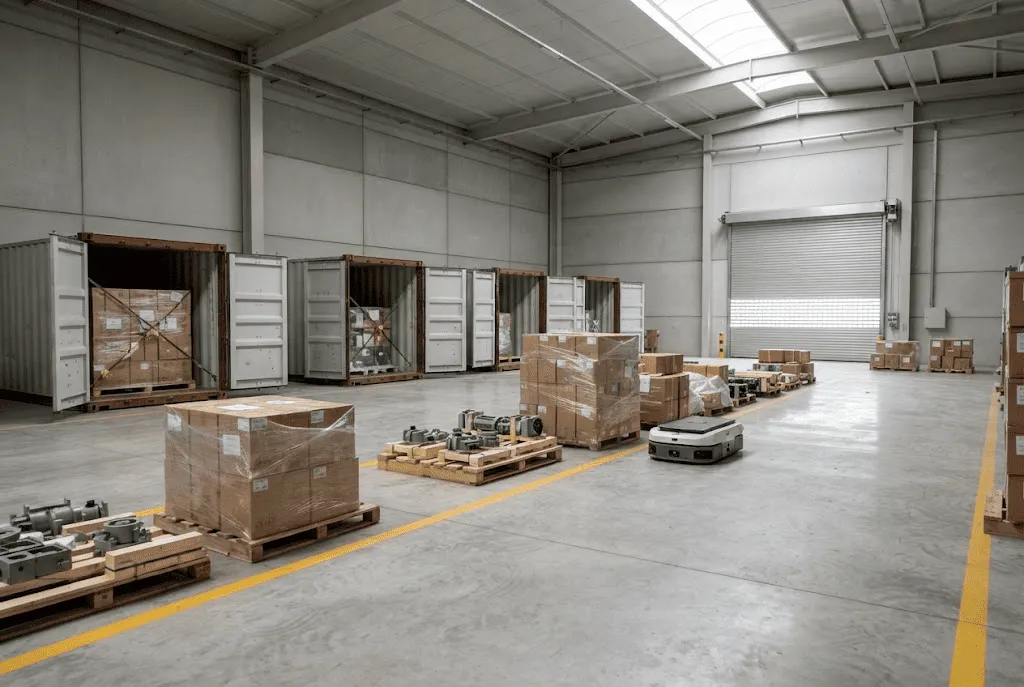
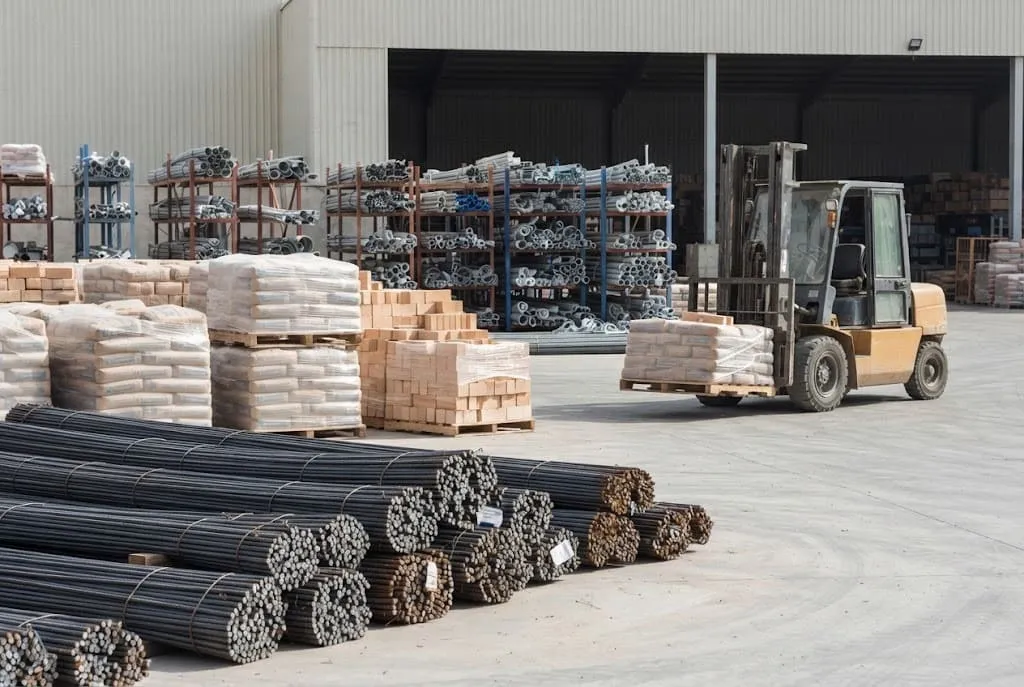
When importing building materials to Syria, a single supply order may contain products subject to different tariff classifications and customs requirements. Under the new Syrian customs law, importers must assess materials according to their actual characteristics and condition at import, rather than relying solely on the supplier’s commercial descriptions.
For construction and industrial procurement, distinctions that warrant particular attention include:
- Steel products: Reinforcing bars, structural steel sections and fabricated metal components may fall under different tariff headings depending on their characteristics and degree of processing.
- Cement and clinker: These are distinct products. Their composition, specifications and form of supply must be reflected accurately in the import documentation.
- Pipes, fittings and valves: Products supplied for the same water or industrial network may require separate classifications based on their function, material and construction.
- Industrial chemicals and insulation: Base polymers, finished insulation products and formulated chemical additives require descriptions that establish their composition and degree of manufacture.
These distinctions can affect the applicable duties and documentation requirements. For mixed-material orders, review the itemized specifications and proposed tariff classifications before finalizing supplier quotations, using the current Syrian tariff schedule and its 2026 amendments.
For material-specific sourcing and documentation considerations, see our guide to importing building materials to Syria in 2026.
Temporary admission for manufacturing inputs
Article 122 of Decree No. 109 of 2026 permits the temporary suspension of customs duties and other applicable taxes on qualifying foreign goods imported for manufacturing or further processing. The initial period is six months, subject to extension, provided the importer undertakes to re-export the goods or place them in a customs warehouse or free zone.
The goods eligible for this procedure, the permitted industrial operations and other applicable conditions are determined by a decision of the head of the Customs Authority.
This distinction matters for manufacturers: temporary admission is not a general customs exemption for industrial raw materials used in products intended for the Syrian domestic market. Before considering this procedure, confirm the eligibility of the inputs, the intended manufacturing process and how the goods will meet the required re-export or other authorized conditions.
Common mistakes that increase import costs
For project importers, avoidable customs costs often originate before shipment, when supplier quotations, technical specifications and delivery commitments are finalized. The most consequential mistakes include:
- Using unverified or outdated tariff classifications: Applying a supplier’s foreign HS code or an outdated Syrian tariff rate can produce unreliable duty estimates. Check classifications and rates against the applicable Syrian schedule before approving the purchase.
- Combining different goods under vague descriptions: A single invoice entry covering equipment, spare parts and other products may complicate classification and valuation. Request an itemized breakdown that reflects the actual supply scope.
- Assuming exemptions or temporary admission apply automatically: Purchasing on the assumption of duty relief without confirming eligibility can create unexpected liabilities or obligations that the project cannot meet.
- Shipping before verifying product-specific approvals: Missing required conformity documents, technical certificates or regulatory approvals can delay clearance and disrupt planned deliveries.
- Failing to reconcile the final shipment documents: Differences in quantities, specifications, origin or equipment condition between the contract, invoice and packing list may require clarification during customs review.
For substantial material or equipment orders, establish a final pre-shipment review involving procurement, the technical team and the authorized customs broker. Confirm that the goods, documents, estimated duties and import procedure are consistent before the supplier dispatches the shipment.
Where projects involve multiple material categories or complex procurement packages, Qiwaa Advance’s trading and supply services can help coordinate sourcing requirements, supplier specifications and delivery schedules.

Planning imports under the new Syrian customs law
A shipment may be commercially ready but still face customs-related delays if its classification, import procedure or supporting documentation remains unresolved. For investors, contractors and procurement managers, an effective import plan should establish these requirements before purchase commitments and shipping arrangements become difficult to change.
To plan project imports under the new Syrian customs law, focus on five steps:
- Finalize the procurement scope. Approve the equipment or material schedule, including quantities, technical specifications and delivery priorities. For production lines shipped in separate consignments, identify the components included in each shipment.
- Confirm the applicable customs requirements. Have an authorized customs professional review the proposed classification, country of origin, import procedure, relevant tariff rates and required approvals. Resolve uncertainties over exemptions or temporary admission before relying on them in the project budget.
- Establish the full import budget. Calculate the estimated landed cost, including applicable duties, taxes, freight, clearance and delivery expenses. Check which costs are already covered by the supplier’s quotation and which remain the importer’s responsibility.
- Approve the shipment documentation. Reconcile the final commercial documents with the agreed technical scope. Obtain any required product-specific certificates or approvals and confirm that the information needed by the customs broker is available before dispatch.
- Assign responsibilities and delivery milestones. Identify who is responsible for supplier documents, shipping arrangements, customs declarations, inspection follow-up and onward delivery. Align these activities with the project’s installation or construction schedule.
The result should be an agreed import plan that connects procurement decisions, customs requirements, estimated costs and delivery responsibilities. Before authorizing shipment, confirm that outstanding customs issues have been resolved or assigned to the appropriate party for formal determination.
How Qiwaa Advance supports project imports
Importing machinery, production lines or construction materials requires more than securing a competitive supplier quotation. Equipment specifications, supply quantities, shipment schedules and site requirements must be aligned to prevent gaps between procurement and project execution.
Through Qiwaa Trading and our wider contracting and industrial capabilities, we, at Qiwaa Advance, support investors, contractors and manufacturers sourcing equipment and materials for projects in Syria.
Depending on the project’s requirements, our support can include:
- Defining the supply scope: Translating bills of quantities, drawings and equipment requirements into clearly specified procurement packages.
- Sourcing and supplier coordination: Identifying suitable materials and equipment, comparing supply options and clarifying technical specifications, quantities and commercial requirements.
- Coordinating supply and logistics: Planning material and equipment deliveries around construction milestones, installation requirements and the availability of project resources.
- Supporting documentation coordination: Organizing relevant technical and commercial information with suppliers and the appointed customs broker, within the agreed scope of our services.
Our role is to support the technical, commercial and logistical aspects of project imports. Formal customs classification, valuation, declarations and clearance remain subject to the applicable procedures and the authority of the relevant customs bodies and legally authorized professionals.
Planning to import equipment, production lines or building materials into Syria? Contact Qiwaa Advance with your equipment list or bill of quantities, available specifications, supply origin and required delivery schedule. Our team can review your requirements and discuss the sourcing, procurement and supply arrangements suitable for your project.
Read also: Investment in Syria 2026: Practical Opportunities
FAQs about the new Syrian customs law
Is Syria’s Customs Law No. 109 of 2026 in force?
Yes. Decree No. 109 of 2026 is in force as of October 2026. Article 264 specifies that it takes effect three months after publication in the Official Gazette. This is separate from the customs tariff introduced under Decree No. 110, which took effect on June 1, 2026.
Is imported factory machinery exempt from customs duties?
No automatic exemption applies to all factory machinery. Any exemption must have a valid legal basis, while temporary admission may be available for qualifying equipment under specific conditions. Confirm eligibility before estimating import costs.
How long can equipment remain in Syria under temporary admission?
Under Article 123, the standard re-export period is six months, extendable at Customs’ discretion. Authorization, guarantees and compliance with the applicable conditions are required.
Can a customs declaration be amended after registration?
Article 73 allows the declarant to request corrections to quantity, measurements, weight or value within 24 hours of submission, provided the declaration has not yet been referred for inspection.
Who can submit customs declarations in Syria?
Under Article 157, licensed customs clearance companies may submit declarations and complete customs procedures. Customs personnel may also perform these functions in cases specified by the Customs Administration.
Which customs tariff applies to imports in 2026?
Decree No. 110 of 2026 established Syria’s Harmonized Customs Tariff, effective June 1, 2026. Decree No. 188 of October 2026 subsequently amended selected tariff codes, descriptions, duty rates and applicable conditions. Importers should verify the current provisions for their goods.