

Investment in Syria in 2026 is entering a new phase. The opportunity is no longer only about identifying promising sectors. The real challenge is turning those opportunities into projects that can be supplied, built, operated, and scaled.
Recent legal and economic changes have improved the investment environment, especially for ownership, incentives, customs procedures, and industrial activity. But investors still need a practical reading of the market: which sectors are moving, which projects are executable, and which supply chains can support real implementation.
In this guide, Qiwa Advance explains the most practical investment opportunities in Syria, the requirements for entering the market, and how to evaluate your project from an execution-first perspective.
Practical Investment Sectors in Syria
When evaluating investment opportunities in Syria, start with sectors connected to active reconstruction, infrastructure, utilities, production, and supply chains. These areas are more likely to convert from general market potential into real projects.
Infrastructure, Utilities, and Services
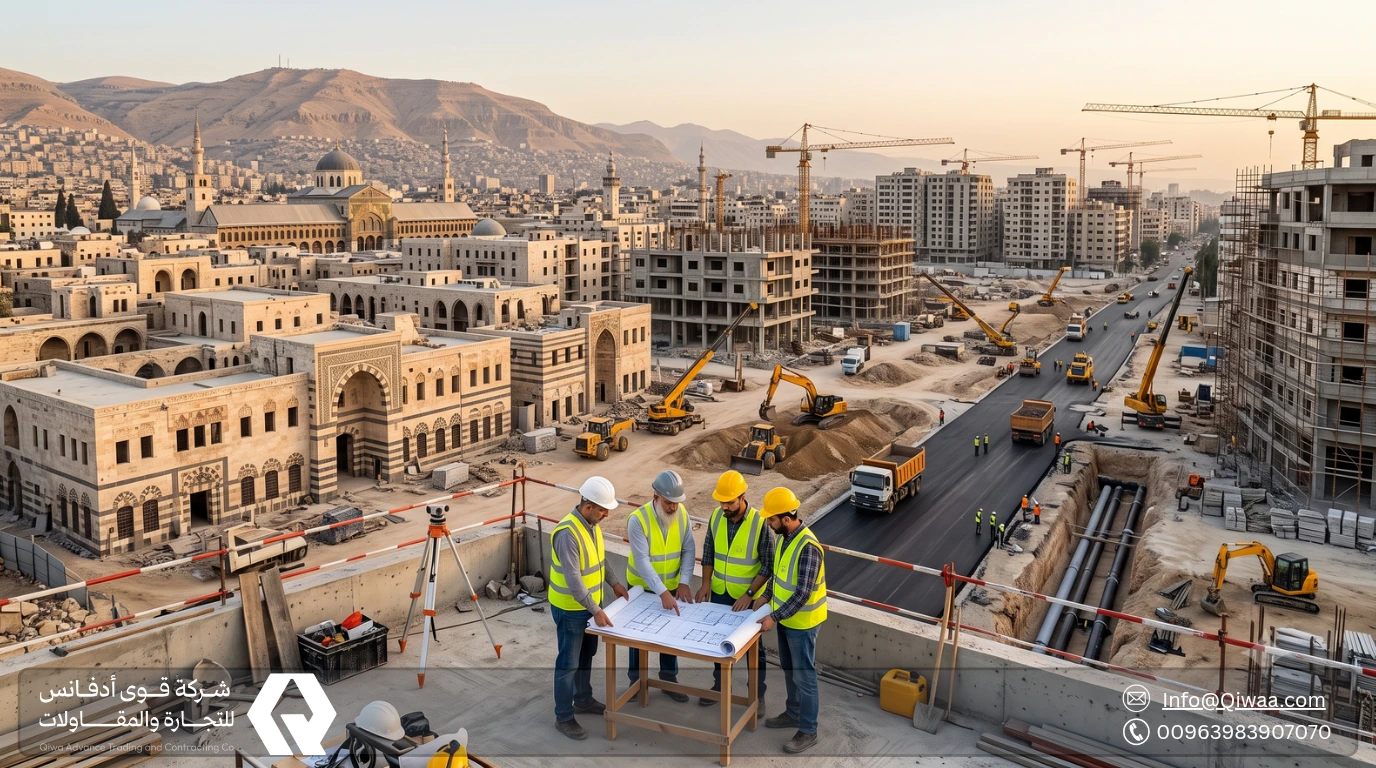
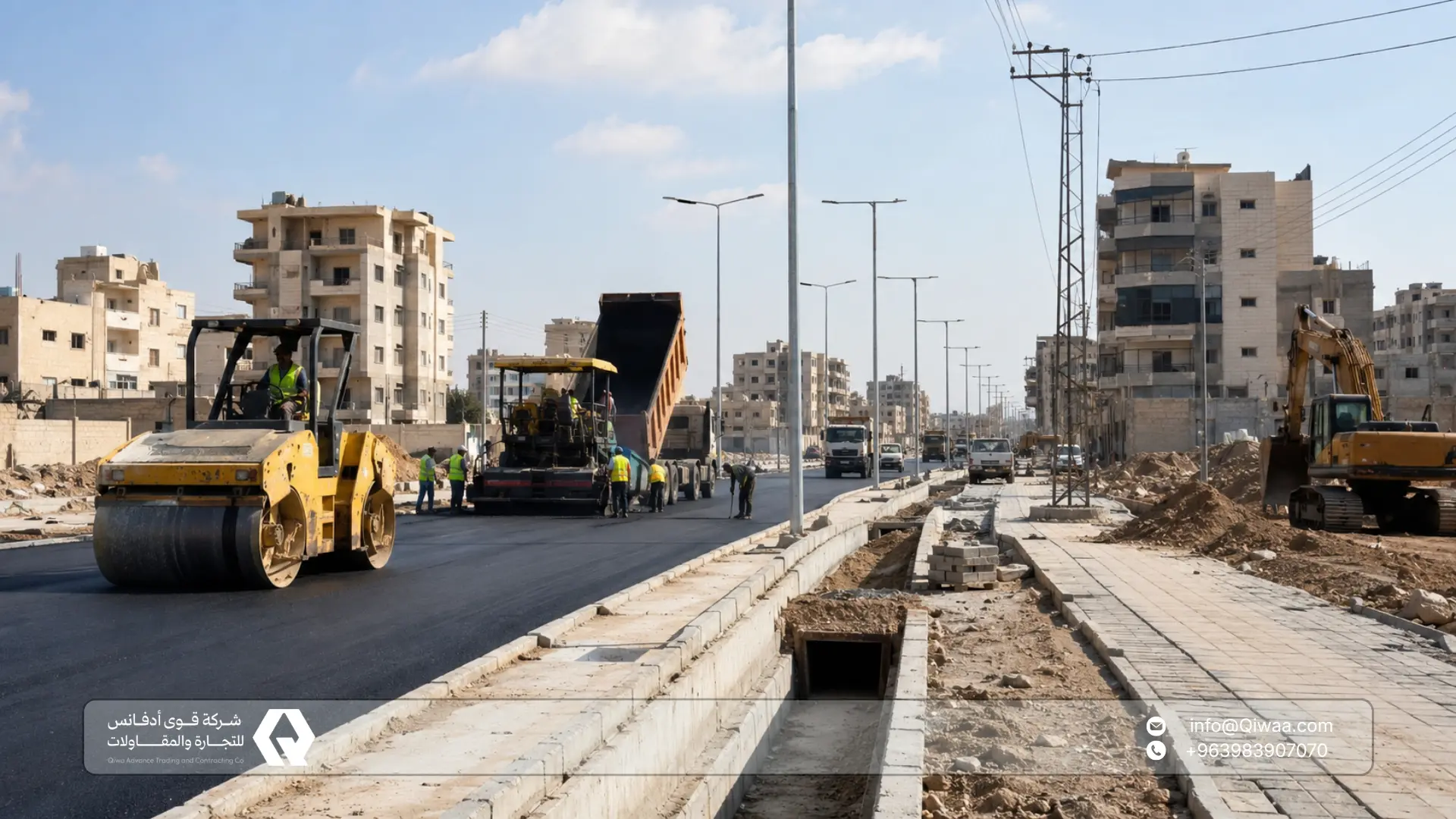
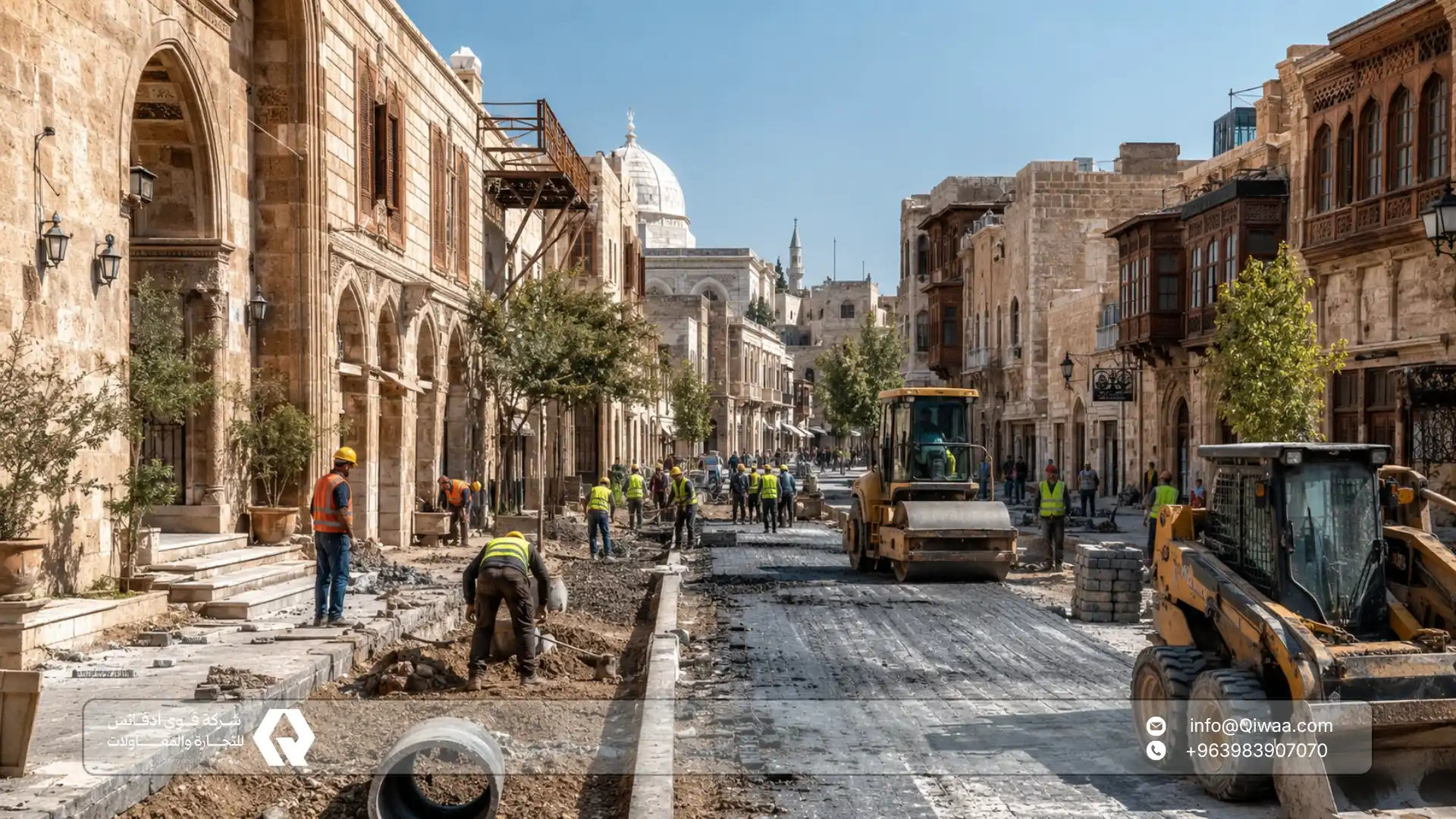
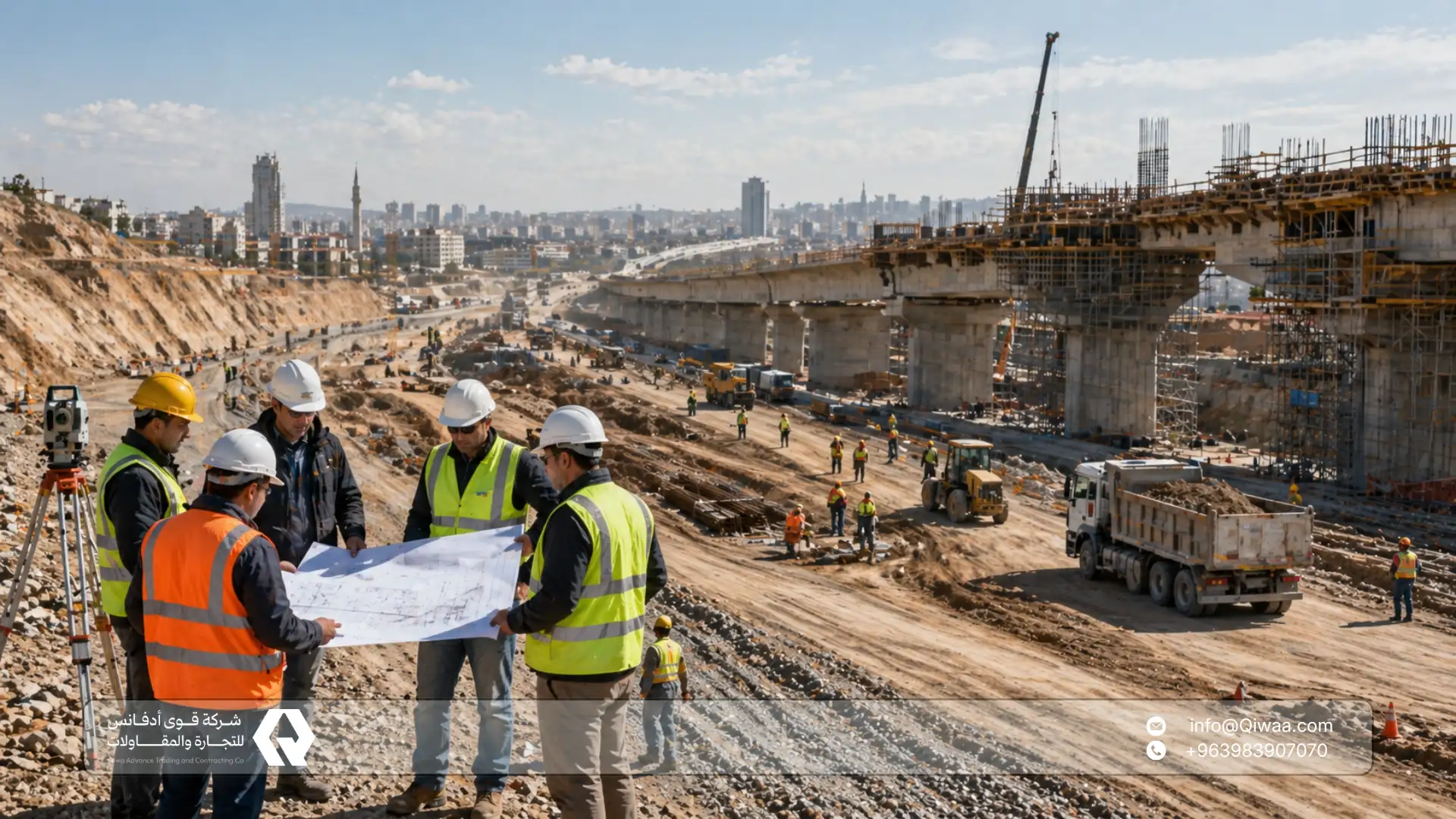
Infrastructure is one of the strongest entry points into the Syrian market. Large projects related to transport, real estate, airport development, metro systems, and public services create demand for contracting, engineering services, construction materials, logistics, and maintenance.
For investors, the opportunity is not limited to major project ownership. It can also appear through:
- Supply and operation contracts
- Long-term service projects
- Engineering and maintenance support
- Logistics for large construction projects
- Materials and equipment supply
This sector is attractive because it creates demand across multiple layers, from EPC contracting to procurement, site logistics, and operational support.
If your investment is connected to infrastructure or public services, Qiwa Advance can help you evaluate the project’s execution path before you commit capital.
Building Materials, Supply Chains, and Logistics
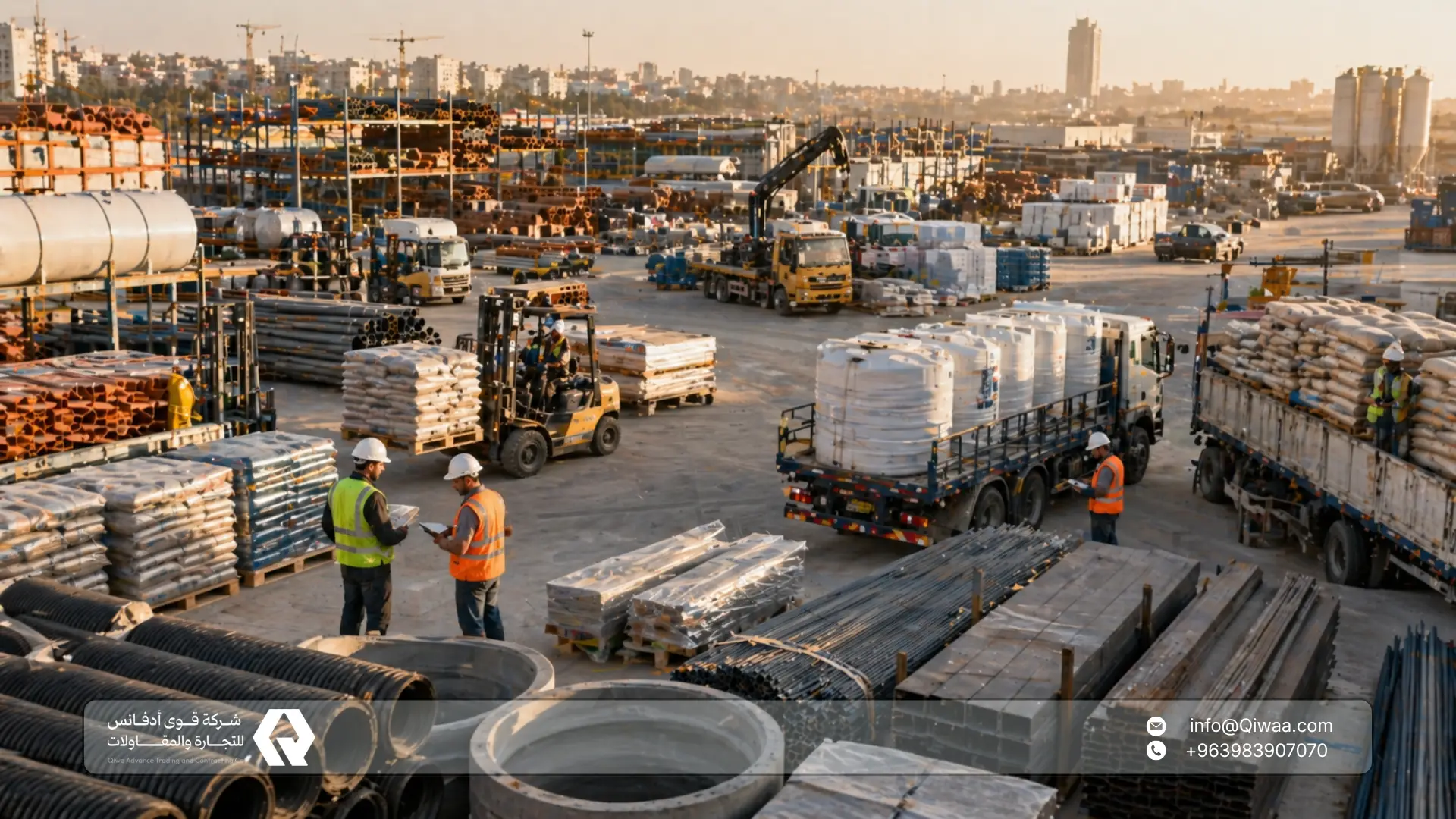
Building materials and logistics are among the most practical investment areas in Syria because they are directly linked to reconstruction, industry, utilities, and infrastructure.
Demand is expected across:
- Cement and clinker
- Pipes and tanks
- Construction materials
- Transport and distribution
- Industrial inputs
- Water and energy networks
The value of this sector lies in continuity. Construction projects, industrial facilities, water systems, and infrastructure programs all need stable supply chains. Investors who can secure materials, storage, transport, and distribution capacity may find strong opportunities.
However, this sector requires more than product availability. It requires clear sourcing, reliable logistics, realistic delivery timelines, and coordination between suppliers and project sites.
Manufacturing and Industrial Projects
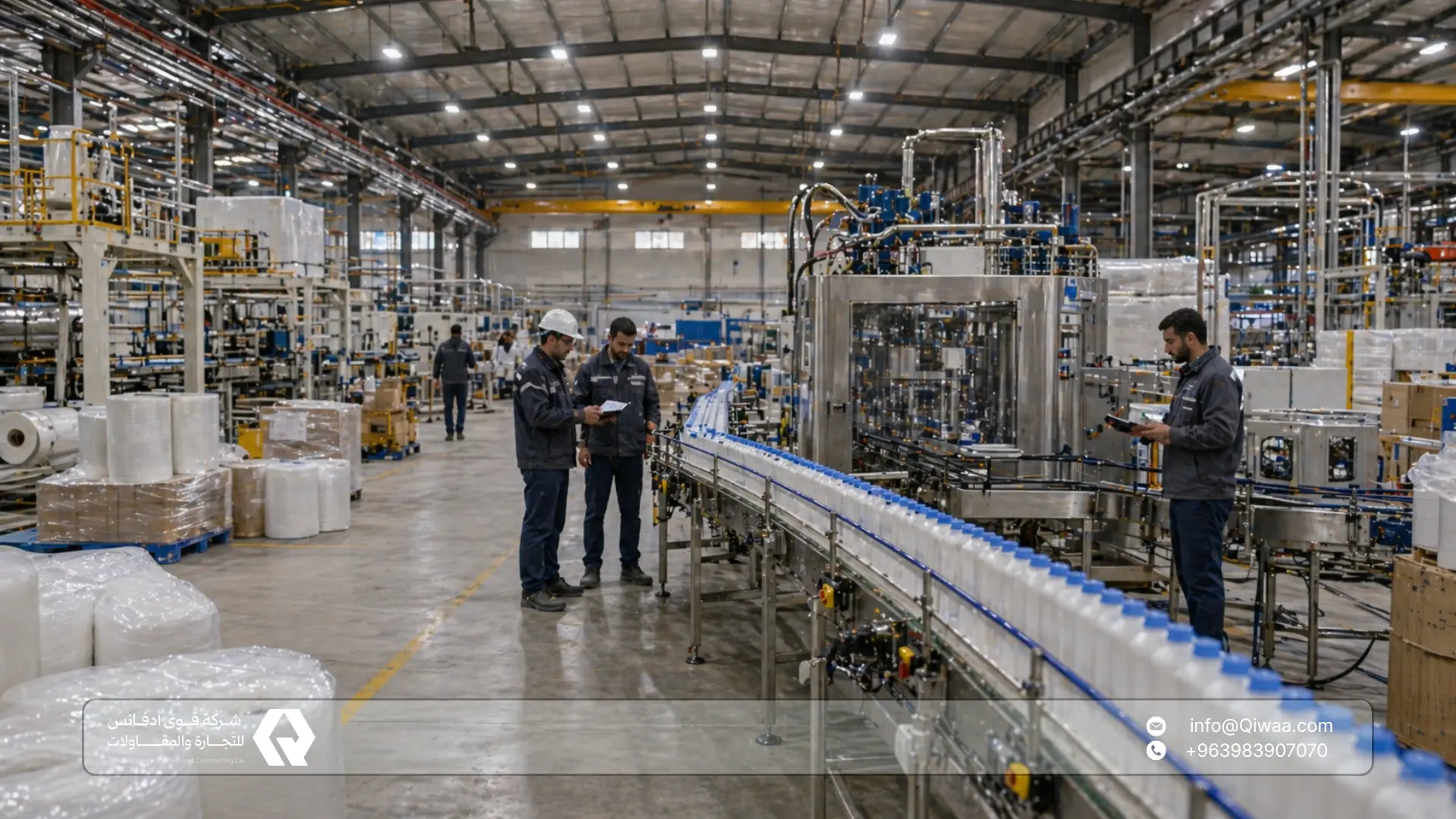
The industrial sector in Syria offers practical opportunities for investors who want to build productive assets rather than short-term trading activity.
Potential areas include:
- Construction material production
- Packaging and processing materials
- Chemicals and operational inputs
- Factories based on local resources
- Industrial components linked to construction and utilities
This sector is important because it supports employment, export potential, and local market needs. It also connects strongly with infrastructure, contracting, concrete, water, and energy projects.
For investors, the key question is not only whether a factory can be established. The important question is whether it can receive inputs, operate consistently, access customers, and scale production.
Qiwa Advance can help you connect an industrial investment idea with sourcing, execution, and operational requirements from the beginning.
Mining and Industrial Raw Materials
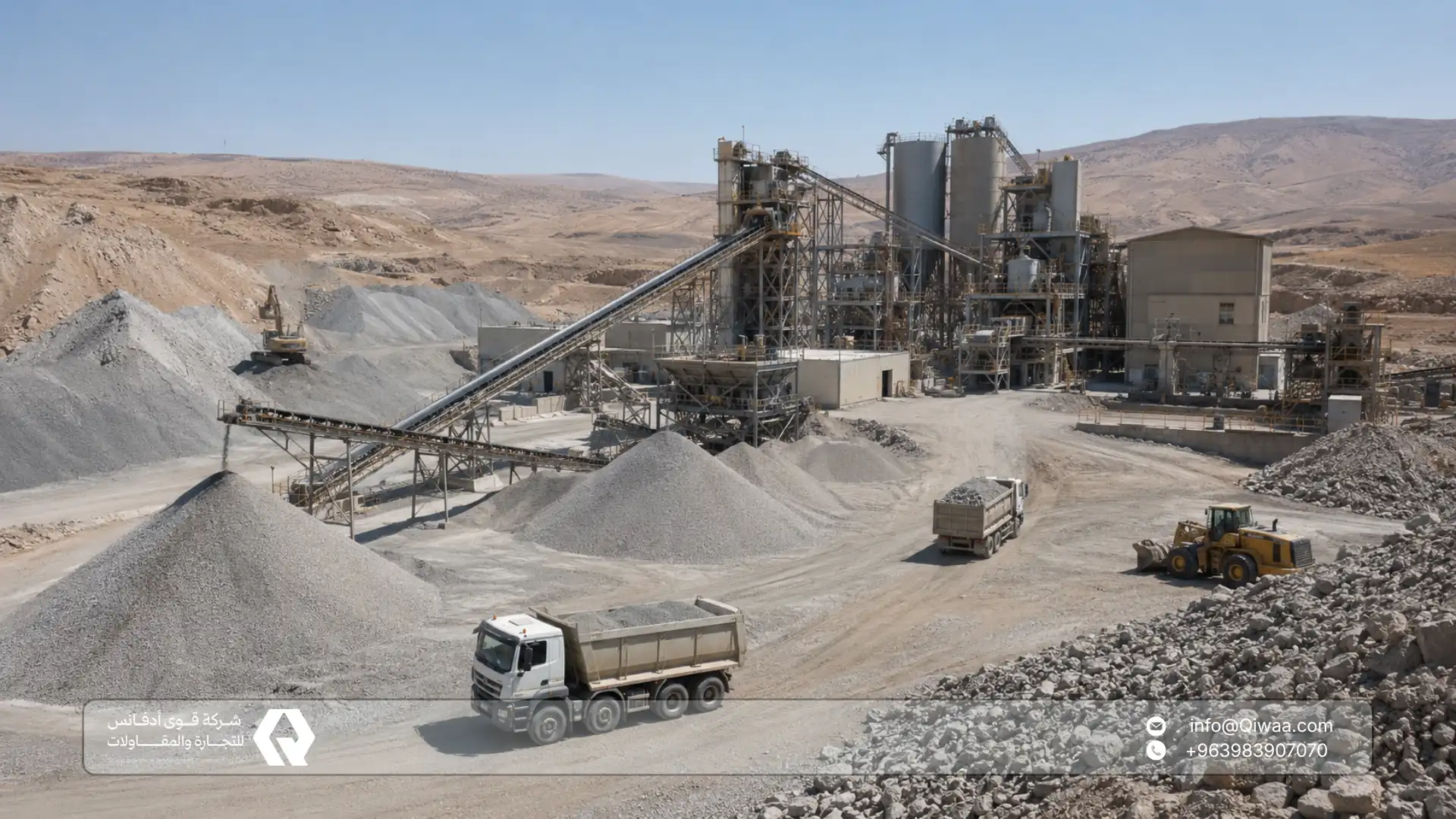
Mining and raw materials can support several value-added investment paths in Syria, especially when linked to construction materials, chemicals, fertilizers, and export supply chains.
Investment opportunities may include:
- Processing raw materials
- Chemical transformation
- Industrial inputs
- Export-oriented supply chains
- Construction-related materials
- Fertilizer and chemical industries
The strongest opportunities are not always in raw extraction alone. In many cases, higher value comes from processing, packaging, transporting, or converting raw materials into products that serve local and regional markets.
This sector requires strong technical, logistical, and regulatory planning. Investors should assess access to raw materials, transport routes, processing requirements, export channels, and long-term operational stability.
Water, Energy, and Operational Services
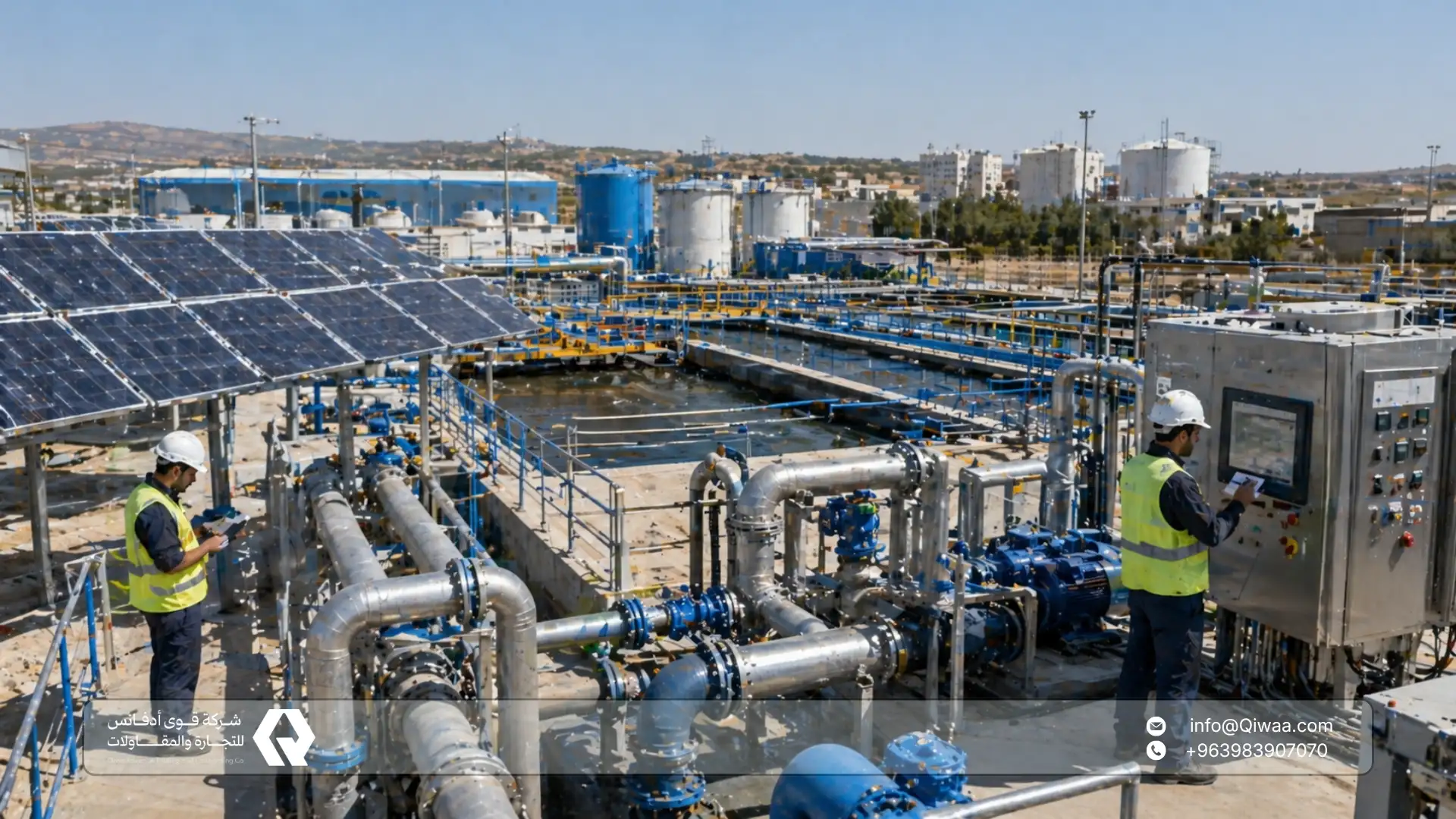
Water and energy projects are critical investment areas because they are both infrastructure sectors and operating sectors. They require construction, equipment, maintenance, technical operation, and long-term service support.
Potential investment areas include:
- Water treatment and transport systems
- Pipes, tanks, and pumping solutions
- Desalination and treatment facilities
- Energy generation and distribution support
- Solar and gas-related projects
- Services connected to public and private utilities
This sector is not limited to large national projects. Investors can also enter through equipment supply, maintenance, subcontracting, installation, technical services, and support systems.
The strongest projects in this field are those that connect construction with operation. Building the asset is only the first stage. Long-term value comes from keeping it functional, efficient, and service-ready.
Qiwa Advance supports investors with supply and execution solutions for water, energy, infrastructure, and operational projects in Syria.
Read more: Tunnel Formwork System in Syria for Repetitive Building Projects
Requirements for Starting an Investment in Syria
A successful investment in Syria requires more than a legal opportunity or a promising sector. You need to understand whether your project can actually be executed and operated under real market conditions.
A Specialized Execution Partner
In a rebuilding market, investors need a partner who can translate an idea into a scope of work, supply plan, execution schedule, and operating model.
A specialized execution partner helps you:
- Turn a broad opportunity into a defined project
- Connect feasibility studies with materials and suppliers
- Reduce the gap between planning and implementation
- Identify execution risks before they become costly
- Accelerate the start of actual work
This is especially important in infrastructure, EPC, utilities, industrial, and supply-driven projects.
Clear Supply Chains
Before entering any project, investors should map the supply chain in detail. This includes where materials will come from, how they will reach the site, what alternatives are available, and how delays may affect execution.
You should review:
- Sources of key materials and equipment
- Local availability and possible substitutes
- Logistics from supplier to project site
- Impact of delays on critical activities
- Coordination between supply and execution
In Syria, supply chain clarity can determine whether a project remains a study or becomes a working investment.
Qiwa Advance helps investors evaluate supply routes, material availability, and execution dependencies before project launch.
Execution and Operation Planning
Do not evaluate investment opportunities only through laws, incentives, or market demand. You also need to assess your technical ability to build, operate, and maintain the project.
Your plan should include:
- Execution model
- Procurement model
- Operating requirements
- Technical and logistical risks
- Realistic start-up and expansion scenarios
This is especially important for energy, utilities, industrial, and production projects. These investments depend on continuity, not only on construction.
Understanding Field Conditions
General market information is useful, but it is not enough. Investors need field-level understanding of regulations, site conditions, suppliers, contractors, licensing steps, and operational barriers.
Before moving forward, answer these questions:
- Is the sector already active?
- Can the project be executed under current conditions?
- Are the supply chains clear?
- Do you need a local or execution partner?
- Can the project operate reliably after construction?
These questions help investors avoid decisions based only on optimism or legal incentives.
If you are studying a project in Syria, Qiwa Advance can help you test its practical readiness before you move to execution.
Also Check: Water Desalination Plants in Syria by EPC Model
Syria’s Investment Law and Your 2026 Strategy
Legal changes can make market entry easier, but they do not replace execution planning. The value of the new investment environment lies in how it helps investors structure ownership, incentives, capital movement, customs benefits, and project entry models.
For investors, the main point is simple: the law may open the door, but execution determines whether the project succeeds.
How Legal Changes Affect Market Entry
Newer investment conditions give investors more flexibility in structuring their market entry. Depending on the sector and project type, investors may consider:
- Full ownership structures
- Partnerships with local or execution partners
- BOT or PPP models
- Direct investment supported by local execution
- Industrial city or infrastructure-linked models
This flexibility allows investors to choose a structure that fits the real needs of the project, rather than entering the market through one fixed model.
What to Review Before Structuring the Project
Before choosing your investment structure, review four areas carefully.
Sector requirements
Incentives, licensing speed, and operational complexity differ from one sector to another.
Ownership model
Full ownership may be possible, but an execution partnership may still be more practical for projects that depend on EPC work, logistics, or complex supply chains.
Incentive realism
Tax or customs incentives matter only when they apply clearly to your project and support its cost structure.
Execution feasibility
The most important question is whether the project can be supplied, built, tested, and operated under real market conditions.
When a Local or Execution Partner Becomes Essential
A local or execution partner becomes especially important when the project is:
- Related to infrastructure, contracting, or EPC
- Dependent on complex supply chains
- Located in an industrial city or operational zone
- Connected to licensing and local authorities
- Dependent on daily field coordination
- Exposed to a gap between study, execution, and operation
Legal flexibility gives investors more options. A capable execution partner helps turn those options into working projects.
Qiwa Advance helps investors choose the right execution and partnership model for projects in Syria. Contact our team to assess the best path for your investment.
Check: Marble and Granite Supply in Syria for Luxury Projects
How Qiwa Advance Turns Opportunities into Projects?
At Qiwa Advance, we do not evaluate opportunities only from a legal or commercial angle. We connect investment potential with supply, execution, operation, and market reality.
Our work is built around four main areas: contracting, trade, industry, and mining. This allows us to support investors from idea assessment to practical project launch.
EPC and Contracting Projects
When an opportunity is related to infrastructure, housing, commercial facilities, or public services, it must be handled as an integrated project.
Qiwa Advance supports investors through:
- EPC and contracting solutions
- Early connection between investment and execution
- Practical project structuring
- Transformation of ideas into buildable assets
- Coordination between planning, procurement, and site work
The objective is to move the project from a concept into a clear scope that can be built, managed, and delivered.
Trade, Supply, and Logistics
Many investment opportunities fail not because the market is weak, but because the supply chain is unclear. This is why Qiwa Advance gives strong attention to trade, procurement, logistics, and distribution.
We support projects connected to:
- Building materials
- Pipes and tanks
- Cement and clinker
- Operational raw materials
- Transport and distribution
- Infrastructure-related supply chains
Our partner network supports multiple sectors, including construction, water infrastructure, industrial gases, logistics, mining materials, and hospitality-related project supplies.
If your project depends on stable supply, Qiwa Advance can help you organize sourcing, logistics, and delivery planning from the start.
Industrial and Operating Solutions
Industrial investment should not be evaluated only by the cost of equipment. It should be evaluated by the ability to produce, operate, maintain, and sell consistently.
Qiwa Advance helps investors:
- Build sustainable production models
- Connect equipment needs with operating inputs
- Support industrial projects linked to construction and utilities
- Move from trading activity to productive assets
- Assess practical production requirements
The goal is to help investors build projects that can operate, not just facilities that can be installed.
Mining and Production Inputs
Some investment opportunities depend on stable access to raw materials and production inputs. Qiwa Advance supports investors by linking mining and industrial materials with wider production and construction supply chains.
This helps investors:
- Understand material availability
- Estimate input costs more accurately
- Connect raw materials with processing opportunities
- Support industrial and construction-related production
- Build a more stable operating base
Qiwa Advance can support your investment with practical sourcing, technical coordination, and execution planning across contracting, trade, industry, and mining.
Read more: HDPE Pipe Supply in Syria for Water Networks
Why Work With Qiwa Advance in Syria?
In emerging markets, the difficulty is not always finding opportunities. The harder part is turning them into projects with clear cost, supply, execution, timing, and operating requirements.
This is where Qiwa Advance adds value.
We Connect Studies With Execution
Many opportunities look promising on paper. The real test is whether they can be executed.
We help investors identify:
- What can actually be implemented
- What needs preparation before launch
- What obstacles may appear during execution
- What requirements must be resolved before commitment
This gives investors a stronger basis for decision-making.
We Clarify Costs and Timelines
Unclear costs and vague timelines are common reasons investors hesitate. Qiwa Advance improves visibility by linking the project idea with real execution requirements.
This helps you assess:
- Realistic project cost
- Measurable timeline
- Required preparation before execution
- Key project stages
- Supply and implementation dependencies
Clearer planning supports better investment decisions and reduces late surprises
We Simplify Supply and Execution
When too many parties work without coordination, delays and conflicts increase. Qiwa Advance helps reduce this complexity by bringing supply, contracting, and operational requirements into one clearer path.
We improve coordination between:
- Suppliers
- Contractors
- Technical teams
- Operating requirements
- Project owners
- Site execution needs
This does not remove all parties from the project. It makes responsibilities clearer and execution more controlled.
We Help You Launch the Project
The real value lies in moving from discussion to action. Qiwa Advance focuses on the practical steps that help investors begin.
This includes:
- Selecting the right entry path
- Connecting the opportunity with the right sector
- Defining supply and execution needs
- Building a project model that can start
- Reducing the gap between study and implementation
Ready to evaluate your investment opportunity in Syria? Contact Qiwa Advance to turn your idea into a clear, executable project plan.
FAQs About Investment in Syria 2026
What are the most practical investment sectors in Syria?
The most practical sectors are those connected to essential needs and active rebuilding, such as infrastructure, energy, water, building materials, manufacturing, logistics, and industrial inputs. These sectors are more likely to convert into real projects because they are linked to immediate market demand and operating requirements.
How should I evaluate an investment opportunity from an execution perspective?
Start by checking material availability, equipment sources, supply chains, logistics, licensing requirements, execution timelines, and operating needs. A strong opportunity should not only look attractive commercially. It should also be possible to build, supply, operate, and scale.
Why is a local or execution partner important?
A local or execution partner helps reduce the gap between feasibility studies and field reality. This partner can support supplier access, contractor coordination, local requirements, site execution, and the transition from planning to actual work.
How should I use Syria’s investment law in my business decision?
Use the law as a framework, not as the full decision. Ownership flexibility, incentives, and customs benefits are valuable, but they should serve a project with a clear supply chain, execution model, operating plan, and realistic market entry strategy.
Investment in Syria in 2026 requires more than identifying a promising sector. It requires a clear path for supply, execution, operation, and growth.
Qiwa Advance helps investors move from opportunity analysis to practical project launch through contracting, trade, industrial solutions, mining inputs, and supply chain coordination.
Contact Qiwa Advance today to evaluate your investment opportunity and build a practical execution plan for the Syrian market.