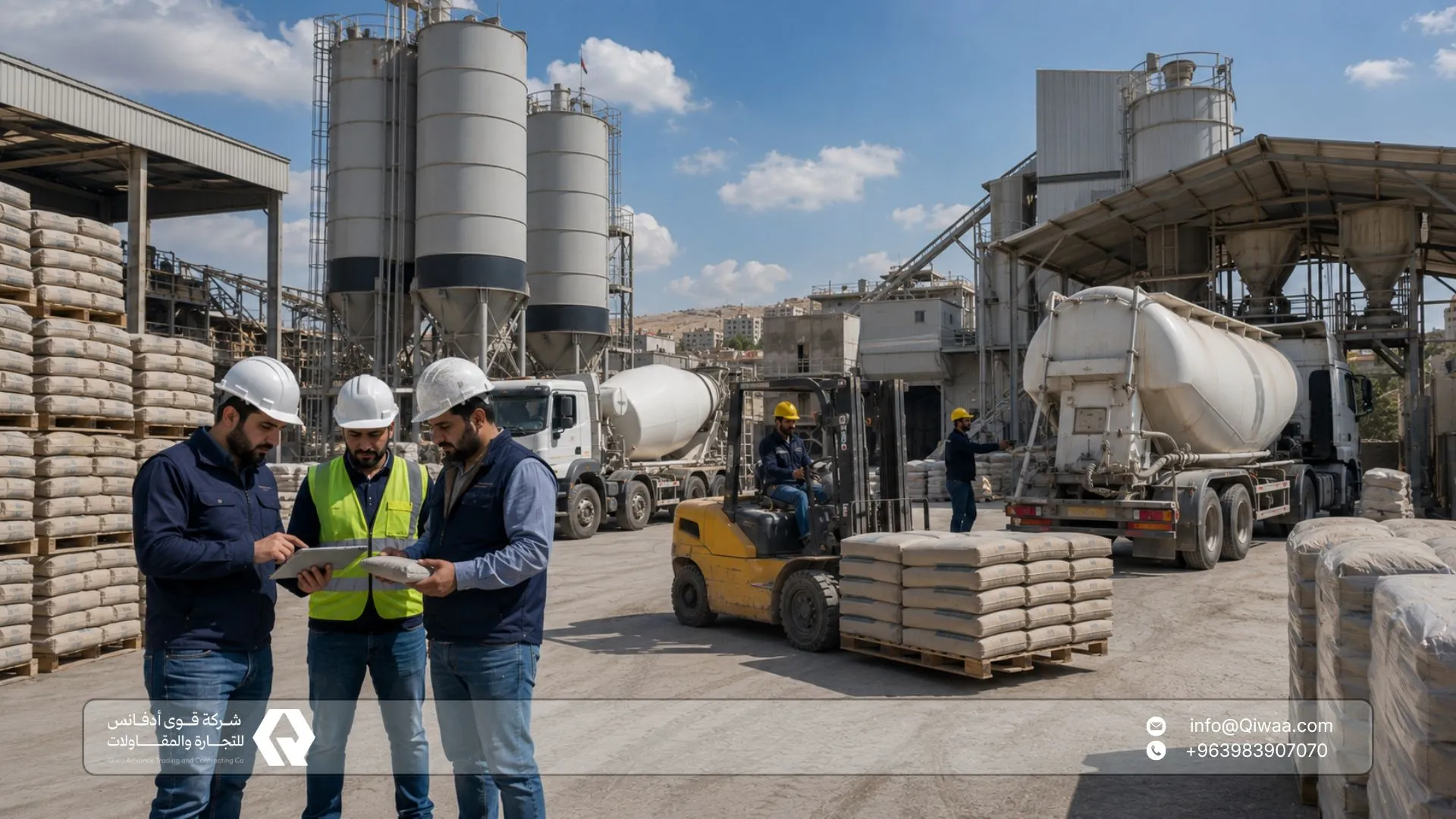


Controlling concrete quality starts with understanding how to achieve a mix that is workable, stable, and strong at the same time. This is where concrete admixtures play a critical role, especially plasticizers and superplasticizers.
In ready-mix concrete projects in Syria, contractors and batching plants often deal with transport distance, hot weather, waiting time, pumping requirements, and site conditions that can affect workability before placement. The right admixture helps maintain concrete performance without adding excessive water on site.
In this guide, Qiwa Advance explains how to choose concrete admixtures based on mix objectives, how to compare normal plasticizers and superplasticizers, and what to review before approving an admixture for ready-mix concrete projects.
Choosing Concrete Admixtures by Mix Objective
The correct admixture should be selected based on the function of the concrete mix, not only by product name or supplier recommendation.
A concrete admixture should solve a specific technical challenge, such as water reduction, workability retention, setting time control, pumping performance, or early strength development.
Water Reduction and Higher Strength
When the goal is to reduce the water-cement ratio while keeping the concrete workable, plasticizers or superplasticizers become essential.
This can help achieve:
- Higher compressive strength
- Lower concrete permeability
- Better mix stability
- Reduced need for adding water on site
- More consistent concrete performance
Adding extra water at the site may temporarily improve workability, but it can weaken durability and reduce final strength. A properly selected admixture gives the mix better flow while protecting the technical design.
Slump Retention During Transport
In ready-mix concrete projects, it is not enough to achieve the required slump at the batching plant. The concrete must keep its workability until it reaches the site and is placed correctly.
This is especially important when the project involves:
- Long transport distances
- Hot weather
- Waiting time before discharge
- Pumping over long distances
- Large or continuous pours
In these cases, a slump-retaining admixture can help maintain workability and prevent rapid slump loss before placement.
If your ready-mix project is affected by transport time or hot weather, Qiwa Advance can help you evaluate the right admixture for stable workability.
Setting Time Control
Some projects require faster early strength to accelerate formwork removal or move to the next construction stage. In this case, accelerating admixtures may be useful.
Other projects require longer workability, especially in hot weather, mass concrete pours, or long placement periods. In these cases, set-retarding admixtures help delay setting and keep the mix workable for a longer time.
Setting control must be linked to the project schedule, site temperature, concrete element type, and execution method.
Better Pumping for Dense Reinforcement
Concrete elements with dense reinforcement or complex shapes need high flowability without segregation or bleeding.
The right admixture can improve:
- Concrete flow between steel bars
- Pumping efficiency
- Mix cohesion
- Placement quality
- Compaction around reinforcement
This is important in columns, beams, slabs, foundations, retaining walls, and heavily reinforced structural elements.
The goal is not only to make the mix “more fluid.” The goal is to improve flow while maintaining cohesion and structural performance.
Read more: Tunnel Formwork System in Syria for Repetitive Building Projects
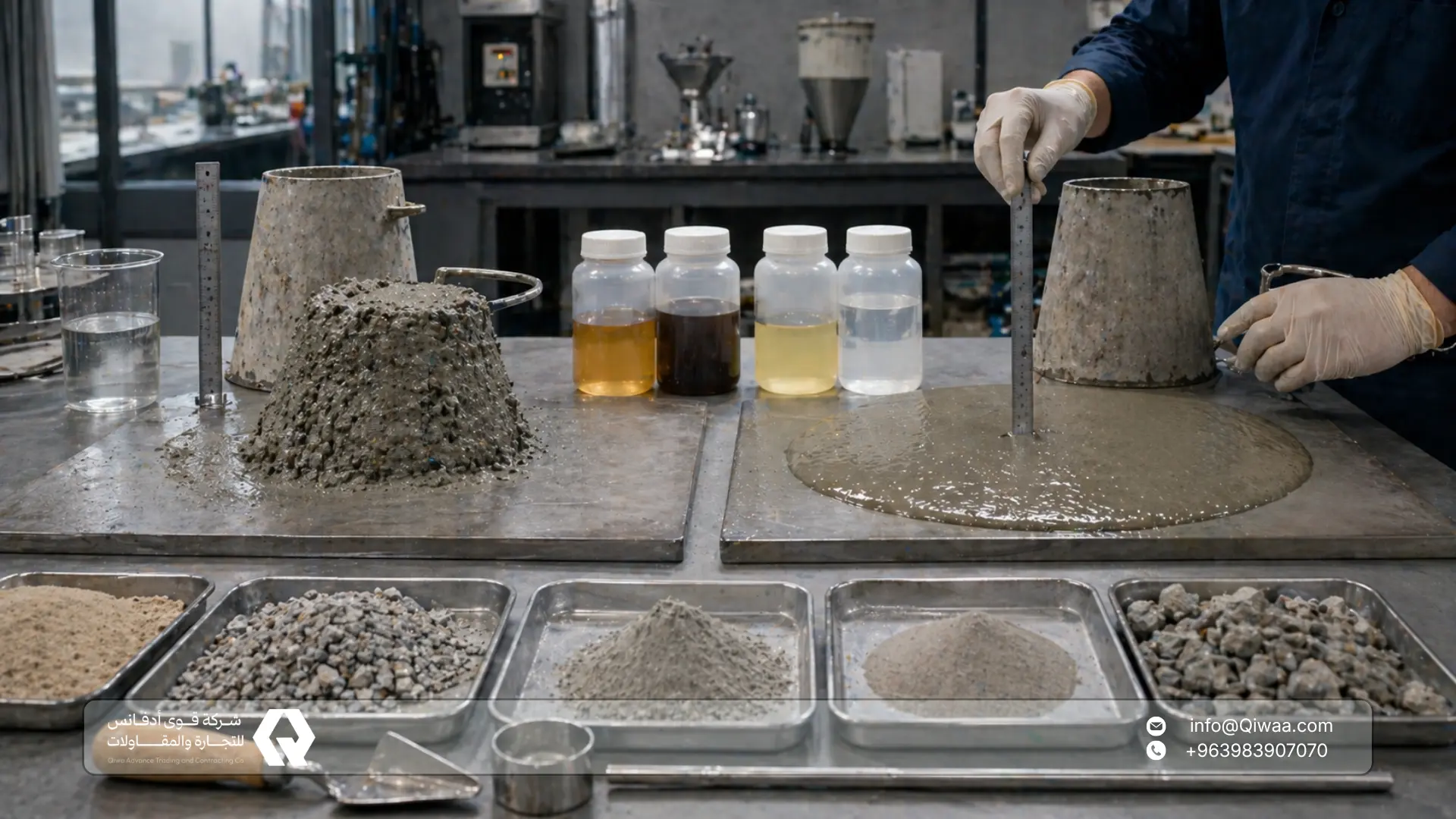
Plasticizers vs. Superplasticizers
Choosing between plasticizers and superplasticizers depends on the required performance level of the concrete mix.
| Comparison Point | Plasticizers | Superplasticizers |
| Main use | Improve workability in normal mixes | High workability and greater water reduction |
| Water reduction | Moderate | High |
| Workability improvement | Good | Strong and clear |
| Pumping performance | Suitable for normal conditions | Better for pumping and dense reinforcement |
| High-performance concrete | Limited ability | More suitable |
| When to use | General mix improvement | Higher strength, better flow, longer workability, or advanced performance |
Plasticizers are useful for general improvement in workability and moderate water reduction. Superplasticizers are more suitable when the mix requires higher slump, stronger water reduction, better pumping, or improved performance under demanding site conditions.
The right choice should always be based on mix design, cement type, aggregate properties, transport time, temperature, and site execution conditions.
Need to compare admixture options for your concrete mix? Qiwa Advance can help you assess the technical fit before supply or approval.
Controlling Concrete Chemicals in Ready-Mix Plants
The performance of concrete admixtures depends heavily on how they are controlled inside the batching plant. Even a good product can fail if the dosage, compatibility, or mixing process is not properly managed.
Compatibility With Mix Components
Concrete admixtures do not behave the same way with every cement type, aggregate source, or mineral addition. Before approval, compatibility should be tested with the actual materials used in the project.
This includes:
- The selected admixture
- Cement type
- Fine and coarse aggregates
- Mineral additions
- Water-cement ratio
- Actual mix proportions
Compatibility testing helps avoid unexpected changes in slump, setting time, bleeding, segregation, or strength development.
Dosage Based on Mix Design
The admixture dosage should be defined through mix design and laboratory trials, not random adjustment on site.
Changing the dosage without a technical reference can affect:
- Initial and final setting time
- Slump level
- Workability retention
- Pumping behavior
- Early and final strength
- Consistency between batches
A controlled dosage system is essential for stable ready-mix production.
Transport Time and Weather Conditions
In Syria, ready-mix concrete performance can be affected by transport distance, waiting time, and temperature.
The admixture decision should consider:
- Transport duration
- Ambient temperature
- Waiting time before placement
- Discharge method
- Pumping requirements
- Size and continuity of the pour
A mix designed for a nearby project may not perform well if it is transported farther or placed under higher temperatures. The admixture should match actual field conditions.
Consistency Between Batches
The real value of a concrete admixture appears in repeated performance, not only in one successful trial.
Plants should monitor:
- Slump stability
- Setting time
- Workability and consistency
- Pumpability
- Early and final strength
- Performance during delivery and placement
Consistent performance between batches reduces site disputes, delays, rejected loads, and quality risks.
Qiwa Advance supports ready-mix plants and construction projects with admixture solutions linked to production stability and site performance.
Also Check: Water Desalination Plants in Syria by EPC Model
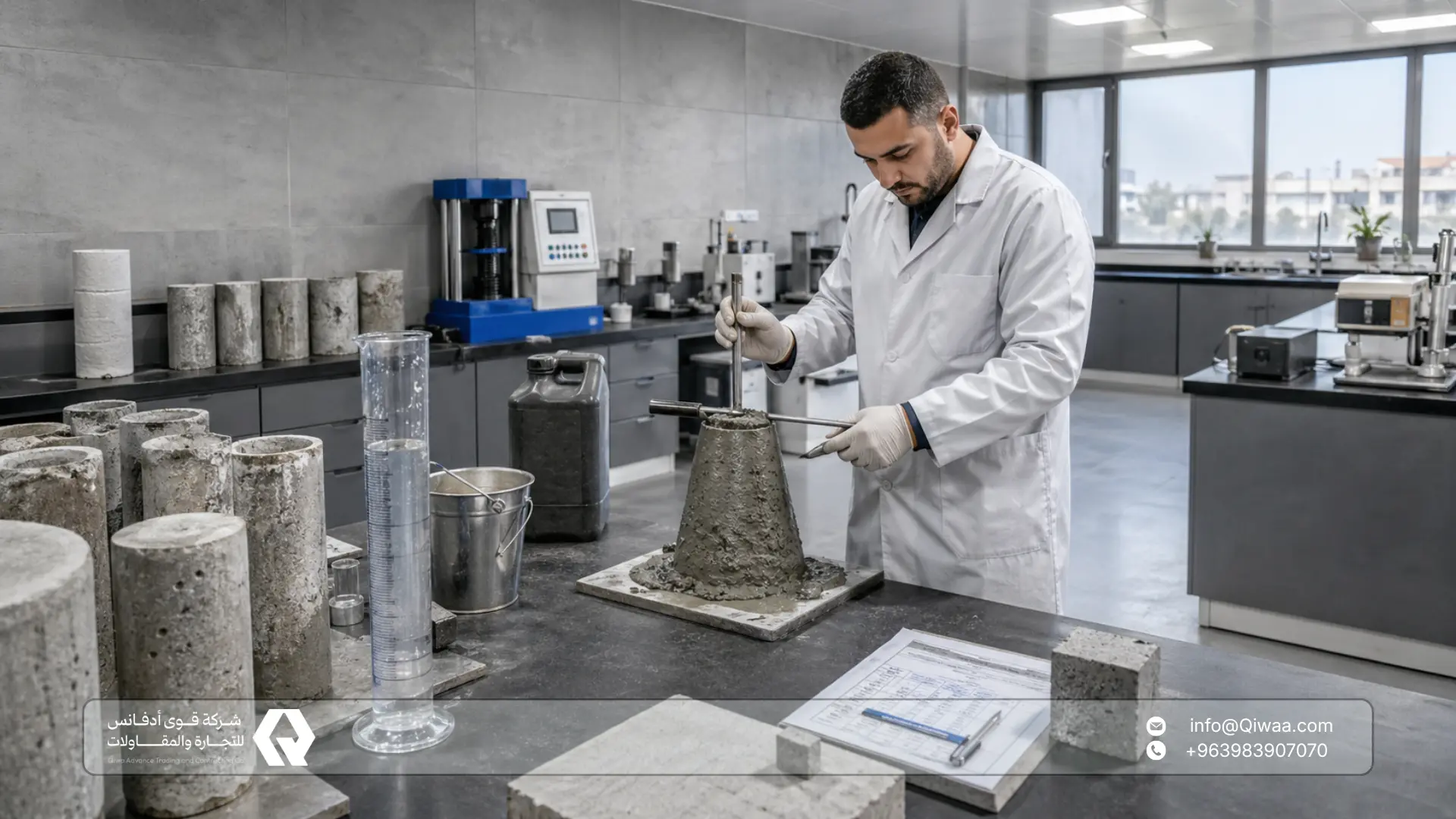
How Admixtures Improve Project Execution
The effect of concrete admixtures is not measured only through technical data sheets. It appears directly in site execution.
Stable Workability in Long Pours
In long or continuous pours, admixtures help maintain slump and workability despite waiting time, traffic delays, or extended placement periods.
This helps prevent loss of workability before the concrete is fully placed.
Easier Placement in Dense Reinforcement
A good admixture improves flow around steel reinforcement and reduces the risk of honeycombing, poor compaction, voids, and weak zones inside structural elements.
This is especially important for heavily reinforced concrete sections.
Better Performance in Hot Weather
High temperatures can cause rapid slump loss and faster setting. The right admixture helps stabilize the mix and reduce the need for adding water on site.
This protects strength, durability, and overall concrete quality.
Faster Construction Schedules
Specialized admixtures can support early strength development, helping contractors remove formwork sooner and move to the next stage faster.
This must be done carefully through tested mix designs, not uncontrolled site modifications.
Check: Marble and Granite Supply in Syria for Luxury Projects

What to Review Before Approving an Admixture?
Concrete admixtures should not be approved based only on technical data sheets, brand names, or supplier claims. Approval should be based on how the admixture performs in the actual mix.
Trial Results on the Actual Mix
Before approving any admixture, test it with the same materials used in the project or plant.
The trial should reflect:
- Actual cement
- Actual aggregates
- Actual mix proportions
- Expected transport time
- Expected temperature conditions
- Real placement method
The goal is not a theoretical result. The goal is to confirm performance under practical conditions.
Slump, Setting Time, and Strength
Before approval, review the effect of the admixture on the key performance indicators of the mix.
These include:
- Slump at batching
- Slump at placement
- Initial setting time
- Final setting time
- Early strength
- Final strength
This is especially important when the project requires faster stripping, better pumpability, or reduced water content.
Finishing, Bleeding, and Segregation
Some admixtures may improve slump but create problems if the dosage or compatibility is not properly controlled.
Review the mix behavior in terms of:
- Finishing quality
- Bleeding rate
- Segregation risk
- Cohesion during pumping
- Uniformity during placement
A good admixture should improve workability without damaging stability.
Quality Stability During Continuous Supply
A successful admixture should not work only in one trial batch. It should deliver consistent results during regular supply.
Check:
- Slump stability between batches
- Consistent setting time
- Close strength results
- Stable behavior during transport
- Reliable pumping and placement performance
If performance varies, the issue may be related to compatibility, dosage, batching control, material variation, or the method of adding the admixture.
Before approving a new admixture for your project, contact Qiwa Advance to review trial results and connect them with real execution requirements.
Common Mistakes in Using Concrete Admixtures
In many projects, the problem is not the absence of concrete chemicals. The problem is uncontrolled use.
Choosing by Price Only
The cheapest admixture is not always the most economical option. A low-cost product can create expensive problems if it fails to match the mix or execution conditions.
Possible risks include:
- Weak slump retention
- Inconsistent batch performance
- More site corrections
- Poor placement quality
- Reduced concrete performance
The correct standard is technical suitability, not only product price.
Using Admixtures to Fix a Poor Mix
An admixture cannot fully solve a poorly designed concrete mix. It may hide the problem temporarily, but it will not correct the root cause.
Admixtures should not be used to compensate for:
- Poor mix design
- Weak aggregate grading
- Uncontrolled water content
- Production problems
- Lack of batching control
The mix itself must be technically sound before the admixture can improve its performance.
Read more: HDPE Pipe Supply in Syria for Water Networks
Changing Dosage on Site Without Control
Adjusting admixture dosage on site without a clear technical basis is one of the most common mistakes.
It can cause:
- Unstable setting time
- Uncontrolled slump change
- Strength variation
- Different behavior between batches
- Placement and finishing problems
Dosage changes should be based on laboratory trials, plant control, and approved technical procedures.
Ignoring Cement Compatibility
Not every admixture works the same way with every cement type or mineral addition.
Ignoring compatibility can lead to:
- Lower-than-expected performance
- Unexpected setting changes
- Poor workability retention
- Inconsistent production results
- Problems in pumping or finishing
Compatibility testing is not optional in serious ready-mix projects.
Approving Products Without Trials
A product that performs well in one project may not deliver the same result in another. Cement, aggregate, temperature, transport time, and mix design can all change admixture behavior.
Before approval, trials should confirm:
- Required performance
- Correct dosage
- Stable results
- No negative side effects
- Suitability for site conditions
Qiwa Advance helps you avoid costly admixture mistakes by linking product selection, dosage, testing, and site performance.
How Qiwa Advance Supports Ready-Mix Projects?
At Qiwa Advance, we do not treat concrete admixtures as isolated materials. We connect them with a wider system that includes supply, manufacturing, ready-mix production, concrete chemicals, and construction material solutions.
We Link Admixtures to Mix Objectives
We select admixtures based on the role they must perform in the mix, such as:
- Water reduction
- Slump retention
- Pumpability improvement
- Early strength support
- Final strength improvement
- Better workability under site conditions
This helps ensure the admixture serves the project’s actual performance target.
We Support Clearer Supply
Ready-mix projects need stable material supply, especially when production is continuous.
Qiwa Advance supports projects through organized supply of concrete admixtures, construction materials, raw materials, and related inputs that help improve production consistency.
We Think From a Manufacturing Perspective
Because we work with construction chemicals and liquid concrete admixtures, we understand admixtures from a production and performance perspective, not only as commercial products.
This helps us recommend solutions based on technical behavior inside the mix.
We Support Ready-Mix Plants
Our work is connected not only to materials, but also to ready-mix plant design, construction, operation, and related solutions.
This gives us a practical understanding of how admixtures perform inside a production environment, from batching to transport and site placement.
We Focus on Site Performance
The real value of an admixture appears during transport, pumping, pouring, finishing, and hardening.
That is why we evaluate admixtures based on concrete behavior in the plant and on site, not only based on product data sheets.
We Help Improve Quality Stability
Our goal is to help projects and ready-mix plants reach more stable concrete performance, including:
- Better slump control
- More consistent setting time
- Easier placement
- More stable pumpability
- Consistent performance between batches
- Improved concrete quality on site
Whether you manage a ready-mix plant or a construction project in Syria, contact Qiwa Advance to discuss the right admixture solution for your concrete mix.

Conclusion
In ready-mix concrete projects in Syria, concrete admixtures have a direct impact on workability, pumping, setting time, strength development, and site execution quality.
The right admixture should be selected based on the mix objective, transport time, weather conditions, placement method, and required performance. It should not be selected only by brand name, price, or general recommendation.
When the admixture is tested correctly, dosed accurately, and matched with the actual materials used in the mix, it can improve concrete stability, reduce site risks, and support better construction quality.
At Qiwa Advance, we help you approach concrete admixtures from a technical and operational perspective that connects supply, manufacturing, plant performance, and site execution.
FAQs About Concrete Admixtures in Syria
What is the practical difference between plasticizers and superplasticizers?
Plasticizers are usually used to improve workability and reduce water within normal limits. Superplasticizers provide higher water reduction and stronger workability improvement, making them more suitable for mixes that need better pumping, higher strength, higher slump, or longer workability.
When should I use a slump-retaining admixture?
Use a slump-retaining admixture when the concrete may lose workability before placement. This is common with long transport distances, hot weather, waiting time before pouring, large pours, continuous pours, and pumped concrete that needs to remain workable for longer.
Can I use the same admixture for all mixes?
No. The same admixture may behave differently from one mix to another. Cement type, aggregate properties, water ratio, mineral additions, transport time, and temperature can all affect performance. Each mix should be reviewed and tested before approval.
What is the most important test before approving an admixture?
There is no single test that is enough by itself. The most important step is testing the admixture on the actual mix using the real project materials. You should review slump, setting time, early and final strength, workability behavior, and consistency between batches.
Why should admixtures not be selected by price only?
Because the wrong admixture can lead to slump loss, unstable performance, pumping problems, site corrections, weak quality, and rejected concrete. The best choice is the admixture that fits the mix design and execution conditions, not simply the lowest-priced option.
Need better control over ready-mix concrete quality in Syria? Qiwa Advance can help you choose, test, and supply concrete admixtures that match your mix design, transport conditions, pumping requirements, and site performance targets.
Contact Qiwa Advance today to discuss your ready-mix plant or construction project requirements.