

If you are planning to use HDPE pipes for a water, wastewater, irrigation, or infrastructure project in Syria, the decision should not depend on product availability alone.
The real question is whether the pipe is technically suitable for the network being built.
A successful HDPE pipe supply process is not measured at the purchase stage. It becomes clear during installation, testing, handover, and long-term operation. When the pipe is selected according to the correct standard, pressure rating, material grade, diameter system, and jointing method, the project becomes easier to execute and the network becomes more reliable.
In this guide, Qiwa Advance explains what you should review before approving HDPE pipe supply, where HDPE pipes are most suitable, what mistakes to avoid, and how to choose the right supplier for your project in Syria.
Where HDPE Pipes Are the Right Choice?
HDPE pipes are a practical choice when the project requires strong joint integrity, flexible installation, corrosion resistance, and clear pressure and size classifications.
They are commonly used in:
- Pressurized water networks
- Wastewater and sewerage systems
- Irrigation networks
- Service lines
- Infrastructure projects
- Selected industrial applications
HDPE pipe selection should not be based on material type alone. It must be linked to the actual application, such as whether the line is for pressurized water, wastewater, irrigation, or another service.
The decision should also consider pressure requirements, jointing method, pipe standard, diameter system, and installation conditions.
If you are planning a water or wastewater project in Syria, contact Qiwa Advance to discuss the right HDPE pipe specifications for your network.
Read more: Concrete Admixtures in Syria: Improve Ready-Mix Quality
Why HDPE Pipes Work Well in Projects?
The value of HDPE pipes appears after installation, not only in the material properties. When the correct size, material grade, SDR, pressure rating, and jointing method are selected, HDPE pipes can support a stronger and more reliable network.
Their practical advantages include:
- Better joint tightness when fusion welding is applied correctly
- Lower leakage risk compared with systems that depend on many mechanical joints
- Flexible handling and installation in long routes or complex sites
- Strong resistance to corrosion in many operating environments
- Easier phased supply when pipe sizes, fittings, and accessories are defined early
- Good performance in water, wastewater, irrigation, and selected industrial applications
However, these benefits depend on correct specification, proper handling, approved jointing methods, and clear documentation during delivery and handover.
An HDPE pipe can be technically suitable on paper but still fail to serve the project properly if the specification, installation, or quality control process is weak.
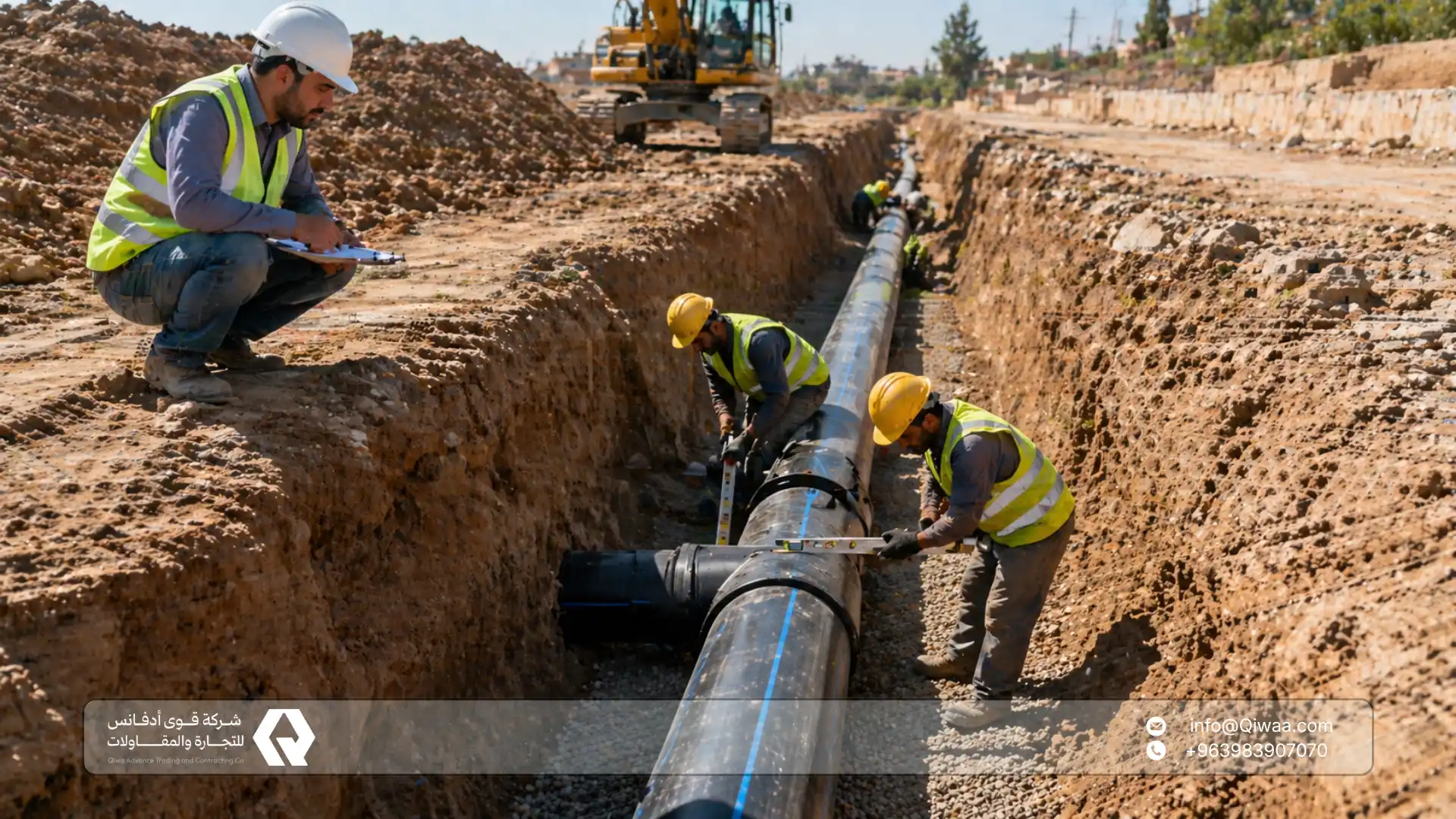
What to Check Before Ordering HDPE Pipes?
Approving HDPE pipe supply is a technical decision, not only a purchasing decision. Before confirming any order, review the following factors carefully.
Application and Reference Standard
Start with the network type:
- Pressurized water
- Wastewater
- Irrigation
- Service line
- Industrial application
Then define the approved standard for the project. Common references may include ISO 4427 for metric water supply and pressure drainage applications, or AWWA C901/C906 and ASTM F714 for projects using American references.
The selected standard affects pipe dimensions, pressure classification, material requirements, testing, and approval documents.
Material Grade
Do not approve the pipe based only on the general term “HDPE.” The material grade must be clearly defined according to the project reference.
Examples include:
- PE100 for many metric-standard projects
- PE4710 for projects using relevant American standards
The material grade directly affects pressure design, performance, and expected service life.
Diameter System, SDR, and Pressure Class
Many supply and installation errors happen because of confusion between diameter systems.
Before ordering, clarify:
- Metric, IPS, or DIPS system
- Nominal diameter and outside diameter
- SDR value
- Pressure class
- Required wall thickness
- Actual operating pressure
The pipe size and pressure rating must match the network design, not only the requested purchase description.
Jointing Method
HDPE pipe performance depends heavily on the jointing method.
Common options include:
- Butt fusion
- Electrofusion
- Transition fittings
- Mechanical or specialized fittings in selected cases
The jointing method affects fittings, equipment, site preparation, installation sequence, testing, and worker qualification.
A strong pipe with weak joint execution can become a weak network. That is why jointing must be treated as a core technical requirement, not a minor site detail.
Documents and Product Marking
Visual inspection is not enough when receiving HDPE pipes.
You should verify:
- Pipe marking and printed data
- Manufacturing standard
- Material grade
- Diameter and SDR or pressure class
- Test certificates or conformity documents
- Drinking water approval when required
- Batch or production traceability where applicable
Clear documentation makes approval, consultant review, quality control, and handover much easier.
Storage and Handling
Even a compliant pipe can lose part of its reliability if it is handled poorly before installation.
The project team should check:
- Storage surface condition
- Stacking method
- Protection from damage
- Pipe scratches or cuts
- Handling during loading and unloading
- Inspection before use
Industry guidance commonly treats deep scratches or cuts as a serious issue, especially when they exceed an acceptable percentage of wall thickness. Pipes should be inspected before installation, particularly in infrastructure projects where future access is difficult.
Need to approve HDPE pipe supply on a clear technical basis? Qiwa Advance can help you review specifications, standards, SDR, fittings, and documentation before supply.
Read more: Investment in Syria 2026: Practical Opportunities
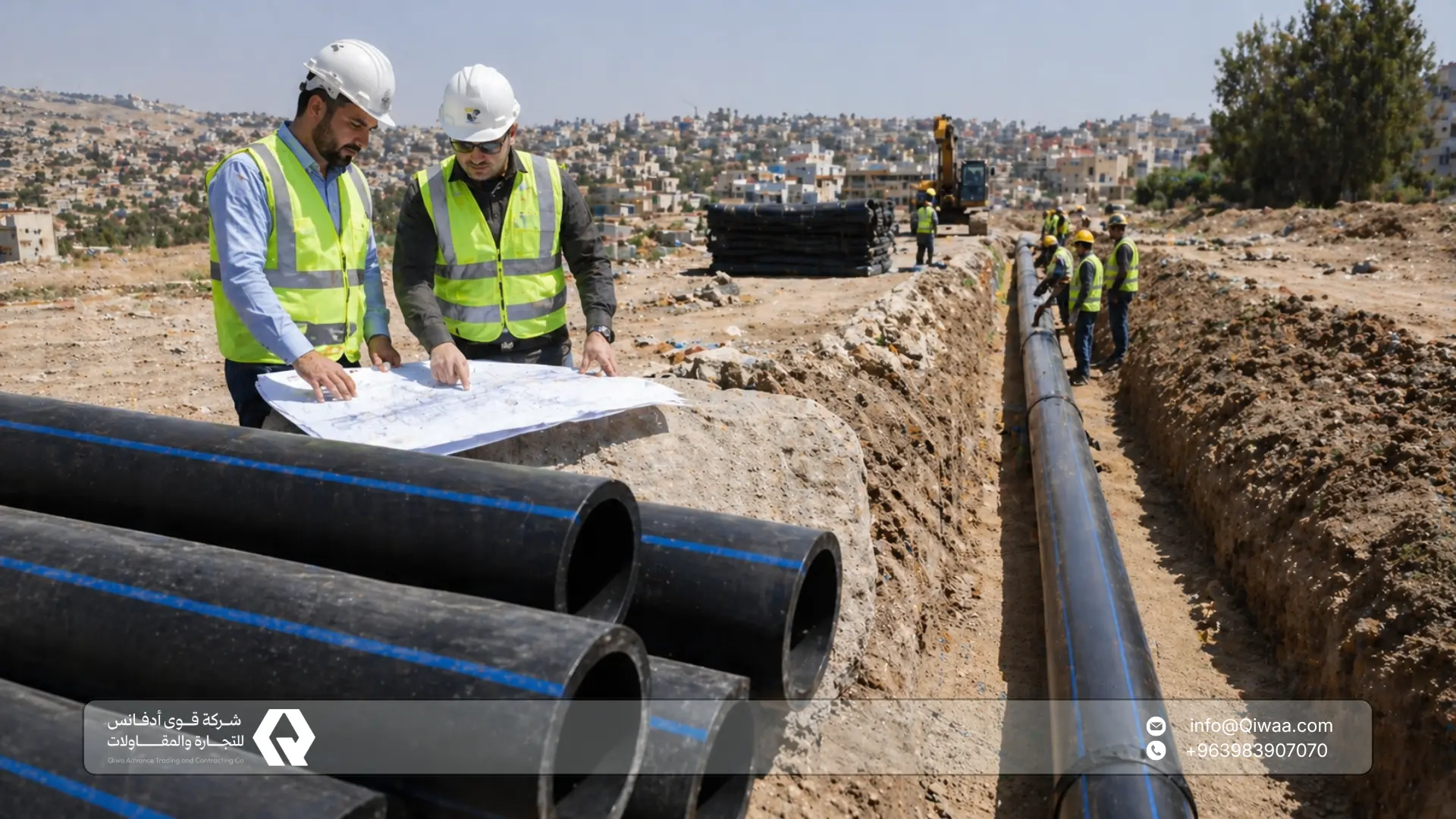
Common HDPE Pipe Mistakes
Most HDPE pipe problems do not come from the material itself. They usually come from poor specification, weak supply control, or incorrect installation decisions.
Choosing by Price Only
When price becomes the only selection factor, the project may face problems in:
- Material grade
- SDR or pressure rating
- Diameter system
- Application suitability
- Documentation and approvals
- Long-term performance
A cheaper pipe can become more expensive if it causes delays, failed approvals, leakage issues, or replacement work.
Mixing Water and Wastewater Requirements
HDPE pipe suitability depends on the application.
Pressurized water networks may require different standards, pressure classes, approvals, and testing procedures than wastewater, drainage, or service lines.
Confusing these requirements can create problems during supply, installation, pressure testing, or consultant approval.
Treating Joints as a Minor Detail
In HDPE systems, the joint is a major part of network performance.
Ignoring the jointing method, welding equipment, technician qualification, fittings, or site conditions can turn a good pipe into a weak system.
Jointing quality should be controlled through:
- Approved procedure
- Suitable equipment
- Qualified technicians
- Correct surface preparation
- Proper cooling and handling
- Inspection and testing
Accepting Unclear Supply
Any supply that does not clearly confirm the standard, product data, material grade, SDR, pressure class, and conformity documents can create confusion during project approval.
This is especially risky in projects with consultant review, strict quality control, or staged handover requirements.
Ignoring Site, Storage, and Backfilling Conditions
The success of an HDPE network depends on more than office-based selection. Site execution matters.
Poor storage, careless handling, unsuitable trench preparation, incorrect backfilling, or damaged pipe surfaces can affect the network even if the supplied pipe is technically correct.
Qiwa Advance helps project teams reduce HDPE pipe risks by aligning supply, documentation, fittings, and execution requirements before delivery.
Also Read: Infrastructure Contracting in Syria: Choosing the Right Contractor
How to Choose an HDPE Pipe Supplier in Syria?
Choosing the right HDPE pipe supplier is not only about finding a company that has the product.
A strong supplier should understand the project and help answer the technical questions that affect execution.
Before choosing a supplier, ask:
- What standard is required for the project?
- What material grade is suitable?
- Which diameter system is being used?
- What SDR or pressure class is needed?
- What fittings and accessories are required?
- What jointing method will be used?
- Will the supply be delivered in one batch or in stages?
- Are the approval and handover documents clear?
The more clearly these points are defined, the lower the risk of site delays, rejected materials, wrong fittings, or installation conflicts.
If you are comparing several HDPE pipe offers, do not compare price alone. Compare specification clarity, material grade, SDR, fittings, documentation, supply stability, and project compatibility.
If you are comparing HDPE pipe quotations in Syria, Qiwa Advance can help you evaluate the technical differences behind the price.
Also Check: Qiwa Advance and Wosta Gases: Strategic Partnership in Syria
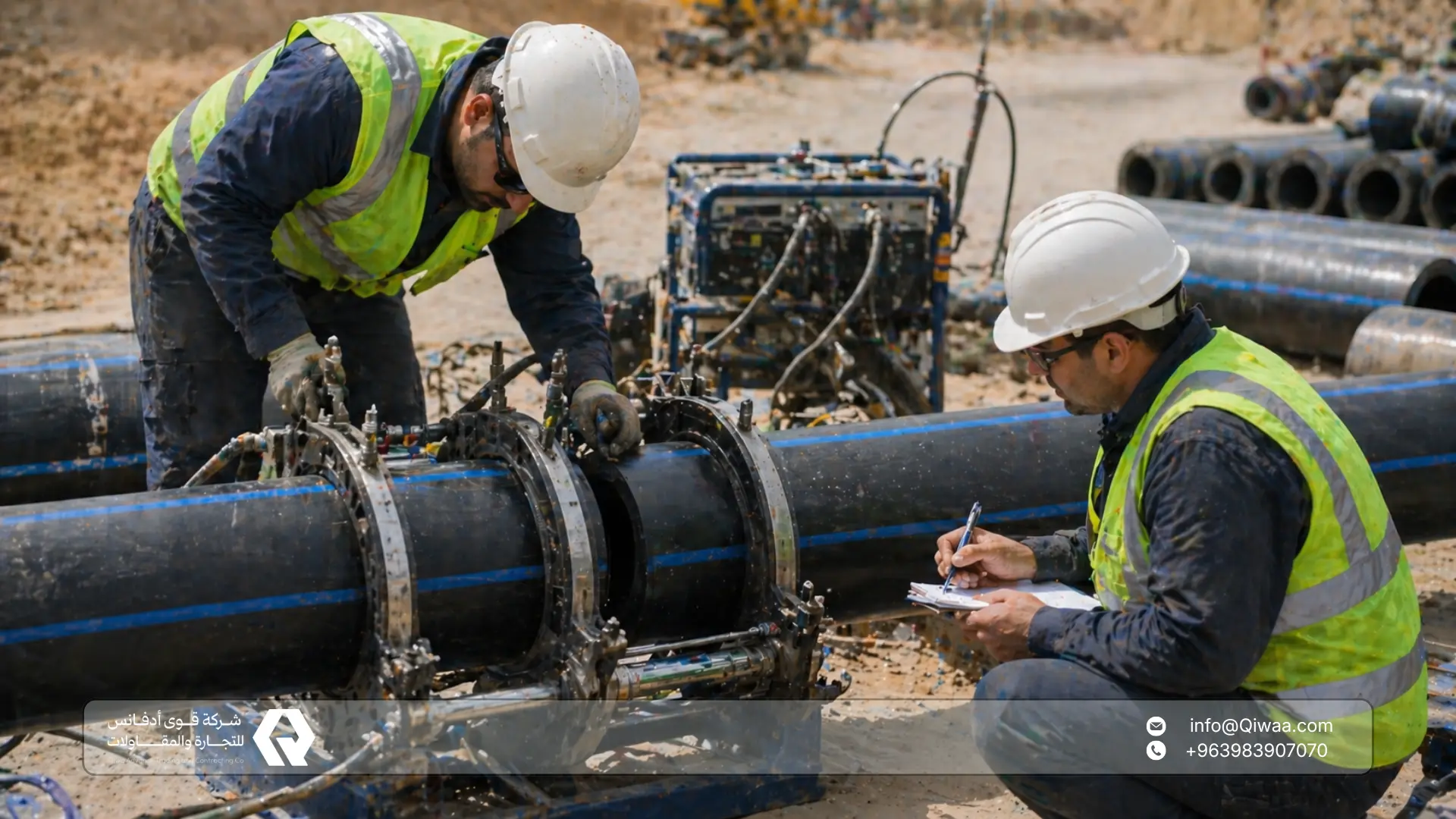
Qiwa Advance for HDPE Pipe Supply in Syria
At Qiwa Advance, we supply HDPE pipes and related solutions based on the network type, project requirements, approved standards, and actual execution conditions.
We do not treat pipe supply as a general trading activity. We connect the material with the project’s technical requirements, installation needs, and long-term network performance.
Experience That Supports Supply Decisions
Qiwa Advance builds on more than 25 years of founder-level experience and an international business network.
This helps us evaluate pipe supply beyond size and price, including:
- Specification requirements
- Network application
- Site conditions
- Installation method
- Project documentation
- Long-term reliability
Integrated Business Capabilities
Our work covers trade, contracting, industry, and mining. This gives us a broader understanding of infrastructure, water, wastewater, industrial, and utility projects.
Because of this integrated perspective, we understand how supply quality affects site progress, installation control, and project handover.
Presence in Water and Infrastructure Projects
Qiwa Advance is connected to infrastructure, water networks, desalination plants, wastewater treatment plants, and industrial water systems.
This makes us closer to the practical requirements of water and wastewater projects, especially where specifications, fittings, pressure ratings, and documentation must be controlled carefully.
Partnerships That Support Quality
We work through a network of agencies and partnerships with specialized regional and international entities.
This supports our ability to provide more reliable materials, clearer specifications, and more stable supply for infrastructure and utility projects.
Supply Matched to Project Needs
We focus on supplying HDPE pipes that match the actual project requirements.
This includes:
- Standards and specifications
- Material grade
- Diameter system
- SDR and pressure class
- Fittings and accessories
- Documentation and approvals
- Delivery planning
Our goal is to support successful installation, testing, handover, and long-term operation.
Looking for HDPE pipe supply in Syria? Contact Qiwa Advance or request a quotation based on your project’s actual technical requirements.
Check: Smart Fuel Station Construction in Syria: From Traditional to Modern Stations
FAQs About HDPE Pipes in Syria
Are HDPE pipes suitable for horizontal directional drilling?
Yes. HDPE pipes are often suitable for horizontal directional drilling because of their flexibility and strong fusion-jointed system. However, pipe wall thickness, SDR, pulling conditions, route design, and installation method must be selected according to the project requirements.
Does sunlight affect HDPE pipes before installation?
Short-term exposure is not always a problem, but long or improper storage can affect pipe temperature, shape, and handling. Pipes should be stored correctly and inspected before installation.
Does HDPE pipe pressure testing require special care?
Yes. Pressure testing for HDPE pipes must consider temperature, line preparation, stabilization, and the behavior of polyethylene under pressure. The test should follow a clear procedure suitable for site conditions, not only a target pressure value.
Does HDPE pipe size change with temperature?
Yes. HDPE pipes expand and contract with temperature changes, especially in exposed or long lines. This should be considered in design, fixing, installation, and testing. The effect is usually more controlled in buried lines when installed properly.
What should I check before accepting HDPE pipe delivery?
Check pipe marking, standard, material grade, diameter system, SDR or pressure class, test certificates, conformity documents, fittings compatibility, and visible damage from handling or storage.
Need reliable HDPE pipe supply for a water, wastewater, irrigation, or infrastructure project in Syria?
Qiwa Advance can help you define the right specification, material grade, SDR, pressure class, fittings, documentation, and delivery plan.
Contact Qiwa Advance today to request a technical review or quotation for your HDPE pipe requirements.