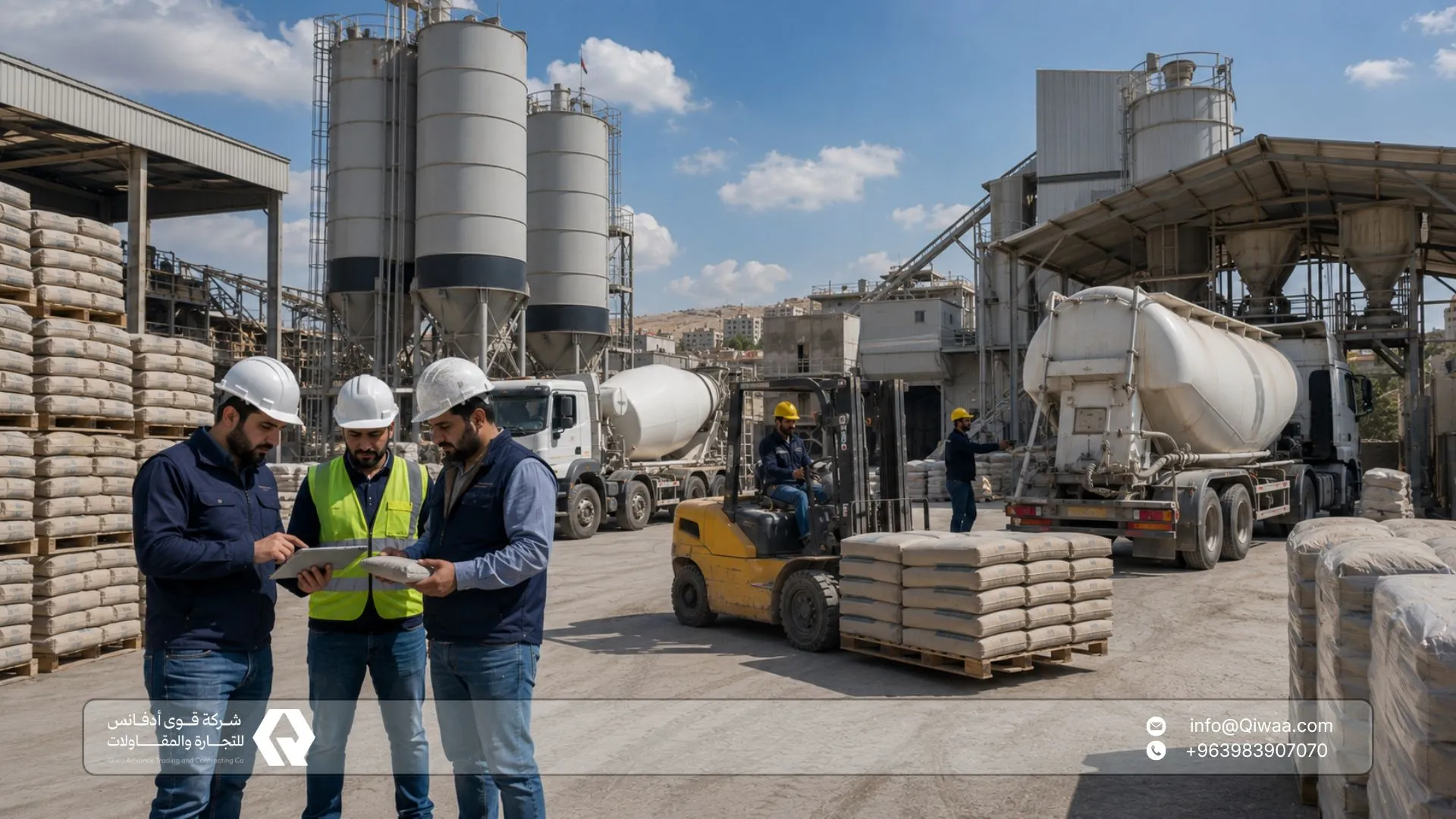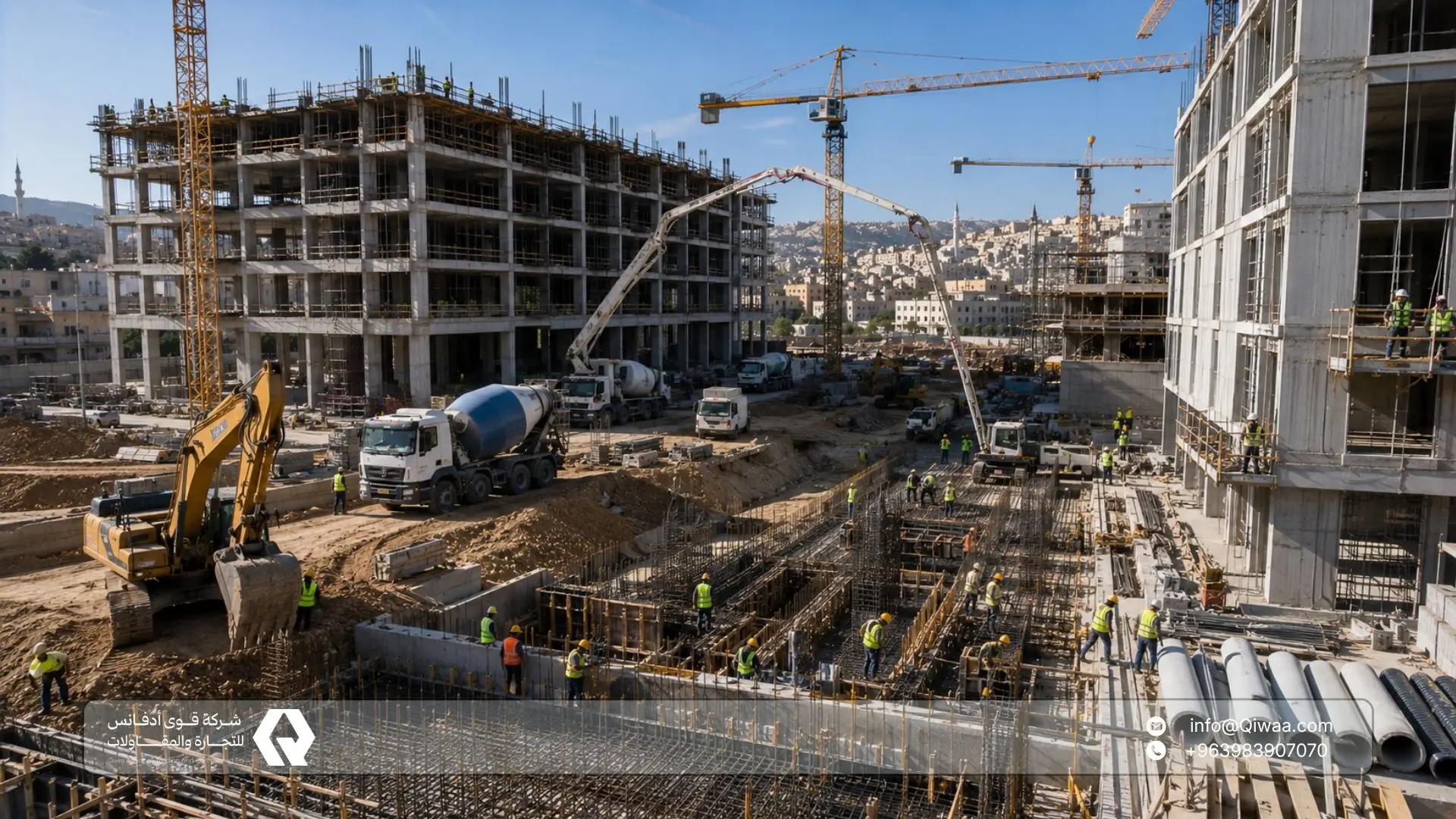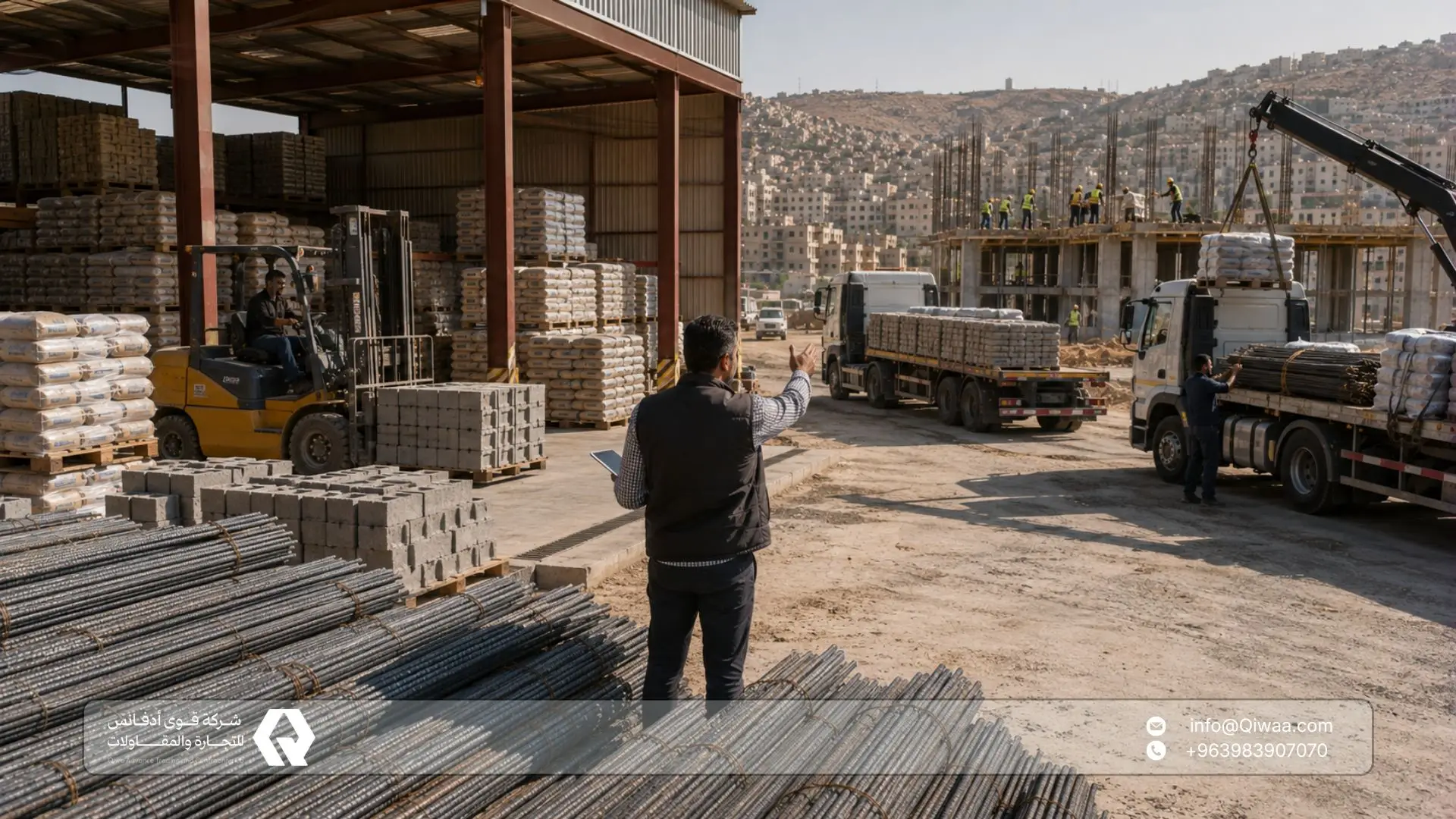


The steel price in Syria published in a market update is not necessarily the price a contractor will pay. A quoted price per ton may apply to a specific rebar grade or diameter, warehouse stock, or delivery to a particular location. With rebar, structural steel, and industrial steel priced differently, relying on an unverified figure can lead to inaccurate material budgets and unexpected purchasing costs.
Rather than listing prices that may change before you place an order, this guide explains how to verify the rebar price per ton in Syria, calculate the steel price per kg, and determine the cost of steel required for your project. You’ll also learn how to compare supplier quotations, check technical specifications and delivery terms, and prepare the information needed to request a project-specific quotation through Qiwaa Trading.
Why Is there no single steel price in Syria today?
The steel price in Syria can differ between Damascus, Aleppo, and other governorates, even on the same day. Each supplier operates under different sourcing, stock, and distribution conditions, making it difficult to establish one price that applies to every type of steel or project location.
The main reasons for these differences are:
- Steel type and specifications: Rebar, structural sections, and steel plates serve different purposes and are priced accordingly. Even within rebar, prices can vary by grade, diameter, and origin.
- Local availability: A supplier with the required steel in stock may offer different pricing from one who needs to source it from another location or arrange a new shipment.
- Geographic and transport costs: The distance between the supply point and the construction site affects the delivered price, particularly for projects outside major distribution centers.
- Pricing and delivery terms: A price quoted ex-warehouse may differ from one that includes delivery. Order quantity, payment conditions, and quotation validity can also influence the amount offered.
These differences explain why two published figures may not represent the same purchase conditions. Before treating a quoted steel price as a market reference, establish which product, location, and supply terms it represents.
What types of steel are Used in construction projects in Syria?
The type of steel required for a project determines which specifications and pricing units matter. Construction projects in Syria commonly use the following steel products, each with different applications and cost considerations:
Rebar
Reinforcing steel (rebar) is used in reinforced concrete foundations, columns, beams, slabs, and walls. Its grade, diameter, and applicable technical standard must match the approved structural drawings.
When checking the rebar price per ton in Syria, confirm which grades and diameters the quotation covers. Different bar sizes may have different availability and pricing, so a general price for construction steel may not represent the exact reinforcement required.
Industrial and structural steel
This category includes steel beams, columns, channels, hollow sections, and plates used in warehouses, industrial buildings, equipment supports, and steel-framed structures.
Unlike rebar, these products may be priced by weight, section, length, or individual component. Their total cost also depends on whether the requirement covers raw steel only or includes fabrication work such as cutting, drilling, welding, and protective coatings.
Merchant and light steel
Merchant steel products include flat bars, round and square bars, angles, and other relatively small steel sections used in gates, railings, brackets, secondary frames, and general fabrication.
Their prices depend on the profile, dimensions, steel grade, and whether additional processing is required. Some merchant steel products may be suitable for structural applications when specified and approved by the responsible engineer, but they must not be treated as interchangeable with reinforcing steel.
These distinctions help establish the correct product and pricing basis before comparing the cost of steel for a construction project.
How steel price changes affect construction costs in Syria
Changes in the steel price in Syria can have a direct impact on construction budgets, particularly in projects that require substantial quantities of rebar or structural steel. However, the financial impact depends on how much steel the project needs, how much has already been purchased, and the price assumed in the original cost estimate.
To assess how a steel price change affects your project, focus on three factors:
- Steel quantities still to be purchased: Use the project’s approved bill of quantities (BOQ) to identify the remaining tonnage. Steel already purchased at a fixed price is generally unaffected by subsequent market changes.
- Difference between budgeted and current prices: Compare the original unit rate with a verified quotation for the same steel specifications and delivery conditions. The difference shows how much the remaining material budget may increase or decrease.
- Impact on the construction budget: Review the additional steel expenditure alongside other project costs. A rise in steel prices does not necessarily mean that labor, concrete, equipment, and other construction expenses will increase by the same percentage.
The potential effect can be estimated using:
Steel cost variation = (Current price per ton − Budgeted price per ton) × Remaining quantity in tons
For example, if a project still requires 40 tons of rebar and the verified price increases by USD 25 per ton, the estimated additional material cost would be USD 1,000. These figures are illustrative, not current steel market prices in Syria.
For contractors and project owners, tracking steel prices is therefore useful for identifying potential budget changes before purchasing decisions are finalized. The important measure is not the market price movement alone, but how that movement affects the steel quantities and costs remaining in the project.
See also: Building Materials in Syria 2026: How to Choose Materials and Read Prices by City
How to check the steel price per ton in Syria in USD
When checking the steel price per ton in Syria, first establish what the quoted amount represents. A price in US dollars may refer to steel available at a local warehouse, an imported shipment, or material delivered directly to a construction site. These figures cannot be compared accurately unless they cover the same product and supply conditions.
Steel is commonly priced in USD per metric tonne (1,000 kg), but some products are quoted by the piece, sheet, or linear meter. Understanding the pricing unit is essential before calculating an equivalent price per tonne.
How steel pricing units differ by product type
Different steel products require different pricing information. The following table shows how to interpret supplier quotations and establish a consistent price per tonne.
| Steel product | Common pricing unit | How to interpret or compare the price |
|---|---|---|
| Rebar | Metric tonne | Check the rebar price per ton in Syria for the specified grade, diameter, and origin. |
| Steel plates | Tonne or sheet | For sheet quotations, use the confirmed weight of the sheet to calculate the equivalent price per tonne. |
| Structural steel sections | Tonne or linear meter | For length-based quotations, calculate the tonne equivalent using the specified section’s weight per meter. |
| Industrial and fabricated steel | Tonne or finished component | Distinguish the raw steel price from any additional fabrication, cutting, welding, or coating costs. |
| Merchant and light steel | Kilogram, length, or piece | Convert the quoted amount to a weight-based price using the confirmed product weight. |
For imported steel, the pricing basis matters as much as the product type. A supplier may quote steel at its origin, under international shipping terms, or after it has reached a warehouse in Syria. Import-related costs must be accounted for before comparing the quotation with locally available stock.
International references can provide additional context. The London Metal Exchange’s LME Steel Rebar FOB Turkey (Platts) is a futures-market benchmark linked to Turkish rebar exports, not a selling price for steel in Syria. It can help explain international market movements, but it cannot replace a current local quotation.
The purpose of standardizing prices is to compare equivalent steel products on the same USD-per-tonne basis, without confusing the material’s unit price with fabrication or delivery charges.
Ex-warehouse vs. delivered-to-site steel prices
An ex-warehouse steel price generally refers to material available for collection from the supplier’s warehouse. The buyer may need to arrange transport and pay additional handling charges, depending on the quotation.
A delivered-to-site price includes transporting the steel to the agreed project location. However, unloading, waiting time, and other site-related charges are not necessarily included unless the supplier confirms them.
To compare both pricing arrangements, calculate the equivalent delivered cost:
Delivered steel cost per tonne = (Steel cost + Additional transport and handling charges) ÷ Delivered quantity in tonnes
Only add charges that are not already included in the supplier’s quotation.
For example, a warehouse quotation in Damascus may initially appear cheaper than an offer delivered to a construction site in another governorate. Once freight and the applicable handling costs are included, the difference may narrow or reverse.
For contractors and procurement teams, the most useful figure is the confirmed delivered price per tonne for the required steel, with the responsibilities for transport and unloading clearly established before placing an order.
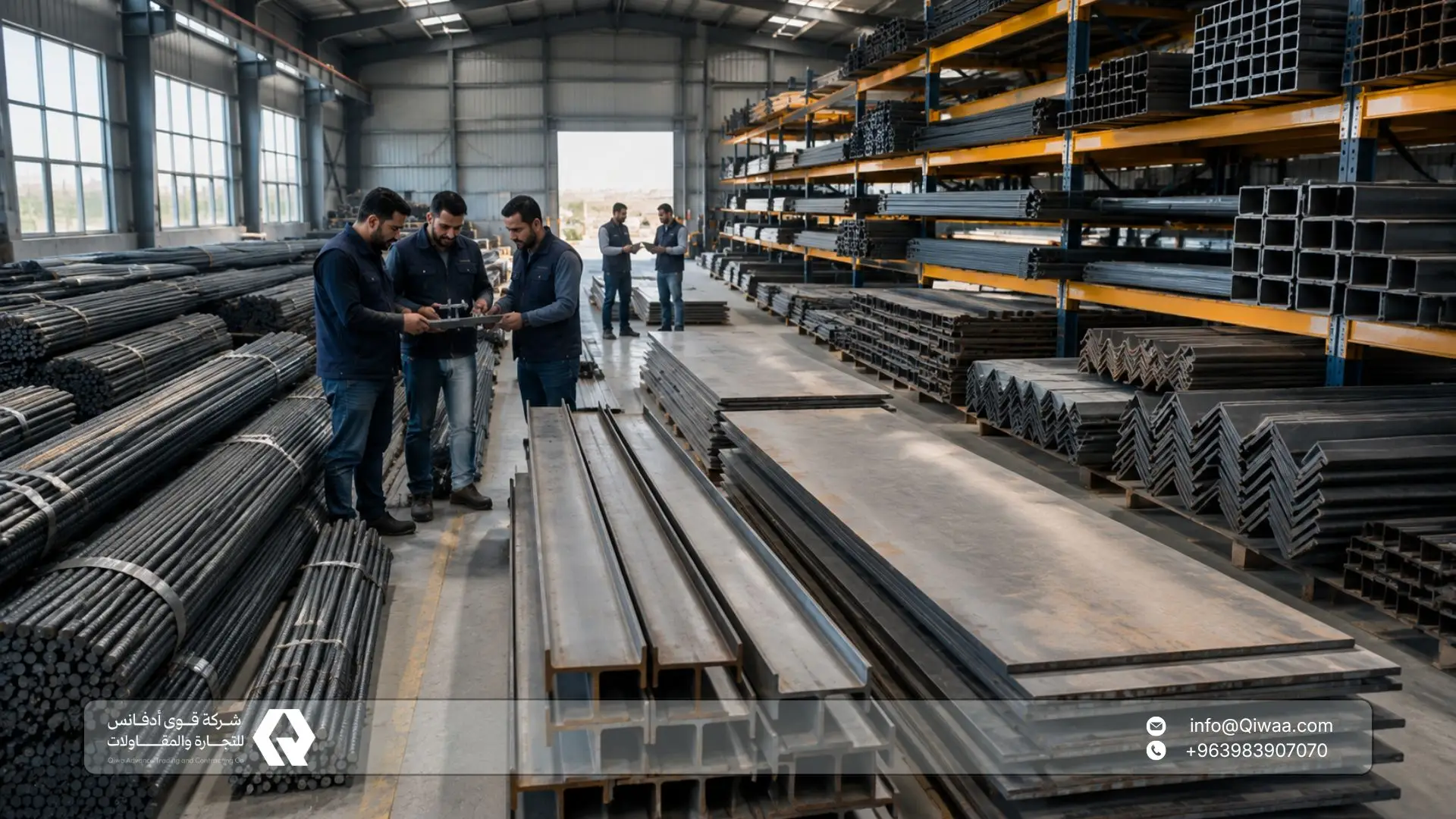
How to calculate steel price per Kg in Syria
The steel price per kg in Syria can be calculated from a supplier’s price per metric tonne, provided both quotations refer to the same steel product and pricing conditions. This conversion is useful when checking smaller quantities of rebar, industrial steel, or other steel products sold by weight.
For steel quoted in US dollars per metric tonne, use:
Steel price per kg (USD) = Steel price per tonne (USD) ÷ 1,000
For example, if a supplier quotes USD 800 per tonne, the equivalent price is USD 0.80 per kilogram. This is an illustrative calculation, not a current market price in Syria.
To convert the result into Syrian pounds, apply the exchange rate agreed for the quotation:
Steel price per kg (new SYP) = Steel price per kg (USD) × Agreed exchange rate (new SYP per USD)
Currency denomination matters when checking older price records. Under Syria’s currency redenomination introduced in January 2026, 100 old Syrian pounds equal one new Syrian pound. Make sure the quotation and exchange rate use consistent denominations before calculating the price.
If a steel section or plate is quoted per piece or linear meter, first establish its corresponding weight in kilograms. You can then divide the quoted price by that weight to obtain an equivalent price per kilogram.
For fabricated steel, check whether the quotation includes cutting, welding, coating, or other processing costs. A kilogram of fabricated steel should not be compared directly with a kilogram of raw steel without accounting for those services.
The resulting price per kilogram provides a consistent unit for calculation, but it represents only the costs included in the supplier’s quotation. Any excluded transport, handling, or fabrication charges must be considered separately.
How to calculate steel price per Kg in Syria
The steel price per kg in Syria can be calculated from a supplier’s quotation per metric tonne. Since one metric tonne equals 1,000 kilograms, the conversion is straightforward, provided both prices refer to the same steel product and purchasing conditions.
For a quotation in US dollars, use:
Steel price per kg (USD) = Steel price per tonne (USD) ÷ 1,000
For example, if a supplier quotes USD 800 per tonne, the equivalent price is USD 0.80 per kilogram. This is an illustrative calculation, not a current market price in Syria.
To calculate the equivalent price in Syrian pounds:
Steel price per kg (SYP) = Steel price per kg (USD) × Agreed exchange rate (SYP per USD)
Before using this conversion, confirm the exchange rate specified in the quotation, its applicable date, the payment currency, and whether the price may be adjusted before settlement. Since Syria introduced its new currency in January 2026, quotations must also identify the denomination used. Under Decree No. 293 of 2025, 100 old Syrian pounds equal one new Syrian pound.
For industrial steel, the pricing basis also matters. Steel sections, plates, and fabricated components may be quoted by weight, length, or individual piece. When a product is priced per piece, its equivalent kilogram price is calculated by dividing the quoted amount by the confirmed weight of that piece.
Finally, distinguish between raw steel and fabricated steel. Cutting, welding, coating, and other processing services may be included in the quoted kilogram price, making a direct comparison with untreated steel misleading.
The calculated price per kilogram provides a consistent basis for comparison, but only when the material specifications and included services are equivalent.
How to compare steel prices in Syria between 2025 and 2026
Was the steel price per ton in Syria higher in 2026 than in 2025? There is no reliable single answer for every steel product and governorate without comparable historical price records. Prices may have changed differently across suppliers, locations, and steel categories, so a general market trend cannot be established from one published quotation.
To make a meaningful year-on-year comparison, follow these steps:
- Compare the same steel product: Use prices for equivalent rebar grades and diameters, or matching structural steel specifications. A change in product type can distort the comparison.
- Match the location and pricing basis: Compare quotations from the same market area under equivalent delivery conditions, preferably from the same supplier or a consistent market source.
- Standardize the currency: Compare prices in USD per metric tonne where reliable records are available. If using Syrian pounds, account for the currency redenomination introduced in January 2026, when 100 old Syrian pounds became equivalent to one new Syrian pound.
- Compare equivalent dates: Use prices from similar periods in both years, recording the source and publication date. Avoid comparing an isolated market peak with an unrelated low.
Once the prices are comparable, calculate the year-on-year difference:
Steel price change (%) = [(2026 price − 2025 price) ÷ 2025 price] × 100
For example, if comparable quotations show USD 600 per tonne in 2025 and USD 660 in 2026, the increase is 10%. These figures are hypothetical and do not represent actual Syrian market prices.
This approach helps contractors and project owners understand how steel costs have changed under comparable conditions. A verified historical increase or decrease describes the selected market and period, not necessarily the price movement across Syria as a whole.
Learn more: Syria Reconstruction Projects 2026: How to Read Opportunities and Costs Before Investing
How to buy steel in Syria at the best price without compromising quality
Finding the best steel price in Syria means securing a competitive offer for steel that meets the project’s technical requirements and delivery schedule. A lower price per tonne may offer little savings if the material fails inspection, arrives in insufficient quantities, or delays scheduled construction work.
A reliable purchasing decision therefore starts with a precise quotation request, followed by an assessment of the supplier’s ability to meet its terms.
Information required for an accurate steel quotation
A general request for the price of a tonne of steel leaves too much room for assumptions. To obtain comparable quotations, the procurement team should prepare a request based on the project’s approved drawings, specifications, and required quantities.
Include the following information:
- Steel type and technical specifications: Specify whether the requirement covers rebar, structural sections, plates, or other steel products. Include the approved grade, applicable standard, diameters, dimensions, and lengths as relevant.
- Required quantities: Provide the quantity for each diameter or steel section, preferably using the bill of quantities (BOQ) or bar bending schedule where available.
- Delivery schedule: State the quantities needed at each construction stage and whether deliveries should be completed in one shipment or several batches.
- Project location and delivery conditions: Identify the site, access restrictions, and whether the requested quotation should include transport, loading, and unloading.
- Pricing and payment requirements: Specify the preferred quotation currency, pricing unit, payment terms, and exchange-rate arrangements where currency conversion applies.
- Quality documentation: Identify any material certificates, test reports, origin information, or other documents required by the project’s technical specifications.
Sending the same complete request to shortlisted suppliers reduces uncertainty and provides a consistent basis for evaluating their offers.
Criteria for comparing steel suppliers and quotations
Once quotations are received, the comparison should focus on technical compliance, actual supply capability, and the total cost of the offer. A supplier quoting a lower unit price is not necessarily offering better value if important costs or obligations are excluded.
Use the following criteria when evaluating steel suppliers in Syria:
| Comparison criterion | What to evaluate | Warning sign |
|---|---|---|
| Technical compliance | The offered grade, diameter, section, and standard match the approved requirements | Unspecified material or unapproved substitutions |
| Total quoted cost | The comparable price includes all agreed material, transport, and handling charges | A low unit price with significant unspecified costs |
| Material availability | The supplier can confirm the required quantities and expected readiness for dispatch | An attractive price without confirmed stock or sourcing arrangements |
| Delivery reliability | The proposed delivery dates align with the construction schedule | Unclear lead times or unsupported delivery commitments |
| Quality and traceability | Required certificates and supporting material documentation can be provided | Missing or unverifiable documentation where required |
| Commercial terms | Payment schedule, currency, exchange-rate provisions, and quotation validity are clearly stated | Open-ended price adjustments or unclear payment obligations |
| Approved alternatives | Any proposed alternative is identified separately and submitted for engineering approval | Changes to steel specifications without approval |
Evaluate technical compliance first, then compare the total cost of offers that meet the project’s requirements. The project engineer or consultant should review proposed technical substitutions, while the procurement team assesses commercial terms and supply reliability.
The preferred offer is the one that provides the required steel at a competitive, clearly defined cost, with sufficient assurance that the material can be delivered and accepted according to the project’s schedule and specifications.
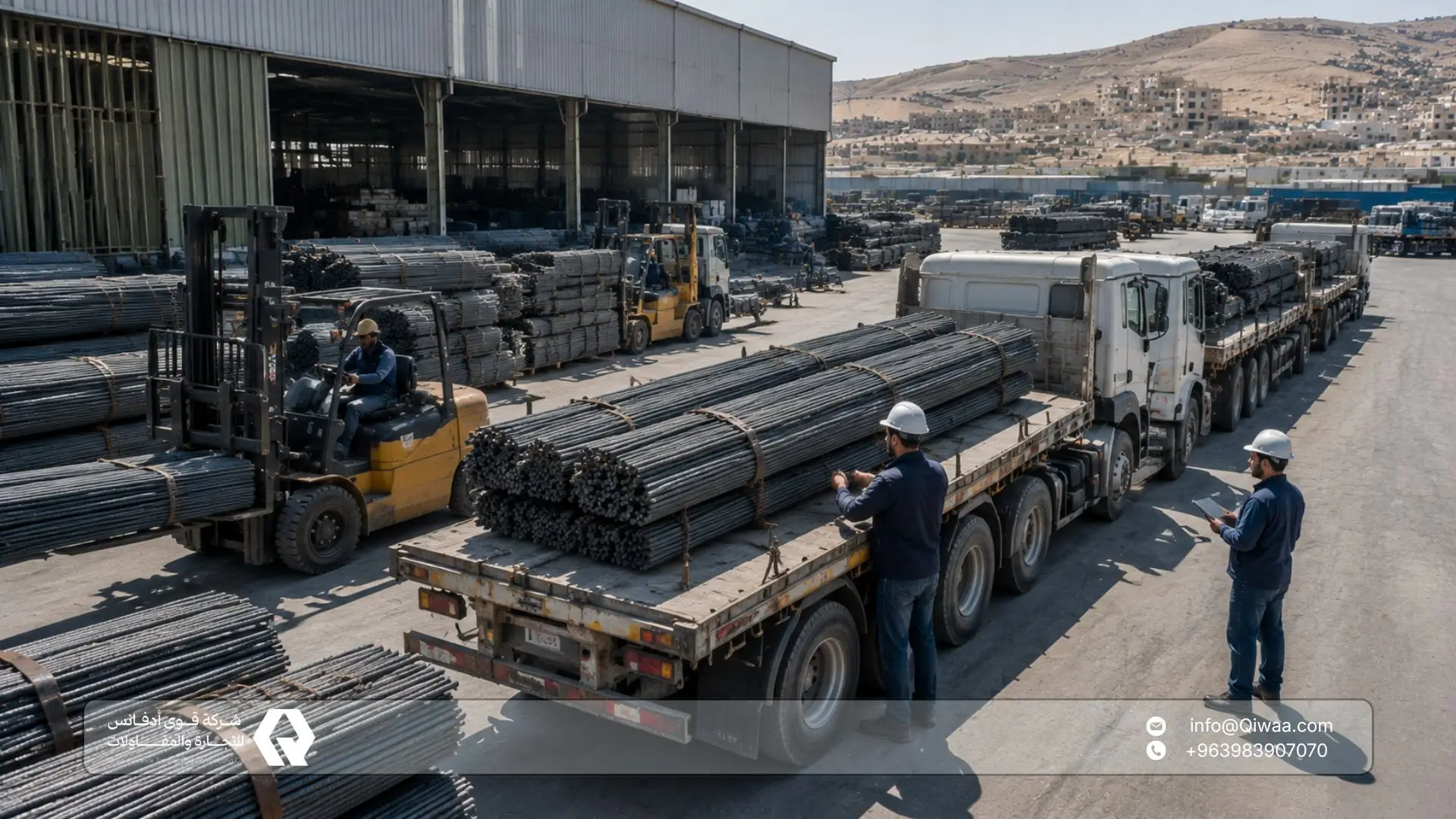
Common mistakes in steel procurement and site delivery
A competitive steel price in Syria does not guarantee a cost-effective purchase. Even after selecting a qualified supplier, mistakes in ordering, delivery coordination, and site handling can lead to material shortages, additional costs, or construction delays.
The most common mistakes to avoid are:
- Ordering from outdated structural drawings: Using superseded drawings or incomplete bar bending schedules can result in incorrect diameters, missing quantities, or unnecessary material. Confirm the latest approved documents before issuing the purchase order.
- Scheduling deliveries without considering construction stages: Receiving too much steel too early creates storage pressure, while late deliveries can interrupt reinforcement installation and concrete pours. Match deliveries to the approved execution schedule.
- Failing to prepare the site for unloading: Limited vehicle access, unavailable lifting equipment, or insufficient unloading space can cause delays and additional handling costs. Confirm site readiness before dispatch.
- Accepting deliveries without checking the received material: Reconcile the delivery note with the purchase order, verify the quantities and steel identification, and review the required documentation before accepting the shipment.
- Poor storage and material identification: Placing steel directly on unsuitable ground or mixing different grades and diameters can complicate handling, traceability, and installation. Store materials on suitable supports and keep them clearly identified.
- Making unapproved substitutions during execution: Replacing specified reinforcement with another diameter, grade, or steel product without engineering approval can compromise compliance with the structural design.
These risks extend beyond the purchase price. The procurement team should coordinate deliveries and material records, while the site and engineering teams verify receipt, storage, and technical compliance according to the project’s approved procedures.
Controlling these steps helps ensure that the steel purchased at an agreed price is delivered, accepted, and available when construction activities require it.
How to calculate steel quantities for a building project
The amount of steel required for a building depends on its structural design, loads, dimensions, and construction requirements. For an approved design, quantities should be calculated from the structural drawings and reinforcement schedules rather than estimated using a general steel-per-square-meter ratio.
The calculation process involves the following steps:
- Review the approved structural documents: Use the latest structural drawings, bar bending schedules (BBS), bill of quantities (BOQ), and steel specifications. The responsible engineer must verify that the quantities reflect the approved design.
- Identify quantities by steel type: Separate reinforcing bars by diameter and grade, and structural steel by section or component type. This allows each material to be measured and priced correctly.
- Calculate the reinforcement weight: For each bar type, multiply the number of bars by their scheduled cutting length and the applicable weight per meter. The cutting length must account for the bends, hooks, and laps specified in the approved schedules.
- Calculate the total steel requirement: Add the calculated weights for the required reinforcement and any separately scheduled structural steel. Convert kilograms into metric tonnes for comparison with supplier quotations.
- Determine the purchase quantity: Apply the approved allowance for cutting waste and other relevant losses without double-counting quantities already included in the schedules. Deduct suitable steel already available in project stock.
For reinforcing steel, the basic calculation is:
Rebar weight (kg) = Number of bars × Cutting length (m) × Unit weight (kg/m)
For example, 80 reinforcing bars, each 6 meters long and weighing 0.888 kg per meter, have a total calculated weight of approximately 426 kg (0.426 tonnes). This is an illustrative quantity calculation, not a substitute for an approved reinforcement schedule.
Once the required tonnage is established, the procurement team can use the rebar price per ton in Syria to estimate the material cost and organize purchasing quantities according to the construction schedule. The project manager determines purchasing priorities, while the engineering and procurement teams coordinate quantities and deliveries to avoid unnecessary stock accumulation or material shortages.
How Are steel and cement prices in Syria related today?
Contractors and project owners often monitor steel and cement prices in Syria together because both affect the cost of reinforced concrete construction. However, their prices do not necessarily move in the same direction or by the same percentage. A rise in the steel price in Syria increases reinforcement costs, while changes in cement prices affect the cost of concrete production.
To assess their impact on a project, the cost and procurement teams should calculate each material separately:
- Reinforcing steel: Multiply the remaining approved reinforcement quantity by the current rebar price per ton in Syria, using a quotation that matches the project’s specifications.
- Cement for on-site concrete production: Calculate the cement requirement from the approved concrete mix and apply the supplier’s current price.
- Ready-mix concrete: Use the supplier’s quotation per cubic meter, which already includes cement and other mix components, rather than counting cement as a separate material cost.
Combining these figures with the other structural work costs provides a more reliable budget estimate. The key is to assess steel and concrete costs independently, without assuming that a price change in one material predicts the price movement of the other.
How Qiwaa Advance helps you source steel in Syria
At Qiwaa Advance, we support contractors, developers, and project owners in sourcing steel for construction, reconstruction, and infrastructure projects across Syria. We work from the project’s technical requirements, quantities, and delivery schedule to identify suitable supply options, rather than relying on general market prices that may not reflect the steel required.
Through our Qiwaa Trading division, we source construction and industrial materials through our network of manufacturers and suppliers. For steel requirements, we help review the specified grades, rebar diameters, structural sections, and quantities, then coordinate sourcing and supply arrangements according to the project’s needs. This allows pricing discussions to be based on defined materials and delivery conditions.
To request a steel quotation, share your approved specifications or bill of quantities (BOQ), required diameters or sections, quantities, project location, and expected delivery dates. Our team can review these details and discuss available sourcing options and commercial terms before an order is confirmed.
Contact Qiwaa Advance to discuss your steel requirements and request a project-specific supply quotation.
FAQs about the steel price in Syria
What is the price of a ton of steel in Syria today in US dollars?
There is no single steel price in Syria that applies to every product or location. The current price per tonne depends on the steel grade, diameter or section, availability, and delivery conditions. For an accurate figure in USD, request a dated quotation from a supplier serving your project location.
What is the price per kilogram of industrial steel in Syria today?
The steel price per kg in Syria can be calculated by dividing the quoted price per metric tonne by 1,000. For industrial steel, confirm whether the quotation covers raw material only or includes fabrication, cutting, coating, or other processing costs.
How do I calculate the price per ton of steel in Syrian pounds?
Multiply the confirmed USD price per tonne by the exchange rate agreed with the supplier. Check the rate’s applicable date and whether the quotation uses the new Syrian pound introduced in 2026. The resulting amount reflects the costs included in the original quotation.
How can I compare steel prices in Syria between 2025 and 2026?
Compare dated quotations for the same steel grade, diameter, quantity unit, and delivery basis. Use a consistent currency, accounting for Syria’s 2026 currency redenomination when comparing prices in SYP. Without comparable records, a reliable nationwide increase or decrease cannot be established.
How do I calculate the steel cost for a complete building project in Syria?
Start with the approved structural drawings, bar bending schedules, and bill of quantities (BOQ). Multiply the required tonnage for each steel specification by its confirmed unit price, then include any additional costs and approved waste allowances not already accounted for.
Should I buy steel in one batch or in phases?
The decision depends on the construction schedule, material availability, cash flow, and storage capacity. A single order may secure agreed commercial terms, while phased deliveries can reduce storage pressure and better align supply with construction activities.
What is the difference between rebar and industrial steel?
Rebar reinforces concrete elements such as foundations, columns, beams, and slabs. Industrial steel is a broader term covering products such as plates, structural sections, and fabricated components. Each must meet the applicable technical requirements and cannot be substituted without engineering approval.
Can international steel prices be used to estimate steel prices in Syria?
International steel benchmarks can indicate broader market movements, but they do not represent confirmed selling prices in Syria. Import costs, local availability, and delivery arrangements affect the amount a buyer ultimately pays. Use international indicators for context and local supplier quotations for purchasing decisions.