

Syria reconstruction projects in 2026 span housing, energy, water, transport, and industrial infrastructure, but not every announced opportunity is ready for investment. The World Bank estimates the cost of rebuilding Syria’s damaged physical assets at approximately USD 216 billion. For investors and project owners, the challenge is identifying which opportunities have clear ownership, viable financing, and a realistic path to construction and operation.
This guide explores the main sectors for reconstruction investment in Syria, explains how to assess project costs, funding, and readiness, and outlines what to verify before making a financial commitment. You’ll also learn how the Rebuilding Syria platform can support your initial research and where Qiwaa Advance’s contracting and material supply capabilities may fit your project’s requirements.
Syria reconstruction projects and its market size
Syria reconstruction projects extend beyond repairing damaged buildings. They involve restoring essential services, rehabilitating infrastructure, and developing facilities needed to support housing, businesses, and local production. This creates demand across construction, engineering, and material supply, with different technical and operational requirements for each sector.
What do reconstruction projects in Syria cover?
Reconstruction projects in Syria may involve rehabilitating existing assets, replacing severely damaged structures, or developing new facilities that support economic recovery.
The main sectors include:
- Housing and urban development: Repairing damaged homes, strengthening existing buildings, and developing residential projects with the necessary supporting services.
- Water and energy infrastructure: Restoring drinking water networks, wastewater systems, power distribution, and essential utility facilities.
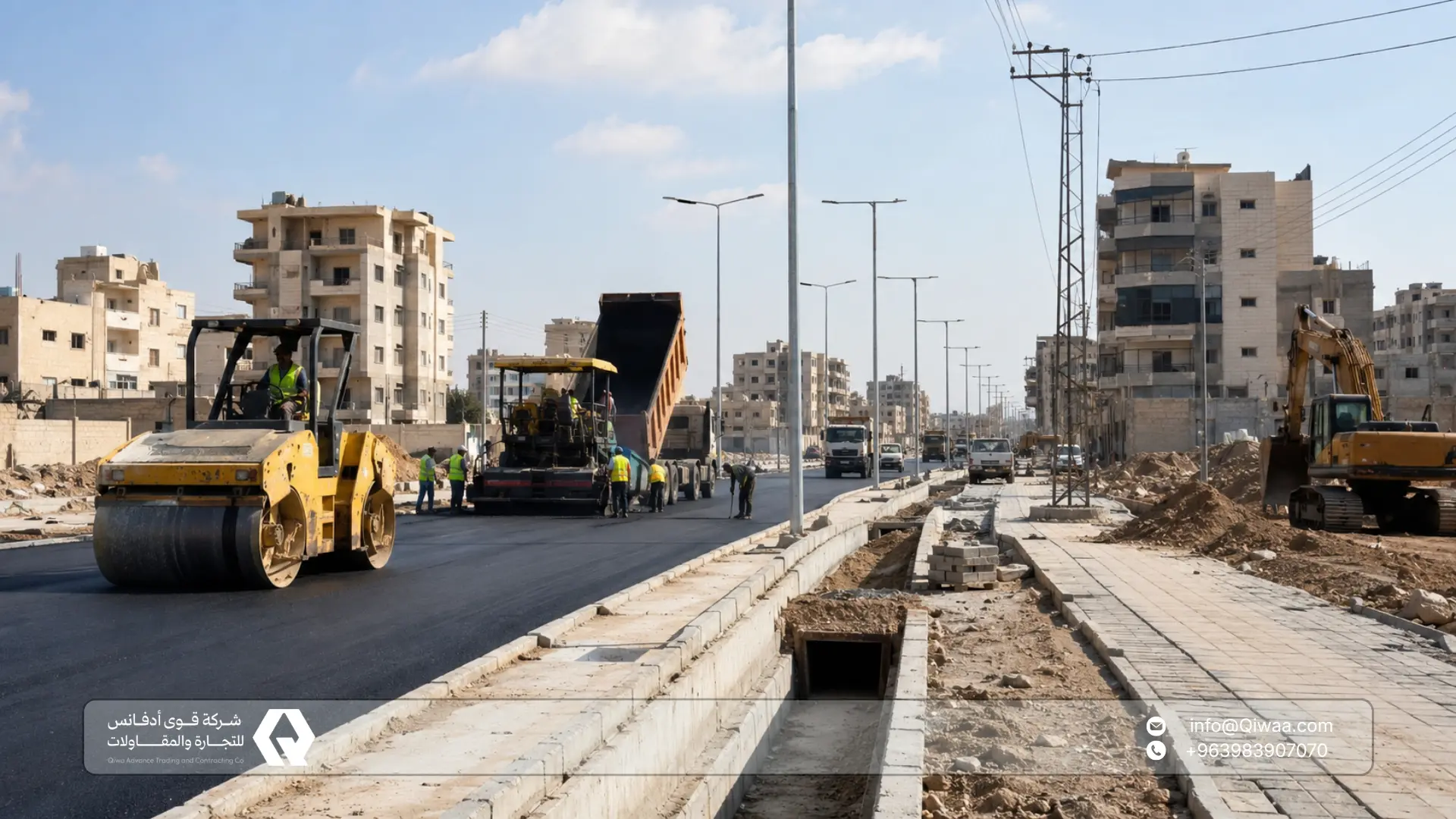
- Transport and logistics: Rehabilitating roads and bridges and developing transport facilities, ports, and logistics infrastructure.
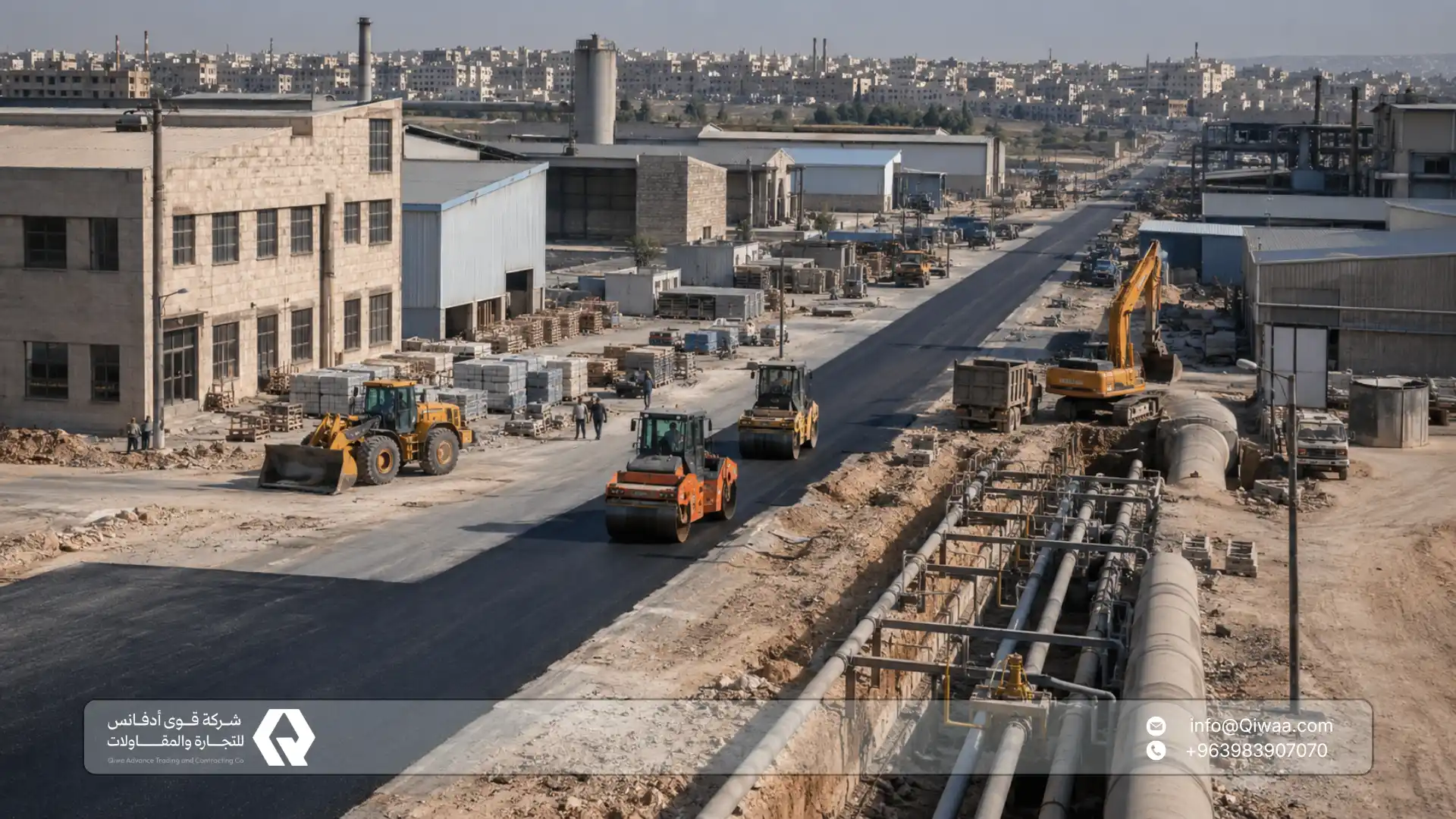
- Industrial and commercial facilities: Restoring factories, industrial zones, warehouses, markets, and commercial buildings to support business activity.
- Public services: Rehabilitating schools, hospitals, and other facilities required for essential community services.
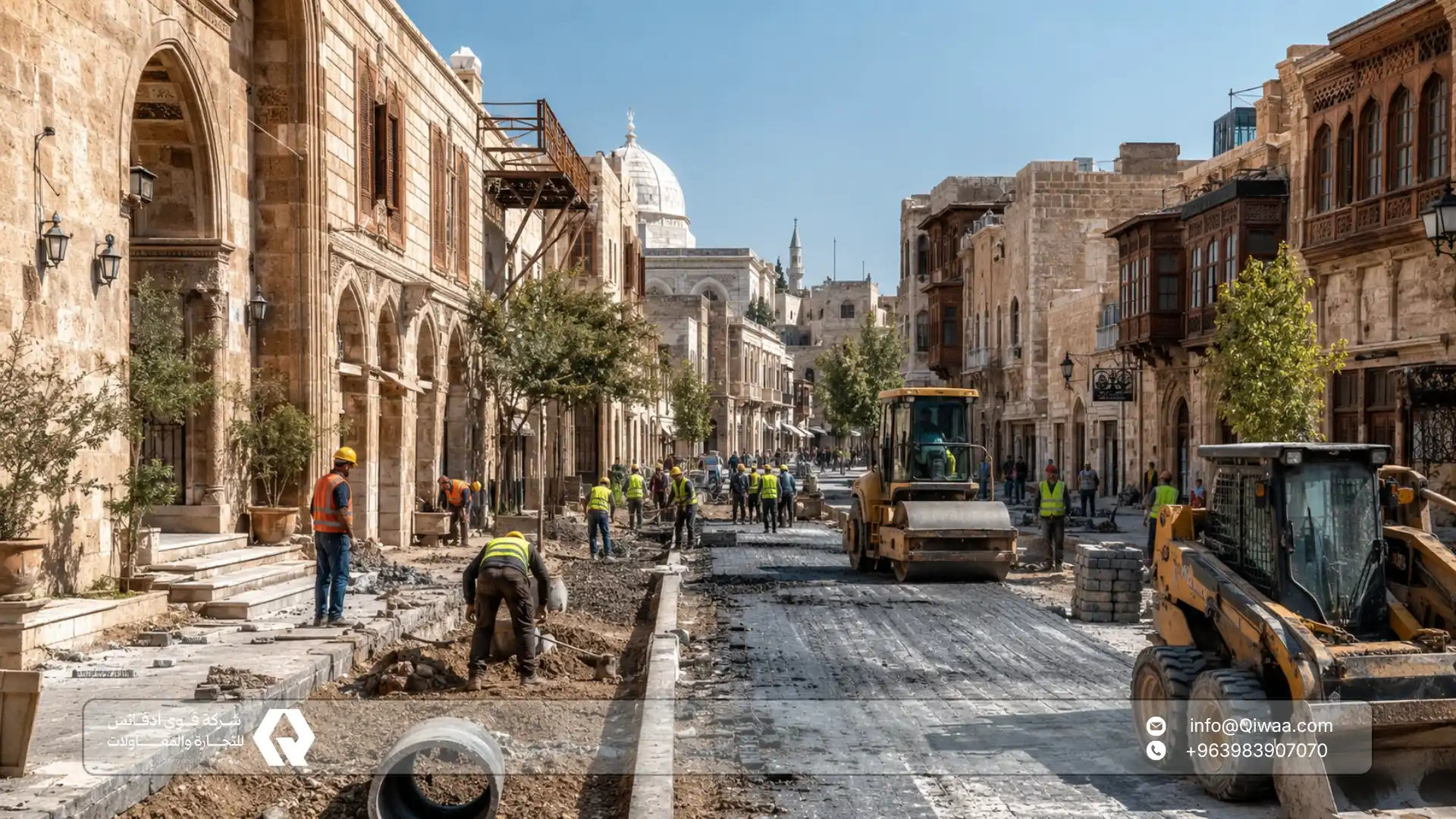
- Heritage and tourism: Restoring historic buildings, traditional markets, hotels, and tourism facilities while considering their structural and conservation requirements.
Site assessments, debris removal, and material recycling may be necessary before construction begins, depending on the condition of the asset.
The United Nations Development Programme (UNDP) emphasizes the importance of rebuilding essential infrastructure and restoring productive activity to support Syria’s economic recovery.
For investors, the key question is whether the completed asset can serve its intended purpose. A rehabilitated factory, for example, still depends on reliable electricity, transport access, and operating infrastructure to resume production.
How Much Will Syria’s Reconstruction Cost, and Why Do Estimates Differ?
The World Bank’s 2025 assessment places Syria’s reconstruction costs at approximately USD 216 billion, with estimates ranging from USD 140 billion to USD 345 billion. These figures cover the rebuilding of damaged physical assets, including residential buildings, non-residential facilities, and infrastructure.
However, the estimated cost of rebuilding Syria depends on what is included in the calculation. For investors comparing reconstruction opportunities, three cost categories are particularly important:
- Physical reconstruction: Repairing or replacing damaged buildings, utility networks, roads, and other physical assets. This is the scope covered by the World Bank’s estimate.
- Service and economic recovery: Restoring the operational capacity of facilities and essential services, including needs that extend beyond repairing physical structures.
- Modernization and new development: Expanding infrastructure capacity, improving existing systems, or developing facilities beyond their pre-conflict condition.
These categories explain why broader recovery and development estimates may differ from physical reconstruction assessments. They should not be treated as directly comparable figures without checking their scope and methodology.
For an individual investment, national estimates provide market context rather than a project budget. Actual costs depend on the site’s condition, engineering requirements, material availability, utility connections, construction schedule, and financing arrangements.
How can reconstruction projects be financed?
Syria reconstruction funding can come from development grants, public investment, private capital, and project-specific financing arrangements. The appropriate model depends on the project’s ownership, revenue potential, delivery structure, and financial requirements.
International development financing is already supporting selected recovery projects. In June 2025, the World Bank approved a USD 146 million grant to rehabilitate electricity infrastructure. This was followed in April 2026 by USD 225 million in approved grant financing for water and health services.
For reconstruction investment in Syria, the main financing options to consider include:
- Development grants and public funding: Financing allocated to eligible infrastructure and public-service projects through development institutions or government programs.
- Private equity and developer capital: Investment from businesses, property developers, and individual investors, including Syrians abroad, in projects with defined commercial objectives.
- Public-private partnerships (PPPs): Contractual arrangements that allocate investment, delivery, operational responsibilities, and risks between public authorities and private partners.
- Project finance and commercial lending: Financing structures supported by project revenues, assets, or other agreed security arrangements, subject to lender requirements and availability.
- Phased and supplier-supported financing: Staged investment commitments or negotiated supplier credit arrangements that align expenditure with procurement and construction milestones.
An approved grant, a signed investment agreement, and a memorandum of understanding do not represent the same level of financial commitment. Before proceeding with an opportunity, establish who is providing the funding, what conditions remain outstanding, and whether sufficient financing is available to complete the proposed scope.
For investors, funding readiness matters as much as projected demand. A promising reconstruction project still needs a credible financing structure to move from planning to execution.
Where are the main opportunities in Syria reconstruction projects for investors?
Syria reconstruction projects span sectors with substantial needs for restored infrastructure, housing, and productive facilities. However, demand alone does not make a project financially viable. For investors, the more important question is whether a specific opportunity has a clear owner, an identifiable funding or revenue model, and a realistic path to operation.
The following comparison highlights potential Syria reconstruction investment opportunities and the factors worth examining in each sector:
| Sector | Potential Projects | Investment Drivers | What to Verify |
|---|---|---|---|
| Housing | Building rehabilitation, residential developments, and serviced apartments | Demand for housing and restoration of damaged properties | Ownership, utility access, construction costs, and purchasing power |
| Water and wastewater | Distribution networks, pumping stations, and treatment facilities | Restoration of essential water and sanitation services | Project authority, available funding, operating costs, and maintenance responsibilities |
| Electricity | Power generation, grid rehabilitation, and solar installations | Need for reliable electricity across residential and productive sectors | Grid access, fuel or energy supply, financing, and revenue arrangements |
| Industry | Factory rehabilitation, warehouses, and industrial zones | Recovery of production, storage, and industrial activity | Energy availability, raw materials, market demand, and operating costs |
| Transport | Road rehabilitation, airports, and transport infrastructure | Improved connectivity and movement of people and goods | Project approvals, funding, expected traffic, and network connections |
| Ports and logistics | Port terminals, cargo facilities, warehouses, and logistics hubs | Import, export, and freight-handling requirements | Concession terms, cargo volumes, operating rights, and inland connections |
| Tourism and hospitality | Hotel rehabilitation, tourism facilities, and heritage accommodation | Potential recovery in tourism and hospitality activity | Visitor demand, location, investment costs, and operating feasibility |
| Retail and commercial property | Markets, shopping centers, offices, and distribution facilities | Recovery of commercial activity and demand for usable space | Tenant demand, purchasing power, accessibility, and expected occupancy |
| Building materials | Cement, ready-mix concrete, steel, and pipe production facilities | Demand for materials used in reconstruction and infrastructure projects | Energy costs, production capacity, input supply, and potential customers |
| Heritage restoration | Historic buildings, traditional markets, and adaptive reuse projects | Conservation and productive reuse of culturally significant assets | Structural condition, conservation approvals, permitted use, and project funding |
For reconstruction investment in Syria, the distinction between sector demand and project readiness is essential. Public infrastructure may depend on government budgets, development grants, or approved procurement arrangements, while commercial and industrial developments need a credible source of revenue.
Use this sector overview to narrow your options before examining individual projects, their financial commitments, and the conditions required to bring them into operation.
Learn more: Construction Companies in Syria 2026: How to Choose a Reliable Contractor for Your Project
Where Are the Residential and Commercial Rebuilding Opportunities?
Major cities need a mix of repairs to existing buildings and construction of new units. The opportunities closest to implementation are buildings with clear ownership, nearby services and damage whose repair cost can be estimated.
In Damascus and Rural Damascus, opportunities relate to building rehabilitation, residential projects, commercial development, hospitality and damaged areas. You can explore Damascus reconstruction opportunities in more depth to see how restoration, real estate and hospitality differ within the capital.
Aleppo, meanwhile, combines housing, industry, old markets and warehouses. The guide to Aleppo reconstruction opportunities explains how real estate connects with labor, factories, roads and services.
Commercial projects include:
- Rehabilitating shops and markets
- Developing offices and administrative complexes
- Building malls and service centers
- Fitting out restaurants and hotels
- Building warehouses and distribution centers
- Converting existing buildings to new uses
Do not rely on theoretical demand alone. Study customer footfall, access, parking, expected income and operating costs after handover.
Where are the residential and commercial rebuilding opportunities?
Residential and commercial reconstruction projects in Syria can involve rehabilitating damaged buildings, adapting existing properties for new uses, or developing sites with access to essential infrastructure. For investors, the opportunity depends on whether the completed property can meet actual housing or business demand.
In Damascus and Rural Damascus, potential projects include residential rehabilitation, office and retail refurbishment, and hospitality developments. Existing buildings may offer opportunities for reuse, although structural conditions and restrictions in historic areas can affect the scope and cost of work. Our guide to Damascus reconstruction opportunities explores these investment paths in greater detail.
In Aleppo, opportunities also connect property rehabilitation with industrial and commercial recovery. Projects may involve restoring housing near employment centers, reopening traditional markets, or upgrading commercial spaces that serve local businesses. Explore Aleppo reconstruction opportunities to understand how industrial activity and infrastructure recovery influence property demand.
The main investment approaches include:
- Residential rehabilitation: Repairing existing apartment buildings and housing developments for sale or rental.
- Commercial refurbishment: Restoring shops, offices, traditional markets, and other premises for business use.
- Hospitality and adaptive reuse: Rehabilitating hotels, restaurants, or suitable existing buildings for new commercial uses.
- New property development: Developing residential, retail, or mixed-use properties where demand and supporting infrastructure justify the investment.
The revenue model matters as much as the type of property. Residential sales, commercial rentals, and hospitality operations depend on different customers, occupancy expectations, and operating costs. Understanding these differences helps investors identify which projects merit a more detailed feasibility assessment.
Where are the opportunities in industrial zones and production?
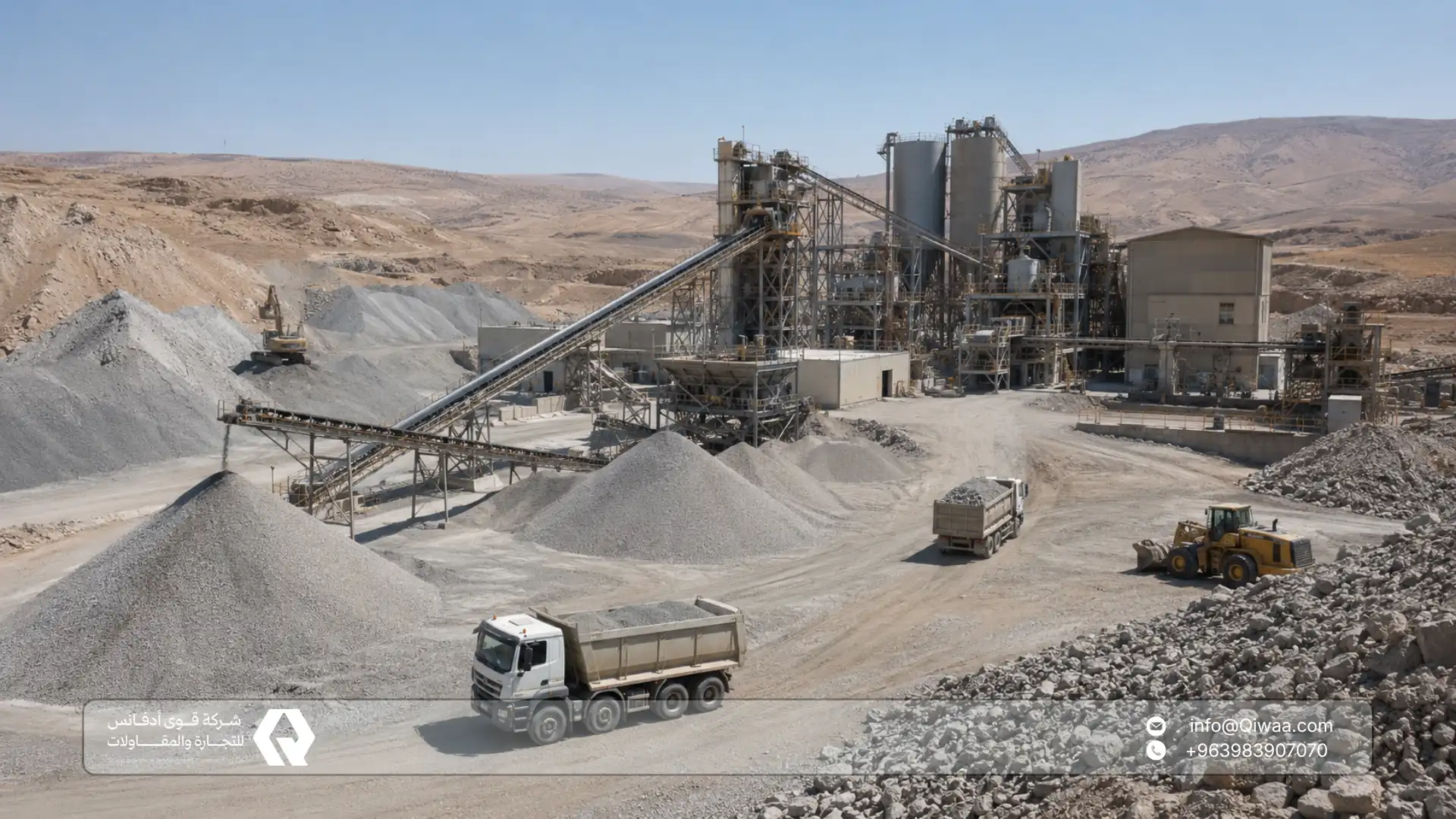
As Syria reconstruction projects move toward implementation, local manufacturing may create investment opportunities in cement, ready-mix concrete, steel, pipes, gypsum, stone, ceramics, and construction chemicals. These industries can support material supply for rebuilding projects, but their viability depends on production costs, reliable inputs, and demand from construction and infrastructure markets.
For investors considering industrial facilities, the site must provide more than space for a factory. Essential requirements include:
- Transport and logistics: Internal roads, loading yards, storage facilities, and access to suppliers and customers.
- Power infrastructure: Reliable electricity supply, substations, and sufficient capacity for production equipment.
- Water and wastewater systems: Industrial water supply, drainage networks, and treatment facilities where required.
- Production facilities: Warehouses, equipment foundations, and buildings designed for the intended manufacturing processes.
- Safety and communications: Fire protection, security systems, and telecommunications infrastructure.
In June 2025, Syria’s Ministry of Economy and Industry approved a new investment framework for industrial cities to encourage domestic and foreign investment and technology transfer. Development and rehabilitation plans have since been reported for several industrial cities, including Adra, Hassia, and Sheikh Najjar.
For reconstruction investment in Syria, securing an industrial plot is only the beginning. Before committing capital, verify utility capacity, applicable permits, raw material availability, transportation costs, and expected demand for the proposed products. These factors determine whether the facility can move from construction to commercially viable production.
Rebuilding Syria platform for investors
Investors exploring Syria reconstruction projects can use the Rebuilding Syria Platform to discover investment opportunities, construction projects, tenders, and potential business partners. The platform connects investors, construction companies, suppliers, and industry specialists through digital directories and an interactive map covering Syria’s governorates.
For initial market research, the platform helps you:
- Explore investment opportunities: Browse published projects, tenders, and investment listings across different sectors.
- Find potential partners: Identify construction companies, engineering firms, suppliers, and other organizations involved in reconstruction.
- Research project locations: Use the interactive map to explore projects, opportunities, and damaged areas across Syria’s governorates.
- Track market developments: Access sector news, project announcements, and updates relevant to your investment interests.
The platform provides source references and publication dates for its listings, helping investors identify where to investigate further. However, a published opportunity does not automatically confirm available financing, regulatory approval, or readiness for investment.
Before pursuing reconstruction investment in Syria, verify the project’s ownership, legal status, funding arrangements, and current stage directly with the responsible organization or relevant authorities. Treat the platform as a starting point for identifying opportunities, not as a substitute for investment due diligence.
Read about the Rebuilding Syria platform’s mission and tools before relying on its data, then verify each opportunity with the owner and official sources.
How do you use the rebuilding Syria platform to find opportunities?
If you’re exploring Syria reconstruction projects, start by identifying whether you want to invest in a project, offer construction or supply services, or present an investment opportunity. Each purpose has a different registration process on the Rebuilding Syria Platform.
Choosing the right route helps you provide relevant information and connect with potential partners whose interests match your sector and project requirements.
Company registration and investment opportunity submission
The platform provides separate forms for company registration, investor applications, and investment opportunity submissions. Before proceeding, prepare accurate information about your organization, investment interests, or proposed project.
Follow these steps according to your purpose:
- Choose the appropriate registration form: Use Company Registration to list your business, Join the Investor Community to express your investment interests, or Submit an Investment Opportunity to present a project.
- Complete your company or investor profile: Companies provide their legal names in Arabic and English, contact information, business details, and objectives. Investors specify their preferred sectors, investment range, and contact information.
- Complete the company onboarding process: After submitting a company application, follow the confirmation email and arrange the introductory meeting requested by the platform. Company listing and account activation are subject to its review process.
- Prepare your investment opportunity: If you are presenting a project, specify its sector, location, area, starting investment amount, expected return, proposed duration, and investment deadline. Any financial projections should be supported by reasonable assumptions and available project documentation.
- Confirm publishing requirements and submit for review: The platform requires companies to be listed before publishing opportunities, and publication depends on the applicable membership plan. Its editorial team may request additional project information or supporting documents before publication.
For reconstruction investment in Syria, a complete profile or project listing can support initial contact with potential partners, but it does not establish the project’s legal approval, financial viability, or readiness for execution.
What types of projects are listed on the rebuilding Syria platform?
The Rebuilding Syria Platform features Syria reconstruction projects across residential development, infrastructure, industry, transport, and commercial investment. Listings cover projects at different stages, from announced developments to construction and rehabilitation work.
The main project categories include:
- Residential and mixed-use developments: Housing complexes, residential towers, and properties combining residential and commercial uses.
- Infrastructure and transport: Road rehabilitation, airports, utility networks, and transport facilities.
- Industrial and energy projects: Industrial zones, production facilities, and energy-related developments.
- Commercial and tourism developments: Hotels, retail complexes, waterfront developments, and tourism facilities.
- Public-service facilities: Healthcare, educational, and community infrastructure projects.
Beyond its project listings, the platform maintains separate sections for investment opportunities and tenders, along with directories of contractors, engineering firms, and suppliers.
For investors, the distinction matters: an announced development is not necessarily open to private investment, while a tender relates to a specific procurement opportunity. Review each listing’s project status, location, responsible organization, and available documentation to determine whether it aligns with your investment objectives.
Reconstruction project feasibility in Syria
Before investing in Syria reconstruction projects, look beyond the initial construction cost. A project may address a genuine market need but still struggle to become operational or financially viable if ownership, infrastructure, financing, or supply arrangements remain unresolved.
To assess whether an opportunity is ready for investment, examine six key areas:
Are ownership and legal status clear?
Verify property ownership, land boundaries, permitted uses, and any outstanding claims or legal obligations. For damaged properties or sites with multiple owners, unresolved ownership issues can delay approvals or prevent development altogether.
Have qualified legal professionals confirm the project’s legal position and the permits required before making a financial commitment.
Is there infrastructure ready to pperate?
A suitable location does not necessarily mean the site is ready for development. Check the availability and capacity of electricity, water, wastewater connections, and transport access.
If these services require upgrades, include their connection costs, delivery timelines, and operational reliability in your feasibility assessment.
Does the financing cover the whole project?
A viable financing plan must cover more than construction. Account for engineering studies, permits, procurement, utility connections, testing, commissioning, and the working capital needed to begin operations.
Confirm which funds are committed, which remain conditional, and whether financing will be available when each project phase requires it.
Can the project be delivered in phases?
Phased construction can help align investment with available capital and operational priorities. However, each phase should deliver a usable asset or a clearly defined part of the overall development.
Check how shared infrastructure, access routes, and utility systems will accommodate future phases without requiring costly modifications to completed work.
Is the supply chain clear?
Material availability and delivery schedules can affect both construction costs and project completion dates. Identify critical materials, equipment suppliers, procurement lead times, and acceptable alternatives before finalizing the execution plan.
Pay particular attention to imported equipment or specialized components whose delivery could delay essential construction activities.
Does the local partner add real value?
A local contracting or supply partner should contribute relevant technical expertise, verified project experience, and resources that match the proposed scope.
Assess the partner’s team, supplier relationships, previous work, and contractual responsibilities. A clearly defined delivery role is more valuable than a partnership based solely on local presence.
For reconstruction investment in Syria, the final decision should be based on documented feasibility rather than projected demand alone. Unresolved legal, financial, technical, or operational risks should be assessed before committing capital.
How Qiwaa Advance supports Syria reconstruction projects
At Qiwaa Advance, we understand that turning a reconstruction opportunity into an executable project requires more than identifying a promising investment. The engineering requirements, construction scope, material specifications, and procurement arrangements must align before work can proceed efficiently.
We support Syria reconstruction projects through our contracting, trading, and industrial capabilities, with solutions tailored to the project’s technical requirements:
- EPC contracting and infrastructure: Engineering, procurement, and construction solutions for water networks, desalination and treatment facilities, and other infrastructure works.
- Construction and rehabilitation: Concrete structures, advanced formwork systems, heritage restoration, and interior fit-out solutions.
- Construction and industrial material supply: Sourcing materials and equipment through our trading activities and international manufacturing partnerships.
- Industrial solutions: Ready-mix concrete plant solutions and construction-related industrial products for projects requiring specialized production capabilities.
For project owners and investors, the value lies in identifying which of these capabilities can address the project’s actual construction and supply requirements, rather than treating every reconstruction opportunity as the same type of development.
To discuss your project with Qiwaa Advance, share its location, intended use, available drawings or bill of quantities, required works or materials, and expected schedule. We can use this information to discuss the contracting, infrastructure, or supply solutions relevant to your project.
Contact Qiwaa Advance to explore how our services can support your reconstruction project in Syria.
Choosing contractors for reconstruction projects in Syria
When a reconstruction opportunity reaches the planning and procurement stage, the type of contractor you need depends on the scope of work and how responsibilities will be divided.
- General or reconstruction contractor: Suitable for projects involving several construction activities, such as structural repairs, building rehabilitation, and utility restoration, where coordinated site execution is required.
- EPC contractor: Appropriate when engineering, procurement, and construction need to be managed under an integrated contractual arrangement, particularly for complex infrastructure or industrial developments.
- Specialist contractor: Suitable for defined work packages such as structural strengthening, waterproofing, mechanical installations, or heritage restoration that require specific technical expertise.
For reconstruction projects in Syria, the decision should reflect the complexity of the work, the condition of existing assets, and the responsibilities assigned to each contractor. A project may require an integrated delivery partner, several specialist contractors, or a combination of both.
To compare suitable firms, refer to the guide to reconstruction companies in Syria, then draw up a shortlist based on project type, city and the volume of work required.
FAQs about Syria reconstruction projects
What is the total cost of rebuilding Syria?
The World Bank estimates Syria’s physical reconstruction costs at USD 216 billion, within a range of USD 140–345 billion. This covers damaged residential buildings, non-residential structures, and infrastructure.
The estimate does not represent the full cost of economic recovery or future development. Broader assessments may include additional needs beyond physical reconstruction.
Which reconstruction projects in Syria are most relevant for investors?
Potential Syria reconstruction projects for investors include housing rehabilitation, electricity, water infrastructure, industrial facilities, transport, ports, and building materials production.
The most suitable opportunities depend on project readiness, available financing, legal status, expected demand, and the investor’s sector expertise. A clear reconstruction need does not automatically mean a project is open to private investment.
How does the Rebuilding Syria platform work?
The Rebuilding Syria Platform connects investors, contractors, suppliers, and other organizations through project listings, investment opportunities, tenders, company directories, and an interactive map.
It is an independent digital platform, not a government licensing authority. Published listings should be verified with the responsible project owners and relevant authorities.
Can foreign companies invest in Syria reconstruction projects?
Yes. Syria’s investment reforms under Decree No. 114 of 2025 permit 100% foreign ownership of qualifying investment projects, subject to the applicable legal framework.
Foreign investors must still verify sector-specific requirements, licensing, property rights, taxation, fund transfers, and applicable sanctions or financial restrictions before committing capital.
What is the difference between an announced project and an investable project?
An announced project may still be at the concept, study, or memorandum-of-understanding stage, without confirmed financing or final approvals.
An investable project should have a clearly identified owner, defined scope, credible financial projections, and a documented route to securing the required funding, approvals, and execution arrangements. Verify these details before treating an announcement as an investment opportunity.
How do you start a reconstruction project in Syria?
To begin a reconstruction project in Syria, verify the site’s ownership, intended use, physical condition, and infrastructure requirements. Then commission the necessary technical assessments and feasibility studies.
Use the findings to establish the project scope, preliminary budget, financing plan, and required approvals before appointing contractors and planning procurement and construction.
Sources
- World Bank on the cost of Syria’s reconstruction
- United Nations Development Programme in Syria
- Syria Electricity Emergency Project
- Financing to restore water and health services
- Rebuilding Syria platform
- Company registration on the Rebuilding Syria platform
- Posting investment opportunities
- Transport and real estate investment agreements
- Power projects agreement
- Infrastructure development at Tartus Port