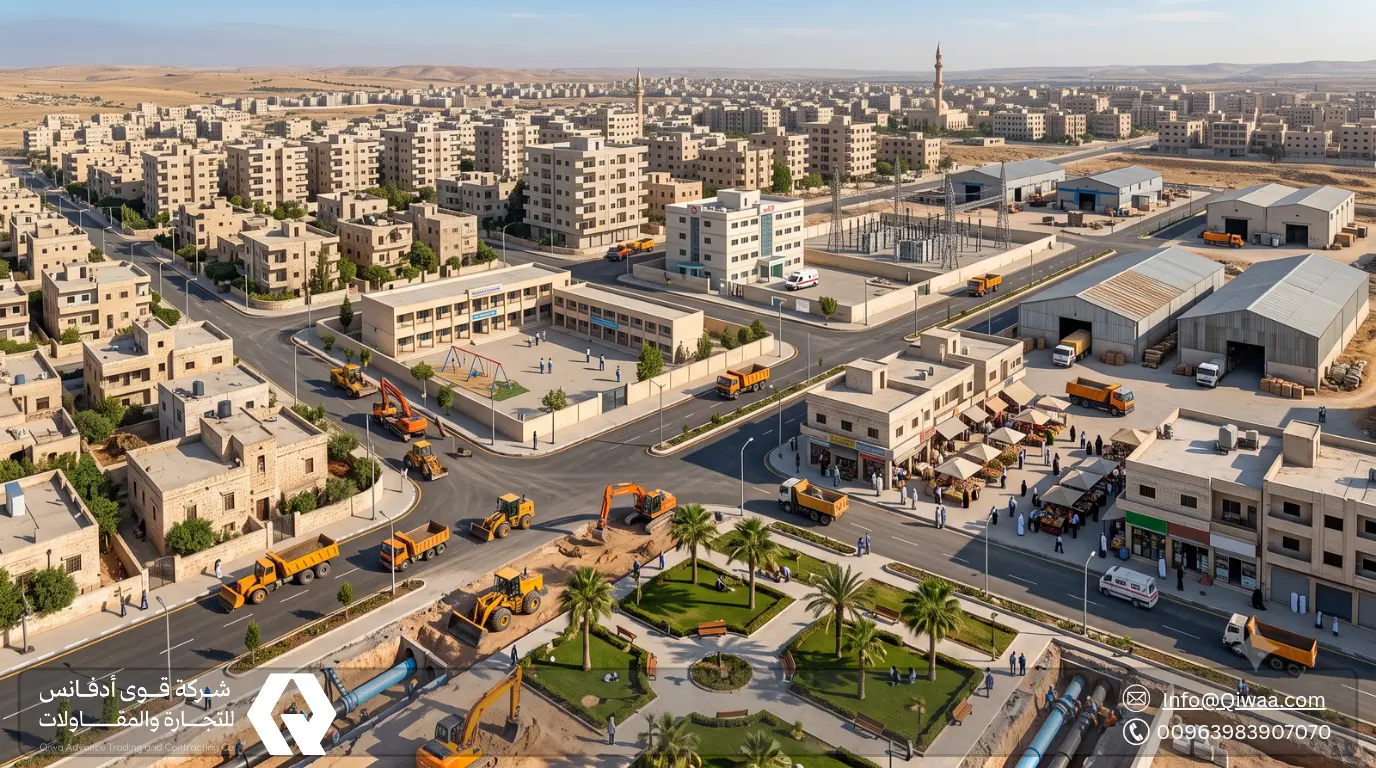


Choosing between construction companies in Syria involves more than comparing prices. Two contractors may quote for the same project but offer different levels of technical expertise, material specifications, quality control, and contractual protection. With the World Bank estimating Syria’s physical reconstruction costs at USD 216 billion, selecting a contractor capable of managing these requirements is particularly important for project owners and investors.
This guide helps you evaluate construction contractors in Syria based on your project’s needs. You’ll learn how to distinguish between contractor types, assess available services, verify qualifications and past experience, compare technical and financial bids, and review essential contract terms before making a decision.
The role of construction companies in Syria
Construction companies in Syria turn engineering plans into completed buildings and infrastructure by managing construction activities, materials, equipment, and site teams. Depending on their specialization and contractual scope, they may also handle procurement, subcontractor coordination, quality inspections, and project handover.
Not all contractors provide the same services. Some focus on specific works, such as concrete structures or interior finishing, while others manage multiple disciplines or integrate engineering, procurement, and construction under one contract. Understanding these differences helps you identify the level of expertise and responsibility your project requires.
Construction company vs. individual contractor
The main difference lies in organizational capacity, project management, and the scope of work each can undertake. A construction company typically has access to engineering, supervisory, and administrative resources, while an individual contractor often manages a smaller workforce focused on specific tasks.
For minor repairs or limited works, an individual contractor may be sufficient. Larger or technically complex projects generally require more structured supervision, procurement planning, and coordination between trades.
The following comparison shows which contractor type may suit different project requirements:
| Type of Project | Suitable Contractor |
|---|---|
| Minor repairs or small renovation works | Individual or specialist contractor |
| Multi-storey residential building | General construction company |
| Factory or commercial complex | General contractor with relevant technical experience |
| Water, road, or sewer networks | Infrastructure contractor |
| Project combining design, procurement, and construction | EPC contractor |
| Hotel, office, or restaurant fit-out | Specialist fit-out contractor |
The appropriate choice also depends on the contractor’s proven experience, available resources, and ability to meet your project’s technical requirements.
Contracting company vs. Ta’ahhudat firm
In Syria, contracting company and ta’ahhudat firm are commonly used to describe businesses that undertake construction work under contractual agreements. The term ta’ahhudat emphasizes the commitment to complete an agreed scope of work, rather than identifying a separate construction specialization.
When evaluating construction contractors in Syria, look beyond the company’s name. Review its commercial registration, professional qualifications, project portfolio, and the responsibilities it agrees to assume.
Contractor classification is also relevant. Syria introduced a new contractor classification system in 2026 that considers technical capacity, financial resources, engineering and administrative staff, and work quality. Check the company’s applicable classification and current professional documents with the relevant authorities before signing.
Choosing between general, specialist, and EPC contractors
The choice depends on how many disciplines your project involves and who will be responsible for coordinating their work.
- General contractor: Manages multiple construction activities, such as structural, electrical, mechanical, and finishing works, while coordinating subcontractors within the agreed schedule and scope.
- Specialist contractor: Handles a defined area of work, such as insulation, HVAC, facades, or steel structures. If you appoint several specialists separately, coordination remains your responsibility or that of your appointed project manager.
- EPC contractor: Integrates Engineering, Procurement, and Construction under a defined contractual scope. This approach is particularly relevant to industrial facilities, water treatment plants, and infrastructure projects where engineering decisions must align with equipment selection and site execution.
For projects involving interconnected technical systems, EPC contractors in Syria may help reduce coordination gaps by bringing engineering, procurement, and construction responsibilities under one contractual framework. The actual benefits depend on the contractor’s capabilities and the responsibilities defined in the agreement.
Construction services across Syria’s governorates
The services offered by construction companies in Syria depend on the project’s purpose, location, and site conditions. In Damascus, projects may involve building rehabilitation, commercial fit-outs, or utility upgrades, while industrial developments in Aleppo often require warehouses, production facilities, and supporting infrastructure.
These differences affect the expertise, equipment, and construction methods a project requires. Understanding the local scope of work helps you identify contractors with relevant experience rather than choosing solely based on their geographic coverage.
Damascus an Rif Dimashq Governorate
Construction companies in Damascus serve residential, commercial, and infrastructure projects, including new developments and the rehabilitation of existing buildings. The required services vary depending on whether the project involves new construction, renovation, or upgrading building systems.
Common services include:
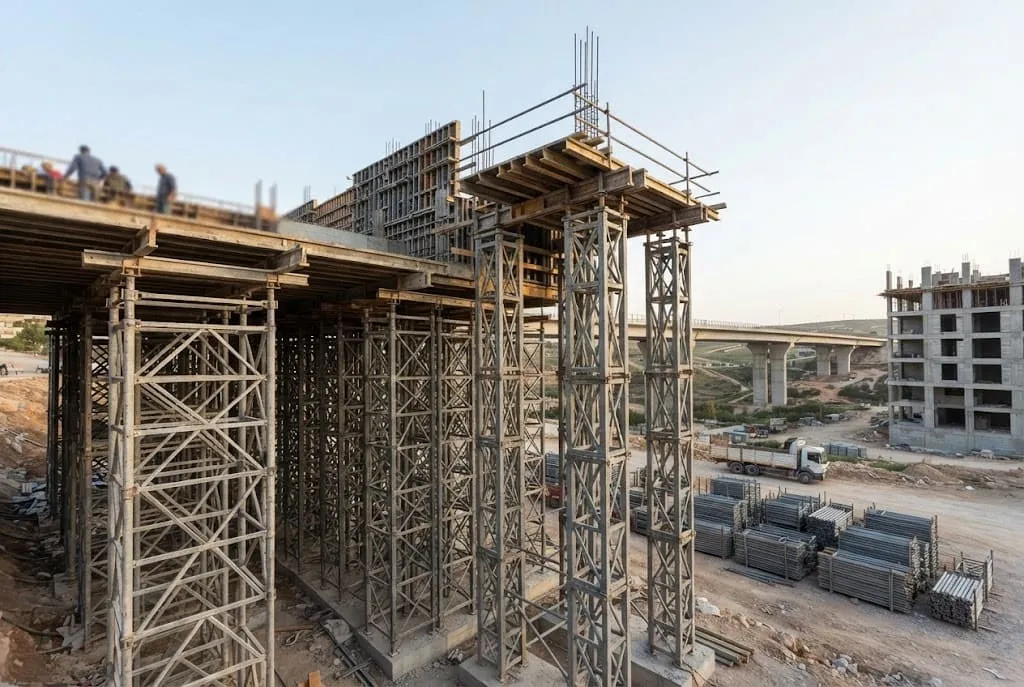
- Structural works: Excavation, foundations, reinforced concrete structures, and structural strengthening.
- Building rehabilitation: Repair and refurbishment of existing residential and commercial properties.
- Mechanical and electrical works: HVAC, electrical installations, plumbing, and building services.
- Infrastructure works: Water supply, sewer networks, and associated utility connections.
- Finishing and fit-out: Insulation, facades, and interior works for offices, hotels, shops, and commercial spaces.
- Construction management: Coordination of suppliers, subcontractors, inspections, testing, and handover.
If you’re evaluating a construction company in Damascus for a renovation project, request a site assessment before finalizing the scope and budget. Existing buildings may have concealed structural damage, outdated installations, or moisture problems that require investigation and could affect the proposed works.
What services do industrial projects in Aleppo need?
Industrial projects in Aleppo often require construction services that accommodate production equipment, storage operations, and the movement of goods. The scope may involve rehabilitating existing facilities or developing new industrial buildings and supporting utilities.
When evaluating a construction company in Aleppo, consider its experience in:
- Industrial buildings: Factory construction, workshop rehabilitation, warehouses, and steel structures.
- Site infrastructure: Internal roads, loading yards, drainage, and industrial water networks.
- Electrical installations: Electrical rooms, power distribution infrastructure, and transformer substations.
- Production facilities: Equipment foundations, production-line installation requirements, and associated civil works.
- Logistics facilities: Storage buildings, distribution centers, and vehicle access areas.
For an operational industrial facility, construction planning must also account for equipment loads, vehicle circulation, maintenance access, and site safety requirements. These considerations help ensure the completed facility supports its intended operations, not just its structural design.
Contracting requirements in Homs, Coastal Syria and other governorates
Construction requirements in Homs, Hama, Tartus, and Latakia depend on the project’s location and intended use. Industrial facilities, warehouses, tourism developments, water treatment plants, and utility networks each involve different construction methods and supply requirements.
For projects outside major supply centers, material availability, transportation routes, site access, and equipment mobilization can influence both cost and delivery schedules.
Before appointing a contractor, establish how these logistical requirements will be addressed, particularly for imported equipment, specialized materials, or sites with limited access. Experience with similar project conditions is more useful than geographic presence alone.
See also: Syria Infrastructure Sector 2026: Market Size, Competitive Gap, & Investment Opportunities
How to choose a construction company in Syria
Choosing the right construction company in Syria starts with defining your project’s scope, technical requirements, and expected timeline. These details give potential contractors a common basis for preparing their proposals and help you assess whether they have the resources to deliver.
Rather than comparing prices immediately, evaluate each company’s qualifications, relevant experience, and technical proposal first. The following steps will help you narrow down your options before making a financial decision.
Which documents should you request before signing?
Before shortlisting construction companies in Syria, request a prequalification package that demonstrates each company’s legal standing, technical resources, and ability to undertake your project.
The package should include:
- Legal documents: Commercial registration, company details, and applicable professional licenses or classifications.
- Company information: Registered address, contact details, and authorized representatives.
- Project experience: A portfolio of comparable projects, supported by completion records or client references where available.
- Technical team: Qualifications and CVs of the proposed project manager, engineers, and supervisors.
- Equipment and subcontractors: Available construction equipment and details of key subcontractors expected to participate.
- Procurement capability: Preliminary arrangements for sourcing critical materials and equipment.
- Quality and safety: Available quality-control procedures and site safety documentation relevant to the proposed works.
Verify that the company’s legal identity matches the contracting documents and payment details. Any unexplained discrepancy should be clarified before proceeding.
How do you verify a company’s experience and past projects?
A contractor’s portfolio should demonstrate experience with projects comparable to yours in scope, technical complexity, and construction requirements. Request details of two or three relevant projects rather than relying on promotional photographs or a long list of unrelated work.
Where possible, contact previous clients or project consultants to assess:
- Schedule performance: Whether key milestones and completion dates were met.
- Construction quality: Compliance with specifications and the standard of completed works.
- Change management: How variations, unforeseen conditions, and additional work were handled.
- Cost management: Accuracy of progress claims and management of approved changes.
- Defect resolution: Responsiveness to defects identified during inspection or after handover.
- Project coordination: Communication between site teams, subcontractors, and consultants.
- Handover documentation: Availability and completeness of inspection records, test results, and as-built drawings.
If access is permitted, visit a completed project or an active site. This can help you assess workmanship and site organization while asking questions about how the contractor handled challenges similar to those your project may face.
How do you compare contractors’ bids fairly?
To compare construction contractors in Syria fairly, provide every bidder with the same drawings, technical specifications, bill of quantities (BOQ), and submission requirements. This ensures that differences between proposals reflect the contractors’ approaches rather than missing project information.
Evaluate the bids against these criteria:
| Evaluation criterion | What to review |
|---|---|
| Scope of work | Included activities, exclusions, and deliverables |
| Materials | Specifications, approved alternatives, and sources |
| Technical proposal | Construction methods and compliance with project requirements |
| Project team | Proposed manager, engineers, and key subcontractors |
| Schedule | Work sequence, milestones, and resource allocation |
| Procurement | Availability of critical materials and delivery arrangements |
| Quality and safety | Inspection procedures, testing, and site safety measures |
| Price | Itemized rates, taxes, transportation, and identified allowances |
| Payment terms | Progress-based payments and financial conditions |
| Warranty and variations | Defect liability, change approval, and pricing procedures |
Start by confirming which proposals meet your essential technical and contractual requirements. Then compare the financial offers, taking account of exclusions and any differences that could affect the final project cost.
A lower price should not outweigh a material weakness in technical capability, relevant experience, or the proposed delivery plan.
For projects requiring integrated engineering, procurement, and construction, Qiwaa Advance provides EPC contracting solutions, particularly for infrastructure and water-related projects. You can contact our team to discuss your project’s technical requirements and the contracting or supply solutions relevant to its scope.
Further reading: Syria Reconstruction Projects 2026: How to Read Opportunities and Costs Before Investing
Cost of hiring a construction company in Syria
The cost of hiring a construction company in Syria depends on the project’s scope, technical specifications, site conditions, and delivery requirements. While a price per square meter can provide an initial estimate, it cannot account for differences in structural design, building systems, or construction complexity.
For project owners, understanding these cost drivers is essential when setting a realistic budget and assessing whether a contractor’s quotation covers the work required.
Factors that influence construction costs
Construction costs in Syria vary according to several project-specific factors:
- Project size and design: Floor area, layout complexity, and the structural system determine material quantities and construction requirements.
- Site and ground conditions: Soil characteristics, excavation requirements, foundations, and access constraints affect the work involved.
- Materials and specifications: Material grades, finishing standards, imported components, and availability influence procurement costs.
- Mechanical and electrical systems: HVAC, electrical installations, plumbing, and other building services add to the technical scope.
- Renovation requirements: Structural strengthening, demolition, and repairs can introduce additional costs, particularly when existing conditions are not fully documented.
- Location and logistics: Transportation, storage, equipment mobilization, and site accessibility affect delivery expenses.
- Labor and project duration: Workforce availability, equipment requirements, and accelerated schedules influence execution costs.
- Contractual and financial terms: Payment arrangements, required guarantees, and allocation of project risks can affect pricing.
Request an itemized quotation that separates major work packages, quantities, and unit rates. This makes it easier to identify significant cost drivers and assess possible adjustments without compromising the project’s technical requirements.
Is the lowest bid the best option?
Not necessarily. A lower quotation may reflect efficient construction methods, favorable supplier agreements, or lower operating costs. However, it can also result from missing work items, unrealistic assumptions, or specifications that differ from the project’s requirements.
If one bid is substantially lower than the others, investigate whether it includes:
- Complete work quantities: No omitted activities or underestimated quantities.
- Required material specifications: No unauthorized substitutions or lower-grade alternatives.
- Adequate site resources: Sufficient supervision, skilled labor, and equipment.
- Realistic delivery allowances: Transportation, procurement lead times, and construction duration.
- Quality requirements: Required inspections, material testing, and corrective work.
Compare the expected cost of completing the agreed scope, including identified exclusions and potential adjustments, rather than focusing on the initial quotation alone. The most economical offer is the one that meets your project’s requirements at a sustainable, clearly defined cost.
Key clauses in construction contracts in Syria
A clear construction contract defines what the contractor must deliver, how the work will be assessed, and what happens if costs, specifications, or timelines change. When hiring a construction company in Syria, reviewing these terms before signing helps you establish responsibilities and reduce the risk of disputes during execution.
Your construction contract in Syria should address seven essential areas:
- Scope of work: Define included and excluded activities, referencing the approved drawings, technical specifications, and bill of quantities (BOQ). Establish which documents take precedence if inconsistencies arise.
- Materials and specifications: Specify material grades, applicable standards, and approval procedures for substitutions. Include brands or countries of origin where relevant to the project requirements.
- Project schedule: Set construction milestones, delivery deadlines, inspection dates, and handover requirements. Clarify how delays, extensions of time, and related responsibilities will be handled.
- Payments and retention: Link payments to verified progress and define payment deadlines, any agreed retention amount, and the conditions for its release.
- Variation orders: Establish a written approval process for changes to quantities, specifications, costs, or timelines before the affected work proceeds.
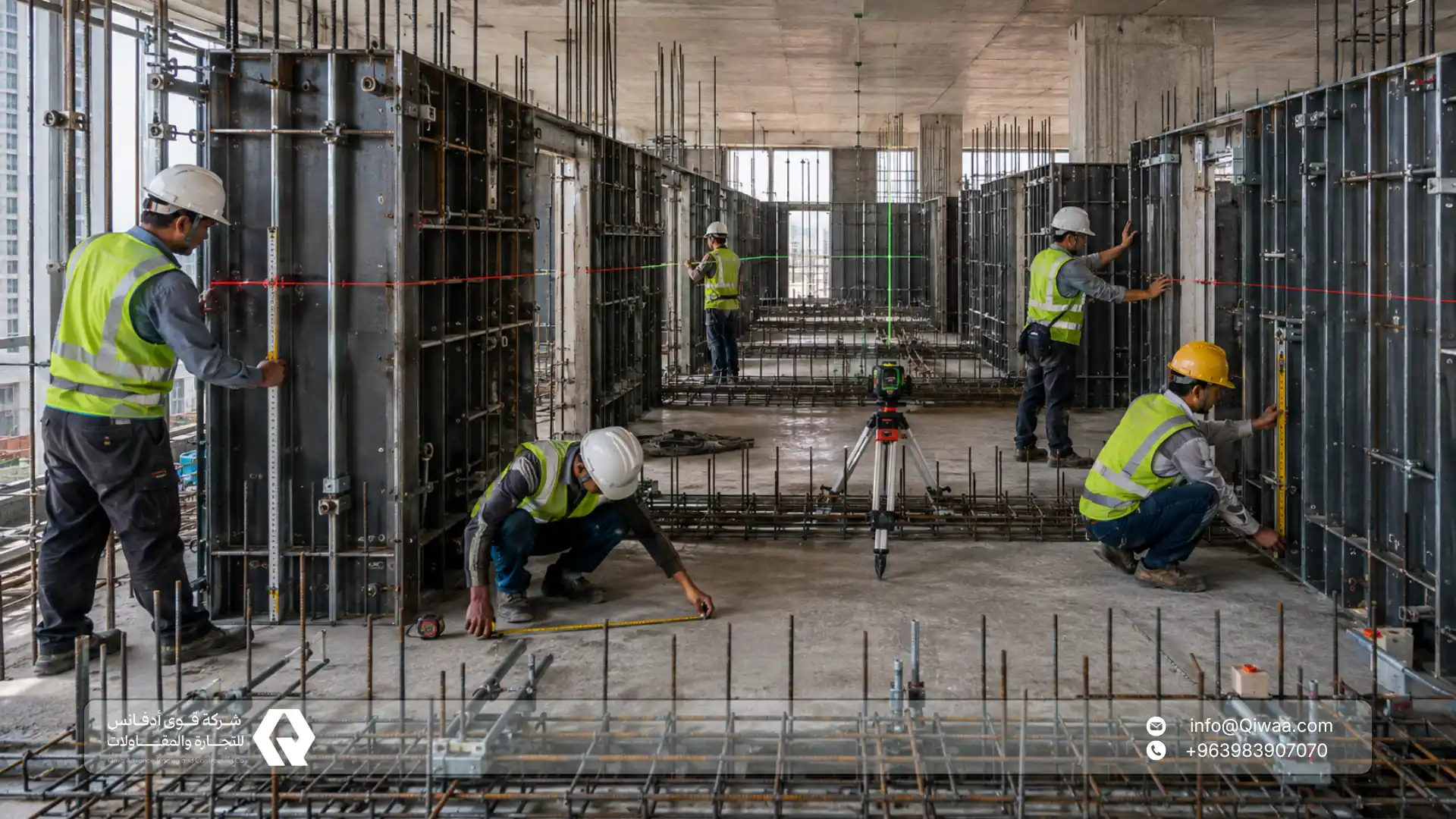
- Quality control and testing: Identify required inspections, acceptance criteria, testing responsibilities, and procedures for addressing defective or non-compliant work.
- Handover and warranty: Define the documentation required at completion, including applicable as-built drawings, test reports, and outstanding work lists. Specify defect liability obligations, warranty terms, and procedures for corrective work.
These provisions give project owners and contractors a shared basis for monitoring delivery, approving changes, and resolving disagreements. For significant projects, have a qualified legal professional review the final contract against applicable Syrian law before signing.
Red flags when choosing construction companies in Syria
Before hiring a construction company in Syria, pay attention to warning signs that could indicate weaknesses in its qualifications, planning, or contractual commitments. Identifying these issues early gives you an opportunity to request clarification before they affect your project’s budget, schedule, or quality.
Key warning signs include:
- Unverifiable credentials: The company cannot provide valid registration documents, relevant professional qualifications, or evidence of comparable projects.
- Unclear quotations: The proposed price lacks a detailed breakdown, contains significant exclusions, or is based on insufficient information about the project.
- Unrealistic deadlines: The contractor promises completion dates without a practical schedule or adequate resources.
- Undefined project responsibilities: No qualified project manager is identified, or responsibility for subcontractors and site supervision remains unclear.
- Weak procurement planning: The contractor cannot explain how critical materials and equipment will be sourced or delivered.
- Missing quality controls: Required inspections, testing procedures, and acceptance criteria are not clearly established.
- Unbalanced payment terms: Large advance payments are requested without adequate contractual safeguards or a clear connection to procurement and mobilization needs.
- Vague contractual commitments: Material substitutions, variations, warranties, or defect-correction responsibilities are left to verbal agreements.
A warning sign does not automatically disqualify a contractor. However, unresolved concerns about legal standing, technical capability, or contractual responsibilities should be addressed and documented before you commit to the project.
Learn more: Aleppo Reconstruction Opportunities 2026: How to Identify the Best Investment Opportunities
Construction companies in Syria worth comparing
When comparing construction companies in Syria, start by identifying firms whose stated services match your project’s technical requirements. The Syrian construction sector includes general contractors, infrastructure specialists, and companies offering integrated engineering, procurement, and construction services.
The following companies provide examples of different contracting capabilities. This is not a ranking or a verified list of qualified bidders. Their current registration, availability, and project experience should be confirmed before inviting them to tender.
| Company | scope of work | What to assess |
|---|---|---|
| Qiwaa Advance | EPC contracting, water infrastructure, concrete structures, construction material supply, and industrial solutions | Relevant EPC capabilities, technical scope, procurement support, and proposed project team |
| Al Din Contracting Co. | Construction services, infrastructure, property development, and construction products | Comparable completed projects, technical resources, and current operating capacity |
| Station for Contracting & Trading | General construction, infrastructure, industrial works, and specialized building systems | Experience in the required construction activities and proposed delivery arrangements |
| Axon Syria | Contracting, civil construction, infrastructure, metal construction, and related services | Local operating capacity, comparable Syrian projects, and the responsible contracting entity |
| Arab Union Contracting Company | General contracting, infrastructure, roads, engineering works, and construction materials | Current project references, specialization, and eligibility for the proposed contract |
| Syrian Combined Group Contracting Company | Contracting presence in Syria within a regional group active in infrastructure and road projects | Contracting entity, completed local work, available resources, and tender eligibility |
These companies should be compared against the same project requirements, not their names or the breadth of services they advertise. Before shortlisting any firm, confirm its legal status, relevant experience, available project team, and ability to deliver the required scope.
How to make your final construction company selection
Once you’ve evaluated the available construction companies in Syria, focus your final decision on the contractor’s ability to deliver your specific project. A competitive price matters, but it should be supported by relevant experience, a capable technical team, and a realistic execution plan.
Before making your selection, resolve any outstanding questions about responsibilities, technical requirements, and contractual commitments. Your goal is to appoint a contractor whose capabilities match the project’s scope, budget, and delivery expectations.
How Qiwaa Advance supports construction projects in Syria
At Qiwaa Advance, we understand that successful construction depends on more than carrying out work on-site. Materials, engineering requirements, procurement, and execution must work together to keep a project moving. That’s why we bring together EPC contracting, infrastructure solutions, and construction material supply to support project owners, investors, and contractors in Syria.
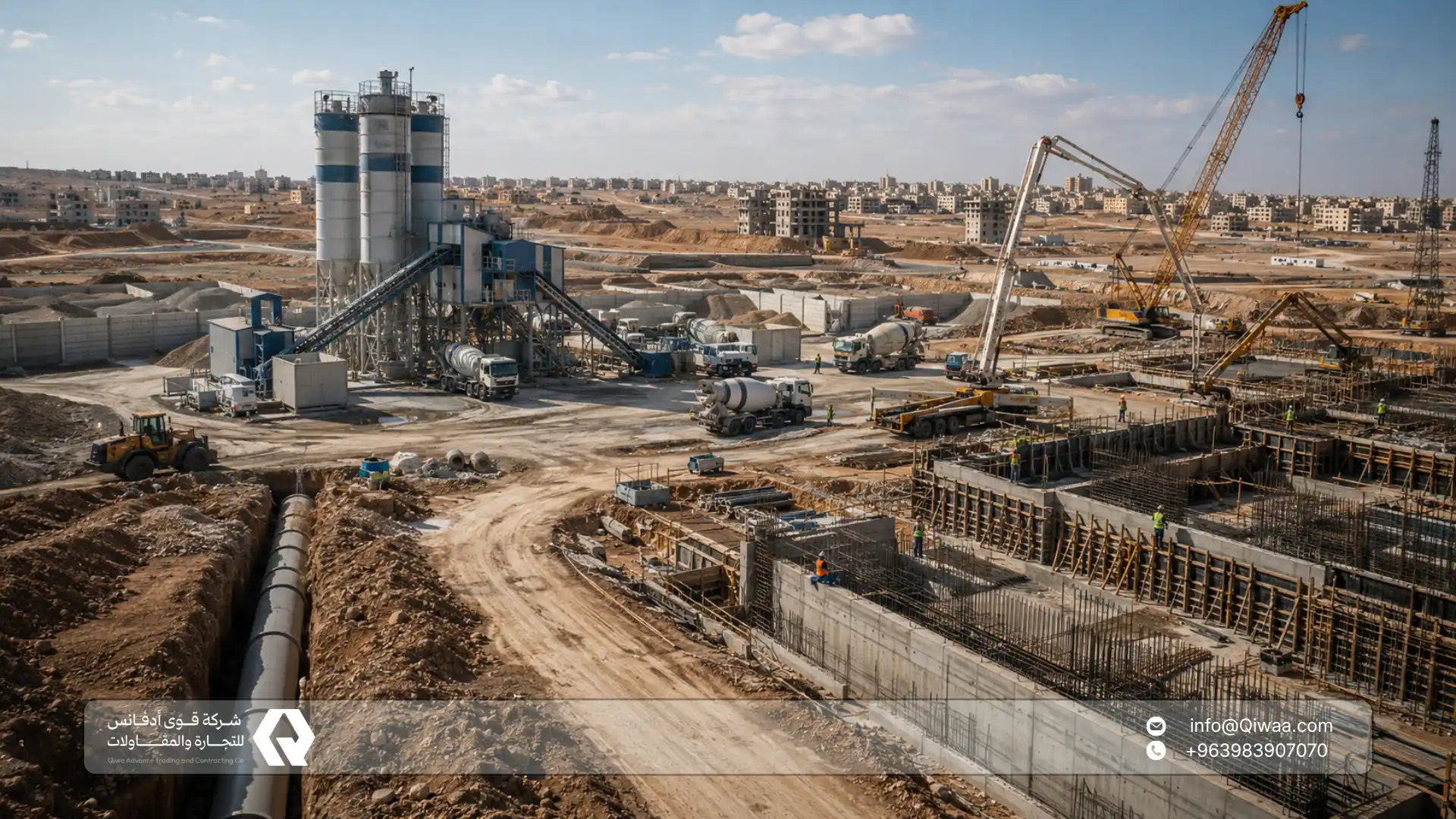
Through our contracting and trading activities, we provide solutions for water and wastewater networks, treatment facilities, concrete structures, and construction material requirements. We also work with specialized partners, including Amiantit and Variant Factory, to connect projects with relevant pipe systems, formwork technologies, and technical solutions.
Our approach focuses on matching these capabilities to your project’s actual requirements rather than offering the same solution for every development.
To discuss your project with Qiwaa Advance, share its location, intended scope, available drawings or bill of quantities, technical specifications, and expected schedule. Our team can review the information and discuss the contracting, procurement, or supply solutions relevant to your needs.
Contact Qiwaa Advance to explore how our capabilities can support your construction project in
Syria.
FAQs about construction companies in Syria
What are some construction companies in Syria?
Examples of construction companies in Syria include Qiwaa Advance, Al Din Contracting, Station for Contracting & Trading, and Axon Syria. These companies offer different services, ranging from general construction and infrastructure to specialized contracting and EPC solutions.
Their inclusion is not a quality ranking. Compare their stated capabilities with your project’s requirements and verify their current qualifications before requesting a proposal.
What is the largest construction company in Syria?
There is no sufficiently comprehensive, publicly verified ranking identifying the largest construction company in Syria by revenue, workforce, or total contract value.
Company size alone does not establish suitability. For major projects, examine financial capacity, available equipment, technical resources, and experience delivering comparable work.
How do I find reliable construction companies in Damascus?
To find reliable construction companies in Damascus, start by identifying firms experienced in your type of project. Verify their registration, review completed work, and request technical and financial proposals based on the same project specifications.
For renovation or infrastructure projects, prioritize contractors familiar with existing structures, utility networks, and site-access constraints in Damascus and Rural Damascus.
What should I check before hiring a construction company in Syria?
Before hiring a construction company in Syria, verify its legal registration, relevant project experience, technical team, and ability to meet your schedule.
Review the proposed scope, material specifications, payment terms, quality requirements, and warranty conditions. Any unclear responsibilities or exclusions should be resolved before signing.
Can I hire a construction company in Syria for a turnkey project?
Yes. Some contractors offer turnkey delivery, where one company takes responsibility for delivering a project to an agreed level of completion.
Before signing, confirm whether the contract includes engineering, procurement, construction, finishing, equipment installation, testing, and commissioning. The exact scope determines what the contractor must deliver, so the term turnkey alone is not sufficient.