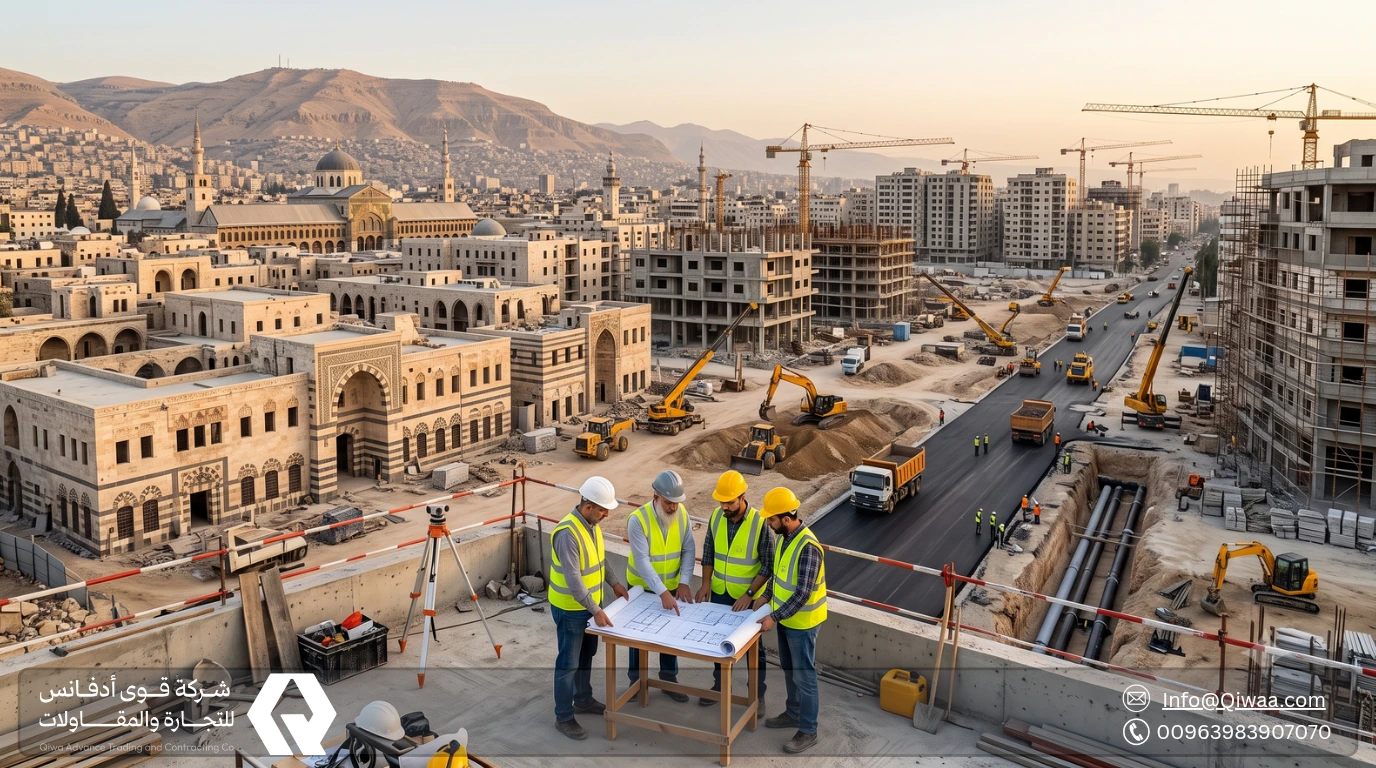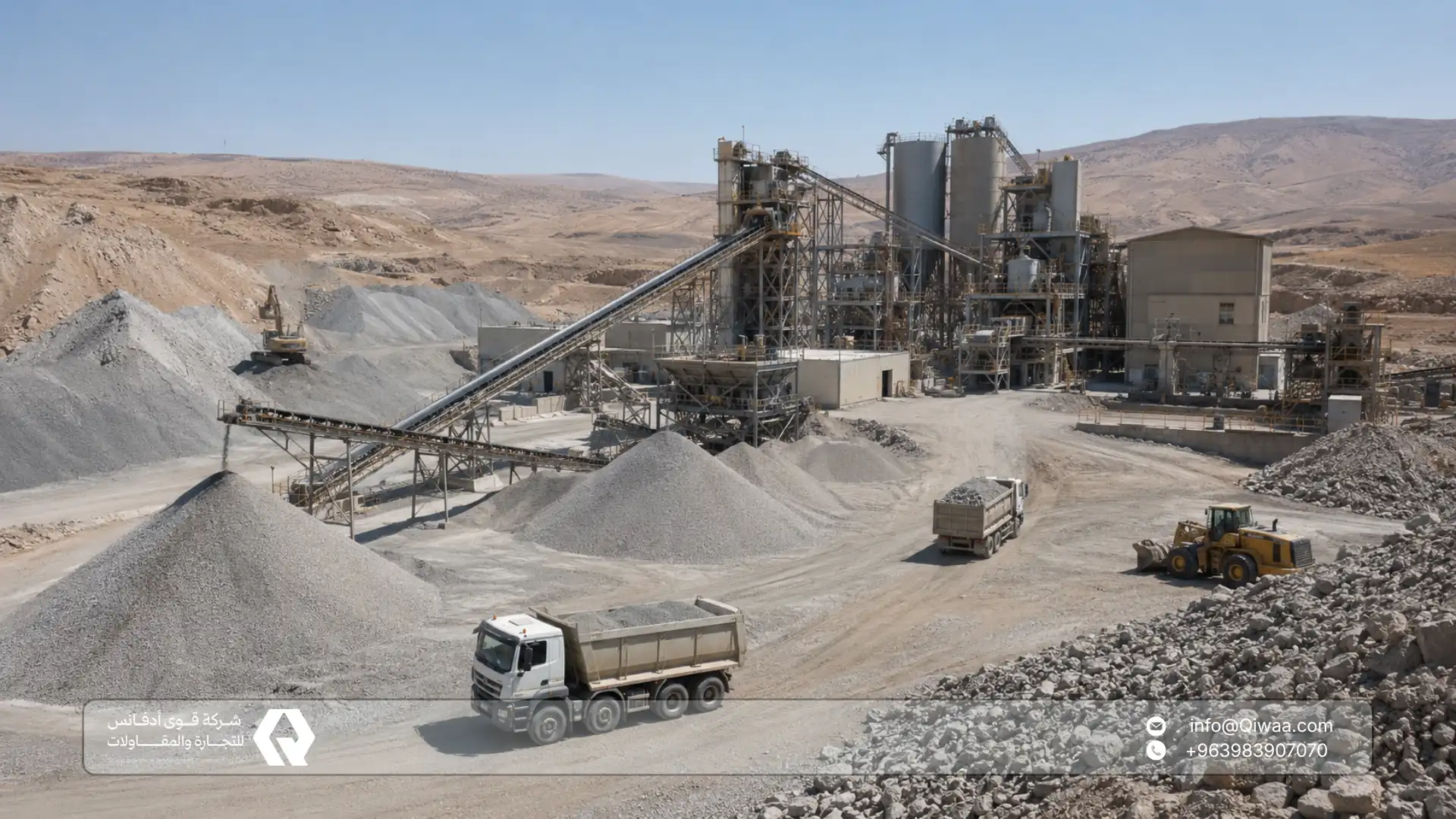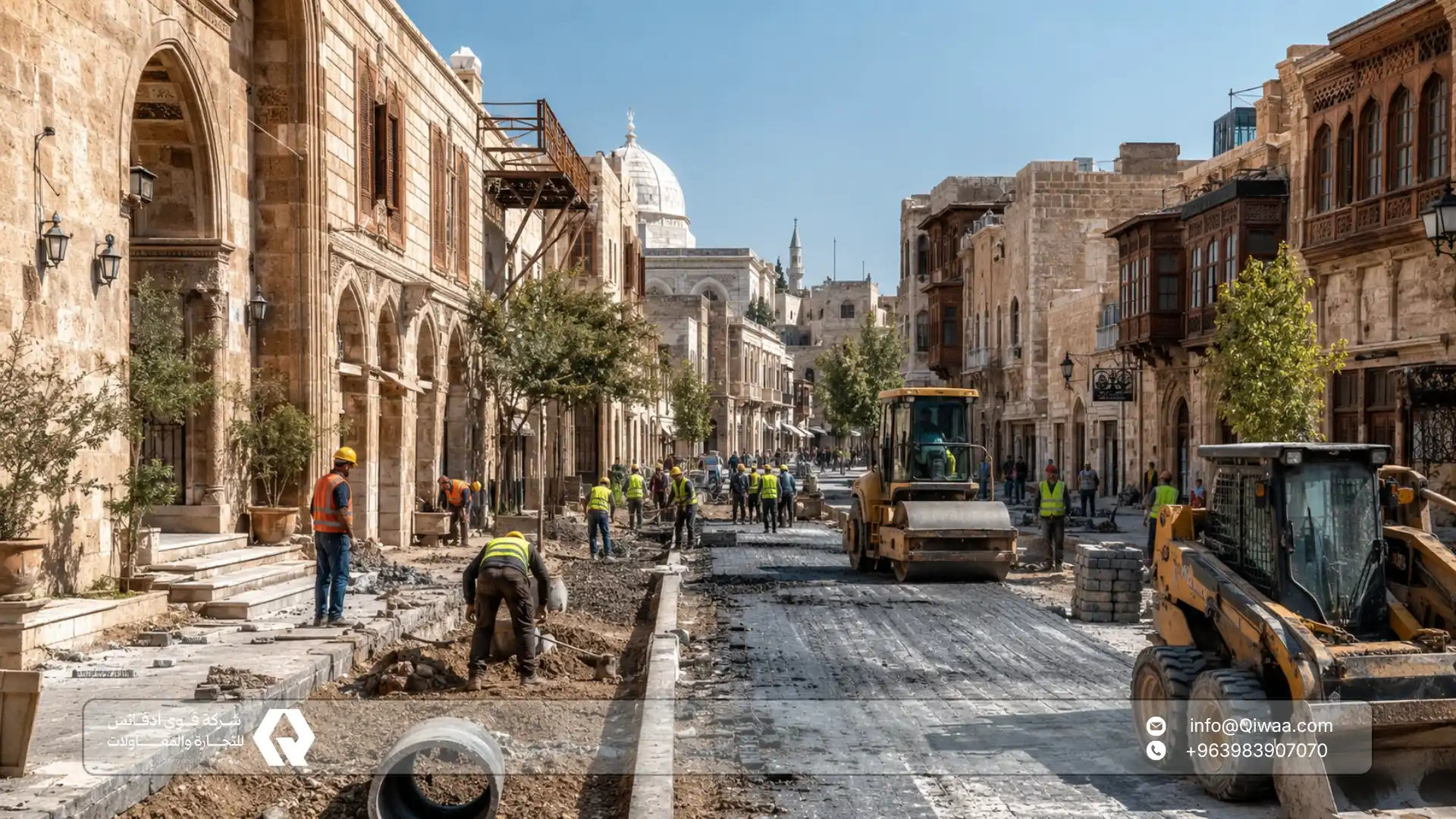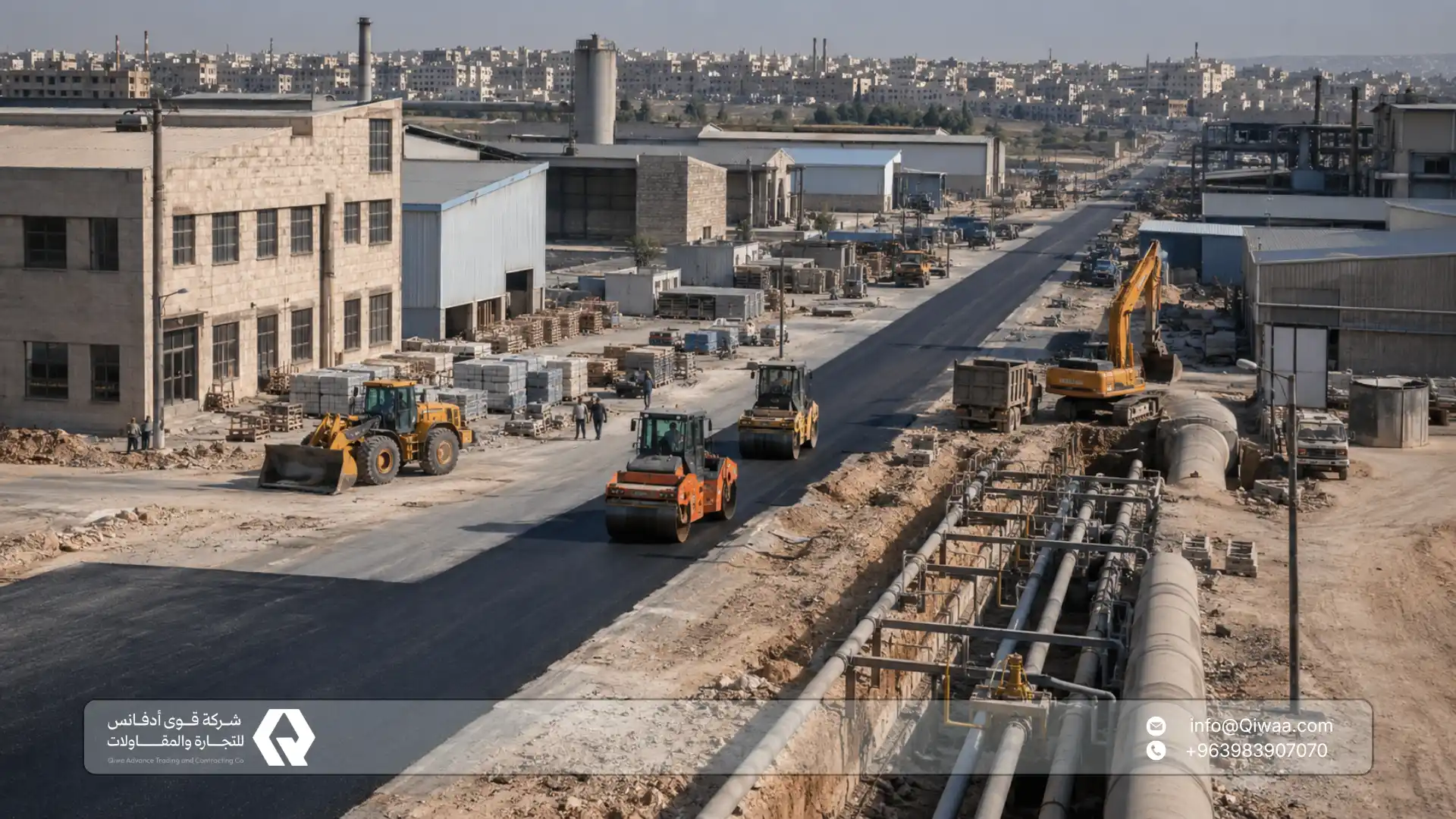


The Syria infrastructure sector 2026 is one of the largest entry points into reconstruction in 2026 because it is connected to almost every other project: housing, industry, agriculture, energy, water, healthcare, transport, ports, industrial zones, and investment areas. No real estate, industrial, or service project can operate efficiently without stable electricity, water and wastewater systems, roads, networks, and facilities capable of supporting daily operations.
The scale of this challenge is clear in World Bank estimates. The World Bank estimated the cost of rebuilding Syria’s physical assets at around 216 billion USD, including 75 billion USD for residential buildings, 59 billion USD for non-residential buildings, and 82 billion USD for infrastructure. The same assessment also estimated direct physical damage to assets at around 108 billion USD, including more than 52 billion USD in infrastructure alone.
In this article, we review the size of Syria’s infrastructure market in 2026, where the competitive gap appears, which sectors are seeing the strongest demand, and what practical opportunities exist for investors, contractors, and suppliers.
Why Has Infrastructure Become the Largest File in Syria’s Reconstruction?
Infrastructure is at the center of every recovery path. Electricity supports factories, homes, and hospitals. Water and wastewater systems are essential for the return of residents and the operation of cities. Roads, ports, and logistics areas move trade. Industrial zones need networks and utilities before they can receive any production line.
For this reason, discussing infrastructure projects in Syria does not only mean large government projects. It also includes wide execution and commercial opportunities, such as:
- Water and wastewater networks
- Pumping and treatment stations
- Electricity, energy, and grid systems
- Roads and city entrances
- Industrial zones
- Ports and logistics areas
- Infrastructure for residential and real estate projects
- Public service facilities in cities and damaged areas
The year 2026 is especially important because the market is moving from estimating needs to seeing actual funding, agreements, and active projects. In February 2026, the IMF stated that economic activity in Syria had improved in recent months, supported by stronger consumer and investor sentiment, the continued return of refugees, increased electricity provision, and Syria’s regional reintegration.
Read more: Syrian Mineral Resources: Strategic Minerals Map and Investment Potential in 2026
Syria’s Infrastructure Market Size in Numbers
The most important figure is 82 billion USD, which is the estimated cost of rebuilding infrastructure within the broader estimate for Syria’s physical reconstruction. This figure alone makes the sector one of the largest fields of work for contractors, suppliers, and investors in the coming years.
However, the market size does not appear from one figure only. In June 2025, the World Bank approved a 146 million USD grant for the Syria Electricity Emergency Project to improve electricity supply and support sector development. Project documents indicate that electricity infrastructure was heavily damaged, and grid supply was limited in many areas to an average of only two to four hours per day, which shows the depth of the basic service gap.
In April 2026, the World Bank also approved 225 million USD in financing to restore water and health services, with around 4.5 million Syrians expected to benefit. The package includes a water project designed to restore water supply and wastewater infrastructure in priority areas, alongside support for the health system.
These numbers show that Syria’s infrastructure market is not based only on general expectations. It is already appearing through financing, agreements, and projects related to electricity, water, wastewater, transport, and logistics.
Read more: Damascus Reconstruction 2026: Where to Invest and How to Start
The Competitive Gap in Syria’s Infrastructure Sector
The competitive gap in Syria’s infrastructure sector is not limited to a shortage in the number of companies. The larger problem is the lack of parties that can combine four elements at the same time: technical understanding, organized supply, on-ground execution, and site and supply chain management.
The gap appears on five main levels.
1. Execution Gap
Many projects will not be implemented on ready land or ideal sites. They will take place in areas that need debris removal, old network repair, route updates, or work inside populated neighborhoods. This requires contractors and suppliers who understand the conditions of damaged sites, not only new projects built from zero.
2. Supply Gap
Water, wastewater, electricity, road, and industrial zone projects need pipes, valves, cables, tanks, pumps, manholes, concrete materials, steel, equipment, and network components in large quantities and stable quality. Weak supply can delay a project even if the study and financing are available.
3. Coordination Gap
When design is separated from supply, or supply is separated from execution, delays and costly modifications appear. The market needs parties that connect technical specifications with available materials, supply schedules with execution programs, and contractor needs with supplier capacity.
4. Quality and Compliance Gap
Infrastructure projects cannot tolerate undocumented materials or unsuitable solutions. Water, wastewater, electricity networks, and public facilities need clear specifications, testing, compliance, and regular supply.
5. Local Partner Gap
A foreign investor may have financing or technology, but still needs a local partner who understands licensing, suppliers, labor, transport, sites, and technical authority requirements. This creates an important opportunity for local companies capable of offering an integrated solution, not only brokerage.
This gap is consistent with the UNDP view of the role of Syria’s private sector, which notes that the construction value chain, from building materials to small contractors, remains essential for recovery.
Learn more: Aleppo Reconstruction Opportunities 2026: How to Identify the Best Investment Opportunities
Electricity and Energy Projects: From Generation to Networks
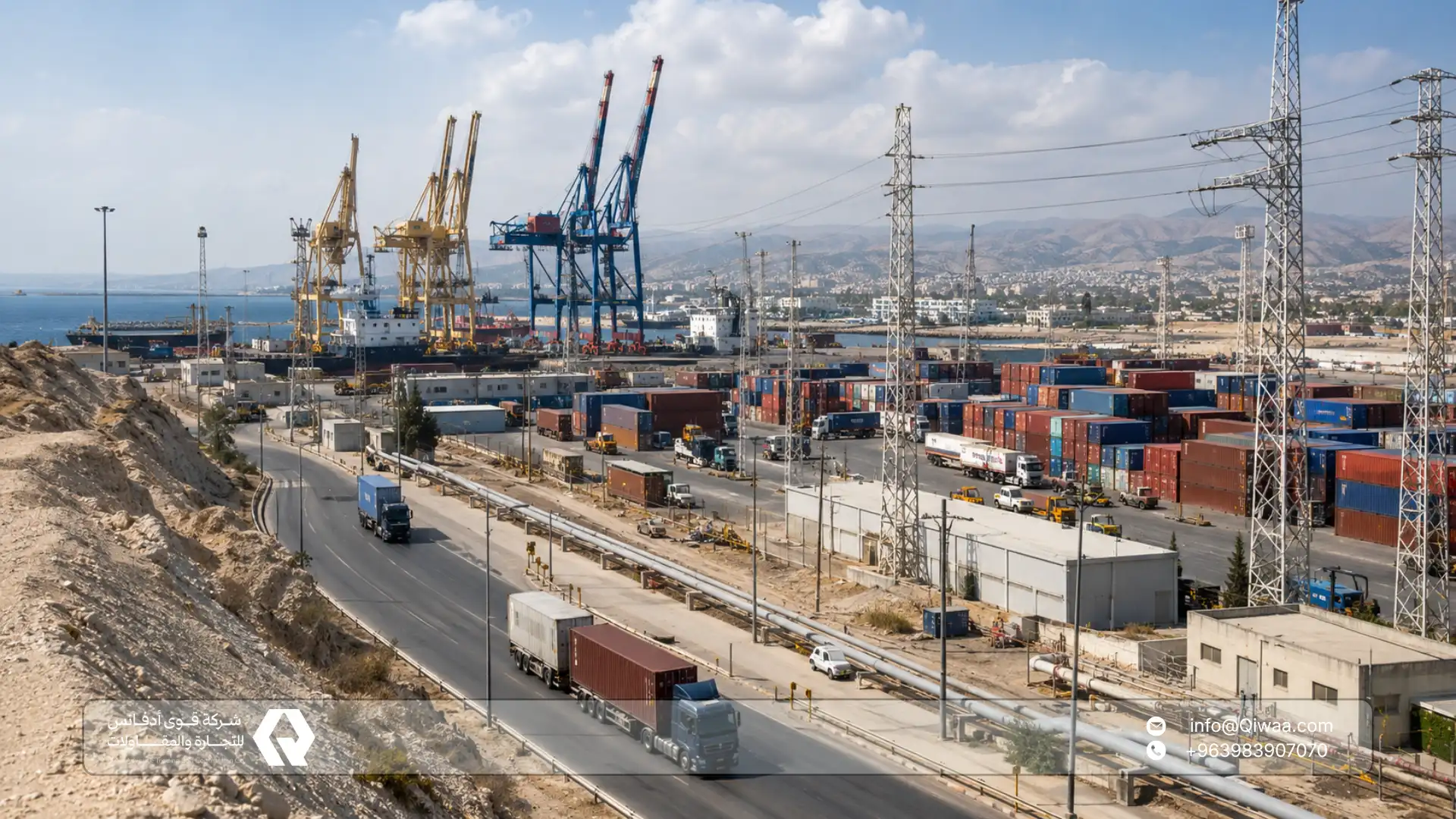
Electricity is one of the most urgent infrastructure files in Syria. Weak grid supply does not affect homes only. It also puts pressure on water systems, industry, agriculture, housing, and healthcare. This is why energy projects are appearing as a priority for financing and investment.
In addition to the 146 million USD World Bank grant for the electricity emergency project, Syria signed a memorandum of understanding in May 2025 with a consortium led by Reuters / UCC Holding for an investment worth about 7 billion USD in power generation projects. The package includes four gas-fired power plants with a total capacity of 4,000 megawatts and a solar power plant with a capacity of 1,000 megawatts.
Reuters also reported that Syria’s electricity generation had fallen to around 1.6 gigawatts, compared with about 9.5 gigawatts before 2011.
These projects open wide sub-opportunities, including:
- Civil works for power stations
- Concrete foundations and electrical rooms
- Cables, transformers, and grid components
- Internal roads and operational entrances
- Drainage systems and metal works
- Supply of construction and concrete materials
- Operation and maintenance services for supporting facilities
Water and Wastewater Projects: A Service and Investment Priority
Water and wastewater projects in Syria are among the most connected files to daily life, population return, and city operation. Any residential, industrial, or tourism project needs water and wastewater systems before full operation can begin.
In April 2026, the World Bank approved 225 million USD in financing to restore water and health services in Syria, with around 4.5 million people expected to benefit. The financing includes a 150 million USD water project to restore water supply and wastewater infrastructure in high-density and high-priority areas.
Investment opportunities here appear in:
- Rehabilitation of water networks
- Wastewater networks
- Pumping stations
- Tanks
- Treatment plants
- Manholes
- Stormwater drainage systems
- Valves and network components
- Network testing and operation after execution
This sector is directly connected to Qiwaa’s work in water, infrastructure, treatment plants, and the supply of pipes, valves, and network components.
Read also: Best Interior Design Services Company in Yaafour, Damascus: From Concept to Execution
Transport, Airports, and Metro: Major Projects That Create Sub-Opportunities
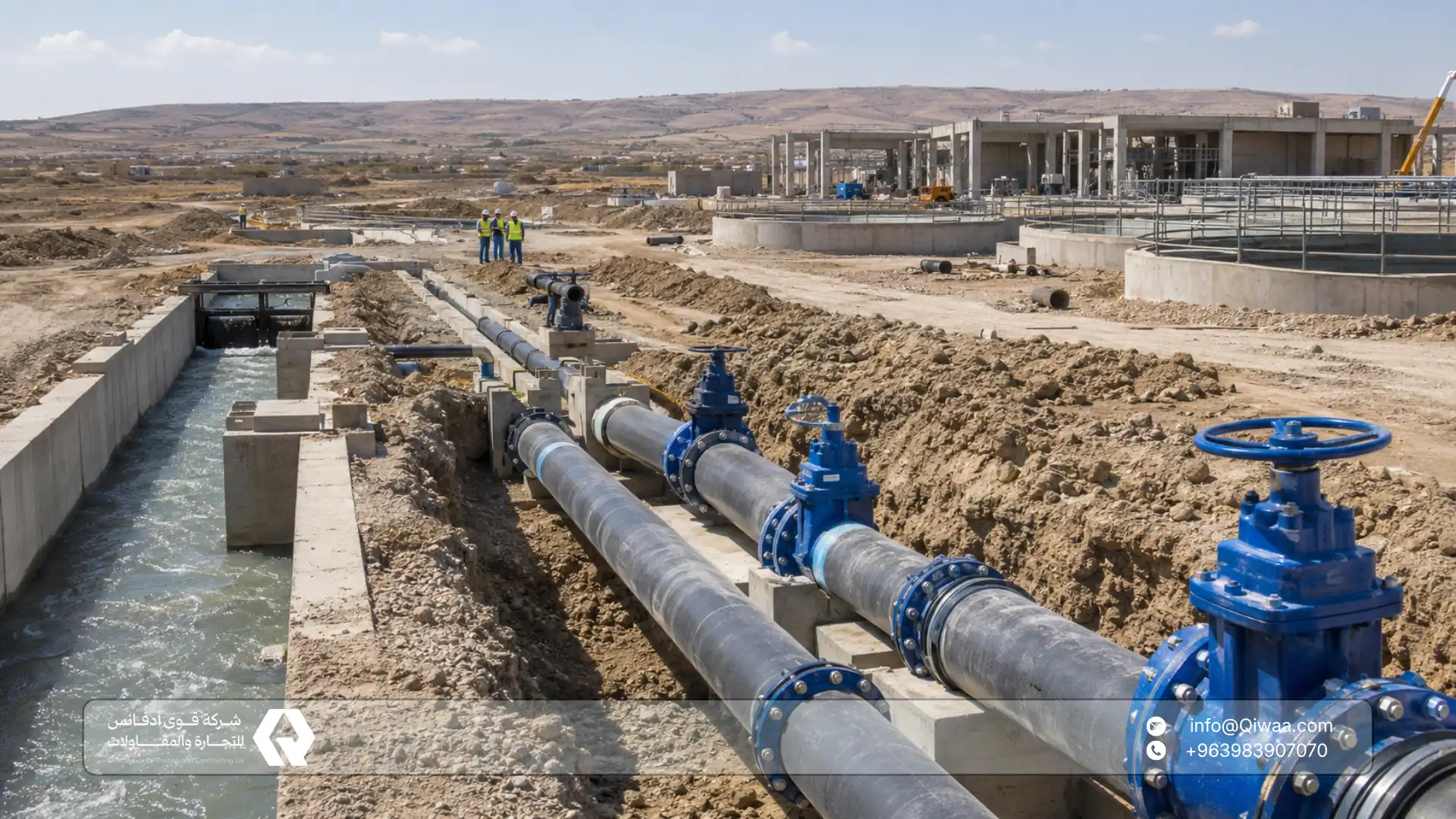
Major transport projects are often seen as large contracts available to only a limited number of companies. In reality, they create dozens of sub-opportunities for local contractors and suppliers: roads, drainage, utility networks, support buildings, concrete materials, steel structures, finishes, electricity, water, and operating zones.
In August 2025, Syria signed 12 investment agreements worth 14 billion USD, including infrastructure, transport, and real estate projects. According to Reuters, the agreements included a 4 billion USD project to build a new airport in Damascus with UCC Holding and a 2 billion USD project to establish a metro system in the capital with a UAE company.
These agreements mean that the opportunity is not limited to the airport or metro as headlines. It extends to:
- Infrastructure around the facilities
- Roads, parking areas, and entrances
- Water and wastewater networks
- Electricity and lighting
- Stormwater drainage systems
- Concrete and steel materials
- Service and operation buildings
- Interior finishes for facilities
For suppliers and contractors, major projects create recurring demand for supporting materials and services, especially once detailed execution begins.
Infrastructure projects need a partner that combines supply, execution, and local experience. Contact Qiwaa to discuss your project requirements.
Learn more: Phosphate Value Chain in Syria: From Raw Material to Manufacturing and Investment in 2026
Ports and Logistics: The Gateway to Investment and Trade
Developing ports and logistics areas changes the structure of trade and supply in any economy. In Syria, this file is connected to restarting import and export, serving industrial zones, and facilitating the entry of building materials, equipment, and raw materials.
In July 2025, Syria signed an 800 million USD agreement with DP World to develop Tartus Port infrastructure and logistics services, with a focus on developing a multipurpose terminal in Tartus and establishing industrial and free trade zones.
In May 2025, Syria also signed a 30-year agreement with Reuters / CMA CGM to modernize and expand the container terminal at Latakia Port, with an investment of 230 million euros and plans for a new berth 1.5 kilometers long and 17 meters deep.
These projects open opportunities in:
- Internal roads and port entrances
- Water and wastewater networks
- Drainage systems
- Storage areas and warehouses
- Berths and concrete structures
- Free industrial zones
- Logistics services linked to import and export
- Supply of materials and equipment for port projects
As ports and logistics improve, infrastructure supply chains become more capable of serving city projects, industrial zones, and reconstruction sites.
Industrial Zones and Productive Infrastructure in Syria
Industry cannot restart without productive infrastructure. An industrial zone needs roads, electricity, water, wastewater, treatment, warehouses, internal networks, and operating facilities. These requirements make investment in Syria’s infrastructure sector directly connected to restarting factories and workshops.
Industrial cities and zones need:
- Industrial water networks
- Industrial and sanitary wastewater networks
- Treatment plants
- Internal roads and loading entrances
- Warehouses and storage areas
- Electricity and substations
- Stormwater drainage
- Safety and operating components
Here, the opportunity appears for companies that combine supply and execution. The industrial investor is not looking for a separate material only, but for a route that helps operate the site and connect the factory to essential services.
To prepare infrastructure for an industrial zone or production project, contact Qiwaa to study water networks, wastewater systems, roads, and the required materials.
Where Do Opportunities Appear for Investors and Contractors in Syria’s Infrastructure Projects?
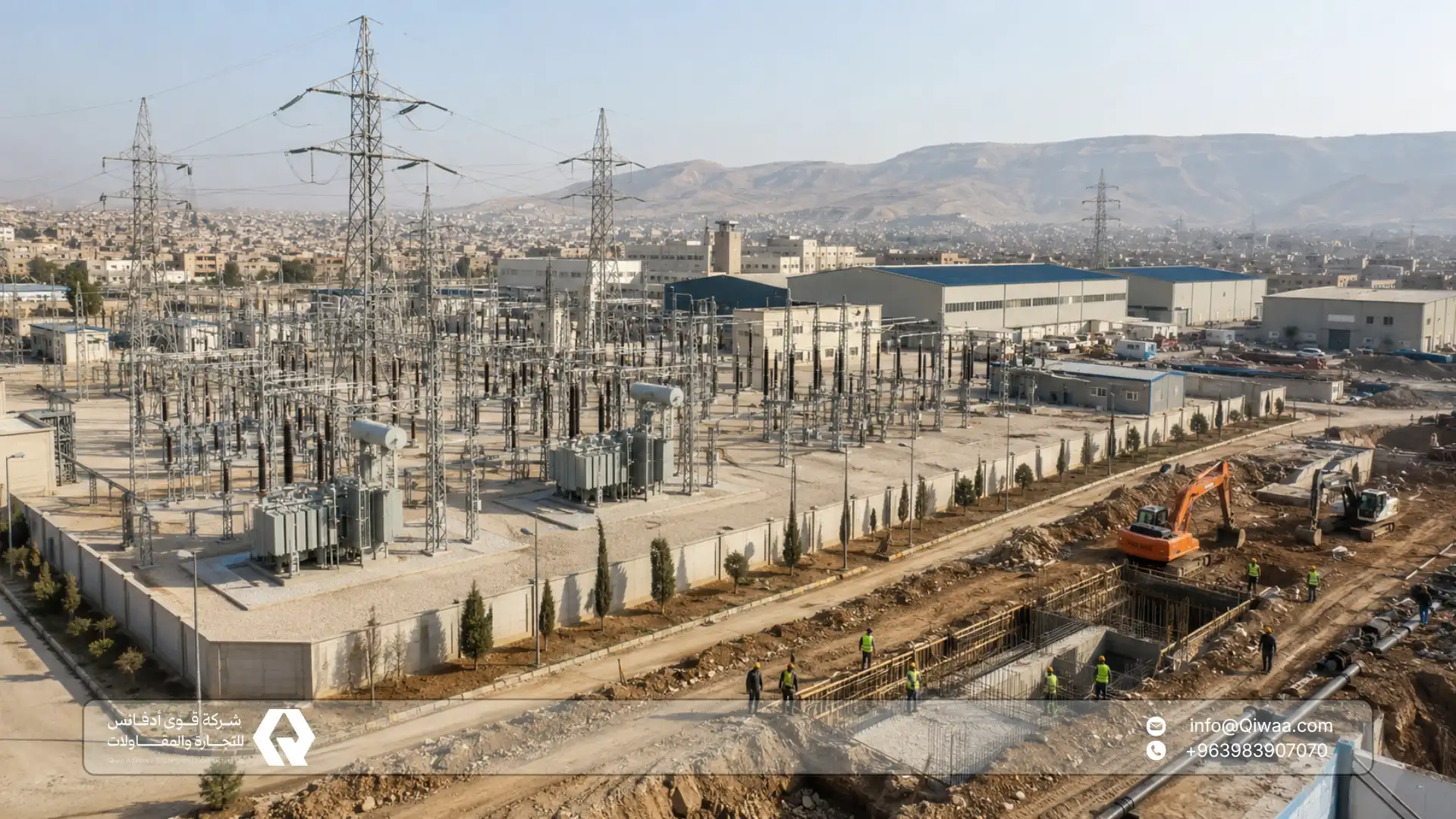
Infrastructure opportunities in Syria in 2026 can be divided according to the type of market participant.
For Investors
Opportunities appear in water and treatment stations, logistics areas, warehouses, industrial zones, energy, port-related services, and infrastructure projects inside residential and commercial developments.
For Contractors
There are opportunities in network execution, road works, manholes, wastewater systems, concrete works, site rehabilitation, pipe installation, utility installations, and infrastructure projects inside cities and industrial zones.
For Suppliers
Opportunities appear in pipes, valves, cables, tanks, steel, cementitious materials, concrete, chemical admixtures, road materials, water pumps, and treatment plant components.
For Foreign Companies
Foreign companies can enter the market through a local partner for supply, execution, or product representation, especially in water, electricity, ports, logistics, treatment equipment, and industrial technologies.
What Risks Should Be Studied Before Entering the Sector?
The opportunity is large, but entering the infrastructure sector requires a practical reading of risk. The most important points to study include:
- Clarity of project scope and technical specifications
- Site condition and existing infrastructure
- Availability of materials locally or need for import
- Transport and storage costs
- Material price fluctuations
- Contractor or supplier capacity to commit to quantities
- Technical approvals and accreditations
- Testing and handover mechanism
- Logistics risks
- Need for a local partner for coordination and follow-up
- Execution schedule and supply chain ability to keep pace
A common mistake in infrastructure projects is treating them as separate material deals or isolated works. A successful project needs a connected chain that starts with study, then specifications, then supply, then execution, then testing and handover.
Reduce the risks of delay and specification conflicts. Request a consultation from Qiwaa before approving a supply plan or starting execution.
Read more: Guide to Investing Iron in Syria 2026: From Mining to Industry
How Qiwaa Supports Infrastructure Projects in Syria
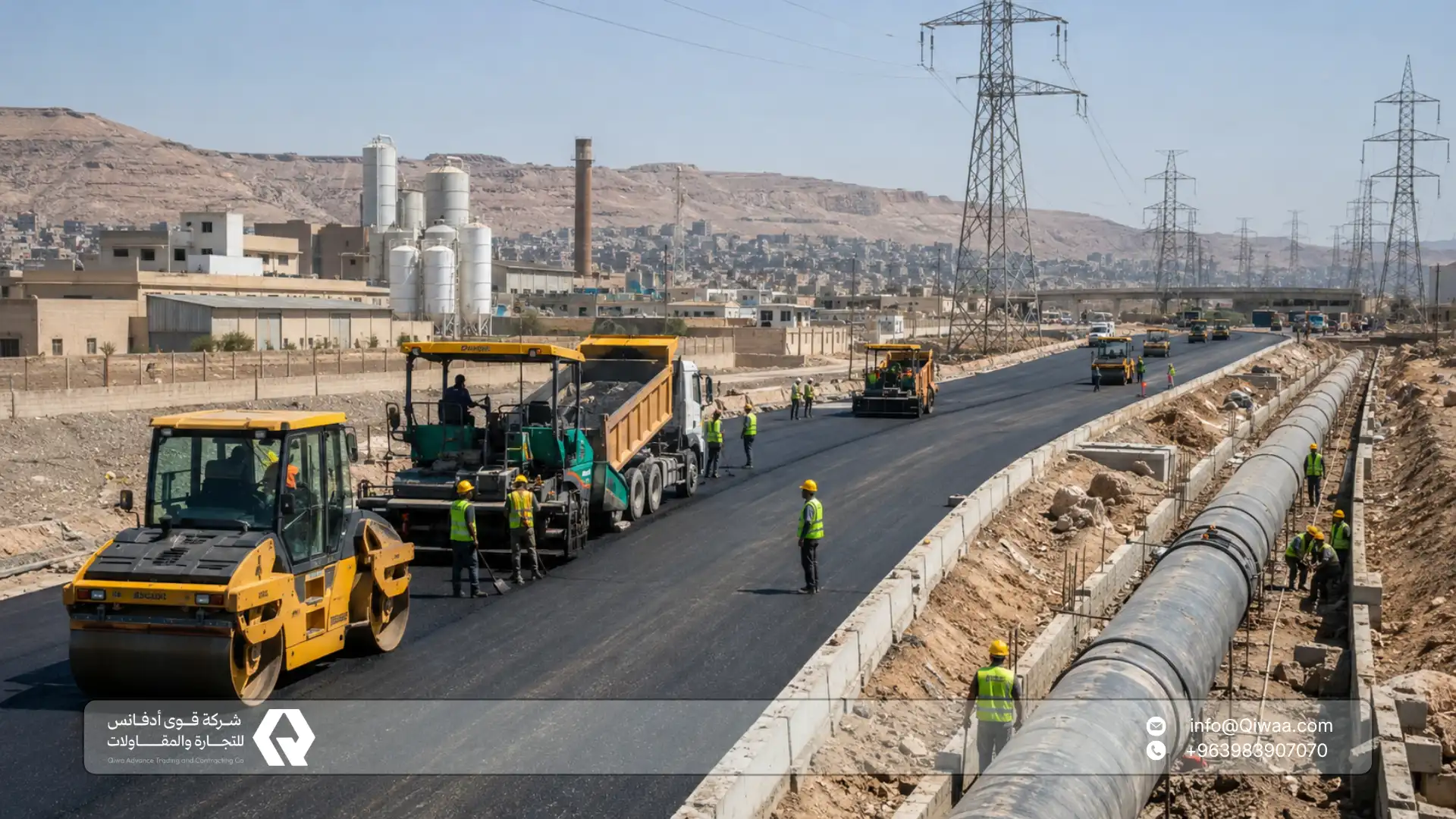
At Qiwaa, we treat infrastructure in Syria in 2026 as an integrated system that starts with need assessment and ends with supply, execution, and follow-up. We work with investors, contractors, and project owners to connect project needs with the right materials, suitable partners, and a practical execution plan.
Our Services in the Infrastructure Sector
- Supplying pipes, valves, and water and wastewater network components
- Supporting water and treatment plant projects
- Executing or supporting infrastructure and contracting works
- Supplying building materials, cementitious materials, and industrial products
- Supporting industrial zone and utility facility projects
- Supplying components for road, water, and wastewater projects
- Connecting investors and contractors with specialized partners and agents
- Organizing supply according to quantities and execution schedules
- Supporting projects from study to execution and follow-up
Why Choose Qiwaa for Investment Projects in Syria?
Qiwaa works in overlapping fields that directly serve infrastructure: industrial and commercial supply, contracting, water, treatment plants, building materials, industry, and mining. This integration helps clients reduce fragmentation between supplier, contractor, and consultant, and connects the project to a practical route.
We can support projects such as:
- Water and wastewater networks for residential or industrial projects
- Infrastructure for industrial zones
- Treatment plant projects
- Supply of materials and components for roads and utilities
- Rehabilitation of existing networks
- Infrastructure projects linked to investors or project owners
At Qiwaa, we support these needs through our experience in supply, contracting, water, building materials, and treatment plants, with a focus on solutions that can be executed inside the Syrian market.
If you are studying a project in Syria’s infrastructure sector, contact Qiwaa to review supply needs, materials, networks, execution requirements, and suitable partners for your project.
Frequently Asked Questions About Syria’s Infrastructure Sector in 2026
1. Why is Syria’s infrastructure sector an important investment opportunity in 2026?
The sector is becoming more important because reconstruction projects first need basic operating services such as electricity, water, wastewater, and roads. The large gap between damage levels and current market capacity creates opportunities for investors, contractors, and suppliers who can provide clear execution solutions.
2. What are the largest infrastructure opportunities in Syria now?
The main opportunities appear in water and wastewater projects, electricity and energy, industrial zones, roads, ports, logistics areas, and treatment plants. There are also major opportunities in internal infrastructure for residential and commercial projects, such as networks, tanks, manholes, drainage systems, and service installations.
3. Is Syria’s infrastructure sector suitable for foreign investors?
Yes, but it requires a local partner capable of understanding the market, licensing, supply, sites, labor, and execution mechanisms. A foreign investor may have financing or technology, but project success in Syria depends on turning the idea into a realistic execution plan.
4. How can a contracting company enter Syria’s infrastructure market?
The starting point is to define the type of target projects, then study technical capacity, supplier network, equipment, labor, and required licensing. After that, the company should choose gradually executable projects instead of entering large contracts without supply and operating readiness.
5. Are electricity projects alone enough to solve Syria’s energy problem?
Generation projects are important, but they are not enough without transmission and distribution networks, substations, and supporting civil infrastructure. This is why opportunities appear in grid-related works, cables, transformers, concrete foundations, electrical rooms, and operating support systems.