

Phosphate in Syria has an importance that goes beyond extracting raw material from mines and selling it for export. The greater value appears when phosphate enters a wider industrial chain that includes preparation, testing, processing, supply to factories, fertilizer manufacturing, phosphoric acid production, and logistics linked to local or international sales.
This perspective matters for investors, factories, and importers because the real value in the phosphate sector is not tied to raw phosphate rock alone. It depends on how that raw material is transformed into a usable product for agriculture, industry, and export. USGS explains that phosphate rock is the world’s important source of phosphorus, and that most phosphorus is consumed as a main component of NPK fertilizers used for food crops around the world.
In this article, we discuss the phosphate value chain in Syria from an industrial and investment perspective. We explain where opportunities appear after mining, what factories need before buying raw phosphate, and how Qiwaa can support phosphate projects through supply, specification review, raw material preparation, connecting investors with factories, and organizing the commercial route.
Why Is Phosphate Extraction Alone Not Enough?
Phosphate extraction is the beginning of the chain, but it is not enough to build a strong sector. Raw material extracted from the mine needs technical evaluation, sorting, preparation, storage, transport, and analysis before it becomes suitable for sale or manufacturing. Each stage affects price, exportability, and buyer confidence.
The difference between extracted raw material and marketable phosphate rock appears in several points:
- P₂O₅ content
- Moisture level
- Particle size
- Impurity level
- Grindability or washability
- Quantity consistency
- Shipping and storage readiness
- Availability of a clear certificate of analysis
USGS states in its 2026 mineral summary that marketable phosphate rock usually refers to beneficiated phosphate rock with suitable P₂O₅ content for use in phosphoric acid or elemental phosphorus production. This point is important because it separates phosphate rock that exists in a mine from phosphate rock that can enter industrial use.
Read more: Guide to Investing Iron in Syria 2026: From Mining to Industry
What Is the Phosphate Value Chain?
The phosphate value chain is the sequence of stages that raw phosphate passes through from extraction until it becomes an industrial or commercial product. Each stage adds a different type of value. The more the project moves from direct raw material sales toward preparation or manufacturing, the greater the opportunities for profit, employment, and industrial growth.
The chain usually includes the following stages:
- Mining: extracting raw phosphate from producing sites
- Crushing and sorting: preparing the material in suitable sizes
- Screening or washing when needed: reducing impurities and improving consistency
- Drying or moisture control: improving storage, transport, and processing readiness
- Testing and analysis: identifying P₂O₅ content, impurities, and specifications
- Storage and transport: moving the material to a factory, port, or preparation center
- Supply or export: selling phosphate according to buyer specifications
- Manufacturing: converting phosphate into phosphoric acid, fertilizers, or intermediate products
- Industrial marketing: selling the final or semi-finished product locally or internationally
This sequence shows that phosphate investment in Syria can be limited to mining, or it can move into preparation, logistics, manufacturing, or connecting factories with suitable sources.
Read more: Cement Industry in Syria: Market Challenges and Investment Opportunities in 2026
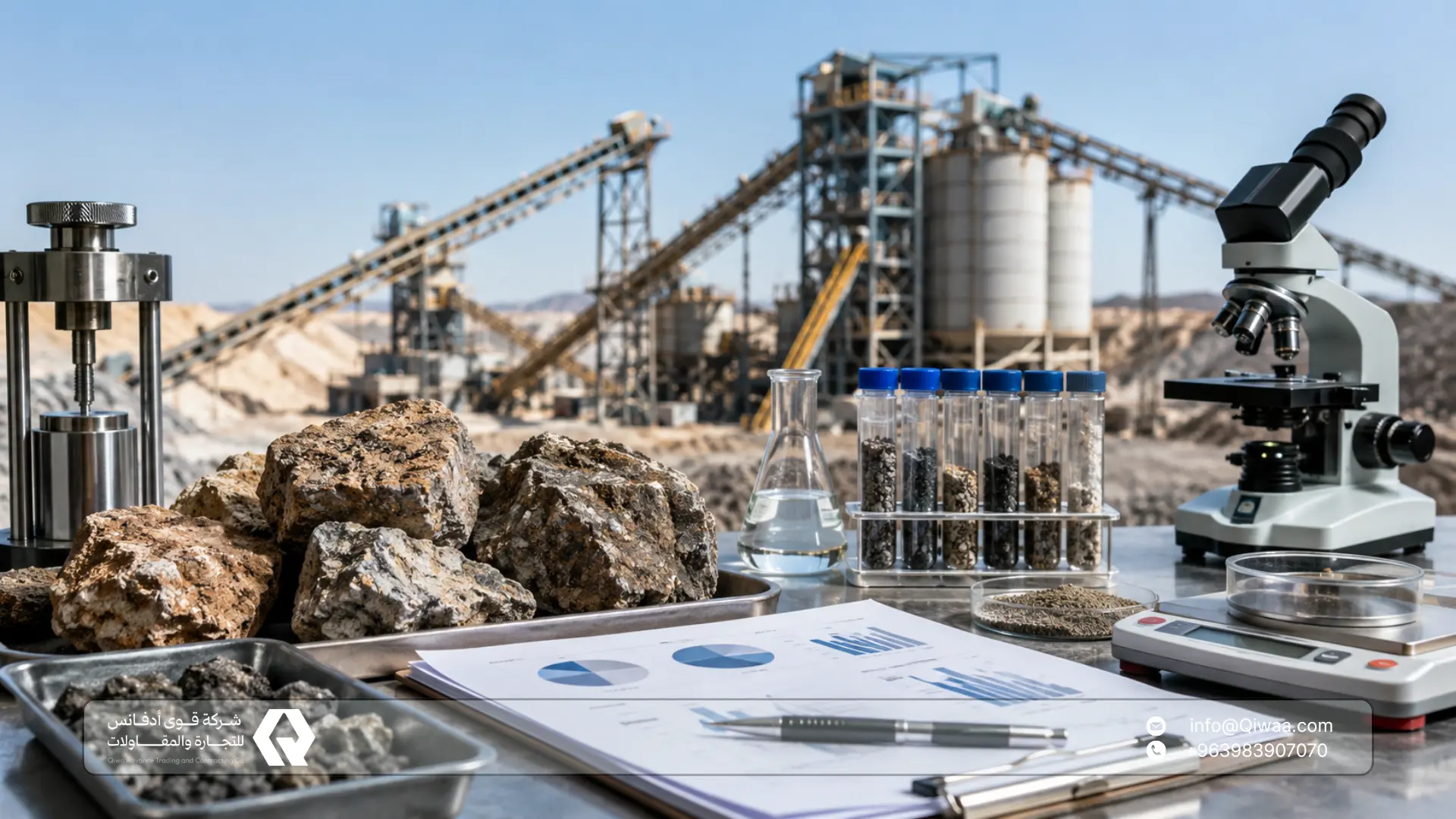
Comparing Investment Paths in Syrian Phosphate
| Investment Path | Suitable For | Added Value | Key Requirements | qiwaa Role |
|---|---|---|---|---|
| Selling raw phosphate rock | Traders and exporters | Limited to medium | Raw material source, analysis, transport, sales contract | Organizing supply, specifications, and quantities |
| Preparing raw material before sale | Industrial investors | Higher than direct sale | Crushing, screening, drying, testing | Supporting requirement assessment, equipment needs, and commercial route |
| Supplying phosphate to factories | Fertilizer and processing plants | Stable when long-term contracts exist | Consistent quality, regular quantities, analysis certificates | Connecting raw material with factory needs |
| Manufacturing phosphoric acid | Large industrial investors | High | Energy, water, sulfuric acid, processing technologies | Supporting project requirement studies and partner selection |
| Manufacturing phosphate fertilizers | Fertilizer and agricultural input plants | Very high | Factory, production formula, agricultural market | Supporting supply and connecting products with markets |
| Transport and storage services | Logistics companies | Medium and continuous | Trucks, warehouses, yards, port access | Organizing supply chain, storage, and shipping |
This comparison helps investors choose the right entry point. Some projects start with supply, some require preparation, and others can move directly into manufacturing if energy, financing, technology, and partnerships are available.
What Do Factories Need to Determine Phosphate Rock Quality Before Purchase?
A factory does not buy phosphate simply because it is phosphate. It buys raw material with specific properties that match its production line. Therefore, every transaction should start with a clear question: what is the final use of the raw material?
The most important elements to check before purchase include:
- P₂O₅ content: the main indicator of raw material value and processing suitability
- Moisture: affects actual weight, storage, transport, and operating efficiency
- Impurities: some impurities affect phosphoric acid quality or final fertilizer quality
- Particle size: determines ease of grinding, mixing, or shipping
- Processability: does the material need washing, drying, or screening?
- Quality stability: do specifications differ from one shipment to another?
- Certificate of analysis: necessary to reduce disputes between seller and buyer
Studies in the phosphate industry show that phosphate rock quality and impurities affect phosphoric acid production, intermediate product quality, and downstream products, especially in filtration, corrosion, scaling, and gypsum quality during processing.
For this reason, factories need support in reading specifications before contracting, not after the shipment arrives. Here, qiwaa can support buyers in identifying the required specifications, reviewing whether the raw material fits the intended industrial use, and organizing quantities and supply methods.
Preparing Phosphate Rock Before Sale
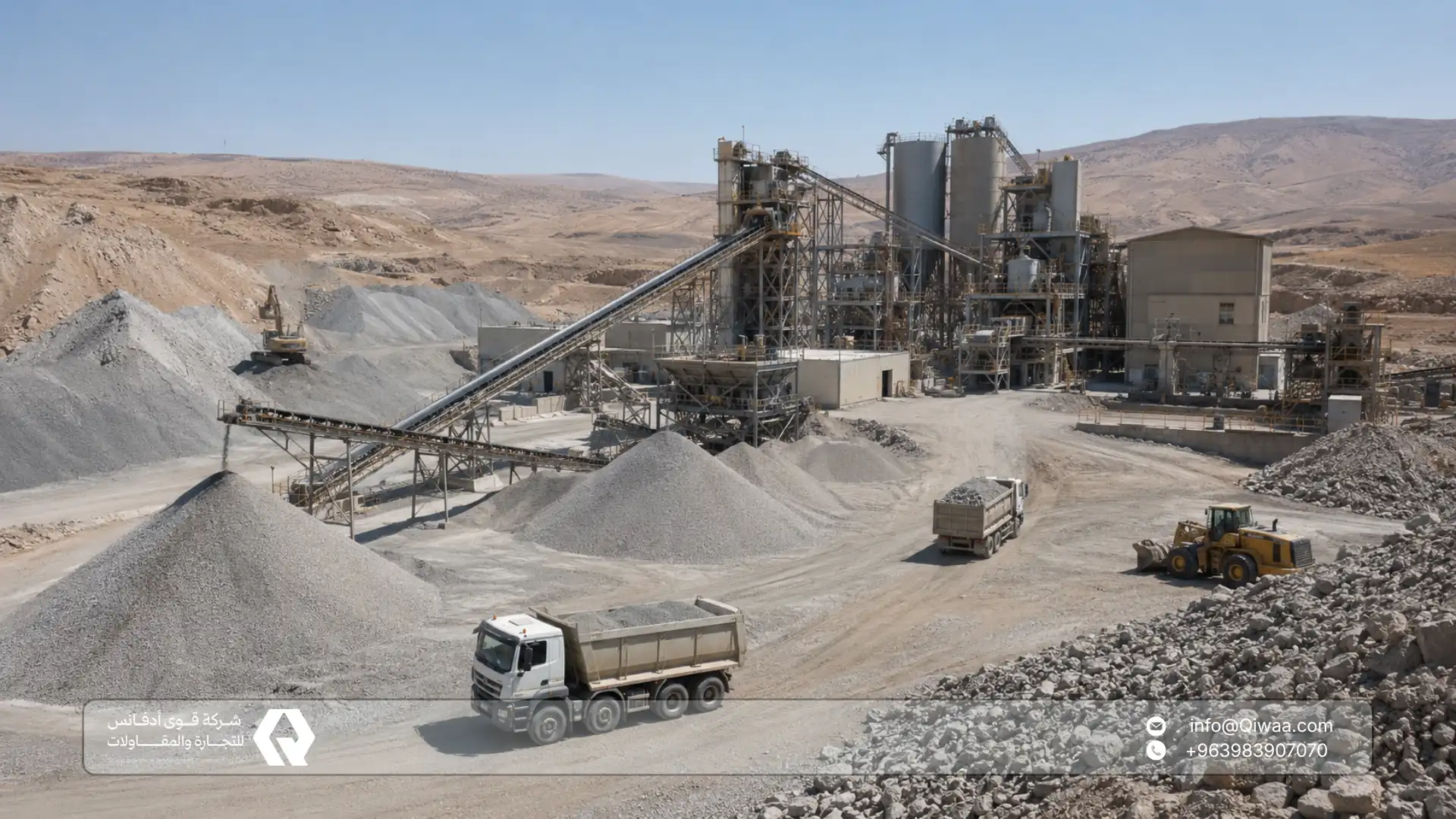
Preparation is the stage that moves phosphate from an extracted raw material to a more marketable product. Phosphate rock preparation usually includes crushing, screening, drying or calcining in some operations, and grinding according to the final use.
The U.S. Environmental Protection Agency explains that phosphate rock processing for fertilizer manufacturing is based on separating phosphate rock from impurities and non-phosphate materials, using operations such as beneficiation, drying or calcining, and grinding.
Raw material preparation is important because it helps:
- Improve shipping and storage readiness
- Reduce moisture that affects weight and pricing
- Standardize particle size
- Reduce impurities as much as possible
- Prepare the material for a specific factory requirement
- Increase buyer confidence in specification stability
In the Syrian market, phosphate preparation projects can be independent opportunities, especially for companies that do not want to operate a full fertilizer plant but want to enter the sector through pre-manufacturing services.
Learn more: Importing Building Materials to Syria and Key Customs Procedures in 2026
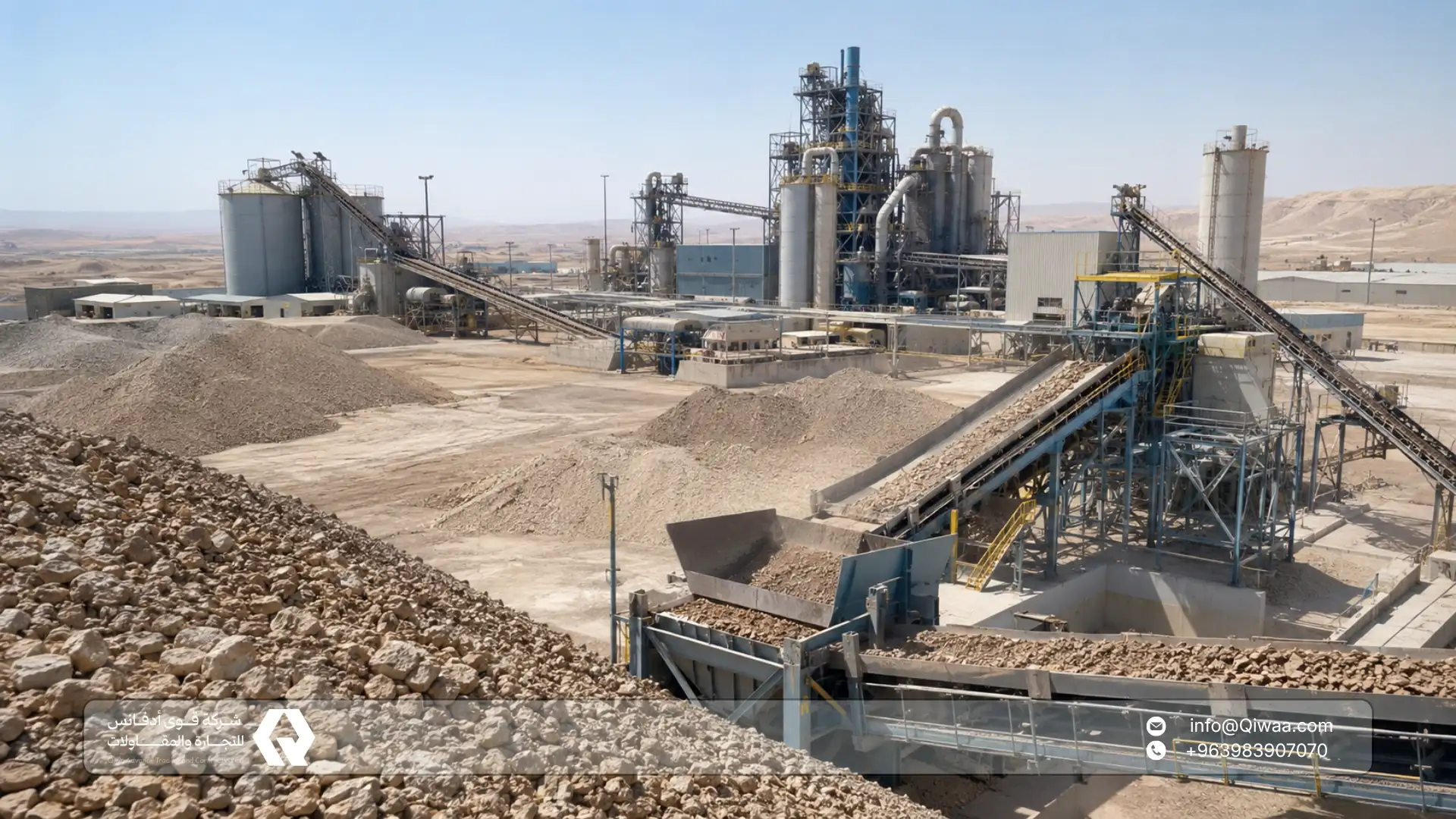
Manufacturing Phosphate Fertilizers in Syria
The value of phosphate increases when it moves from raw material to an agricultural or industrial product. Phosphate fertilizers are among the most important final uses of phosphate because they are directly connected to food production and soil fertility.
FAO explains that phosphorus is an essential plant nutrient and that phosphorus deficiency can severely limit crop production. It also discusses the role of phosphate rock in improving soil fertility and addressing nutrient depletion.
USGS also states that more than 95% of phosphate rock mined in the United States is used to manufacture wet-process phosphoric acid and superphosphoric acid. These intermediate materials are then used in the production of ammonium phosphate fertilizers and animal feed supplements. This model shows that the industrial value of phosphate often appears in chemical conversion, not in selling rock alone.
In Syria, fertilizer manufacturing opportunities can appear through several paths:
- Supplying phosphate rock to fertilizer plants
- Producing phosphoric acid as an intermediate material
- Manufacturing phosphate fertilizers for the local market
- Building partnerships with foreign fertilizer companies
- Serving the Syrian agricultural sector and nearby markets
- Exporting products with higher value than raw material
The Importance of Phosphoric Acid Between Raw Phosphate and Fertilizer
Phosphoric acid is a central link in the phosphate fertilizer industry. It is produced industrially from phosphate rock through chemical processes and is later used to manufacture different phosphate products.
Specialized industrial sources explain that phosphoric acid is produced from phosphate rock by adding concentrated sulfuric acid in reactors. This produces phosphoric acid along with calcium sulfate, known as gypsum, and insoluble impurities that are separated later.
This stage requires greater investment than mining or preparation because it needs:
- A stable raw material source
- Sulfuric acid
- Energy and water
- Reaction and filtration units
- By-product treatment
- Quality systems and laboratories
- Operating expertise
- A market for selling the acid or fertilizers produced from it
At this stage, the role of a local partner becomes important in studying the site, infrastructure, supply, approvals, and industrial partnerships.
Read more: Industrial and Medical Gases in Syria: Safe Supply for Steel Plants and Hospitals
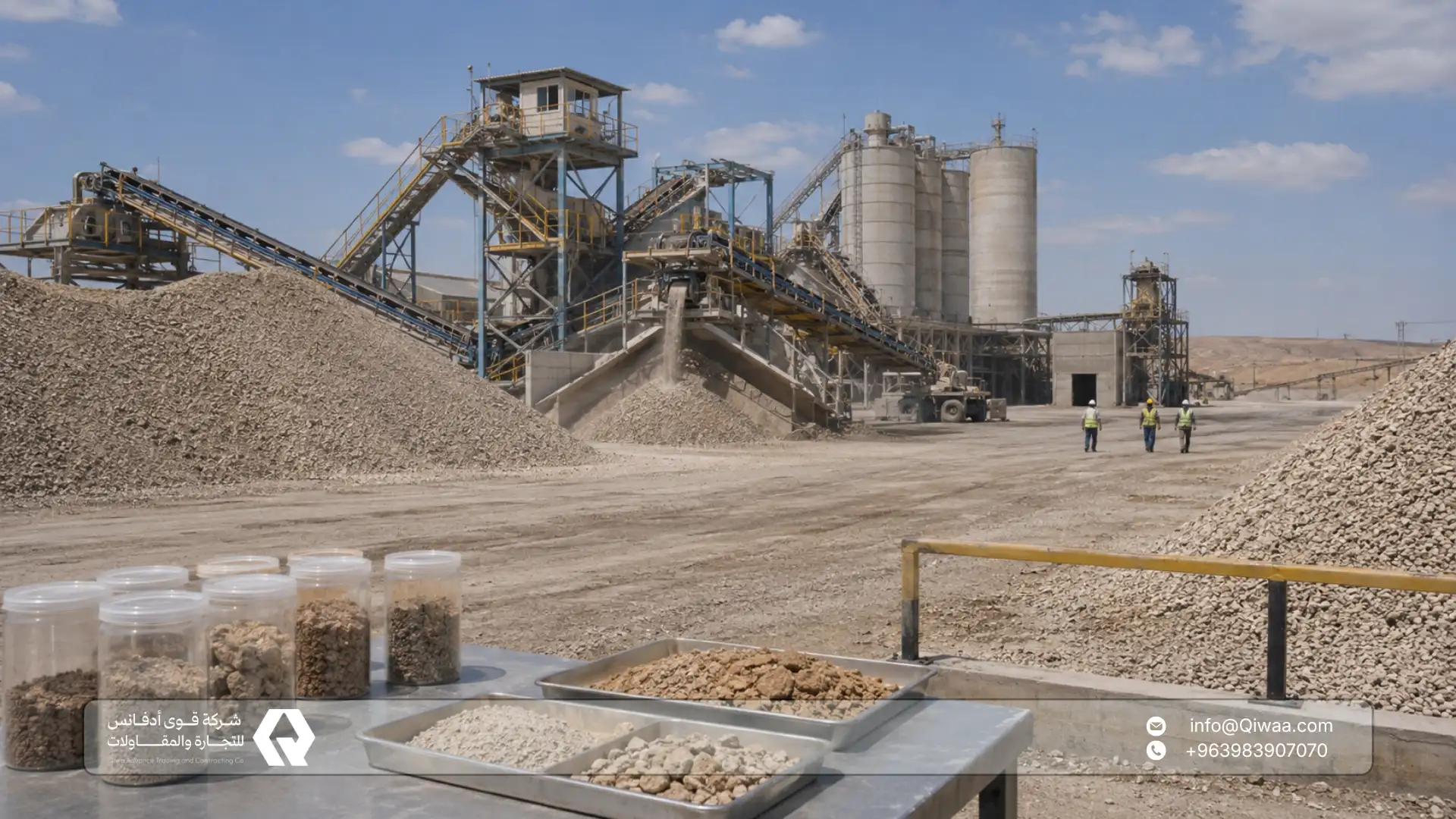
Why Is 2026 Important for the Phosphate Value Chain in Syria?
The year 2026 is important because it follows recent agreements related to phosphate and coincides with rising global interest in fertilizer supply chains. In December 2025, Syria announced an agreement with TERYAQ, a subsidiary of Serbia’s ELIXIR Group, to export 1.5 million tons of phosphate by 2026, with the possibility of expanding cooperation later toward establishing phosphate processing plants linked to related industries.
Syria also announced two additional agreements in the phosphate sector in January 2026 for the sale, investment, and marketing of large quantities through land and sea transport, as part of an official direction to develop the sector and increase revenues.
At the same time, World Bank commodity updates indicate that fertilizer prices are projected to increase by 31% in 2026, with risks related to energy, fertilizer flows, and global trade. This makes phosphate sources and fertilizer supply chains more important for factories, importers, and the agricultural sector.
Where Do Industrial Investment Opportunities Appear in Syrian Phosphate?
Investment opportunities in Syrian phosphate appear in the spaces that add value to the raw material. The most important opportunities include:
1. Preparing Raw Material and Improving Marketability
Investors can enter through crushing, screening, drying, storage, and testing units. This path suits investors who want to enter the sector without building a large chemical plant.
2. Supplying Phosphate to Factories
Factories need raw material with stable specifications and regular quantities. The opportunity in supply depends on trust, analysis quality, shipment consistency, and clear contracts.
3. Manufacturing Phosphate Fertilizers
This path creates higher value but requires larger industrial investment. It is suitable for companies with fertilizer experience or investors looking for a local partnership.
4. Producing Phosphoric Acid
Phosphoric acid is an important intermediate material in fertilizer manufacturing. This opportunity requires a careful technical study because of energy, water, chemical, and by-product treatment requirements.
5. Logistics and Export Services
Transport, storage, loading, shipping, and commercial documentation are essential to the success of the phosphate sector. Logistics companies can enter the sector without owning a mine or a factory.
6. Supporting Agricultural Input Manufacturers
Syrian phosphate can serve agricultural input companies by providing raw material or intermediate products used in fertilizer manufacturing, connecting mining directly with agriculture.
What Does an Investor Need Before Entering the Phosphate Sector in Syria?
Before investing in phosphate, the decision must be built on a clear technical and commercial study. The most important questions to define include:
- Is the project based on mining, preparation, or manufacturing?
- What is the source of the raw material and what are its specifications?
- Are the available quantities regular?
- What are the P₂O₅ content, moisture level, and impurity profile?
- Is there an approved laboratory or testing provider?
- What is the transport cost from the mine to the factory or port?
- Does the project need large quantities of water and energy?
- What is the target market: local, regional, or global?
- Are there purchase contracts or factory interest?
- Who is the right local partner for execution and supply?
Each of these questions affects the project structure and investment size. Therefore, it is not enough to say that phosphate is available. The real question is how it will be turned into a product, deal, factory, or supply chain.
Support Services Needed by the Phosphate Sector in Syria
The phosphate sector is not built on the mine alone. It requires many surrounding services, and these services can become independent opportunities for companies and investors.
The most important support services include:
- Supplying mining and preparation equipment
- Supplying belts, screens, and crushers
- Preparing storage yards
- Building warehouses and industrial facilities
- Implementing water and wastewater networks for industrial sites
- Preparing internal roads and loading access points
- Testing and analysis services
- Land transport and shipping
- Commercial and customs documentation
- Industrial marketing and connecting buyers with suppliers
This point is important for Qiwaa because its experience in supply, contracting, infrastructure, building materials, and treatment plants enables it to support projects from more than one angle, not only through raw material sales.
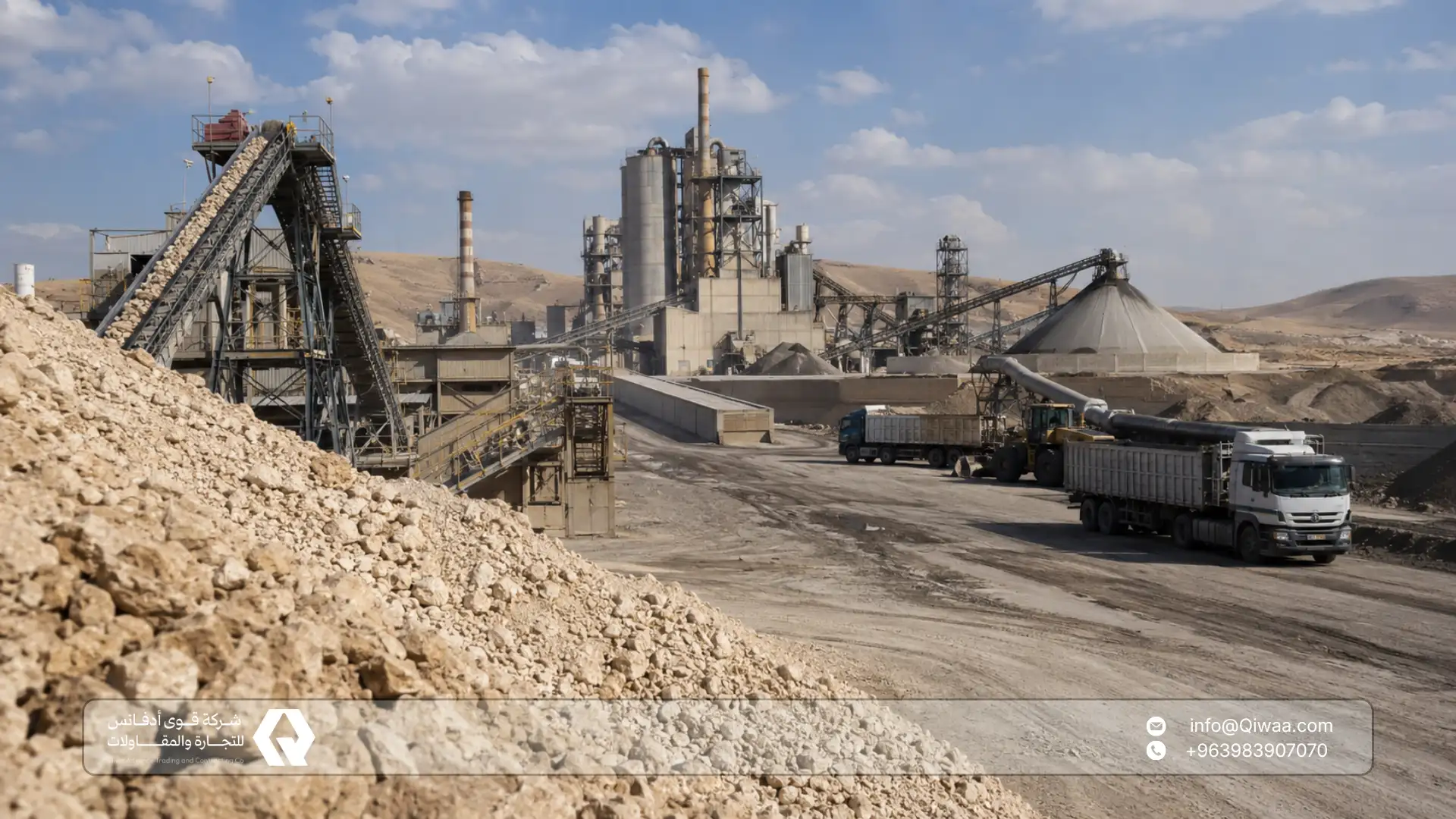
How Qiwaa Supports Phosphate Projects in Syria
Qiwaa supports phosphate projects in Syria by connecting raw material with the right use and helping investors or factories understand the best route: supply, preparation, manufacturing, export, or industrial partnership.
Our services in this sector include:
- Studying factory needs for phosphate rock
- Reviewing required technical specifications before supply
- Organizing quantities and delivery mechanisms
- Supporting raw material preparation projects before sale
- Connecting investors with suitable partners
- Supporting infrastructure requirements for mines and factories
- Supplying industrial materials and components for phosphate-related projects
- Supporting export and industrial marketing routes
- Helping investors choose the most suitable path according to project goals
At Qiwaa, we look at phosphate as an integrated industrial sector. It starts with raw material, but it does not stop there. The goal is to transform the mineral resource into scalable economic value, whether through organized supply, local manufacturing, or export partnerships.
To start studying a phosphate-related project in Syria, contact qiwaa to review specifications, quantities, supply opportunities, preparation or manufacturing requirements, and suitable partners for your project.
Learn more: GGBS and Pozzolana Supply in Syria: Cement Alternatives for Green Concrete
Frequently Asked Questions About the Phosphate Value Chain in Syria
What is the difference between phosphate mining and the phosphate value chain?
Phosphate mining means extracting raw material from the mine. The phosphate value chain includes what comes after extraction: preparation, testing, storage, transport, supply, manufacturing, and export. This makes the value chain broader and more closely connected to industrial investment.
Why is selling raw phosphate rock directly not enough?
Selling raw material creates limited value compared with preparation or manufacturing. When specifications are improved, moisture is reduced, particle size is standardized, or raw phosphate is converted into fertilizers or phosphoric acid, commercial value increases and contracting opportunities with factories and foreign markets become stronger.
What are the most important phosphate rock specifications for factories?
The most important specifications are P₂O₅ content, moisture, impurities, particle size, grindability or washability, and quality stability between shipments. These factors determine whether the raw material is suitable for fertilizer manufacturing, phosphoric acid production, or industrial supply.
Is manufacturing fertilizer from phosphate in Syria a suitable opportunity?
Yes, fertilizer manufacturing can be an important opportunity if there is a clear technical study, a stable raw material source, energy and water, suitable equipment, and a local or export market. The greater value appears when the project moves from selling raw material to producing an agricultural product that can be used and exported.
What does a foreign investor need to enter the phosphate sector in Syria?
A foreign investor needs a local partner, a clear raw material source, a specification study, an understanding of licensing, a transport and storage plan, purchase contracts, and a study of the required infrastructure. Project success depends on turning the idea into an executable operating and supply plan.