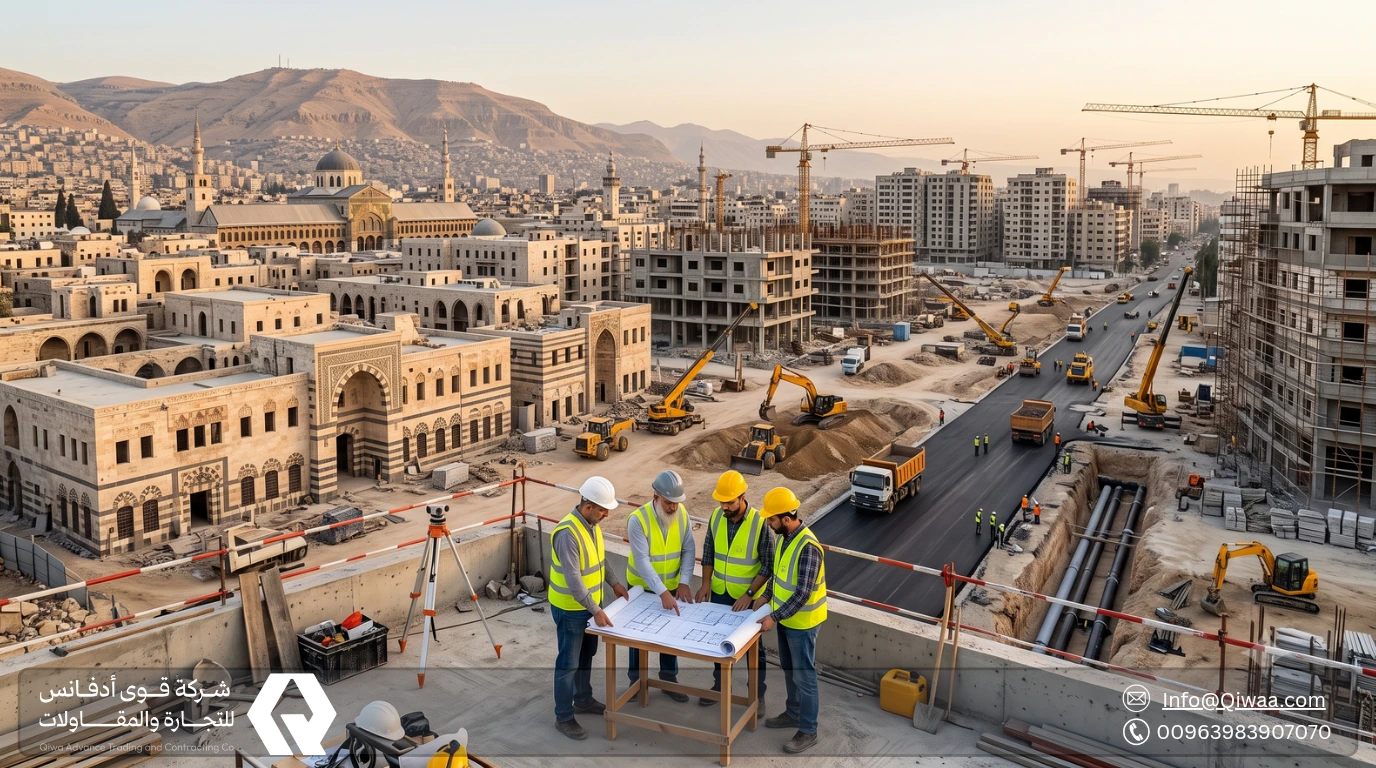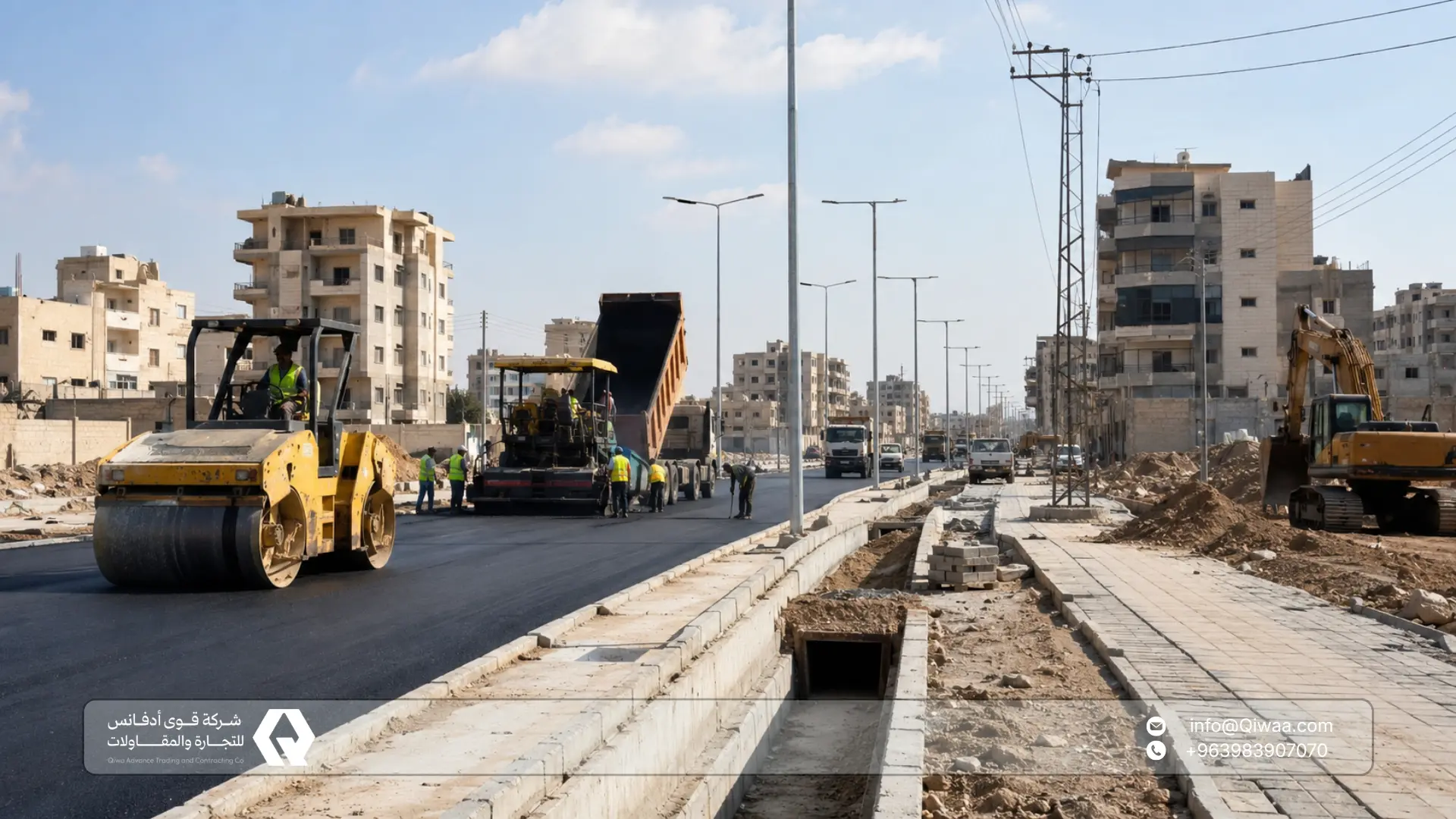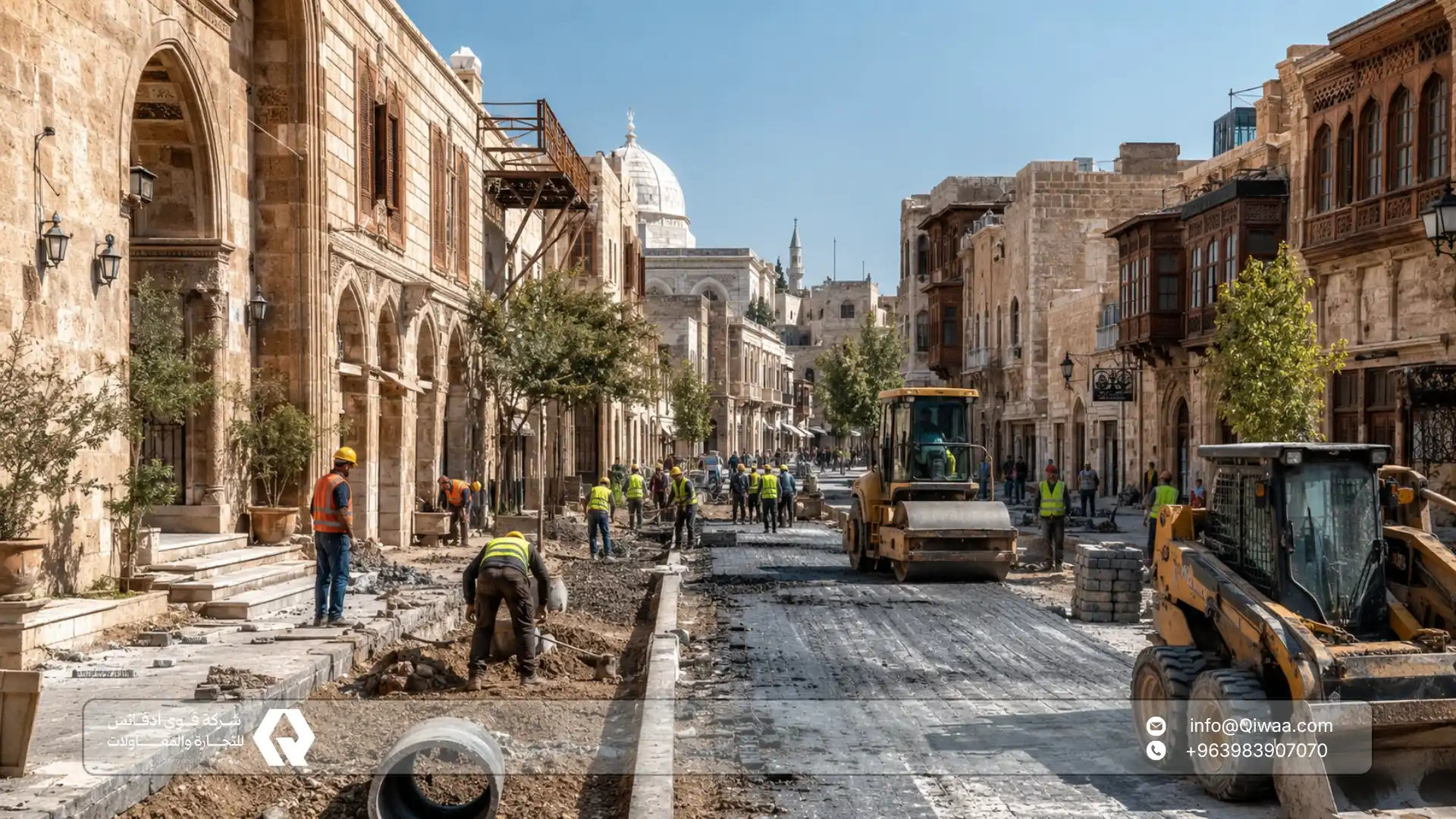


The cement industry in Syria is one of the sectors most closely connected to reconstruction. Cement is used in almost every project: residential buildings, roads, bridges, water and wastewater networks, industrial zones, factories, warehouses, ports, and power plants. As the need for restoration, construction, and infrastructure expands, cement in Syria becomes a strategic material, not just a traditional construction product.
World Bank estimates place the cost of rebuilding Syria’s physical assets at around USD 216 billion, including USD 75 billion for residential buildings, USD 59 billion for non-residential buildings, and USD 82 billion for infrastructure. These figures explain why demand for cement, clinker, concrete, and building materials in Syria is expected to become central in the coming years.
In this article, we discuss the current state of the cement industry in Syria, production capacity, the role of clinker, investment opportunities, factory challenges, raw materials, and the gap between local demand and production capacity. We also explain how Qiwaa Advance can support cement projects and building materials supply in Syria.
Why Is the Cement Industry in Syria a Strategic Sector?
Cement is the binding material used in concrete, mortar, blocks, and precast elements. It is the foundation of most construction and infrastructure works. For this reason, the cement market in Syria cannot be separated from housing projects, city restoration, water and wastewater networks, roads, industrial facilities, and energy projects.
The sector is especially important in Syria for three main reasons:
- The scale of damage to buildings and infrastructure
- The need for stable and locally available building materials
- The presence of cement plants that need rehabilitation, development, and more efficient operation
USGS data indicates that cement production in Syria was estimated to have increased to 2.5 million tons in 2021, compared with around 2.4 million tons in 2020. However, production remained below 3 million tons annually over five years, which is less than one-third of the country’s production capacity of around 10 million tons per year. This gap explains why rehabilitating cement plants and expanding production capacity is so important.
Read more: Importing Building Materials to Syria and Key Customs Procedures in 2026
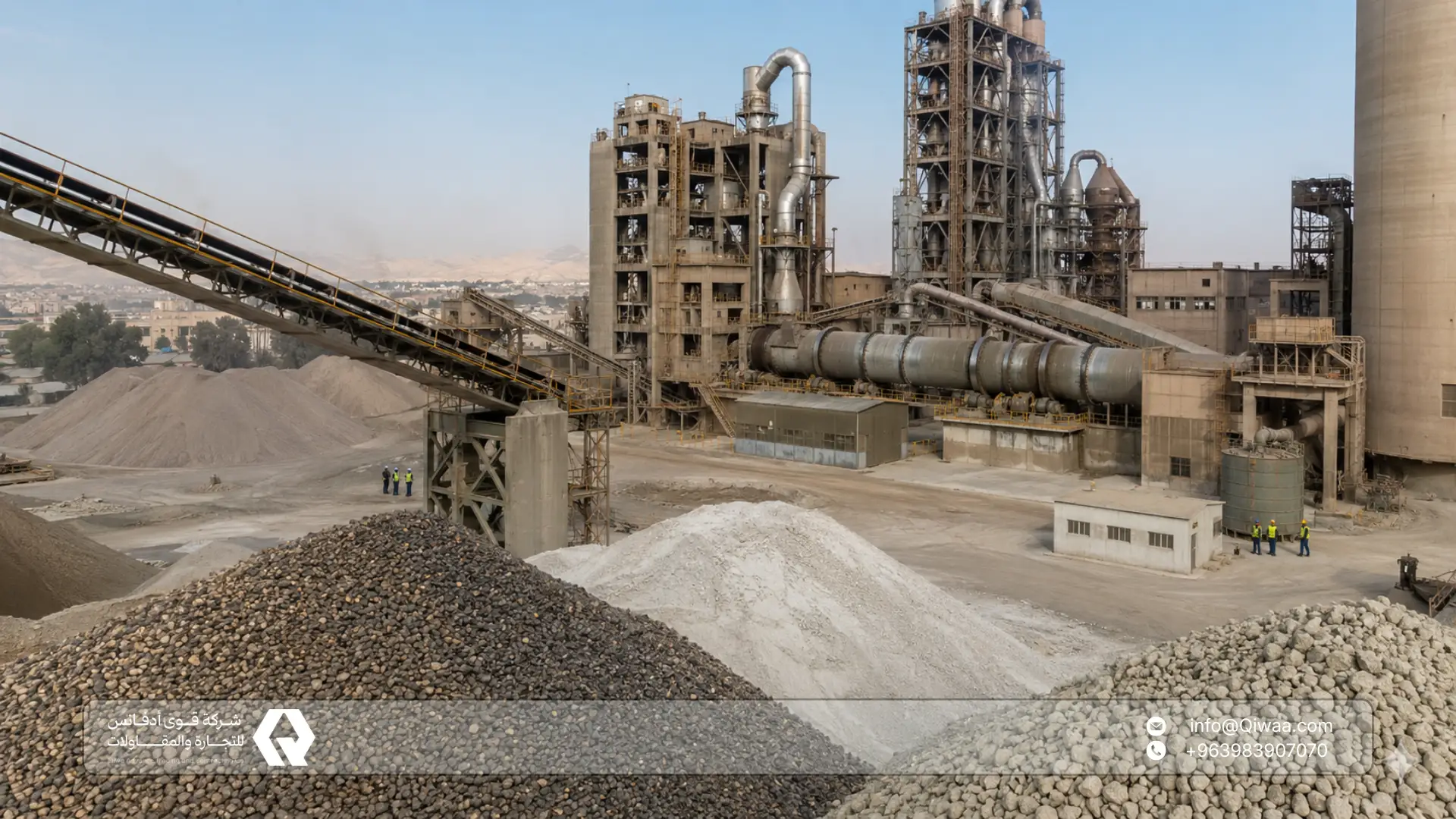
What Is the Current Situation of Cement Plants in Syria?
Syria has several cement plants and cement factories historically connected to both the public and private sectors. However, many of these facilities were affected during the war years due to damaged assets, energy shortages, reduced maintenance, the shutdown of some production lines, and higher operating costs.
In 2025 and 2026, clear signs began to appear that the sector was moving again. Omran Company announced a new investment map for the cement sector, aimed at attracting local and regional partners, expanding production, and improving the competitiveness of Syrian products.
SANA also announced in March 2026 that 12 Arab and foreign companies had applied to invest in the Muslimiyah and Adra cement plants, with offers being evaluated according to technical and financial criteria. In addition, rehabilitation work was reported at the mills of the Tartous cement plant by the UAE-based QBZ, along with rehabilitation and development of the third line at the Hama cement plant through the Iraqi company Vertex.
This means that cement investment in Syria is moving in several directions: restarting production lines, upgrading mills, importing clinker, attracting partners, and gradually increasing production capacity.
How Is Cement Made?
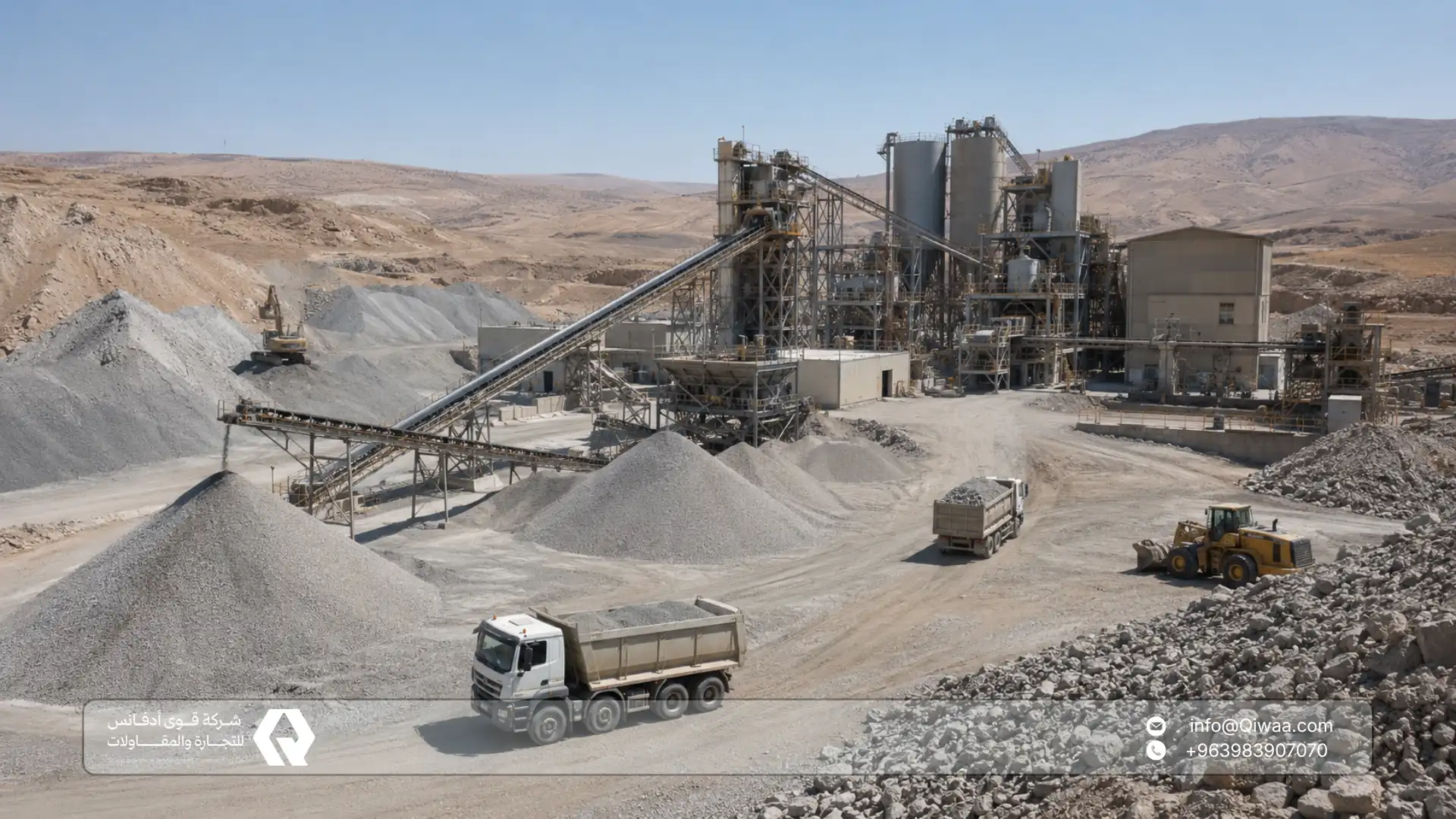
To understand investment opportunities in the sector, it is important to understand the manufacturing process. Cement production usually begins with extracting limestone, clay, or similar materials. These raw materials are then ground and prepared into a raw mix. After that, they are heated in kilns to produce clinker. In the final stage, clinker is ground with gypsum and other additives to produce finished cement.
The Portland Cement Association explains that cement manufacturing depends on processing large quantities of limestone, clay, and similar materials to produce a fine powder later used in concrete and mortar.
In simple terms, the cement manufacturing process includes the following stages:
- Extracting raw materials such as limestone, clay, sand, iron ore, or corrective materials
- Crushing and grinding the materials into suitable sizes
- Preparing the raw meal by controlling calcium, silica, alumina, and iron ratios
- Burning in the kiln to produce clinker at high temperatures
- Grinding clinker with gypsum or supplementary cementitious materials
- Packing or bulk shipping to supply cement to projects or concrete companies
These stages show that investment is not limited to building a full cement factory in Syria. Opportunities also exist in quarries, transport, clinker grinding, gypsum supply, additive supply, mill operation, production line maintenance, and the provision of energy and industrial materials.
Learn more: Ceramic and Porcelain Tiles in Syria: Import Sources and Best Options
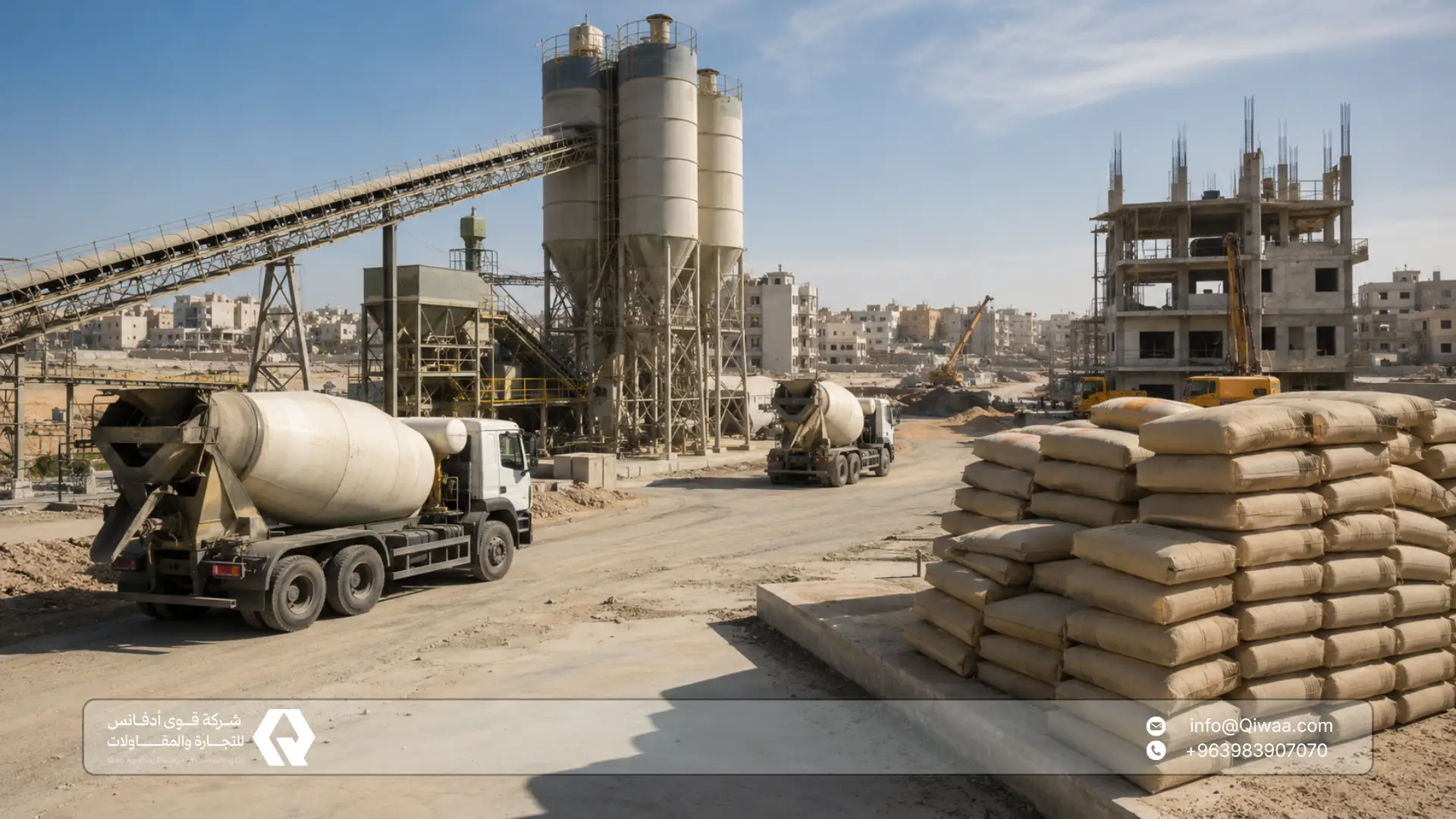
Why Has Clinker Become Important in Syria?
Clinker is the essential intermediate material used before cement grinding. When clinker is available, a cement plant can operate its cement mills and produce finished cement, even if local clinker production is limited or costly.
In March 2026, SANA announced that Omran Company had received clinker shipments from Egypt to support cement production in Syria. Industrial reports explained that these shipments aim to support the operation of cement plants and meet local demand according to each plant’s production capacity.
Omran also signed a 15-year contract with a UAE company to rehabilitate the Tartous cement mills, relying on imported clinker processed according to Syrian standards, with the goal of increasing local production and supporting price stability. SANA reported that the project may provide around 300 direct jobs and more than 2,000 indirect jobs.
For this reason, clinker in Syria can be considered a practical input for restarting part of the country’s production capacity more quickly, while kilns, burning lines, energy systems, and industrial infrastructure are being developed.
Comparing Investment in a Cement Plant and Clinker Grinding
| Path | Best For | Key Requirements | Investment Level | Main Advantage |
|---|---|---|---|---|
| Integrated cement plant | Large industrial investors | Quarries, kiln, energy, water, equipment, licenses | Very high | Full control over the production chain |
| Clinker grinding | Industrial investors and operating partners | Clinker, mills, gypsum, packing, laboratory | Medium to high | Faster operation compared with building a full plant |
| Rehabilitation of an existing plant | Operating and development companies | Maintenance, equipment, energy, operations management | Medium | Using existing assets |
| Cement supply | Traders, suppliers, and contractors | Supply sources, transport, storage, quality | Lower | Faster entry into the market |
| Raw material supply | Material companies and quarry operators | Limestone, gypsum, additives, transport | Medium | Serves plants and concrete companies |
| Maintenance and modernization services | Technical companies and equipment suppliers | Spare parts, experience, equipment, maintenance teams | Medium | Continuous demand from existing plants |
Raw Materials Used in the Cement Industry in Syria
The cement industry in Syria depends on mineral resources and industrial materials required to produce clinker and cement. The most important materials include:
- Limestone as the main source of calcium
- Clay or marl as a source of silica and alumina
- Sand or siliceous materials to adjust the mix when needed
- Iron ore or iron-bearing materials to control iron ratios in the raw meal
- Gypsum, added during clinker grinding to control setting time
- Pozzolana, slag, or supplementary cementitious materials used in some blended cement types
Specialized geological publications explain that cement is produced from a controlled mixture of limestone and clay materials. Limestone provides calcium, while clay materials provide silica and alumina.
This point is important for Qiwaa Advance, because the company works in the supply of building materials, industrial materials, and raw materials related to infrastructure. This enables it to serve cement plants and concrete projects from more than one angle: materials, supply, transport, requirement assessment, and technical partners.
Types of Cement Needed in the Syrian Market
The Syrian market needs more than one type of cement because projects are not the same. A fast housing project is different from a water plant, an industrial facility, a road, or a tank.
The most important cement types include:
- Ordinary Portland cement for general construction uses
- Sulfate-resistant cement for areas exposed to sulfate-rich soil or water
- Pozzolanic cement for some applications that require better resistance to harsh environments or lower heat of hydration
- Oil well cement for specialized uses in the energy sector
- Rapid-hardening cement for some urgent repair and infrastructure projects
- Blended cement with supplementary cementitious materials to reduce reliance on clinker and improve certain properties
The appearance of products such as pozzolanic cement CEM II in sector news reflects a move toward product diversification, rather than relying only on traditional cement.
Read more: Heritage Building Restoration in Syria: Solutions for Reconstruction 2026
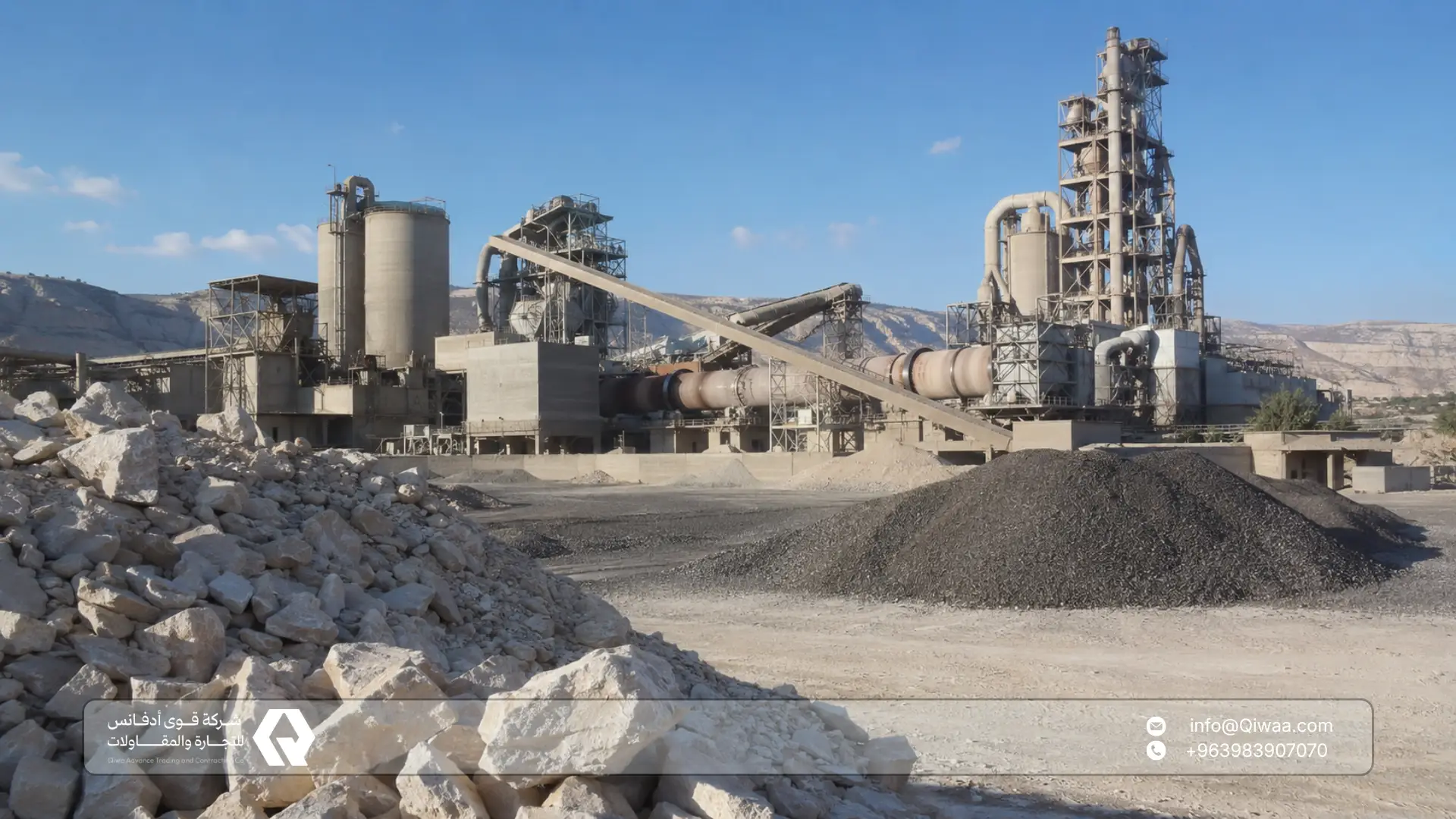
Where Are the Investment Opportunities in the Cement Industry in Syria?
Cement investment opportunities in Syria appear across several paths. Some are large industrial opportunities, while others are commercial, operational, or supply-related.
1. Rehabilitating Existing Cement Plants
This is a core opportunity because some plants already have assets and production lines that can be restarted or improved. This is clear in the rehabilitation projects related to Tartous, Hama, Adra, and Muslimiyah.
2. Grinding Clinker and Producing Finished Cement
This path is suitable when local clinker production is limited or expensive. Clinker can be imported and ground locally with gypsum and additives to produce cement that meets the required standards.
3. Supplying Clinker, Gypsum, and Additives
Cement plants need a stable flow of clinker, gypsum, and supplementary cementitious materials. Weak supply can stop production even when the mills are ready.
4. Producing Blended Cement
Blended cement can reduce dependence on clinker in some applications, especially when pozzolana, slag, or suitable cementitious materials are available. This direction is important because it can help reduce cost and improve performance in certain projects.
5. Maintenance and Modernization Services
Cement factories need maintenance for mills, belts, filters, kilns, packing systems, laboratories, and electrical and mechanical equipment. These services represent a continuous opportunity.
6. Ready-Mix Concrete and Precast Elements
Rising demand from infrastructure and housing projects may push the market toward greater use of ready-mix concrete and precast elements, because they help control quality and speed up execution.
Challenges Facing the Cement Industry in Syria in 2026
Despite the size of the opportunity, cement plants in Syria face several challenges that must be studied before investment or supply decisions are made.
The main challenges include:
- Damage to some production lines and the need for rehabilitation
- High energy and fuel costs
- The need for imported clinker during some phases
- Weakness in some supply chains
- Aging equipment in older plants
- The need to comply with environmental and safety standards
- The need for laboratories and regular quality testing
- Price pressure compared with imported cement
- Difficulty financing large industrial projects without the right partner
SANA confirms that investment offers for Syrian cement plants are being evaluated according to technical and financial criteria. The plan to offer plants for investment aims to strengthen the industrial base and improve production efficiency while taking safety and environmental protection into account.
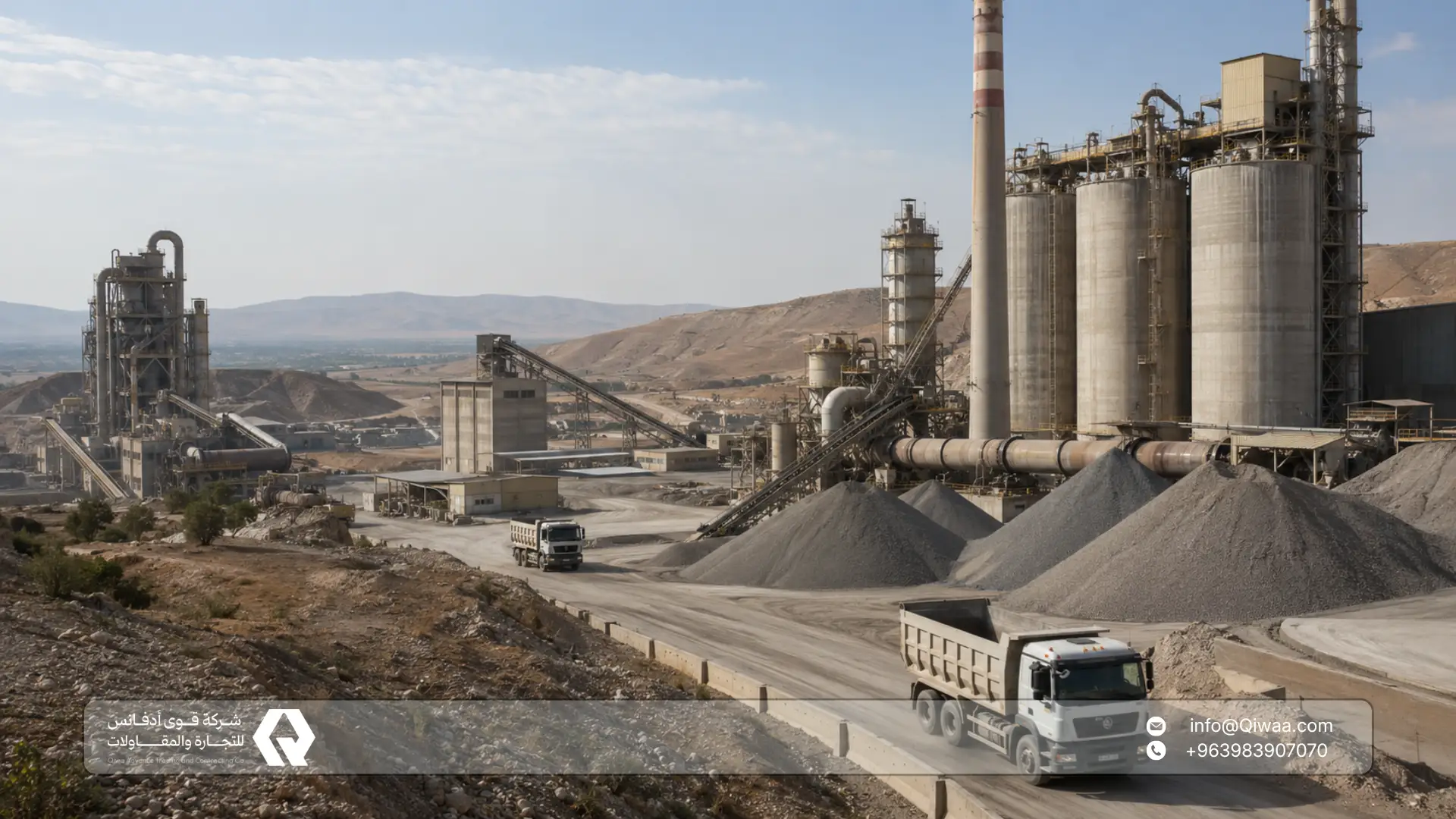
How Does Energy Affect Cement Production?
Cement is an energy-intensive industry. Clinker production requires high-temperature kilns, while mill operation requires stable electricity. Any weakness in electricity or fuel supply directly affects production volume and final cost.
In the short term, importing clinker and operating mills can help increase cement availability. In the longer term, the sector needs kiln modernization, improved energy efficiency, upgraded filters, and a stable fuel or energy supply.
This point is essential when studying investment. Energy cost can determine whether the better project is an integrated cement plant, clinker grinding, rehabilitation of existing lines, or ready-made cement supply.
The Role of Cement in Reconstruction and Infrastructure
Every reconstruction project needs cement, but demand differs by sector:
- Housing: concrete, blocks, mortar, plaster, and precast elements
- Roads and bridges: structural concrete, bases, drainage structures, and barriers
- Water and wastewater: tanks, inspection chambers, canals, pumping stations, and treatment plants
- Industrial zones: industrial floors, concrete structures, and equipment foundations
- Ports and logistics: docks, storage yards, warehouses, and internal roads
- Energy: turbine foundations, operating buildings, cable channels, and support facilities
For this reason, cement supply in Syria should not be random. Each project needs the right cement type, quality testing, stable quantities, and a supply schedule connected to the execution program.
What Should Be Studied Before Investing in a Cement Factory in Syria?
Before entering any project in the cement industry in Syria, the following elements should be studied:
- Source of raw materials such as limestone, clay, gypsum, and additives
- Condition of the plant or site, and whether it is an existing line needing rehabilitation or a new project
- Energy availability, including electricity, fuel, and operating alternatives
- Clinker source, whether local production or import
- Target market, whether local sales, project supply, or export
- Specifications and standards, including the required cement type and strength class
- Supply chains, including transport, storage, packing, and distribution
- Equipment and maintenance, including mills, kilns, filters, belts, and laboratories
- Environmental impact, including dust, emissions, waste management, and filters
- Local partner, including licensing, operations, suppliers, and distribution
These points help investors choose the right path instead of entering a large project before understanding its operating cost and risks.
How Qiwa Advance Supports the Cement Sector in Syria
Qiwaa Advance supports cement and building materials projects in Syria through its experience in supply, contracting, infrastructure, industrial raw materials, and building materials. We do not look at cement as a standalone product, but as part of a chain that begins with raw materials and clinker and ends at the construction project.
Qiwaa Advance can support clients through:
- Supplying building materials and industrial materials related to cement projects
- Supporting plant requirements for raw materials, components, and operating supplies
- Connecting investors and contractors with suitable partners and suppliers
- Supporting infrastructure projects linked to cement plants
- Supplying cement or construction products for projects when needed
- Studying project needs for cement, concrete, and complementary materials
- Supporting ready-mix concrete plants and construction sites
- Organizing supply according to quantities and execution schedules
- Providing solutions related to water, wastewater, and utility infrastructure for industrial facilities
At Qiwaa Advance, we help investors and contractors identify what they actually need. Is the challenge related to materials, supply, clinker, infrastructure, cement type, or connecting the project with a stable supply chain?
If you are studying a project related to the cement industry in Syria, or if you need cement and building materials supply for your project, contact Qiwaa Advance to review your requirements, define specifications, organize supply, and choose the right partners.
Frequently Asked Questions About the Cement Industry in Syria
1. Why is the cement industry important in Syria?
The cement industry in Syria is one of the most important sectors connected to reconstruction. It serves housing, roads, bridges, infrastructure, industrial zones, and water and energy projects. Any expansion in construction requires cement that is available and consistent in quality.
2. What is the difference between cement and clinker?
Clinker is an intermediate material produced by burning a mixture of limestone, clay, and corrective materials inside the kiln. It is then ground with gypsum and other additives to produce finished cement.
3. Are there investment opportunities in cement in Syria?
Yes. Opportunities exist in rehabilitating cement plants, clinker grinding, raw material supply, maintenance, mill modernization, blended cement production, and ready-mix concrete plants. The right opportunity depends on capital, expertise, and target market.
4. What are the main challenges facing cement plants in Syria?
The main challenges include energy, clinker availability, production line maintenance, aging equipment, transport costs, the need for filters and environmental standards, and ensuring final product quality.
5. What raw materials are used in cement manufacturing?
Cement manufacturing depends on limestone, clay or marl, sand or siliceous materials, iron ore or corrective materials, gypsum, and some additives such as pozzolana or slag depending on the required cement type.