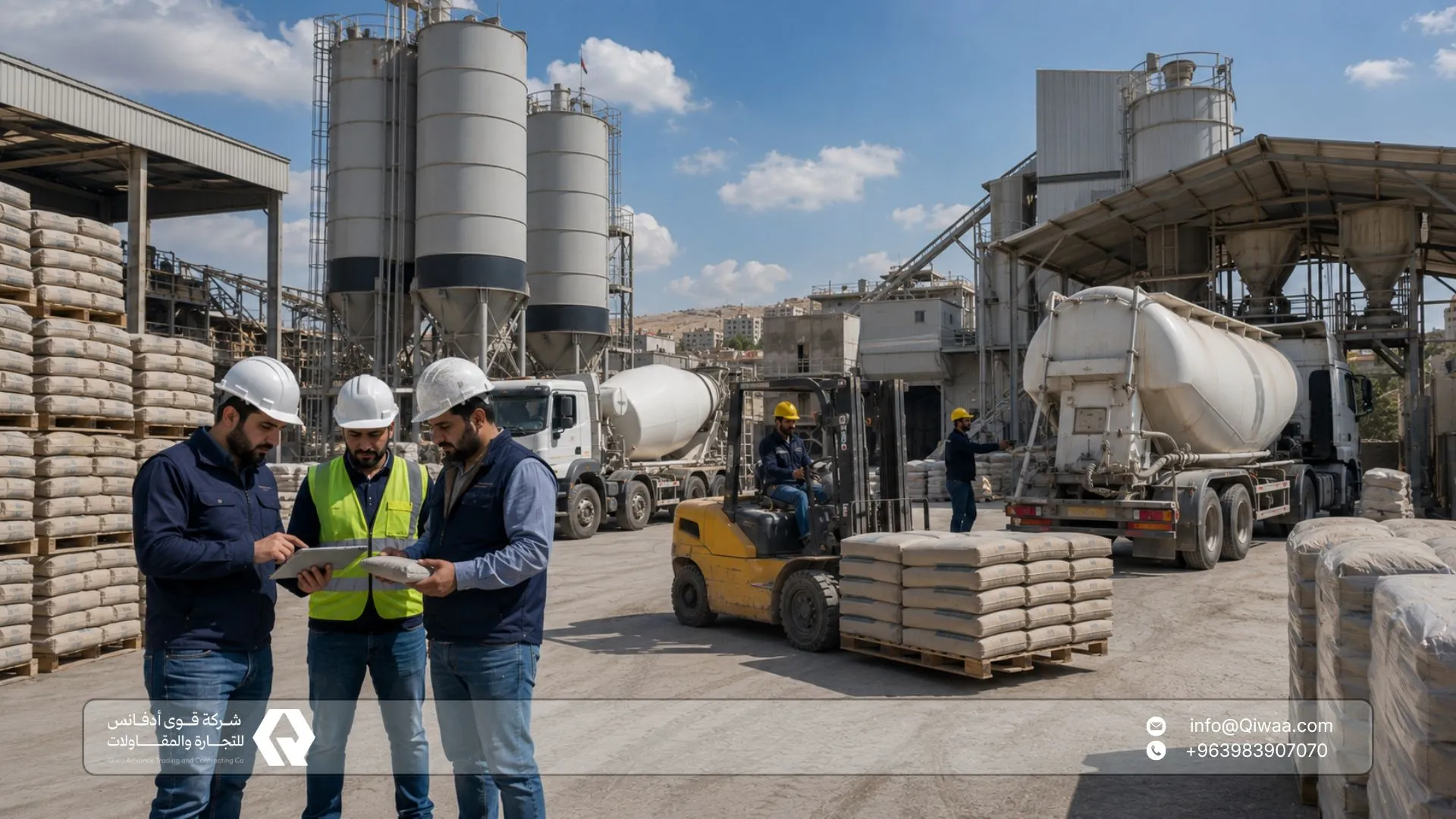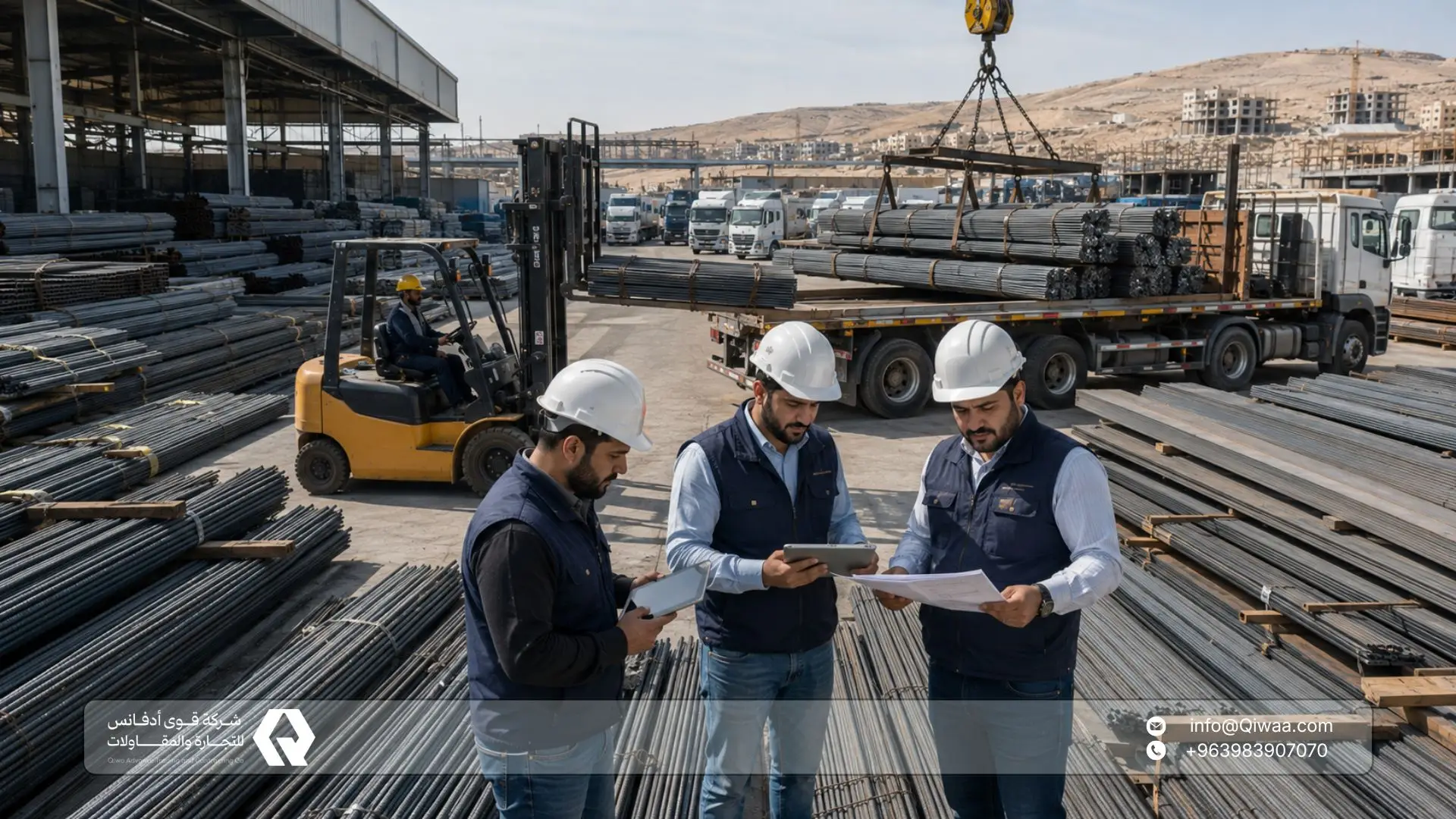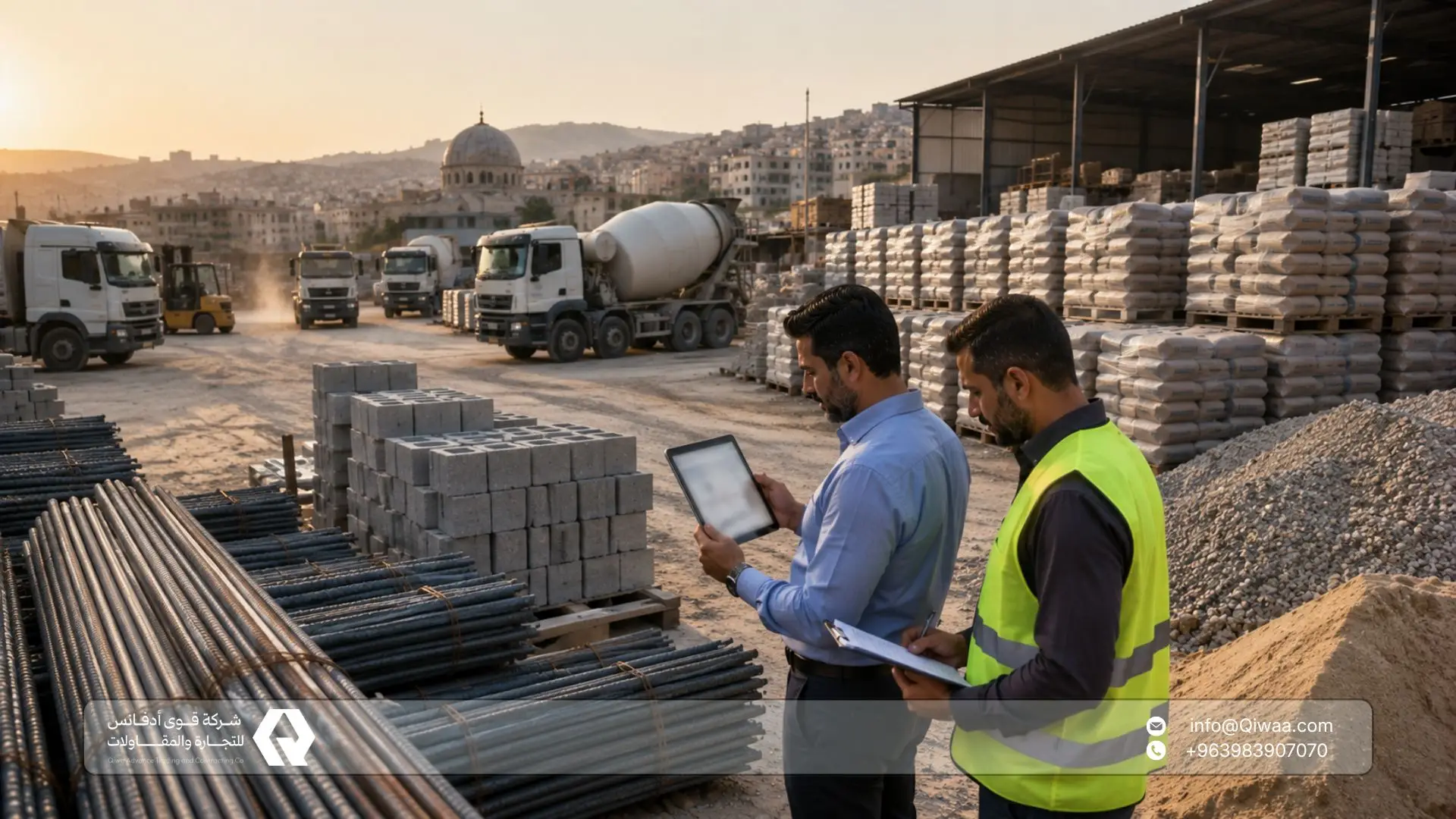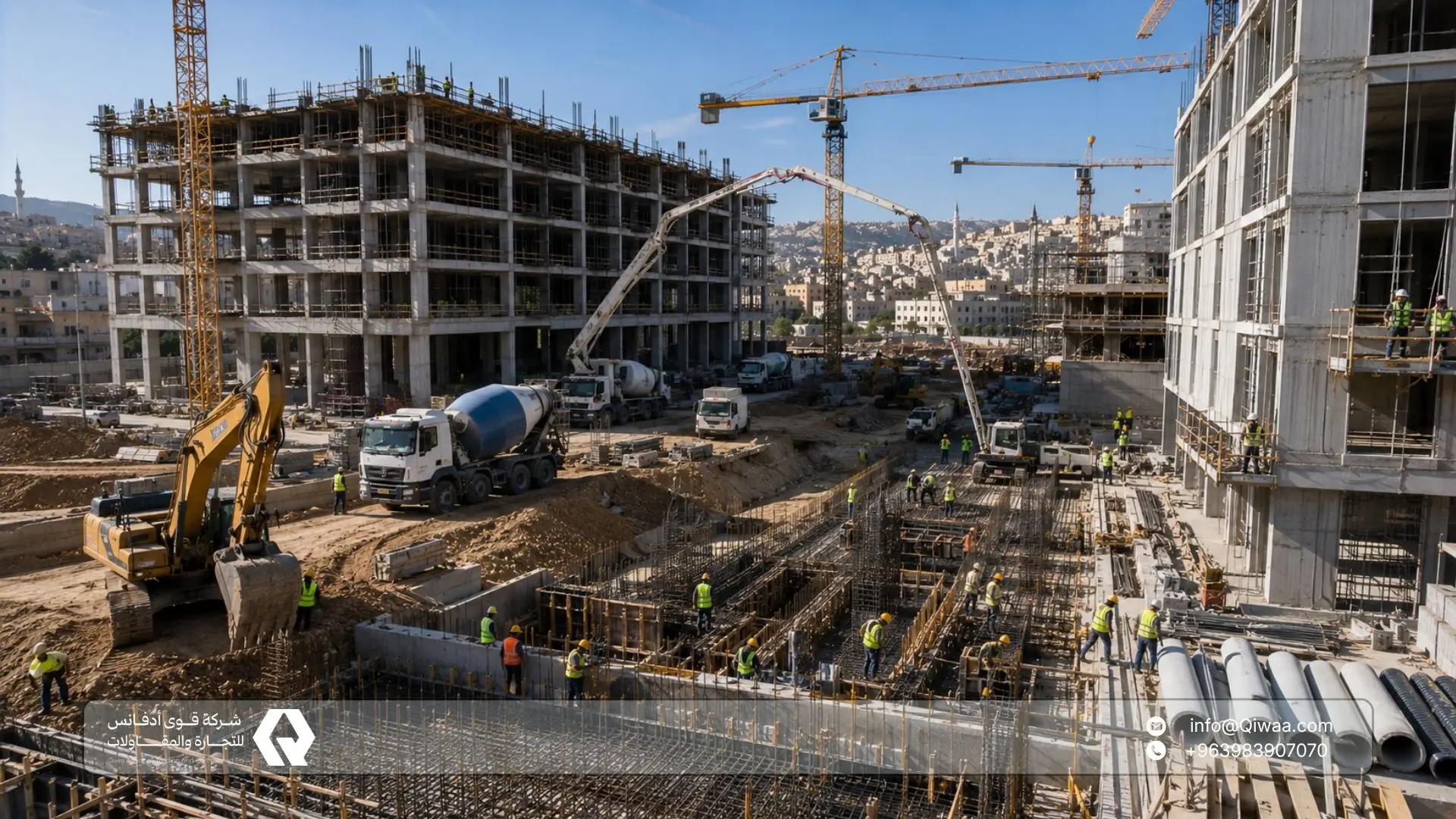


GGBS and pozzolana supply in Syria is becoming increasingly important as demand grows for more efficient building materials in reconstruction and infrastructure projects. These materials fall under the category of supplementary cementitious materials, and they are used as partial cement replacements in selected concrete mixes to improve performance, reduce heat in mass pours, increase durability, and lower the carbon footprint of concrete when technically approved.
This topic is especially important in Syria because of the expected demand for concrete and building materials in the coming years, alongside a local trend toward developing pozzolanic cement products. In December 2025, Syria’s Omran Company announced the launch of Pozzolanic Cement 42.5 – CEM II at the Sheikh Said plant in Aleppo, describing the step as part of restoring production capacity and providing materials needed for reconstruction.
In this article, we explain what GGBS and pozzolana are, why they are linked to the concept of green concrete in Syria, and their most important applications in infrastructure and ready-mix concrete projects. We also explain how Qiwa Advance can support contractors, concrete plants, and investors in GGBS and pozzolana supply in Syria and in choosing the most suitable usage path.
What Are GGBS and Pozzolana?
GGBS, or ground granulated blast-furnace slag, is a material produced from the iron industry. It is cooled and ground into a fine powder with cementitious properties. GGBS is used as a partial replacement for cement in concrete and mortar, especially in projects that require higher durability, lower heat of hydration, or better resistance to certain aggressive environments.
Pozzolana is a natural or industrial material rich in siliceous or aluminous compounds. It reacts with calcium hydroxide produced during cement hydration to form additional binding compounds. For this reason, pozzolana is used to improve concrete density, reduce permeability, and enhance long-term performance when the mix is designed correctly.
From a standards perspective, specifications such as ASTM C989 address ground granulated blast-furnace slag used in concrete and mortar, while ASTM C311 covers testing methods for fly ash and natural pozzolans. These standards are usually used as part of the testing and approval system for supplementary cementitious materials before they are introduced into concrete mixes.
Also Read: Commercial Fit-Out in Syria for Malls, Showrooms, and Car Showrooms
The Practical Difference Between GGBS and Pozzolana
Choosing the right material depends on the purpose of the mix, not on the material name alone. GGBS is usually suitable for mixes that need high durability, lower heat of hydration, and better resistance to certain aggressive environments.
Pozzolana is important in mixes that aim to improve concrete density, reduce permeability, and produce blended cement or blended concrete using natural or processed materials.
| Material | Best Use | What to Check |
|---|---|---|
| GGBS | High-durability concrete, mass pours, water structures, concrete exposed to moisture or sulfates | It may affect early strength development depending on replacement ratio, temperature, and cement type |
| Pozzolana | Pozzolanic cement, sustainable mixes, low-permeability concrete, selected green concrete applications | Requires testing for pozzolanic activity, fineness, impurities, and quality consistency |
For successful GGBS and pozzolana supply in Syria, the material must be matched with the project’s technical objective, whether the priority is durability, lower heat, sustainability, or long-term performance.
Also Read: Tunnel Formwork in Syria: Benefits for Residential Tower Construction
Why Do Reconstruction Projects in Syria Need Studied Cement Alternatives?
Reconstruction and infrastructure projects in Syria depend on large quantities of concrete, which makes cement one of the most influential items in cost, emissions, and supply chains. The International Energy Agency indicates that reducing the clinker ratio in cement through the use of supplementary cementitious materials is one of the key paths for reducing emissions in the cement sector.
Cement sector studies show that cement production accounts for about 5–8% of direct global carbon dioxide emissions, and that about 60% of process emissions come from limestone calcination, while the remaining part is generally linked to the energy used in burning.
These figures explain the global interest in materials such as GGBS and pozzolana as part of clinker-reduction solutions in cementitious mixes.
In Syria, these alternatives are important for three practical reasons:
- Supporting reconstruction projects with more durable concrete mixes.
- Reducing full dependence on Portland cement in selected applications.
- Benefiting from local or imported pozzolanic materials when stable quality is available.
This makes GGBS and pozzolana supply in Syria a technical decision connected to performance, availability, cost, and project requirements.
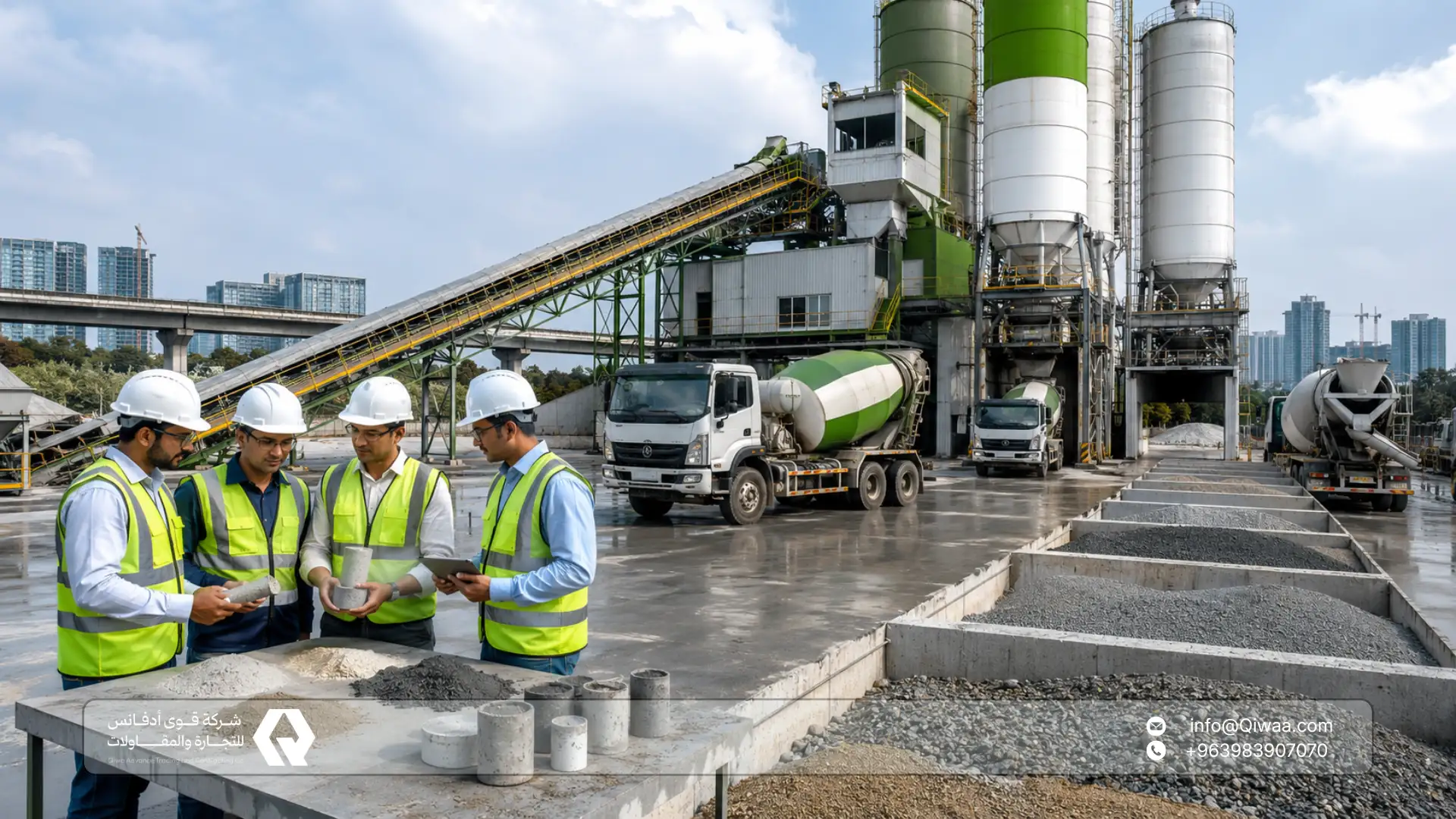
Pozzolana in Syria: A Local Resource with Development Potential
A UNIDO report discussed the potential use of volcanic materials in Syria to produce pozzolanic cement, hydraulic lime, and lightweight concrete, while referring to pozzolanic activity tests and the possibility of developing building materials based on local resources.
This makes pozzolana an important option in Syria from a local-resource perspective, especially when clear technical tests are available for fineness, pozzolanic activity, chemical composition, and quality consistency between shipments.
With the launch of a Syrian pozzolanic cement product in 2025, it appears that the local market is starting to move toward developing blended cementitious materials that can serve reconstruction needs and reduce dependence on some imported products.
Read more: Foreign Investment in Syria: How to Enter the Syrian Market Step by Step
GGBS and Pozzolana in Green Concrete
The term green concrete does not refer to one specific material. It refers to concrete mixes designed to reduce environmental impact and improve performance compared with traditional concrete in selected applications.
Replacing part of cement with supplementary cementitious materials such as GGBS or pozzolana is one of the most common approaches in this field.
Recent studies show that introducing GGBS and pozzolanic materials into blended cement systems can reduce binder emissions compared with traditional Portland cement, while performance must still be evaluated according to mix type, replacement ratio, curing conditions, and project requirements.
One study published in 2024 indicated that using GGBS with other cementitious materials can reduce binder emissions to levels close to half the emissions of Portland cement concrete in some scenarios.
For Syria, green concrete can be linked to practical projects such as water stations, tanks, roads, industrial facilities, and on-site concrete plants, where long-term durability, lower permeability, and control of casting heat are important factors.
This is why GGBS and pozzolana supply in Syria should be connected to mix design, testing, consultant approval, and project performance requirements, not treated as a simple material replacement.
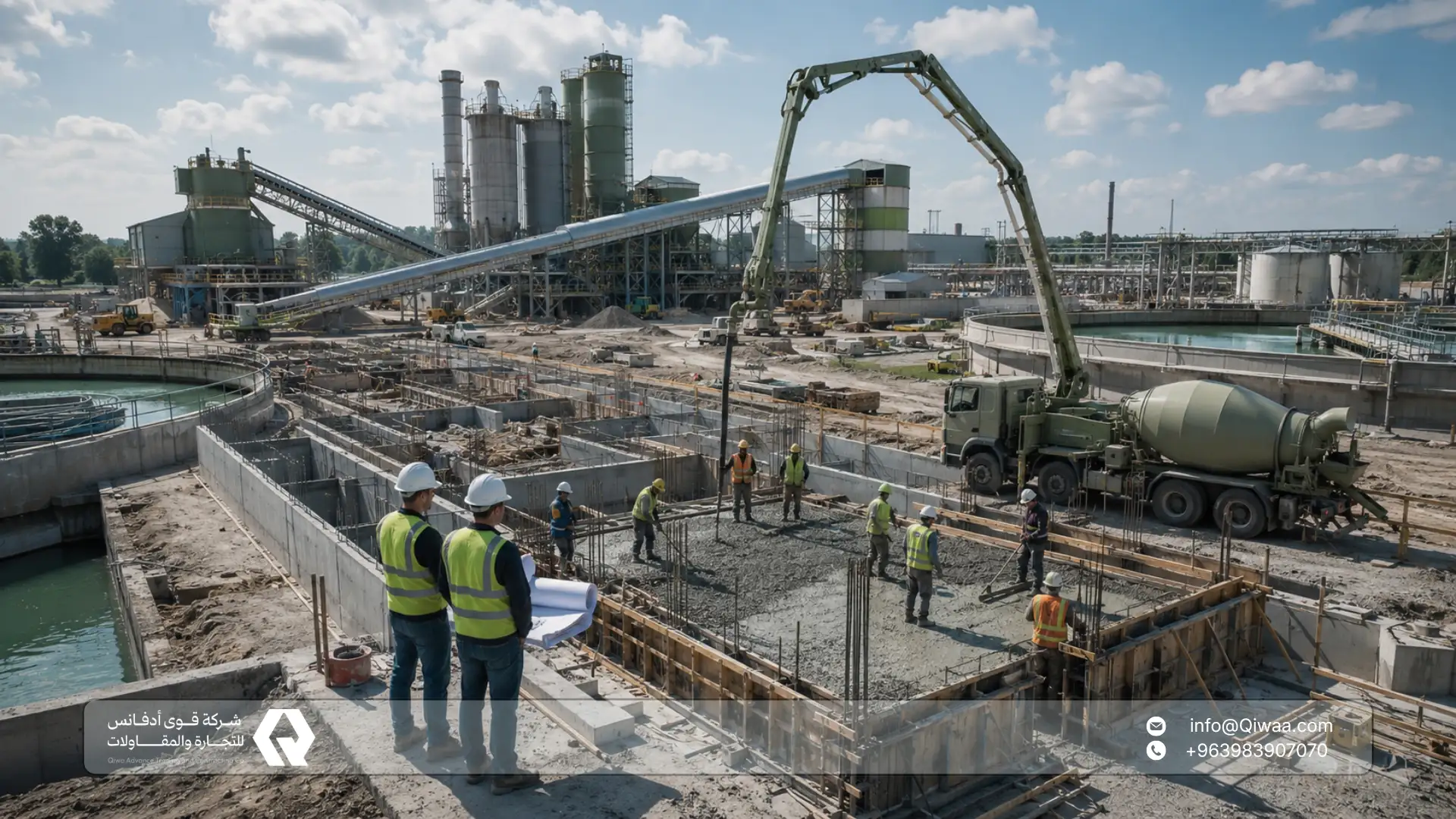
Key Applications of GGBS and Pozzolana in Construction Projects
The benefit of GGBS and pozzolana varies according to project type, cement type, mix design, and replacement ratio. Therefore, they should be treated as technical materials that require testing and approval, not as general additives for all concrete types.
The most suitable applications in Syria include:
- Water, Sewage, and Treatment Plants: These projects need durable concrete that resists moisture and selected aggressive environments.
- Tanks, Channels, and Water Structures: These can benefit from low-permeability mixes when properly designed.
- Mass Pours and Large Foundations: GGBS usually helps reduce heat of hydration, which limits the risk of thermal cracking.
- Roads and Bridges: These require concrete that can withstand loads and environmental exposure.
- Industrial Facilities and Warehouses: These can benefit from improved durability and lower long-term maintenance costs.
- Ready-Mix Concrete Plants and On-Site Plants: These facilities can use these materials to develop special mixes according to project requirements.
- Large-Scale Reconstruction Projects: These require materials with stable specifications and clear supply capacity.
In all these applications, GGBS and pozzolana supply in Syria must be supported by technical documentation, mix trials, and quality consistency.
Also Check: Ceramic and Porcelain Tiles in Syria: Import Sources and Best Options
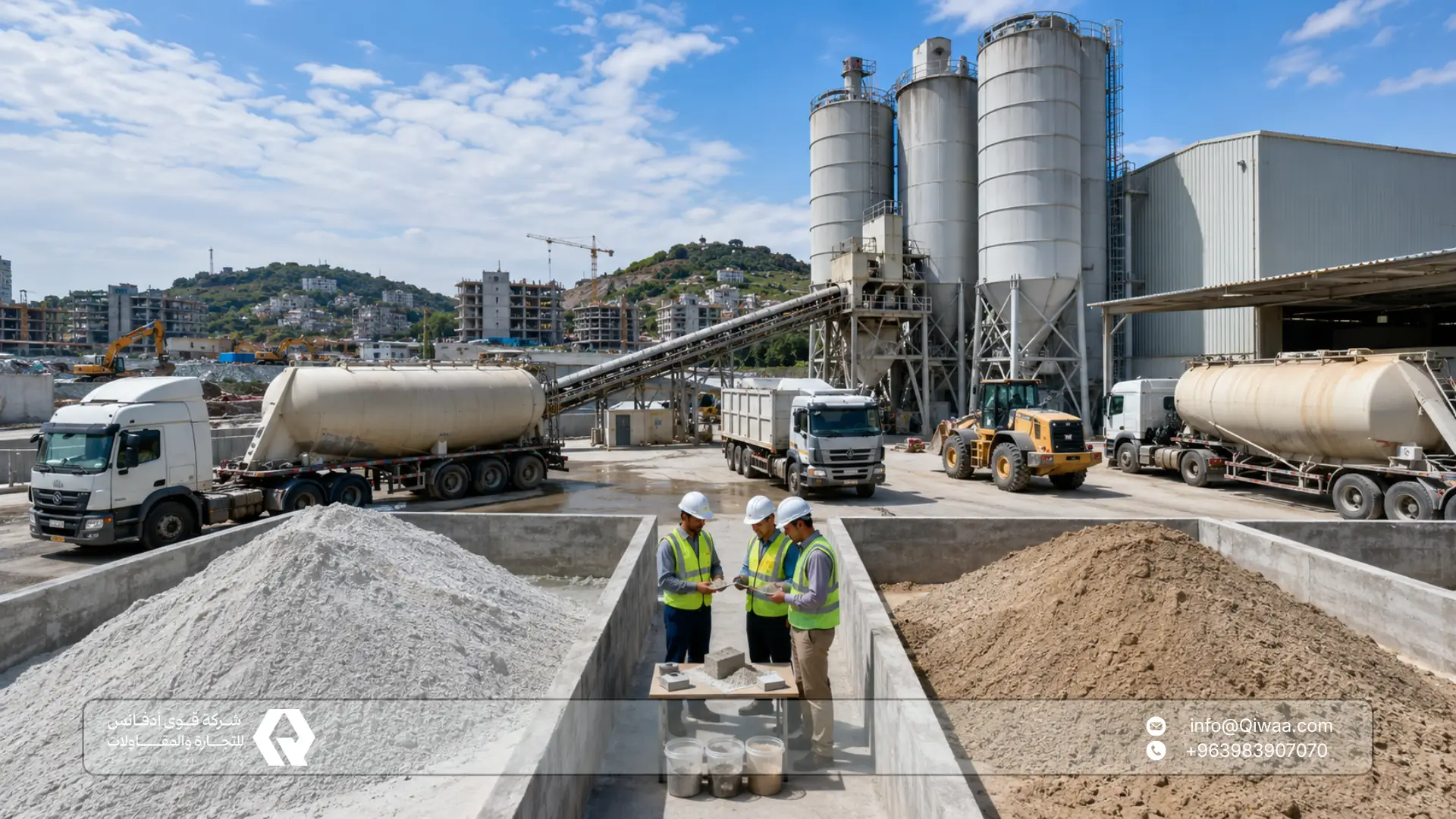
Technical Specifications When Supplying GGBS and Pozzolana
Successful use of GGBS or pozzolana starts with specifications. The most important specifications to review before supply include:
- Fineness and grading.
- Chemical composition.
- Activity index or effectiveness indicator.
- Moisture content.
- Quality consistency between shipments.
- Packaging method or bulk supply method.
- Mix trial results.
- Compatibility with the cement type used.
- Compatibility with chemical admixtures.
- Strength results at 7, 28, 56, or 90 days depending on the project.
- Permeability or sulfate-resistance tests when required.
Using these materials without mix trials may lead to unstable results, especially in infrastructure or ready-mix concrete projects that require clear performance and continuous monitoring.
For this reason, GGBS and pozzolana supply in Syria should always be linked to laboratory testing and project-specific approval.
Read Also: Industrial and Medical Gases in Syria: Safe Supply for Steel Plants and Hospitals
How Do Cement Alternatives Affect Mix Cost?
Using GGBS or pozzolana may reduce mix cost in some cases, especially when the material is available at a competitive price and with stable quality. However, it may also increase testing, curing, or waiting costs for strength development in other cases.
Therefore, the cost must be calculated at project level, not based on the price per ton only.
The main factors that determine economic feasibility include:
- Cement replacement ratio.
- Material price compared with cement price.
- Transport and storage cost.
- Effect on early strength.
- Project need for fast formwork removal.
- Number of tests required for approval.
- Impact on durability and service life.
- Supplier ability to secure quantities according to the project schedule.
In water and infrastructure projects, service-life and maintenance savings may be more important than the initial price difference, especially when the mix helps reduce permeability or improve resistance to aggressive environments.
This makes GGBS and pozzolana supply in Syria valuable when it is studied from a full project-cost perspective, not only as a raw material purchase.
How Qiwa Advance Supports GGBS and Pozzolana Supply in Syria
At Qiwa Advance, we can support concrete and building material projects that require GGBS or pozzolana from supply, technical, and commercial perspectives.
We focus on understanding the material’s intended use before supply because the requirements of a ready-mix concrete plant differ from those of a water station, mass pour, or green concrete project.
Our Services in This Field
- Supplying GGBS and pozzolana according to project specifications.
- Supporting ready-mix concrete plants and on-site concrete plants.
- Providing cementitious materials and cement alternatives within the building materials scope.
- Linking materials with mix trials before use.
- Supporting major projects that require regular quantities.
- Helping contractors and consultants identify the most suitable material according to application.
- Studying bulk or packaged supply options according to project size.
- Organizing the supply chain for projects that depend on continuous casting.
Through this approach, GGBS and pozzolana supply in Syria becomes part of a controlled technical process, starting from specifications and ending with practical use in concrete.
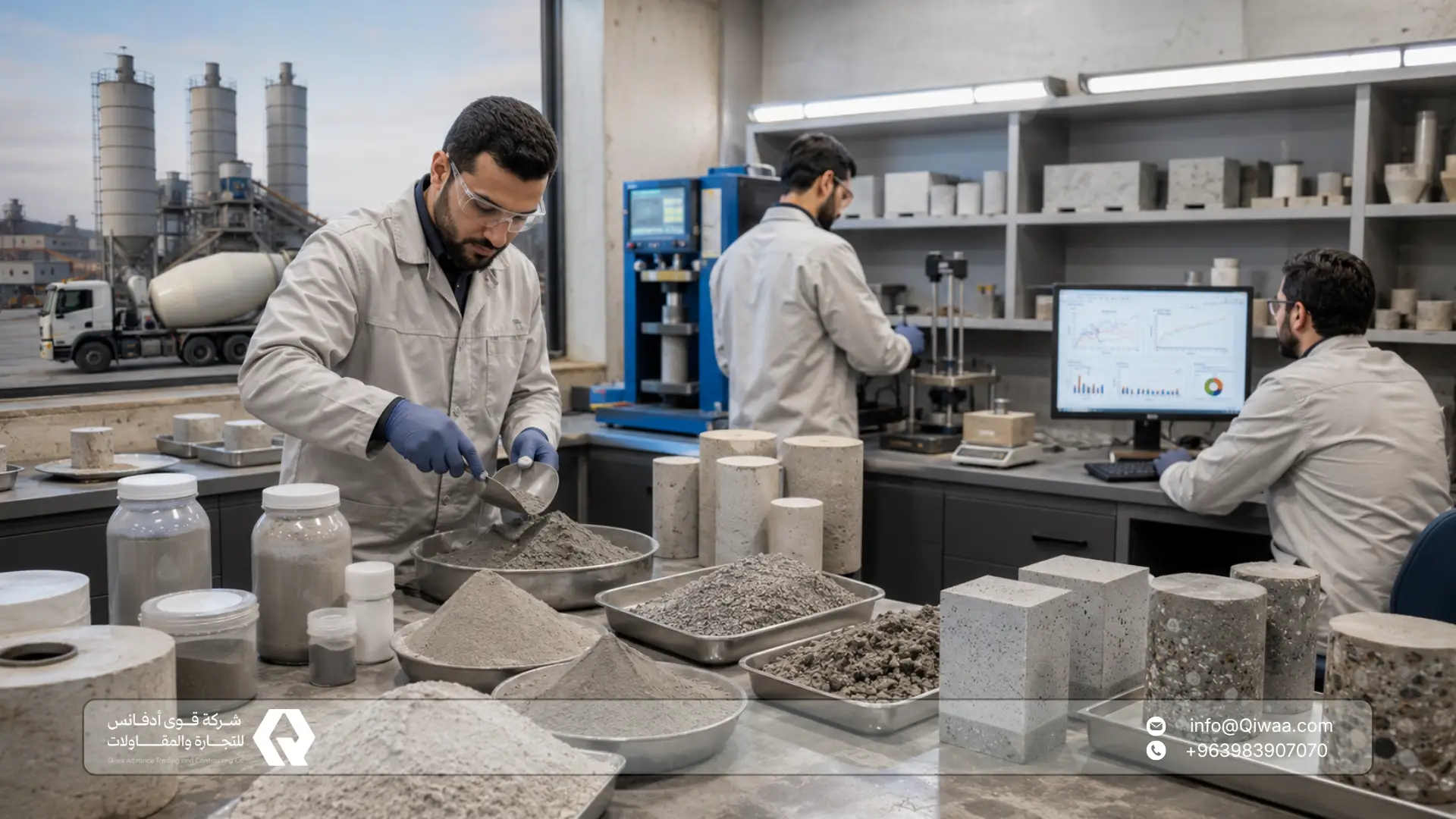
GGBS and Pozzolana Supply in Syria: A Technical Decision Before a Commercial One
Using GGBS or pozzolana in Syria can support more durable and lower-impact concrete projects, especially in infrastructure, water projects, mass pours, and ready-mix concrete plants.
However, the success of these materials depends on testing, quality consistency, consultant approval, and matching the material with the purpose of the mix.
To obtain GGBS or pozzolana for a project in Syria, contact Qiwa Advance to define the specifications, quantities, and supply method suitable for your concrete mixes or infrastructure project.