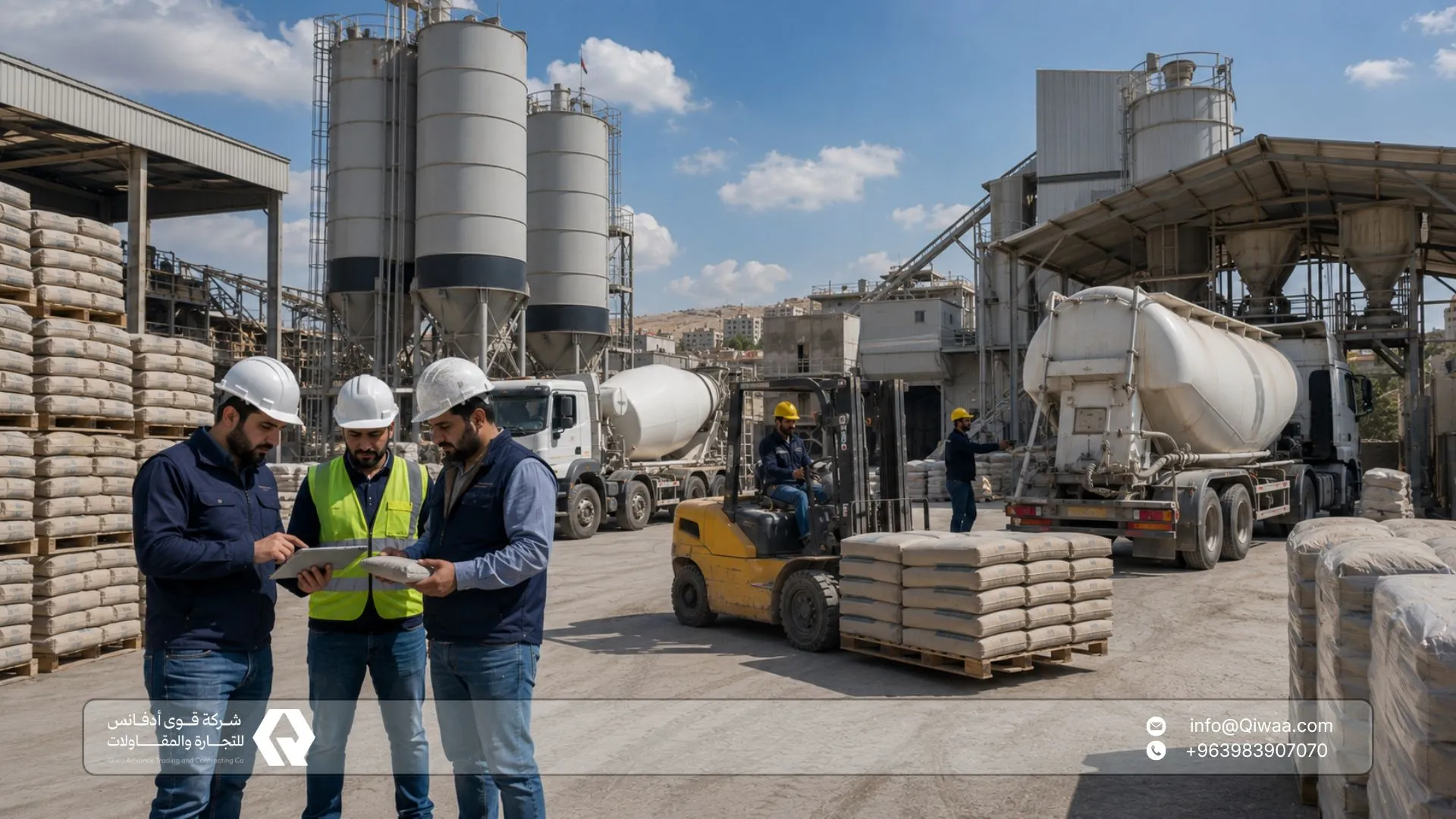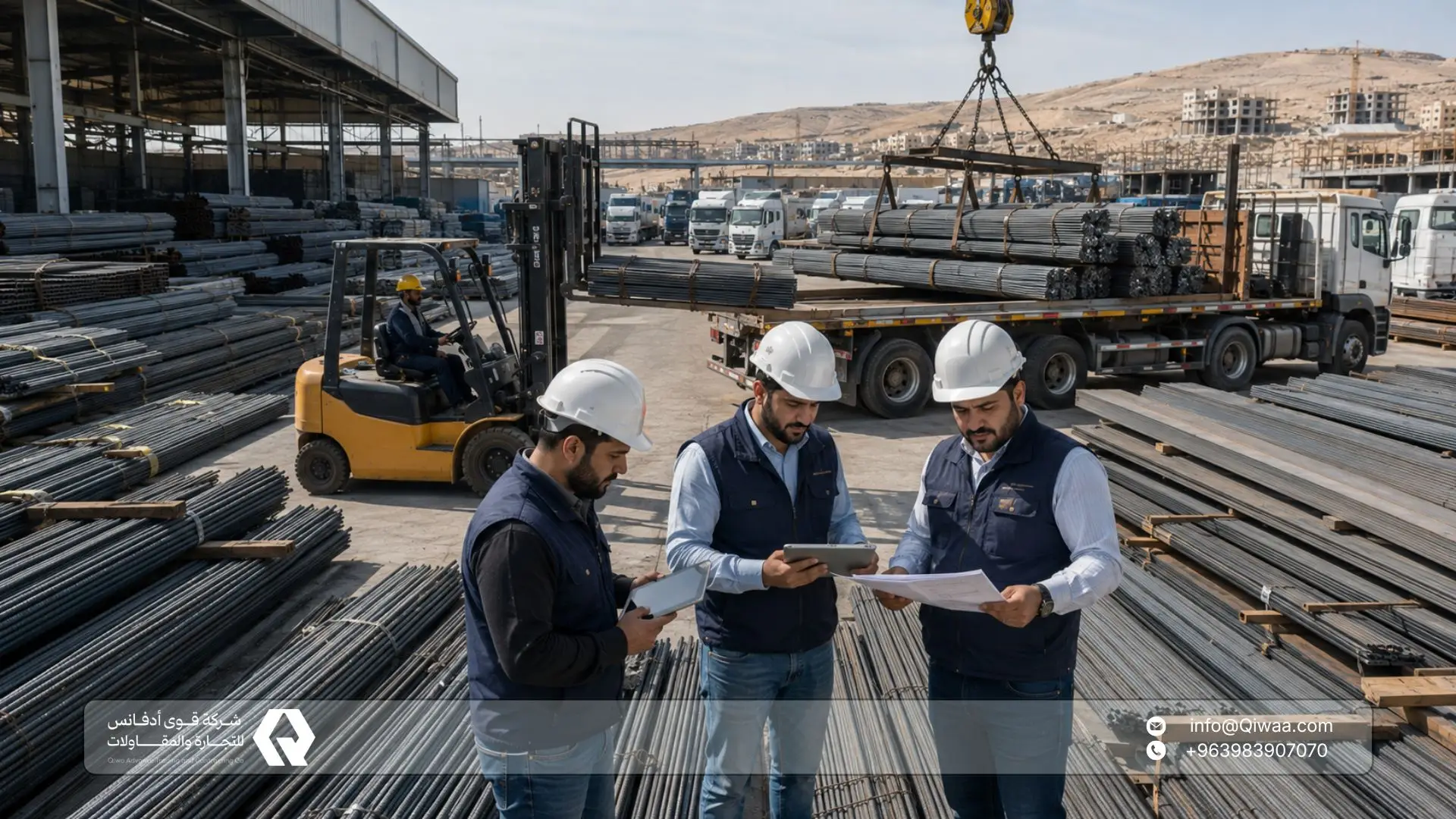


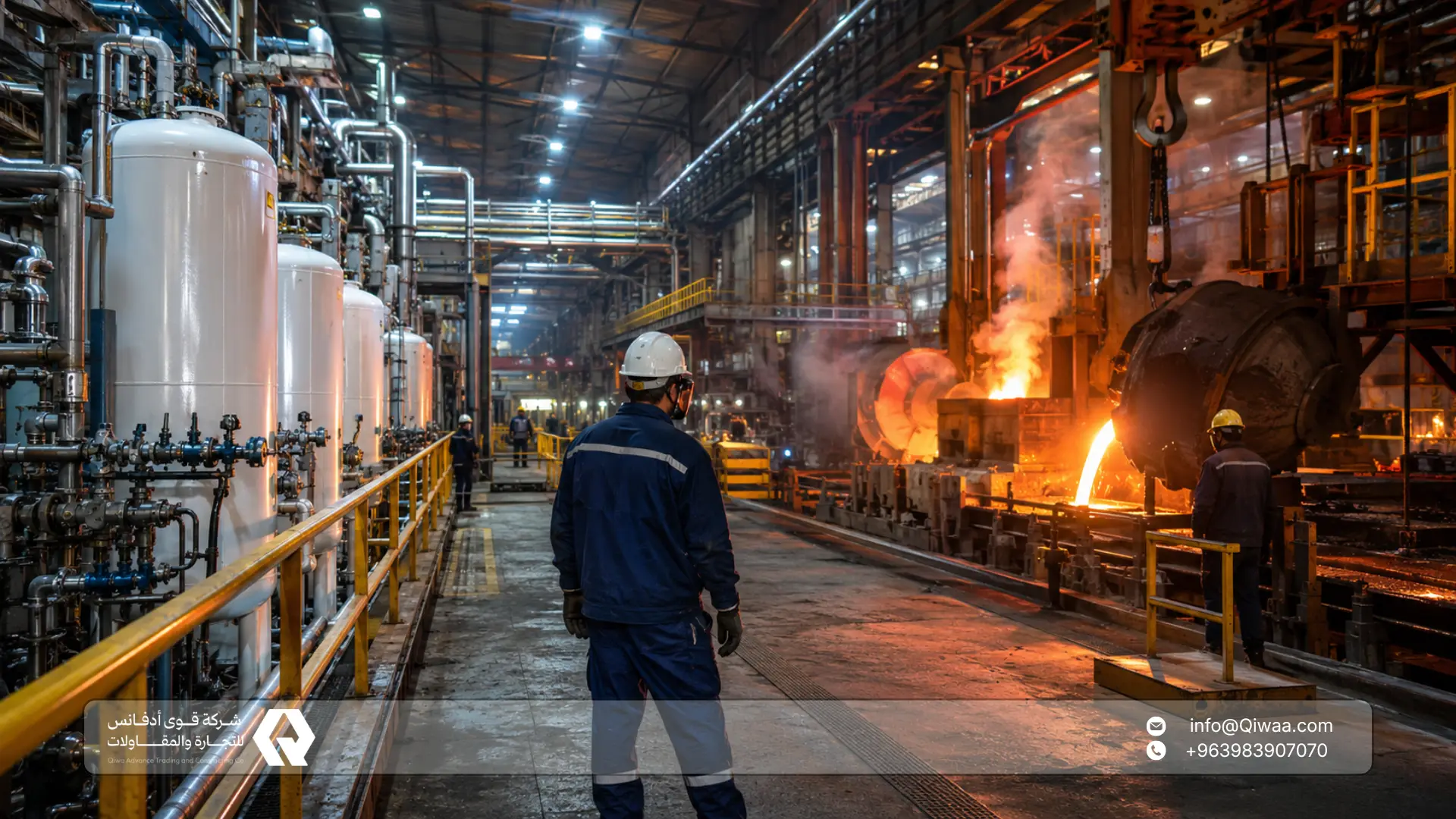
industrial and medical gases in Syria are essential for production continuity and healthcare services, especially in steel plants, metal factories, and hospitals. In steelmaking, Britannica explains that basic oxygen furnace operations may consume around 110 m³ of oxygen per ton of steel, with oxygen flows exceeding 800 m³ per minute in large converters. This shows the scale of industrial dependence on oxygen in melting, refining, and metal production.
In the healthcare sector, the need is equally clear in Syrian hospitals. On June 25, 2023, the World Health Organization delivered three oxygen generators to hospitals in Homs, Daraa, and Dummar, with capacities of 20 m³/hour for Homs National Hospital, 40 m³/hour for Daraa National Hospital, and 18 m³/hour for Dummar National Hospital in Damascus. The Global Fund also reported in February 2024 that Homs National Hospital may have around 10 to 25 patients needing oxygen every day.
In this article, we review the main types of industrial and medical gases, their uses in steel plants and hospitals, suitable supply models, and safety and documentation requirements. We also explain the role of Qiwa Advance as the official agent of Wosta Gases in Syria, providing organized supply solutions for factories, hospitals, workshops, and infrastructure projects.
What Are Industrial Gases?
Industrial gases are gases used in production lines, workshops, steel plants, metal fabrication, industrial laboratories, cooling, heat treatment, and welding.
The required purity and specifications vary depending on the application. A gas used for cutting and welding is different from a gas used as a shielding atmosphere for metals or in a sensitive industrial laboratory.
The most commonly used industrial gases include:
- Industrial Oxygen: Used for cutting, melting, improving combustion efficiency, and selected steelmaking operations.
- Nitrogen: Used as an inert gas for purging, cooling, oxidation prevention, and selected industrial applications.
- Argon: Used for welding and protecting molten metal, especially in TIG/MIG welding and some steel applications.
- Carbon Dioxide: Used in some welding and gas-shielding applications.
- Acetylene: Used with oxygen in cutting and welding.
- Helium and Specialty Gases: Used for laboratory or specialized industrial applications when required.
Read More: GGBS and Pozzolana Supply in Syria: Cement Alternatives for Green Concrete
What Are Medical Gases?
Medical gases are used inside hospitals and healthcare centers. They require a higher level of traceability, cleanliness, certification, and safety control for cylinders and networks.
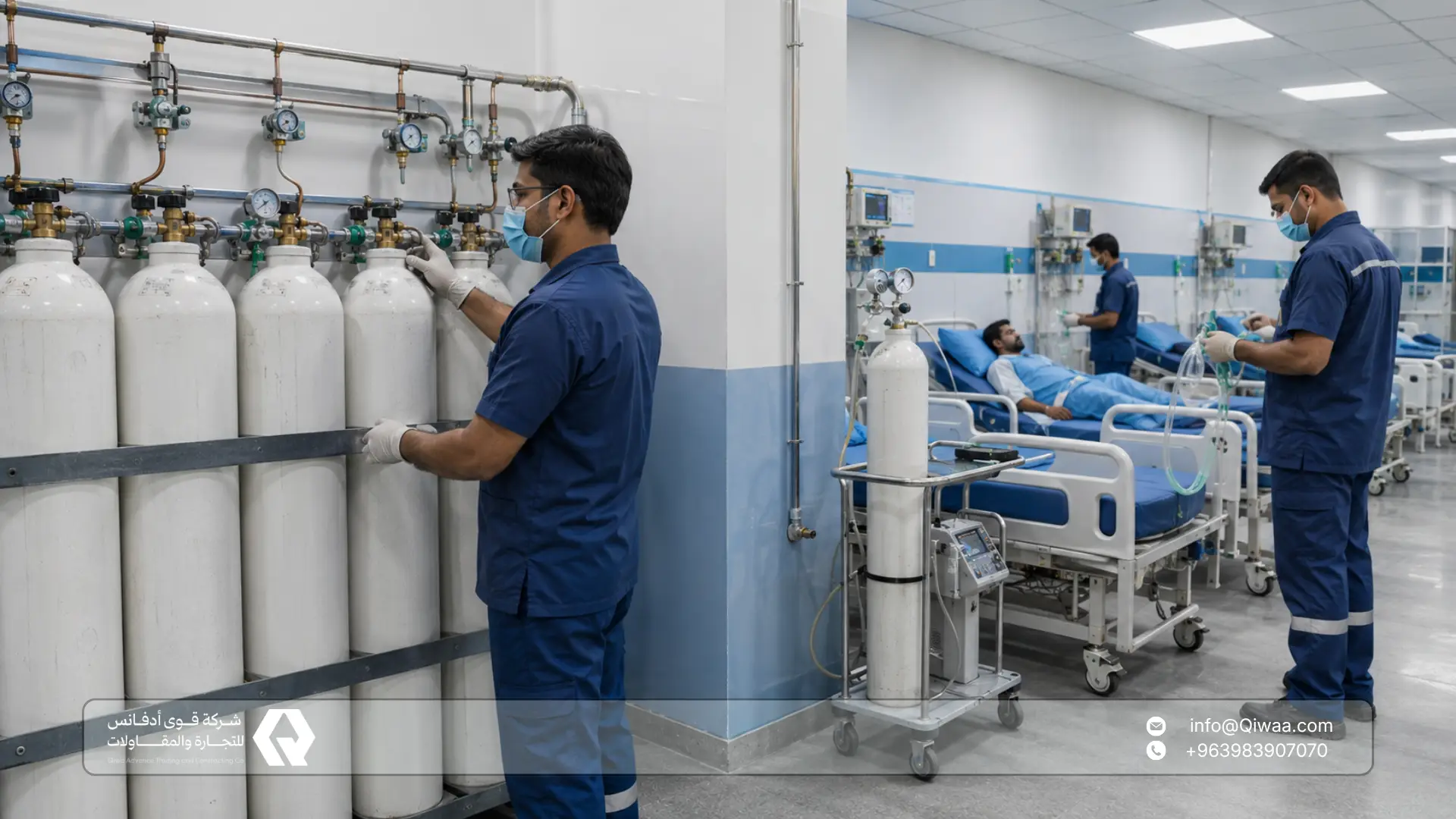
Medical oxygen is the most important among these gases because it is used in intensive care, surgeries, emergency departments, ventilators, and patient care for those with respiratory difficulties.
The World Health Organization explains that medical oxygen produced through air liquefaction should contain not less than 99.5% v/v O₂, while medical PSA systems produce oxygen at a concentration of 93% ±3 from ambient air. WHO also describes oxygen as an essential medicine used in surgery, injury treatment, respiratory diseases, intensive care, emergency departments, and maternity units.
Common medical gases include:
- Medical Oxygen: Used for patient care, emergency treatment, surgeries, ventilators, and ambulance services.
- Medical Air: Used to operate some medical and respiratory devices.
- Nitrous Oxide: Used in selected anesthesia applications depending on facility equipment.
- Medical Carbon Dioxide: Used in selected medical and endoscopy procedures.
- Medical Nitrogen: Used in selected laboratory applications or preservation and cooling uses.
Why Does Syria Need Stable Supply of Industrial and Medical Gases?
The need for industrial and medical gases in Syria is increasing with the reactivation of factories, rehabilitation of facilities, expansion of steel and metal works, and the need of hospitals for more stable oxygen sources.
This makes gas supply part of production and healthcare readiness, not a secondary operating item.
In February 2024, the Global Fund published a report about supplying Homs National Hospital with an oxygen generator, in addition to installing two more generators in Daraa and Dummar hospitals, in partnership with the International Organization for Migration and WHO to support Syria’s capacity to provide medical oxygen. The report noted that less than 50% of healthcare facilities in low- and middle-income countries, including Syria, had uninterrupted access to medical oxygen as of September 2023.
This example shows that medical oxygen in Syria needs production, supply, and backup storage solutions, especially in hospitals operating emergency, intensive care, surgery, and ambulance services.
In the industrial sector, steel and metal factories need regular gas supply to maintain operation continuity, welding and cutting quality, and worker and equipment safety.
For this reason, industrial and medical gases in Syria require organized supply models that match each facility’s consumption, risk level, and safety requirements.
Also Read: Ready-Mix Concrete Plant in Syria: A Guide for Contractors and Investors
Supply Models for Industrial and Medical Gases in Syria
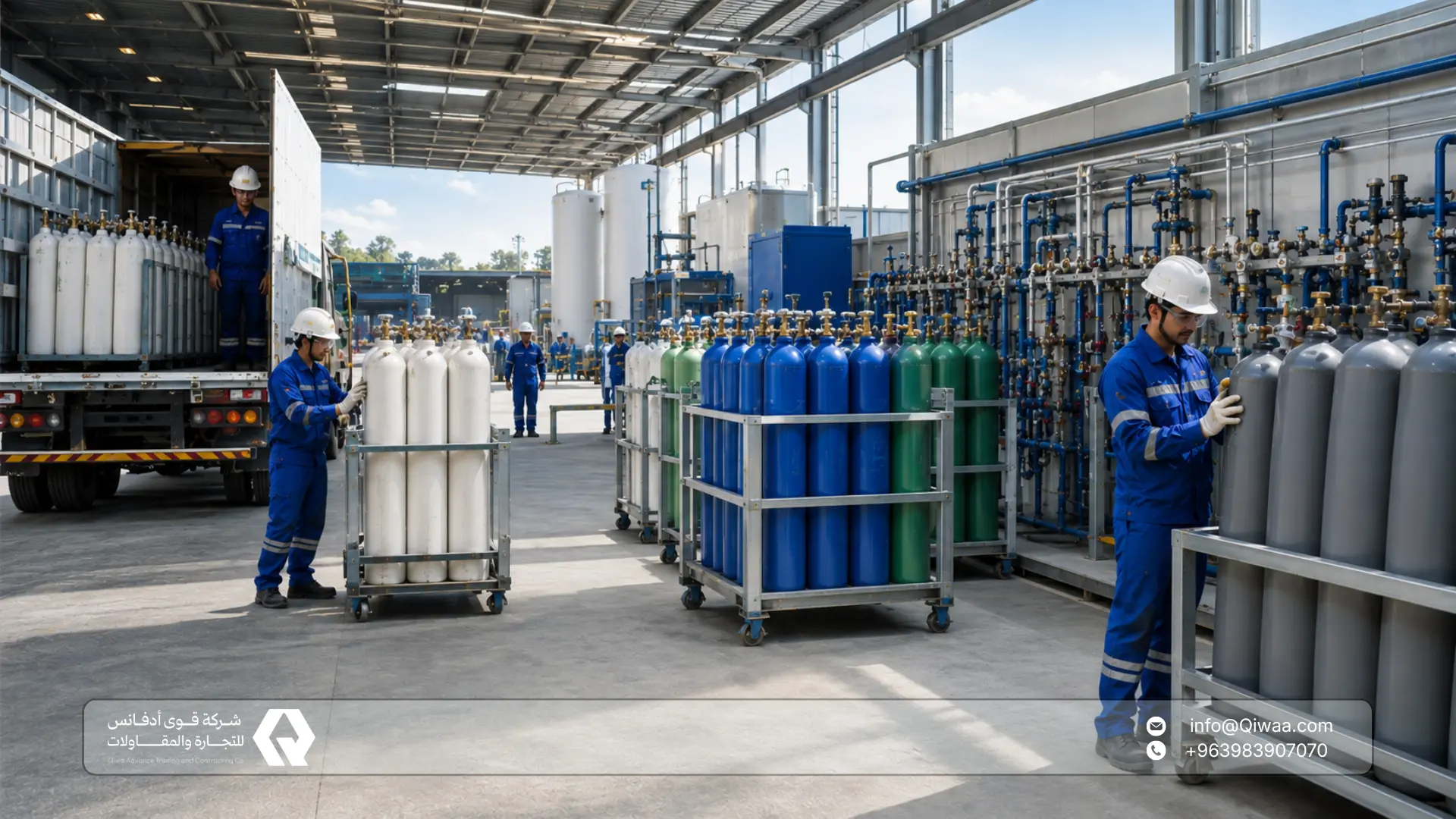
Choosing the supply model depends on the facility size, consumption rate, location, and service sensitivity. In large hospitals, continuous supply and backup capacity are priorities. In steel and metal factories, gas pressure, flow rate, and quantity stability are more important.
| Supply Model | Suitable For | Main Point to Control |
|---|---|---|
| Cylinders | Workshops, small hospitals, intermittent use | Number of cylinders, filling pressure, safe storage |
| Liquid Tanks | Large hospitals and high-consumption factories | Site safety, evaporation, filling schedule |
| PSA Generators | Hospitals or facilities needing continuous oxygen | Maintenance, electricity, purity, backup source |
| Periodic Supply Contracts | Medium and large steel plants and hospitals | Supply schedule, emergency response, documents, commitment |
| Internal Gas Network | Large hospitals and factories | Network design, pressure, isolation points, maintenance |
A clear supply model helps control industrial and medical gases in Syria from the source to the point of use.
Safe Supply Requirements for Industrial and Medical Gases
Safe supply starts with identifying the gas type, purity level, and supply model, then controlling filling, transport, storage, and documentation.
For medical gases, WHO adds that oxygen quality must be guaranteed across production, testing, storage, and distribution because medical oxygen is used directly with patients and is subject to higher quality and safety requirements.
For industrial gases, safety requirements focus on pressure hazards, flammability, reaction with other materials, and poor storage practices.
OSHA, for example, requires stored oxygen cylinders to be separated from fuel gas cylinders or combustible materials, especially oil and grease, by at least 20 ft / 6.1 m or by a non-combustible barrier at least 5 ft / 1.5 m high with a fire-resistance rating of at least half an hour.
Key safe supply requirements include:
- Defining Gas Type and Purity Level: Liquid medical oxygen requires purity of at least 99.5% O₂, while medical PSA systems produce oxygen at 93% ±3 according to WHO guidance.
- Separating Medical and Industrial Use: Medical oxygen cylinders must be dedicated to medical use, with clear source, quality, storage, and distribution traceability.
- Using Dedicated and Clearly Marked Cylinders: WHO oxygen cylinder safety guidance emphasizes storing cylinders upright in a clean, well-ventilated area, away from ignition sources.
- Inspecting Cylinders, Valves, and Regulators: CGA recommends safe procedures for handling, transporting, and storing compressed gas cylinders, including securing cylinders during movement and using appropriate handling equipment.
- Preventing Oxygen Contact with Oil and Grease: EIGA/AIGA guidance explains that oil, grease, and organic materials create fire or explosion risks in oxygen-rich atmospheres, and that oxygen-service equipment must be designed and prepared for that use.
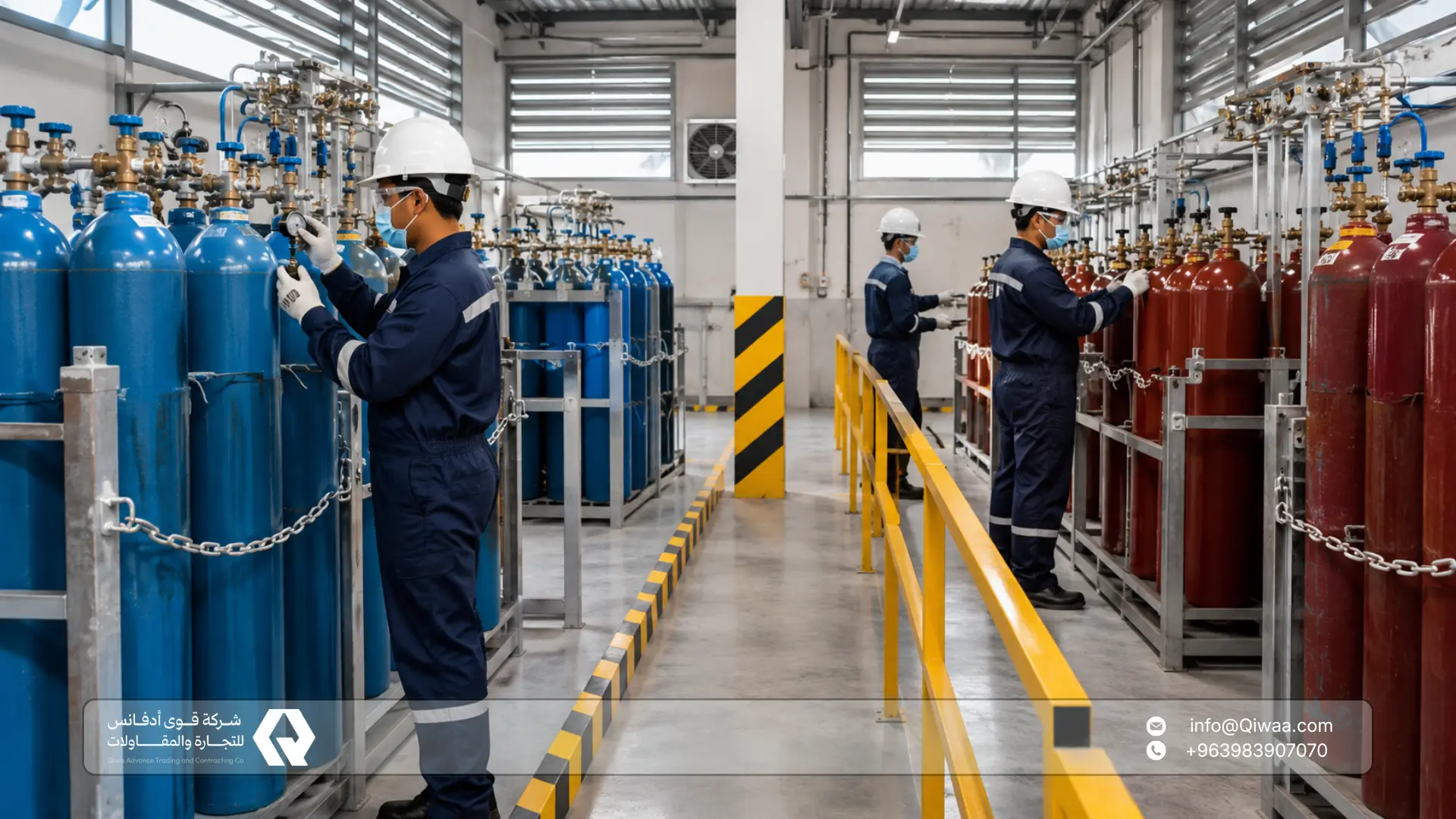
- Providing Ventilation and Defined Storage Areas: Medical and industrial gas cylinders need dedicated, well-ventilated storage areas, with separation between full and empty cylinders and clear signs based on gas type.
- Training Workers: Everyone handling cylinders or compressed gas tanks must understand pressure, falling, fire, asphyxiation, and emergency risks. CGA stresses awareness of cylinder hazards and safe handling practices.
- Providing Certificates of Analysis or Conformity When Needed: Medical gases need quality assurance through testing and traceability, while sensitive industrial gases often require purity or conformity certificates depending on the factory application or customer requirements.
- Creating a Backup Supply Plan: Hospitals and sensitive factories need backup sources, whether through cylinders, an additional tank, a PSA generator, or an emergency supply contract, so treatment or production does not stop when shipments are delayed.
- Documenting Cylinder Movement, Quantities, and Batches: Documentation protects the facility from gas mix-ups and helps track batches, filling dates, inspection, receipt, and consumption.
With these requirements, the supply of industrial and medical gases in Syria becomes a complete safety and operating system. It includes choosing the right gas, controlling purity, protecting cylinders, separating storage areas, training personnel, and documenting every movement from source to use point.
Read Also: Heritage Building Restoration in Syria: Solutions for Reconstruction 2026
Challenges of Gas Supply in Syria
Syria needs flexible supply solutions because industrial cities, remote sites, workshops, and hospitals have different requirements. Some facilities need small quantities of cylinders, while steel plants and large hospitals require regular supply or generation and storage systems.
The main practical challenges include:
- Demand fluctuation between industrial and medical sectors.
- Sensitivity of transporting cylinders and liquid gases.
- The need for hospitals to maintain permanent backup sources.
- The need for steel plants to maintain uninterrupted gas flow during operation.
- Different purity requirements between industrial and medical use.
- Transport difficulty to some remote areas or sites.
- Need for safe storage inside workshops and hospitals.
- Dependence of oxygen generators on power, maintenance, and spare parts.
- Importance of training operation and safety teams inside the facility.
These challenges make supplier selection and supply model selection part of risk management, especially in facilities whose daily operation depends on gas availability.
Read more: Microsilica and Fly Ash Supply in Syria In high-performance concrete projects
Wosta Gases: Saudi Expertise in Industrial and Medical Gases
Wosta Gases is a Saudi company specialized in providing industrial and medical gases, cylinder and tank solutions, industrial parts, and related technical services.
Its services cover filling, inspection, maintenance, delivery, and technical support, serving the needs of factories, workshops, hospitals, and facilities that rely on safe and regular gas supply.
Wosta provides important gases such as medical and industrial oxygen, nitrogen, carbon dioxide, argon, helium, and specialized industrial gases, with a clear focus on product quality and safe use in medical and industrial applications.
As Qiwa Advance is the official agent of Wosta Gases in Syria, we work to make these solutions available to the Syrian market through an organized supply channel that serves factories, hospitals, infrastructure projects, workshops, and medical and industrial service centers.
Read more: Phosphate Investment in Syria 2026: Mining, Processing, and Export Opportunities
The Role of Qiwa Advance in Gas Supply Inside Syria
At Qiwa Advance, we support industrial and medical facilities in Syria with gas supply solutions that match the nature of use, consumption volume, and safety requirements inside each facility.
We start by defining the gas type, purity level, supply model, storage method, and number of use points. Then we coordinate the supply process in a way that supports operational continuity in the factory or hospital.
Our Industrial Gas Services
- Supplying industrial oxygen for steel plants, cutting, and welding.
- Supplying nitrogen, argon, and carbon dioxide according to application.
- Supporting metal workshops, fabrication centers, and welding facilities.
- Organizing periodic supply according to consumption volume.
- Helping select suitable cylinders, tanks, or supply solutions.
- Connecting supply with site safety and storage procedures.
Our Medical Gas Services
- Supplying medical oxygen according to required specifications.
- Supporting hospital and healthcare center needs for medical gases.
- Studying the suitable supply model: cylinders, tanks, generators, or periodic supply.
- Supporting documentation, traceability, and cylinder safety requirements.
- Providing solutions for intensive care, emergency, surgery, and ambulance departments.
- Organizing a supply plan that helps facilities manage daily and backup needs.
For inquiries about industrial or medical gas supply in Syria, contact Qiwa Advance to define the suitable gas type, required quantities, supply model, and safety requirements for your facility.
How to Choose the Right Gas for Your Facility in Syria?
Before ordering gas, the use must be defined accurately. A steel plant needs different specifications than a hospital or ambulance center. Even inside one factory, welding requirements may differ from cutting, cooling, or shielding applications.
Questions that help with selection include:
- What type of gas is required?
- Is the use medical or industrial?
- What purity level is needed?
- What is the daily or monthly consumption volume?
- Does the facility need cylinders, a tank, or a generator?
- Is there an internal distribution network?
- What are the use points inside the facility?
- Is there a backup source?
- What are the storage and safety requirements?
- What documents are required by the owner, consultant, or medical administration?
To choose the right gas for your facility in Syria, contact Qiwa Advance to review the use type, purity level, consumption volume, and the most suitable supply model between cylinders, tanks, and periodic supply.
Also Check: Mall Construction in Syria: Building Commercial Malls and Shopping Complexes
Safe Gas Supply Means Continuity of Production and Healthcare
industrial and medical gases in Syria are essential for maintaining industrial production and healthcare quality. Steel plants need stable oxygen, nitrogen, argon, and welding gases, while hospitals need medical oxygen and safe, documented supply systems.
At Qiwa Advance, we work as the official agent of Wosta Gases in Syria to provide supply solutions for factories and hospitals, with a focus on purity, safety, documentation, and the right supply model for each facility.
For inquiries about industrial or medical gas supply in Syria, contact Qiwa Advance to define the gas type, quantities, supply model, and safety requirements suitable for your facility.