

mall construction in Syria is not simply about building a concrete structure and dividing it into shops. This type of project requires a wider understanding: how visitors move, where shops are distributed, how parking areas work, whether fire, ventilation, and electrical systems can serve the building after opening, and whether materials and finishes have been selected to withstand daily use for years.
At Qiwa Advance for Trading and Contracting, we approach mall construction in Syria as an investment project before treating it as a construction project. Our goal is to help the owner or developer reach a commercial building that is ready for leasing, operation, maintenance, and future expansion, not only a building that looks attractive from the outside.
We work through an integrated system that combines contracting, trading, industry, and building material supply. This gives us greater ability to manage mall construction in Syria from the study and supply stages to execution and finishing.
What Makes a Mall Project Different from Other Buildings?
A mall is a high-usage building. Visitors enter daily, shops operate for long hours, services and suppliers move through the building, and air conditioning, fire, and electrical systems work continuously.
This means that any small decision in design or execution can later affect operation.
Narrow corridors affect visitor movement. Poorly planned parking reduces footfall. Weak air conditioning disturbs tenants and customers. Poor distribution of service rooms makes maintenance difficult. Weak finishes increase repair costs after opening.
That is why mall construction in Syria must start with a practical question: how will this complex operate after handover?
When we execute a commercial project, we focus on five main pillars that determine success after opening:
- Safety.
- Movement.
- Operation.
- Material quality.
- Maintainability.
These pillars are what separate an ordinary commercial building from a complex capable of attracting visitors and tenants.
Also Read: Commercial Fit-Out in Syria for Malls, Showrooms, and Car Showrooms
How to Choose the Best Company for Mall Construction in Syria
The best execution company is not necessarily the one that offers the lowest price. In commercial projects, a low price can become a higher cost if it causes delays, weak finishing, operational problems, or post-handover modifications.
When choosing a company for mall construction in Syria, focus on the following points:
- Does the company have experience in multi-disciplinary projects?
- Can it manage civil, mechanical, electrical, and finishing works?
- Does it have the ability to supply essential building materials?
- Does it understand safety, fire, and evacuation requirements?
- Does it care about parking, movement, and services?
- Does it provide a clear execution schedule?
- Can it coordinate with the consultant and licensing authorities?
- Does it think about operation and maintenance after handover?
At Qiwa Advance, we believe the right company for mall construction in Syria is the one that treats the project as a long-term investment, not a temporary construction task.
A successful commercial project must be built in a way that helps it operate, lease, maintain, and attract visitors.
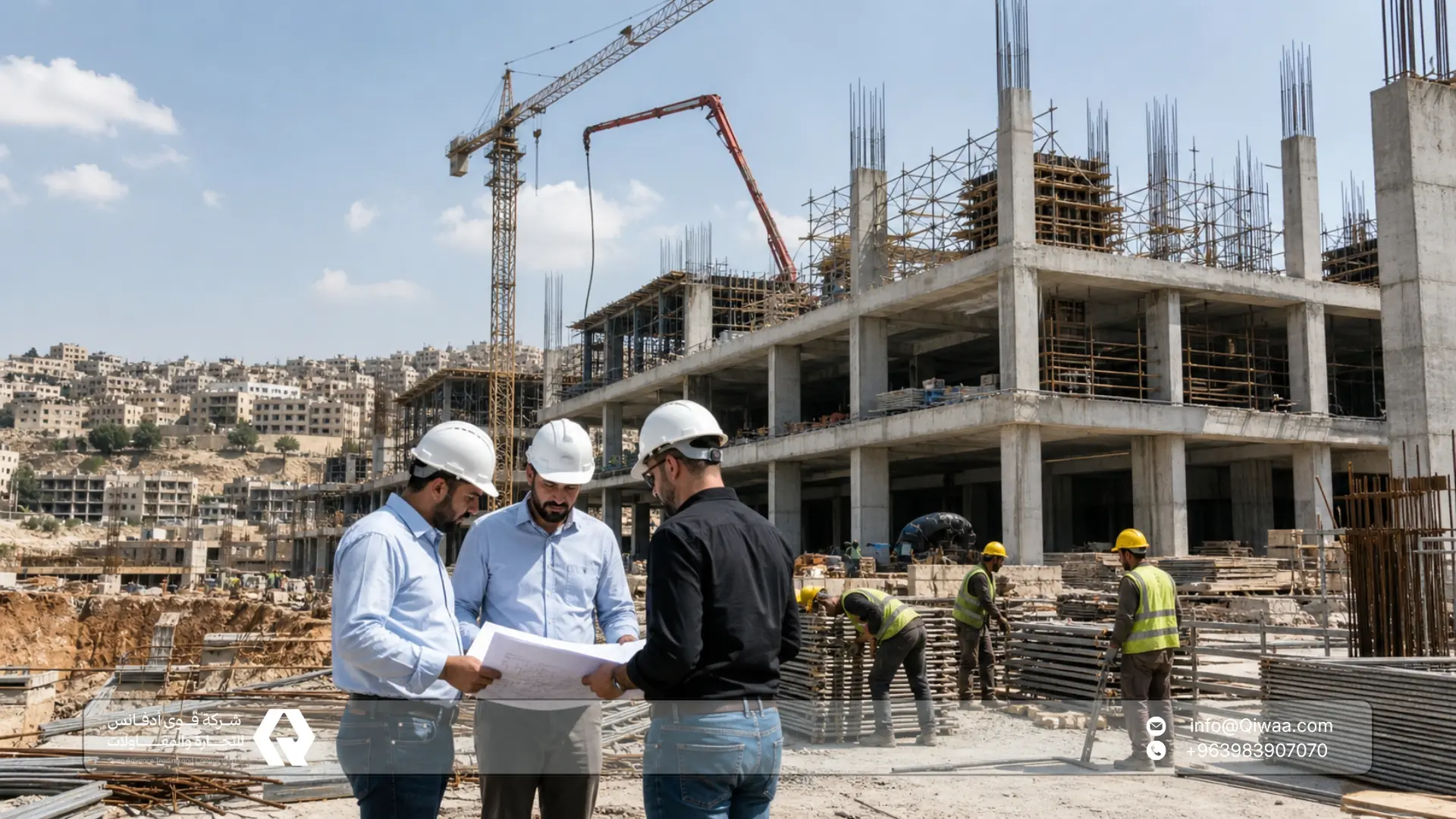
The Right Start: Site Study Before Design
Before architectural drawings begin, the site must be understood. Land area alone is not enough to judge whether a commercial project is suitable.
We study site access, street width, traffic directions, entry and exit points, the possibility of separating visitor movement from service movement, and the required number of parking spaces.
In mall construction in Syria, the site study should answer clear questions:
- Can visitors enter and leave easily?
- Is there enough space for parking?
- Can a loading and unloading area be separated from visitor entrances?
- Does the land allow clear entrances for anchor shops?
- Is future expansion or use modification possible?
This study prevents costly mistakes later. A successful commercial project does not depend only on the façade design, but also on ease of access and daily usability.
Also Read: Tunnel Formwork in Syria: Benefits for Residential Tower Construction
Commercial Design: Spaces Must Support Leasing
The architectural design of a mall must serve the investment. Shops, corridors, escalators, elevators, restaurants, restrooms, storage areas, and service rooms must be placed within a clear movement pattern that allows visitors to pass by as many commercial frontages as possible without confusion.
At this stage of mall construction in Syria, we focus on distributing spaces in a way that supports leasing. A good retail unit is not just an enclosed space. It is a unit with a clear frontage, comfortable access, nearby services, and the ability to be fitted out according to business type.
Common areas must also be carefully designed because they affect the value of the entire project.
In small and medium commercial complexes inside Syrian cities, the biggest challenge may be making the best use of limited space. Here, execution experience becomes extremely important because every square meter must serve a clear function: shop, corridor, parking, service, or attraction point.
Structural System: Space Flexibility Matters More Than the Cheapest Solution
Malls need open spaces and column layouts that do not reduce shop value or obstruct parking movement. Therefore, we do not choose the structural system based only on the cost of concrete and steel. We choose it based on usability after execution.
In structural design, global references are often used, such as:
- ASCE 7 for determining design loads, wind and seismic effects, and load combinations.
- ACI 318 for concrete structure design and detailing.
These references do not replace local codes and licensing authority requirements in Syria, but they provide a strong engineering framework that helps improve design and review quality.
In mall construction in Syria, structural quality means three things: structural safety, constructability, and operational flexibility.
The structure must carry loads, allow service routes, and give the investor greater freedom to divide or modify shops in the future.
Read more: Foreign Investment in Syria: How to Enter the Syrian Market Step by Step
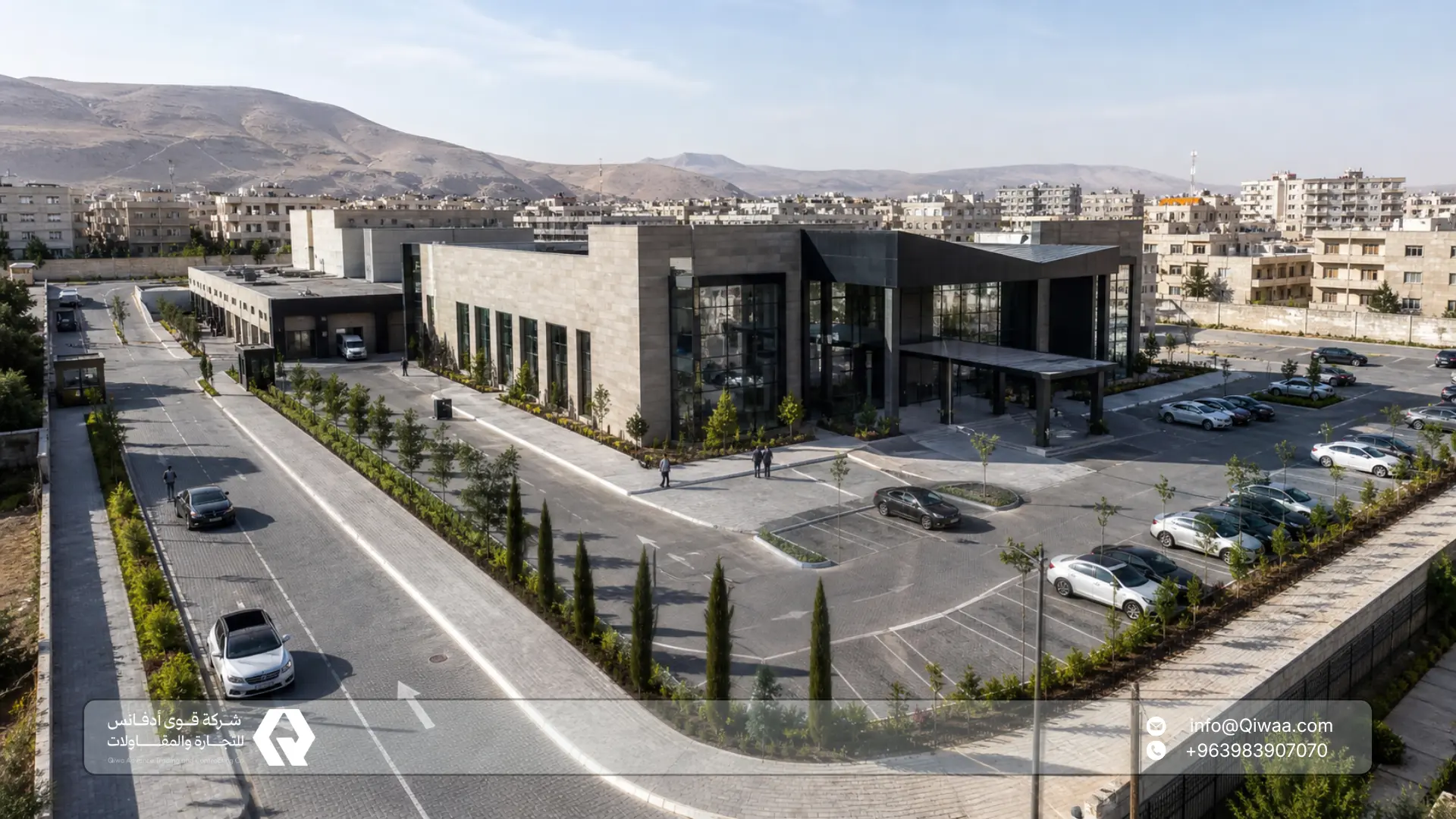
Concrete and Building Materials: Project Quality Starts with Supply
At Qiwa Advance, we have an important advantage in mall projects: the connection between execution and supply.
We do not depend on construction execution alone. We also work in supplying building and industrial materials that enter the project from the earliest stages to final finishing.
This matters in mall construction in Syria because material availability, delivery timing, and supply quality directly affect the project schedule and final cost.
Materials We Supply for Commercial Projects
We supply materials such as:
- Cement.
- Steel.
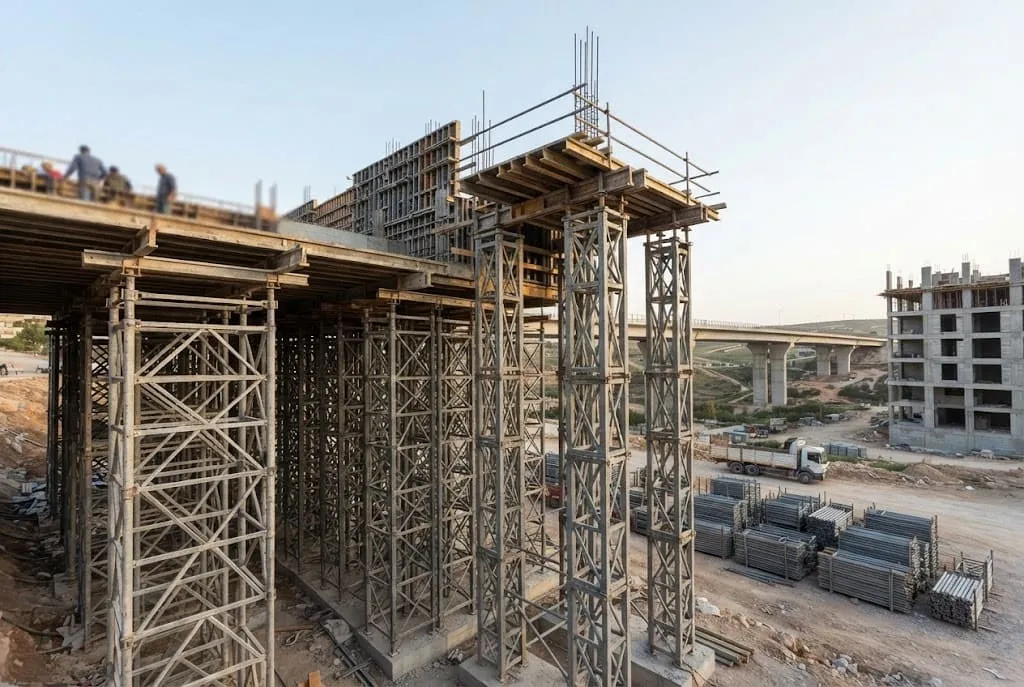
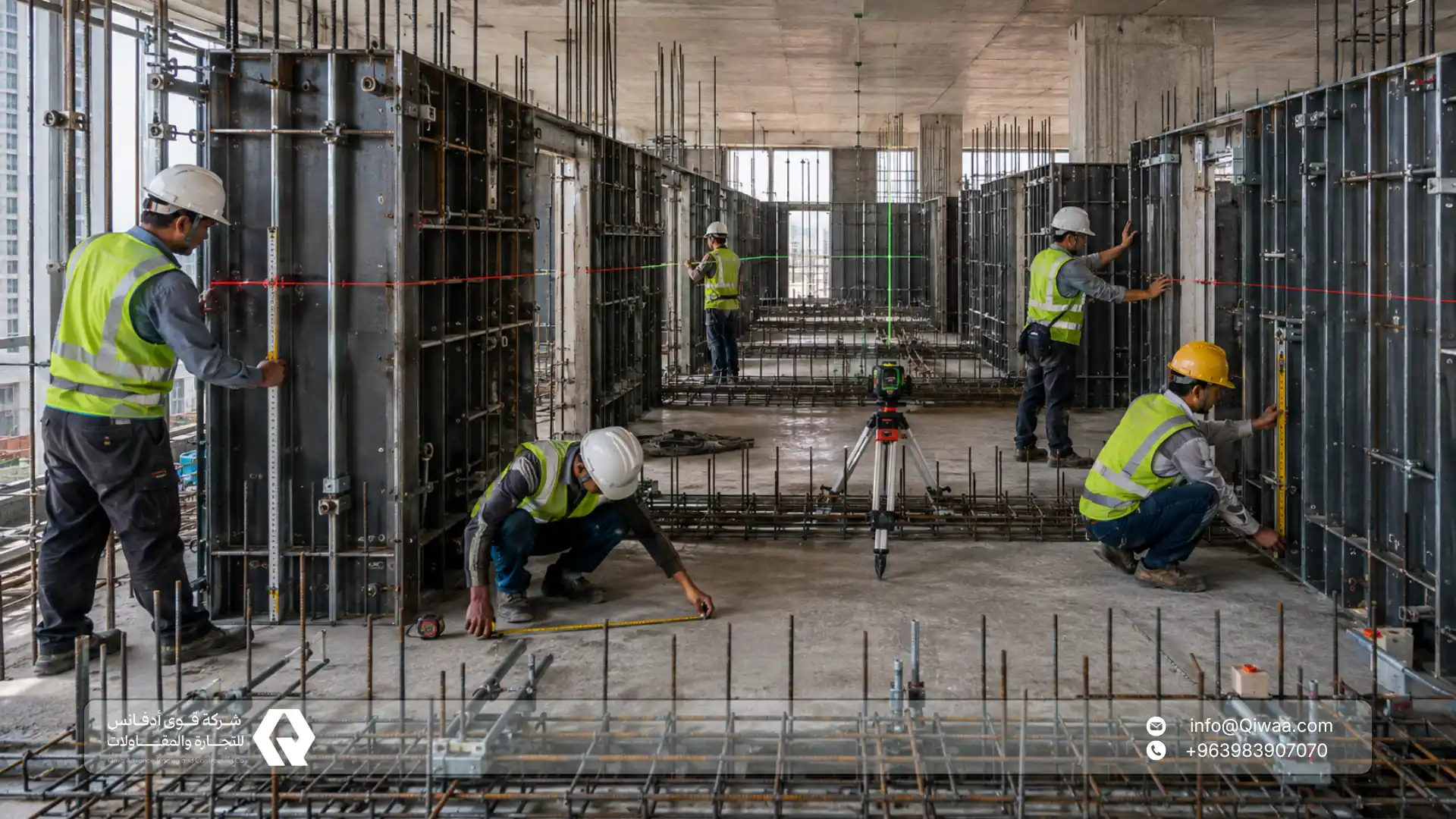
- Metal formwork.
- Scaffolding.
- Pipes.
- Ceramic.
- Marble and granite.
- Advanced concrete materials such as microsilica, GGBS, and pozzolana.
- Chemical admixtures for concrete.
This variety helps us control quality and reduce the risk of material delays, especially in projects that require a clear execution schedule.
Fire Safety: A Core Element from Day One
Every mall needs an integrated safety system. Visitor density, multiple shops, restaurants, storage areas, electrical panels, and parking facilities make fire safety a core part of design and execution.
Fire safety cannot be treated as a late-stage addition in mall construction in Syria. It must be planned from the beginning with circulation, exits, stairs, corridors, and service zones.
References and Standards Used in Safety Design
In commercial projects, the following references may be used:
- International Building Code – IBC provisions for covered and open malls.
- NFPA 101 as an important reference for life safety and means of egress.
- NFPA 13 for sprinkler system design and installation.
These references are always connected with Civil Defense and approved local authority requirements in Syria.
At this stage, we review escape routes, number of exits, stair and corridor widths, emergency lighting, directional signs, alarm systems, sprinkler networks, fire tanks and pumps, and smoke extraction when required.
The goal is to create a building that is safe, licensable, and ready for operation, not to add fire systems at the end of the project as an emergency solution.
Also Check: Ceramic and Porcelain Tiles in Syria: Import Sources and Best Options
Air Conditioning and Ventilation: Visitor Comfort and Operating Cost
Air conditioning in malls is not an ordinary mechanical item. It is a major factor in visitor experience, tenant satisfaction, and operating cost.
A weak design causes heat, odors, and uncomfortable areas. An oversized design increases electricity and maintenance costs.
In mall construction in Syria, HVAC planning must consider heat-load distribution, glass façades, restaurants, visitor numbers, ceiling heights, and zone-control methods.
References such as the following may be used:
- ASHRAE 62.1 for ventilation and indoor air quality requirements.
- ASHRAE 90.1 as a reference for energy efficiency in non-residential buildings.
We look at air conditioning as part of the project economy. A good system should provide indoor comfort, allow maintenance, consume reasonable energy, and respond to occupancy variation between weekdays and seasons.
Electrical and Low-Current Systems: Infrastructure That Can Expand
A commercial mall needs a stable and expandable electrical network. Lighting, elevators, escalators, air conditioning, restaurants, cameras, sound systems, alarms, advertisements, internet networks, and control systems all require early planning.
In mall construction in Syria, electrical infrastructure must be designed with future tenant changes in mind. A restaurant, clothing store, supermarket, or entertainment zone may each require different loads and technical services.
We focus on panel distribution, cable routes, electrical rooms, grounding, lightning protection, backup power, and emergency lighting.
We also consider the ability to modify shops in the future, because tenants may request different loads according to their business activity.
Early coordination between electrical, mechanical, and architectural works saves significant time during execution.
Many commercial project problems appear because duct routes, cables, gypsum ceilings, and lighting conflict with each other. That is why we prefer resolving these details in shop drawings before they reach the site.
Parking and Internal Movement
Parking is part of the mall experience. Visitors start evaluating the project from the moment they enter the parking area, not when they enter the shop.
That is why we care about designing parking areas that are clear, safe, and connected to entrances.
In mall construction in Syria, parking design can affect the commercial success of the entire project. If access is difficult, visitors may avoid the complex even when the building itself is attractive.
We consider aisle width, traffic direction, accessible parking, basement entrances, ventilation, water drainage, column protection, internal signage, and the possibility of separating visitor movement from loading and service movement.
In crowded cities, good parking organization can directly affect the success of the complex. A project that is difficult to access or park in loses part of its commercial value, no matter how attractive its façade is.
Read Also: Industrial and Medical Gases in Syria: Safe Supply for Steel Plants and Hospitals
Finishes: Durable and Sustainable Materials Are the Better Choice
Mall finishes must withstand heavy movement, repeated cleaning, and continuous maintenance. Therefore, we select flooring, ceilings, paint, glass, doors, accessories, and restrooms based on actual use.
At Qiwa Advance, we have experience in interior finishing and commercial space preparation, in addition to supplying finishing materials such as ceramic, porcelain, marble, granite, doors, and supporting building materials.
Our scope also includes executing and preparing commercial and showroom projects according to brand and project requirements.
In mall construction in Syria, good finishing should be attractive, practical, easy to maintain, and resistant to heavy use.
We avoid solutions that look attractive at handover but create maintenance problems for the owner after a few months of operation.
Why Is Qiwa Advance a Strong Choice for Mall Construction in Syria?
Because we do not enter the project from one angle only. A mall needs a contractor, supplier, coordinator, and team that understands the relationship between design, execution, and operation.
This is what we work on at Qiwa Advance.
We combine:
- Civil and construction work execution through our contracting sector.
- Essential building material supply through our trading sector.
- Support for cement, concrete, and admixture projects through our industrial sector.
- Work with materials and solutions used in infrastructure and commercial projects.
- Experience in infrastructure projects, fuel stations, treatment plants, and interior finishing.
This combination is very important in the Syrian market because material availability, supply speed, and quality control directly affect execution time and project cost.
When a company has experience in both execution and supply, it becomes able to provide faster and more realistic solutions for mall construction in Syria.
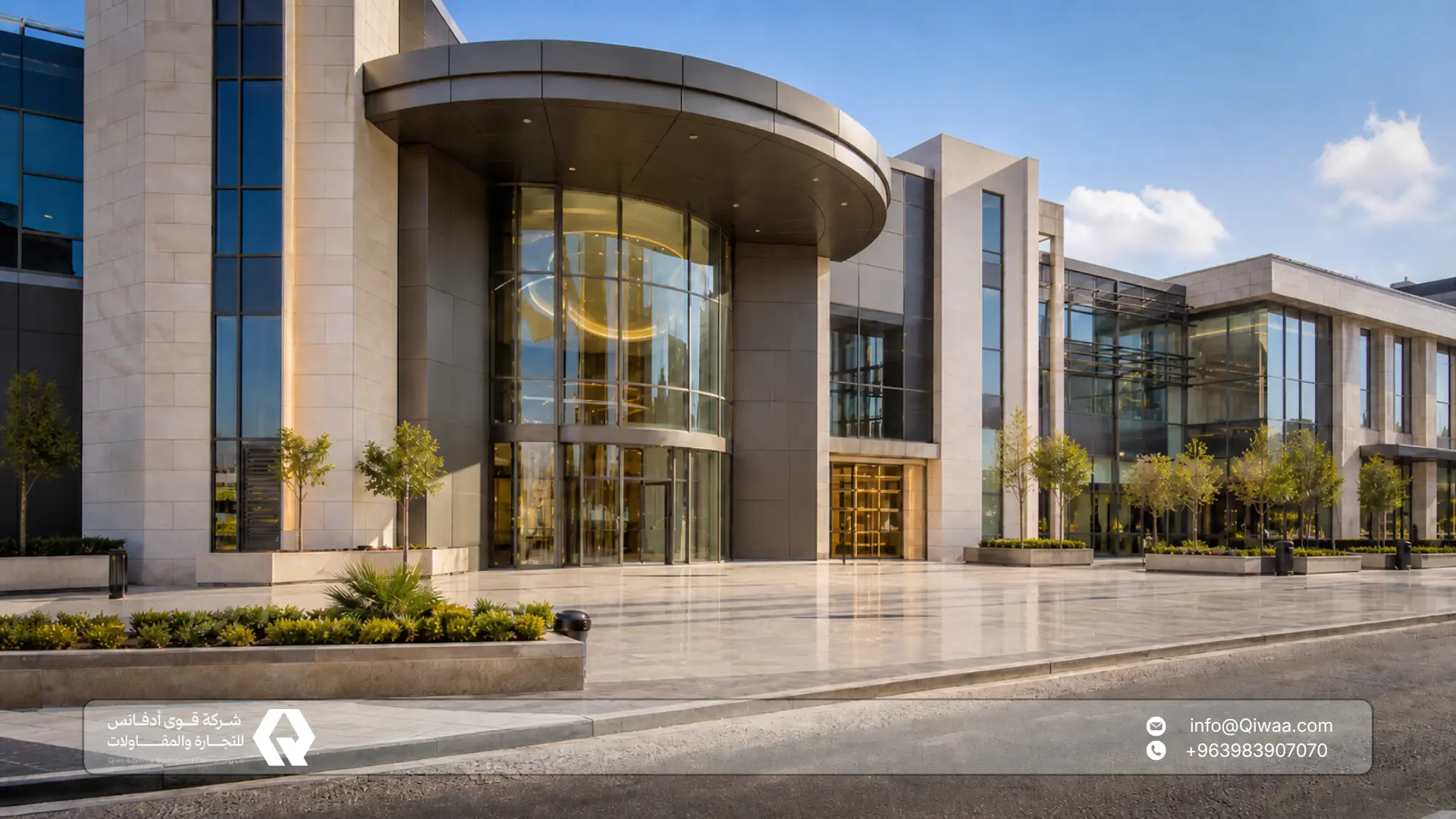
Mistakes We Work to Avoid in Mall Projects in Syria
In mall and commercial complex projects, mistakes do not always appear during execution only. Their impact may appear after opening through weak operation, high maintenance cost, or poor visitor and tenant experience.
That is why we work to avoid the following mistakes from the earliest stages.
1. Starting Execution Before Drawing Coordination Is Complete
One of the most common mistakes in commercial projects is starting execution before coordination is complete between architectural, structural, mechanical, and electrical drawings.
This leads to site conflicts and costly modifications, especially between ducts, cables, beams, and false ceilings.
In mall construction in Syria, this mistake can delay the project and increase cost because commercial buildings contain many overlapping systems.
2. Ignoring Parking and Service Routes
Parking and service routes may sometimes be neglected in favor of increasing leasable areas.
This decision may look good on paper, but it weakens operation later. A mall does not need shops only. It also needs clear entrances, organized services, loading and unloading areas, electrical and mechanical rooms, and suitable restrooms.
3. Choosing Finishes That Are Not Suitable for Heavy Movement
A common mistake is choosing finishes that look attractive at handover but do not withstand heavy daily use.
In commercial projects, materials must suit high movement, repeated cleaning, and continuous maintenance. Appearance matters, but durability and easy maintenance matter more in the long term.
Mall Construction in Syria Requires an Integrated Execution Vision
A successful mall starts with a clear idea, then a practical design, then organized execution, and finally stable operation.
Between these stages, there are dozens of details that require experience: supply, safety, air conditioning, electricity, finishes, parking, concrete quality, insulation, and maintenance routes.
At Qiwa Advance for Trading and Contracting, we put our contracting, trading, and industrial experience at the service of commercial projects in Syria.
We help owners and developers turn land or drawings into projects that are ready for execution and operation, while focusing on quality, clear specifications, suitable material selection, and organized work-stage coordination.
If you are planning mall construction in Syria or a commercial complex project, we can study the project with you from the beginning: land location, area, type of use, finishing level, design stage, and expected budget.
After that, we provide a practical vision that helps you make a clear decision before starting execution.