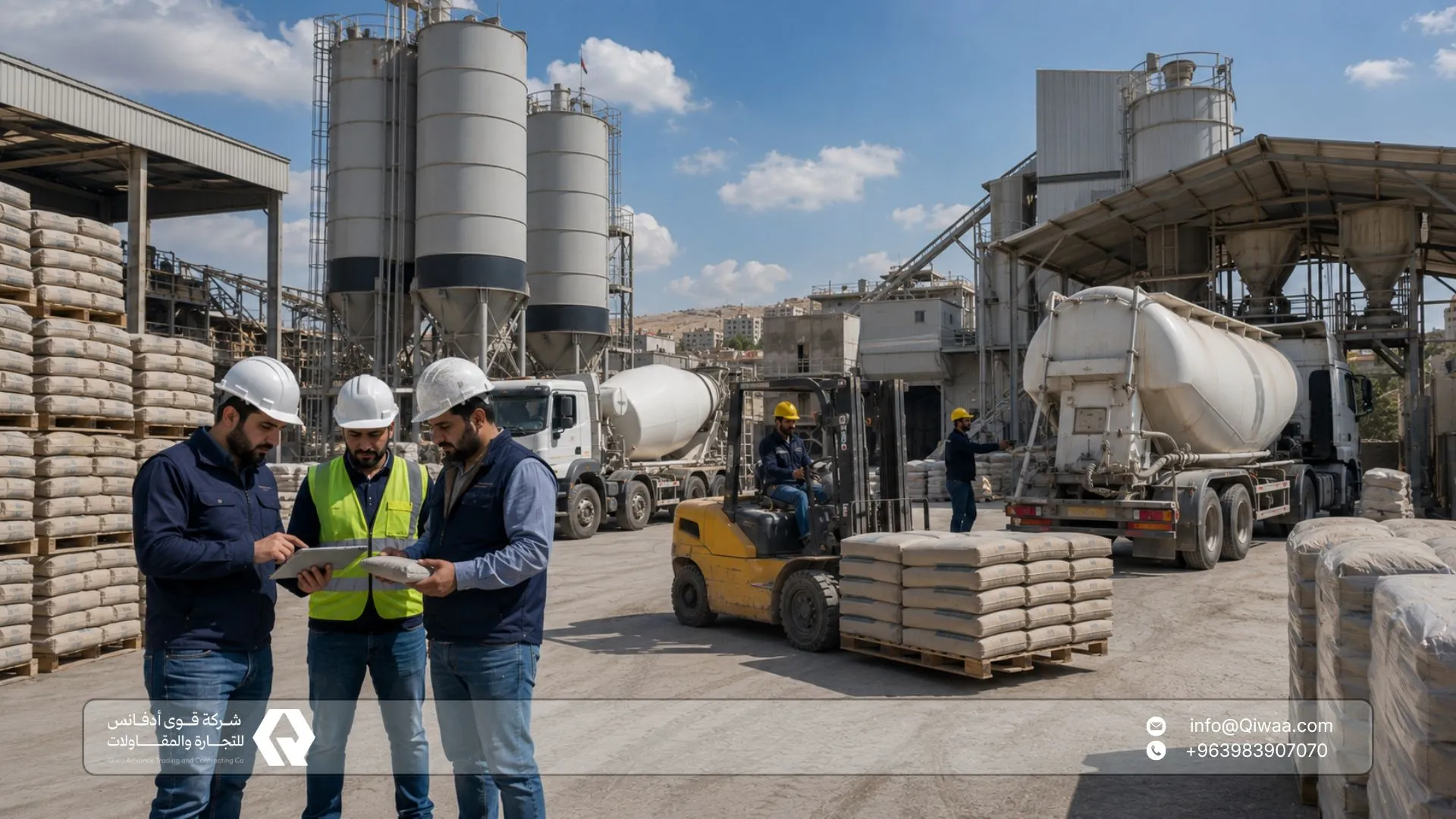


In high-performance concrete projects, the quality of cementitious materials has a direct impact on durability, strength, workability, permeability, and long-term structural performance.
That is why microsilica and fly ash should not be treated as ordinary raw materials. They are supplementary cementitious materials that must be selected, tested, supplied, and used according to the concrete mix requirements and project conditions.
In Syria, where infrastructure, industrial, housing, and reconstruction projects need stronger and more durable concrete solutions, the correct use of microsilica and fly ash can help improve performance and reduce risks during execution.
In this guide, Qiwa Advance explains how microsilica and fly ash support concrete quality, when each material is suitable, what to check before approval, and how organized supply helps ready-mix plants and construction projects achieve more stable results.
What Are Microsilica and Fly Ash?
Microsilica and fly ash are supplementary cementitious materials used in concrete to improve performance, durability, workability, and long-term behavior.
They can be used as part of the cementitious system to reduce permeability, improve strength development, support cement optimization, or enhance concrete behavior under demanding site conditions.
The correct choice depends on the project specification, concrete performance target, cement type, admixture compatibility, and the actual conditions of production and placement.
Microsilica
Microsilica, also known as silica fume, is an extremely fine material used in concrete mixes that require high density, low permeability, and stronger durability performance.
It is commonly used when the project needs:
- High-strength concrete
- Low-permeability concrete
- Better resistance to aggressive environments
- Denser cement paste
- Improved bonding within the concrete matrix
- Better performance in demanding structural elements
Microsilica is usually selected for projects where durability and high performance are more important than standard concrete behavior.
Fly Ash
Fly ash is a fine supplementary cementitious material used in concrete to improve workability, support long-term strength development, reduce heat in suitable applications, and optimize cement use when applied correctly.
It is commonly used in:
- Ready-mix concrete
- Mass concrete
- Infrastructure works
- Pavements
- Precast elements
- General structural concrete
- Projects that need improved workability and long-term durability
The right use of fly ash depends on its class, source, chemical composition, fineness, loss on ignition, compatibility with cement, and project specifications.
Read more: Concrete Admixtures in Syria: Improve Ready-Mix Quality
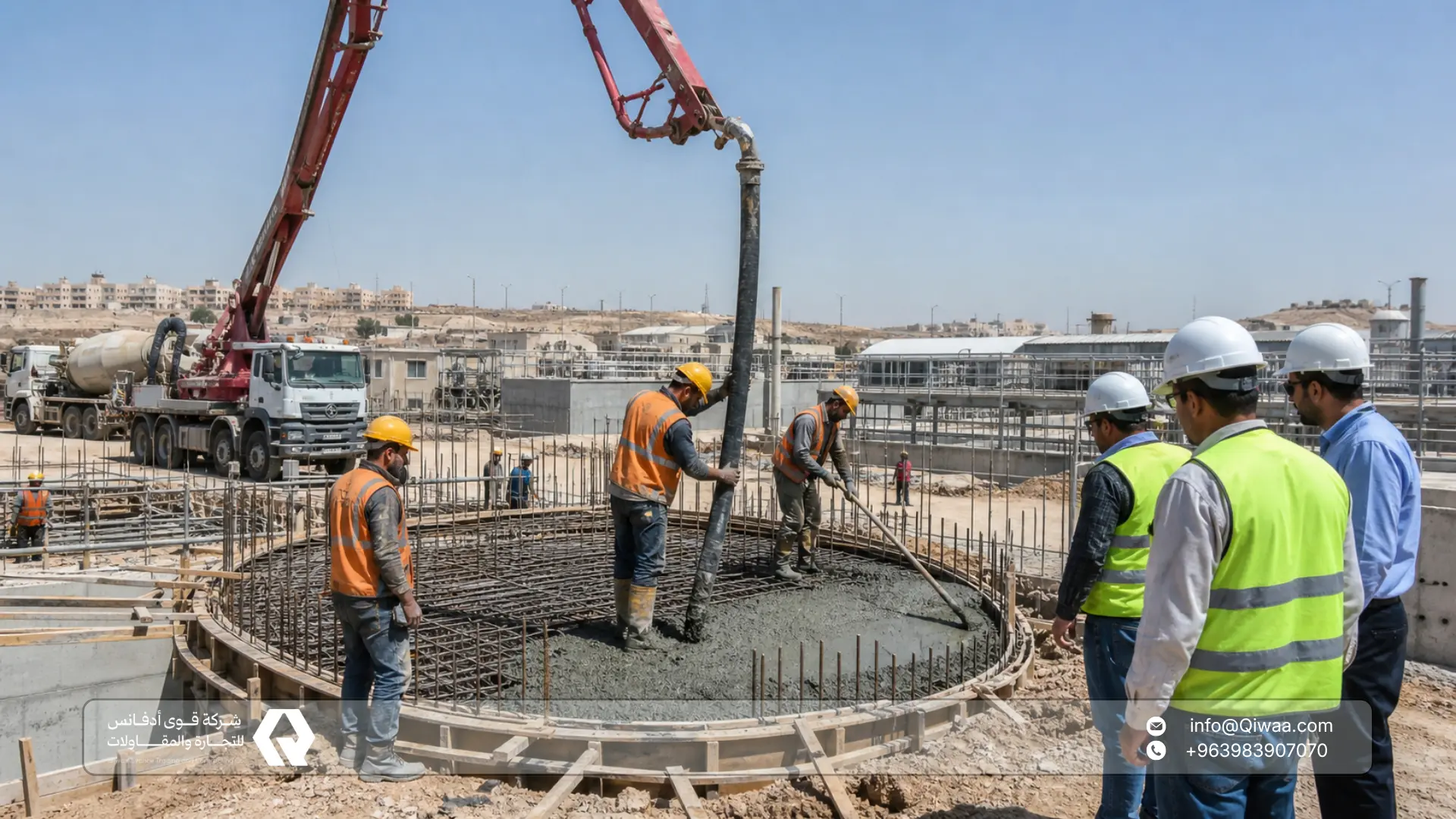
Why These Materials Matter in Concrete Projects
The value of microsilica and fly ash appears in the actual performance of the concrete, not only in the material certificate or technical data sheet.
When selected and tested correctly, these materials can help improve concrete durability, workability, density, and long-term service behavior.
Better Durability
Microsilica can help produce a denser concrete matrix with lower permeability. This is valuable in projects exposed to moisture, salts, chemicals, or aggressive environmental conditions.
Fly ash can also support durability when used within a controlled mix design and tested with the actual project materials.
For infrastructure projects, water structures, industrial floors, marine-related environments, and high-performance concrete elements, durability is often more important than early appearance or short-term compressive strength alone.
Lower Permeability
Concrete durability is strongly connected to permeability. When water, chlorides, sulfates, or other aggressive agents move easily through concrete, the structure becomes more exposed to long-term deterioration.
Microsilica is especially useful in mixes that require lower permeability and higher density.
This can benefit:
- Water-retaining structures
- Foundations
- Bridges
- Industrial facilities
- Parking structures
- Concrete exposed to aggressive environments
Improved Workability and Mix Stability
Fly ash can improve the consistency and workability of fresh concrete when the material is suitable and the dosage is controlled.
This can help ready-mix plants and contractors manage:
- Pumping requirements
- Longer transport times
- Large pours
- Better placement
- More stable finishing
- Reduced water adjustment on site
However, performance depends on the actual fly ash source, cement type, admixtures, dosage, temperature, and production control.
Stronger Performance in Special Mixes
Microsilica and fly ash are especially important in mixes where normal cement-only concrete may not achieve the required performance efficiently.
They may be used in:
- High-strength concrete
- High-performance concrete
- Low-permeability concrete
- Mass concrete
- Pumped concrete
- Durable infrastructure concrete
- Industrial and water-related structures
The decision should always be connected to the project’s performance target, not only to the desire to reduce cost or replace cement.
If your project needs high-performance concrete in Syria, Qiwa Advance can help you evaluate whether microsilica, fly ash, or a combined cementitious system is suitable for your mix.
Read more: Investment in Syria 2026: Practical Opportunities
Microsilica vs. Fly Ash
Microsilica and fly ash are not interchangeable materials. Each one has a different role in the concrete mix.
| Comparison Point | Microsilica | Fly Ash |
| Main role | Improves density, durability, and high-performance behavior | Improves workability, long-term performance, and cement optimization |
| Particle size | Extremely fine | Fine, but generally coarser than microsilica |
| Common use | High-strength and low-permeability concrete | Ready-mix, mass concrete, infrastructure, and general concrete |
| Durability effect | Strong impact on permeability reduction | Useful when compatible and properly dosed |
| Workability | Can make mixes more cohesive and sticky | Often improves workability and pumpability |
| Dosage sensitivity | High; requires careful control | Requires control, especially for setting and strength development |
| Best use | Demanding structural and durability-focused applications | Large-scale concrete, workability improvement, and cement optimization |
The best choice may be microsilica, fly ash, or a combination of both, depending on the design target.
In many cases, the right question is not “which material is better?” but “which material fits the mix objective, cement type, project conditions, and performance requirements?”
When to Use Microsilica
Microsilica is suitable when the concrete must achieve higher durability, density, and low permeability.
High-Strength Concrete
When a project requires high compressive strength, microsilica can support a denser cementitious matrix and improved bonding inside the concrete.
This makes it useful in demanding structural elements, towers, bridges, and special industrial applications.
Water and Infrastructure Projects
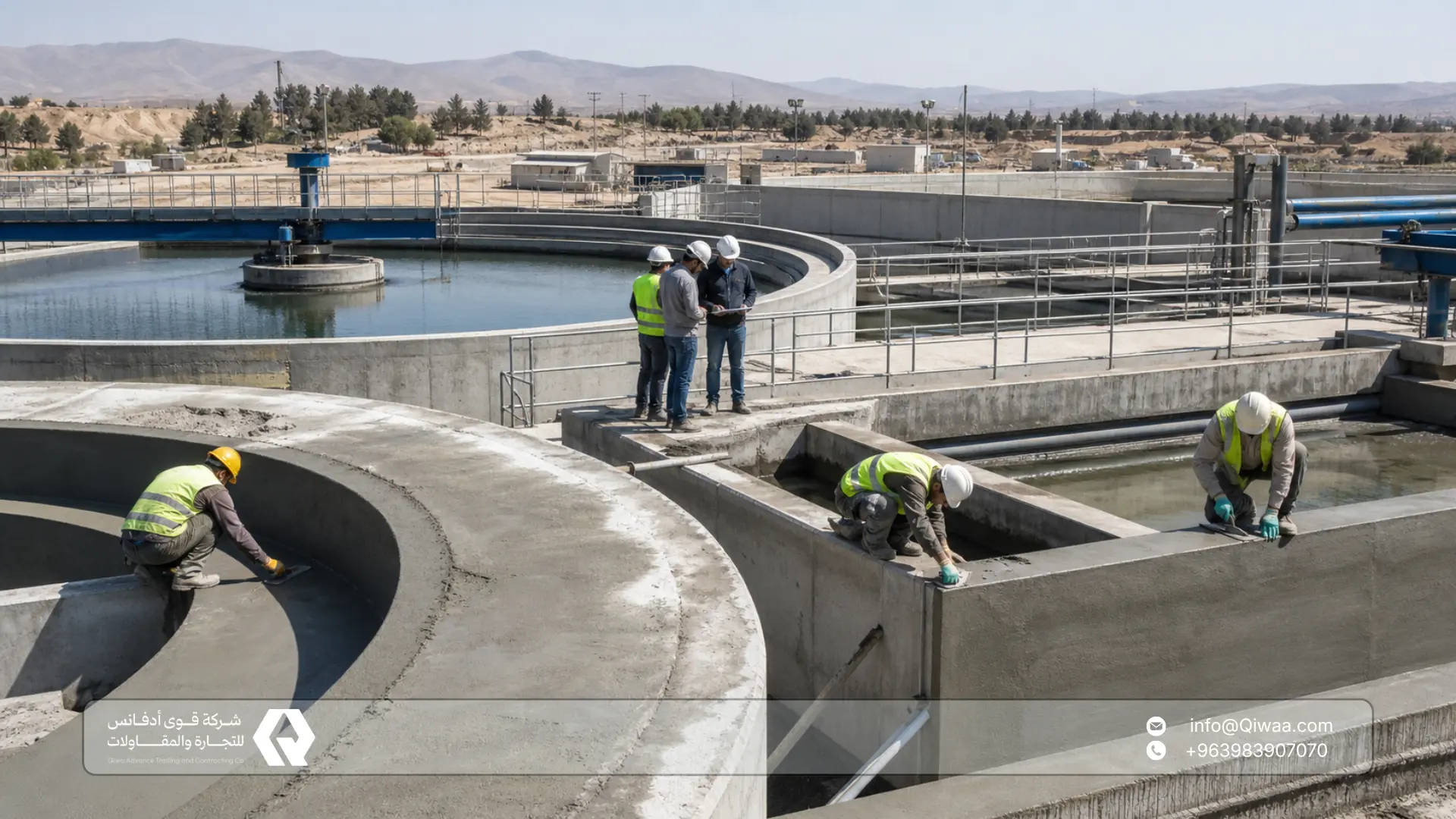
Water-related concrete requires strong resistance to permeability and chemical exposure.
Microsilica may be considered for:
- Water tanks
- Treatment plant structures
- Pumping stations
- Desalination-related concrete works
- Foundations exposed to moisture
- Infrastructure components requiring higher durability
Industrial Floors and Heavy-Duty Concrete
Industrial floors and heavy-use structures require abrasion resistance, durability, and stable surface performance.
Microsilica can support mixes designed for higher wear resistance and better long-term performance when used with the right mix design, admixture system, and curing process.
Aggressive Environments
Concrete exposed to chlorides, sulfates, moisture, or chemicals may need lower permeability and stronger protection.
Microsilica can be valuable in these cases, but its dosage and compatibility with cement and admixtures must be carefully verified.
Qiwa Advance can help you review whether microsilica is suitable for your concrete durability target, exposure condition, and project specification.
When to Use Fly Ash
Fly ash is often suitable when the project needs better workability, cement optimization, lower heat in certain applications, and long-term performance improvement.
Ready-Mix Concrete
Fly ash can improve the flow and workability of ready-mix concrete when properly selected and dosed.
This supports:
- Easier pumping
- Better placement
- Lower water demand
- More stable workability
- Improved finishing in suitable mixes
Mass Concrete
In large concrete pours, heat generation can become a technical concern.
Fly ash may help reduce heat of hydration in suitable mixes, making it useful in foundations, thick concrete sections, and large-volume pours.
Infrastructure Projects
Fly ash can support concrete used in infrastructure where durability, workability, and long-term strength matter.
Applications may include:
- Roads
- Bridges
- Water infrastructure
- Utility structures
- Pavements
- Precast or cast-in-place elements
Cement Optimization
Fly ash can replace part of the cement in a controlled mix design. This may support cost efficiency and reduce cement consumption when quality, availability, and compatibility are properly managed.
However, cement replacement should not be treated as a simple percentage decision. It must be based on trials, specifications, strength development, setting time, and project conditions.
If you are considering fly ash for ready-mix or infrastructure concrete in Syria, Qiwa Advance can help you connect supply quality with mix design and project requirements.
Also Read: Infrastructure Contracting in Syria: Choosing the Right Contractor
What to Check Before Approval
Before approving microsilica or fly ash for a project, the decision should be based on technical verification, not supplier claims alone.
Material Standard
Confirm the applicable standard and project specification.
Review:
- Applicable standard
- Product certificate
- Test reports
- Source consistency
- Batch traceability
- Compliance with project specification
- Consultant approval requirements
A material that does not match the project standard can create approval delays, production issues, or rejection during quality control.
Chemical and Physical Properties
The performance of supplementary cementitious materials depends on their chemical and physical characteristics.
Review:
- Fineness
- Silicon dioxide content
- Loss on ignition
- Moisture content
- Specific gravity
- Pozzolanic activity
- Color and consistency
- Presence of impurities
For fly ash, class and chemical composition are especially important. For microsilica, fineness and purity are critical.
Compatibility With Cement and Admixtures
Microsilica and fly ash do not behave the same with every cement or chemical admixture.
Before approval, test compatibility with:
- Actual cement
- Aggregates
- Water source
- Plasticizers or superplasticizers
- Retarders or accelerators
- Other mineral additions
- Actual batching process
This is essential to avoid unexpected slump loss, delayed setting, sticky mixes, segregation, or strength variation.
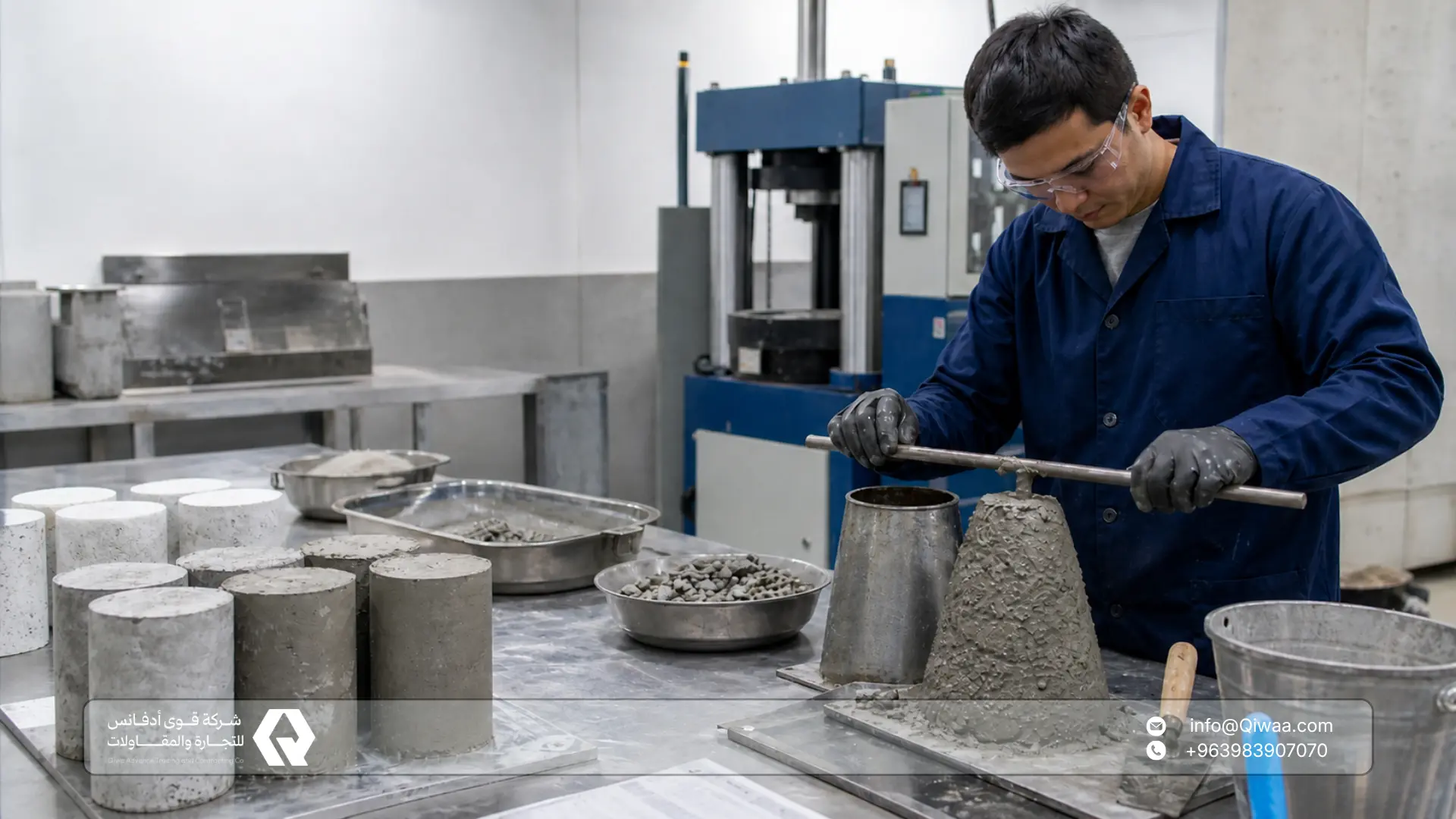
Trial Mix Performance
No material should be approved for major use without trial mixes.
Review the effect on:
- Slump
- Workability retention
- Setting time
- Pumpability
- Finishing
- Early strength
- 28-day strength
- Long-term strength
- Permeability or durability indicators where required
The trial should use the actual materials and conditions expected in the project.
A trial mix is not only a laboratory step. It is the most practical way to confirm whether the material will perform correctly in the plant and on site.
Supply Stability
A material that performs well in one delivery may still create problems if future batches vary.
Before approval, check:
- Source stability
- Batch consistency
- Packaging condition
- Delivery schedule
- Storage requirements
- Availability for repeated supply
- Documentation for each shipment
Supply stability is especially important for ready-mix plants and large infrastructure projects.
Before approving microsilica or fly ash, contact Qiwa Advance to review technical documents, trial mix results, delivery plan, and compatibility with your concrete system.
Also Check: Qiwa Advance and Wosta Gases: Strategic Partnership in Syria
Common Mistakes to Avoid
Many concrete problems happen because supplementary cementitious materials are selected or used without enough technical control.
Choosing by Price Only
The lowest price can become expensive if the material causes inconsistent strength, poor workability, failed tests, or rejected concrete.
The right comparison should include:
- Standard compliance
- Source reliability
- Test reports
- Batch consistency
- Suitability for the mix
- Delivery stability
- Technical support
Treating Microsilica and Fly Ash as the Same
These materials serve different purposes.
Microsilica is often selected for high density and low permeability. Fly ash is often selected for workability, cement optimization, and long-term performance.
Using one instead of the other without technical review may lead to performance problems.
Skipping Trial Mixes
A technical data sheet is not enough.
The same material can behave differently with different cement types, aggregates, admixtures, temperatures, and water contents.
Trial mixes are essential before approving large-scale use.
Ignoring Setting Time
Supplementary cementitious materials can affect setting time and strength development.
This matters in:
- Fast-track projects
- Cold or hot weather
- Precast production
- Formwork removal
- Pumped concrete
- Large pours
The project team must check whether the material supports the execution schedule.
Weak Storage Control
Microsilica and fly ash are fine materials and need suitable storage and handling.
Poor storage can cause moisture problems, contamination, batching errors, or inconsistent performance.
Proper storage protects both material quality and concrete consistency.
Qiwa Advance helps projects avoid these mistakes by linking material supply with standards, testing, storage, mix design, and site performance.
Check: Smart Fuel Station Construction in Syria: From Traditional to Modern Stations
Qiwa Advance for Microsilica and Fly Ash Supply
At Qiwa Advance, we support concrete and construction projects in Syria through organized supply of raw materials, industrial inputs, and construction-related materials.
Our role is not only to provide microsilica or fly ash as separate products. We help connect the material with the concrete performance target, project requirements, supply chain, and execution reality.
Supply Based on Project Requirements
We help clients review the material based on:
- Concrete type
- Strength target
- Durability requirement
- Exposure condition
- Workability needs
- Pumping requirements
- Project specification
- Delivery schedule
This ensures the material serves the mix design and not only the purchase order.
Support for Ready-Mix and Construction Projects
We support projects that require stable supply for:
- Ready-mix plants
- Infrastructure projects
- Industrial buildings
- Water projects
- Housing and commercial construction
- High-performance concrete applications
Our goal is to improve supply reliability and reduce uncertainty during production and execution.
Connection With Wider Construction Materials
Qiwa Advance works across trade, contracting, industry, and infrastructure-related supply needs.
This wider position helps us understand how cementitious materials affect concrete production, site execution, and final project quality.
For clients, this means clearer coordination between material supply, concrete performance, and project delivery.
Technical and Supply Chain Coordination
We help clients align:
- Material standards
- Test documents
- Packaging and handling
- Delivery planning
- Storage needs
- Mix trial requirements
- Supplier documentation
- Project approval procedures
This makes the approval and supply process more controlled.
Looking for microsilica or fly ash supply in Syria? Contact Qiwa Advance to request a quotation based on your concrete performance requirements and project schedule.

FAQs About Microsilica and Fly Ash in Syria
What is the difference between microsilica and fly ash?
Microsilica is mainly used to improve density, reduce permeability, and support high-performance concrete. Fly ash is commonly used to improve workability, optimize cement content, support long-term performance, and improve concrete behavior in large or general concrete applications.
Can fly ash replace cement in concrete?
Yes, fly ash can replace part of the cement in a controlled mix design. The replacement percentage should be based on project specifications, trial mixes, strength development, setting time, cement compatibility, and durability requirements.
Is microsilica suitable for all concrete mixes?
No. Microsilica is best used when the project requires high strength, low permeability, or enhanced durability. It can make mixes more cohesive and may require careful use of superplasticizers, dosing control, and curing.
What documents should I request before approving these materials?
You should request product certificates, test reports, standard compliance documents, source information, batch traceability, technical data sheets, and any project-specific conformity documents required by the consultant or specification.
Why are trial mixes important?
Trial mixes show how the material performs with the actual cement, aggregates, admixtures, water, temperature, and execution conditions. They help confirm slump, setting time, strength, pumpability, finishing, and consistency before large-scale use.
Can microsilica and fly ash be used together?
Yes, they can be used together in some mix designs, but this should be based on technical trials. The combined system must be checked for workability, setting time, water demand, strength development, durability, and compatibility with chemical admixtures.
What is the main risk of using low-quality fly ash?
Low-quality or inconsistent fly ash can affect setting time, strength development, workability, color, finishing, and long-term performance. It can also create approval problems if documentation and testing are not clear.
Need reliable microsilica or fly ash supply for high-performance concrete in Syria?
Qiwa Advance can help you review specifications, test documents, trial mix requirements, delivery planning, and supply stability for ready-mix plants and construction projects.
Contact Qiwa Advance today to request a technical consultation or quotation for microsilica and fly ash supply.