

In infrastructure projects, the real risk is not only choosing the wrong contractor. It is choosing a contractor that cannot maintain quality under site pressure, manage execution discipline, or respond effectively to supply and coordination challenges. In Syria, and especially in Damascus, these risks can quickly turn into delays, rework, rising costs, and weaker project control.
In this article, we explain what makes an infrastructure contractor truly capable of delivering projects in Syria, how quality standards are applied in practice rather than on paper, and what owners, consultants, and executing entities should review before contracting. We also show how Qiwa Advance approaches infrastructure execution through clearer site management, stronger follow-up, and a more reliable connection between quality requirements and actual delivery on the ground.
Why Choosing a Construction Company in Syria Should Not Be Based on Price Alone?
In infrastructure projects, the lowest bid does not always lead to the lower project cost. Many of the real losses appear later during execution: delays in the work program, weak coordination, inconsistent workmanship, or rework that should have been avoided from the start. At that stage, a small difference in contract value can turn into a much bigger loss in time, control, and future correction costs.
That is why choosing a construction company in Syria should not be based on price alone. It should be based on the contractor’s ability to execute within clear specifications, maintain a disciplined timeline, and manage the site in a way that reduces stoppages, errors, and approval delays.
Read more: Tunnel Formwork System in Syria for Repetitive Building Projects
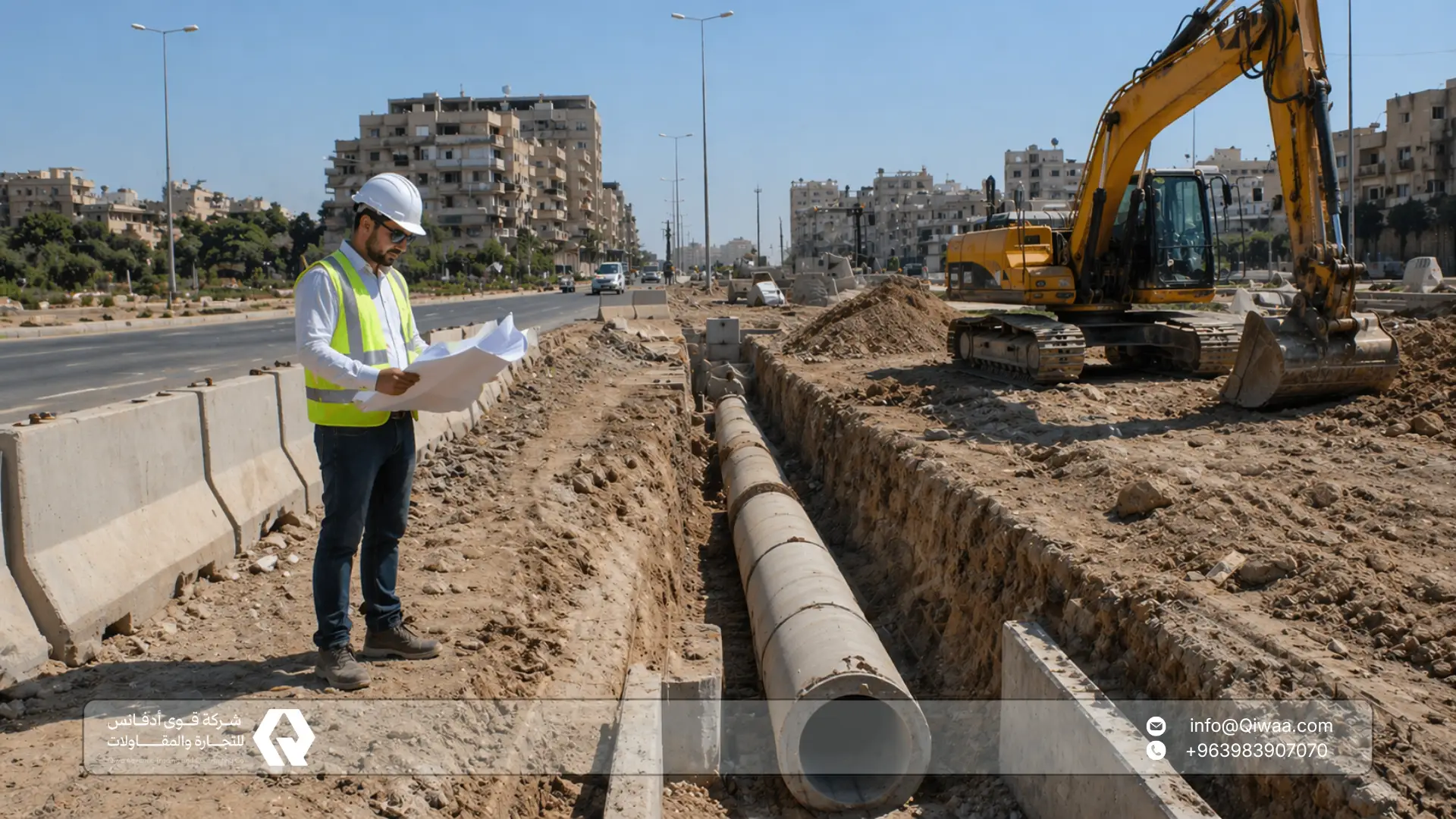
What Makes an Infrastructure Contractor in Syria Capable of Real Delivery?
A contractor that can actually deliver infrastructure projects is not defined by strong marketing language, but by strong execution capability on the ground.
What matters most is the ability to:
- manage the project as one connected system, not as separate daily tasks
- control labor, equipment, materials, and subcontractors effectively
- turn drawings and specifications into a realistic and workable execution plan
- coordinate continuously with the consultant, owner, and service-related entities
- respond quickly when site conditions change or unexpected issues appear
- commit to testing, documentation, and phased closure of works before moving forward
In practical terms, the right infrastructure contractor in Syria is the one that can convert technical requirements into controlled and reliable execution.
How Quality and Site Discipline Affect Infrastructure Project Success?
In infrastructure projects, quality is not only a compliance requirement. It is what protects the project from leakage, settlement, weak performance, delays, and costly rework after handover.
The same applies to operational discipline. Project stability often depends on practical details such as:
- setting priorities correctly
- ensuring materials and equipment are ready before each activity starts
- following the correct execution sequence
- closing comments and remarks on time
- controlling concealed works before they are covered
These are the factors that separate a project that progresses steadily from one that keeps losing time and budget despite having drawings and funding in place.
If you are looking for an infrastructure contractor in Syria that works with clearer standards, stronger follow-up, and more disciplined site execution from start to handover, Qiwa Advance will support you with an approach built around real project delivery.
Also Check: Water Desalination Plants in Syria by EPC Model
What Infrastructure Projects in Damascus Need Today?
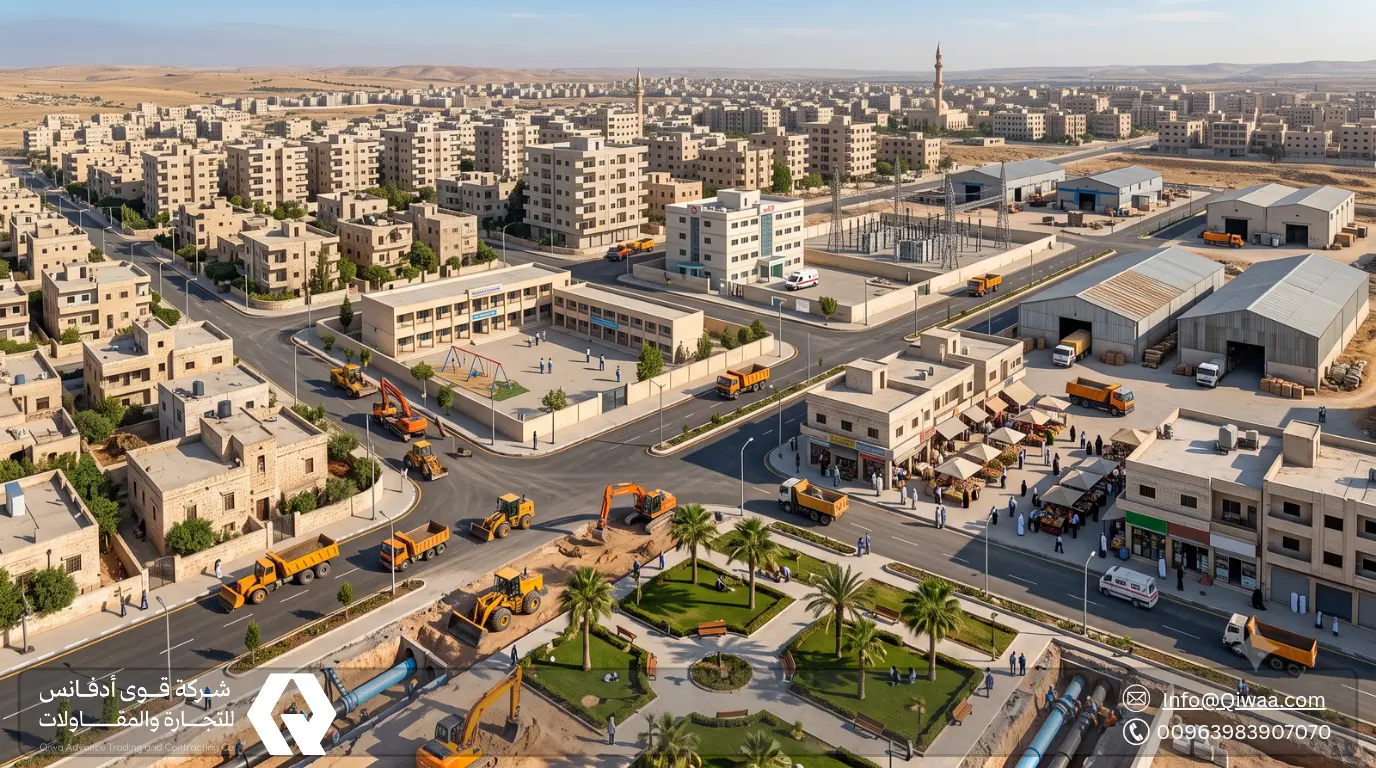
Infrastructure projects in Damascus need more than a contractor that can execute items on paper. They need a contractor that can work within restricted access, existing services, phased execution requirements, and daily site changes without losing control of quality or progress.
1. Execution That Matches Real Site Conditions
In networks, roads, and civil works, compliance with drawings alone is not enough. The contractor must be able to adapt execution to actual site conditions, including ground levels, buried services, excavation routes, backfilling, compaction, and the sequence between related activities.
What matters here is the ability to answer practical questions early:
- what can be executed now
- what must be prepared before the next phase
- how each stage will be closed properly before moving forward
2. Strong Coordination Between Design, Execution, and Schedule
Many infrastructure projects do not slow down because of execution alone, but because drawings, work sequencing, and available time are not coordinated properly.
Projects today need a contractor that can read the design from a field perspective, identify clashes early, and connect each activity to a realistic execution timeline. This helps reduce:
- unexpected stoppages
- clashes between activities
- rework
- poor use of labor, equipment, and materials
3. Better Control of Field Challenges
In Damascus and its surroundings, site conditions often require staged work, tighter access control, and closer coordination with service entities or surrounding activities.
The contractor adds value when it manages these conditions early through:
- clear phase planning
- early preparation of materials and equipment
- daily site follow-up
- faster field decisions when issues appear
- the ability to reset priorities without affecting quality
At Qiwa Advance, we manage infrastructure contracting projects in Damascus through an execution approach linked to actual site conditions, not only written documents. This helps reduce disruption, improve coordination, and support steadier delivery from start to handover.
Check: Marble and Granite Supply in Syria for Luxury Projects
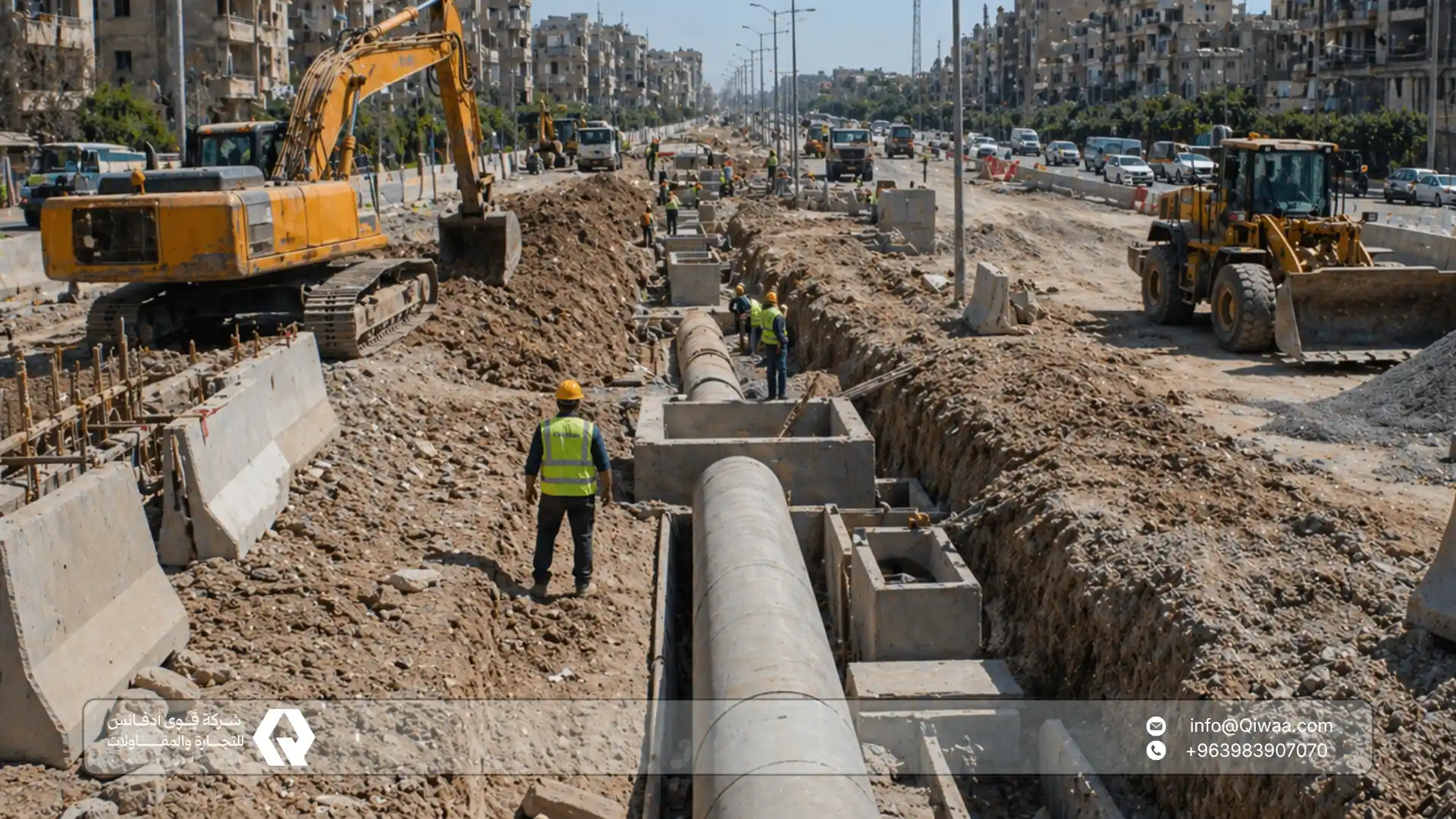
How International Quality Standards Appear in Infrastructure Execution?
In infrastructure projects, international quality standards are not valuable because they are written in specifications or approval forms. Their real value appears when they are applied on site through material control, disciplined execution, timely testing, clear documentation, and phased approvals.
In other words, quality is not a separate file. It is part of how the project is executed every day.
1. Material Control, Workmanship, and Testing
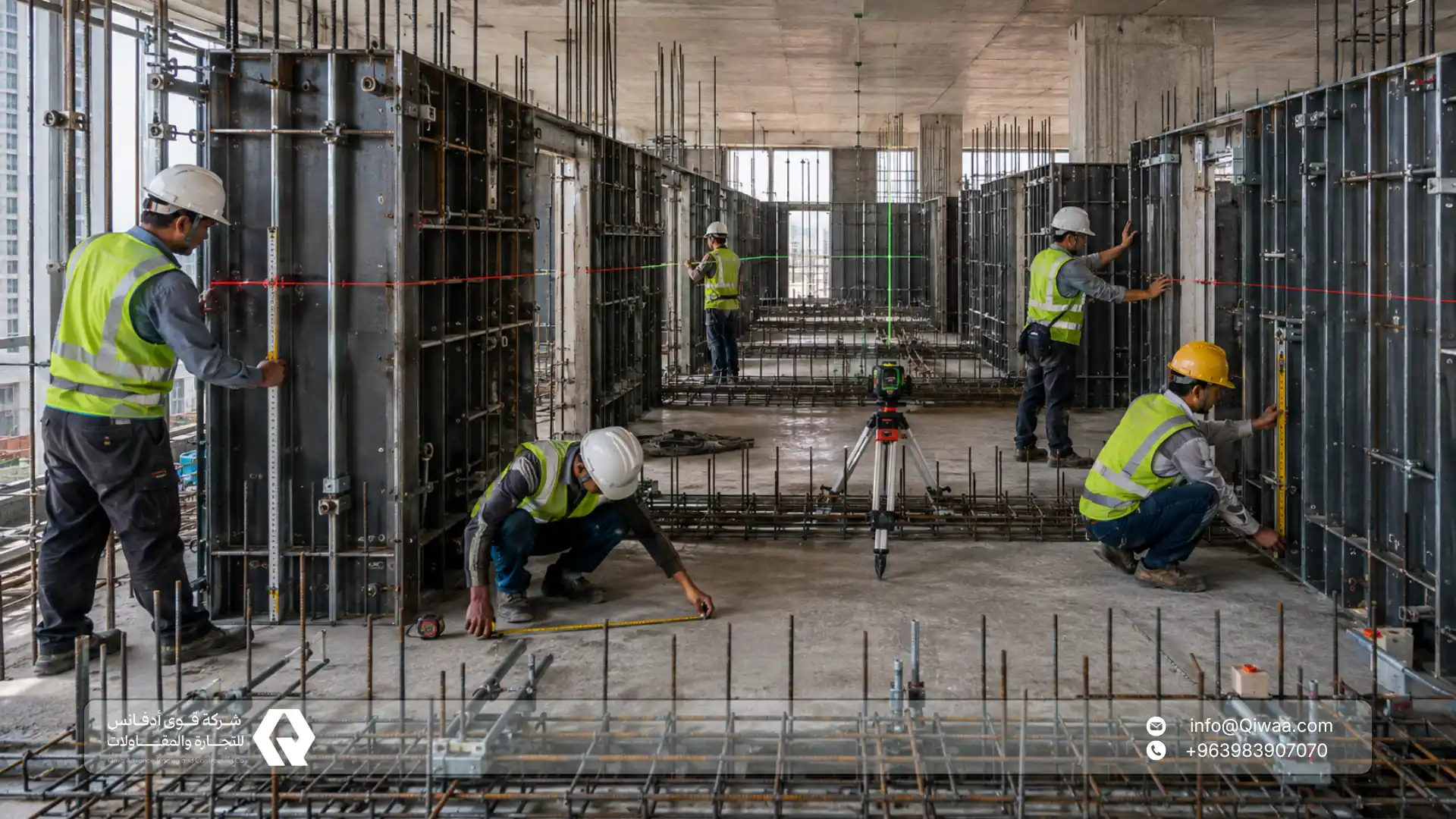
Quality starts before execution begins. It starts with approving the right materials, reviewing certificates, confirming compliance, and then following the work itself during execution, not after problems appear.
In practice, this means:
- checking incoming materials before use
- inspecting concealed works before they are covered
- carrying out tests at the right stage
- comparing results against approved requirements
- closing remarks before they turn into larger defects
In this type of project, quality control is not an extra layer. It is part of the execution process itself.
2. Site Safety and Risk Control
International quality standards in infrastructure projects also appear in how the site is managed safely. Excavation works, equipment movement, overlapping activities, and restricted work zones all require clear control if execution is to remain stable.
This usually includes:
- organizing work zones clearly
- controlling movement between equipment and labor
- handling excavations and level differences safely
- reducing clashes between activities
- maintaining readiness for emergency response
The better safety is managed, the fewer unplanned stoppages the project faces, and the more stable execution becomes.
3. Documentation and Phased Approvals
In well-managed infrastructure projects, execution is not left until the end to be reviewed. Works are followed up, documented, and approved in phases, especially where many items will later become concealed.
Good control here means:
- recording daily or phased progress
- documenting what has been executed and what has been approved
- linking tests to specific project phases
- closing each stage clearly before moving to the next one
This does not only improve quality. It also gives the owner, consultant, and project team better control over the project as a whole.
At Qiwa Advance, we apply quality standards as part of daily execution on site, from material review and field control to documentation and phased approvals. That gives infrastructure projects a clearer path to approval, handover, and more reliable final performance.
Read more: HDPE Pipe Supply in Syria for Water Networks
How International Quality Standards Are Applied in the Syrian Context?
In infrastructure projects in Syria, quality standards only matter when they can be maintained under real execution conditions. The challenge is not writing the right specification. It is applying the same level of control while dealing with supply pressure, changing site conditions, and shifting execution priorities.
| What the Project Faces on Site | What Applying Quality Standards Requires | Why It Matters to the Project |
| Supply and logistics do not always move at the same pace | Linking material orders to the execution program, planning priorities early, and securing acceptable alternatives without affecting specification | Reduces delays, protects critical activities, and keeps quality from dropping when supply changes |
| Site conditions do not always match the drawings exactly | Reading the specification together with actual site conditions, buried services, access limits, and work sequence | Helps preserve technical quality without turning the specification into a source of delay or clash |
| Execution priorities may change from one phase to another | Keeping inspection, approvals, testing, and documentation consistent even when the work sequence changes | Maintains project control and prevents quality loss under schedule pressure |
Applying standards in the Syrian context means that quality cannot be managed separately from execution. It must stay connected to:
- supply planning
- field coordination
- inspection and approval timing
- documentation and testing
- practical decisions when site conditions change
At Qiwa Advance, we apply quality standards in this way: as part of the execution process itself, not as a separate layer added after the work starts. This helps projects maintain technical discipline while staying workable under real site conditions.
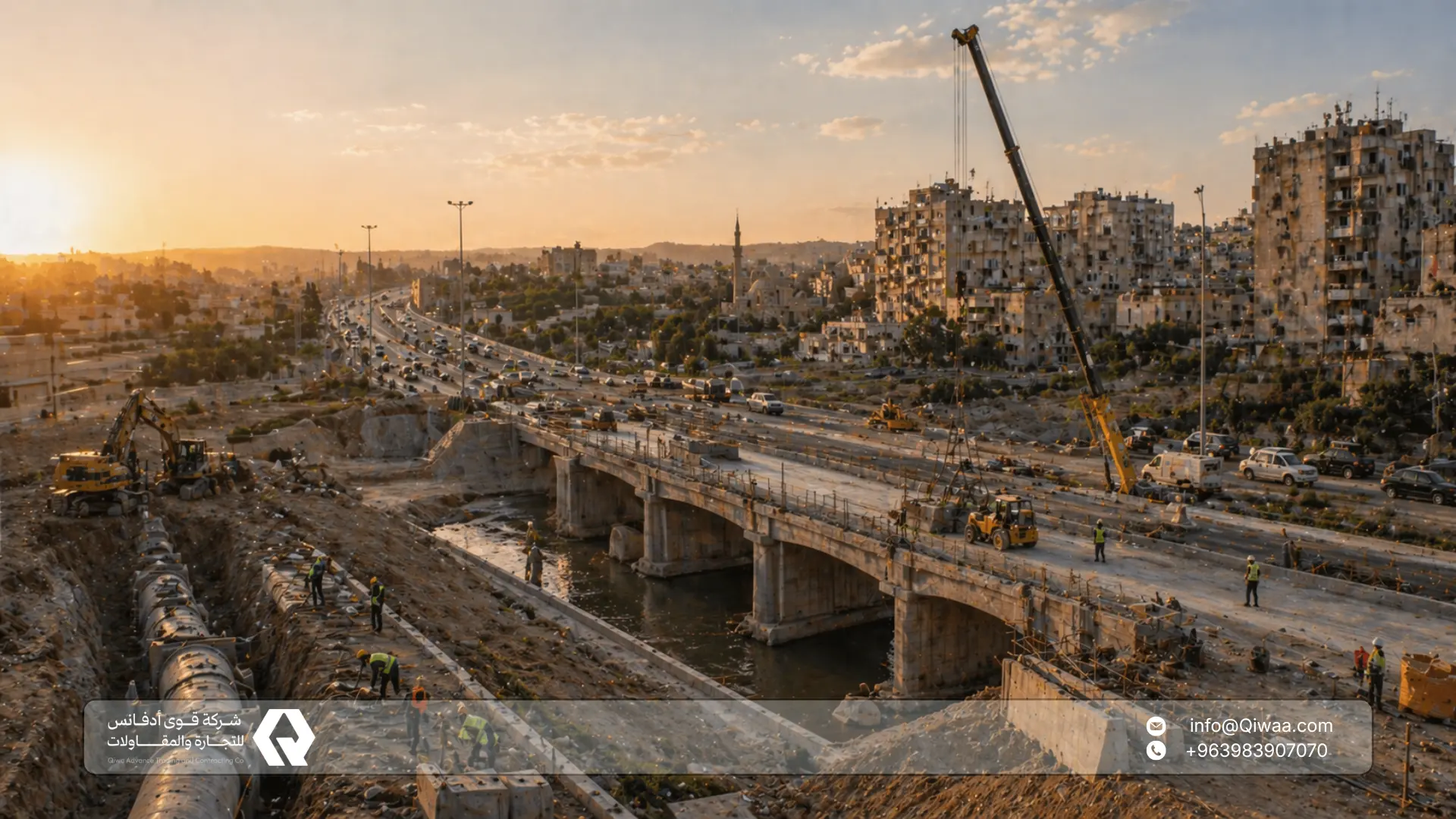
What Should You Check Before Contracting with a Construction Company in Syria?
Before signing with any construction company in Syria, focus on the points that affect execution quality, project control, and long-term cost, not only the bid price or company name.
Check these points before contracting:
- Relevant infrastructure experience: Make sure the contractor has real experience in infrastructure works similar to your project, not only general building experience.
- Site management capability: Review how the contractor manages labor, equipment, subcontractors, and daily site coordination.
- Ability to control quality, time, and cost together: The right contractor should be able to maintain quality, keep a realistic timeline, and reduce rework and hidden operating costs.
- Clear scope and execution program: Before signing, make sure the work scope, execution sequence, project timeline, approval points, and follow-up method are clearly defined.
- Readiness to deal with field changes: Infrastructure projects rarely run exactly as planned, so the contractor should be able to respond quickly without losing control of quality or progress.
The clearer these points are from the beginning, the lower the risk of delay, dispute, or weak execution later.
At Qiwa Advance, we build this clarity into the project from the start through defined scope, disciplined site management, and follow-up that supports steadier execution.
What Actually Defines a Strong Infrastructure Contractor?
In infrastructure projects, the strongest contractor is not the one with the biggest name, but the one that can deliver within specification, maintain control on site, and move the project from planning to handover with fewer delays, fewer clashes, and clearer execution.
In practice, that strength appears in three areas: real field experience, the ability to deliver works within quality and time requirements, and the ability to manage the project as one connected system rather than separate activities.
At Qiwa Advance, we build our role on this principle: disciplined execution, stronger site control, and project delivery that can be followed up and relied on from start to handover.
Why Qiwa Advance Is a Stronger Infrastructure Partner in Syria?
At Qiwa Advance, we do not separate quality from execution. We manage infrastructure projects on the basis that site decisions affect quality, time, and cost every day. That is why we connect planning, execution, follow-up, and phased handover through one controlled working method that fits actual project conditions in Syria.
How We Work on Infrastructure Projects?
Our approach is built on three priorities:
- clear execution control from planning to handover
- quality linked to daily site work, not only final review
- practical coordination that reduces clashes, delays, and rework
This helps projects move with stronger discipline, clearer approvals, and better control over field execution.
When Qiwa Advance Becomes the Right Choice?
Qiwa Advance is especially suitable when the project includes:
- networks, utilities, and interrelated civil works
- higher requirements for quality, documentation, and follow-up
- changing site conditions that need faster field decisions
- a need for an execution partner, not just a conventional contractor
In these cases, the value is not only in completing the works, but in keeping execution stable, coordinated, and easier to control from start to handover.
If your project needs an infrastructure contractor in Syria with clearer site control, stronger follow-up, and a more reliable execution approach, Qiwa Advance is ready to support you. Contact us to discuss your project scope and execution requirements.
FAQs about Infrastructure Contracting in Syria
1. How Do I Choose the Right Construction Company in Syria for My Project?
Choose the company based on real infrastructure experience, site management ability, quality control, and clarity of execution scope. What matters is not only starting fast, but delivering the work in a way that can be approved and followed up with fewer disruptions.
2. What Should Be Reviewed Before Contracting an Infrastructure Project?
Before signing, review the work scope, execution sequence, project timeline, follow-up method, approval points, and responsibility limits. The clearer these points are from the start, the lower the risk of delay, dispute, or weak execution later.
3. Do Infrastructure Contracting Requirements in Damascus Differ from Other Areas?
Yes. Projects in Damascus often require tighter coordination because of existing services, access limitations, and the need for phased execution. That is why they need a contractor that understands local site conditions and can adapt execution accordingly.
4. What Makes a Company One of the Top Contractors in Syria?
The answer is execution performance. A strong contractor is one that can deliver within specification, on a realistic timeline, and with site management that reduces disruption, remarks, and rework. Real value appears in how the project is delivered, not in how the company presents itself.