

Two suppliers may quote different prices for the same water network, but the lower price does not necessarily mean a lower project cost. Differences in pipe diameter, wall thickness, pressure rating and included fittings can make quotations difficult to compare. For contractors and procurement managers in Syria, overlooking these details can lead to inaccurate budgets, additional purchases and delays during installation.
Understanding water pipe prices in Syria in 2026 starts with comparing products against the same technical specifications and delivery requirements. This guide explains how PPR, PVC and HDPE pipe prices are assessed, how to estimate quantities and total network supply costs, and how to evaluate quotations for water and drainage projects. It also covers coordinating pipe, valve and fitting deliveries with your construction schedule.
Water pipe prices in Syria in 2026
Water pipe prices in Syria vary by material, diameter, technical specification, quantity and delivery location. There is no single price per metre that accurately represents all water and drainage pipe systems.
A reliable 2026 price comparison requires dated supplier quotations for clearly specified products. Published factory-price estimates without confirmed product specifications and purchasing terms should not be treated as current market prices.
The following table identifies the pricing information needed for the main pipe categories used in construction and infrastructure projects.
| Pipe type | Pricing basis | Details to confirm |
|---|---|---|
| PPR water pipes | Price per metre, pipe length or kilogram | Diameter, PN rating, wall thickness and manufacturer |
| PVC-U drainage pipes | Price per metre or pipe length | Diameter, wall thickness or stiffness class, and jointing system |
| PVC-U pressure pipes | Price per metre or pipe length | Diameter, pressure rating and applicable product standard |
| HDPE water pipes | Price per metre or coil | Diameter, material grade, SDR, pressure rating and coil or straight-length supply |
| GRP and ductile iron pipes | Project-specific price per metre or pipe length | Nominal diameter, pressure class, joint type, fittings and delivery requirements |
Actual prices for these categories should be confirmed through supplier quotations covering the required quantities and delivery destination. A price based on one diameter or pressure class should not be applied to another.
How to calculate water pipe prices per metre
When a supplier quotes pipes by weight, the price must be converted into a consistent unit before it can be compared with a price per linear metre.
Price per metre = Price per kilogram × Pipe weight per metre
For example, Pinoplast’s published technical specifications provide the following weights for standard PPR PN20 (SDR 6) pipes:
| Outside diameter | Pipe weight |
|---|---|
| 20 mm | 0.172 kg/m |
| 25 mm | 0.266 kg/m |
| 32 mm | 0.434 kg/m |
| 40 mm | 0.671 kg/m |
These are manufacturer-published technical weights, not Syrian market prices.
For a 32 mm PPR PN20 pipe weighing 0.434 kg/m, multiply the supplier’s confirmed price per kilogram by 0.434 to obtain the estimated material price per metre.
Use the actual manufacturer’s datasheet for the selected product, as weight can differ between product constructions and specifications.
What determines water and drainage pipe prices?
Several factors affect water pipe prices and sewer pipe prices in Syria, particularly when comparing quotations for large projects:
- Diameter and technical rating: Larger diameters and greater wall thicknesses generally increase material consumption. Compare pressure pipelines using the approved PN or SDR requirements, while checking the applicable stiffness and performance specifications for non-pressure drainage pipes.
- Material and product specifications: PPR, PVC-U, HDPE and other pipe systems have different manufacturing and performance requirements. Quotations should be compared only where products meet the approved design specifications.
- Fittings, valves and accessories: Pipe prices may exclude elbows, tees, reducers, couplings, valves and jointing components. These must be included in the bill of quantities when estimating the complete network supply cost.
- Order size and delivery conditions: Total supply costs depend on quantities, transport distance, unloading requirements and phased deliveries. Large-diameter pipes may require additional handling arrangements that affect the delivered price.
It is also important to separate the cost of supplying network materials from the cost of installing the network. Excavation, bedding, jointing, testing and reinstatement may be covered by separate construction items rather than the pipe supply quotation.
For an accurate procurement budget, compare offers against the same bill of quantities, approved specifications, currency, delivery point and quotation validity period. This allows you to identify genuine price differences rather than differences in supply scope.
Need a project-specific pipe supply quotation in Syria? Contact Qiwaa Advance with your bill of quantities, pipe specifications, required quantities and delivery location. Through our trading and supply services, we can review your requirements and discuss suitable sourcing options for pipes, fittings, valves and other network components.
Read also: Building Materials in Syria 2026: How to Choose Materials and Read Prices by City
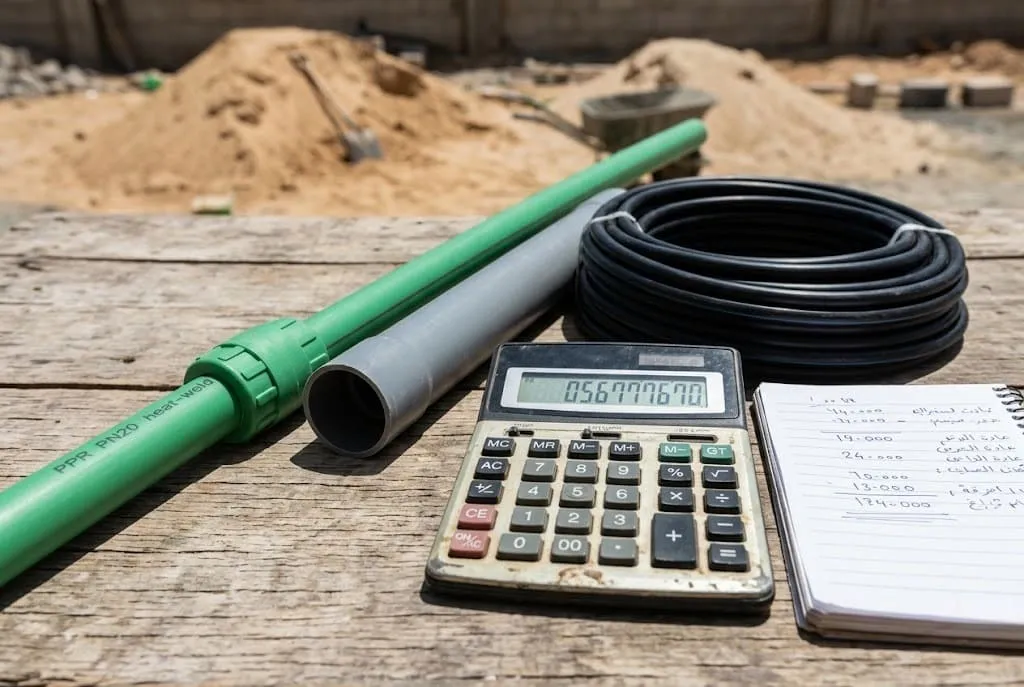
Pipe types and their effect on water pipe prices
Water and drainage pipe prices in Syria vary considerably across piping systems, but material alone is not a sufficient basis for comparison. The network’s application, design pressure, diameter, jointing requirements and approved specifications determine which products can be priced against one another.
For procurement teams, the objective is to compare technically compliant products and account for the fittings and installation requirements associated with each system.
Polypropylene random copolymer (PPR) pipes
PPR pipes are commonly specified for hot- and cold-water distribution inside residential and commercial buildings. They are joined using heat-fusion methods, with fittings selected to match the approved pipe system.
When comparing PPR pipe prices in Syria, focus on the diameter, wall thickness, pressure-temperature rating and manufacturer. Products marketed under pressure classifications such as PN20 or PN25 should not be considered interchangeable without checking their actual performance under the project’s operating temperature and pressure conditions.
The quotation should also identify compatible fittings and jointing components. A lower pipe-only price may not represent the lowest complete supply cost.
Polyvinyl chloride (PVC) pipes
PVC-U pipes are used in gravity drainage, sewerage and certain pressure-water applications, depending on the product standard. Pressure-rated pipes and non-pressure drainage pipes must be evaluated separately because they are designed for different operating requirements.
For PVC pipe prices in Syria, check whether the quotation covers:
- Pressure-rated or non-pressure pipe.
- The specified diameter, wall thickness or stiffness class.
- The required jointing system, including compatible seals, couplings or fittings.
An inexpensive drainage pipe should not be compared directly with a pressure-rated water pipe simply because both have the same nominal diameter. The approved application and technical specification must govern the comparison.
High-density polyethylene (HDPE) pipes
HDPE pipes are used in water distribution, irrigation and other infrastructure networks where their flexibility, corrosion resistance and joining characteristics suit the design.
For HDPE pipe prices in Syria, important specifications include the material grade, outside diameter, SDR, pressure rating and delivery format. The selected SDR affects wall thickness and material consumption and must correspond to the network’s design requirements.
Jointing costs also matter. Butt fusion, electrofusion and mechanical connections have different requirements for fittings, equipment and installation. A quotation that includes only pipe lengths may exclude a significant part of the complete network cost.
For larger water transmission and wastewater projects, GRP and ductile iron pipes may also be considered where the engineering design requires them. These systems should be priced according to their own specifications, including nominal diameter, pressure class, jointing components and delivery requirements, rather than compared directly with plastic pipes on a price-per-metre basis alone.
Through our Amiantit partnership in Syria, Qiwaa Advance also supports the supply of GRP/GRE, ductile iron and HDPE piping systems, valves and related infrastructure components.
How to estimate water and drainage pipe supply costs
A reliable pipe cost estimate starts with an approved bill of quantities, not a general price per metre. For contractors and procurement managers, the goal is to translate the engineering drawings into quantities that suppliers can price consistently, including the components required to complete each network.
Measure pipe lengths by diameter and specification
Start with the approved drawings and separate water supply, wastewater and stormwater networks. For each pipeline, record the material, diameter, pressure or stiffness classification, and measured length.
The quantity takeoff should distinguish between:
- Design quantities: Pipe lengths measured from the approved drawings, grouped by network, size and specification.
- Ordering quantities: The quantities needed for procurement after accounting for available commercial lengths, cutting requirements and any justified project allowances.
- Delivery phases: The quantities required for each construction zone or installation stage.
Avoid applying a general allowance without considering the pipe system and installation method. Any additional material should be justified by the project’s requirements and reflected in the procurement estimate.
Include fittings, valves and network accessories
The pipe length alone does not represent the full network supply requirement. Fittings and valves should be measured from the actual network configuration, rather than estimated solely as a percentage of the pipe cost.
Include the relevant components, such as elbows, tees, reducers, couplings, flanges, isolation valves, transition fittings and jointing accessories.
Check their sizes, pressure ratings, material compatibility and quantities against the drawings and specifications. Also establish whether seals, special connectors or other system-specific components are included in the supplier’s quotation.
This is especially important where the project connects different pipe materials or includes pumping stations, control chambers and distribution branches.
Calculate and compare total network supply costs
Once quantities and specifications are established, calculate the supply cost using the quoted unit price for each item.
Total network supply cost = Sum of (item quantity × quoted unit price) + separately quoted delivery and handling costs
Include fittings, valves and accessories as individual priced items, and avoid adding transport or other expenses twice if they are already included in the quoted unit prices.
For a reliable comparison, all supplier quotations should use the same:
- Approved bill of quantities and technical specifications.
- Units of measurement and supply scope.
- Delivery location, shipping terms and currency.
- Required certificates, product documentation and quotation validity period.
Keep supply and installation costs separate. Excavation, bedding, welding or jointing labour, testing and reinstatement may belong to the construction budget unless the quotation explicitly includes them.
The final estimate should show both the cost of individual pipe categories and the total delivered materials cost. This allows procurement teams to identify the reasons behind differences between supplier quotations and establish a more dependable budget before purchasing.
For larger projects, the same quantity breakdown can also support phased procurement, linking the required pipes, valves and fittings to the construction schedule rather than ordering the entire network at once.
Read also: GRP Fiberglass Pipes in Syria: A Practical Choice for Water Projects
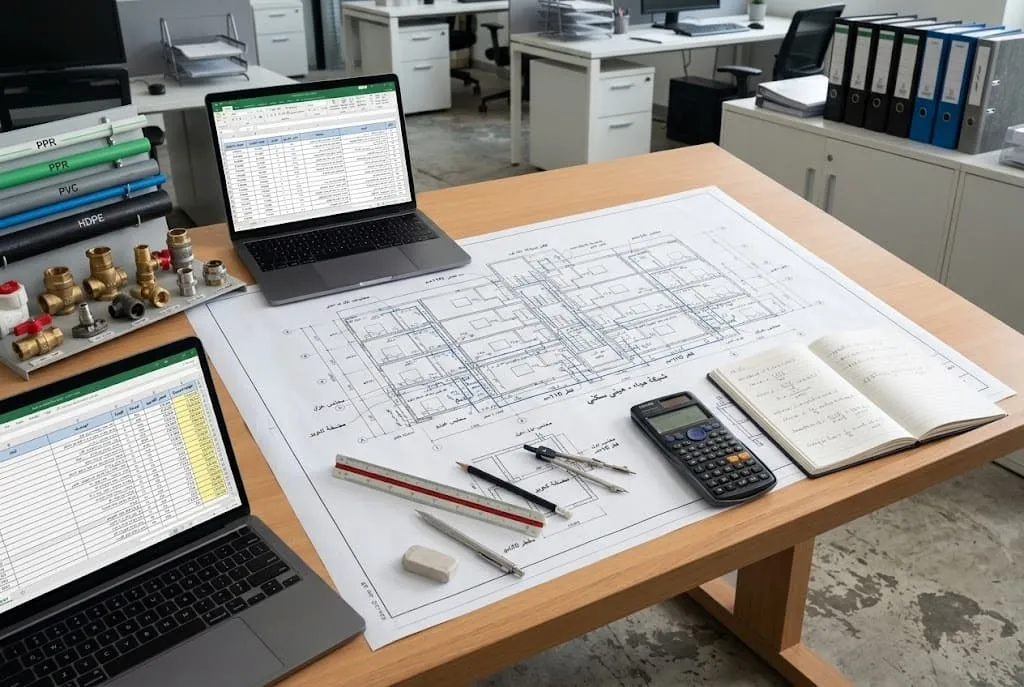
Managing pipe and valve supply for large projects
Competitive water pipe prices in Syria do not necessarily translate into lower project costs if quotations exclude essential fittings, valves or delivery requirements. For large water and drainage projects, procurement teams must ensure that the supply package meets the approved specifications and that all required components arrive in time for installation.
Finalize the supply scope before ordering
Once the bill of quantities is approved, confirm that supplier quotations cover the complete network materials package, including pipes, compatible fittings, valves, jointing accessories and any project-specific components.
Before issuing a purchase order, establish:
- Supply scope: Which components are included, excluded or priced separately.
- Technical requirements: Approved materials, diameters, pressure or stiffness classes, and relevant product specifications.
- Commercial terms: Unit prices, currency, delivery location, transport charges and quotation validity.
- Delivery commitments: Lead times, shipment quantities and agreed delivery milestones.
This allows procurement teams to compare quotations on a consistent basis and identify additional supply costs before awarding the order.
Verify technical compliance before purchasing
Supplier quotations should be evaluated against the approved technical specifications, not price alone. Review the manufacturer’s product data, applicable certificates, material grades and jointing requirements before confirming the order.
Particular attention should be given to compatibility between pipes, fittings, seals and valves. Products that share the same nominal diameter may still differ in pressure rating, connection type or other specifications affecting their suitability.
Where the project requires consultant or engineer approval, proposed alternatives must be reviewed and approved before procurement. A lower-priced product should not be treated as an equivalent substitute solely on commercial grounds.
Schedule deliveries around construction progress
Large water and wastewater networks are often installed in phases, making delivery timing as important as the quoted unit price.
Coordinate procurement with the construction schedule, taking account of manufacturing lead times, transport requirements and site storage capacity. Valves, special fittings and other components with longer lead times should be identified early to avoid delays when their installation stage begins.
Phased deliveries can reduce unnecessary on-site storage and handling, but they may also increase transport costs. Compare these additional expenses against the project’s available storage capacity and installation priorities before agreeing on the delivery schedule.
Inspect materials before site acceptance
Each delivery should be checked against the approved purchase order, technical submittals and delivery documents.
Confirm the quantities, pipe dimensions, product markings, pressure or stiffness classifications, fittings and valves supplied. Inspect pipes, ends, seals and other components for visible transport damage, and verify that the required certificates and supporting documents accompany the shipment.
Any nonconforming or damaged materials should be recorded and handled under the project’s inspection and acceptance procedures before installation.
Maintaining accurate delivery and inspection records helps procurement teams track outstanding quantities, resolve supplier discrepancies and prevent incomplete material packages from disrupting installation.
Qiwaa Advance solutions for water network supply in Syria
For contractors and infrastructure developers, sourcing pipes and valves involves more than purchasing individual products. The supply arrangement must account for network specifications, material compatibility, quantities and delivery schedules.
Through Qiwaa Trading and our partnership with Amiantit, Qiwaa Advance supports water, wastewater, irrigation and infrastructure projects in Syria with specialized piping systems and network components.
Our supply solutions include:
- Piping systems: GRP/GRE, ductile iron and HDPE pipes for water distribution, wastewater networks, irrigation and other applicable infrastructure uses.
- Valves and jointing components: Shut-off valves, industrial valves, fittings, seals and related accessories selected according to the approved network requirements.
- Technical and commercial coordination: Reviewing project specifications and supply requirements, coordinating product options and supplier quotations, and organizing procurement and delivery arrangements.
- Logistics and delivery planning: Coordinating material shipments and delivery schedules with project requirements, within the agreed scope of supply.
As an Amiantit agent in Syria, Qiwaa Advance provides a channel for sourcing specialized piping products and coordinating technical and commercial requirements with the manufacturer’s relevant companies.
Need pipes, valves or network components for a project in Syria? Contact Qiwaa Advance with your bill of quantities, approved technical specifications, project location and required delivery schedule. Our team can review your requirements and discuss suitable products, supply options and a project-specific quotation.
Read also: Qiwaa Advance: Amiantit Agent in Syria | Water Infrastructure Partnership
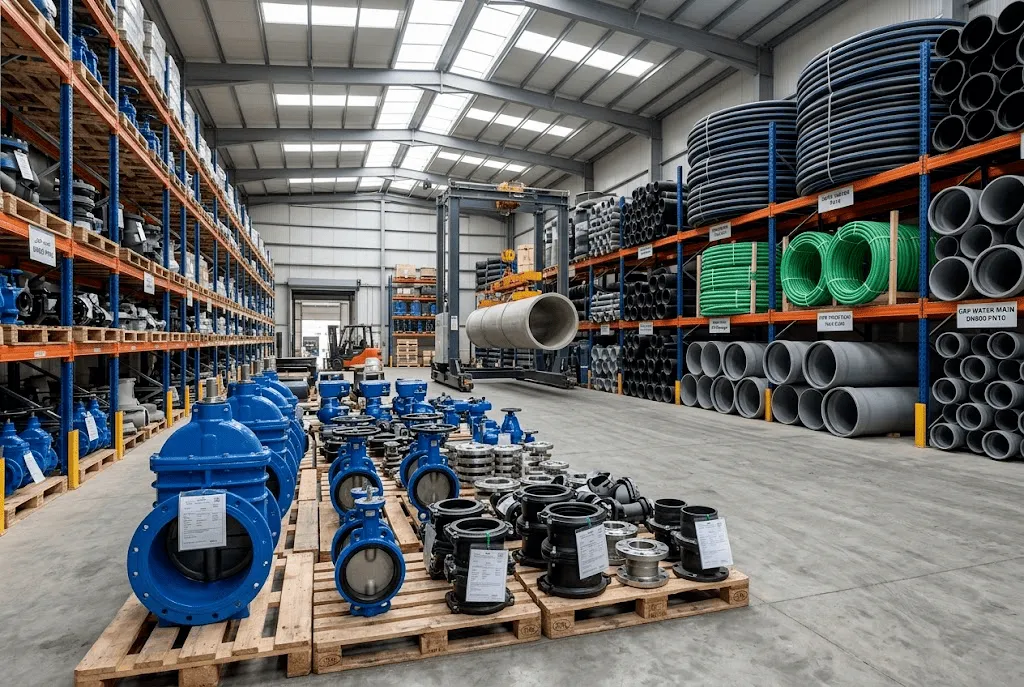
FAQs about water pipe prices in syria
How much do water and sewer pipes cost in Syria in 2026?
Water pipe prices in Syria depend on the pipe material, diameter, pressure or stiffness class, order quantity and delivery location. No single price per metre represents all products. For a reliable 2026 estimate, request dated supplier quotations for pipes that meet the same approved specifications.
How do PPR, PVC and HDPE pipe prices differ?
PPR is commonly used for internal water distribution, PVC-U for drainage and certain pressure applications, and HDPE for water distribution and infrastructure networks. Their prices depend on product specifications, dimensions and manufacturing requirements. Compare technically suitable pipes rather than assuming one material is always cheaper.
How do diameter and pressure rating affect pipe prices?
Larger diameters and thicker walls generally increase material consumption and cost. For pressure pipes, the required pressure class and SDR influence wall thickness. For non-pressure drainage pipes, stiffness requirements also matter. Compare quotations using the same diameter and approved performance specifications.
How can I compare pipe prices per kilogram and per metre?
Multiply the quoted price per kilogram by the manufacturer’s specified pipe weight in kilograms per metre. The result is the material price per linear metre. Use the exact product’s technical datasheet, since pipe weights vary with diameter and wall thickness.
Do water pipe quotations include fittings and valves?
Not necessarily. Suppliers may quote pipes separately from fittings, valves, seals, transport and unloading. Request an itemized quotation showing the quantities, specifications and prices of all components to establish the complete network supply cost.
What information is needed to request an accurate pipe quotation in Syria?
Provide the bill of quantities, pipe material, diameters, pressure or stiffness classes, applicable specifications, fitting and valve requirements, delivery location and required schedule. These details allow suppliers to prepare comparable, project-specific quotations.