

An investment opportunity linked to the Syrian Sovereign Fund may look promising, but an announced partnership does not necessarily mean the project is ready for execution. Before committing capital, investors need to establish who controls the asset, what investment or operating rights are available, and whether rehabilitation costs, financing requirements, or unresolved approvals could affect the project’s viability.
This guide from Qiwaa Advance examines the fund’s mandate, how it manages state-owned assets, and the status of its announced projects in 2026. It also explains how investors and industrial companies can assess potential partnerships, evaluate technical and contractual risks, and distinguish early-stage initiatives from projects ready for implementation.
What is the Syrian Sovereign Fund?
The Syrian Sovereign Fund is a public economic institution established under Presidential Decree No. 113 of 2025, dated June 24, 2025. Headquartered in Damascus and affiliated with the Presidency of the Republic, it has legal personality and financial and administrative independence.
The fund’s mandate focuses on productive investment and the development of government assets. Its establishment does not replace the responsibilities of investment licensing authorities or automatically provide financing or approvals for individual projects. Investors must therefore distinguish the fund’s role as an asset holder or investment partner from the regulatory approvals required to execute a project.
Objectives of the Syrian Sovereign Fund
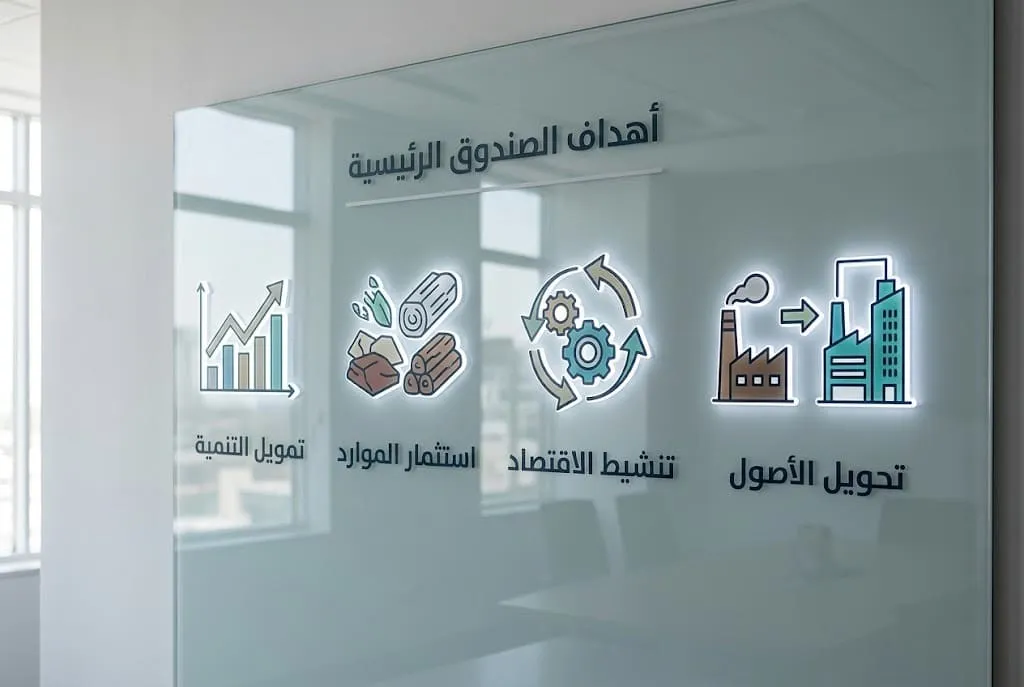
Under Article 3 of Decree No. 113, the fund has four principal objectives:
- Direct project development: Implement development and production projects.
- Resource utilization: Make effective use of human and material resources and technical expertise.
- Economic investment: Stimulate economic activity through carefully assessed and diversified investments.
- Government asset activation: Transform inactive state-owned assets into
Read also: Development Fund and Sovereign Fund: Which Is Better Suited to Financing Your Project?
How the Syrian Sovereign Fund invests state assets
The Syrian Sovereign Fund aims to turn underutilized government assets into productive investments. For private investors, the critical question is whether a proposed asset can generate a viable return after accounting for its ownership status, rehabilitation costs, operating requirements, and contractual obligations.
Decree No. 113 of 2025 establishes the fund’s investment mandate but does not prescribe a single assessment or contracting procedure for every asset. The following checks help investors evaluate opportunities involving state-owned facilities, industrial assets, or operating partnerships.
Verify asset ownership and investment rights
Before investing in an asset associated with the Syrian Sovereign Fund, confirm who legally owns or controls it and what rights the contracting entity is authorized to grant.
Request documentation covering:
- Ownership and authority: Evidence of ownership or management rights, and authorization to enter the proposed agreement.
- Asset identification: Property records, boundaries, facilities, equipment, or other assets covered by the transaction.
- Existing obligations: Leases, third-party rights, outstanding claims, debts, and contracts affecting the asset.
- Investment rights: The scope and duration of the proposed operating, leasing, rehabilitation, or partnership rights.
A project announcement does not, by itself, establish that the fund can transfer ownership or grant unrestricted operating rights. Investors should obtain qualified legal advice on the contracting entity’s authority before signing.
Assess asset condition and Rehabilitation costs
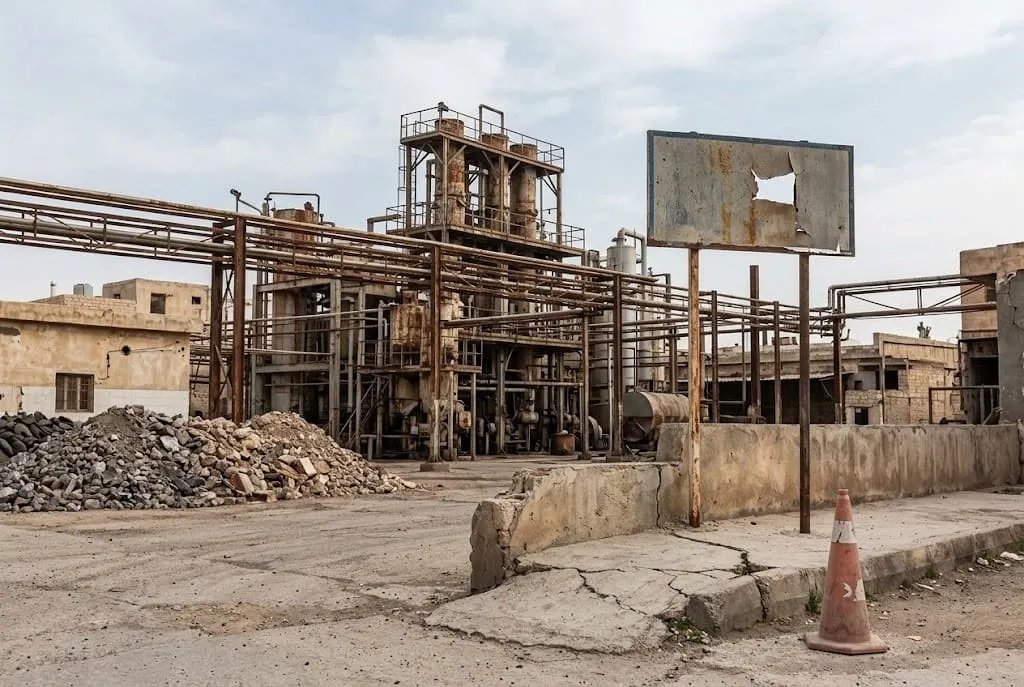
An existing factory or government facility may offer infrastructure and equipment that reduce initial development costs. However, prolonged shutdowns, outdated machinery, or insufficient utilities can make rehabilitation more expensive than expected.
A technical and financial assessment should establish:
- Structural condition: Buildings, foundations, and infrastructure requiring repair or replacement.
- Equipment readiness: Production lines that can operate, require rehabilitation, or need replacement.
- Utility capacity: Available electricity, water, drainage, and other services compared with the proposed operating requirements.
- Restart costs: Rehabilitation work, equipment procurement, installation, commissioning, and working-capital needs.
- Realistic output: Achievable production capacity after rehabilitation, based on equipment condition and available resources.
Investors should use these findings to estimate the total capital required, assess commercial viability, and establish a realistic restart schedule. Historical production figures alone are not a reliable basis for valuation.
Compare state asset investment models
Investment opportunities involving the Syrian Sovereign Fund may require different contractual structures depending on the asset, its condition, and the responsibilities assigned to each party.
Possible arrangements to evaluate include:
- Management and operation: Operating an existing facility under agreed commercial and performance terms.
- Rehabilitation and operation: Financing or executing improvements in exchange for defined investment or operating rights.
- Investment partnership: Sharing project financing, responsibilities, and returns under a negotiated agreement.
- Project company or long-term arrangement: Establishing a dedicated operating structure or granting rights for an agreed investment period.
These are potential contractual models, not a standardized list of arrangements automatically offered by the fund.
Before choosing a model, establish who finances rehabilitation, owns new equipment, pays operating and maintenance costs, receives project revenues, and retains the assets when the agreement ends.
Monitor investment performance and asset value
For projects involving state asset management in Syria, performance monitoring should measure both commercial results and the condition of the asset throughout the contract.
Relevant indicators include:
- Production performance: Actual output, equipment availability, and product quality.
- Operating efficiency: Energy consumption, material use, and production costs.
- Financial performance: Revenue, operating expenses, and returns specified in the agreement.
- Asset preservation: Maintenance completion, equipment condition, and obligations at contract expiry.
Investors should agree on the initial condition of the asset, measurable performance targets, reporting responsibilities, and procedures for addressing underperformance.
For projects requiring factory rehabilitation, infrastructure works, or equipment supply, Qiwaa Advance can discuss the relevant contracting and industrial supply requirements. Contact our team with your proposed project scope and available technical documentation.
Syrian Sovereign Fund Funding sources
The Syrian Sovereign Fund draws on several categories of financial resources established under Article 13 of Decree No. 113 of 2025. The decree does not specify a fixed investment budget or establish a general financing program for private businesses.
Its stated resources include:
- State allocations: Funds and appropriations designated for the fund by the government.
- Investment revenue: Income generated through the fund’s activities.
- Fixed assets and investments: The value of assets and associated investments included in the fund’s resources.
- Grants and donations: Subsidies, grants, and donations accepted under applicable laws and regulations.
These resources serve different purposes. The value of a government facility, for example, does not represent cash immediately available to finance its rehabilitation.
The fund’s development role may involve returning inactive facilities to production, improving existing assets, or participating in investments that generate operating income and long-term economic value. The financing structure, investment commitments, and allocation of commercial returns must be established for each project.
For investors, the key distinction is between an asset controlled by the fund and the financing available to develop it. Before committing capital, verify the source of project funding, the parties responsible for rehabilitation expenditure, and the contractual terms governing revenues and returns.
Read also: Syrian Development Fund vs Sovereign Fund: Which Route Fits?
Syrian Sovereign Fund governance and oversight
For investors considering a partnership with the Syrian Sovereign Fund, governance matters because it determines who can authorize investment decisions, how the fund is supervised, and what accountability mechanisms exist. However, the fund’s institutional oversight does not replace the contractual protections required for an individual project.
Under Decree No. 113 of 2025, the fund is managed by a board of directors and a director general. The director general is responsible for its operations and represents the fund before courts and third parties.
Article 4 establishes three oversight mechanisms:
- Quarterly and annual reporting to the Presidency of the Republic.
- Financial auditing by bodies independent of the fund.
- Continuous oversight intended to identify and correct errors.
These are governance requirements established by law; they do not, by themselves, confirm that individual project reports, valuations, or audit findings are publicly available.
What investors should verify in project contracts
Before entering a partnership, investors should ensure that the agreement clearly establishes:
- Decision-making authority: Who can approve investments, contracts, expenditure, and major operational changes.
- Asset valuation: The agreed valuation methodology, the asset’s initial condition, and how subsequent improvements are treated.
- Procurement and conflicts of interest: Applicable contracting procedures, related-party disclosures, and safeguards against conflicts.
- Performance and reporting: Measurable targets, financial reporting obligations, and access to operational information.
- Audit and dispute rights: Contractual inspection rights, dispute-resolution procedures, and responsibilities if the project underperforms.
For investors, the priority is to verify that the contracting entity has the necessary authority and that responsibilities, reporting rights, and exit conditions are documented before capital is committed.
Syrian Sovereign Fund projects and partnerships in 2026
The Syrian Sovereign Fund has been associated with projects and partnerships in telecommunications, manufacturing, and food production. However, these initiatives are at different contractual and implementation stages. A signed operating agreement provides different investment certainty from an exploratory memorandum of understanding.
The following examples illustrate those differences.
Telecommunications: MTN Transition and Zain Partnership
The fund played a role in safeguarding state assets during the transition involving MTN Syria. The telecommunications sector subsequently moved toward a new operating structure.
On June 30, 2026, Kuwait’s Zain Group secured the license for Syria’s second mobile network. According to the Syrian telecommunications regulator, the Syrian Sovereign Fund holds a 25% stake in the new operating company, with Zain holding the remaining 75%.
The new network was expected to begin commercial operations in early 2027, subject to the required transition and licensing arrangements.
Investment status: Awarded telecommunications license and announced equity partnership, with commercial rollout scheduled for a later stage.
Electrical Manufacturing: Riyadh Cables Agreement
On January 14, 2026, Riyadh Cables Group, through its subsidiary, signed an agreement with the fund to rehabilitate, operate, and develop Syrian Modern Cables Company.
According to the company’s official Saudi Exchange disclosure, the arrangement includes:
- An 18-year contract, renewable by mutual agreement.
- Approximately SAR 60 million in planned capital investment over the contract term.
- Four implementation stages, with technical, operational, and financial evaluations required before progressing to the next stage.
Investment status: Signed management, operation, and development agreement with defined investment commitments and implementation milestones. The agreement itself does not establish that every rehabilitation stage has been completed.
Food Industries: Al Muhaidib Group Memorandum
On July 8, 2026, the fund signed a memorandum of understanding with Saudi Arabia’s Al Muhaidib Group to explore investments in Syria’s food industry.
The proposed areas include cattle farming, dairy production, and related food-processing activities, potentially involving European industrial expertise.
Investment status: Exploratory memorandum of understanding. Its signing does not establish that financing, final investment contracts, or production facilities are already in place.
What these projects mean for investors
These examples demonstrate three different forms of involvement: an equity partnership in a licensed telecommunications project, a signed industrial rehabilitation and operating agreement, and an exploratory industrial investment memorandum.
When assessing Syrian Sovereign Fund investment opportunities, investors should distinguish the announcement date from the contract signing date, verify the project’s financing and approvals, and determine which investment rights and implementation obligations have actually been agreed.
This distinction is essential when evaluating project readiness, estimating execution costs, or considering participation as an investor, contractor, operator, or equipment supplier.
Read also: Syria Reconstruction Projects 2026: How to Read Opportunities and Costs Before Investing

How to evaluate Syrian Sovereign Fund investment opportunities
An opportunity involving the Syrian Sovereign Fund may offer access to an existing industrial facility, infrastructure, or a productive asset. However, its commercial value depends on more than location or historical production capacity. Investors must determine whether the asset can be legally invested in, rehabilitated at a viable cost, and operated profitably under the proposed agreement.
Before submitting a binding offer or committing capital, assess six factors:
- Legal rights and project status: Verify the asset’s owner, the contracting entity’s authority, and the rights being offered. Determine whether the opportunity is still under discussion, covered by a memorandum of understanding, or supported by an enforceable agreement.
- Asset condition and existing liabilities: Request technical records, an assessment of the facility’s physical condition, and disclosure of outstanding debts, employment obligations, leases, and third-party claims. Identify which liabilities, if any, would transfer to the investor.
- Valuation and rehabilitation costs: Obtain an independent valuation where appropriate. Estimate the cost of restoring buildings, replacing machinery, upgrading utilities, and restarting operations. Use achievable production capacity rather than historical output alone.
- Commercial feasibility: Test demand, selling prices, raw-material availability, operating costs, and expected margins against current market conditions. A technically recoverable facility is not necessarily a financially viable investment.
- Financing and payment security: Confirm the financing sources, capital commitments, payment currency, disbursement conditions, and available guarantees. Establish how construction delays, exchange-rate movements, and unexpected cost increases will be addressed.
- Contractual protection and exit: Define responsibility for permits, procurement, operation, maintenance, and major repairs. Ensure the agreement includes performance targets, reporting and audit rights, dispute-resolution provisions, and clear conditions for termination or asset handover.
These checks form an investor due-diligence framework, not a mandatory application procedure established by the fund.
The investment decision should be based on the asset’s expected performance after rehabilitation, not its former value or production capacity. If material ownership, financing, or technical questions remain unresolved, investors should address them before proceeding to binding commitments.
For projects requiring rehabilitation or industrial infrastructure works, Qiwaa Advance can discuss the construction scope, equipment requirements, and material supply needed to assess execution feasibility.
Risks in Syrian Sovereign Fund projects
Syrian Sovereign Fund investment risks vary according to the condition of the asset, the contractual arrangement, and the project’s implementation stage. Even when an agreement has been signed, unresolved technical, financial, or operational issues can affect cost, delivery, and expected returns.
The main risks investors should address include:
- Asset deterioration: Prolonged shutdowns may leave structures and equipment in worse condition than available records suggest. Allow for physical inspections, testing, and rehabilitation contingencies before fixing the execution budget.
- Ownership and contractual disputes: Unresolved property rights, existing agreements, or inherited liabilities may restrict the investor’s ability to operate or develop the asset. Require documentary verification and appropriate contractual protections.
- Infrastructure and commissioning delays: Insufficient electricity, water, transport access, or supporting utilities can delay production even after equipment installation. Verify capacity and assign responsibility for upgrades before setting the operating schedule.
- Cost escalation and financing gaps: Import expenses, exchange-rate movements, unforeseen repairs, or delayed funding can increase capital requirements. Establish funding milestones, cost-adjustment provisions, and contingency arrangements.
- Licensing and operational restrictions: Required permits, environmental approvals, and sector-specific conditions may delay or limit operations. Identify the responsible authorities and approval dependencies during project planning.
- Market and operating performance: Production capacity does not guarantee demand or profitability. Test the business case against realistic output, input costs, sales volumes, and achievable margins.
- Asset maintenance and handover: Disagreements may arise over responsibility for major repairs or the required condition of the asset at contract expiry. Define maintenance obligations, inspection standards, and handover conditions in advance.
For industrial rehabilitation projects, these risks are interconnected. A utility upgrade can delay commissioning, extend the financing period, and change the project’s expected return. Investors should therefore assess technical readiness, contractual obligations, and financing as parts of the same execution plan.
The objective is not to eliminate every investment risk, but to identify which risks are commercially manageable, which require contractual protection, and which could make the proposed project unviable.
Read also: Investment in Syria 2026: Practical Opportunities.

Qiwaa Advance: Industrial asset rehabilitation in Syria
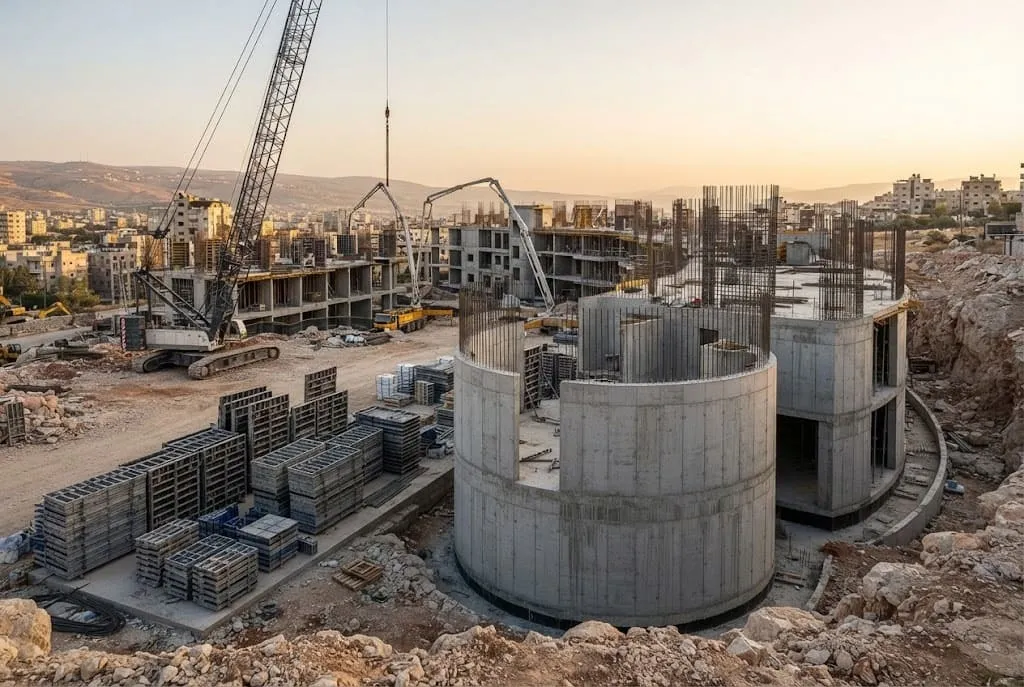
An investment agreement involving the Syrian Sovereign Fund may establish the commercial framework for a project, but bringing an existing facility into productive use requires a clear understanding of its technical condition, rehabilitation needs, and execution costs.
At Qiwaa Advance, our contracting, trading, and industrial capabilities support project owners, investors, and contractors in planning and executing industrial rehabilitation and infrastructure works.
Depending on the project’s requirements, our services include:
- Site and facility assessment: Reviewing existing buildings, available infrastructure, equipment installation requirements, and the scope of rehabilitation or expansion.
- Engineering and execution planning: Defining technical specifications, preliminary layouts, bills of quantities, and construction work packages.
- Infrastructure and rehabilitation works: Supporting civil works, utility infrastructure, structural rehabilitation, and related construction activities through our contracting services.
- Industrial materials and equipment supply: Sourcing construction materials, industrial inputs, and equipment that match the project’s technical specifications through Qiwaa Trading.
- Procurement and construction coordination: Aligning material deliveries, installation requirements, contractor responsibilities, and execution schedules.
These capabilities help investors identify the work and resources required to rehabilitate an asset before committing to major procurement or construction expenditure.
Planning to rehabilitate an industrial facility in Syria? Contact Qiwaa Advance with the asset’s location, available technical drawings, required rehabilitation works, or preliminary bill of quantities to discuss the contracting and supply solutions relevant to your project.
FAQs about the Syrian Sovereign Fund
When was the Syrian Sovereign Fund established?
The Syrian Sovereign Fund was established under Presidential Decree No. 113 of 2025, announced on July 9, 2025. Its projects and investment partnerships expanded during 2026, but the fund was not established that year.
Does the Syrian Sovereign Fund issue investment licenses?
No. The Syrian Sovereign Fund’s mandate concerns investment and asset development. Investment licensing falls under the applicable investment framework and the competent authorities, including the Syrian Investment Authority. A partnership with the fund does not automatically replace the licenses and approvals required for a project.
Does signing an MoU with the Fund mean a project has started?
No. A memorandum of understanding (MoU) generally establishes a framework for discussions or cooperation. It does not, by itself, confirm that financing is secured, final contracts are signed, regulatory approvals are obtained, or construction has begun.
Do Syrian Sovereign Fund companies receive special tax exemptions?
According to a statement by Syria’s Finance Minister on July 10, 2026, companies affiliated with the fund do not receive preferential tax treatment solely because of that affiliation. Investors should assess any project-specific tax incentives under the applicable legislation rather than assume that fund participation provides an exemption.
Sources
- Al Muhaidib Group’s Food Industry Investment MoU — SANA, July 8, 2026
- Syria’s Mobile Network Licensing and Sovereign Fund Participation — SANA
- Presidential Decree No. 113 of 2025 Establishing the Sovereign Fund — SANA
- Presidential Decree No. 112 of 2025 Establishing the Development Fund — SANA
- Finance Minister Clarifies the Sovereign Fund’s Tax Treatment — Sourya Times, July 10, 2026
- Riyadh Cables Group’s Agreement with the Syrian Sovereign Fund — Saudi Exchange, January 18, 2026