

Chinese and Asian investment in Syria is developing at different stages in 2026. A Syrian–Chinese manufacturing venture has begun operations, while other industrial projects remain under discussion or development. Wider Asian involvement includes commercial partnerships and development-funded programs, which should not be confused with confirmed private investment.
At Qiwaa Advance, we examine the status of Chinese and other Asian projects, identify investment opportunities across key sectors, and assess the risks and conditions shaping market entry. If you are considering manufacturing, equipment supply, or infrastructure projects in Syria, we focus on what matters before committing capital: market demand, financing, site readiness, logistics, and the capabilities of local partners.
The presence of of China and other Asian countries in Syria
Asian investment in Syria differs by country and stage of implementation, ranging from operating industrial facilities and cooperation agreements to trade discussions and development-funded projects. The current presence of major Asian partners can be summarized as follows:
- China: The opening of a Syrian–Chinese synthetic fur factory in Adra marks a confirmed manufacturing venture, while the Smart Industrial Cities platform supports industrial cooperation, technology transfer, and proposed development projects.
- Japan: Development assistance and technical cooperation remain the main areas of engagement, including the Japanese-funded rehabilitation of Douma National Hospital, rather than confirmed large-scale private industrial investment.
- South Korea: Korean-funded recovery and infrastructure support programs are active, while Korean companies are exploring reconstruction opportunities through UNDP procurement channels.
- India and Pakistan: India has held investment cooperation discussions with Syrian authorities, while Pakistani engineering and logistics companies have expressed interest in participating in reconstruction projects. These discussions should not be treated as completed investments.
- Uzbekistan: The September 2026 Syrian–Uzbek business forum and the establishment of a joint economic cooperation framework have strengthened engagement in manufacturing, pharmaceuticals, food processing, and construction materials.
- Indonesia and Malaysia: Indonesia has renewed discussions on trade and investment partnerships, while a Syrian–Malaysian business council was reported to be under establishment in August 2026. These developments indicate institutional engagement rather than confirmed major capital projects.
Separately, Syria has discussed reconstruction financing with the Asian Infrastructure Investment Bank (AIIB). However, no Syria-specific approved loan was identified in the bank’s published project register as reviewed in October 2026.
For Chinese and Asian companies evaluating manufacturing, equipment supply, or infrastructure projects, contact Qiwaa Advance to discuss local sourcing, site requirements, and project execution needs.
See also: Foreign Investment in Syria: How to Enter the Syrian Market Step by Step
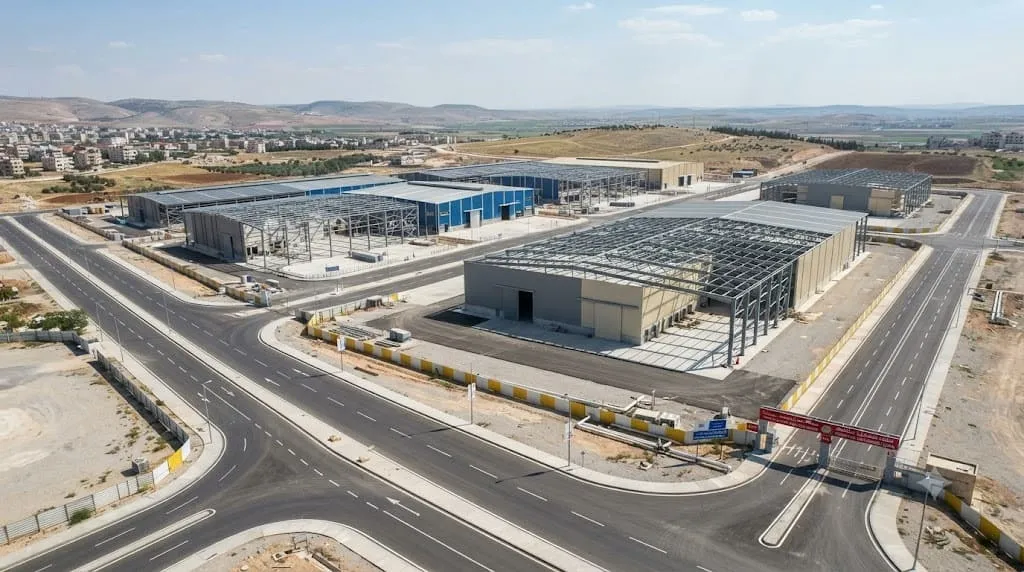
Investment vs. supply and MOUs
Not every announced Chinese or Asian project in Syria represents a committed investment. To assess its actual status, investors should distinguish between capital commitments, commercial contracts, preliminary agreements, and completed operations:
- Direct investment: Establishing or acquiring a lasting ownership interest in a Syrian business, such as a manufacturing venture. Verify committed capital, ownership, project approvals, and operational progress.
- Local partnership: A joint venture may involve shared equity and investment, while an agency or contracting partnership may not. The agreement should clearly define each party’s contributions, decision-making authority, responsibilities, and risks.
- Memorandum of understanding (MoU): Usually establishes a framework for negotiations or feasibility studies rather than a finalized investment. Some provisions may still be legally binding, depending on their wording.
- Commercial supply: Selling machinery, production lines, or materials to Syrian buyers does not automatically constitute foreign direct investment. Establishing a lasting local business presence may create a separate investment.
- Development finance: Grants, loans, and technical assistance can support reconstruction projects but should not be confused with committed private equity investment.
To verify whether an announced project has advanced beyond preliminary commitments, look for definitive contracts, confirmed financing, secured land rights, relevant permits, and evidence of construction or equipment installation. An operational investment requires further evidence of commissioning and production.
Why Chiness and Asian unvestors consider Syria?
Syria’s reconstruction and industrial recovery create potential markets for Asian manufacturers, equipment suppliers, and infrastructure contractors. The World Bank estimates physical reconstruction needs at approximately $216 billion, although this represents estimated requirements rather than funded projects available to investors. The main commercial opportunities include:
- Infrastructure rehabilitation: Supplying equipment and engineering solutions for electricity, water, transport, healthcare, and industrial facilities, subject to confirmed project funding and procurement requirements.
- Industrial manufacturing: Establishing production or assembly facilities for building materials and other industrial products where market demand, energy supply, raw materials, and production costs support commercial viability.
- Equipment supply and local services: Entering through distribution agreements, machinery supply, installation, maintenance, and spare-parts services before considering permanent production facilities.
- Agriculture and food processing: Providing irrigation equipment, refrigerated storage, packaging lines, and processing technology to address specific gaps in agricultural supply chains.
- Natural resources and industrial processing: Developing extraction and local processing activities where resource availability, licensing, environmental requirements, and market access justify investment.
- Regional distribution: Assessing Syria as a potential base for supplying neighboring markets, provided border access, customs procedures, rules of origin, and transport costs support the proposed model.
- These opportunities require project-specific validation. For investors considering industrial investment in Syria, the decisive factors are verified demand, access to financing, reliable utilities, and a cost structure that supports sustainable operations.
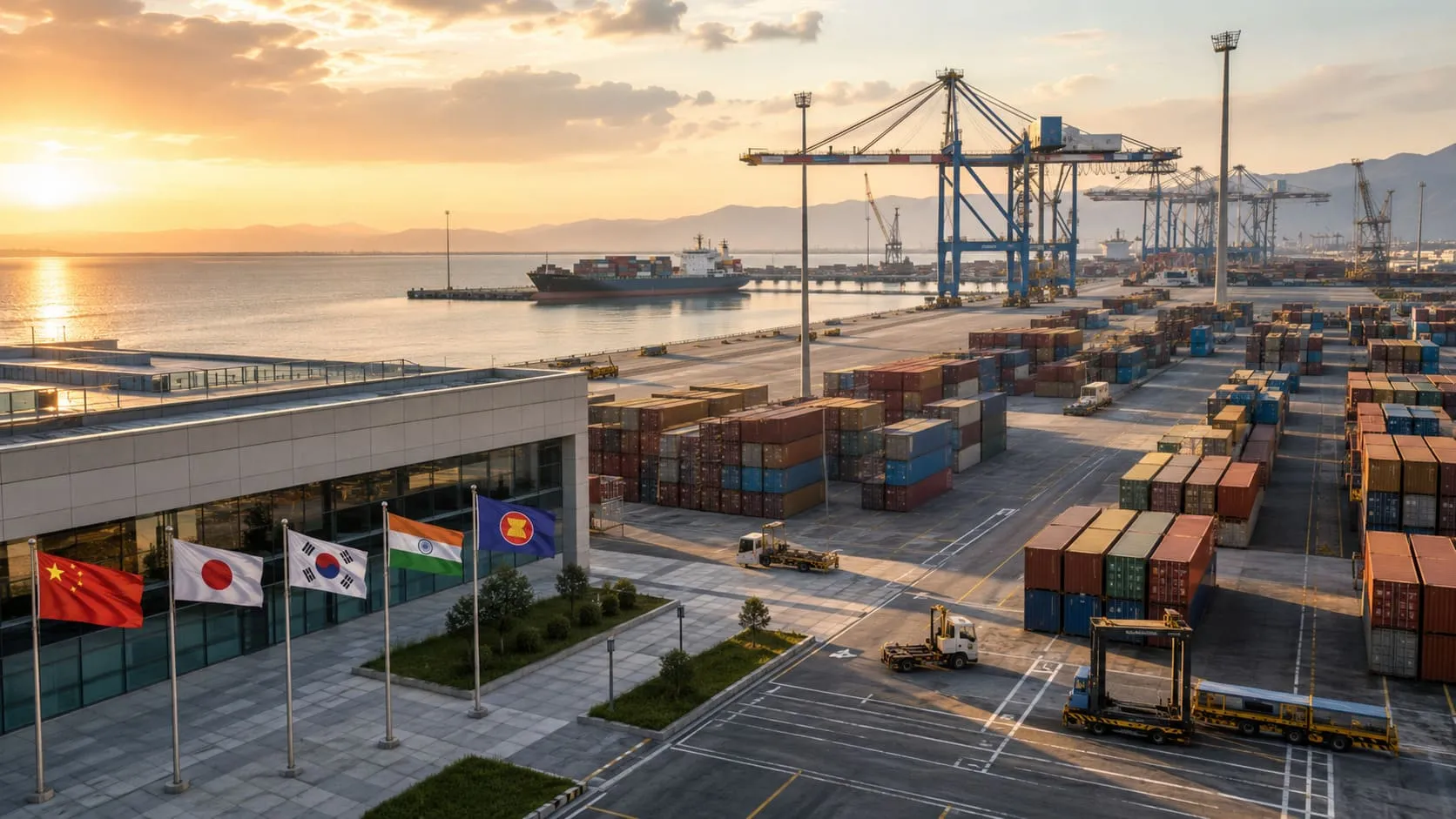
Market entry conditions in Syria
Recent regulatory and commercial developments have changed the conditions for entering the Syrian market, but they do not eliminate the operational and financial risks associated with new projects. For Chinese and other Asian investors, the most relevant developments are:
- Sanctions relief: The US ended its broad Syria sanctions program in July 2025, and the Caesar Act was repealed in December 2025. The EU also lifted its general economic sanctions. Targeted sanctions and export controls remain relevant, making counterparty and transaction screening essential.
- Business cooperation: Joint business councils and official investment forums provide channels for identifying Syrian partners and discussing commercial projects. However, institutional cooperation does not replace verification of a partner’s capabilities, financial position, and contractual commitments.
- Import logistics: Latakia and Tartous remain important entry points for imported machinery and industrial materials. Port activity and infrastructure upgrades have expanded, but freight costs, customs requirements, inland transport, and equipment-handling capacity still require shipment-specific assessment.
- Development-funded projects: International recovery programs are creating procurement opportunities in infrastructure and essential services. Participation depends on the funding institution’s procurement procedures, supplier qualifications, and contract requirements.
- Project economics: Potential savings on labor or facilities must be evaluated against electricity reliability, backup power, water supply, transport, maintenance, and financing costs before an investment is considered viable.
Key Asian projects in Syria
Chinese investment in Syria includes an operating manufacturing venture, industrial cooperation initiatives, and proposals still under negotiation. Other Asian countries are participating through development-funded projects, trade partnerships, and procurement opportunities. The following examples distinguish confirmed activity from proposed investment.
Chinese investment in Syria
China’s involvement spans manufacturing, industrial development, equipment supply, and infrastructure discussions. The most notable developments include:
- Operating manufacturing project: The United Fur Company factory opened in Adra Industrial City in August 2026 under a Syrian–Chinese partnership. Its reported annual production capacity is approximately 10 million meters of synthetic fur, with plans to expand into yarn and fabric manufacturing.
- Smart Industrial Cities: The Syria International Smart Industrial Cities platform was launched in June 2026 by the Syrian-Chinese Business Council with Suzhou Land Group and GrowFast. It focuses on industrial-city cooperation, technology transfer, and investment promotion. Smart Furniture City projects were announced for Damascus and Aleppo, but the announcement does not establish that construction has begun.
- Industrial manufacturing proposals: Syrian officials have discussed cement-sector cooperation with Sinoma and, in October 2026, potential glass manufacturing investment with Qinhuangdao Shihaidayi Glass. These discussions indicate sector-specific interest rather than confirmed factory investments.
- GCI Group: The group opened a regional logistics and administrative center in Chtoura, Lebanon, in February 2026 to support its intended participation in Syrian reconstruction. The center is located in Lebanon, and the announcement does not confirm an executed investment project inside Syria.
- Construction-material suppliers: At Buildex 2026, Chinese companies presented building products and industrial solutions while exploring partnerships and supply agreements. Such activity demonstrates commercial engagement but is not equivalent to establishing production facilities.
- Belt and Road cooperation: Syria signed a Belt and Road cooperation memorandum with China in January 2022. This provides a framework for cooperation but does not automatically secure funding for individual infrastructure or industrial projects.
Japanese-funded projects in Syria
Japan’s documented engagement is concentrated in healthcare, infrastructure rehabilitation, and technical assistance rather than large-scale private industrial investment.
- Douma National Hospital: The hospital reopened in August 2026 following rehabilitation and equipment provision by the World Health Organization with Japanese government funding.
- Homs infrastructure and healthcare: Syrian and Japanese representatives discussed Japanese-supported initiatives involving Homs Grand Hospital, Al-Rastan Bridge, and essential service rehabilitation in June 2026.
These initiatives create potential procurement and engineering opportunities, but government-funded development assistance should not be classified as Japanese foreign direct investment.
South Korean projects in Syria
South Korea’s most clearly documented involvement is through UN-supported recovery programs, alongside efforts to help Korean businesses participate in reconstruction procurement.
- Recovery funding: The Republic of Korea supported a recovery and humanitarian assistance package exceeding $38 million. A second phase worth $18.95 million was launched in August 2026.
- Business participation: In August 2026, KOTRA organized a briefing to help Korean companies explore UNDP procurement opportunities related to reconstruction and essential infrastructure.
These activities demonstrate funded development work and emerging commercial channels, rather than confirmed large-scale Korean private investments in Syrian manufacturing.
Other Asian investment initiatives
Several other Asian countries are expanding commercial engagement with Syria, although the maturity of their investment projects varies:
- India: Investment cooperation discussions continued in July 2026, following earlier talks on financial cooperation, technology, and potential credit arrangements.
- Pakistan: Representatives of engineering company FWO and logistics operator NLC expressed interest in Syrian reconstruction projects, particularly construction and logistics services, without a confirmed project contract in the cited announcement.
- Uzbekistan: A joint economic and trade committee was agreed in September 2026, alongside business forums focused on manufacturing, trade, and potential joint ventures.
- Indonesia: October 2026 discussions addressed trade expansion, private-sector cooperation, and obstacles affecting commercial and logistical activity.
- Malaysia: The proposed establishment of a Syrian–Malaysian business council indicates developing business ties, rather than evidence of a specific large-scale industrial project.
AIIB financing status
Syria’s Ministry of Finance held discussions with the Asian Infrastructure Investment Bank in February 2026 regarding reconstruction financing and potential public-private partnerships.
However, discussions do not constitute a financing commitment. As of the October 2026 review, no approved Syria-specific financing was identified in the bank’s published project register. Any future financing would require a defined project, an eligible financing structure, and the bank’s applicable appraisal and approval procedures.
For Chinese and Asian companies moving toward industrial or infrastructure project execution, contact Qiwaa Advance to discuss local procurement, site preparation, and construction requirements.
Read also: Syria Infrastructure Sector 2026: Market Size, Competitive Gap, & Investment Opportunities
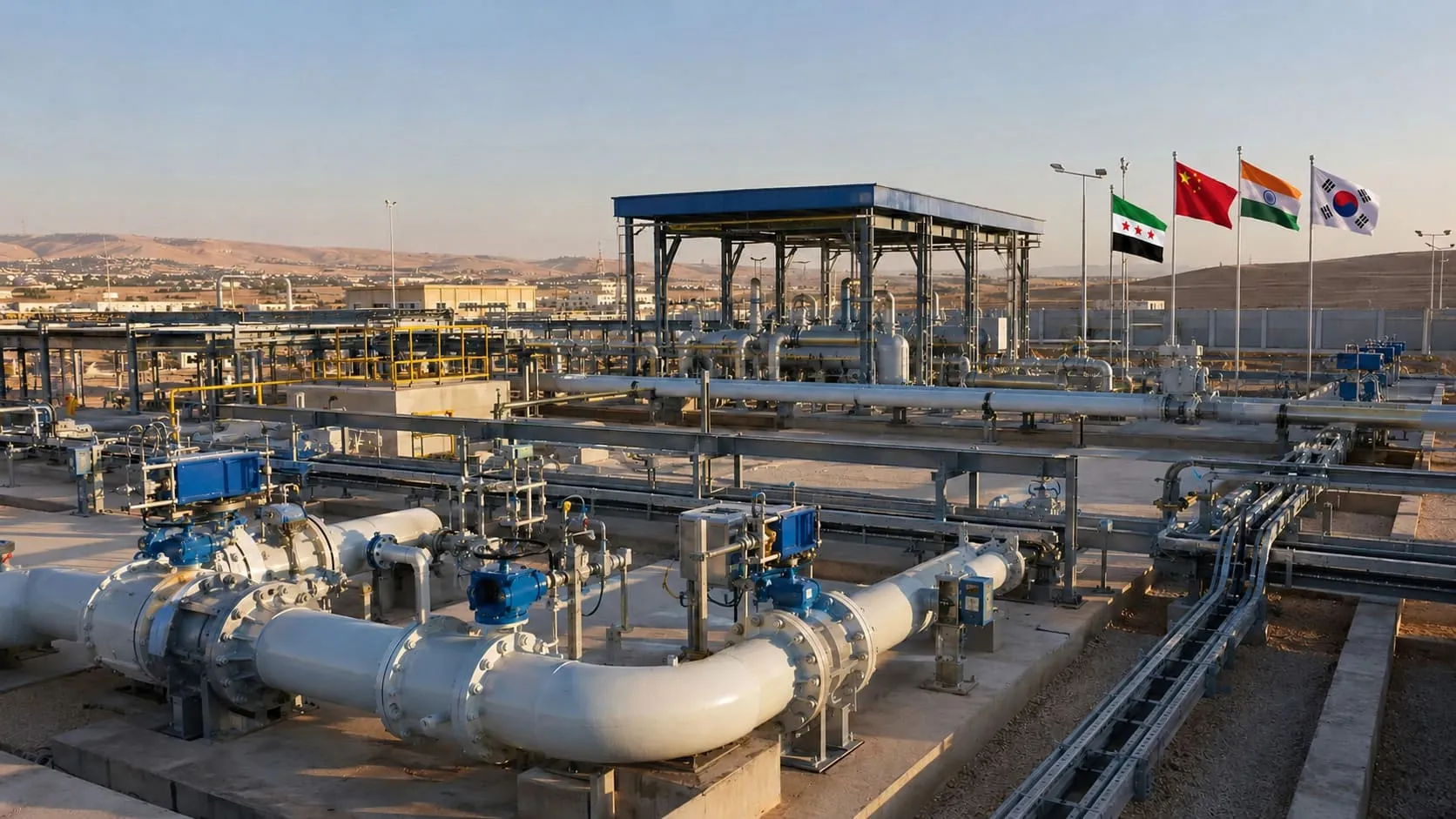
Sectors for Asian investment in Syria
Asian investment opportunities in Syria span several sectors, but their commercial viability depends on local demand, infrastructure readiness, financing, and operating costs. For companies evaluating industrial or infrastructure projects, the main opportunities include:
- Industrial cities and manufacturing: Developing production facilities, assembly lines, industrial warehouses, and service centers, with investment decisions based on site availability, utilities, and production costs.
- Cement and building materials: Manufacturing cement, glass, pipes, plastics, and construction chemicals, where raw-material supply, energy costs, and demand can support production.
- Renewable energy: Developing solar generation, battery storage, and power systems for industrial facilities or grid-connected projects, subject to viable financing and electricity purchase arrangements.
- Water and wastewater: Constructing and rehabilitating pumping stations, treatment facilities, water networks, and wastewater systems, with opportunities depending on funding and project-specific engineering requirements.
- Transport and logistics: Developing warehouses, distribution centers, and freight-handling facilities, alongside participation in funded road, rail, and transport infrastructure projects.
- Healthcare and pharmaceuticals: Supplying hospital equipment, establishing pharmaceutical production or packaging facilities, and providing specialized technical systems that meet applicable regulatory standards.
- Agriculture and food processing: Investing in irrigation systems, cold storage, packaging equipment, and processing facilities where agricultural output and distribution networks support consistent operations.
- Telecommunications and digital infrastructure: Supplying network equipment, developing data centers, and providing industrial control systems, subject to licensing, cybersecurity, and operational requirements.
- Mining and mineral processing: Developing extraction, processing, and supply operations for minerals and industrial raw materials, provided resource quality, permits, environmental requirements, and market demand justify the investment.
Key investment challenges in Syria
For Chinese and other Asian companies, investing in Syria requires more than identifying a promising sector. Before committing capital, investors need to verify the financial, technical, and operational conditions that determine whether a project can be implemented and sustained. The main challenges include:
- Banking and payment arrangements: Confirming workable payment channels, contract currencies, banking requirements, counterparty compliance, and profit-repatriation arrangements. Despite progress in financial-sector recovery, banking and international payment limitations remain important considerations.
- Land and infrastructure readiness: Verifying property rights, permits, site access, electricity, water, and fuel availability before selecting land or ordering production equipment. Where public utilities are insufficient, investors must account for additional infrastructure costs.
- Equipment and technical compatibility: Ensuring imported machinery meets the project’s operating conditions, with clearly defined technical specifications, installation requirements, acceptance tests, warranties, spare parts, and maintenance responsibilities.
- Supply chains and local execution: Assessing shipping routes, customs requirements, storage capacity, and inland transportation, while selecting local contractors and suppliers with the technical capabilities to meet project specifications and schedules.
- Market and financial viability: Validating demand, expected sales volumes, operating expenses, competing products, and potential buyers, while evaluating exchange-rate exposure and the terms of long-term supply or purchase agreements.
At Qiwaa Advance, we help investors address the practical execution challenges that arise between project planning and implementation. Through our contracting, trading, industrial, and mining activities, we can support site and infrastructure assessments, review technical specifications and material requirements, coordinate sourcing and logistics, and connect equipment supply with construction and installation needs.
These services help investors define the local scope of work, identify technical and supply requirements early, and establish a more practical execution plan. Legal approvals, banking arrangements, and investment compliance remain subject to review by the relevant authorities and qualified advisers.
If you are evaluating an industrial or infrastructure project in Syria, contact our team with your proposed location, equipment specifications, preliminary drawings, or project requirements to discuss the supply and execution support available.
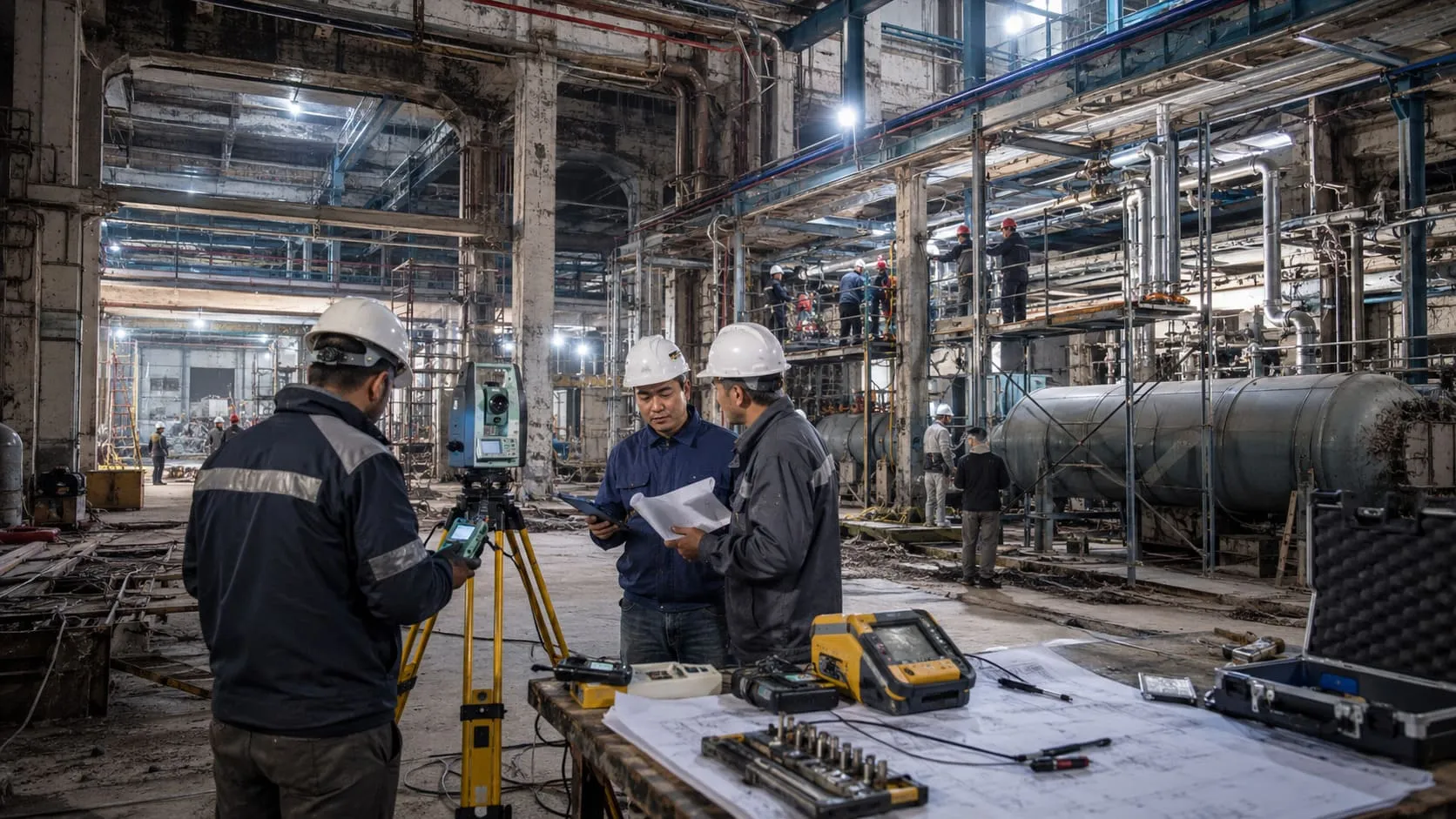
Market entry for Asian companies
Chinese and other Asian companies can enter the Syrian market through direct supply, distribution agreements, technical service operations, local assembly, or industrial investment. The appropriate model depends on market demand, financial exposure, regulatory requirements, and the level of local operations needed. Four practical stages can guide the decision.
1. Assess the market and entry model
Validate demand with potential customers, review competitors and pricing, and assess the payment and regulatory requirements of your proposed activity. Compare the commercial and financial implications of working through a local distributor, establishing a service operation, or investing directly in production before selecting a structure.
2. Test commercial and operational feasibility
Where appropriate, use an initial shipment, supply contract, or limited technical project to verify the assumptions behind your investment. Focus on measurable results:
- Actual customs clearance, transport, and delivery costs
- Product performance and compliance with customer specifications
- Spare-parts availability, maintenance requirements, and warranty obligations
- Customer demand, payment reliability, and achievable margins
For large industrial or infrastructure projects where a pilot is impractical, use technical due diligence and feasibility studies to validate these assumptions.
3. Establish the required local presence
Determine whether your activities require a registered company, branch, agency arrangement, or another permitted structure. Confirm the applicable licensing, tax, employment, and reporting obligations before starting local operations. If warehouses or service facilities are needed, define their costs, staffing, and operational responsibilities.
4. Prepare for industrial investment
For companies moving into manufacturing, the investment decision should be supported by a bankable feasibility study, confirmed land rights, utility availability, and reliable raw-material supply. Before construction and equipment procurement, establish:
- Production capacity, capital expenditure, and operating-cost estimates
- Site layouts, technical designs, and infrastructure requirements
- Financing commitments, contractual responsibilities, and project milestones
- Equipment installation, testing, commissioning, and maintenance arrangements
Industrial investment is not necessarily the final stage of every market-entry strategy. It is a separate decision justified by demand, operating conditions, and expected returns.
Choosing a local partner in Syria
A capable local partner in Syria can support procurement, site preparation, and project execution, but the partnership must be justified by the project’s actual requirements. Under Syria’s amended investment framework, full foreign ownership is permitted for investment projects, subject to applicable regulations, making local partnerships a commercial choice rather than a universal ownership requirement.
Before selecting a partner, evaluate the following:
- Relevant project experience: Request references for comparable projects, including their scope, completion status, and the partner’s actual responsibilities.
- Technical and procurement capabilities: Verify the team’s ability to prepare or review drawings, bills of quantities, specifications, procurement schedules, and installation requirements.
- Supply-chain capacity: Assess supplier relationships, inspection procedures, storage facilities, and the ability to coordinate deliveries with project milestones.
- Legal and financial transparency: Verify registration, ownership, financial standing, and contractual authority, including any relevant compliance requirements.
- Execution and quality controls: Review quality assurance, occupational safety procedures, subcontractor management, and the handling of delays, variations, and defects.
- Contractual accountability: Define deliverables, payment milestones, performance guarantees where appropriate, reporting obligations, and responsibility for cost overruns and delays.
For industrial and infrastructure projects, the strongest indication of a partner’s suitability is not the number of relationships it claims, but its ability to demonstrate the resources, documentation, and delivery controls required for the proposed scope.
Read also: Infrastructure Contracting in Syria: Choosing the Right Contractor
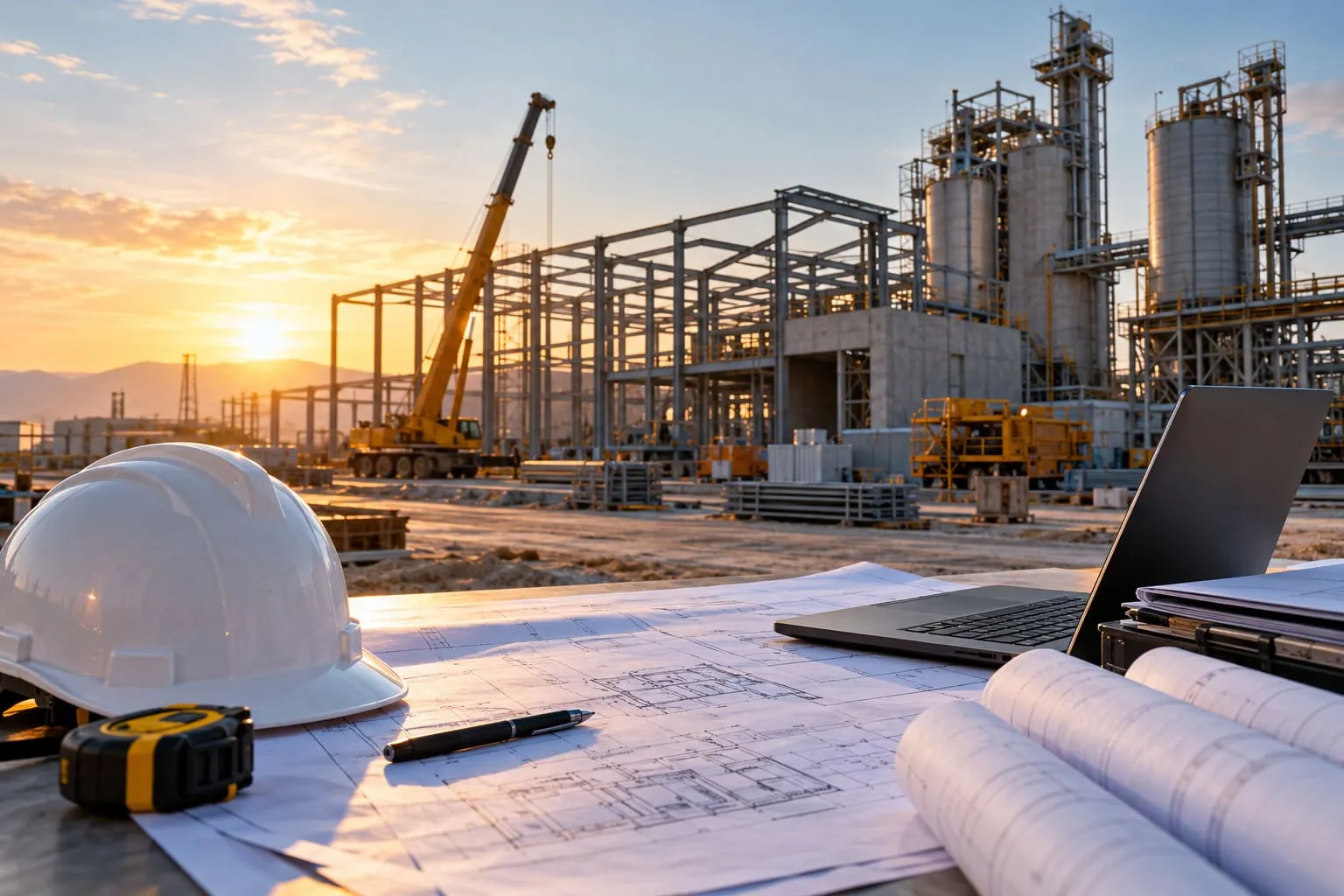
How Qiwaa Advance supports Asian projects in Syria
For Chinese and other Asian companies entering Syria, imported equipment and technical proposals must be matched with local site conditions, infrastructure, and construction requirements. At Qiwaa Advance, we connect our contracting, trading, industrial, and mining capabilities to help investors define the work required to move their projects toward execution.
Depending on the project’s scope, our support includes:
- Site and infrastructure assessment: Reviewing access roads, utility requirements, and site conditions to identify the civil and infrastructure work needed before equipment installation.
- Technical coordination: Reviewing drawings, specifications, and bills of quantities to align imported equipment requirements with local construction and installation work.
- Procurement and logistics: Sourcing construction and industrial materials through our trading network and coordinating supply and delivery with project schedules.
- Construction and utilities: Providing EPC and contracting solutions for relevant infrastructure, concrete structures, water networks, and treatment facilities.
- Industrial and raw-material support: Connecting project requirements with our industrial and mining activities, particularly where production facilities depend on construction materials or mineral inputs.
- Installation and handover coordination: Defining responsibilities between equipment suppliers and local execution teams, including installation interfaces, testing, and handover requirements where covered by the agreed project scope.
If you are planning an industrial or infrastructure project in Syria, contact Qiwaa Advance with your project location, preliminary drawings, equipment specifications, or bill of quantities. We can review your requirements and discuss the relevant supply and execution solutions.
FAQs about Chinese and Asian investment in Syria
What Chinese investment projects are underway in Syria?
The United Fur Company factory in Adra opened in August 2026, while the Ain Issa cement plant reached the groundbreaking stage in October. Other Chinese initiatives, including the Smart Industrial Cities platform, remain at different stages of cooperation and development.
Which other Asian countries are involved in Syria?
Japan and South Korea are supporting recovery and infrastructure programs, while India, Pakistan, Uzbekistan, Indonesia, and Malaysia have pursued trade discussions and potential partnerships. Their activities differ in scale and should not all be classified as direct investment.
Are Asian-funded reconstruction projects considered foreign investment?
Not necessarily. Government grants, development assistance, and internationally funded procurement differ from foreign direct investment, which generally involves a lasting ownership interest in a local enterprise. The distinction matters when assessing actual investment commitments.
Which sectors offer opportunities for Asian investors in Syria?
Potential opportunities include industrial manufacturing, construction materials, renewable energy, water infrastructure, logistics, pharmaceuticals, agriculture, and mineral processing. Project viability depends on demand, financing, utilities, and operating costs.
Does Asian cooperation guarantee financing for Syrian projects?
No. China’s Belt and Road cooperation framework does not guarantee project financing. Similarly, discussions with the Asian Infrastructure Investment Bank (AIIB) should not be treated as approved funding without a confirmed financing decision.
What should Asian companies verify before investing in Syria?
Before committing capital, companies should assess market demand, payment channels, regulatory compliance, land rights, utility availability, logistics costs, and the technical capabilities of prospective local partners.
How Can Qiwaa Advance Support Chinese and Asian Projects?
Qiwaa Advance supports industrial and infrastructure projects through contracting, procurement, technical coordination, and supply solutions. Investors can contact our team with their project location, specifications, and preliminary requirements to discuss suitable execution support.