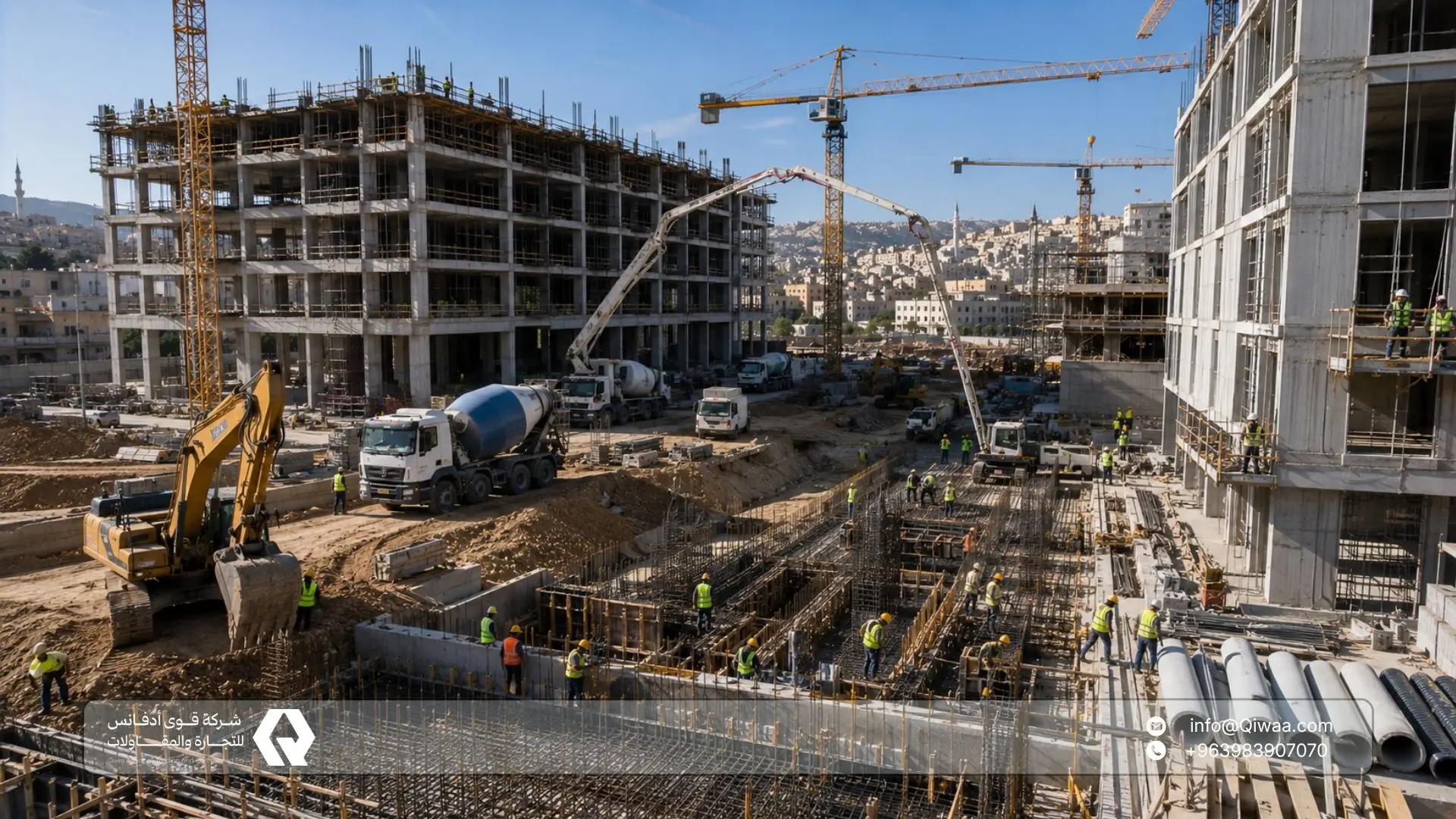


Finishing projects in Syria need more accurate supply decisions than ever before, especially with the expected scale of reconstruction across residential, commercial, and service buildings. In October 2025, the World Bank estimated the cost of rebuilding Syria’s physical assets at around USD 216 billion, including USD 75 billion for residential buildings and USD 59 billion for non-residential buildings. These sectors depend directly on finishing materials such as ceramic and porcelain tiles.
Demand for ceramic and porcelain tiles in Syria is also clear in regional market data. Syria imported around 9.9 million square meters of ceramic tiles in 2024 and recorded the highest growth rate among major Middle Eastern importers between 2013 and 2024, with a compound annual growth rate of 18.5%. The average import price in the Middle East reached USD 8.9 per m² in 2024, making the choice of supply source, specifications, and cost a major factor in finishing budgets.
For this reason, selecting ceramic or porcelain based only on appearance or price is not enough. In this article, we explain the difference between ceramic and porcelain, the best import sources for Syria, quality standards before purchase, common supply mistakes, and the role of Qiwa Advance in supplying finishing materials and organizing quantities and batches according to project requirements.
Why Is Demand for Ceramic and Porcelain Tiles in Syria Increasing?
Demand for ceramic and porcelain tiles in Syria is directly connected to the scale of building and finishing projects. In October 2025, the World Bank estimated the cost of rebuilding Syria’s physical assets at around USD 216 billion, including USD 75 billion for residential buildings, USD 59 billion for non-residential buildings, and USD 82 billion for infrastructure.
These figures reflect the expected need for finishing materials in residential, commercial, service, and hospitality projects over the coming years.
Ceramic and porcelain tiles are used in:
- Apartment and villa floors.
- Bathroom and kitchen walls and floors.
- Entrances and corridors.
- Malls and commercial complexes.
- Hotels and restaurants.
- Hospitals and service facilities.
- Outdoor areas and façades, depending on product type.
- Rehabilitation and finishing projects after reconstruction.
As projects increase, the most important questions become: which product suits the application, what source should be used for supply, and how can color, size, and quality consistency be maintained between batches?
Read More: GGBS and Pozzolana Supply in Syria: Cement Alternatives for Green Concrete
Market Indicators for Ceramic and Porcelain Tiles in Syria and the Region
IndexBox data shows that the Middle East imported around 258 million square meters of ceramic tiles in 2024, with a value of around USD 2.1 billion. Among the largest importers in the region, Syria imported around 12 million square meters in 2024 and recorded the highest import-volume growth rate among major regional importers during 2013–2024, with a compound annual growth rate of 20.9%.
The same data indicates that the average import price for ceramic tiles in the Middle East reached USD 8.3 per m² in 2024, while Syria’s average price was among the lowest in the region at around USD 4.1 per m². This means the Syrian market is highly price-sensitive and needs a careful balance between cost and quality, especially in reconstruction projects that require large quantities.
On the regional supply side, Turkey was the largest exporter of ceramic tiles in the Middle East in 2024, with around 86 million square meters, representing 52% of regional exports, followed by the UAE with around 52 million square meters. This highlights the importance of supply sources close to Syria when planning to import ceramic and porcelain tiles in Syria for major projects.
Also Read: Ready-Mix Concrete Plant in Syria: A Guide for Contractors and Investors
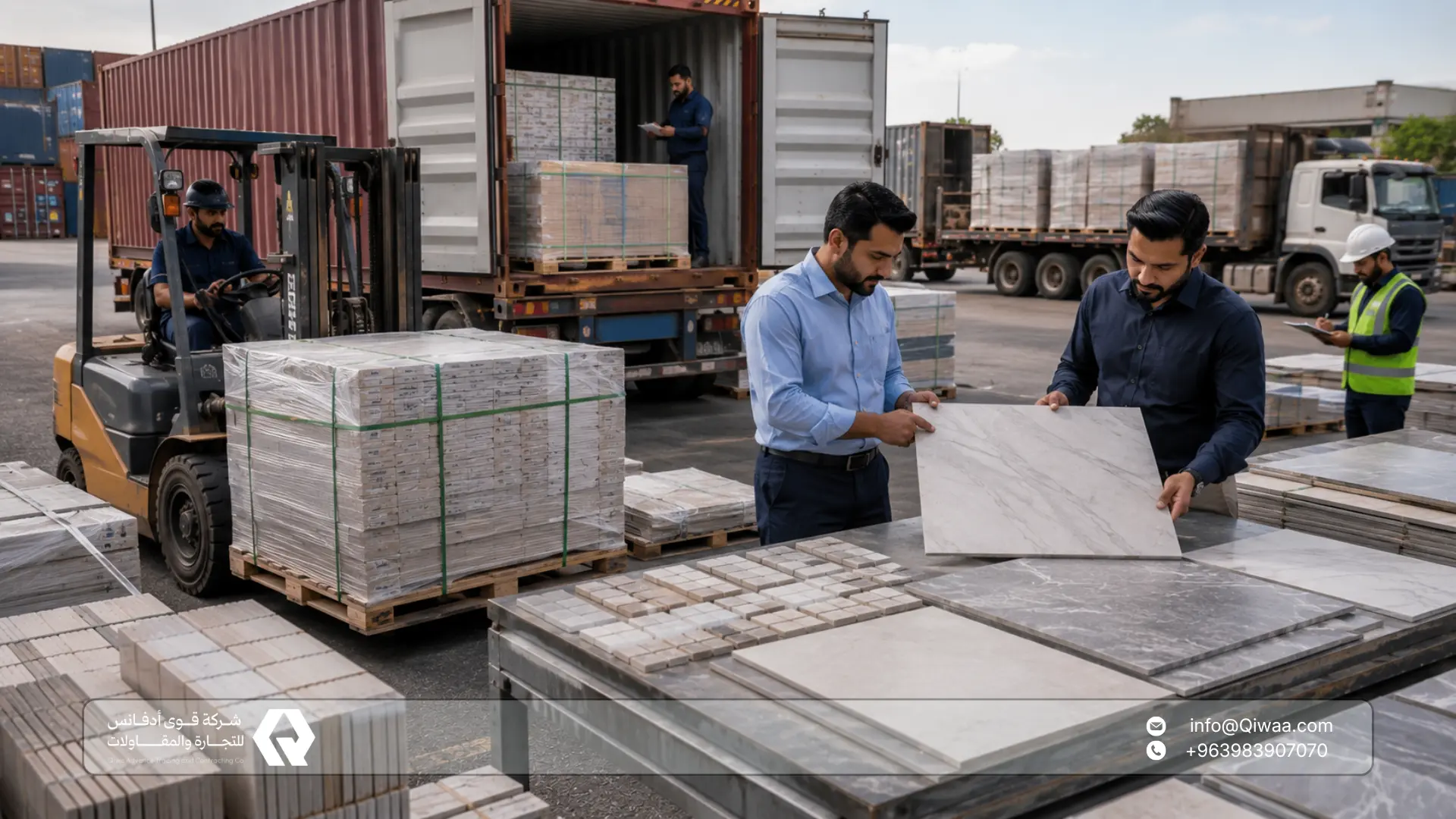
The Practical Difference Between Ceramic and Porcelain
Ceramic and porcelain are both common finishing materials, but the choice between them depends on the place of use, traffic level, moisture, budget, and project type.
- Ceramic is suitable for walls, interior floors, and medium residential use. It offers wide design and price variety.
- Porcelain is denser and has lower water absorption, making it more suitable for high-traffic floors, entrances, hotels, malls, commercial spaces, and some outdoor applications.
According to ANSI A137.1, porcelain is classified as ceramic tile with water absorption of 0.5% or less according to ASTM C373. This is an important point when selecting tiles for wet or high-use areas.
| Element | Ceramic | Porcelain |
|---|---|---|
| Use | Interior walls and floors | Strong floors and commercial spaces |
| Water Absorption | Usually higher | Very low |
| Price | More economical | Usually higher |
| Wear Resistance | Suitable for medium use | Suitable for high traffic |
| Installation | Usually easier | Requires higher precision |
| Best Use | Bathrooms, kitchens, walls | Entrances, malls, hotels, outdoor areas |
Best Import Sources for Ceramic and Porcelain Tiles in Syria
Choosing the country of origin depends on project budget, required quality level, supply speed, quantity size, and intended use. In Syrian projects, distance, shipping cost, and supply stability play an important role in the decision.
1. Turkey
Turkey is one of the most important nearby sources for ceramic and porcelain tiles in Syria. It suits projects that need variety in quality and price with a relatively shorter supply time.
Turkey was also the largest ceramic tile exporter in the Middle East according to 2024 data, making it a practical option for contractors and importers.
2. Iran
Iran is suitable for projects looking for large quantities and competitive prices, especially in economical and mid-range tiles.
These options require careful sample review and confirmation of batch and size consistency before supply.
3. The UAE
The UAE is an important regional supply and distribution hub. It suits projects looking for brands or diverse options from different sources.
In 2024, the UAE ranked second regionally in ceramic tile exports, with around 52 million square meters.
4. China
China provides wide variety in sizes, colors, designs, and prices. This option suits projects that need large quantities or specific designs.
However, samples must be inspected, quality certificates reviewed, and packaging and shipping details checked carefully.
5. India
India, especially Morbi in Gujarat, is one of the global ceramic and tile manufacturing centers. However, sourcing from India requires monitoring energy and shipping conditions.
Reuters reported in March 2026 that Morbi’s ceramic and tile sector, valued at around USD 7 billion, faced stoppage risks due to fuel disruptions, affecting around 800 manufacturing units and causing a major rise in shipping costs.
6. Spain and Italy
Spain and Italy are suitable for premium projects such as hotels, villas, showrooms, and malls that require high-quality designs.
Their cost is usually higher, making them more suitable for projects where design and visual identity are key priorities.
Read Also: Heritage Building Restoration in Syria: Solutions for Reconstruction 2026
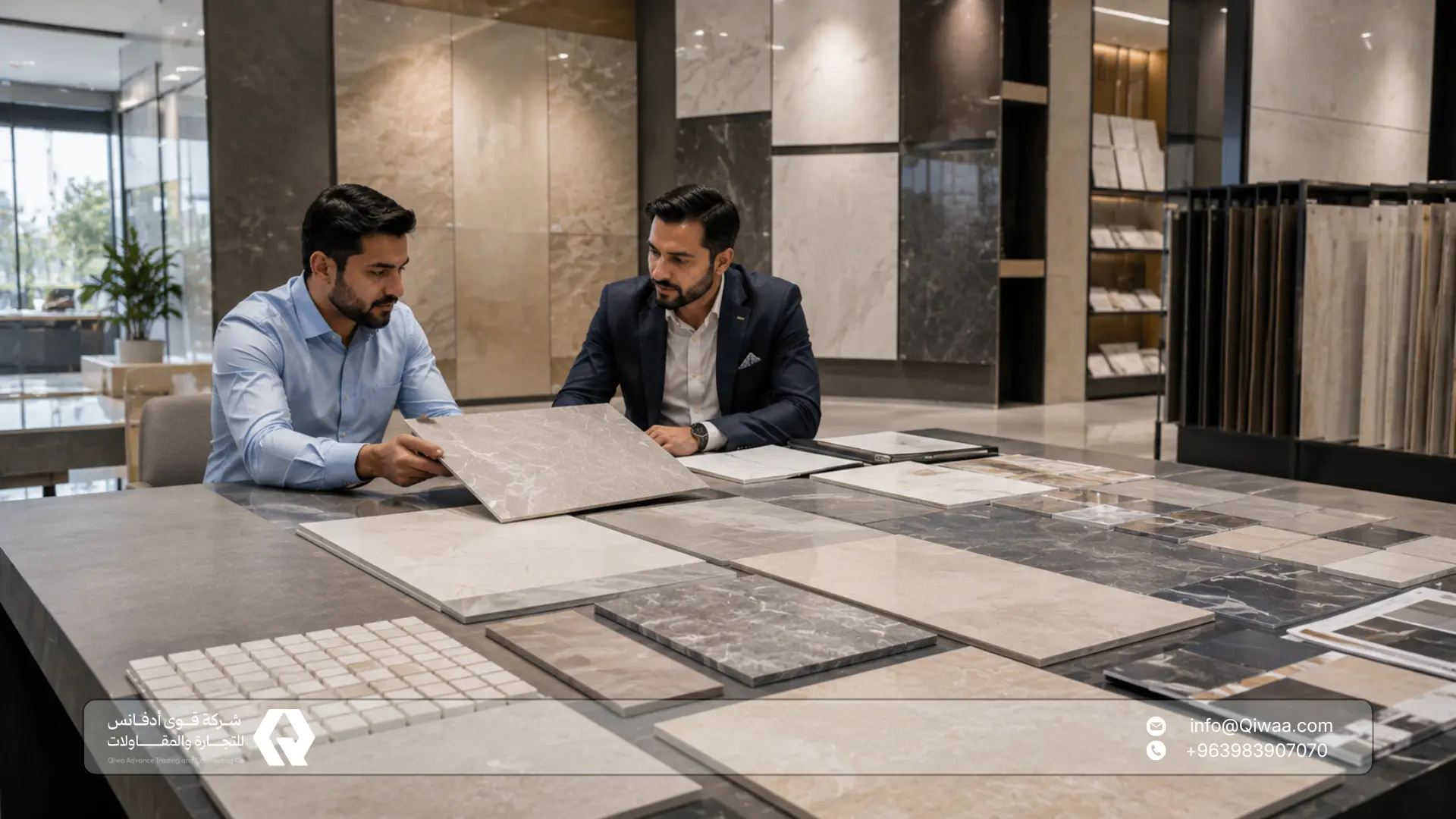
How to Choose the Right Ceramic or Porcelain for Your Project?
Choosing tiles starts with the type of use because a residential bathroom has different requirements from a hotel entrance, mall floor, or commercial kitchen.
Technical product characteristics should be reviewed before approving design and price.
1. Place of Use
Define whether the tile is for walls, floors, bathrooms, kitchens, entrances, or outdoor areas.
Some products are designed for walls only, while others are suitable for floors and daily movement.
2. Traffic Level
In commercial spaces, hotels, and malls, tiles must withstand abrasion and repeated use.
The PEI rating is commonly used to evaluate tile surface wear resistance, helping connect the product with the expected movement level.
3. Water Absorption
Water absorption is important in bathrooms, kitchens, and wet areas.
According to ANSI A137.1, porcelain is classified as ceramic tile with water absorption of 0.5% or less according to ASTM C373, making it suitable for areas requiring higher moisture resistance.
4. Slip Resistance
In bathrooms, kitchens, entrances, outdoor areas, and public facilities, slip resistance should be reviewed.
ANSI A326.3 explains the method for measuring the dynamic coefficient of friction, DCOF, for hard surfaces in the laboratory or on site. It also includes use classifications that help select the right surface.
5. Size
Large-format tiles provide a cleaner look and fewer joints, but they require more accurate installation and a flatter surface.
TCNA explains that large-format tiles make edge lippage more noticeable when there is variation in surface flatness.
6. Thickness and Installation Method
Thickness should not be evaluated alone. It must be linked to place of use, adhesive type, floor flatness, and tile size.
Large-format tiles usually require better surface preparation and suitable installation materials to prevent post-installation problems.
7. Surface Finish
Glossy finishes are suitable for walls and dry interior spaces.
Matte or textured finishes are better in areas that require higher slip resistance, such as entrances, bathrooms, and outdoor spaces.
8. Grade and Quality Level
Review product grade, size consistency, flatness, surface defects, and edge condition before supply.
These details reduce waste and prevent visible defects after installation.
9. Color and Batch Consistency
In large projects, quantities should be supplied from closely matched batches whenever possible to reduce color or gloss variation between areas.
This is especially important in malls, hotels, and large open spaces.
10. Spare Quantity Availability
Order additional quantity for future maintenance and replacement, especially when the product is imported or from a design that may not remain available after the project ends.
Spare quantity helps handle breakage or future modifications without a visible difference in color or size.
Read more: Phosphate Investment in Syria 2026: Mining, Processing, and Export Opportunities
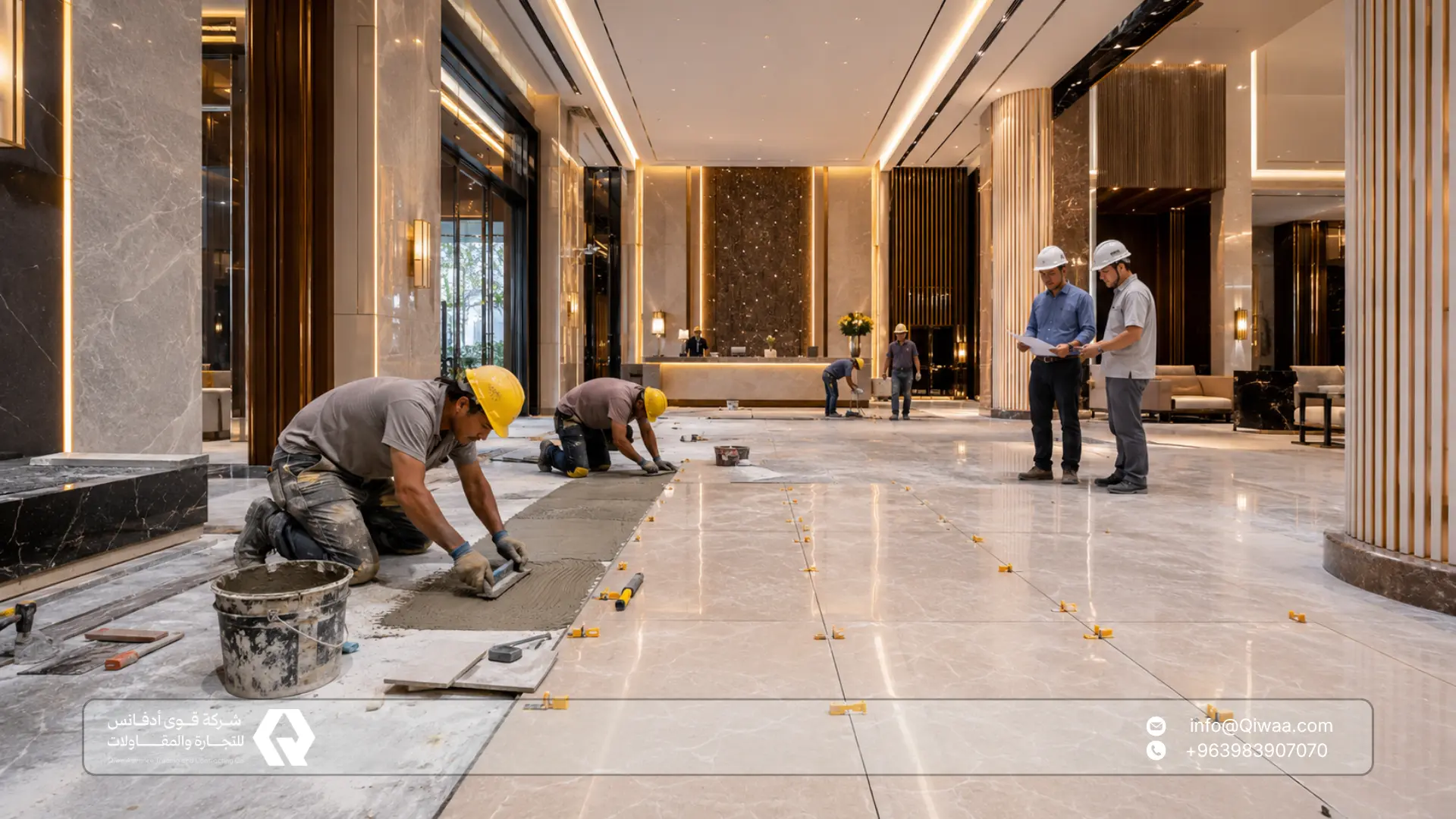
Best Options by Project Type
Ceramic or porcelain can be selected according to project type, budget, and usage level.
- Apartments: Good ceramic or mid-range porcelain for floors, depending on budget.
- Villas: Porcelain for main floors and high-quality ceramic for walls.
- Hotels: Traffic-resistant porcelain that is easy to clean.
- Malls: High-resistance porcelain with sizes suitable for large spaces.
- Restaurants and Commercial Kitchens: Slip-resistant, moisture-resistant, easy-to-clean tiles.
- Bathrooms: Ceramic or low-absorption porcelain with a safe surface.
- Entrances and Outdoor Areas: Textured or slip-resistant porcelain.
- Hospitals and Service Facilities: Easy-to-clean products suitable for repeated use.
For contractors and owners, choosing ceramic and porcelain tiles in Syria should always be based on use, traffic, safety, cleaning requirements, and long-term maintenance.
Specifications to Request Before Importing
When importing ceramic or porcelain into Syria, a clear technical file should be requested before approving the quantity. This reduces the risk of quality differences between the sample and the shipment and helps the contractor or owner control supply and installation.
Ask the supplier for:
- Country of origin.
- Product type: ceramic or porcelain.
- Size and thickness.
- Product grade.
- Water absorption.
- Slip resistance when needed.
- Wear or scratch resistance.
- Surface finish type.
- Quantity and batch number.
- Actual photos and samples.
- Packaging and protection method.
- Shipping and delivery terms.
- Quality certificates when available.
Clear specifications are essential when sourcing ceramic and porcelain tiles in Syria for large or repeated finishing works.
Also Check: Mall Construction in Syria: Building Commercial Malls and Shopping Complexes
Common Mistakes When Importing Ceramic and Porcelain
Most tile problems appear after installation, so the decision must be controlled before supply.
Common mistakes include:
- Choosing the product based on appearance only.
- Ignoring slip resistance in wet areas.
- Not inspecting samples before contracting.
- Ordering quantity without calculating waste and spare stock.
- Mixing different batches, causing color variation.
- Choosing large formats without proper technical preparation.
- Neglecting adhesive, grout, and installation materials.
- Weak packaging during shipping.
- Not reviewing tile flatness and edge condition.
- Not linking supply with the project installation schedule.
Avoiding these mistakes helps protect the budget, reduce waste, and maintain finishing quality across the project.
Qiwa Advance: Ceramic, Porcelain, and Finishing Material Supplier in Syria
At Qiwa Advance, we support finishing projects in Syria by supplying ceramic, porcelain, and finishing materials suitable for each project type, whether residential, commercial, hospitality, service, or industrial.
We help contractors and investors choose the right product based on actual use, size, surface finish, slip resistance, water absorption, batch quality, and supply schedule.
Our approach to ceramic and porcelain tiles in Syria focuses on matching the product with the project, not only selecting the lowest price or most attractive design.
Official Agent of Ariane Fine Porcelain in Syria
Qiwa Advance is the official agent of Ariane Fine Porcelain in Syria. Ariane is a brand specialized in hospitality porcelain and professional tableware designed for hotels, restaurants, cafés, catering companies, and banquet services.
Ariane offers wide tableware collections including plates, bowls, dishes, cups, serving accessories, and multiple collections such as Ivory, Colors, Decal, Impress, Cruise, and Fabric, giving hospitality projects diverse options for daily operation and premium presentation.
Ariane uses high-quality porcelain fired at high temperatures to achieve a durable, non-porous surface with resistance to chipping, scratching, and staining, along with food-safe glazes.
The brand focuses on combining design, function, durability, and ease of use, which are important characteristics in high-intensity environments such as hotels, restaurants, and buffets.
Through our official agency for Ariane Fine Porcelain in Syria, Qiwa Advance helps hotels, restaurants, cafés, and hospitality projects choose suitable porcelain collections according to service type, number of guests, presentation style, budget, and operating needs, while organizing supply and quantities according to the project plan.
Read more: Microsilica and Fly Ash Supply in Syria In high-performance concrete projects
Our Services in Ceramic, Porcelain, and Finishing Material Supply in Syria
- Supplying ceramic and porcelain according to project specifications.
- Providing suitable options for apartments, villas, hotels, malls, restaurants, and service buildings.
- Supplying hospitality porcelain and hotel tableware from Ariane Fine Porcelain.
- Reviewing samples, sizes, thicknesses, and surface finishes before supply.
- Organizing batches to reduce color or size variation in large projects.
- Linking supply with the project execution schedule.
- Supporting contractors and investors in choosing products according to actual use.
For inquiries about Ariane Fine Porcelain products in Syria, contact Qiwa Advance to choose suitable porcelain collections for hotels, restaurants, cafés, and banquets according to use type and required quantities.
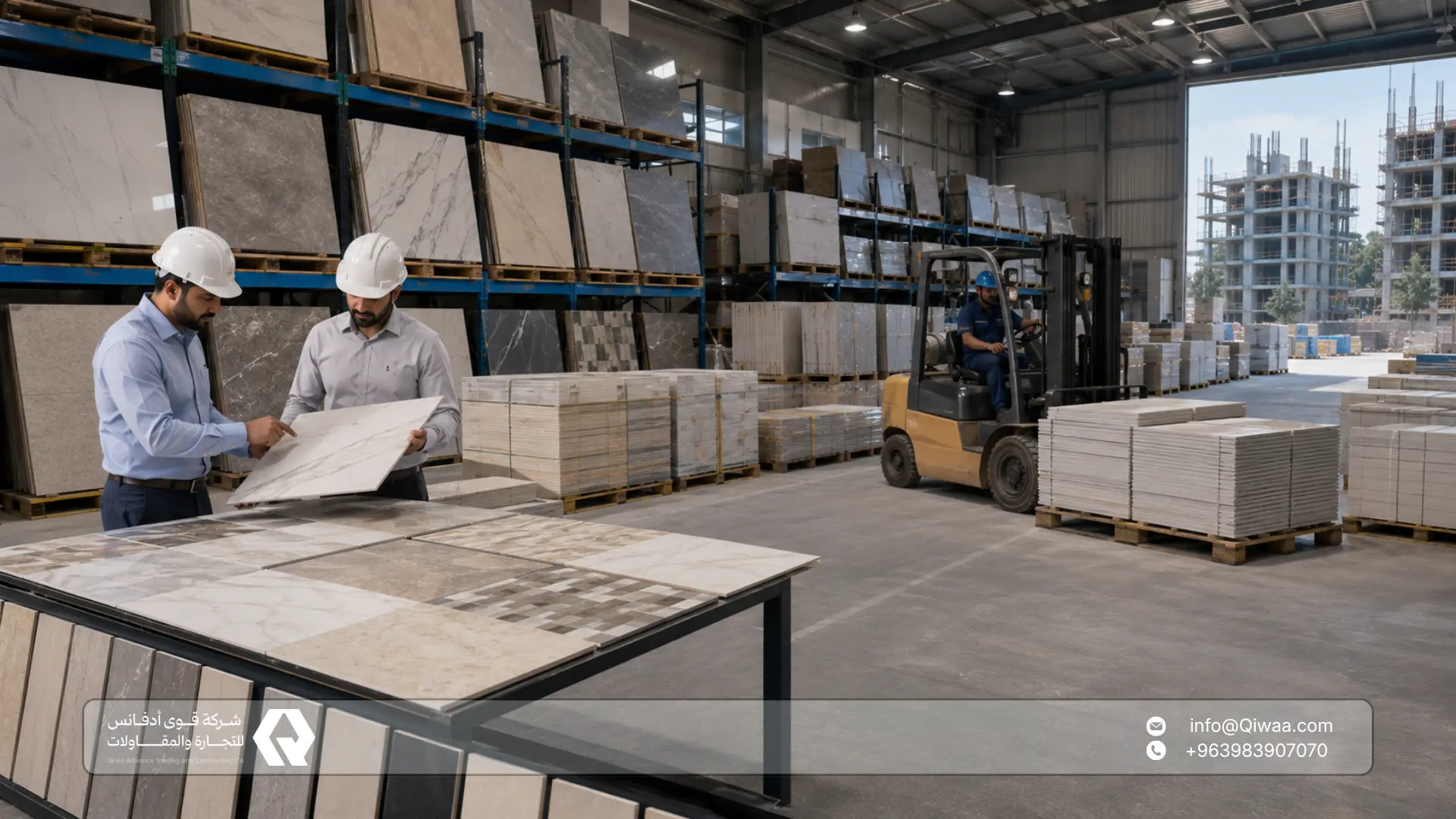
Importing Ceramic and Porcelain for Finishing Projects in Syria
Choosing ceramic or porcelain in Syria requires balancing quality, price, supply source, and project type. The local market is cost-sensitive, but it also needs finishing materials that withstand use and suit reconstruction and rehabilitation projects.
Porcelain is suitable for high-traffic spaces and projects that require a longer service life, while ceramic remains a practical choice for many interior walls and floors.
The right decision starts with defining the use, reviewing specifications, inspecting samples, and ensuring quantity availability from closely matched batches.
For inquiries about supplying ceramic and porcelain tiles in Syria for your project, contact Qiwa Advance to define the suitable type, sizes, and source according to project nature and execution schedule.