

Syria is preparing two toll-road corridors under a Build-Operate-Transfer (BOT) model, but contractors still lack the tender documents, project scope, and commercial terms needed to prepare bids. On November 17, 2026, the government announced funding for road studies, not construction.
This guide explains the confirmed status of toll roads in Syria, the project details still missing, and how local contractors and suppliers can prepare for potential BOT opportunities.
What Has Syria Announced About Toll Roads?
On July 3, 2026, Moaz Najjar, director general of the General Establishment for Road Transport, confirmed that feasibility studies were being updated for two proposed toll-road corridors under the BOT model.
On November 17, Transport Minister Yarub Badr announced $2.9 million in Islamic Development Bank funding for studies covering Syria’s national road network and the two proposed toll roads. He said the corridors would be offered to specialized international companies to finance, build, and operate, subject to feasibility results.
As of November 19, 2026, the official announcements reviewed do not identify a published tender, prequalification notice, or awarded concession for either proposed toll road. The funding concerns studies, not construction works.
Where Are Syria’s Two Proposed Toll Roads?
According to the July 3 announcement, the proposed corridors are:
- North–South Corridor: Connecting the Jordanian border with the Turkish border, along a proposed alignment several kilometers east of the existing road.
- East–West Corridor: Connecting Tartus Port on the Mediterranean coast with the Al-Tanf crossing on the Iraqi border.
Najjar also described the existing road as free to use. However, the final alignments, toll arrangements, and provisions for alternative routes have not been established in published concession documents.
Seven Project Details Contractors Still Need
Before contractors can assess bidding requirements or prepare reliable project-specific prices, seven details need clarification:
- Project cost and route length: Confirmed alignments, construction scope, and estimated investment costs are needed to assess quantities, equipment, and delivery capacity.
- Concession period: The proposed duration affects the investor’s financial model and the structure of project funding.
- Toll rates and traffic forecasts: These determine projected concession revenue and influence project financing and financial viability.
- Procurement process: Tender dates, prequalification criteria, and package structure determine whether firms should pursue investor partnerships, EPC contracts, or subcontracting opportunities.
- Government support and guarantees: Any guarantees or risk-sharing commitments must be confirmed before evaluating project financing and contractual security.
- Contracting authority and payment structure: Contractors need to know who will award the concession, who will sign construction contracts, and which entity will be responsible for payment.
- Published feasibility results: Traffic forecasts, technical requirements, environmental assessments, and proposed work packages are needed to evaluate the project’s scope and risks.
For local contractors, the immediate priority is preparation, not bid pricing. Firms can assess their technical capacity, document relevant project experience, and identify potential partners while monitoring official announcements for the first procurement documents.
Read more: Syria Infrastructure Sector 2026: Market Size, Competitive Gap, & Investment Opportunities
How BOT Highway Projects Affect Contractors in Syria
In a traditional public works contract, the contractor is typically paid by the public authority. Under a Build-Operate-Transfer (BOT) project, a private investor or project company arranges financing, oversees construction and operation, and transfers the asset to the state at the end of the agreed period.
For contractors, the key difference is who signs the construction contract and guarantees payment. A contractor working under a BOT project may be paid by the project company through an EPC contract, without becoming an investor or assuming responsibility for toll collection.
Which PPP Law Could Govern Syria’s Toll Roads?
Syria’s Public-Private Partnership Law No. 5 of 2016 provides a legal framework for private participation in public infrastructure, including construction, rehabilitation, operation, and maintenance.
The law establishes a PPP Council and PPP Bureau, with provisions governing project approval, procurement, and partnership agreements. It was subsequently amended by Legislative Decree No. 21 of 2017.
However, the government has not confirmed which legal and procurement framework will govern the two proposed toll-road corridors. Contractors should verify the applicable legislation, contracting authority, and approval procedures once official project documents are published.
This framework is distinct from Decree No. 114 of 2025, which amended Syria’s Investment Law No. 18 of 2021. Investment incentives and PPP procurement requirements should not be treated as interchangeable.
Who Bears Traffic and Payment Risk in BOT Highway Projects?
The main distinction between highway financing models is where project revenue comes from and who bears the risk of lower-than-expected traffic.
The following comparison reflects international PPP practice, not confirmed terms for Syria’s proposed toll roads.
| Project model | Revenue or funding source | Who generally bears traffic risk? | Who pays the construction contractor? |
|---|---|---|---|
| User-pay BOT concession | Equity, loans, and future toll revenue | Primarily the project company, subject to any government support | Project company under an EPC or construction contract |
| Existing-road toll concession | Toll revenue from operating an existing or upgraded road | Generally the concessionaire, depending on the agreement | Concessionaire under a works contract |
| Availability-payment PPP | Government payments linked to road availability and performance | Primarily the public authority | Project company under a construction contract |
| Traditional public works contract | Public budget or other committed public-project funding | Generally the public authority | Public contracting authority |
The World Bank’s PPP guidance distinguishes user-pay projects from availability-payment arrangements and explains how traffic risk can be transferred or shared.
For an EPC contractor, traffic risk and payment risk are not the same. The project company may bear the risk of lower toll revenue, while the contractor remains exposed to delayed payments, financing failure, or disputes under its construction contract.
Before joining a project, verify the contracting party, evidence of secured financing, payment guarantees, performance bonds, and provisions for suspension or termination if funding is interrupted.
How Have Syria’s Toll Road Plans Progressed?
Syria has discussed privately financed highways for several years, but announcements must be distinguished from actual procurement and signed concessions.
| Date | Announcement | What it means for contractors |
|---|---|---|
| January 2019 | Former Transport Minister Ali Hammoud referred to Russian and Chinese investment offers for toll highways. | Reported investor interest, not evidence of an awarded contract. |
| December 2019 | The Greater Homs Bypass was described as a proposed 46 km toll highway. | A historical project announcement; its operational status requires separate verification. |
| May 2025 | Transport Minister Yarub Badr outlined plans for tolls based on vehicle type and distance, while retaining free alternative roads. | An indication of intended toll policy, not an approved tariff or concession. |
| July 2026 | The General Establishment for Road Transport confirmed updated feasibility studies for two proposed BOT corridors. | Project preparation continued, without published procurement terms. |
| November 2026 | The Islamic Development Bank provided $2.9 million for road-network studies, including the two proposed toll roads. | Funding for studies, not construction or an awarded concession. |
In his May 2025 interview with Erem Business, Badr said the toll-road concept dated back to studies undertaken in 2010 before being suspended during the conflict.
The latest November 17, 2026 announcement confirms plans to offer the proposed corridors to specialized international companies, subject to feasibility results.
For contractors, the next decisive milestone is the publication of procurement or prequalification documents. These will clarify eligible bidders, contract packages, financing requirements, and opportunities for local construction and supply firms.
Read more: Foreign Investment in Syria: How to Enter the Syrian Market Step by Step
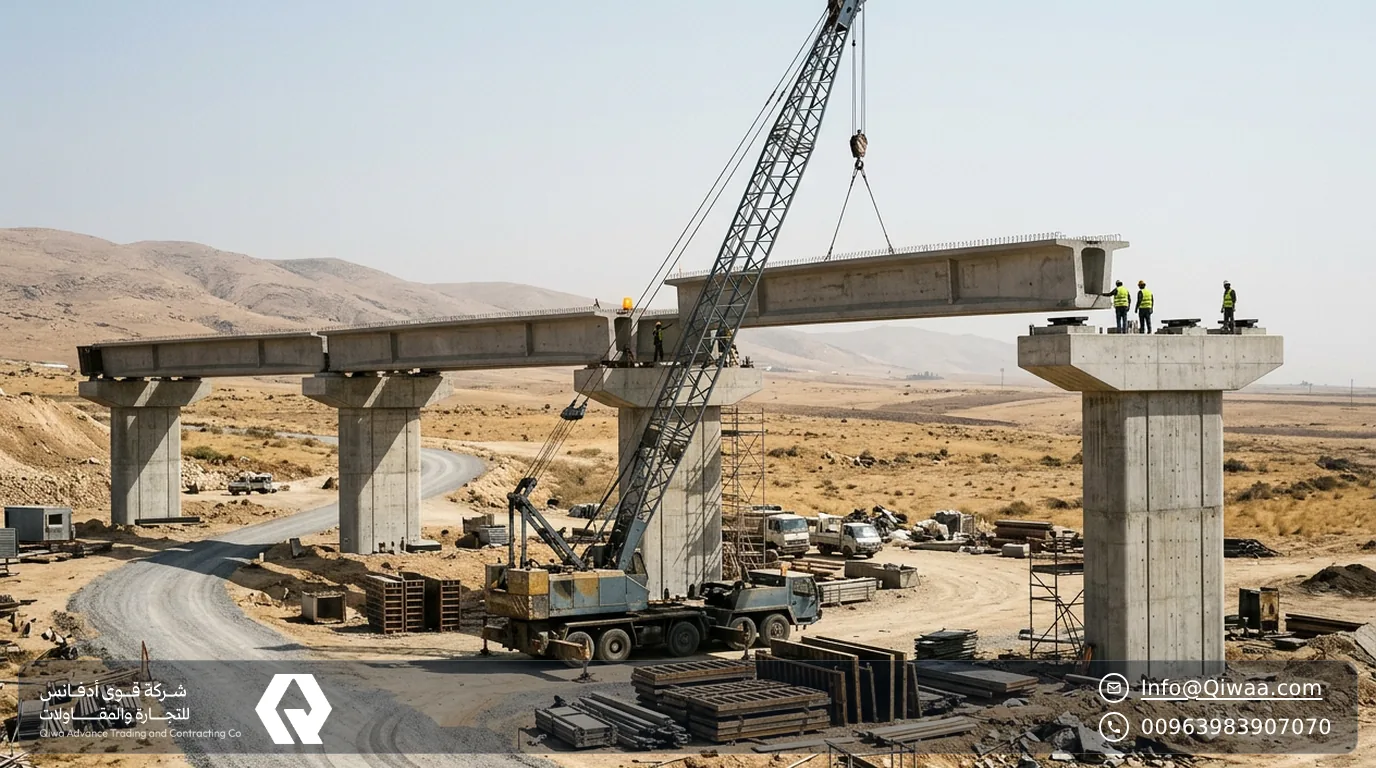
How Local Contractors Can Participate in Syria’s Road Projects
For local contractors, the first decision is whether to pursue a future BOT project or an existing road rehabilitation contract. The two routes involve different clients, qualification requirements, and payment arrangements.
While the proposed toll roads remain at the study stage, contractors can prepare by:
- Choose a realistic role: Investor or consortium member, EPC contractor, specialist subcontractor, or materials supplier.
- Prepare a prequalification file: Document completed projects, comparable work quantities, equipment, key personnel, and quality and safety records.
- Identify potential partners: Approach experienced road contractors or project developers where your capabilities complement their construction requirements.
- Assess financial capacity: Review working capital, cash flow, and the ability to obtain the required performance bonds.
- Monitor procurement notices: Follow the Ministry of Transport and General Establishment for Road Transport, checking eligibility criteria, submission deadlines, and awarded contracts.
- Review contractual exposure: Before committing to a consortium or subcontract, assess payment security, liabilities, guarantees, and applicable Syrian law.
How Can Local Contractors Work on BOT Highway Projects?
Local firms do not necessarily need to invest in a BOT concession to participate in construction. Depending on the procurement and contracting structure, they may contribute through:
- EPC delivery partner: Undertaking a defined construction package under an agreement with the project company or lead EPC contractor.
- Specialist subcontractor: Executing earthworks, drainage, culverts, pavement layers, or utility relocation within an awarded construction package.
- Materials supplier: Providing aggregates, asphalt materials, steel, drainage pipes, or other approved products against the project’s technical specifications.
A local firm’s advantage may lie in its verified project experience, available equipment, local supply network, and ability to mobilize personnel within Syria.
The appropriate route depends on the firm’s capabilities. An EPC contractor may need to join a bidding consortium, while a specialist subcontractor or supplier may work directly with the selected construction contractor without taking an equity stake in the concession.
Before entering negotiations, establish who will award the work, who will pay, and whether the proposed package matches your technical and financial capacity.
Road Projects Already Under Contract in Syria
Unlike the proposed toll-road concessions, several Syrian highway rehabilitation projects have already progressed through tendering and contract awards.
On July 14, 2026, Syria announced seven domestic and international tenders covering major highway rehabilitation, additional carriageways, and engineering supervision.
The announced works included the Nassib–Damascus, Damascus–Homs, and Homs–Aleppo sections, the Saraqib–Idlib link, and the Damascus–Palmyra–Deir Ezzor corridor.
Official reports have used both M5 and M45 when describing the north–south international road network. Contractors should follow the route designation, project boundaries, and package references in the actual tender documents.
Subsequent awards show that some projects have moved beyond procurement:
- September 22, 2026: The General Establishment for Road Transport signed a contract with Kuwait’s Combined Group Contracting Company to rehabilitate the approximately 100 km Nassib–Damascus section. The reported contract value was USD 46.8 million, with a 400-day implementation period.
- October 26, 2026: Qatar’s Almohannadi for Roads, Trading and Contracting signed a USD 147 million agreement covering the 170 km Al-Busayri–Al-Tanf road and a further 45 km connecting Al-Sabaa Biyar to Al-Busayri. The reported implementation period is 900 days.
- November 17, 2026: Saudi engineering consultancy SETS signed a supervision contract for the Damascus–Palmyra–Deir Ezzor highway rehabilitation and expansion project, covering approximately 426 km. The reported USD 320 million relates to the overall road project, not the supervision contract’s value.
These are road rehabilitation and expansion projects, not confirmed toll-road concessions. Their progress also means that contractors should not assume the July tenders remain open.
For local firms, the next step is to verify which packages are still accepting bids and which have been awarded. For awarded contracts, relevant opportunities may arise through subcontracting or material supply, subject to the main contractor’s procurement procedures and approved specifications.
Contractors seeking infrastructure materials or utility-network works within a defined road package can contact Qiwaa Advance with the BOQ, specifications, project location, and delivery schedule to discuss relevant contracting or supply capabilities.
20 Questions to Ask Before Joining a BOT Highway Project in Syria
Before committing to a BOT highway project, identify which risks and obligations apply to your role. Equity investors must assess concession revenue and financing, while EPC contractors and subcontractors should focus on work scope, payment security, and delivery risks.
Use these 20 questions to review the proposed agreements with your partners and legal counsel:
- Contracting parties: Which public authority awards the concession, and which project company or contractor will sign and pay under your agreement?
- Concession period: How long will the concession last, and does its duration affect your contractual obligations?
- Traffic risk: Who bears revenue losses if traffic falls below forecasts, and could those losses affect construction payments?
- Government support: Are any revenue, financing, or payment guarantees available, and what risks do they cover?
- Payment currency: In which currency will payments be made, and how will exchange-rate changes be handled?
- Toll adjustments: How will toll rates be adjusted for inflation or other factors, and who bears the resulting revenue risk?
- Equity commitments: If joining as an investor, what ownership share, capital contributions, and additional funding obligations will you assume?
- Construction scope: What work package, contract value, and responsibilities will each construction partner undertake?
- Contract guarantees: Who provides performance bonds and advance payment guarantees, and under what conditions can they be called?
- Dispute resolution: Which law governs each agreement, and what dispute-resolution process, arbitration seat, and enforcement arrangements apply?
- Financing failure: What happens to completed works and unpaid invoices if project financing is delayed or withdrawn?
- EPC pricing and schedule: Is the construction contract fixed-price or lump-sum, and when are extensions of time or price adjustments permitted?
- Ground conditions: Who bears the cost and delay risk of unforeseen geotechnical or site conditions?
- Site access: Who is responsible for land acquisition, site handover, and delays in granting access?
- Environmental approvals: Which environmental and social assessments, permits, and mitigation measures are required, and who must obtain or implement them?
- Utility relocation: Who identifies, relocates, and pays for affected water, electricity, and telecommunications networks?
- Delay damages: What liquidated damages apply to late completion, and what are the agreed liability limits?
- Defects liability: Who is responsible for defects after construction handover, and when do warranty obligations end?
- Withdrawal and termination: Can a partner exit the project, and what financial liabilities or compensation provisions apply?
- Written agreements: Are each party’s scope, decision-making rights, payment obligations, and liabilities documented in the consortium, EPC, or subcontract agreement?
Before signing, confirm that your obligations match your actual role. A local subcontractor or supplier should not assume investor-level financing or traffic risks simply because the works form part of a BOT concession. The final risk allocation depends on the applicable agreements and procurement documents.
Also read: Infrastructure Contracting in Syria: Choosing the Right Contractor
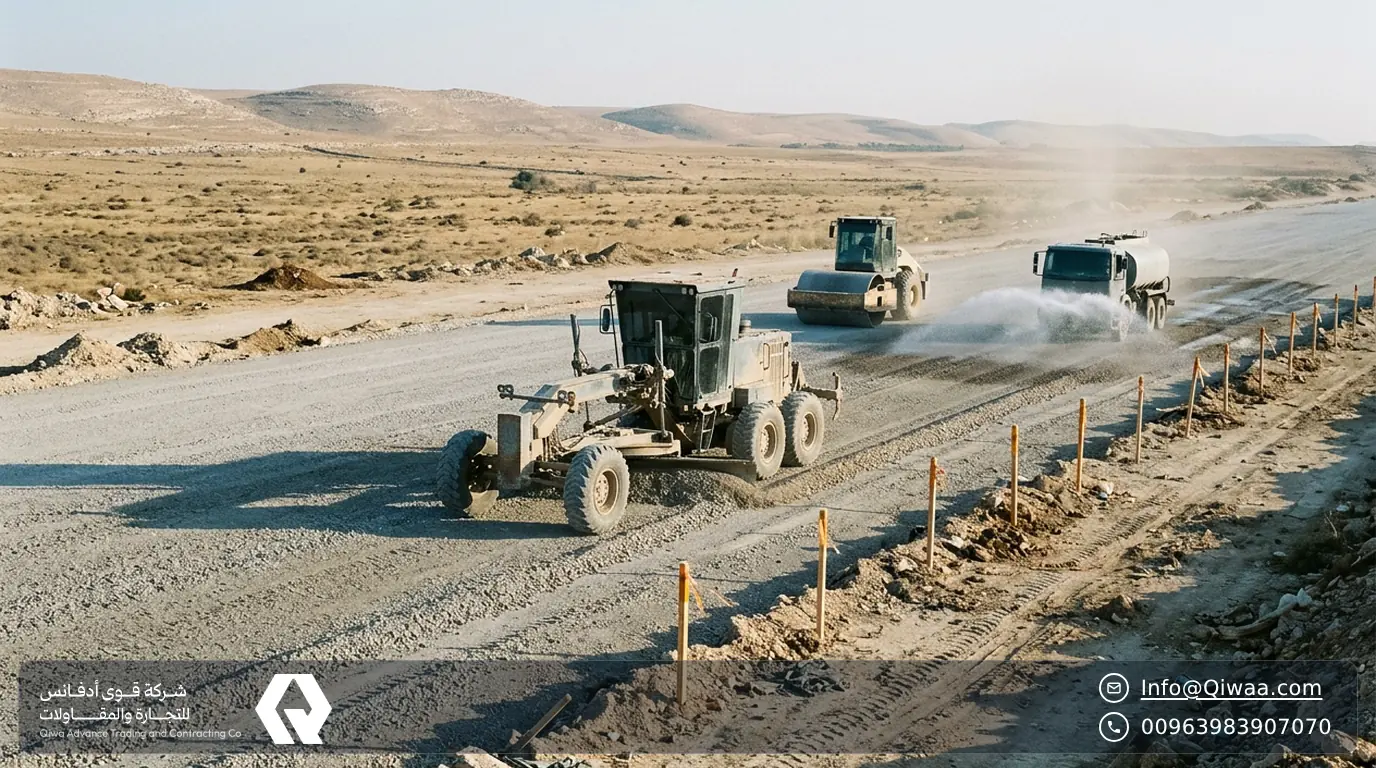
How Qiwaa Advance Can Support Road Infrastructure Projects
Road construction and rehabilitation projects may require water and wastewater networks to be installed, protected, or relocated along the route. Through Qiwaa Contracting, we provide EPC services for water infrastructure, while Qiwaa Trading coordinates the supply of pipes and construction materials through our manufacturing partnerships and authorised agencies.
For road project contractors, our relevant services include:
- Water and wastewater infrastructure: EPC works for networks within or affected by the road construction scope.
- Pipe systems: Supply of GRP and other specified pipe solutions through our approved manufacturing partners.
- Lime supply: Quicklime and hydrated lime through our agency with Vişne Madencilik / Öztüre Holding, for soil stabilisation where testing, project specifications, and the approved design permit their use.
- Materials coordination: Supply planning based on approved quantities, technical specifications, and the construction schedule.
These capabilities may support road rehabilitation contracts or defined construction packages within future BOT projects. They do not imply that we, at Qiwaa Advance, have been awarded a role in Syria’s proposed toll roads.
Direct Contracts vs BOT Construction Packages
For contractors, the practical difference lies in who awards the work, who pays, and which risks the construction contract transfers.
| Criterion | Direct public works contract | Construction package within a BOT project |
|---|---|---|
| Contracting party | Public authority awarding the works | Project company or its appointed EPC contractor |
| Payment source | Public contracting authority under the agreed funding arrangements | Project company or main contractor, depending on the contract |
| Scope of work | Defined by the public tender and awarded contract | Defined by the EPC contract or subcontracted work package |
| Qualification requirements | Public tender eligibility and technical criteria | Requirements set by the project company or main contractor, subject to project rules |
| Payment security | Governed by the public contract and applicable guarantees | Depends on project financing, contractual payment terms, and available security |
| Risk and liability | Allocated under the public works contract | Allocated through the EPC contract, subcontract, and applicable flow-down provisions |
Neither route automatically offers better margins or lower risk. Before accepting a work package, contractors should verify payment security, performance guarantees, scope boundaries, and liability for delays or additional costs.
What to Include in Your Request to Qiwaa Advance
If your road project includes water infrastructure works, pipe systems, or other materials within our supply scope, send us:
- Project details: Road section, location, and contracting party.
- Scope of work: Required infrastructure works or materials.
- Bill of quantities: Item descriptions, quantities, and BOQ references, where available.
- Technical requirements: Approved drawings, specifications, and applicable standards.
- Project schedule: Required delivery dates and execution milestones.
- Commercial requirements: Payment terms, delivery conditions, and contractual obligations relevant to the proposed package.
These details help us assess which EPC services or materials sourcing options are relevant to your project and coordinate a technical or commercial proposal.
Contact Qiwaa Advance on WhatsApp to share your project requirements and discuss the infrastructure works or materials we may be able to support.
FAQs About Toll Roads in Syria
Has Syria Issued a Tender for Its Proposed Toll Roads?
As of November 19, 2026, the official announcements reviewed do not identify a tender or prequalification notice for either proposed BOT toll-road corridor. OnNovember 17, the government announced $2.9 million in fundingfor road studies, not construction. The Al-Tanf road agreement signed in October concerns rehabilitation and expansion, not a confirmed toll-road concession.
Which Roads Are Planned as Toll Roads in Syria?
Two corridors are being studied: a north–south route linking the Jordanian and Turkish borders, and an east–west route connecting Tartus Port with the Iraqi border near Al-Tanf. Neither corridor has a final published alignment, confirmed length, or announced toll-collection locations.
Will Existing Roads Remain Free?
According to government statements in 2025 and July 2026, existing roads are intended to remain free, providing alternatives to the proposed toll highways. However, the final toll rates, alternative-route arrangements, and concession terms have not been published. These commitments should be verified against the approved project documents.
How Does Syria’s PPP Law Differ from Its Investment Law?
PPP Law No. 5 of 2016, as amended, provides a framework for public-private infrastructure partnerships, while Investment Law No. 18 of 2021, amended by Decree No. 114 of 2025, addresses the broader investment framework and incentives. The legal and procurement arrangements for the proposed toll roads have not been confirmed and require review once official project documents are available.
Sources
- Syrian Government Studies Paid Road Projects, Enab Baladi, 3 July 2026
- Transport minister: USD 500 million to rehabilitate road links with neighboring countries (in Arabic), Enab Baladi, 24 September 2026
- Syria launches international tenders for major highway rehabilitation projects, SANA, 14 July 2026
- Interview with Transport Minister Yarub Badr (in Arabic), Erem Business, 16 May 2025
- Syria, Qatar sign $147m deal to upgrade key road infrastructure, Arab News, 26 October 2026
- Syria.. The First Toll Highway, Enab Baladi, 1 January 2020
- Russian, Chinese Offers to Invest in Toll Roads, The Syrian Observer, 16 January 2019
- Public-Private Partnership Law No.5 of 2016, UN Environment Programme LEAP, undated, accessed October 2026
- PPP Laws: Syria, World Bank PPP Resource Center, 16 May 2017
- President al-Sharaa issues decree amending some articles of the Investment Law (in Arabic), SANA, 9 July 2025
- What are PPPs?, UNCTAD Investment Policy Hub, undated, accessed October 2026