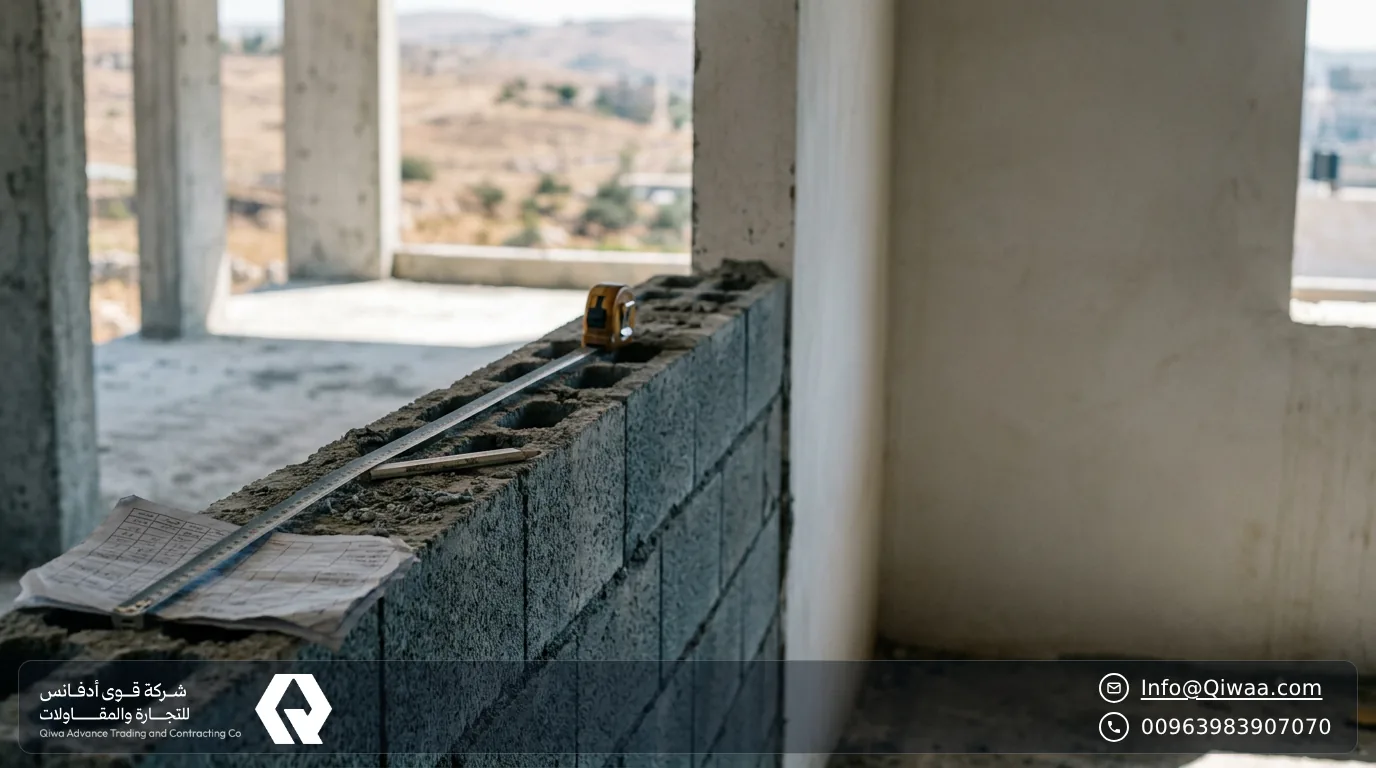


Bank guarantees can reduce a contractor’s profit and restrict working capital before construction begins. On a hypothetical contract worth 48 million new Syrian pounds, commissions on three guarantees total 235,800 pounds, or 0.49% of the contract value, at an assumed monthly rate of 0.2%—excluding issuance fees and cash collateral costs.
Before bidding, contractors need to know the required performance bond in Syria, the submission deadlines, and how long each guarantee may remain in force. This guide examines the applicable rules, compares guarantee types, and shows how to calculate their cost before pricing a contract.
Performance bond requirements in Syria
Under Article 46 of Law No. 51 of 2004, the standard final security for covered public contracts is 10% of the contract value. However, the law permits reductions or exemptions under specified conditions, so the percentage stated in the tender documents must be checked.
A bank guarantee is one accepted form of security, alongside cash deposits, bank transfers, and certified cheques, subject to the law’s requirements. In international construction contracts, the equivalent instrument is commonly called Performance Security.
When final security must be submitted
Under Article 48, the successful bidder must provide final security within the period specified in the special tender conditions, no later than 30 days after written notification of the award, and before signing the contract.
A shorter deadline may apply. For example, the General Authority for Supply and Procurement’s tender notice of 7 September 2026 required 10% final security within 15 days.
Article 48 also distinguishes between forms of provisional security:
- Cash security: Previously submitted provisional security may count toward the final amount if the contractor pays the difference.
- Bank guarantee: An existing provisional bank guarantee must be replaced with a new guarantee covering the full final security amount.
Missing the deadline can jeopardise the award. Under Article 24, failure to sign the contract within the prescribed period may result in forfeiture of submitted security and possible claims for damages.
Before submitting your bid, confirm the required guarantee amount, the submission deadline, and your bank’s ability to issue it on time.
How a performance bond affects cash flow
A bank guarantee does not necessarily require depositing its full face value in cash. Depending on the bank’s credit assessment and terms, it may require cash collateral, other security, or available credit facilities.
These arrangements affect the contractor in different ways:
- Bank commission and fees: Direct costs that reduce the project’s expected margin.
- Cash collateral: Funds that may become unavailable for purchasing materials, paying wages, or financing operations.
- Credit facility utilisation: Guarantee exposure that may reduce the capacity available for additional contracts.
The Central Bank of Syria’s Decision No. 748 of 5 November 2026 requires banks to disclose applicable fees, their calculation methods, and relevant charging conditions. It does not establish a single commission rate for all contractor guarantees.
Before requesting issuance, obtain written confirmation of the commission rate, charging period, collateral requirements, extension fees, and early-release conditions.
A guarantee that remains outstanding beyond the planned acceptance date may generate additional charges and prolong restrictions on working capital.
These costs are not automatically reflected in the bill of quantities. Account for them in your bid pricing and financing plan rather than allowing them to reduce your profit margin.
Also read: Construction Companies in Syria 2026: How to Compare and Choose

Contractor guarantees in Syria and their release conditions
Under Law No. 51 of 2004, public contractors may face different security requirements depending on the tender, advance payment arrangements, and contract conditions. Not every project requires all four guarantees.
| Guarantee | Legal basis | Amount | When required | When released |
|---|---|---|---|---|
| Bid bond | Provisional security, Article 46 | Normally 5% of estimated value, or a fixed amount if no estimate exists | With the bid | According to Article 47; successful bidders must arrange final security |
| Performance bond | Final security, Articles 46–48 | Normally 10% of contract value | Before contract signing, within the specified period of up to 30 days after written award notification | After provisional acceptance for works, or final acceptance for supplies and services, subject to outstanding obligations |
| Advance payment guarantee | Article 49 | At least equal to the advance, which cannot exceed 15% of contract value | Before receiving an authorised advance, after the commencement order | According to the agreed recovery and guarantee-release provisions |
| Maintenance guarantee | Where required by the contract | Contract-specific | As specified in the contract | Under the agreed defects and release conditions |
Article 46 permits reductions or exemptions from provisional and final security in specified circumstances. Always use the amount and conditions stated in the applicable tender documents, rather than assuming the standard percentages apply without exception.
Bid bonds and advance payment guarantees in Syria
A bid bond secures the bidder’s commitment during procurement. Under Article 46, provisional security is normally 5% of the contracting authority’s estimated value, not necessarily 5% of your offered price.
Article 47 governs its return to unsuccessful bidders. For the successful bidder, Article 48 distinguishes between two arrangements:
- Cash provisional security: It may count toward final security if the contractor pays the difference.
- Bank-issued provisional guarantee: It must be replaced with a new guarantee covering the full final security amount.
An advance payment guarantee is required only where the contract provides for an advance. Under Article 49, the advance cannot exceed 15% of the contract value and requires a bank guarantee of at least the same amount before disbursement.
The article also addresses contractual restrictions on claims for price increases after receiving an advance, making those provisions important when evaluating whether to request one.
Before accepting the advance, verify its recovery schedule and whether the bank guarantee can be reduced as repayments are certified. Do not assume partial recovery automatically reduces the bank’s outstanding guarantee. Confirm the reduction and release procedure with both the beneficiary and the issuing bank.
Retention and maintenance guarantees in construction
Retention and a separate maintenance guarantee can secure obligations during the defects period, but they affect the contractor’s finances differently.
Retention is money deducted from certified payments. A maintenance guarantee, where required, is a separate financial security that may involve bank commissions, collateral, or credit-facility utilisation.
Law No. 51 establishes the return of final security for public works after provisional acceptance under Article 47, provided no obligations justify withholding it. This does not automatically establish a separate maintenance guarantee.
If the contract requires one, check whether it replaces part of the performance security or retention, or applies in addition to them. Confirm its amount, validity, call conditions, and release requirements.
The financial risk is providing overlapping security for the same obligations without accounting for the combined cash-flow and financing impact.
FIDIC performance security requirements
Under FIDIC Red Book 2017, Performance Security is governed by Sub-Clause 4.2, subject to the Contract Data and Particular Conditions adopted for the project.
Three provisions directly affect the contractor:
- Submission: Under Sub-Clause 4.2.1, the security is generally delivered within 28 days after receiving the Letter of Acceptance. Its amount and currencies are specified in the Contract Data.
- Claims: Sub-Clause 4.2.2 restricts the employer’s contractual entitlement to call the security and provides for indemnification where the employer makes a claim it was not entitled to make. The issuing bank’s separate payment obligations depend on the guarantee wording.
- Adjustment: Under Sub-Clause 4.2.1, cumulative Variations or Clause 13 adjustments exceeding 20% of the Accepted Contract Amount can trigger an increase in security at the employer’s request or a reduction with the employer’s consent.
The 20% adjustment mechanism was already included in the 2017 Red Book; it was not introduced by the 2022 reprint.
Under Sub-Clause 4.2.3, security is generally returned within 21 days after issuance of the Performance Certificate and compliance with the relevant site-clearance obligations.
This differs from the provisional-acceptance release rule for public works under Article 47 of Syria’s Law No. 51.
Before pricing a FIDIC-based contract, check the actual edition, Contract Data, Particular Conditions, and guarantee wording. In particular, establish whether the security must remain valid through the defects period and whether variations could require an increase in its amount.

How to calculate the cost of a performance bond in Syria
Before pricing your bid, calculate the bank charges for each required guarantee and estimate how much working capital or credit capacity it will tie up.
For a guarantee charged at a fixed monthly commission, use:
Bank commission = Guarantee amount × Monthly commission rate × Chargeable months
Calculate each guarantee separately, using its expected issuance and release dates. Then add issuance fees, extension charges, and any financing cost associated with cash collateral.
This formula assumes a constant guarantee amount and a simple monthly rate. Your bank’s actual pricing method, minimum charges, and billing periods take precedence.
Performance bond costs on a SYP 48 million contract
Consider a hypothetical construction contract with the following assumptions:
- Estimated tender value: SYP 50 million
- Awarded contract value: SYP 48 million
- Construction period: 12 months
- Advance payment: 15% of the contract value
- Monthly bank commission: 0.2%, assumed for illustration
All figures use the new Syrian pound introduced on 1 January 2026, equivalent to 100 old Syrian pounds under Decree No. 293 of 2025.
| Guarantee | Amount (new SYP) | Months | Monthly commission | Total cost (new SYP) |
|---|---|---|---|---|
| Bid bond (5% of estimated value) | 2,500,000 | 3 | 5,000 | 15,000 |
| Performance bond (10% of contract value) | 4,800,000 | 14 | 9,600 | 134,400 |
| Advance payment guarantee (15%) | 7,200,000 | 6 | 14,400 | 86,400 |
| Total | 235,800 |
The performance bond remains outstanding for an assumed 14 months, including two months between construction completion and provisional acceptance. The advance payment guarantee remains at its full value for six months.
At these assumed rates, bank commissions represent approximately 0.49% of the contract value. If the contractor targets a 10% profit margin before these costs, the commissions consume approximately 4.9% of that expected profit.
An additional chargeable month on the SYP 4.8 million performance bond would cost SYP 9,600 at the assumed rate, provided the bank continues charging on the full amount.
The calculation excludes cash collateral financing, issuance fees, and additional guarantees.
For example, if the bank requires 50% cash collateral against the performance bond, SYP 2.4 million becomes restricted. That amount is not itself a guarantee expense, but its financing or opportunity cost must be assessed separately.
Include these costs in the bid’s project financing and bank charges before finalising your price. Confirm the actual charging method and release conditions with the issuing bank.
URDG 758 and bank guarantee wording in Syria
Guarantee wording determines when the beneficiary can demand payment, which documents the bank examines, and what happens when an extension is requested.
For Syrian public contracts, obtain the currently approved guarantee wording from the issuing bank and contracting authority. Historical instructions refer to a standard guarantee form introduced in 1987, but their current application and subsequent amendments must be verified rather than assumed.
The Central Bank of Syria’s Decision No. 748 of 5 November 2026 also requires transparent bank commission and fee policies, making written confirmation of current charges essential.
For guarantees expressly subject to ICC URDG 758, three provisions are particularly important:
- Article 15: Supporting statement: A demand generally requires the beneficiary to state how the contractor breached its obligations, unless the guarantee expressly excludes that requirement.
- Article 23: Extend or pay: When a complying demand requests an extension as an alternative to payment, the bank may suspend payment for up to 30 calendar days. If the requested or agreed extension is not granted, the bank must pay the complying demand.
- Article 24: Rejection of demands: If the bank rejects a non-complying demand, it must notify the presenter and identify every discrepancy no later than the fifth business day following presentation.
These provisions must be read alongside Articles 5 and 6, which establish that a demand guarantee is independent of the underlying contract and that banks examine documents rather than the actual performance of construction works.
Consequently, a supporting statement of breach is not proof that the contractor defaulted. It is a documentary requirement, not a guarantee against an unjustified demand.
Before approving the wording, verify whether URDG 758 applies, which documents are required for a demand, whether the supporting statement requirement has been excluded, and how extension or payment requests are handled.
18 checks before a bank issues your guarantee
Review the following points against the tender documents, draft guarantee, and written bank quotation:
- Guarantee amount: Is the percentage calculated on the correct basis, such as estimated tender value or awarded contract value?
- Applicable requirements: Does the tender permit any reduction or exemption, and does the proposed amount comply?
- Currency: Is the guarantee denominated in the required currency, with old and new Syrian pounds clearly distinguished where relevant?
- Issuing bank: Is the selected bank acceptable to the contracting authority?
- Beneficiary: Does the legal name exactly match the tender documents?
- Contract reference: Are the tender number, project description, and contractual references correct?
- Effective date: When does the bank’s obligation begin?
- Expiry date: Does the validity period cover the contractual requirement, including the relevant acceptance or release conditions?
- Guarantee wording: Has the issuing bank confirmed the currently required form for this contract?
- Demand conditions: Which documents are required to call the guarantee, and does URDG 758 apply expressly?
- Extensions: Who can request an extension, what approvals are required, and how are additional charges calculated?
- Cash collateral: What percentage must be deposited or otherwise secured, and when will it be released?
- Credit facilities: How much of your available banking limit will the guarantee consume?
- Commission: What rate, billing periods, minimum charges, and calculation method apply?
- Additional fees: Are issuance, amendment, extension, cancellation, or other charges payable?
- Contract changes: Will variations or changes in contract value require an increase, reduction, or replacement of the guarantee?
- Release and refunds: What evidence is required to discharge the guarantee, release collateral, and obtain any applicable refund of prepaid charges?
- Monitoring: Who will track expiry, renewal deadlines, acceptance milestones, and release requests before additional charges arise?
Complete this review before the guarantee is issued. A bank quotation that specifies the amount, currency, commission, collateral, expiry conditions, and extension charges provides a more reliable basis for bid pricing than an assumed market rate.
If your project requires construction or infrastructure materials, contact Qiwaa Advance to discuss specifications, quotation validity, delivery locations, and supply schedules. These inputs can help assess procurement timing and its potential effect on project completion, while guarantee issuance and pricing remain the responsibility of your bank.
Qiwaa Advance supply planning for contractors in Syria
Delays in critical construction materials can affect project completion and increase financing costs. If those delays postpone contractual acceptance or the release of a performance bond in Syria, the contractor may face additional bank commissions and extended collateral requirements.
At Qiwaa Advance, we support construction and infrastructure projects through Qiwaa Contracting and Qiwaa Trading. Our relevant capabilities include:
- Water infrastructure: EPC works and technical coordination for Amiantit GRP pipes used in water and wastewater networks.
- Concrete construction: Variant Factory LLC formwork systems, including tunnel formwork for suitable repetitive structures.
- Treatment facilities: EPC services for desalination and wastewater treatment projects.
- Material supply: Sourcing construction and finishing materials against project specifications, quantities, and delivery requirements.
Our role is to support construction and supply requirements. Bank guarantees, collateral, and financing terms remain matters for the contractor and its bank.
How supply delays affect performance bond costs
A late delivery does not automatically extend a performance bond. The financial exposure arises when a critical-path delay affects contractual completion or acceptance and requires the guarantee to remain valid longer.
| Procurement issue | Planned procurement | Risk without adequate planning |
|---|---|---|
| Technical approvals | Confirm approved specifications and required documents before ordering | Rejected materials, replacement orders, and delayed installation |
| Manufacturing and delivery | Establish lead times and delivery milestones against the construction programme | Late critical-path materials may delay completion |
| Quotation validity | Match quotation validity and price conditions to the purchasing schedule | Expired quotations may require repricing or new approvals |
| Payment milestones | Compare supplier payment terms with the contractor’s available project cash flow | Supplier payments may fall due before corresponding project receipts |
| Acceptance documents | Confirm required certificates, inspection records, and delivery documentation | Missing documents may delay material acceptance or completion records |
For example, late delivery of approved GRP pipes may postpone network installation and testing. If those activities are on the critical path, the delay could affect project acceptance and the eventual release of the performance security.
The contractor should assess this exposure against the actual contract and guarantee terms, rather than assuming that every procurement delay results in additional bank charges.
What to send Qiwaa Advance for a supply quote
To assess a construction or infrastructure supply requirement, provide:
- BOQ and specifications: Materials, quantities, approved technical requirements, and applicable standards.
- Drawings: Network or structural drawings relevant to the requested products.
- Delivery programme: Required delivery dates, installation sequence, and critical project milestones.
- Project location: City, site access conditions, and delivery destination.
- Commercial requirements: Requested quotation validity, delivery terms, and any relevant procurement constraints.
For GRP pipes, include DN, PN, SN, joint requirements, and approved material specifications. For formwork, provide structural drawings, typical floor layouts, and the planned construction sequence.
Through Qiwaa Trading and our manufacturing partners, we can discuss suitable product options, technical documentation, and proposed supply arrangements based on the available project information. Final availability, prices, and delivery commitments must be confirmed in the project-specific offer.
Send your BOQ, approved specifications, project location, and delivery schedule to Qiwaa Advance on WhatsApp to discuss your construction or material supply requirements.
Read more: Infrastructure Contracting in Syria: Choosing the Right Contractor

Frequently Asked Questions About Performance Bonds in Syria
What percentage is required for a performance bond in Syria?
Under Article 46 of Law No. 51 of 2004, final security is normally 10% of the public contract value. Reductions or exemptions are permitted under specified conditions. Private contracts follow their agreed terms and applicable law.
When Is a Performance Bond Released in Syria?
Under Article 47, final security for public works is returned after provisional acceptance, and for supplies and services after final acceptance, provided no outstanding obligations justify withholding it. Check the applicable contract conditions and required release documents.
Can private banks issue guarantees for Syrian public contracts?
Yes, provided the issuing bank meets the applicable approval requirements. Article 46 permits guarantees from resident banks approved by the competent authorities. Confirm the bank’s eligibility and the contracting authority’s requirements before issuance.
How much does a performance bond cost in Syria?
The cost depends on the guaranteed amount, bank commission, validity period, collateral requirements, and additional fees. This article’s hypothetical example uses a 0.2% monthly commission, not a standard Syrian bank rate. Obtain a written quotation before pricing your bid.
What Is the difference between retention and a performance bond?
Retention deducts money from certified payments. A performance bond issued as a bank guarantee provides separate security and may require commissions, collateral, or credit facilities. Both can restrict liquidity, but their payment and release mechanisms differ.
Sources
- Law No. 51 of 2004, Contracts Law for Public Bodies (Arabic), Aleppo City Council, Legislative Data Bank, 9 December 2004
- Decision treating bank guarantees issued by private banks as equivalent to those of the Commercial Bank of Syria, Central Bank of Syria, Credit and Monetary Council, 9 May 2004
- Decision on bank facilities and guarantees for the contracting sector, Central Bank of Syria, Credit and Monetary Council, 31 October 2005
- Invitation to submit domestic price offers for the General Authority for Supply and Procurement, notice 096-2026 (Arabic), SANA, 7 September 2026
- Syria launches its new currency in early 2026 (Arabic), Al Jazeera Net, 25 December 2025
- Effect On Demand Guarantees: Clause 4.2.2 In FIDIC Red 2017, Mondaq, Tiefenthaler Africa, 13 July 2023
- FIDIC 2022 Reprints: 10 Key Areas Of Change In The FIDIC Red Book 2017, Howard Kennedy, publication date not shown
- URDG 758: A Facelift for the Demand Guarantee Rules, Reed Smith, July 2010