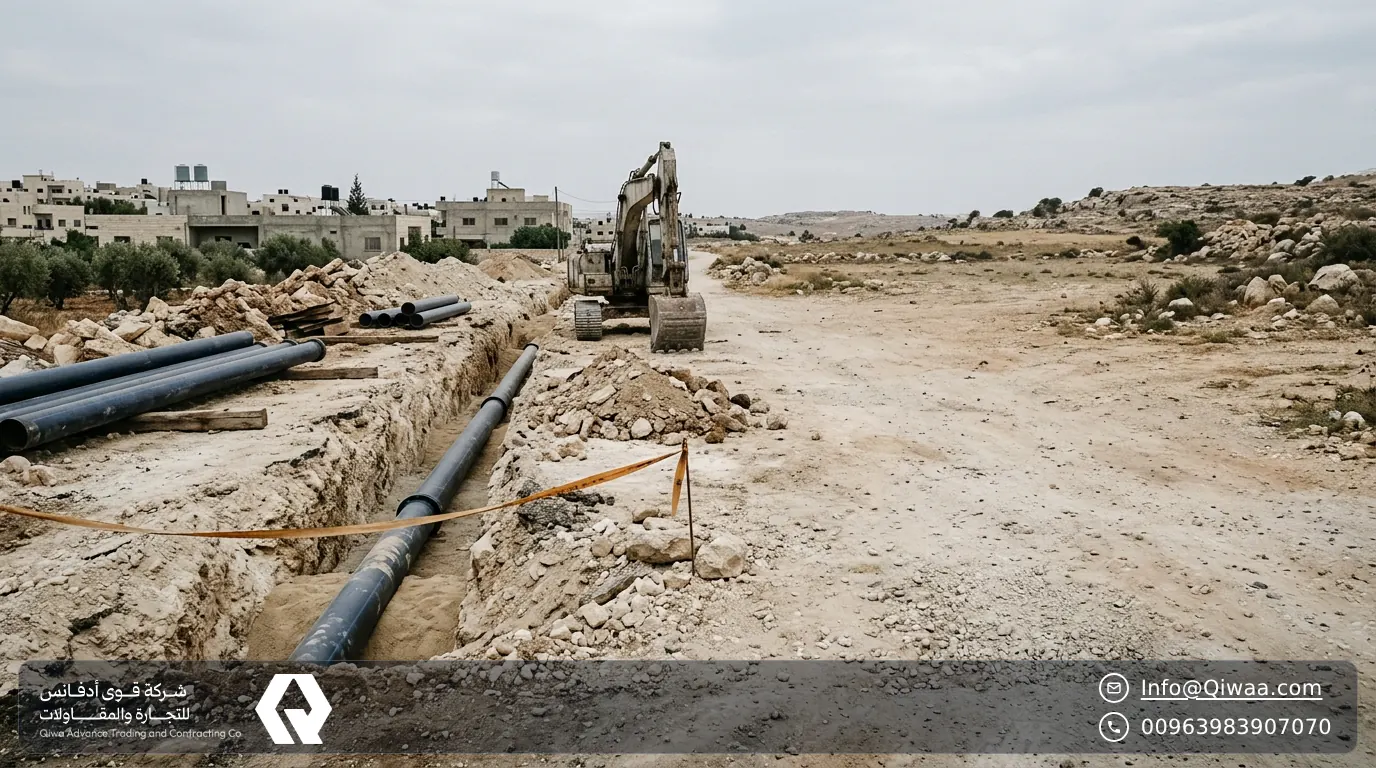


A contractor deciding where to mobilize next needs more than damage figures or investment announcements. Reconstruction activity varies across Hama, Idlib, Deir ez-Zor, and Daraa, but not every announced project offers an accessible contract.
This Syria Reconstruction by Governorate guide compares published projects, their status, and contracting routes, helping contractors identify opportunities worth pursuing and assess the costs of moving crews and equipment.
Syria Reconstruction by Governorate
Hama, Idlib, Deir ez-Zor, and Daraa have different reconstruction priorities and project pipelines. Published announcements cover water networks, public facilities, housing, and investment developments, but their funding arrangements and procurement status vary.
This comparison focuses on these four governorates. For other areas, see our guides to Damascus reconstruction and Aleppo reconstruction opportunities.
Water, Housing and School Reconstruction Projects
Recent announcements illustrate the different types of work contractors may need to evaluate:
- Hama: The Syria Without Camps initiative announced 84 projects worth approximately $7.5 million across 70 towns and villages in September 2026. These include 40 education projects and 34 water, sanitation, and well projects. A separate November investment package introduced 11 projects worth an estimated $1.5 billion, including urban development, services, and tourism.
- Idlib: The Al-Nahda housing development was launched in October 2026, with 3,000 apartments planned across 51 residential towers. The announcement establishes the development scope but does not identify construction packages open for bidding.
- Deir ez-Zor: Water infrastructure rehabilitation is among the documented activities. In July 2026, the Ministry of Energy announced that newly installed pipelines had restored drinking water to four towns. This confirms network rehabilitation activity, not the availability of additional supply contracts.
- Daraa: The Directorate of Education reported completing renovation and maintenance at approximately 200 schools by September 2026. These completed works illustrate rehabilitation activity but should not be counted as new tender opportunities.
These examples show why contractors should assess each project separately. A rural utility programme, an announced housing development, and a completed school rehabilitation project require different capabilities and approaches to procurement.
The relevant question is not which governorate announced the largest investment, but which project has a defined scope, an identifiable buyer, and a contracting route suited to the company’s capabilities.
Why Damage Figures Don’t Measure Reconstruction Demand
Damage assessments help identify reconstruction needs, but their figures are not directly comparable measures of construction demand.
In February 2026, Syria’s Ministry of Local Administration and Environment, working with UN-Habitat, reported more than 95,000 damaged homes and housing units in Daraa, including 33,400 completely destroyed.
The Aleppo assessment published in March 2026 reported housing damage across several severity categories, including 24,262 completely destroyed homes and 105,408 lightly damaged homes.
These assessments report different damage distributions, and the reviewed publications do not establish sufficient methodological consistency to treat their totals as directly comparable measures of market opportunity.
The same limitation applies across other governorates. Sector-specific assessments of schools, health facilities, or public infrastructure cannot be compared directly with comprehensive housing damage figures.
For contractors, damage severity matters more than a headline total when identifying the type of work required, but even a detailed assessment does not confirm that rehabilitation has been funded or tendered.
Before prioritizing a governorate, verify:
- Assessment scope: Which areas, assets, and damage categories were surveyed?
- Project readiness: Have technical studies, funding, and work packages been approved?
- Procurement status: Which authority or implementing organization will award the work?
Use damage assessments to understand potential needs, then compare published project scopes, procurement arrangements, and execution requirements before committing resources to a new location.
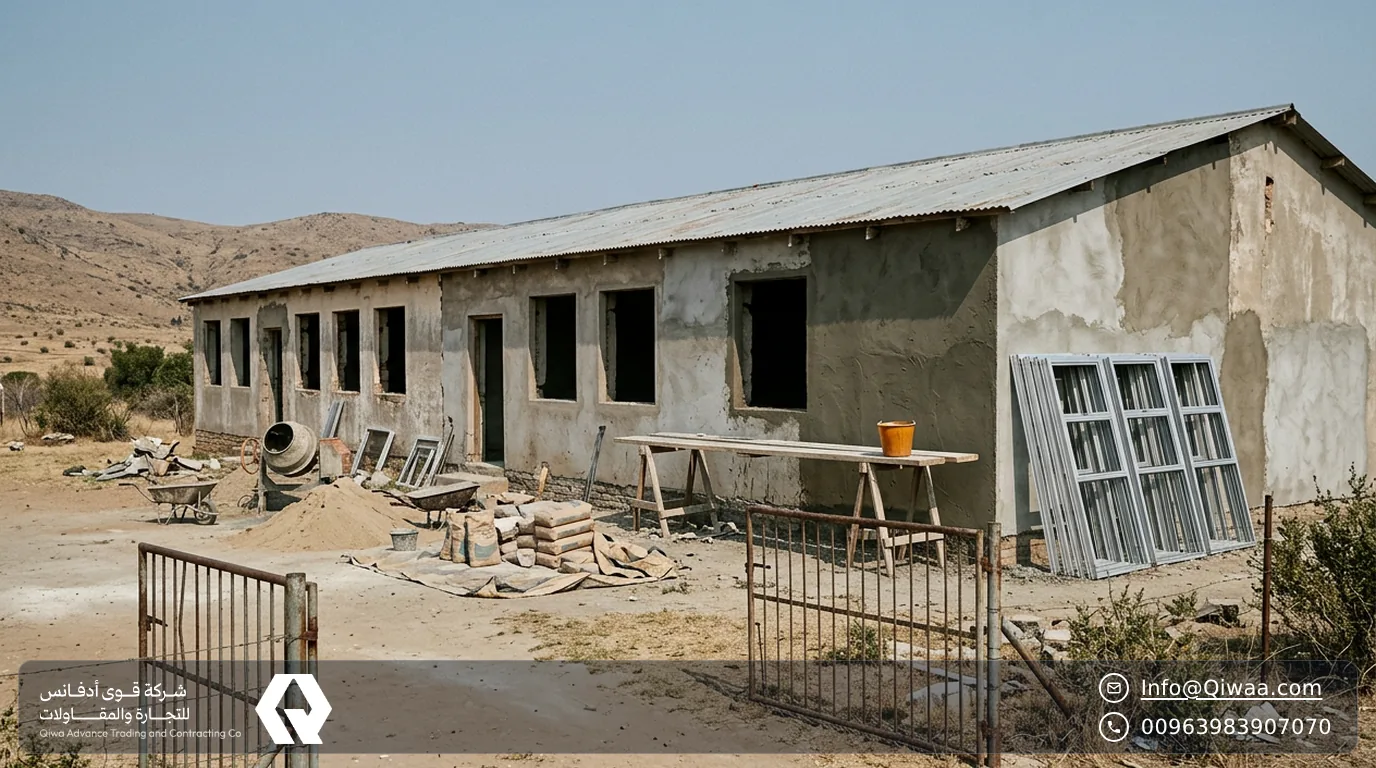
Syria Reconstruction Projects by Governorate
Reconstruction activity in Hama, Idlib, Deir ez-Zor, and Daraa varies by project type, funding, and implementation status. For contractors, the useful comparison is not which governorate announced the largest investment, but which projects match their capabilities and have an identifiable contracting route.
Reconstruction Opportunities Across Four Governorates
| Governorate | Main Project Activity | Project Status | What Contractors Should Check |
|---|---|---|---|
| Hama | Water, sanitation, schools, and major investment developments | Service projects announced; separate investment agreements signed | Individual work packages, funding, and procurement arrangements |
| Idlib | Al-Nahda residential development | Project launched; construction tendering details unconfirmed | Main contractor appointment, approved designs, and subcontracting opportunities |
| Deir ez-Zor | Rubble removal, recycling, and water network rehabilitation | Implementation underway | Remaining work packages, technical requirements, and procurement authority |
| Daraa | School and public facility rehabilitation | Documented works underway or completed | Additional funded packages, implementing agencies, and tender availability |
Project status reflects announcements reviewed through 23 November 2026. Published activity does not necessarily indicate an open tender.
The comparison highlights different contracting situations. Hama combines public-service rehabilitation with larger investment developments, Idlib has a major housing project, Deir ez-Zor has active rubble and utility works, and Daraa has documented school rehabilitation programmes.
Before prioritizing a governorate, contractors should confirm the responsible contracting entity, remaining work scope, procurement stage, and mobilization requirements.
For a broader overview, see our guide to Syria reconstruction projects.
Hama Reconstruction Projects and Funding
Hama Governorate launched the first package of the Syria Without Camps initiative on 13 September 2026. According to Levant24, the programme includes 84 projects across 70 towns and villages, with an announced value of approximately $7.5 million.
The projects cover five sectors:
- Education: 40 school rehabilitation projects.
- Sanitation: 18 projects.
- Water supply and wells: 16 projects.
- Health facilities: 6 projects.
- Roads and infrastructure: 4 projects.
Dividing the total announced value by the number of projects gives approximately $89,000 per project. However, this is a mathematical average, not a published contract value. Individual budgets and procurement packages may differ substantially.
For contractors, the distribution of works across rural communities is particularly important. Mobilizing equipment, transporting materials, and supervising several dispersed sites can affect profitability, especially where individual contracts are relatively small.
Hama’s reconstruction activity also extends beyond this service programme.
On 12 November 2026, the governorate announced 11 investment projects worth an estimated $1.5 billion, covering urban development, public services, and tourism.
One of the largest is the Al-Yasmin District development in Wadi al-Jouz, with an estimated investment exceeding $500 million. The project involves residential, commercial, and service facilities, but the published investment value does not establish the budgets or procurement arrangements for individual construction packages.
These programmes require different contracting approaches.
For rural rehabilitation works, contractors should verify the implementing authority, project locations, technical specifications, and whether works will be tendered individually or grouped into larger packages.
For investment developments, the priority is to identify the developer, appointed contractors, approved construction scope, and subcontracting or material supply procedures.
Neither programme should be classified as suitable for a particular contractor size based solely on its announced investment value.
Idlib Al-Nahda Housing Project
The Al-Nahda housing project was launched in southern Idlib in October 2026 by the Ministry of Public Works and Housing and the General Housing Establishment, in cooperation with Idlib Governorate.
The announced development includes:
- 3,000 apartments, comprising 2,000 affordable units and 1,000 investment units.
- 51 residential towers across approximately 340 dunums.
- A five-year implementation period.
- A maximum announced selling price of $600 per m² for fully finished apartments, including infrastructure and building services.
The $600 figure represents the announced apartment selling-price ceiling, not the construction cost per square meter or an approved contractor budget. Contractors should not use it to estimate tender prices or expected margins.
For construction companies and suppliers, the development may create requirements for reinforced concrete structures, formwork systems, reinforcement steel, building services, and finishing materials.
However, the actual quantities, specifications, and procurement routes depend on approved designs and the division of construction works into packages.
Before pursuing the project, contractors should establish:
- Whether a main construction contractor has been appointed.
- How structural, infrastructure, and finishing works will be procured.
- Whether the approved structural layouts support repetitive formwork systems.
- Who is responsible for material approvals and supplier selection.
The announced scale of Al-Nahda indicates potential construction demand, not confirmed contracting opportunities. Suppliers should obtain approved drawings, bills of quantities, and procurement requirements before preparing commercial offers.
Deir ez-Zor Rubble and Water Projects
Deir ez-Zor has documented reconstruction activity in rubble removal and water infrastructure rehabilitation. These activities involve different scopes, implementing organizations, and potential procurement requirements.
The Fajr al-Furat rubble removal and recycling project was launched on 10 September 2026 in the al-Rashidiya neighborhood.
The project is supervised by the governorate and implemented through cooperation between Deir ez-Zor City Council and Zoom Investment Holding Group.
According to a SANA report published on 22 September 2026, the project aims to remove and recycle approximately 8 million m³ of rubble over 18 months, from an estimated total of 10 million m³ across the city.
The same report identified a target removal capacity of 15,000 m³ per day, compared with approximately 1,800–3,000 m³ per day during the initial pilot phase.
These figures describe announced targets and reported early operations, not completed quantities or guaranteed production rates.
A separate official report published on 17 September 2026 described approximately 10 million tonnes of rubble as equivalent to 4.2 million m³. Since the published estimates differ, contractors should rely on verified site surveys and project-specific quantity schedules when calculating equipment, transport, and processing requirements.
Potential work associated with rubble removal includes demolition, loading, haulage, sorting, crushing, and handling recycled materials. However, an active project with an appointed implementing company does not necessarily mean additional subcontracting packages are available.
Contractors should verify the remaining scope, responsible procurement entity, equipment specifications, disposal arrangements, and site safety responsibilities before preparing a proposal.
Water network rehabilitation follows a separate implementation route.
In July 2026, the Ministry of Energy reported that newly installed pipelines had restored drinking water to four towns in western Deir ez-Zor. The Water and Sanitation Company, working with UNICEF, had also launched network rehabilitation and replacement activities across the governorate.
These announcements confirm infrastructure rehabilitation activity, but they do not establish quantities or technical specifications available for future contracts.
For network contractors and pipe suppliers, the next step is to identify the implementing organization and obtain the approved BOQ, pipeline drawings, pipe specifications, delivery locations, and procurement requirements.
The distinction is between work already underway and contracts still available to pursue. Both rubble clearance and water rehabilitation are active in Deir ez-Zor, but contractors must establish what work remains and who controls procurement before committing resources to bidding or supply quotations.
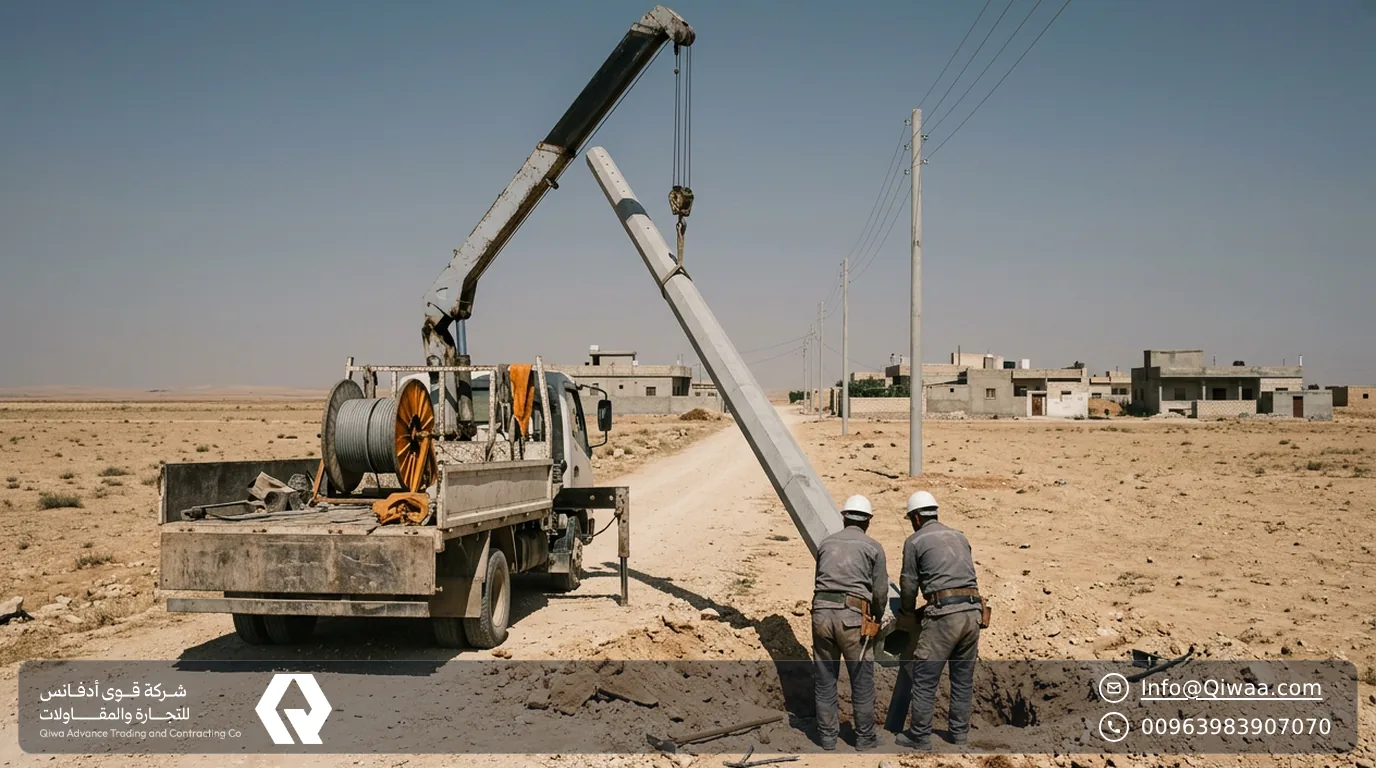
When to Move Crews for Syria Reconstruction
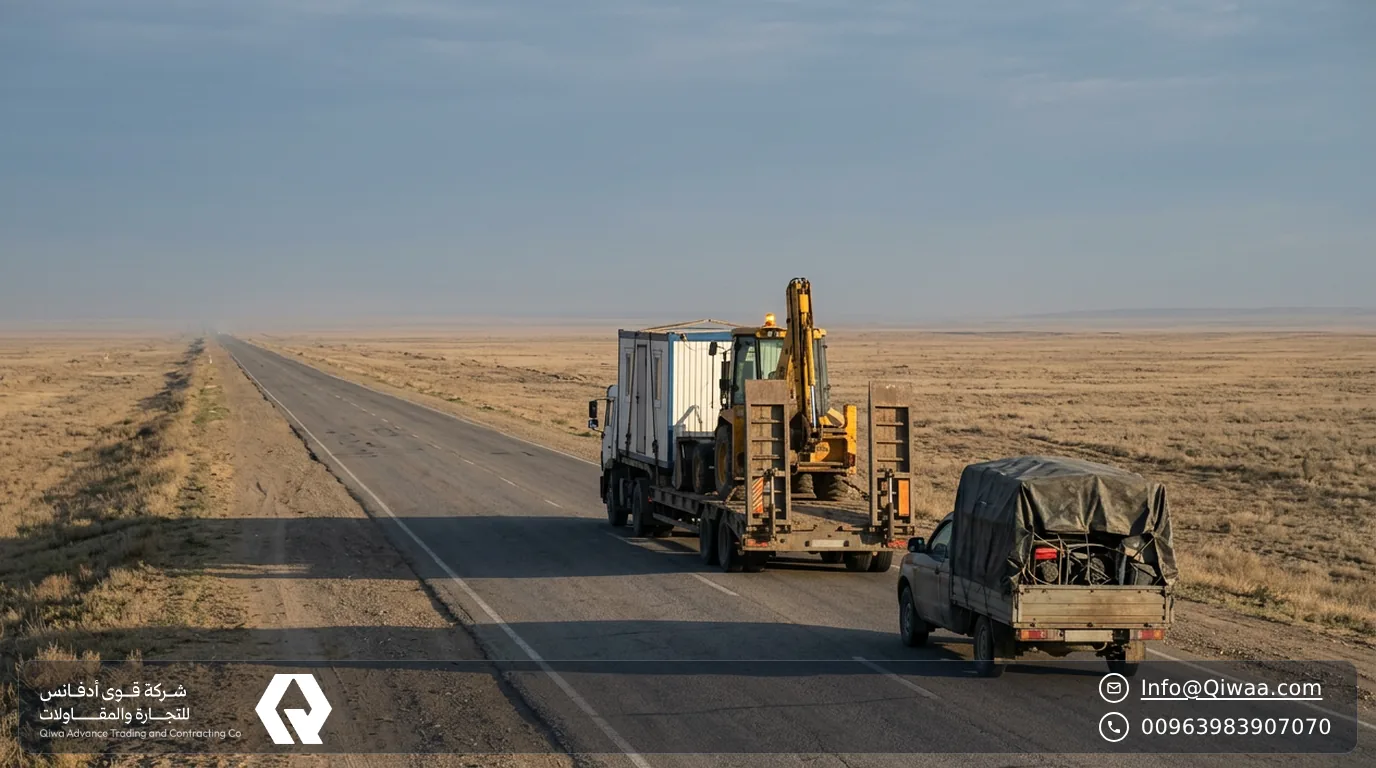
Before moving crews and equipment to another governorate, contractors need to establish whether a project offers a realistic contracting opportunity and whether its expected return justifies mobilization costs.
Three decisions matter: confirming the contracting authority and procurement route, calculating profitability after relocation, and verifying that the site and execution schedule support the proposed work.
Where to Find Reconstruction Tenders in Syria
The organization announcing a reconstruction project may differ from the entity responsible for funding, procurement, and contract award. Contractors should identify the actual contracting authority before preparing a bid.
Procurement routes vary by project:
- Governorates and public utilities: Follow announcements from the relevant governorate, ministry, or public utility. For water infrastructure in Deir ez-Zor, contractors should identify whether the Water and Sanitation Company or another implementing partner controls procurement for the specific work package.
- National reconstruction initiatives: Projects under Syria Without Camps are coordinated through a national committee established by Decree No. 59 of 2026. However, the initiative’s coordination structure does not establish a single tendering authority. Contractors must confirm which implementing organization issues each procurement notice.
- International agencies and funded programmes: Search UNGM procurement opportunities for UN tenders. Other organizations may use separate procedures. For example, the Syria Recovery Trust Fund publishes procurement information and documentation through its own platform.
Before pricing, confirm four details: the contracting entity, approved work scope, funding and payment arrangements, and procurement status.
An announcement without a defined procurement route belongs on the company’s project watchlist, not in its active bidding pipeline.
Calculating Mobilization Costs in Hama
Contract value alone does not determine whether relocating crews and equipment is commercially viable.
In September 2026, Hama announced 84 reconstruction and rehabilitation projects worth approximately $7.5 million. Dividing the announced package value by the number of projects gives approximately $89,000 per project.
This is a mathematical average, not a published contract value. The actual budgets, package sizes, and procurement arrangements may differ.
Consider a hypothetical $89,000 construction contract in rural Hama. The following figures illustrate how mobilization affects profitability; they are not actual project costs or market quotations.
| Cost component | Illustrative amount |
|---|---|
| Contract price | $89,000 |
| Direct execution costs, including labor, materials, and site equipment | $65,000 |
| Crew and equipment mobilization and demobilization | $9,000 |
| Accommodation and temporary site overhead | $5,000 |
| Financing costs and risk contingency | $4,000 |
| Total estimated costs | $83,000 |
| Estimated profit | $6,000 |
| Estimated profit margin | 6.7% |
The estimated margin is calculated as:
Profit margin (%) = (Contract price − Total estimated costs) ÷ Contract price × 100
In this example, the contractor retains approximately 6.7% of the contract value before any costs or taxes not included in the estimate.
Whether that margin is acceptable depends on the company’s required return, cash-flow capacity, payment terms, and exposure to delays or cost increases.
For projects spread across multiple locations, contractors should also examine whether equipment and supervision costs can be shared. Securing several compatible contracts within the same area may improve mobilization economics, but only when their schedules and contractual commitments support coordinated execution.
Before making a bid-or-no-bid decision, contractors should obtain current transport and equipment quotations, confirm site access, and test how payment delays or additional mobilization costs would affect the expected margin.
The objective is not simply to win a reconstruction contract, but to ensure that the work remains commercially viable after the full cost of operating in another governorate is considered.
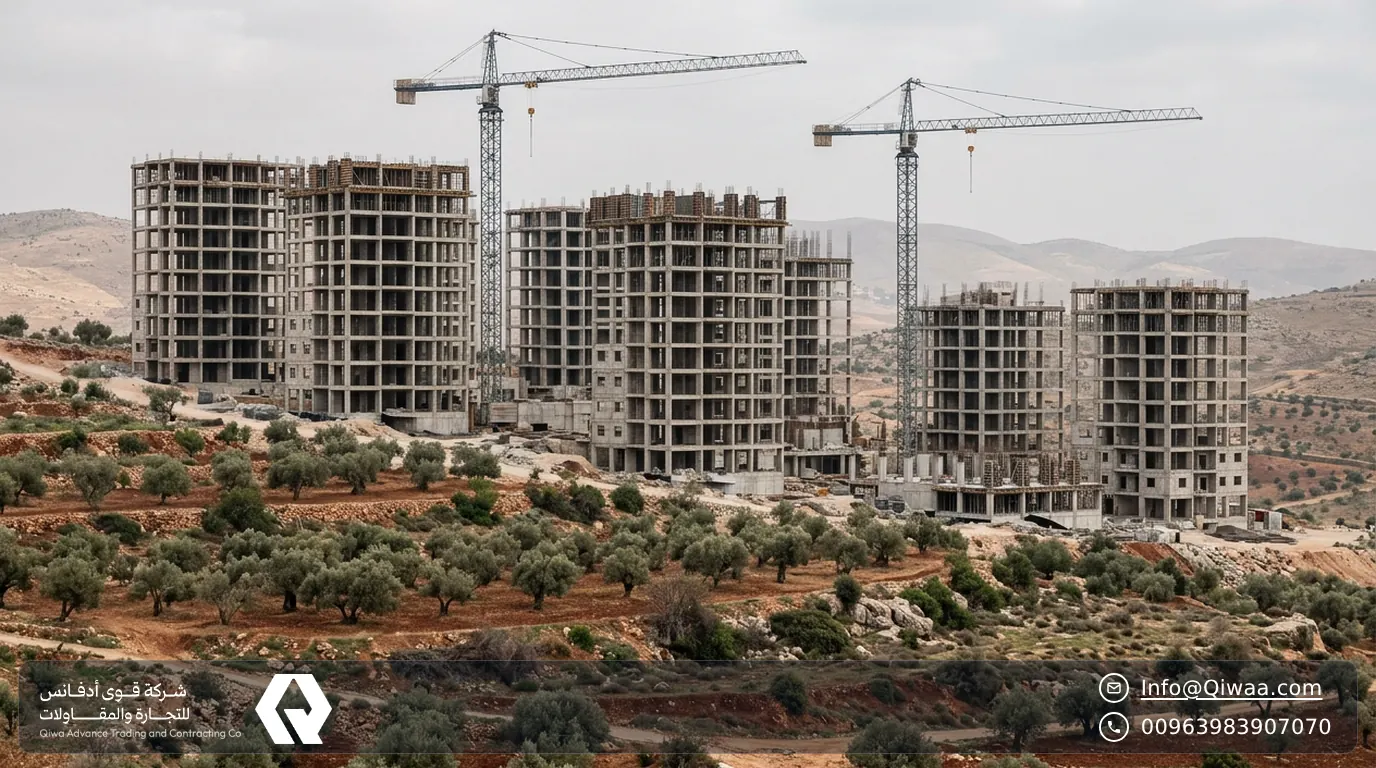
Syria Reconstruction Mobilization Checklist
Before relocating crews and equipment for a Syria reconstruction project, contractors should verify that the site, resources, and contractual conditions support execution. A commercially attractive contract can become unprofitable if access, utilities, materials, or payments are delayed.
Use these 14 checks before committing to mobilization.
- Contracting authority: Confirm which organization issues the contract, approves work, and authorizes payments. Verify that the project has a defined procurement route and an approved scope of work.
- Site accessibility: Check road conditions, bridge load limits, vehicle restrictions, and unloading access. Confirm that trucks and construction equipment can reach the site without unexpected transport arrangements.
- Explosive ordnance safety: Obtain documented information about explosive hazard assessments and any required specialist clearance before site access or earthworks. Confirm who is responsible for arranging clearance and authorizing safe entry. The UNDP Debris and Explosive Ordnance Guide provides relevant risk-management guidance.
- Local material availability: Identify which specified materials are available near the project and which require delivery from another governorate. Verify supplier capacity, compliance certificates, and replacement lead times.
- Mobilization arrangements: Obtain current quotations for crew transport, equipment relocation, accommodation, and demobilization. Confirm whether these costs are included in the contract price or reimbursable under its terms.
- Contract currency: Verify the pricing and payment currencies, applicable exchange-rate provisions, and responsibility for currency fluctuations. Ensure supplier quotations remain compatible with the contract’s payment arrangements.
- Approved scope and quantities: Obtain the latest BOQ, drawings, and technical specifications. Damage assessments may indicate reconstruction needs, but they cannot replace project-specific quantities when estimating materials, equipment, and labor.
- Supervision and acceptance: Identify the engineer or authorized representative responsible for inspections, approving variations, certifying completed work, and accepting handover. Confirm the required testing and documentation.
- Payment schedule: Review advance payments, interim payment certificates, retention, and payment deadlines. Assess whether available working capital can cover labor, materials, and equipment costs between payments.
- Site utilities: Verify the availability and reliability of water, electricity, and communications. Include temporary generators, water storage, or alternative services in the execution plan where necessary.
- Material storage: Confirm secure storage space, unloading arrangements, protection requirements, and responsibility for theft or damage. For remote sites, check whether deliveries must be scheduled around limited storage capacity.
- Local workforce: Assess the availability, qualifications, and employment costs of local labor. Determine which specialist crews must relocate and whether accommodation or transport arrangements are required.
- Land and site handover: Verify the contractor’s legal right of access, approved site boundaries, and any unresolved ownership or compensation issues. Obtain confirmation of when the site will be handed over for execution.
- Execution and handover schedule: Check commencement conditions, seasonal weather constraints, material lead times, and dependencies on other contractors. Review how the contract handles delays, extensions of time, and changes to the completion date.
The final decision should depend on verified site readiness and contractual obligations, not the announced project value alone.
If access, safety clearance, payment arrangements, or approved quantities remain uncertain, contractors should request written clarification before mobilizing. The UNOPS Supplier Resource Centre provides additional guidance on reviewing solicitation documents and contract conditions for internationally funded projects.
Also read: Syria Infrastructure Sector 2026: Market Size, Competitive Gap, & Investment Opportunities
Qiwaa Advance Supply Solutions for Syria Reconstruction
At Qiwaa Advance, we support contractors working across Syria’s governorates with infrastructure materials, water network solutions, and concrete formwork systems. Our role is to help match approved project specifications with suitable products, supply arrangements, and delivery requirements.
Through Qiwaa Trading and our authorized manufacturing partnerships, we support:
- Water and wastewater networks: As an authorized agent of Saudi Arabia’s Amiantit Group, we supply GRP pipe solutions for suitable water and wastewater applications. We also review HDPE and other piping requirements where they fall within the available project supply scope.
- Residential and structural construction: Through our authorized partnership with Variant Factory LLC, we provide access to tunnel formwork and other concrete formwork systems. These may suit repetitive housing projects where approved structural designs allow efficient system reuse.
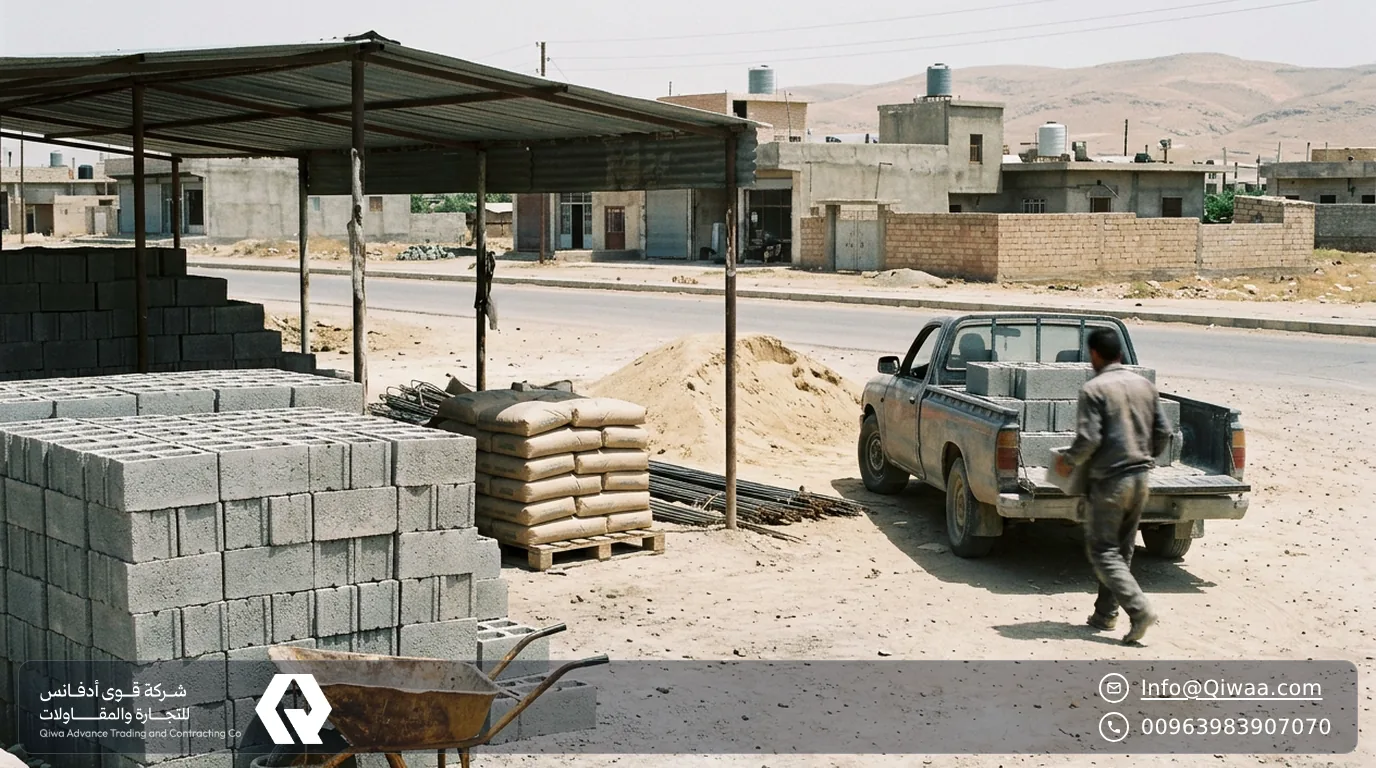
- Construction material sourcing: We coordinate building and infrastructure material requirements based on approved BOQs, technical specifications, quantities, and delivery schedules.
The projects discussed in this article illustrate different potential requirements. Rural water rehabilitation may involve distribution pipes and fittings, while multi-storey housing may require specialized formwork. However, the appropriate products and supply arrangements must be established from each project’s approved specifications.
Centralized vs Local Material Sourcing
For contractors operating across multiple governorates, the choice between a centralized supplier and local purchasing affects more than the initial material price.
| Criterion | Centralized supply | Local purchasing |
|---|---|---|
| Specification compliance | Can simplify documentation and technical coordination across multiple deliveries | Requires verification of each supplier’s products, certificates, and approved specifications |
| Material availability | May provide access to specialized or made-to-order products, subject to confirmed lead times | Depends on verified local stock and the ability to obtain compliant quantities |
| Transport costs | May involve longer-distance haulage and additional handling | May reduce transport distances when suitable materials are available nearby |
| Delivery flexibility | Scheduled deliveries can be coordinated with the project’s execution plan | Local stock may support urgent replacements, subject to actual availability |
| Supply risk | Concentrating purchases can increase dependence on one supplier | Multiple suppliers can diversify risk but require additional quality and delivery coordination |
The World Bank’s procurement guidance identifies both the coordination benefits and supplier-dependence risks associated with consolidated purchasing.
A combined sourcing strategy may be appropriate when projects require both specialized materials and readily available local products.
For example, contractors may source approved pipe systems or specialized formwork through a manufacturing partner while purchasing suitable standard materials locally. The decision should depend on technical compliance, confirmed stock, delivery reliability, and total cost to the site.
Before selecting suppliers, compare quotations using the same specifications, quantities, delivery point, payment terms, and documentation requirements. A lower unit price does not necessarily mean a lower delivered project cost.
For additional technical guidance, see our GRP fiberglass pipes guide.
How Qiwaa Advance Supports Contractors Across Syria
We begin with the project’s approved scope, location, and delivery requirements to determine which materials or construction systems may be suitable.
- For water and wastewater networks, contractors can provide the BOQ, pipeline drawings, diameters, pressure and stiffness requirements, applicable standards, and delivery schedule. Our team can review the specifications and coordinate suitable supply options through Qiwaa Trading and our manufacturing partners.
- For residential and structural projects, we review typical-floor drawings, structural layouts, expected repetition, and construction schedules to assess whether Variant formwork systems are appropriate.
- For multi-location projects, we also consider delivery sequencing, transport requirements, and the availability of compliant materials near each site. This helps contractors evaluate whether centralized supply, local purchasing, or a combination better supports their execution plan.
At Qiwaa Advance, we base our technical and commercial proposals on the project’s actual requirements rather than assuming that the same materials or construction systems suit every governorate.
Preparing a reconstruction project in Syria? Send your BOQ or structural drawings, project location, technical specifications, and required delivery date through WhatsApp. We’ll review your requirements and discuss suitable supply or construction system options.
Also read: Tunnel Formwork System in Syria for Repetitive Building Projects
FAQs About Syria Reconstruction by Governorate
Which Syrian governorate offers the best reconstruction opportunities?
There is no single best governorate. Hama has announced utility and investment projects, Idlib has major housing development plans, Deir ez-Zor has rubble and water infrastructure works, and Daraa has documented school rehabilitation. Prioritize projects that match your expertise and have a verifiable procurement route.
Where can contractors find reconstruction tenders in Syria?
Check the relevant governorate, ministry, or implementing organization’s official notices. Internationally funded opportunities may appear on UNGM or the Syria Recovery Trust Fund procurement portal. Confirm the submission deadline, eligibility requirements, and contracting authority before bidding.
Can contractors bid for projects outside their home governorate?
Eligibility depends on the specific tender and applicable registration, licensing, and qualification requirements. Before bidding, verify whether additional approvals, local representation, or site-access permits are required.
Can suppliers join reconstruction projects already underway?
Yes, if the responsible contractor or implementing organization is still procuring materials or subcontracted works. Contact the authorized procurement team to confirm remaining packages, approved specifications, supplier qualification requirements, and quotation procedures.
Does registering on UNGM guarantee access to reconstruction contracts?
No. UNGM registration is free, but it does not guarantee eligibility or contract awards. Each tender has its own requirements, and government-funded or privately developed projects may use separate procurement systems.
Sources
- Hama governorate launches the first package of Syria Without Camps projects in 70 towns and villages, SANA, 13 September 2026
- A package of projects worth $7.5 million in Hama, Enab Baladi, 15 September 2026
- Idlib launches the Al-Nahda housing project with 3,000 flats, SANA, 4 October 2026
- Report on rubble and the Fajr al-Furat project in Deir ez-Zor, SANA, 29 September 2026
- Work starts on drinking water networks in 17 communities in Deir ez-Zor, SANA, 8 October 2026
- Report counts damaged facilities in Daraa, Enab Baladi, 26 February 2026
- Report sets damage rates in Aleppo: 58% of housing damaged, Enab Baladi, 28 March 2026
- Local Administration issues damage assessment results for bakeries, schools and places of worship in Hama, SANA, 15 June 2026
- Government assessment records damage at more than 1,400 service facilities in Idlib (in Arabic), Syria TV, 13 August 2026