

A low sand or gravel price can quickly lose its advantage when transport costs, truckload capacity, and material specifications are taken into account. For contractors comparing sand and gravel prices in Syria in 2026, the real question is not simply how much a cubic meter costs, but how much compliant material will actually cost when delivered to the project site.
At Qiwaa Advance, we help construction projects connect material requirements with practical supply arrangements. This guide covers sand and gravel prices per cubic meter and truckload, material types, transport costs, quantity estimation, and delivery inspection criteria to help you evaluate quotations and plan procurement more accurately.
Sand and gravel prices in Syria 2026 per m³ and truckload
Sand and gravel prices in Syria vary by material specifications, source, order quantity, and delivery location. For accurate project budgeting, obtain dated supplier quotations that distinguish the material price at source from the total delivered cost.
Sand price per cubic meter in Syria
The sand price per cubic meter in Syria depends on the material’s grading, cleanliness, source, and intended application. Sand specified for concrete production may have different requirements and costs from sand used for plastering or backfilling.
When requesting quotations, specify the required sand type, quantity in m³, delivery location, and whether transport is included. Compare suppliers offering material that meets the same approved specifications.
Gravel price per cubic meter in Syria
The gravel price per cubic meter in Syria varies according to aggregate size, grading, source, and delivery conditions.
Before comparing quotations, confirm the specified particle size and grading, required quantity, and whether the quoted rate covers material at source or delivery to site. Different aggregate grades should not be compared on price alone.
Sand and gravel truckload cost
The cost of a sand or gravel truckload in Syria depends on its actual volume, haulage distance, and delivery terms. A cheaper trip does not necessarily mean a lower cost per cubic meter if the truck carries less material.
For a fair comparison, confirm:
- Load volume: The agreed quantity in m³ per truckload and how it will be measured.
- Transport charges: Whether haulage is included or quoted separately.
- Delivery terms: The unloading location and any additional handling charges.
Compare quotations using the total delivered cost per m³, rather than the price per trip alone.
Need a project-specific sand and gravel supply quote in Syria? Through Qiwaa Trading, you can discuss sourcing and delivery arrangements based on your project’s requirements. Contact Qiwaa Advance with your material specifications, required quantities, and delivery location to request a quotation.
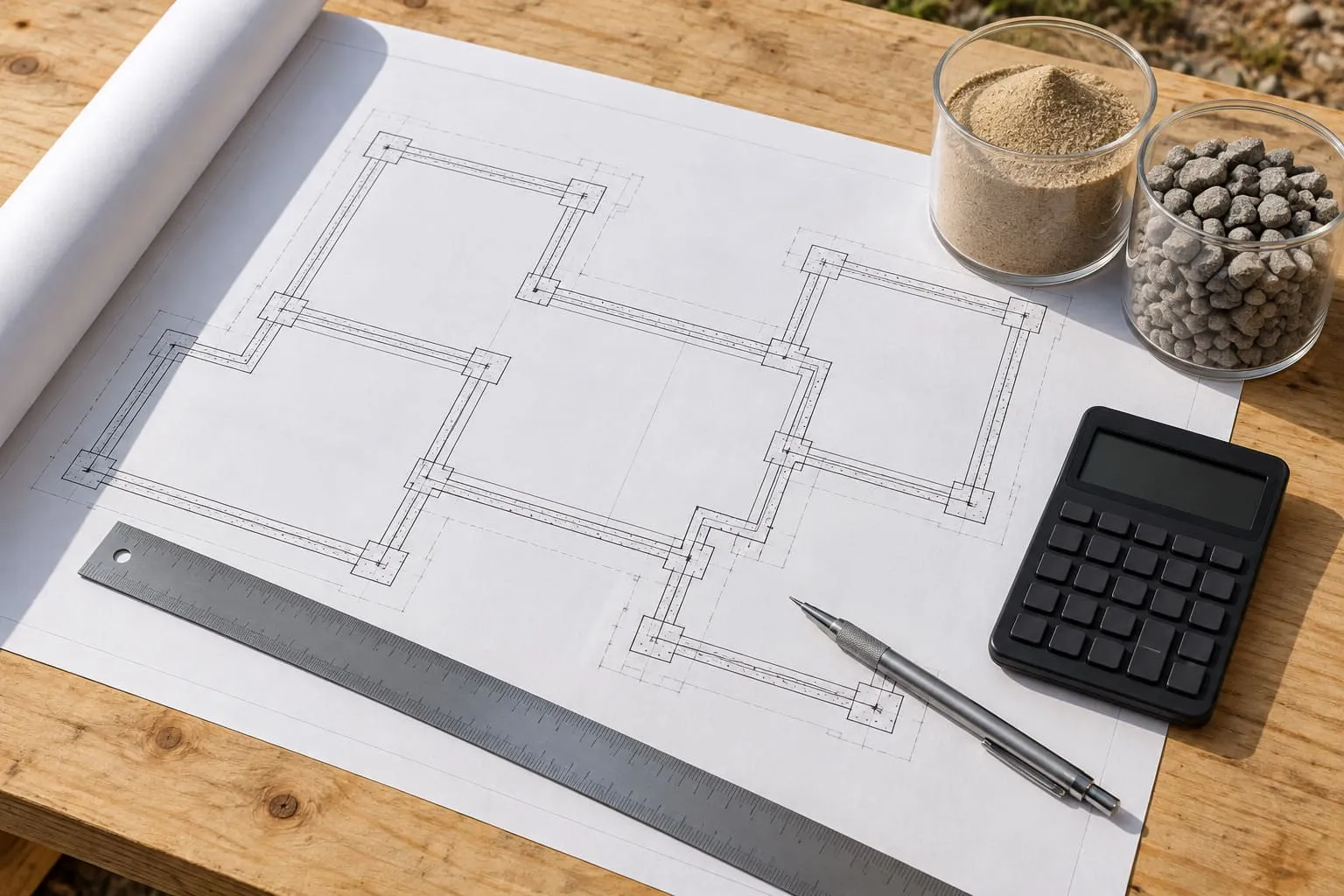
How to compare sand and gravel supplier quotes
When comparing sand and gravel prices in Syria, use the delivered cost per cubic meter as a common benchmark, whether the supplier quotes by volume or truckload.
- Per cubic meter: Provides a direct basis for comparing material costs against the project’s required quantities.
- Per truckload: Requires confirmation of the actual load volume, measurement method, and whether transport and unloading are included.
To compare quotations on equal terms:
Delivered cost per m³ = Total load cost, including applicable delivery charges ÷ Verified delivered volume (m³)
Apply this comparison only to materials meeting the same approved specifications and delivered to the same location.
Types of sand and gravel used in Syrian construction projects
For construction projects, sand and gravel selection should be based on the intended application, particle grading, and approved material specifications—not trade names alone.
Types of sand
- Washed sand: Processed to reduce unwanted fines and impurities. Suitability for concrete, mortar, or other applications depends on the specified grading and test results.
- Building sand: A general commercial term for sand used in construction. Specify the intended application, grading, and permissible impurities before ordering.
Types of gravel
- Fine gravel: Commonly used to describe smaller gravel sizes. Specify the required particle-size range and grading rather than relying on this general description.
- Coarse gravel: Used in concrete and other construction applications where larger aggregate sizes are specified. Selection depends on the approved mix design and project requirements.
For concrete applications, ASTM C33/C33M provides requirements for fine and coarse aggregate grading and quality. Suppliers should provide material specifications and relevant test results where required by the project.
Read also: Concrete Block Price in Syria 2026: How to Read Block, Sand, Gravel and Ready-Mix Concrete Prices
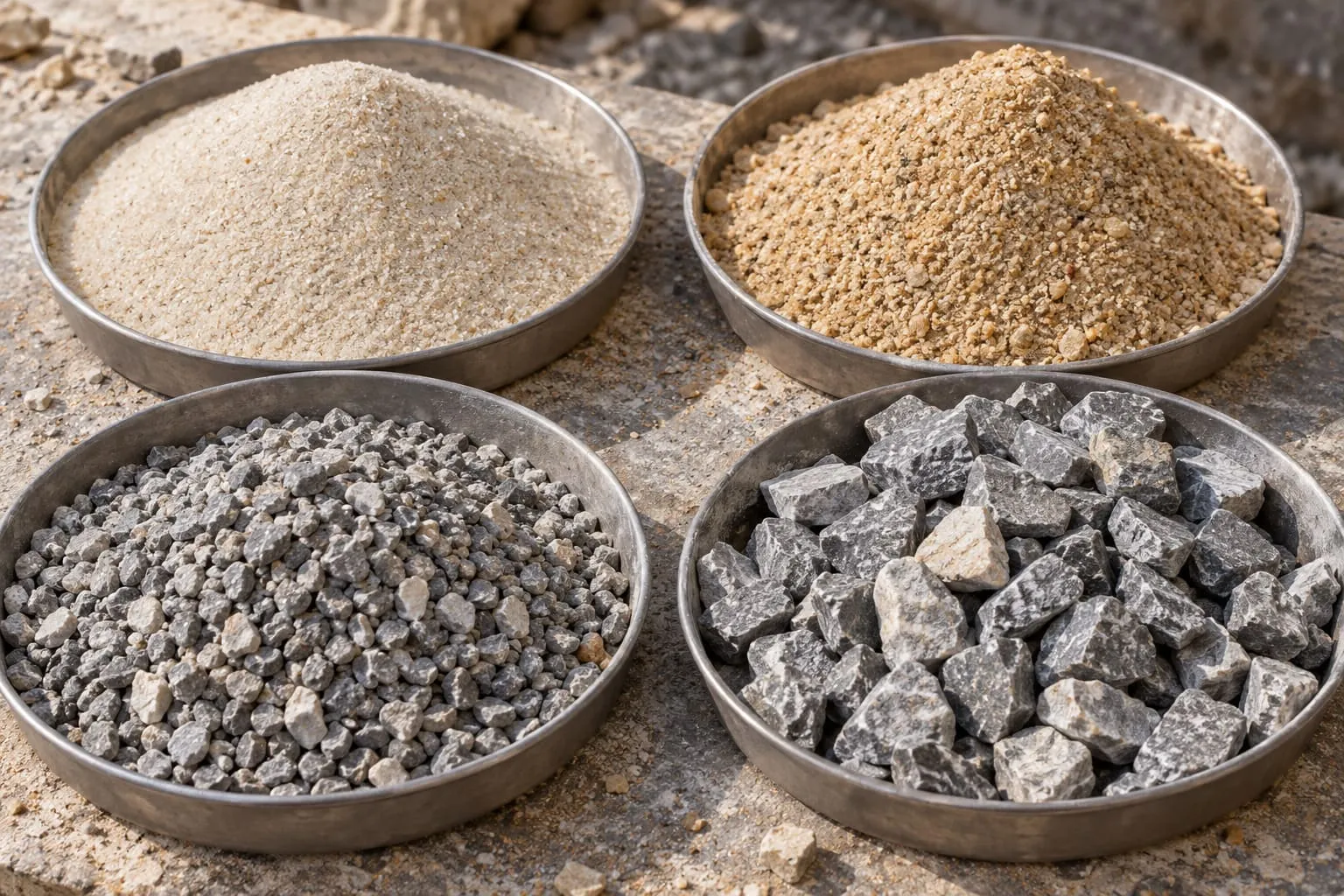
What drives the delivered cost of sand and gravel?
The lowest price at the source does not always translate into the lowest sand and gravel delivery cost. For construction projects in Syria, three factors have the greatest impact on the final supply quotation:
- Material source and specifications: Quarry location affects haulage costs, while aggregate grading, cleanliness, and processing requirements influence the material price. Compare only products that meet the same approved specifications.
- Transport distance and truck capacity: Haulage rates depend on the route, actual load volume, and number of trips. A lower price per trip may result in higher total costs if more deliveries are required.
- Site access and delivery schedule: Restricted access, unloading requirements, and phased deliveries may introduce additional charges that should be identified before placing an order.
To avoid unexpected costs, request quotations that clearly separate material, transport, and unloading charges, unless an all-inclusive delivered price is provided.
How to calculate sand and gravel quantities and supply costs
Accurate sand and gravel cost estimation requires aligning project quantities with the supplier’s measurement and delivery terms.
- Confirm material quantities: Use the approved BOQ and drawings. For concrete and mortar, obtain aggregate quantities from the approved mix design. For compacted fill, account for the difference between the required compacted volume and the loose volume delivered by truck.
- Account for material losses: Include a justified allowance for handling and placement losses based on project conditions, rather than applying a fixed percentage.
- Determine truckloads: Divide the required delivery volume by the verified volume per load, rounding up to complete trips and respecting vehicle weight limits.
- Calculate the delivered cost: Apply supplier prices to the required quantities and add separately quoted transport, unloading, and handling charges.
Where materials and transport are priced separately by volume:
Total supply cost = (Material quantity × Price per m³) + (Number of trips × Haulage rate) + Additional delivery charges
Do not add transport or unloading costs again if they are already included in the quoted price.
For procurement decisions, compare the resulting delivered cost per m³ against quotations for aggregates meeting the same specifications and measurement conditions.
Read also: Building Materials in Syria 2026: How to Choose Materials and Read Prices by City
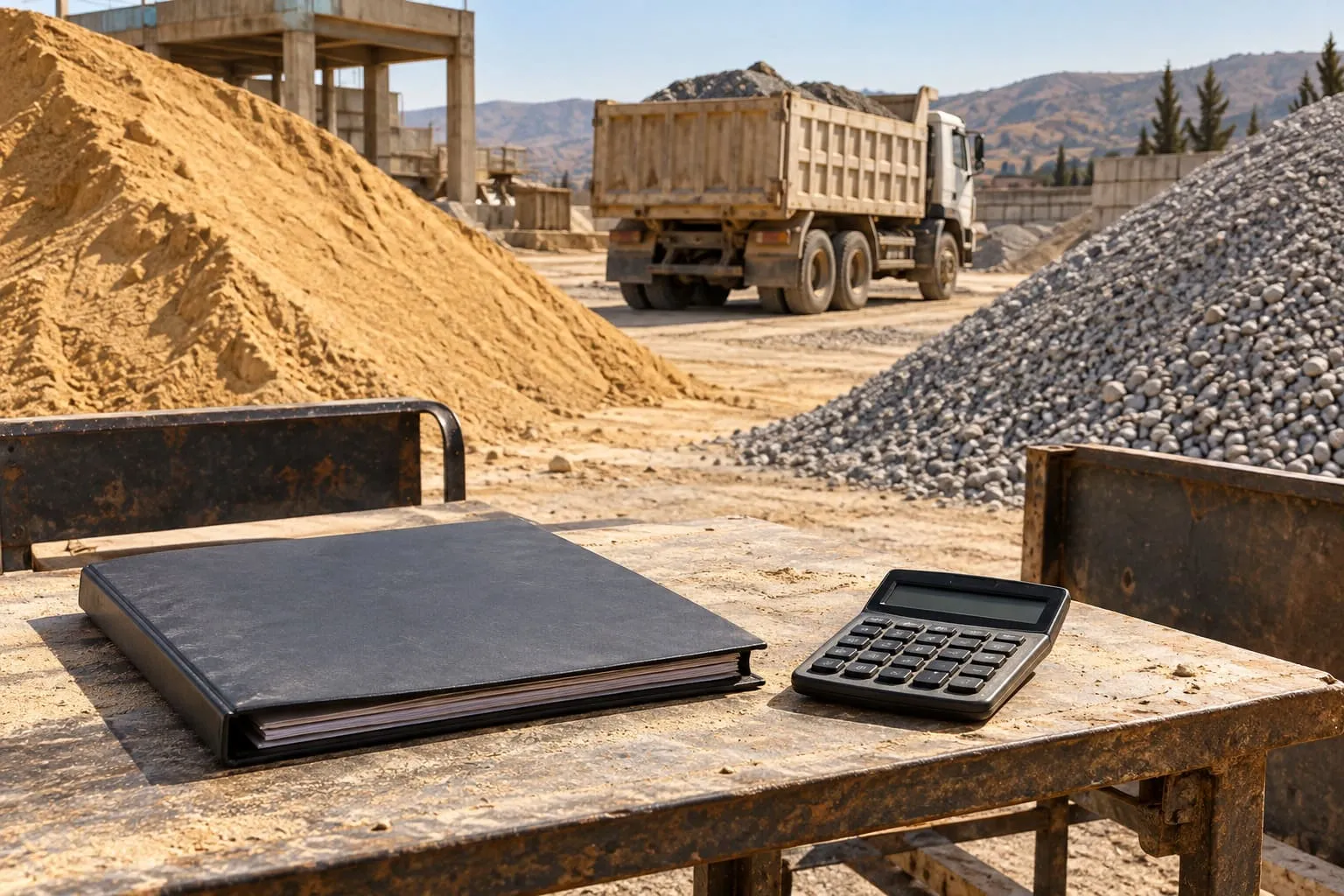
How to check sand and gravel deliveries before acceptance
Before accepting a sand and gravel delivery, the site team should verify that the supplied material matches the purchase order in both quantity and specifications.
Focus on four checks:
- Material identification: Match the delivered sand or gravel type, source, and specified aggregate grade against the purchase order.
- Visual inspection: Check for clay lumps, debris, contamination, segregation, or noticeable differences in aggregate size.
- Delivered quantity: Verify the actual volume or weight using the agreed measurement method, rather than relying on nominal truck capacity.
- Quality documentation: Review required test reports and arrange representative sampling where specified, particularly for grading, fines content, and moisture.
Visual inspection alone cannot establish full technical compliance. If discrepancies are identified, hold the affected material for assessment by the authorized site engineer or quality-control team before use.
Record accepted quantities, delivery details, and any nonconformities to support supplier reconciliation and future deliveries.
Sand and gravel supply in Syria with Qiwaa Advance
At Qiwaa Advance, we support construction and infrastructure projects through material sourcing and supply-chain coordination.
Through Qiwaa Trading, contractors and procurement teams can discuss bulk sand and gravel supply in Syria based on:
- Project specifications: Required material type, grading, and quality documentation.
- Supply quantities: BOQ requirements and planned delivery volumes.
- Delivery arrangements: Site location, transport requirements, and phased delivery schedules.
Our team can review your requirements and discuss available sourcing options and quotation terms according to project needs and supplier availability.
Need sand and gravel delivered to your project in Syria? Contact Qiwaa Advance with your BOQ, material specifications, required quantities, and site location to request a project-specific supply quotation.
Read also: Importing Building Materials to Syria and Key Customs Procedures in 2026
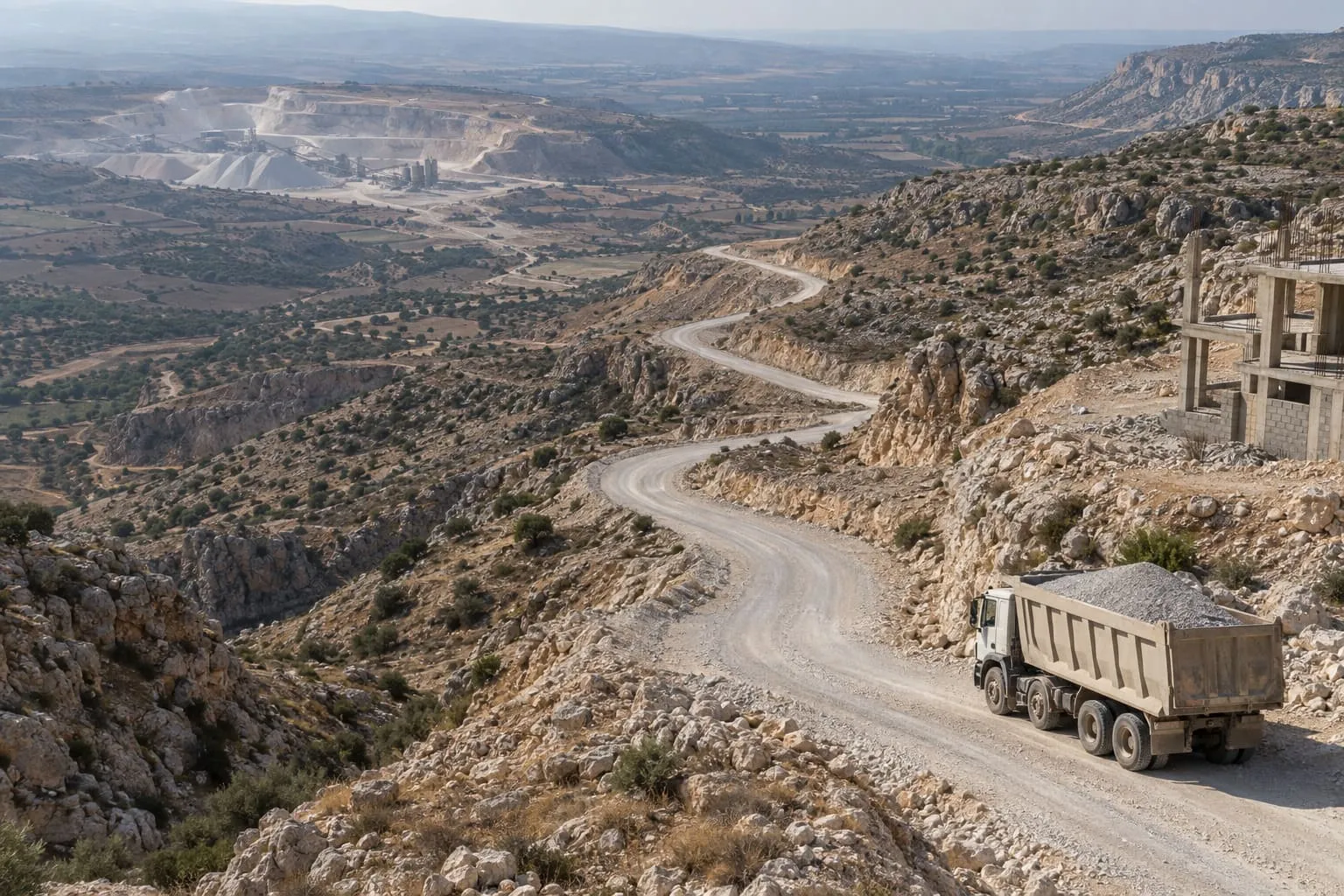
FAQs about sand and gravel prices in Syria
How can I get accurate sand and gravel prices in Syria?
Request dated supplier quotations specifying the aggregate type, grading, quantity, and delivery location. Compare the total delivered cost per m³ for materials meeting the same specifications.
Does the price of a sand or gravel truckload include transport?
Not always. Some quotations cover materials at source, while others include transport and unloading. Confirm the delivery terms before comparing prices.
How can I compare prices for different truckload sizes?
Divide each truckload’s total delivered price by its verified volume in m³. Use the same material specifications and delivery location for a fair comparison.
Does moisture affect sand quantity measurements?
Yes. Moisture affects sand weight and can increase its loose bulk volume. Use the agreed measurement method and account for moisture when required by the project specifications.
When is laboratory testing required for sand and gravel?
When specified by the project or needed to verify properties that visual inspection cannot establish, such as particle grading, fines content, and other required quality characteristics.