


Funding announcements worth billions do not tell Syrian contractors which projects they can bid for. An approved grant, a conference pledge, and an investment agreement can follow very different procurement routes.
To assess donor-funded projects in Syria, contractors need to trace funding to a defined project, its implementing agency, and an actual procurement notice. This guide compares funding sources, shows where to find tenders, and explains how to prepare before bidding.
When Syria Funding Leads to Tenders
Not every funding announcement creates an immediate contracting opportunity. Even an approved grant may cover equipment, consulting, institutional support, or construction works that have not yet been tendered.
On 18 November 2026, the World Bank confirmed $491 million in IDA grants across five approved projects in Syria. However, the existence of approved financing does not establish that specific construction packages are open for bidding.
Contractors must distinguish the funding commitment from the procurement plan, the implementing organization, and the actual tender notice.
Grants, Pledges and Investment Deals
These funding arrangements differ in what they reveal about potential construction contracts.
| Funding Type | Example | What It Means for Contractors | Where to Track Opportunities |
|---|---|---|---|
| Approved project grant | World Bank IDA grants totaling $491 million, including the $150 million water and sanitation project (P515199) | Financing is approved, but individual procurement packages and tender status must be verified | World Bank project pages, procurement plans, and implementing agency notices |
| Donor pledge | EU commitment of nearly €2.5 billion for 2025–2026, covering Syria and regional support | A funding commitment, not an individual construction tender. Opportunities depend on funded programmes and delivery arrangements | European Commission announcements and the procurement channels of implementing organizations |
| Investment agreement | Saudi-Syrian investment agreements announced in July 2025, totaling nearly SAR 24 billion by the conclusion of the investment forum | Investment projects may generate construction and supply contracts, but they do not automatically follow UN or World Bank procurement rules | Project developers, investors, and relevant contracting authorities |
These figures represent different financing arrangements and should not be combined into a single total of construction funding available for bidding.
For contractors, an actionable opportunity requires a defined work package, an identifiable contracting entity, and published procurement instructions. An approved project without an issued tender may be worth monitoring, but it should not be treated as an open contract.
Why Contractors Miss Donor Tenders in Syria
Donor-funded tenders are published through different channels, including government implementing agencies, UNGM, and individual organizations’ procurement systems. Finding a funding announcement does not necessarily reveal where or how to submit a bid.
Preparation time can also be shorter than the published bidding period suggests.
For example, UNICEF’s Rayash Water Pumping Station rehabilitation tender, reference 9202863, was published on 10 March 2026 with a submission deadline of 4 April.
However, the notice also specified:
- 15 March: Optional site visit.
- 17 March: Deadline for submitting clarification questions.
- 4 April: Final proposal submission deadline.
- 120 days: Minimum required bid validity after the submission deadline.
- Separate submissions: Technical and financial proposals had to be sent in separate emails, following the specified instructions.
Although contractors had approximately 25 calendar days before the final deadline, the site visit and clarification periods occurred much earlier.
This illustrates why waiting until a tender is published can leave insufficient time to inspect the site, consult suppliers, and resolve technical questions.
Contractors should prepare company registration documents, relevant project references, financial information, and technical supplier documentation in advance. Prequalification, bid security, and environmental and social requirements must then be checked against each specific solicitation rather than assumed to apply to every donor-funded project.
The practical approach is to monitor approved projects before tender publication, identify their procurement channels, and prepare qualification documents early. This allows contractors to concentrate on technical and commercial requirements when a relevant notice is issued.
Read more: Syria Infrastructure Sector 2026: Market Size, Competitive Gap, & Investment Opportunities
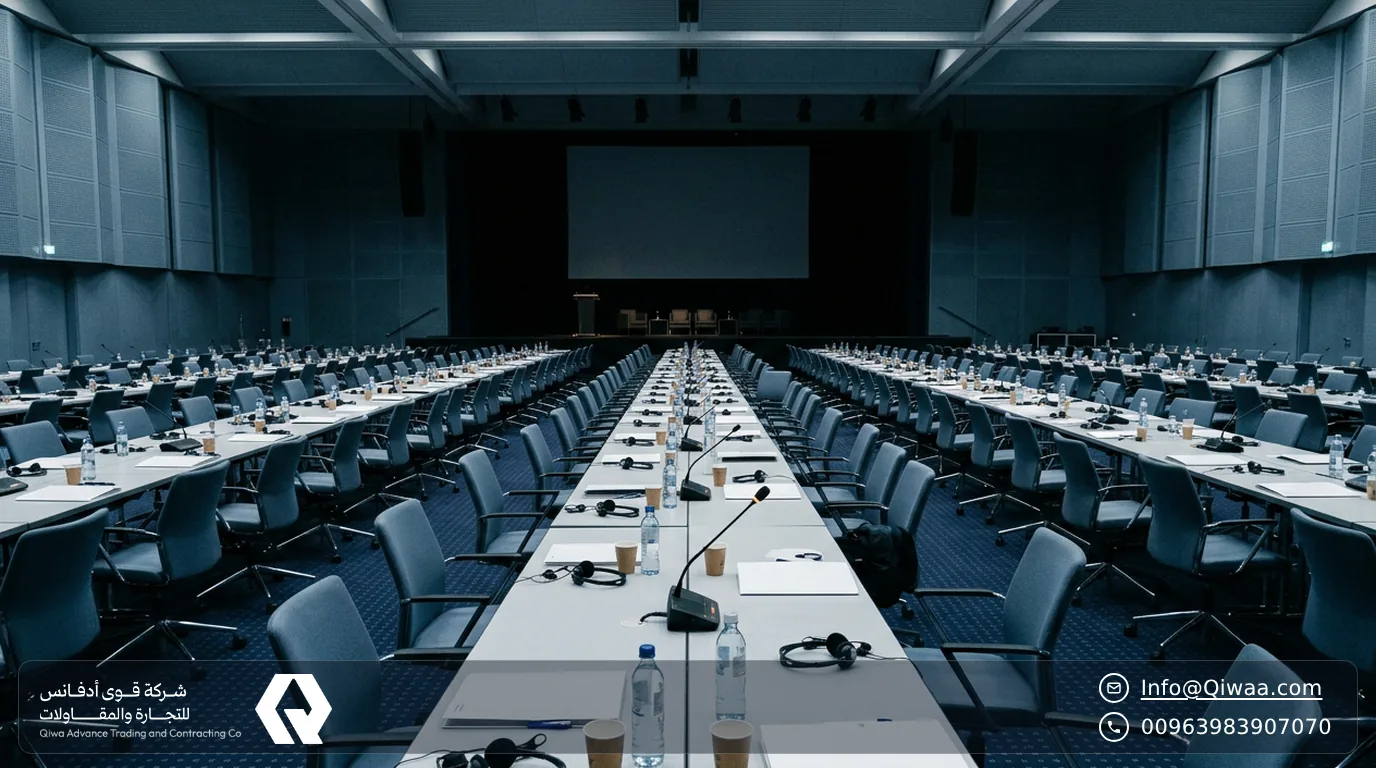
Syria Reconstruction Funding by Donor
International support for Syria covers electricity, water, health, public services, and economic recovery. However, funding announcements differ in status and procurement arrangements, and their full values should not be treated as budgets for construction contracts.
The table identifies major funding programmes, their relevant sectors, and where contractors should look for procurement information.
| Funder and Programme | Funding and Status | Relevant Projects or Activities | Where to Track Procurement |
|---|---|---|---|
| World Bank — Electricity (P511407) | $146 million IDA grant, approved June 2025 | Transmission lines, substations, and electricity infrastructure | World Bank project and procurement notices; implementing agency PETDE |
| World Bank — Public Financial Management (P512516) | $20 million IDA grant, approved March 2026 | Public financial systems, procurement capacity, and digitalization | World Bank project records and implementing agency notices |
| World Bank — Water and Sanitation (P515199) | $150 million IDA grant, approved April 2026 | Water treatment and transmission, wastewater infrastructure, and emergency equipment | Published procurement plan and implementing agency notices |
| World Bank — Health (P513704) | $75 million IDA grant, approved April 2026 | Primary healthcare facilities, equipment, and health system strengthening | World Bank project procurement records |
| World Bank — Financial Sector Modernization | $100 million IDA grant, approved August 2026 | Payment systems, financial infrastructure, and institutional technology | World Bank project records and procurement notices |
| European Union | Approximately €620 million support package announced for 2026–2027 | Humanitarian assistance, early recovery, and bilateral support | European Commission and implementing organizations |
| Germany — KfW | Approximately €119 million in financing agreements announced March 2026 | Water and sanitation, schools, hospitals, markets, and production facilities | KfW programme information and procurement notices issued by UNICEF, UNDP, or other responsible partners |
| Republic of Korea | More than $38 million for Phase I, completed June 2026; a separate $18.95 million Phase II launched August 2026 | Infrastructure recovery, debris clearance, education, health, and humanitarian assistance | UNDP programme updates and participating UN agencies |
| Japan — UN-Habitat | ¥813 million, approximately $5.5 million, announced August 2025 | Upgrading informal settlements and basic infrastructure in Aleppo and Homs | UN-Habitat project information and relevant UN procurement notices |
Funding information reviewed through 23 November 2026. Amounts cover different programmes, periods, and financing arrangements and should not be added together as a single construction procurement budget. None of these funding announcements alone confirms an open tender.
World Bank Grants and Water Procurement
The World Bank confirmed on 18 November 2026 that its five approved IDA-funded projects in Syria total $491 million.
For construction contractors, the distinction is between infrastructure investments and projects focused primarily on institutional or financial systems. The total approved grant value does not indicate how much will be spent on construction contracts.
The Syria Emergency Water Security and Resilient Services Project (P515199) is particularly relevant to water network contractors and equipment suppliers.
Its approved scope includes:
- Idlib, Homs, and Hama: Rehabilitation of water treatment and transmission infrastructure.
- Damascus: Rehabilitation of priority wastewater treatment infrastructure.
- Additional activities: Emergency equipment, water resources management, and climate resilience measures.
These activities may involve pipes, pumps, treatment equipment, and civil works, depending on the approved procurement packages and technical specifications.
Importantly, the World Bank has published a procurement plan for P515199 dated 19 October 2026.
Contractors should use the procurement plan to identify planned purchasing activities, then monitor the implementing agency for actual tender notices. A package listed in a procurement plan is not necessarily open for bidding.
Before preparing a proposal, confirm the procurement reference, scope, selection method, qualification requirements, and current submission deadline.
SEEP Electricity Project Procurement
The Syria Electricity Emergency Project (SEEP) is implemented by the Public Establishment for Transmission and Distribution of Electricity (PETDE).
Its scope includes transmission infrastructure, transformer substations, and technical support for electricity sector development.
Unlike a general funding announcement, SEEP has identifiable procurement activities.
For example, a November 2026 invitation indexed under World Bank notice OP00480092 concerns the design, supply, and installation of high-voltage substations, including spare parts. The associated tender reference is SY-PETDE-510612-CW-RFB.
The published notice specifies a two-envelope bidding procedure without prequalification and lists 3 February 2027 as the submission deadline.
Contractors should verify the current notice, any amendments, and the official bidding documents through World Bank procurement notices and PETDE before relying on these details.
The example also illustrates why procurement procedures must be checked for each package. A two-envelope procedure does not mean that every World Bank-funded tender uses the same qualification or submission requirements.
EU, KfW, Korea and Japan Funding
Funding outside the World Bank follows different implementation arrangements, even when programmes address similar infrastructure needs.
Germany’s KfW funding provides a clear example of why contractors must identify the implementing partner.
Its March 2026 announcement identifies €40 million for UNICEF-supported water, wastewater, and education activities; €30 million for UNDP-supported hospital rehabilitation; and €20 million for UNDP-supported markets and production facilities.
These are components of the broader German financing arrangements, not additional amounts to add to the announced total. Relevant procurement should be followed through the organizations responsible for purchasing goods and works.
Republic of Korea funding also demonstrates why programme status matters. Phase I of its UN-supported recovery initiative was completed in June 2026, while the separately funded Phase II launched in August. The second phase includes an approximately $6 million UNDP component supporting debris removal and infrastructure recovery.
For Japanese support, the UN-Habitat programme focuses on informal settlements and basic infrastructure in Aleppo and Homs. Contractors should follow the implementing organization’s procurement notices rather than assume that the full grant remains available for new contracts.
The European Union’s €620 million package covers multiple forms of support during 2026–2027. Its announcement does not identify a single procurement authority or establish a unified construction tender programme.
The procurement route follows the implementing organization, not simply the donor’s name. Contractors should therefore connect each funding announcement to a specific project, responsible buyer, and published work package before committing resources to bidding.

How to Qualify for Donor Tenders in Syria
Contractors pursuing donor-funded projects in Syria should prepare their qualification documents before relevant tenders are published. The requirements differ between World Bank-financed projects, UN agencies, and other donor-funded programmes.
The first step is to identify the procurement channel and its rules. Contractors can then prepare evidence of their technical experience, financial capacity, and compliance with the requirements of their target projects.
Where to Find Donor-Funded Tenders
The organization financing a project may not be the one issuing its tenders. Contractors should follow the implementing agency and check how each solicitation requires bids to be submitted.
| Procurement Channel | Where to Find Opportunities | How to Submit |
|---|---|---|
| World Bank-financed projects | World Bank Business Opportunities, project procurement plans, and implementing agency notices | Follow the instructions and submission method specified by the procuring agency |
| UN agencies | UNGM Procurement Notices and agency procurement pages | Use the designated portal, email address, or submission method stated in the notice |
| Syria Recovery Trust Fund (SRTF) | SRTF Procurement Portal | Follow the fund’s solicitation documents and applicable submission procedures |
For World Bank projects, procurement plans help contractors identify potential work packages before tender publication. However, planned activities are subject to change and should not be treated as open opportunities.
On UNGM, contractors can search for relevant terms such as Syria, water rehabilitation, and wastewater treatment. Registration requirements and submission procedures should be checked for each agency and solicitation.
UNGM registration is not a general requirement for World Bank-financed tenders. Contractors must follow the procurement arrangements of the organization issuing the specific contract.
World Bank Tender Eligibility and Bid Security
The World Bank Procurement Regulations for IPF Borrowers, 7th edition (September 2025) establish rules for eligibility, bid security, and procurement compliance.
Three requirements deserve particular attention.
1. Contractor eligibility
Paragraphs 3.20–3.22 generally allow eligible firms from all countries to compete for Bank-financed contracts, subject to specified exceptions.
Restrictions may apply because of relevant legal prohibitions, UN Security Council decisions, World Bank sanctions, or other eligibility provisions.
Contractors should verify their company’s eligibility, potential conflicts of interest, and the status of proposed partners before bidding. Eligibility should not be assumed solely from the company’s country of registration.
2. Bid security and bid-securing declarations
Under paragraph 5.33, the procuring authority may require bid security in the amount and form specified in the bidding documents. Its validity generally extends four weeks beyond the bid validity period.
Paragraph 5.35 allows a bid-securing declaration instead. This is an undertaking that can result in suspension from bidding for contracts with the inviting entity if the bidder breaches specified obligations.
Neither requirement should be assumed to apply automatically. Contractors must check the solicitation to determine whether security is required, its accepted form, validity period, and issuing institution.
3. Environmental and social requirements
Paragraph 5.4(d) requires appropriate provisions for environmental and social risks, including sexual exploitation, abuse, and harassment, in national open competitive procurement procedures covered by the regulations.
Individual tenders may also require project-specific environmental and social documentation, occupational health and safety measures, and evidence of the contractor’s ability to implement them.
Contractors should review these obligations in the actual bidding documents and prepare the required plans, personnel, and compliance records accordingly.
Preparing Before Tender Publication
A contractor qualification file should be organized around the requirements commonly assessed in the target category of work.
Useful documents to prepare include company registration records, relevant completed-project references, financial statements, key personnel qualifications, equipment information, and supplier technical documentation.
For water and wastewater tenders, contractors should also establish access to product specifications, conformity certificates, manufacturer documentation, and reliable material quotations.
Preparation does not replace tender-specific compliance. Once a notice is issued, contractors must review its qualification criteria, submission deadlines, approved forms, bid validity, guarantees, and technical requirements before finalizing their offer.
The objective is to enter the bidding period with the company’s basic documentation ready, leaving more time for site visits, clarification requests, technical coordination, and commercial pricing.

Donor-Funded Tender Checklist for Syria
Before bidding on donor-funded projects in Syria, contractors should check the actual solicitation against their qualifications, technical capabilities, and financial capacity.
Use these 19 checks to identify potential disqualification risks, missing documents, and commercial obligations before submitting a bid.
- Project and contracting authority: Confirm the project reference, funding organization, implementing agency, and entity authorized to award the contract.
- Procurement method: Check whether the opportunity uses a Request for Bids (RFB), Request for Proposals (RFP), or another procedure, and whether prequalification is required.
- Registration and submission platform: Determine whether the tender requires UNGM registration, another supplier portal, or direct submission through the procuring agency. Follow the specified procedure.
- Bidder eligibility: Verify applicable sanctions, debarment restrictions, conflicts of interest, and eligibility requirements affecting the company, its partners, and relevant subcontractors.
- Qualification requirements: Check minimum turnover, financial capacity, technical experience, and whether a joint venture is permitted or necessary to meet the criteria.
- Company documentation: Prepare the required registration certificates, licenses, financial statements, and qualification forms, including certified translations where requested.
- Technical experience and resources: Confirm that previous project references, qualified personnel, equipment, and execution capacity satisfy the tender’s minimum requirements.
- Site visits and clarifications: Identify mandatory or optional site visits, pre-bid meetings, and deadlines for submitting technical or contractual questions.
- Approved scope and quantities: Review the BOQ, drawings, technical specifications, and site conditions. Identify discrepancies before pricing the work.
- Material standards and certification: Confirm required product standards, test reports, conformity certificates, manufacturer documentation, and inspection procedures.
- Material origin and eligibility: Check any country-of-origin restrictions, eligible-source requirements, and documentation rules applicable to the specific procurement.
- Supplier readiness: Obtain quotations based on approved specifications, including pipe diameters, pressure classes, quantities, manufacturing lead times, and delivery requirements where relevant.
- Environmental and social compliance: Review required environmental and social plans, occupational health and safety measures, and project-specific compliance obligations.
- Technical and financial submissions: Verify whether proposals must be submitted in separate envelopes, files, or stages, and use the exact forms required.
- Bid security: Determine whether a bid guarantee or bid-securing declaration is required. Confirm its amount, acceptable issuer, format, and validity.
- Pricing and currency: Check the required bid currency, applicable taxes, price-adjustment provisions, and allocation of customs, transport, and delivery costs.
- Payment and contract guarantees: Review advance payments, interim certificates, retention, performance security, and the conditions governing payment and guarantee release.
- Execution and delivery schedule: Confirm milestones, material lead times, site access, implementation risks, and contractual consequences of delays.
- Final submission review: Check all published amendments and clarification responses, verify bid validity, and confirm that every required document is submitted through the correct channel before the deadline.
A compliant bid must satisfy the specific solicitation, not a generic donor checklist. Before submission, contractors should resolve outstanding technical questions, confirm supplier commitments, and verify that the proposed price covers all contractual obligations.
Where essential qualification, payment, or technical requirements cannot be met, the contractor should reassess participation rather than submit an incomplete or commercially unsustainable bid.

Qiwaa Advance for Donor-Funded Water Tenders
Contractors pursuing donor-funded water projects in Syria need material quotations that reflect the tender’s technical specifications, quantities, documentation requirements, and delivery schedule.
At Qiwaa Advance, we support water infrastructure contractors through Qiwaa Trading, our authorized partnership with Amiantit, and the EPC capabilities of Qiwaa Contracting.
Our relevant services include:
- GRP pipe supply: We coordinate Amiantit pipe solutions for water transmission and wastewater networks, subject to the approved application, pressure and stiffness classes, and applicable standards.
- HDPE and network materials: We review requirements for HDPE pipes, fittings, and related components against the BOQ and available manufacturer supply options.
- Water infrastructure EPC: Through Qiwaa Contracting, we assess engineering, procurement, and construction requirements for water networks and treatment facilities where the work package calls for integrated delivery.
The World Bank’s $150 million Syria Emergency Water Security and Resilient Services Project illustrates the type of infrastructure activity relevant to these capabilities.
However, the project’s approved funding does not establish specific pipe quantities, an open supply tender, or Qiwaa Advance’s participation. Each opportunity must be assessed against its actual procurement documents.
Tender-Based vs General Supply Quotes
A general material quotation may be sufficient for preliminary budgeting, but donor-funded tenders often require more detailed technical and commercial information.
| Criterion | Tender-Based Supply Offer | General Price Quote |
|---|---|---|
| Technical specifications | References the required standards, dimensions, pressure classes, and approved product characteristics | May identify only the product type and basic specifications |
| Product documentation | Identifies applicable manufacturer data, test reports, and conformity documents required by the tender | Supporting documentation may be limited |
| Price validity | Aligns with the contractor’s required pricing commitment and tender schedule | Follows the supplier’s standard quotation validity |
| Delivery requirements | Accounts for quantities, delivery location, lead times, and project milestones | May provide general availability and delivery estimates |
| Commercial conditions | Clarifies payment terms, currency, transport responsibilities, and quotation exclusions | Usually follows standard supplier terms |
| Technical bid support | Provides relevant product information for the contractor’s tender submission | May not contain the supporting details required for technical evaluation |
The tender-based offer should reflect the actual solicitation. For example, a 120-day bid validity requirement does not automatically mean every supplier must issue a 120-day quotation; the contractor must ensure its supplier commitments adequately support the bid.
The objective is to identify technical and commercial gaps before submission, reducing the risk of proposing unsuitable materials, overlooking required documents, or relying on prices that cannot support the contract schedule.
For additional product guidance, see our GRP fiberglass pipes guide.
How Qiwaa Advance Reviews Tender BOQs
We begin by reviewing the tender’s material requirements to determine which products and supply arrangements may be suitable.
For water and wastewater networks, contractors should provide the tender reference, BOQ, approved drawings, pipe diameters, pressure and stiffness classes, applicable standards, and required delivery location.
Our team can then coordinate with relevant suppliers and manufacturers to review product suitability, available technical documentation, quantities, lead times, and commercial conditions.
Where the tender requires more than material supply, Qiwaa Contracting can also discuss the defined EPC scope, subject to the project’s qualification criteria and technical requirements.
The resulting information helps contractors prepare their technical and financial proposals. Final product acceptance, bidder eligibility, and tender compliance remain subject to the procuring authority’s requirements.
Preparing a donor-funded water or wastewater tender in Syria? Send your tender reference, BOQ, technical specifications, and delivery schedule to Qiwaa Advance on WhatsApp. We’ll review your requirements and discuss suitable pipe supply or EPC options.
Also read: Water Desalination Plants in Syria by EPC Model
FAQs about Donor-Funded Projects in Syria
Can Syrian contractors bid for donor-funded projects?
Yes, provided they meet the eligibility and qualification requirements of the specific procurement. Syrian registration alone does not automatically exclude a company from World Bank-financed contracts. Contractors must still check applicable restrictions, sanctions, financial capacity, experience, and tender-specific requirements.
Do sanctions still prevent Syrian companies from bidding?
Not automatically. The former comprehensive U.S. Syria sanctions programme ended in July 2025, and the Caesar Act was repealed in December 2025. However, targeted sanctions and procurement restrictions may still apply to particular companies, individuals, or transactions. Check the relevant eligibility rules and current sanctions lists before bidding.
Can suppliers participate without winning the main contract?
Yes, where the contract permits it. Pipe and equipment suppliers may support a main contractor through material quotations and technical documentation without bidding directly for the construction package. Supplier approval, product eligibility, and compliance with the tender specifications must still be verified.
How can contractors verify a donor-funded tender?
Check the notice against the official procurement channel, such as UNGM, the World Bank’s procurement listings, or the implementing agency’s website. Verify the tender reference, submission instructions, and issuing organization. Avoid unofficial intermediaries requesting payments or promising contract awards.
Can contractors propose alternative pipe brands or materials?
Only where the tender permits alternatives or equivalent products. Contractors should confirm the applicable standards, technical performance, certification requirements, and approval procedure. Where equivalence is unclear, request written clarification before submitting the bid.
Sources
- Press release, World Bank approves US$225 million financing to restore water and health services in Syria, World Bank, 23 April 2026
- Press release, US$146 million grant to improve electricity supply in Syria, World Bank, 25 June 2025
- Press release, US$100 million grant for financial sector modernization in Syria, World Bank, 7 August 2026
- Procurement Regulations for IPF Borrowers, 7th edition, World Bank, September 2025
- The EU mobilises international support for Syria’s transition and the region, European Commission, 18 March 2025
- EU grants Syria $722 million for recovery, humanitarian aid, von der Leyen says, Reuters, 9 January 2026
- Press release, new $20 million grant to enhance public financial management for Syria, World Bank, 11 March 2026
- Syria seeks to expand $493m in World Bank grants, Arab News, 14 October 2026
- Press release on grant contracts for Syria, KfW Development Bank, 30 March 2026
- Korea and the UN launch $38 million of aid and resilience projects, UNDP Syria, 30 September 2025
- Signing ceremony for Japan’s Grant Aid Project for Syria through UN-Habitat, Embassy of Japan, 12 August 2025
- UNICEF notice, rehabilitation of Rayash water pumping station, UNGM, 10 March 2026
- Saudi Arabia announces $5bn in Syria investments, Arab News, July 2025
- Syria welcomes permanent repeal of sweeping US sanctions, Associated Press via PBS NewsHour, 19 December 2025


