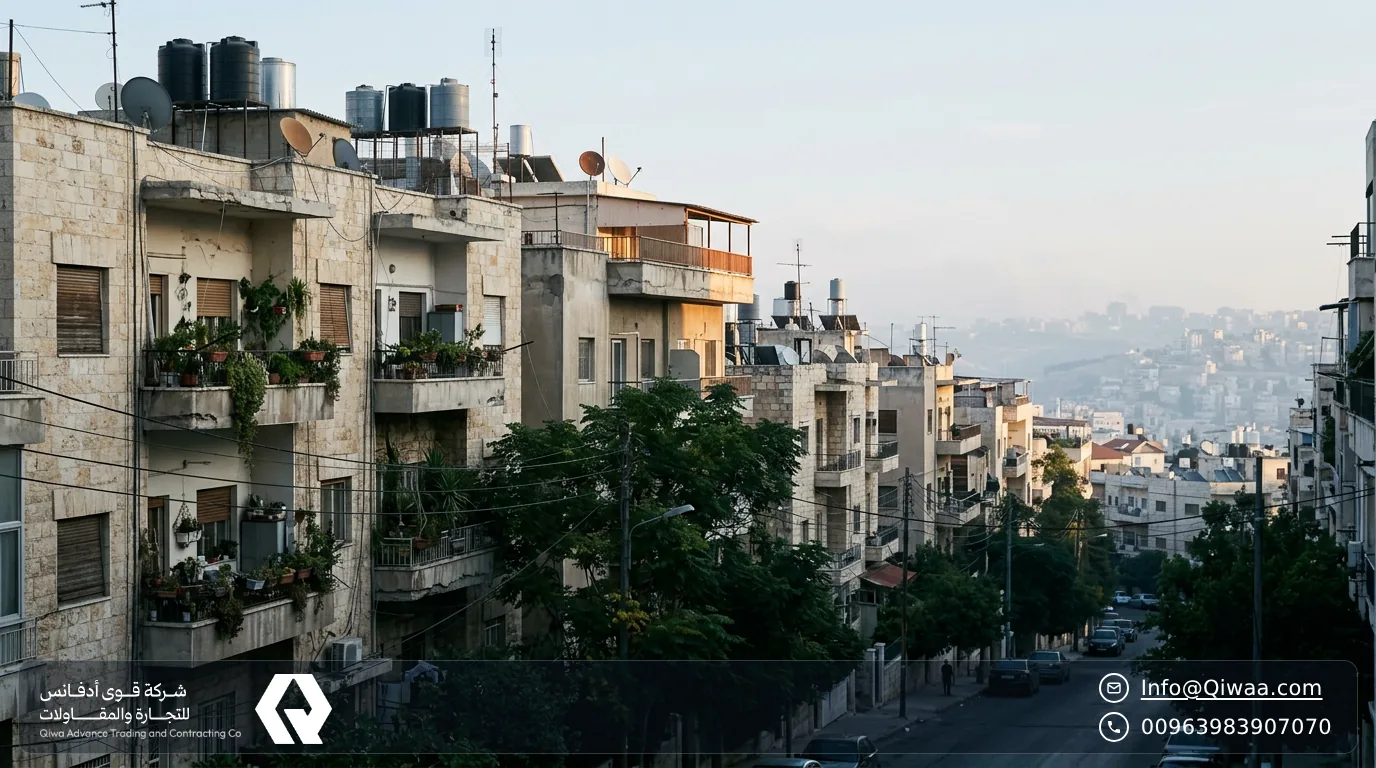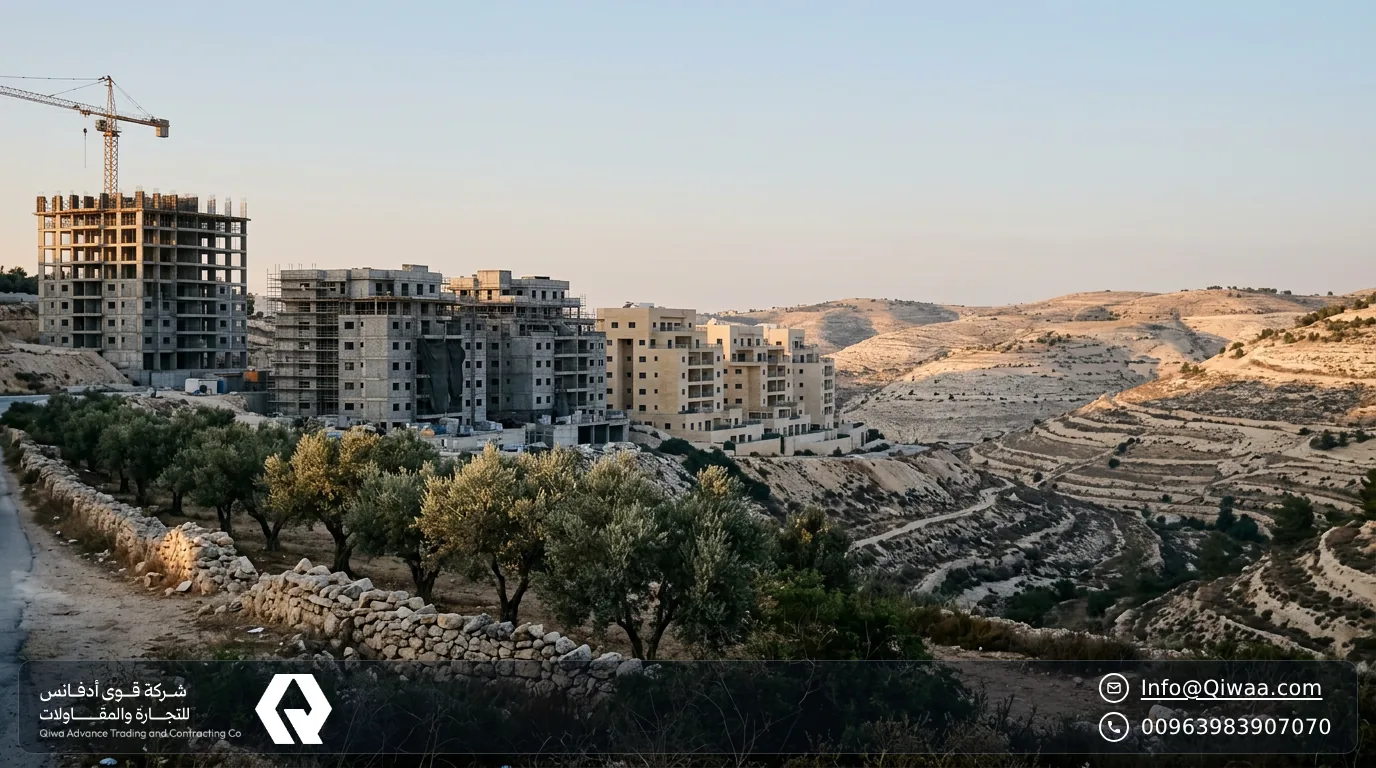


The Arada Damascus Project has an estimated $7 billion development value, but what does that mean for contractors and suppliers? Following the agreement signed on 31 August 2026, the proposed New Damascus development covers approximately 4 million m² and includes 11,000 homes. Yet these figures do not establish construction quantities, procurement schedules or available contracts.
This article separates confirmed announcements from missing project details, identifies potential construction packages and uses an illustrative demand calculation to help suppliers assess their capacity before committing resources.
What the Agreement Between Arada and the Syrian Sovereign Fund Covers
The Syrian Sovereign Fund and UAE developer Arada signed an agreement on 31 August 2026 to develop New Damascus, a mixed-use community west of the capital with an estimated gross development value of $7 billion. The agreement establishes a joint venture between the two parties, according to the official Syrian announcement and Arada’s statement.
The agreement was signed by Arada Group CEO Ahmed Alkhoshaibi and Mohammed Al Khayyat, Chief Executive Officer of the Syrian Sovereign Fund’s Real Estate Development Sector. However, the official project materials reviewed as of 3 November 2026 do not identify a main contractor or published construction tender packages.
Arada Syria now offers vendor registration for interested contractors, suppliers and commercial partners. This provides a channel to express interest, but registration is not confirmation of prequalification or an invitation to bid. The agreement is also separate from the Eagle Hills developments announced in Syria, which involve different parties and project scopes.
Key Figures Announced for the Arada Damascus Project
The Syrian announcement was published on 31 August 2026, followed by Arada’s detailed statement on 1 September. Both confirm the project’s approximate $7 billion value and 4 million m² site area. The following component figures come from Arada’s statement.
| Item | Announced figure |
|---|---|
| Estimated gross development value | $7 billion (AED 25.7 billion) |
| Site area | 4 million m² |
| Planned homes | 11,000 |
| Hotel rooms | 500 |
| Serviced apartments | 1,000 |
| Hospital | 300 beds |
| Education facilities | Capacity for 5,000 students |
Source: Arada’s official project announcement, 1 September 2026.
These figures establish the announced scale and mix of the development, not its construction quantities or delivery schedule. The housing-demand calculation later in this article uses the announced 11,000 homes alongside explicitly stated assumptions about unit size, shared areas and delivery period.
Why the $7 Billion Project Value Is Not a Construction Budget
For concrete, rebar and other construction-material suppliers, the $7 billion headline does not indicate annual material demand or available contract values. Arada identifies this figure as the project’s estimated Gross Development Value (GDV), not its construction budget or bill of quantities (BOQ).
Before expanding production capacity or committing additional equipment, suppliers need to establish the expected construction rate, relevant work packages, material specifications and delivery schedules. None can be reliably calculated from the GDV alone.
The announced 11,000 homes provide a starting point for an illustrative housing-area estimate, but actual material quantities will depend on approved designs, construction methods and project phasing. The following sections examine those assumptions and identify potential supply packages without treating them as confirmed tenders.
Suppliers should also assess these potential requirements alongside other Damascus reconstruction projects, particularly when planning long-term production, logistics and workforce capacity.
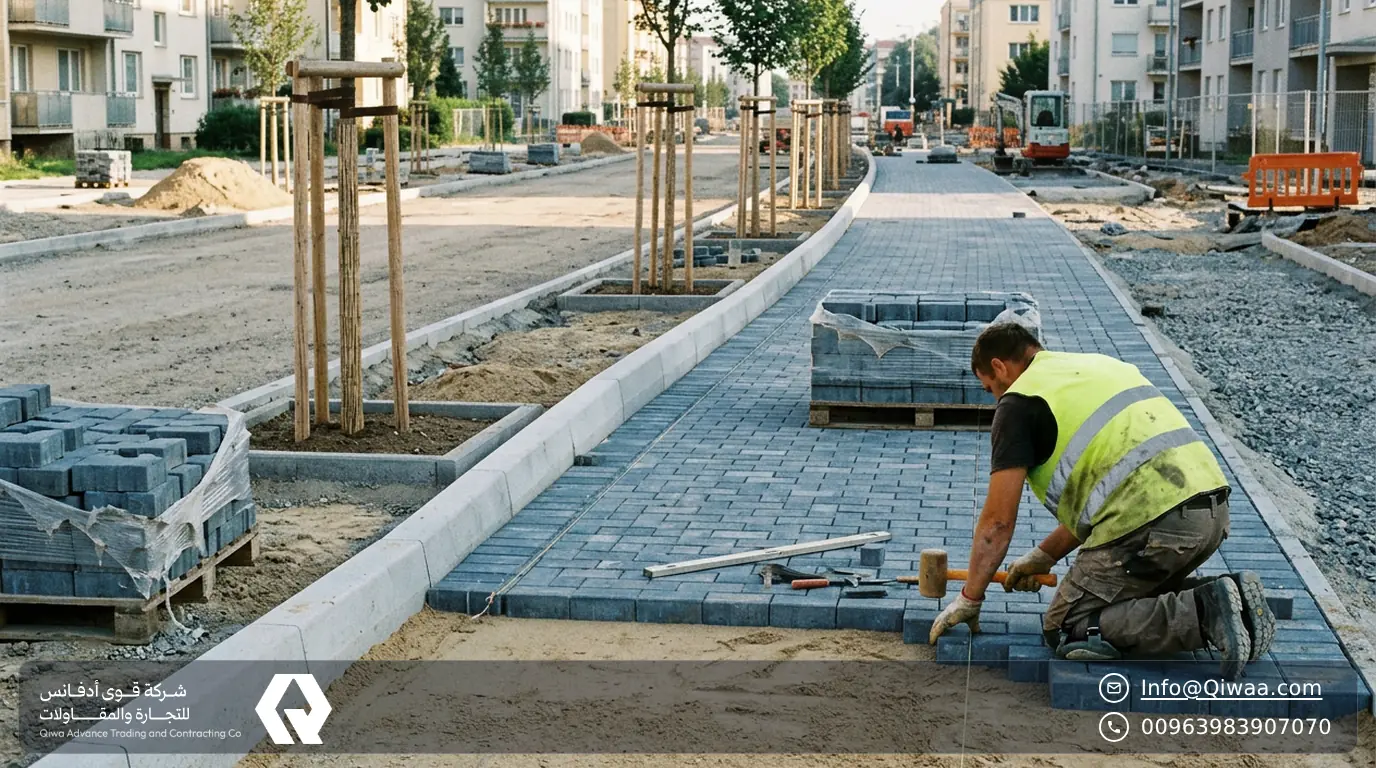
Planned Buildings and Infrastructure in New Damascus
The New Damascus project combines residential buildings, hospitality, healthcare, education and public infrastructure, creating potential construction and supply opportunities across different specialisations. However, each component requires a different approach to assessing demand.
According to Arada’s official announcement, the 11,000 planned homes will include apartments, villas, townhouses and branded residences. This mix matters to concrete, steel and formwork suppliers because building designs and construction methods will determine material quantities. The hotel and hospital could also require specialised fit-out, HVAC, MEP and medical gas systems, subject to approved designs.
The 4 million m² site near Mezzeh includes a planned 700,000 m² public park, offices, retail and government service buildings. The development follows the 15-minute city concept, linking homes with essential services. For infrastructure contractors, this points to potential road, water, wastewater, drainage and utility works, although their designs, specifications and contract boundaries remain unannounced.
Where the Published New Damascus Project Figures Differ
The Syrian government announcement and Arada’s statement agree on the project’s overall scale, but some facility details differ or appear in only one source:
- Healthcare: The detailed Arabic government announcement refers to hospitals with a combined capacity of up to 300 beds, while Arada specifies one 300-bed hospital.
- Hospitality: The government refers to more than 500 hotel rooms. Arada specifies 500 hotel rooms and adds 1,000 serviced apartments.
- Education: Both sources confirm capacity for 5,000 students. The National reports two schools, but Arada’s statement does not specify the number of school buildings.
These differences do not change the announced development scale, but they matter when estimating individual work packages. Contractors should use the developer’s published figures as preliminary planning references, not confirmed building counts or equipment quantities. Final estimates require approved designs and bills of quantities (BOQs).
Arada Syria: Contractor and Supplier Selection
Arada acquired Australian contractor Roberts Co in 2025 and expanded its operations into the UAE in October 2026. Roberts Co’s announced UAE work includes Phase 2 of Arada Central Business District in Sharjah and preconstruction services on other developments.
However, Arada has not publicly confirmed Roberts Co as the main contractor for New Damascus or identified the company responsible for awarding its construction packages.
In an October 2026 interview, Arada Group CEO Ahmed Alkhoshaibi said the developer intends to work with Syrian contractors and suppliers where they can meet quality and delivery requirements. He also identified potential opportunities for smaller companies in engineering, transport, logistics, fit-out and maintenance.
This indicates potential participation beyond major construction contracts, but it does not establish a contractual preference for local suppliers or published qualification criteria.
Contractors can prepare relevant project references, technical staff records, equipment capacity and quality documentation. Specific certificates, financial thresholds and submission requirements must be confirmed through Arada’s official procurement process rather than assumed from its projects in other markets.
What Is Still Unconfirmed About New Damascus Tenders?
As of 3 November 2026, the official project sources reviewed do not identify an appointed main construction contractor or published construction tender packages. Several details remain necessary before contractors can prepare reliable bids:
- Construction phasing: Package start dates, delivery milestones and the sequence of works.
- Tender procedures: Contracting responsibilities, procurement routes and submission deadlines.
- Technical documentation: Approved drawings, BOQs, specifications and package boundaries.
- Supplier prequalification: Required certifications, experience, financial capacity and evaluation criteria.
- Site information: Confirmed plot boundaries, access arrangements and infrastructure interfaces.
- Joint-venture details: The partners’ respective contributions and contractual responsibilities.
In an October 2026 interview, Alkhoshaibi said Arada had completed its site assessment and feasibility work and was progressing with planning and early development preparations. A detailed construction programme had not yet been announced.
The separate City for a City housing initiative remains another area requiring clarification. Its housing quantities, locations and procurement arrangements have not been published, so contractors should not include this initiative in their New Damascus material-demand estimates.
What can suppliers do now? Arada Syria’s official website provides a vendor registration option for contractors, suppliers, consultants and commercial partners. Companies can express their interest and prepare their qualifications while monitoring official project updates.
Vendor registration is not prequalification or an invitation to bid. Until tender documents are released, firms should avoid committing additional production capacity, equipment or inventory based solely on the announced development value.
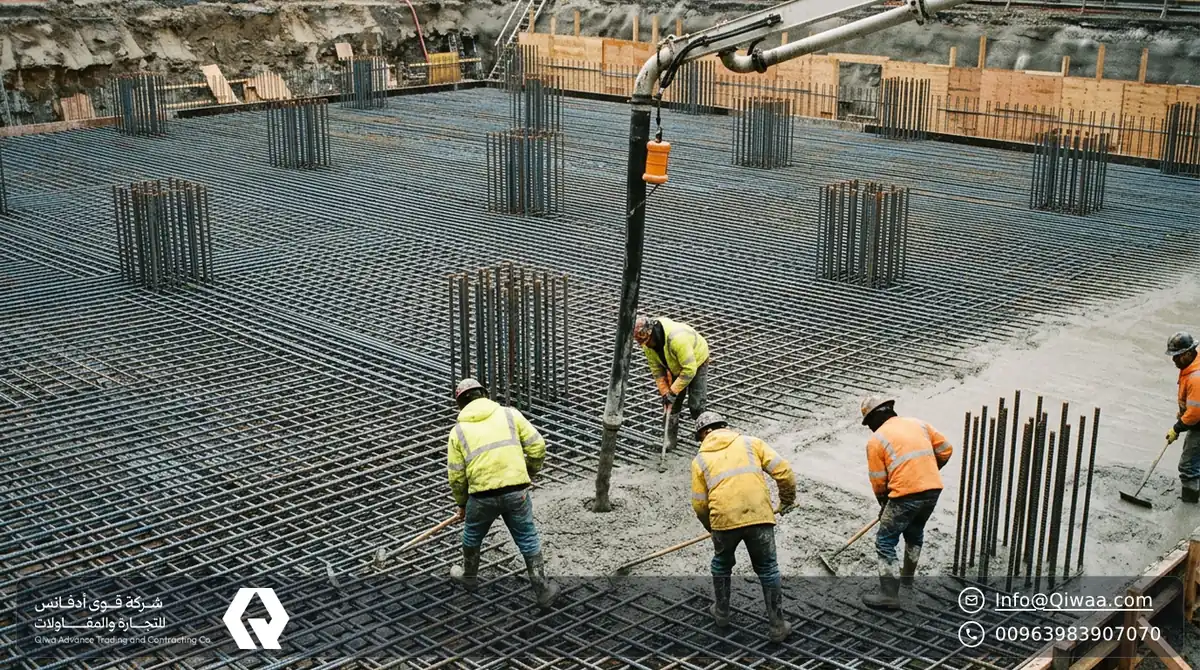
Planning Supply for the Arada Damascus Project
The Arada Damascus Project’s announced figures offer a starting point for estimating potential supply demand, but they do not establish contract quantities or procurement schedules. Suppliers need to distinguish preliminary capacity planning from quantities supported by approved designs and bills of quantities (BOQs).
The following housing calculation uses explicit assumptions to illustrate potential construction volume. The package comparison and pre-bid checklist then show how contractors can assess relevant work opportunities and prepare for future procurement.
How to Estimate Annual Housing Floor Area in New Damascus
Arada has announced 11,000 homes but has not published their individual areas or a detailed delivery schedule. A preliminary estimate can be calculated using:
Annual housing floor area = (Number of homes × Average unit area × Gross-up factor) ÷ Delivery years
For an illustrative scenario:
- Housing area: 11,000 homes × 120 m² average = 1,320,000 m².
- Gross floor area: 1,320,000 × 1.2 = 1,584,000 m², allowing an assumed 20% for shared spaces and circulation.
- Annualised area: 1,584,000 ÷ 10 years = 158,400 m² per year.
The 120 m² average and 1.2 gross-up factor are assumptions, not published project specifications. The allowance for common areas is also a simplification: apartments, villas and townhouses have different building layouts.
The ten-year period comes from an interview with Arada Group CEO Ahmed Alkhoshaibi, who described phased development over approximately ten years. It is not an approved annual construction schedule, and housing delivery may be uneven across phases.
How should suppliers use this estimate? Treat 158,400 m² as a scenario for annual housing construction activity, not a material order forecast. A concrete supplier cannot directly compare floor area in m² with plant output in m³, or a steel supplier with capacity in tonnes.
Converting the estimate into material demand requires project-specific consumption rates derived from comparable designs or, preferably, an approved BOQ. Suppliers must then account for the portion of work they could realistically secure, delivery peaks and existing capacity commitments.
The calculation also excludes hotels, serviced apartments, healthcare, education and infrastructure. It should support initial scenario planning, not justify new production lines, equipment purchases or stock commitments.
Potential Construction and Supply Packages
The New Damascus master plan includes residential, hospitality, healthcare and public-service components. Each could generate different construction and supply requirements, although Arada has not published how contracts will be divided or awarded.
| Announced component | Potential construction and supply scopes | What suppliers need to confirm |
|---|---|---|
| 11,000 homes | Structural concrete, reinforcement, formwork, masonry, finishes and MEP systems | Building types, structural designs, material specifications and construction phases |
| 500 hotel rooms and 1,000 serviced apartments | Specialist fit-out, HVAC, plumbing, electrical works and hospitality equipment | Building layouts, operator specifications, fit-out boundaries and procurement responsibilities |
| 300-bed hospital | Medical gas systems, HVAC, specialist MEP installations and medical equipment | Hospital design, system specifications, equipment schedules and clinical requirements |
| Education facilities for 5,000 students | Structural works, building services, outdoor facilities and classroom equipment | Number of buildings, layouts, specifications and delivery phases |
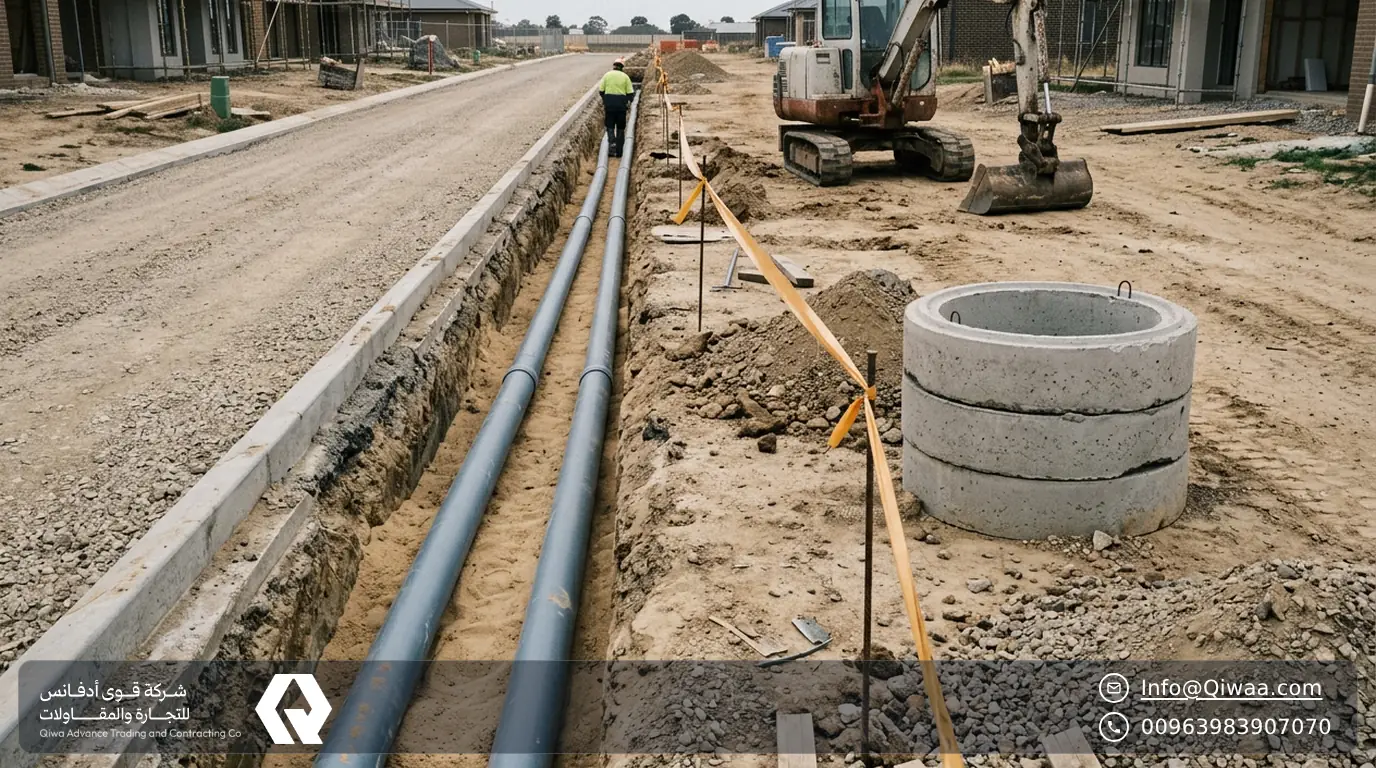
| Infrastructure within the 4 million m² development | Water supply, wastewater, stormwater drainage, internal roads and electrical networks | Network layouts, pipe diameters, capacities, quantities and utility connection points |
These are potential work scopes, not confirmed tender packages. The project’s 4 million m² site area, for example, does not establish the length or capacity of water and sewer networks.
Contractors should also distinguish construction packages from operational procurement. Hotel tableware and recurring medical gas supplies may be purchased separately from building construction and by different purchasing entities.
For related technical requirements, see our guides to industrial and medical gases in Syria and construction companies in Syria.
12 Checks Before Bidding on New Damascus Contracts
Contractors can begin preparing their company records and assessing capacity now. However, project-specific pricing and contractual commitments should wait until the relevant procurement documents are available.
- Register through official channels. Use Arada Syria’s vendor registration to express interest. Registration alone does not establish prequalification or tender eligibility.
- Prepare your prequalification file. Assemble verified project references, legal registrations, financial statements, technical staff profiles, equipment records and relevant quality documentation.
- Identify the contracting authority. Confirm which entity will issue the tender, evaluate proposals and sign the contract. Do not assume Roberts Co or another Arada affiliate will award Syrian packages.
- Obtain the complete tender documents. Request the applicable drawings, BOQ, technical specifications, scope boundaries and document revisions before preparing a binding price.
- Verify site conditions. Check the relevant plot boundaries, access routes, utility connections and responsibility for site preparation.
- Confirm construction phasing. Establish package start dates, delivery milestones and dependencies between infrastructure, structural works and specialist installations.
- Check material compliance. Confirm required technical standards, testing, certification, approved manufacturers and country-of-origin restrictions where applicable.
- Calculate package-specific demand. Use BOQ quantities and delivery schedules rather than the project’s gross development value or illustrative housing-area estimate.
- Test delivery capacity. Check production output, workforce availability, equipment, transport resources and existing contractual commitments against peak delivery requirements.
- Review currency and price risks. Confirm payment currency, exchange-rate provisions, taxes, customs obligations and any permitted price-adjustment mechanisms.
- Examine payment and security terms. Review advance payments, interim payment periods, retention, bid and performance bonds, and the ability of your bank to issue required guarantees.
- Assess contractual exposure. Review delay damages, variation procedures, insurance, warranty obligations, dispute resolution and conditions for contract termination.
Statements favouring local suppliers should not be treated as contractual preferences unless the procurement documents confirm them.
Until Arada releases project-specific tender requirements, suppliers should prepare qualifications, verify their capacity and monitor official announcements. Avoid paying intermediaries who promise guaranteed registration, preferred-supplier status or contract allocations without verifiable authorisation.
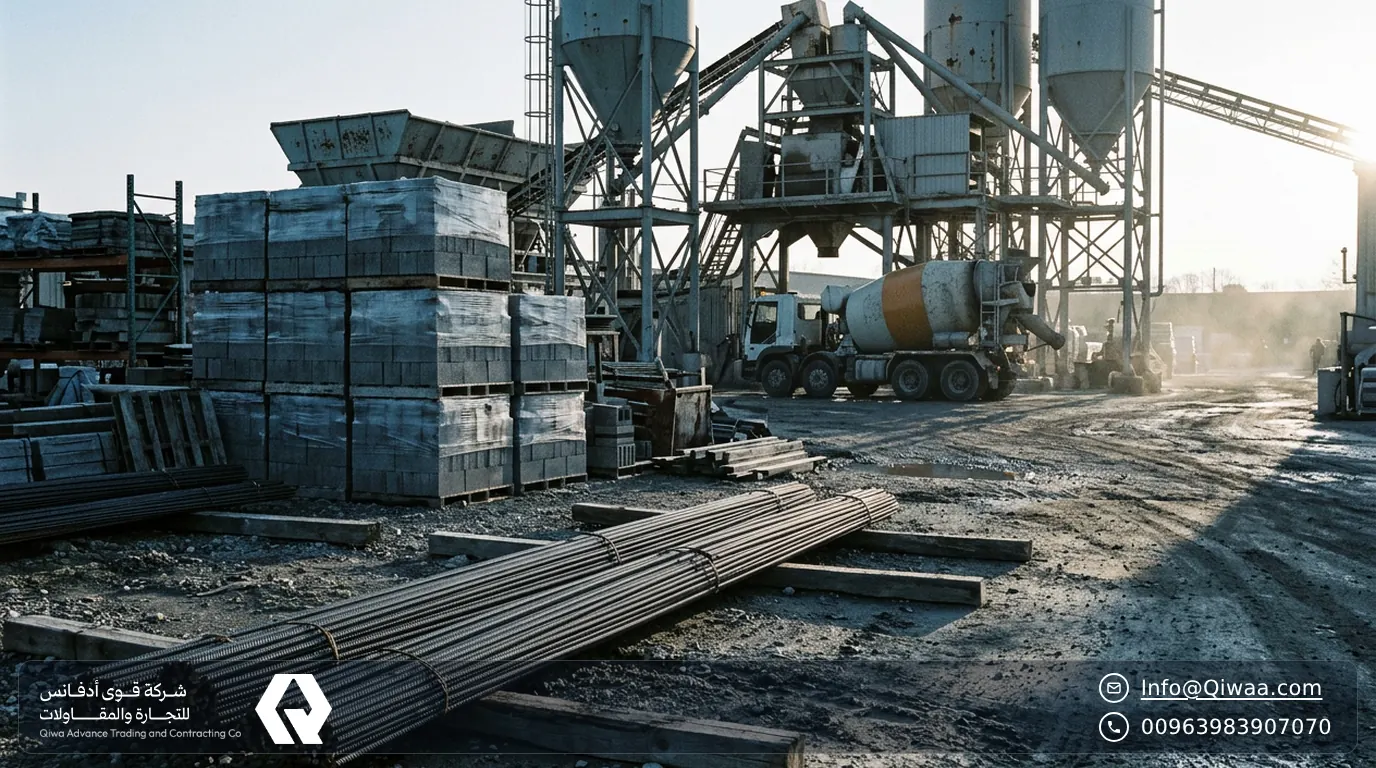
How Qiwaa Advance Supports Construction and Supply
The New Damascus development could create demand for infrastructure works, construction materials, medical gas supplies and hospitality equipment. Qiwaa Advance offers services relevant to these sectors, although it is not a party to the Arada agreement and has no announced role in the project.
Through Qiwaa Contracting, we undertake EPC infrastructure works, including water networks and treatment facilities in cooperation with Amiantit. We also work with Variant tunnel formwork systems for concrete construction where project designs and execution requirements support their use.
Qiwaa Trading sources construction, industrial and infrastructure materials through international suppliers and authorised agencies. For contractors, the starting point is matching material specifications, required quantities and delivery schedules rather than relying on the project’s announced value.
For healthcare facilities, our partnership with Wosta Gases supports the sourcing of medical and industrial gases, cylinders and storage solutions. The appropriate supply model depends on gas specifications, consumption, safety requirements and backup capacity. Gas supply should not be confused with responsibility for designing or installing a complete hospital gas distribution network.
For hotels and serviced apartments, our agency with Ariane Fine Porcelain provides professional tableware, cutlery and customisation options for hospitality operations. These purchases may fall under an operator’s equipment and operating supplies budget rather than the main building contract.
Authorised Suppliers vs Open-Market Sourcing
For long-term construction and hospitality projects, the choice between an authorised manufacturer channel and independent market sourcing depends on specification compliance, traceability, lead times and contractual responsibility.
| Criterion | Authorised supplier | Open-market supplier |
|---|---|---|
| Product authenticity | Manufacturer relationship can support origin verification | Origin and distribution chain must be verified |
| Technical documentation | Manufacturer certificates and test reports may be accessible directly | Equivalent documents must be obtained and validated |
| Consistent specifications | Repeat orders can use the same product, subject to availability | Alternative sources may require technical approval |
| Delivery continuity | Production and shipment schedules can be negotiated | Available stock may be faster, but repeat supply needs confirmation |
| Warranty and defects | Responsibilities should be defined with the agent and manufacturer | Responsibilities should be defined with the seller and any upstream suppliers |
Neither route guarantees compliance, lower costs or timely delivery. Buyers should compare written quotations, documentation, warranty terms and delivery commitments against the same project specification.
For specialised materials, particularly medical gases and safety-critical components, technical approval, applicable standards and traceability should take priority over a lower initial purchase price.
How Qiwaa Advance Reviews Supply Requirements
A useful supply review starts with the contractor’s actual scope, not the estimated value of the overall development.
For infrastructure works, we need the relevant drawings, BOQ, material specifications, pipe sizes, required quantities and delivery milestones to assess whether the requirements fall within our contracting or supply capabilities.
For medical gas supplies, the initial information should identify the gas type, required purity, expected consumption, storage and backup requirements, and the intended supply arrangement. If the scope involves an internal distribution system, its drawings and technical requirements must be reviewed separately.
For hospitality procurement, the number of hotel rooms alone is insufficient to determine tableware requirements. Restaurant capacity, service formats, operating volumes, product specifications and replenishment needs are more useful for selecting suitable Ariane products.
Based on the available information, our team can discuss relevant supply options through our authorised agencies, identify missing technical details and clarify which requirements fall outside our stated services. Product availability, delivery arrangements and commercial terms require separate confirmation.
If you are evaluating infrastructure, medical gas or hospitality supply requirements for a project in Syria, send the relevant scope, BOQ or technical documents to Qiwaa Advance on WhatsApp. We can review the enquiry against our capabilities without implying that any New Damascus package has already been awarded or opened for bidding.
FAQs about Arada Damascus Project
Are Arada Damascus Project Tenders Open?
As of 3 November 2026, the official project materials reviewed do not identify published construction tender packages or an appointed main contractor. Arada Syria provides a vendor registration channel, but registration does not confirm an open tender or prequalification approval.
How Can Contractors Register with Arada Syria?
Contractors and suppliers can visit the official Arada Syria website and select Register as a vendor under Vendors and Commercial Partners. Companies should prepare relevant credentials and monitor official communications for any subsequent qualification or tender requirements.
Will Arada Prioritise Syrian Suppliers?
Arada has publicly expressed support for Syrian businesses and local employment. However, the official project materials reviewed do not establish a contractual preference, local-content percentage or published supplier eligibility criteria. Contractors should rely on the terms of any future procurement documents.
Is Qiwaa Advance Involved in the New Damascus Project?
Qiwaa Advance is not an announced project partner, contractor or supplier. Its infrastructure, construction-material, medical-gas and hospitality supply services are relevant to potential development requirements, but no Arada contract or appointment is being claimed.
What Should Suppliers Prepare Before Requesting a Quote?
Prepare the relevant scope of work, BOQ, specifications, drawings and expected delivery schedule where available. Requirements differ by package: infrastructure supply needs quantities and technical specifications, medical gases require consumption and safety information, and hospitality procurement requires operating-capacity and product details.
The Arada Damascus Project provides a substantial announced development scope, but its $7 billion gross development value cannot establish supplier demand or individual contract opportunities. Contractors can register their interest with Arada, prepare their qualifications and avoid committing resources before procurement details are confirmed.
For infrastructure and specialised supply enquiries within our published capabilities, contact Qiwaa Advance with the available technical requirements to discuss suitable options.
Sources
- New Damascus agreement between the Syrian Sovereign Fund and Arada (Arabic), Syrian Arab News Agency (SANA), 31 August 2026
- Arada enters Syria via partnership with Syrian Sovereign Fund to develop $7bn mixed-use megaproject in New Damascus, Arada, 1 September 2026
- UAE developer Arada to build $7 billion mixed-use project in Syria, The National, 1 September 2026
- Arada joins Gulf push into Syria with $7bn project, AGBI, September 2026
- Billions of dollars head to Syrian real estate projects (Arabic), Al Jazeera Net, 2 September 2026
- Report on Arada’s acquisition of Roberts and its UAE construction arm, MEED, 7 October 2026
- The Syrian president appoints a chairman for the Sovereign Fund board (Arabic), CNBC Arabia, 18 October 2026