

A government-funded construction contract may look profitable on paper, but delayed payments can strain a contractor’s cash flow. While waiting for payment certificates to be approved and settled, contractors must still cover labour, materials, and other project expenses.
Syria’s 2026 budget provides insight into planned and actual public spending, but it does not reveal when individual contractors will be paid. This guide examines the budget figures, spending restrictions, and payment risks, with a checklist to help contractors assess government-funded projects before bidding.
What Syria’s 2026 Budget Means for Contractors
According to the Ministry of Finance’s 2026 Citizen Budget, Syria planned approximately USD 10.516 billion in expenditure against USD 8.716 billion in revenue, with an estimated deficit of USD 1.799 billion.
The budget allocates 27% of planned expenditure to investment spending, covering infrastructure and other development activities. However, this allocation does not establish how much funding is available for a particular construction project or when its contractor will receive payment.
Syria’s 2026 Budget at a Glance
| Budget item | USD equivalent | New Syrian pounds |
|---|---|---|
| Planned expenditure | USD 10.516 billion | SYP 1,156.7 billion |
| Expected revenue | USD 8.716 billion | SYP 958.8 billion |
| Estimated deficit | USD 1.799 billion | SYP 197.9 billion |
Source: Syrian Ministry of Finance, 2026 Citizen Budget, page 22. Figures are official budget estimates, not actual year-end results.
The Ministry of Finance’s first-half 2026 financial performance report recorded USD 3.7 billion in actual expenditure, including approximately USD 1.021 billion in investment spending.
For contractors, these figures show the difference between planned expenditure and actual budget execution. They do not establish whether individual construction invoices have been paid on time.
Why Budget Funding Doesn’t Guarantee On-Time Payment
A budget allocation is not the same as cash received. Before relying on government funding, contractors should distinguish four stages:
- Budget allocation: Funds are designated for an activity or project, but this alone does not establish a contractor’s payment date.
- Contractual commitment: The public body enters into a contractual obligation, subject to the applicable financial and procurement procedures.
- Work certification: Completed works are measured, reviewed, and certified according to the contract’s payment procedures.
- Payment and disbursement: The approved amount becomes payable and is transferred according to the applicable contractual and financial procedures.
The contractor’s cash-flow risk lies in the time between financing the work and collecting payment. The contract should therefore specify how certificates are approved, when payments become due, and what remedies apply if payment is delayed.
The published Ministry of Finance reports provide aggregate spending figures, not project-level payment schedules or contractor arrears. Investment expenditure is useful for assessing overall budget execution, but it cannot establish the payment history of a specific public employer.
Read more: Syria Infrastructure Sector 2026: Market Size, Competitive Gap, & Investment Opportunities
What Syria Actually Spent in the First Half of 2026
Syria’s Ministry of Finance reported USD 3.7 billion in public expenditure during the first half of 2026, equivalent to 35% of the annual budget. The figures show how much of the budget was executed, but not when individual contractors received their payments.
How Much Was Spent on Investment Projects?
Of the USD 3.7 billion spent between January and June 2026, USD 1.021 billion went to investment expenditure, representing approximately 27.6% of total spending.
| Spending category | Amount (USD) | Share of total spending |
|---|---|---|
| Salaries, wages, and compensation | 1.339 billion | 36.2% |
| Administrative expenditure | 1.025 billion | 27.7% |
| Investment expenditure | 1.021 billion | 27.6% |
| Subsidies and social security | 315 million | 8.5% |
| Total expenditure | 3.7 billion | 100% |
Source: Syrian Ministry of Finance, First-Half 2026 Financial Performance Report, pages 17–18. Percentages are calculated from the reported amounts.
Investment spending reached approximately 35% of its USD 2.888 billion annual allocation by the end of June. However, the report does not identify which construction contracts were paid, which projects remain unfunded, or whether any payment certificates are overdue.
For a sector-specific example, Finance Minister Mohammad Yisr Barnieh announced on October 26, 2026 that USD 193 million had been allocated to major road projects in the 2026 budget, with another USD 450 million proposed in the draft 2027 budget. These are funding allocations, not evidence of payments to individual contractors.
How Syria Financed Its First-Half Budget Deficit
The Ministry of Finance reported a USD 1.005 billion deficit in the first half of 2026, with revenue of USD 2.695 billion against expenditure of USD 3.7 billion.
The ministry’s report describes short-term investment financing to cover the deficit. Its executive summary refers to short-term bonds repayable within one year, but does not provide detailed issuance terms, financing costs, or a repayment schedule.
For contractors, the deficit highlights the importance of checking project-level funding and payment arrangements. It does not establish that the government has delayed contractor payments or that future debt repayments will prevent them.
Sovereign sukuk are a separate financing initiative. Syria has announced plans to develop these instruments, but their proposed issuance should not be treated as evidence of funding already available for a particular construction project.
Why Revenue Forecasts Matter for Public Projects
The 2026 Citizen Budget estimated annual government revenue at USD 8.716 billion. In August, Finance Minister Barnieh said revenue was expected to reach nearly USD 8 billion.
This indicates a lower revenue expectation than the original budget estimate, but it is not a final annual result. The separate USD 6.45 billion figure reported in October came from an economic analysis and has not been verified as an official revision.
Revenue falling short of expectations may increase pressure on expenditure priorities. However, it does not establish which construction projects will be postponed or which contractors may face payment delays.
Before bidding, contractors should verify the project’s approved allocation, funding commitments, and payment conditions with the contracting authority, rather than relying on national revenue forecasts alone.
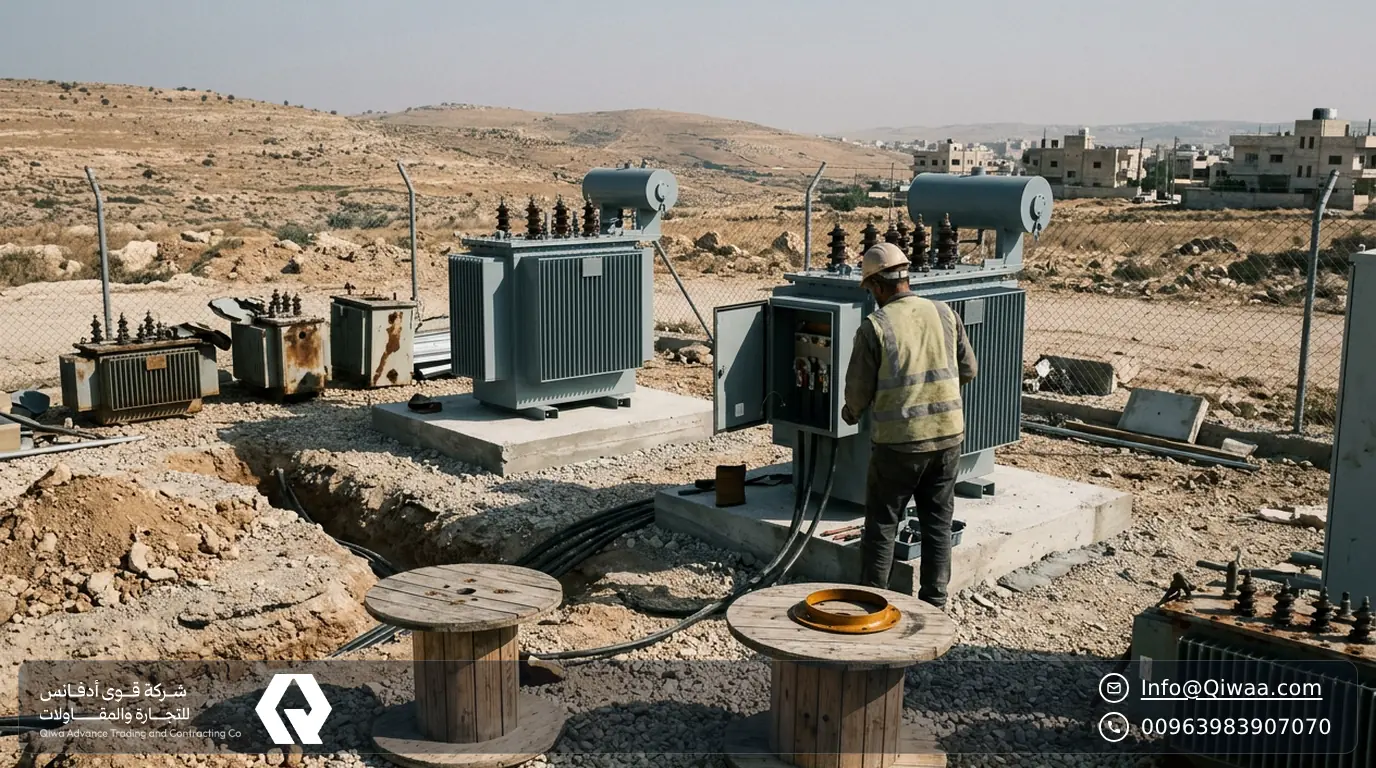
Assessing Payment Risk Before Bidding on Syrian Public Contracts
Before bidding on a government-funded project, contractors need to verify more than the budget allocation. The project’s funding status, spending priority, and payment terms determine how much working capital may be needed during execution.
Which Projects Can Continue Under Syria’s Spending Controls?
On September 28, 2026, Syrian authorities announced spending controls requiring public bodies to review investment projects, reduce non-essential expenditure, and prioritise essential services and financially justified commitments.
The measures protect necessary spending on healthcare, education, water, energy, security, public safety, salaries, and essential maintenance. Investment projects, however, are assessed according to their urgency, progress, existing contractual commitments, economic value, and available funding.
| Protected or eligible for continuation | Subject to review or postponement |
|---|---|
| Essential operating expenditure for water, energy, health, education, and public safety | Non-essential expenditure that can be reduced without disrupting services |
| Necessary operational and preventive maintenance | Non-urgent maintenance, improvements, or capital works |
| Priority infrastructure projects with verified funding and documented benefits | Investment projects that can be deferred without significant service or economic consequences |
| Advanced projects where suspension would create greater costs or contractual liabilities | New commitments on projects not approved as priorities |
| Externally funded projects meeting the conditions for exemption | Non-priority projects with uncommitted allocations |
Sources: SANA’s September 28 announcement and the September 30 official clarification.
For contractors, priority status does not guarantee timely payment. Before bidding, ask the contracting authority to confirm whether the project is approved to continue, whether funding and contractual commitments are in place, and what payment procedures apply.
A new water infrastructure project, for example, is not automatically exempt simply because water services are protected. Its investment status, priority, and financing must still be verified.
Budget Execution and the Cost of Delayed Payments
The Ministry of Finance’s first-half 2026 report allows contractors to compare planned spending with actual budget execution:
| Spending measure | First-half monthly average | Monthly equivalent of annual budget |
|---|---|---|
| Investment expenditure | USD 170 million | USD 241 million |
| Total public expenditure | USD 617 million | USD 876 million |
Calculated from first-half investment expenditure of USD 1.021 billion and total expenditure of USD 3.7 billion, against annual allocations of USD 2.888 billion and USD 10.516 billion, respectively.
By June 2026, approximately 35% of the annual investment budget had been executed. Spending may not occur evenly throughout the year, and these aggregate figures do not establish whether individual contractors have experienced payment delays.
Contractors should calculate financing costs using their own expected payment schedule, rather than assuming a delay from national budget figures.
Consider a hypothetical example:
- Outstanding financed amount: USD 200,000
- Monthly financing cost: 1.5%, assumed for illustration
- One additional month of financing: USD 3,000
- Two additional months: USD 6,000, assuming simple financing costs
The example assumes the full USD 200,000 remains financed throughout the delay. Actual costs depend on the contractor’s outstanding cash exposure, financing rate, and payment timing.
Before submitting a bid, test how an additional 30 or 60 days of financing would affect your margin. Where tender conditions permit, consider negotiating payment milestones, advance payments, and contractual remedies for late payment.
The key is to price the project’s actual financing exposure, not an assumed national payment delay.

12 Questions to Ask Before Bidding on a Syrian Public Contract
Before pricing a project funded by Syria’s 2026 budget, use these 12 questions to assess funding certainty, payment terms, and the working capital your company may need during execution.
- Project priority: Is the project approved to proceed under the September 2026 spending controls, or could its funding be reviewed or postponed?
- Budget allocation: Can the contracting authority confirm an approved allocation covering the planned works and relevant financial year?
- Funding commitment: Has the expenditure been formally authorised and committed, or is the allocation still subject to reassessment?
- Funding source: Will payments come from the state budget, an external grant, a loan, or another source? What conditions govern disbursement?
- Payment certificates: Who approves completed works and payment certificates, how long does certification take, and when does payment become contractually due?
- Advance payment: Is an advance available, what guarantee is required, and how will the advance be recovered from subsequent payments?
- Currency and exchange risk: What currency will be used for payment, and how will exchange-rate changes affecting materials and other costs be handled?
- Contract guarantees: What are the amounts, costs, validity periods, and release conditions for bid, advance payment, and performance bonds?
- Late-payment remedies: What remedies or compensation, if any, are available if the public employer pays after the contractual deadline?
- Delays and suspension: Can delayed payment justify an extension of time or suspension of work under the applicable contract and law?
- Price adjustments: Are contract prices fixed, or can material, labour, and other cost increases qualify for adjustment?
- Working capital: How much cash must your company finance if certification or payment takes 30, 60, or 90 days longer than expected?
Before submitting your bid, test these conditions against your project cash-flow forecast. A confirmed budget allocation does not guarantee payment on a specific date, and an otherwise profitable contract can become difficult to finance if several payment certificates remain outstanding.
For tender procedures and supporting documents, see our guide to public tenders in Syria. Have a qualified Syrian public-procurement specialist review the applicable contract conditions before signing.
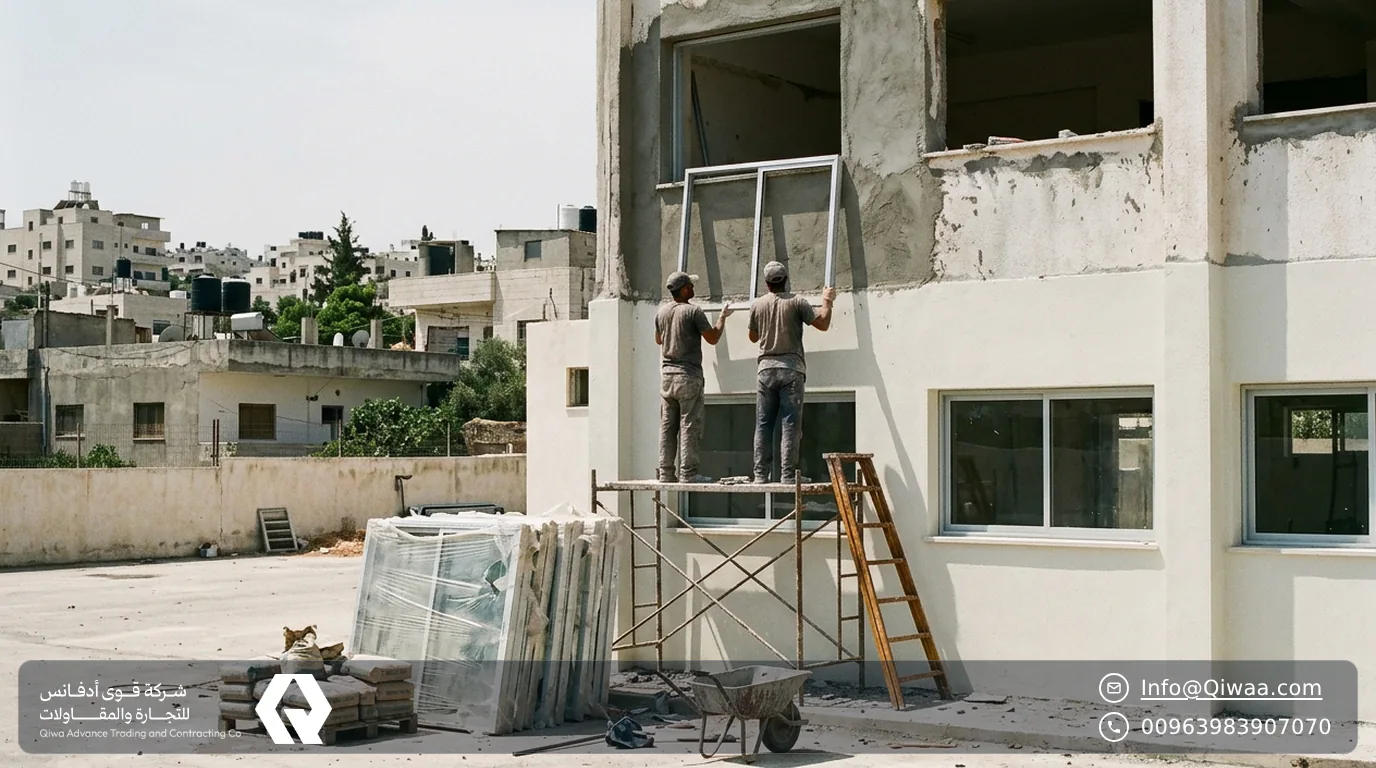
How Qiwaa Advance Supports Public Water Projects in Syria
Water and wastewater projects are among the infrastructure works supported by Qiwaa Advance through two business divisions:
- Qiwaa Contracting: EPC services for water and wastewater networks, desalination facilities, and treatment plants.
- Qiwaa Trading: Construction and infrastructure material sourcing, including GRP pipe systems through our authorised agency with Saudi Arabia’s Amiantit Group.
Syria’s September 2026 spending controls protect essential water services, but new water infrastructure projects are not automatically exempt from investment spending reviews. Contractors must verify each project’s funding and payment conditions.
For a contractor facing payment uncertainty, a supply quotation should make the procurement commitment clear before bid submission, including the quoted price, currency, validity period, delivery schedule, and any adjustment conditions.
How Funding Sources Affect Contract Payments and Requirements
State-budget funding and international financing may involve different procurement and disbursement arrangements. Neither guarantees timely payment.
| Criterion | State-budget-funded contract | Internationally financed contract |
|---|---|---|
| Contracting and payment authority | Public employer, under the applicable budget and payment procedures | The designated employer or implementing agency, under the project financing arrangements |
| Funding verification | Confirm the approved allocation, financial commitment, and project priority | Confirm the financing agreement, available funding, and applicable disbursement conditions |
| Payment currency | Defined by the contract and applicable Syrian law | Defined by the contract and financing arrangements; foreign-currency payment is not automatic |
| Payment process | Subject to contract certification and public financial procedures | May require additional documentation or approvals under the funder’s procedures |
| Spending controls | Investment projects may be reviewed according to priority, progress, and commitments | Externally grant-funded projects were identified for continuation; other financing arrangements require separate verification |
| Bid qualification | Requirements follow the applicable public tender documents | Requirements follow the implementing agency’s procurement rules and tender documents |
| Guarantees | Bid, advance-payment, and performance guarantees as specified in the contract | Guarantee amounts, forms, and acceptable issuing banks depend on the procurement documents |
For contractors, the funding source is only the starting point. Before committing to procurement, confirm who will pay, when payment becomes due, what approvals are required, and whether your supplier’s payment schedule matches the expected project cash flow.
For additional guidance on internationally financed procurement, see our guide to UN tenders in Syria.
What to Send Qiwaa Advance for a Water Project Quotation
To assess a water infrastructure supply requirement, send us:
- BOQ and specifications: Pipe types, quantities, technical standards, and required product documentation.
- Project location: Delivery city, site location, and delivery conditions.
- Contract terms: Pricing and payment currency, relevant payment milestones, and any required price-adjustment conditions.
- Delivery schedule: Required shipment dates and construction milestones.
- Tender requirements: Bid submission deadline and the required quotation validity period.
For GRP pipes, include the specified diameter, pressure class, stiffness class, and jointing requirements.
Through Qiwaa Trading, we can review relevant materials against the project’s technical requirements and coordinate a written quotation covering the proposed specifications, quantities, pricing basis, validity, and delivery terms, subject to confirmation.
Before finalising your bid, compare the supplier quotation with your contract’s payment schedule and working-capital requirements. Check whether advance payments, delivery costs, and currency changes could create financing obligations before you receive payment from the employer.
Contact Qiwaa Advance with your BOQ, specifications, and delivery schedule to discuss suitable pipe supply options or related EPC requirements for your water project.
Also read: Syria Reconstruction Projects 2026: Investment Opportunities and Costs
FAQs About Syria’s 2026 Budget and Contractor Payments
How Large Is Syria’s 2026 Budget?
According to the Ministry of Finance’s 2026 Citizen Budget, planned expenditure totals USD 10.516 billion, against estimated revenue of USD 8.716 billion and a projected deficit of approximately USD 1.799 billion. These are annual budget estimates, not actual spending or confirmed payments to contractors.
Do Syrian Public Bodies Pay Contractors Late?
The available Ministry of Finance reports do not provide contractor-level payment delays or outstanding arrears. National spending figures therefore cannot establish whether a particular public body pays late. Before bidding, verify the employer’s payment procedures, certificate approval deadlines, and contractual remedies for delayed payments.
Which Projects Are Exempt from Syria’s Spending Controls?
The September 2026 measures protect salaries, essential public services, and necessary maintenance. Advanced projects, externally funded commitments, and projects with documented economic benefits may qualify for continuation under specified conditions. New construction projects in essential sectors are not automatically exempt and must be assessed against the applicable priorities and funding requirements.
How Is Syria Financing Its 2026 Budget Deficit?
The Ministry of Finance’s first-half report recorded a USD 1.005 billion deficit, covered through short-term investment financing repayable within one year. The report does not disclose sufficient details about the financing instruments or repayment arrangements to assess their direct effect on contractor payments.
Sources
- Syria prepares to issue sovereign sukuk (in Arabic), Enab Baladi, 19 July 2026
- Syrian Finance Minister: USD 1.8 billion budget deficit in 2026 (in Arabic), Enab Baladi, 9 April 2026
- Syria’s budget rises to USD 10.5 billion in 2026 (in Arabic), Al Jazeera Net, 20 March 2026
- Al-Sharaa: USD 10.5 billion Syrian budget for 2026 (in Arabic), Annahar, 20 March 2026
- Spending growth pressures the Syrian budget despite revenue doubling to USD 2.7 billion in the first half (in Arabic), Annahar, 31 August 2026
- Syrian Finance Ministry Reshapes Spending Priorities, Enab Baladi English, 28 September 2026
- Energy Revenues Fund 55% of Syria’s Treasury, but at What Cost?, Enab Baladi English, 3 October 2026
- A billion dollars in half a year: can sukuk address the budget deficit? (in Arabic), Enab Baladi, 4 October 2026
- Finance Minister: spending rationalization measures protect essential services and do not affect salaries or wages (in Arabic), SANA, 28 September 2026
- What does government spending rationalization include and exclude? (in Arabic), SANA, 30 September 2026
- Syria, Qatar sign $147m deal to upgrade key road infrastructure, Arab News, 26 October 2026