

A reconstruction or investment project in Syria can lose time and money before execution even begins if its financing plan targets the wrong institution or relies on opportunities that have not been officially announced. For investors, project owners, and contractors comparing Syrian Development Fund vs Sovereign Fund, the critical question is which fund’s mandate aligns with their project and whether a formal financing, investment, or contracting route is actually available.
In this guide, we explain the differences between the two funds, including their objectives, funding sources, and approaches to reconstruction financing and investment. We also examine the Development Fund’s qard hasan (interest-free loan) provision and the requirements to verify before seeking financing, pursuing an investment opportunity, or preparing a tender proposal, helping you avoid unsuitable routes and make better-informed project decisions.
Where the Syrian development and sovereign funds overlap
The Syrian Development Fund and Syrian Sovereign Fund share a similar institutional framework. Established under Decrees No. 112 and 113 of 2025, respectively, both have legal personality, financial and administrative independence, and direct affiliation with the Presidency. Their activities also intersect in sectors such as infrastructure and economic development, where projects may serve both public needs and broader economic objectives.
For investors and project developers, this overlap becomes important when evaluating opportunities that combine infrastructure rehabilitation with productive or revenue-generating assets. A project’s sector alone does not establish which fund has the authority to finance, invest in, or contract its activities. Even when a project aligns with the objectives of both institutions, the responsible entity and its role must be established through the relevant official framework.
Understanding these shared characteristics helps investors recognize potential areas of overlap without assuming that the funds offer interchangeable financing or investment opportunities.

The Syrian Development Fund
Established under Presidential Decree No. 112 of 2025, the Syrian Development Fund is a public economic institution supporting Syria’s recovery through development financing and reconstruction initiatives. For investors, contractors, and project owners, understanding its mandate is essential to distinguishing projects that fall within its objectives from financing or contracting opportunities that are formally available.
Objectives of the Fund
The founding decree identifies three principal objectives:
- Reconstruction Financing: Contributing to the rebuilding and rehabilitation of damaged facilities and infrastructure as part of Syria’s recovery.
- Infrastructure Rehabilitation and Development: Supporting essential facilities and services, including roads, bridges, water and electricity networks, airports, ports, and telecommunications infrastructure.
- Project Financing Through Qard Hasan: Providing a legal basis for financing projects through qard hasan (interest-free loans), subject to the terms of the relevant financing arrangements.
The Fund has also begun allocating resources to specific development priorities. In May 2026, it announced an initial allocation of $15 million for education, healthcare, economic empowerment, removal of war remnants, and early-response programs. This indicates where resources have been directed, but it does not establish an open financing or procurement opportunity for every business operating in those sectors.
The Syrian Development Fund’s sources of funding
Under Article 12 of Decree No. 112, the Fund’s financial resources come from three principal sources:
- Individual donations from citizens inside and outside Syria.
- Recurring contributions through the Permanent Donor program.
- Grants, gifts, and donations accepted under applicable laws and regulations.
For businesses assessing Syria reconstruction financing, an important distinction is that pledged contributions, collected funds, and approved project allocations are not interchangeable. The availability of funding for a particular project must be established through its official financing or contracting arrangements.
The decree also provides for financial and disbursement regulations, together with periodic financial oversight involving independent accounting firms.
How does Qard Hasan financing work through the Syrian Development Fund?
A qard hasan is an interest-free loan requiring repayment of the principal under agreed terms. Unlike a grant, it creates a repayment obligation, making the financing conditions relevant to a project’s financial feasibility and cash-flow planning.
Although Decree No. 112 recognizes qard hasan as a financing mechanism, it does not establish specific loan amounts, repayment periods, borrower eligibility criteria, or an application procedure. The availability of financing must therefore be confirmed through a separate official program or announcement.
Before treating such financing as part of your project’s funding structure, establish:
- Project Eligibility: Which applicants, sectors, project types, and locations qualify.
- Financing Terms: The amount available, repayment schedule, required guarantees, and any applicant contribution.
- Application and Approval: The responsible institution, submission requirements, assessment process, and evidence of formal approval.
- Disbursement Conditions: When funds become available, whether payments are linked to project milestones, and what obligations apply during implementation.
For contractors and suppliers, financing approval and contracting authorization must be distinguished from preliminary project discussions. Equipment orders, subcontracting commitments, and material purchases should be supported by documented financing and contractual arrangements rather than expectations of future funding.
Where an approved development project proceeds to construction or procurement, Qiwaa Contracting and Qiwaa Trading offer services relevant to infrastructure execution and material supply. Their role concerns the project’s technical and commercial requirements, while financing approvals remain the responsibility of the authorized funding institutions.
Read also: Syria Reconstruction Projects 2026: How to Read Opportunities and Costs Before Investing
The Syrian Sovereign Fund
Established under Presidential Decree No. 113 of 2025, the Syrian Sovereign Fund is mandated to invest resources, develop productive projects, and bring inactive government assets into economic use. For investors and project developers, its significance lies in the potential to participate in asset-based investments and commercially structured projects, provided that a specific opportunity and its participation terms have been formally established.
The Role of the Fund
Article 3 of the founding decree establishes four objectives:
- Direct Development and Production: Implementing projects that expand productive capacity and support economic activity.
- Resource Investment: Making productive use of human resources, material assets, and technical expertise.
- Economic Diversification: Stimulating the national economy through evaluated investments across different activities.
- Government Asset Development: Transforming inactive government assets into productive resources.
The fund’s investment activity is reflected in developments announced during 2026. On August 31, it signed an agreement with UAE-based Arada Group for the $7 billion New Damascus development project. In September, fund officials also discussed potential joint ventures with visiting US companies.
These announcements demonstrate investment and partnership activity, but they do not establish that the projects are completed or open to additional investors. For any specific opportunity, the asset involved, investment structure, authorized contracting party, and participation terms must be confirmed through the relevant project documentation.
For investors developing projects through the Syrian Sovereign Fund, securing an investment agreement is only one part of bringing an asset into operation. Infrastructure development, facility rehabilitation, and material procurement require technical and execution capabilities aligned with the approved project scope. In this context, Qiwaa Contracting provides EPC and infrastructure construction services, while Qiwaa Trading supports construction and industrial material sourcing and logistics. Their involvement would depend on the project’s requirements and applicable contracting procedures.
The Syrian sovereign Fund’s financial resources
Under Article 13 of Decree No. 113, the fund draws its resources from four categories:
- State Allocations: Appropriations and funds allocated by the government.
- Investment Revenues: Income generated through the fund’s activities.
- Fixed Assets: The value of fixed assets forming part of the fund’s resources.
- Grants and Contributions: Subsidies, grants, and donations.
For investors assessing Syrian Sovereign Fund investments, these categories must be interpreted carefully. The recorded value of an asset does not represent cash available to finance its development, while a publicly announced investment value does not necessarily establish the amount of capital already committed or disbursed.
Accordingly, a project’s financial feasibility must be assessed against its own funding arrangements, capital requirements, and expected revenue model rather than the fund’s overall resource categories.
Governance of the Syrian Sovereign Fund
Article 4 of Decree No. 113 provides for quarterly and annual reporting to the Presidency, financial audits by bodies independent of the fund, and ongoing monitoring. These provisions establish the fund’s legal oversight framework; they do not, by themselves, demonstrate that financial reports or independent audit findings are publicly available.
In July 2026, Finance Minister Mohammed Yisr Barnieh stated that the fund’s assets and returns belong to the Syrian state and that companies affiliated with it receive no special tax exemptions merely because of their association with the fund.
For prospective investors, the critical considerations extend to the legal status of the underlying asset, the authority of the entity entering the agreement, and the allocation of investment rights, financial obligations, and returns. These matters must be established through the applicable legal framework and project-specific agreements before an investment commitment is made.
Read also: Investment in Syria 2026: Practical Opportunities
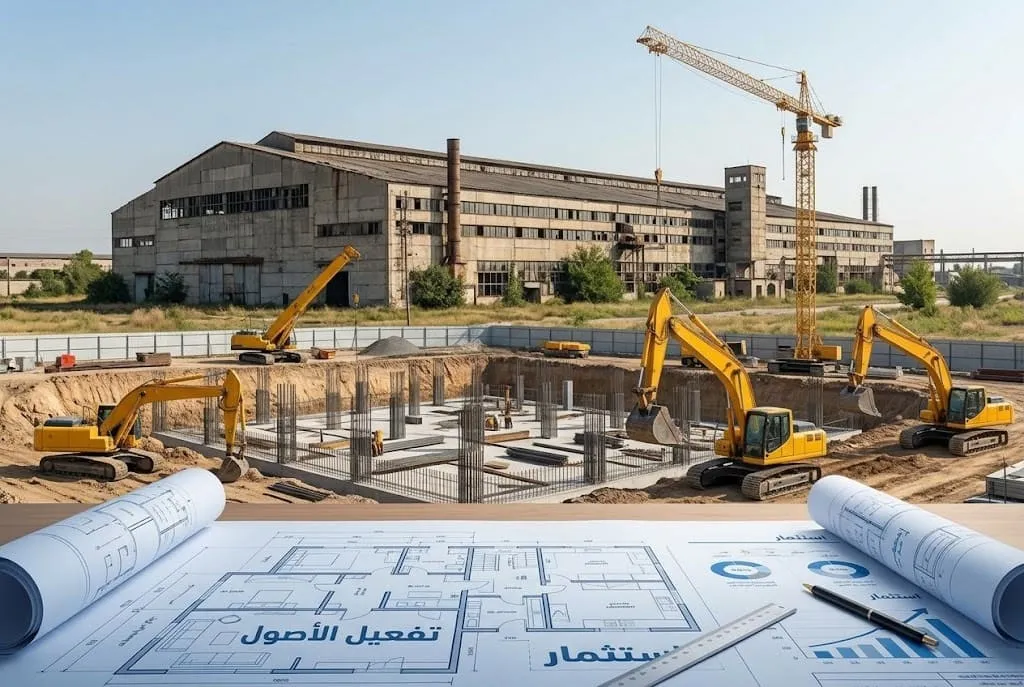
How Syria’s Development and Sovereign Funds differ in financing and investment
The main distinction between the two funds lies in how projects are financed, how private businesses can participate, and what financial obligations may follow. For investors, developers, and contractors, understanding these differences helps determine whether to pursue development financing, assess an investment partnership, or monitor opportunities to deliver contracted works.
The following comparison focuses on the implications for project financing, private-sector participation, and contractual responsibilities.
| Comparison Criterion | Syrian Development Fund | Syrian Sovereign Fund |
|---|---|---|
| Project Financing Model | Supports reconstruction and infrastructure development, with qard hasan recognized as a financing instrument under its founding decree | Undertakes development and productive projects and invests resources and assets to generate economic value |
| Private-Sector Participation | Businesses may seek financing or participate in project delivery where an officially established program or procurement arrangement permits it | Businesses may participate as investors, project partners, operators, or contractors where the approved project structure provides for their involvement |
| Financial Obligations | Qard hasan financing requires repayment of the principal under the applicable terms; other project funding arrangements depend on their specific conditions | Capital commitments, financial risks, operating obligations, and returns depend on the investment or contractual arrangement |
| Project Revenue and Returns | Development and service outcomes guide the fund’s mandate; the financial viability and repayment capacity of a financed project remain relevant | Asset productivity, commercial viability, and investment returns are central considerations in structuring productive projects |
| Required Documentation | The applicable program conditions, financing approval, disbursement arrangements, and any relevant procurement documents | Evidence of asset ownership or control, contracting authority, participation rights, investment terms, and allocation of financial obligations and returns |
| Availability of Opportunities | The legal authority to provide financing does not establish that a particular loan program or application window is open | The authority to invest state assets does not mean those assets or projects are automatically available to private investors |
For a private business, the distinction also affects its contractual position. A company seeking Syrian Development Fund financing may face repayment obligations if it receives a qard hasan loan, while a contractor executing a fund-supported project operates under a separate construction or supply contract. Participation in Syrian Sovereign Fund investments, meanwhile, depends on whether the business is entering as an investment partner, an operator, or a contracted service provider, with different rights and financial exposure in each case.
How to identify the right Fund for your project
A project that falls within a fund’s mandate is not necessarily eligible for its financing or investment programs. For investors, developers, and contractors, pursuing the wrong route can consume resources in preparing proposals, financial models, or procurement plans without a confirmed opportunity to participate.
The starting point is to establish whether your project requires development financing, an asset-based investment arrangement, or a contract to deliver specific works.
The following scenarios help you determine which route is relevant to your project:
- Rehabilitating Essential Infrastructure: Projects involving damaged water networks, schools, or public facilities align with the Syrian Development Fund’s reconstruction and infrastructure objectives. However, participation depends on an authorized project, financing arrangement, or procurement process—not the project’s social value alone.
- Developing a State-Owned Asset: If your proposal involves redeveloping or operating a government asset through a revenue-generating business model, the Syrian Sovereign Fund may be relevant. First, establish whether the asset falls within an authorized investment arrangement and whether private participation is formally permitted.
- Seeking Interest-Free Project Financing: The Development Fund’s founding decree provides for qard hasan, but it does not establish an automatic financing entitlement. A business should assess this option only against an officially announced program specifying eligible applicants, financing terms, and application procedures.
- Pursuing Construction, Supply, or Consultancy Contracts: Contractors, suppliers, and engineering consultants participate through the procurement arrangements of the responsible implementing entity. Before allocating resources to a bid, identify the authorized client, confirmed project scope, financing status, and applicable tender or qualification requirements.
- Financing a Private Commercial Project: A privately owned industrial or commercial development does not automatically qualify for either fund. Unless an applicable financing program or investment arrangement has been formally established, the project’s funding strategy must be assessed independently.
For projects that advance to the execution stage, the next consideration is whether the required construction and supply packages can be delivered within the approved scope. This is where Qiwaa Contracting, through its EPC and infrastructure services, and Qiwaa Trading, through material sourcing and logistics, can support the project’s implementation requirements under the applicable contracting arrangements.

How to prepare for financing, investment, or tenders in Syria
A technically viable project can face delays or unnecessary preparation costs if its proposal is developed without confirming the applicable financing or contracting procedure. Before committing resources, investors, project owners, and contractors should establish whether an official opportunity exists, which institution is authorized to receive applications or proposals, and what documentation is required at that stage.
The preparation requirements differ according to how your business intends to participate:
| Participation Route | What to Verify First | Documentation to Prepare |
|---|---|---|
| Development Financing | Whether the Syrian Development Fund has announced a program covering the proposed project, eligible applicants, financing terms, and submission procedures |
|
| Investment Partnership | Whether a Syrian Sovereign Fund asset or project is formally available for private participation, the authorized contracting entity, and the proposed investment structure |
|
| Construction, Supply, or Consultancy Contracts | Whether an authorized implementing entity has issued a tender, request for proposals, or prequalification notice, together with its eligibility and evaluation requirements |
|
The level of documentation also depends on the stage of the process. An initial expression of interest may require an outline of the proposed project or qualifications, while a formal tender or financing application can require detailed technical, financial, and legal submissions.
Submitting a proposal does not establish financing approval, investment rights, or a contract award. Financial commitments, equipment orders, and procurement arrangements should therefore be based on the applicable written approvals and contractual obligations, rather than on a project’s general alignment with either fund’s objectives.

How Qiwaa Advance Supports Development and Investment Projects in Syria
For investors pursuing projects aligned with the Syrian Development Fund or Syrian Sovereign Fund, securing financing or an investment agreement is only part of the process. Turning an approved project into an operational asset requires engineering, construction, equipment, and material supply capabilities. At Qiwaa Advance, we provide contracting and procurement services that help project owners and investors address these requirements during project development and execution.
For infrastructure rehabilitation and reconstruction projects within the Syrian Development Fund’s mandate, our Qiwaa Contracting division provides Engineering, Procurement, and Construction (EPC) services covering water networks, treatment facilities, concrete structures, and building rehabilitation. These capabilities are relevant to projects focused on restoring essential infrastructure and public services.
For productive facilities and asset-development projects associated with the Syrian Sovereign Fund’s investment objectives, our contracting capabilities can support construction and infrastructure requirements, while Qiwaa Trading provides access to construction and industrial materials, equipment sourcing, and supply-chain logistics.
By connecting contracting capabilities with material sourcing, we help investors and project owners address two closely related execution requirements: delivering the planned works and securing the materials and equipment needed to complete them. Our involvement depends on each project’s approved scope, procurement arrangements, and contractual requirements. Financing decisions, investment approvals, and participation rights remain with the authorized institutions.
Whether you are evaluating a reconstruction initiative or planning an investment in a productive facility, share your project’s location, development stage, technical requirements, and expected timeline. We can discuss how our contracting and supply services fit its execution needs.
Contact Qiwaa Advance to explore the contracting, infrastructure, and supply solutions relevant to your development or investment project in Syria.
Read also: Infrastructure Contracting in Syria: Choosing the Right Contractor
FAQs on Syrian Development Fund vs Sovereign Fund
FAQs About the Syrian Development and Sovereign Funds
What Is the main difference between the Syrian Development Fund and the Sovereign Fund?
The Syrian Development Fund focuses on reconstruction, infrastructure rehabilitation, and development financing, including qard hasan as an authorized financing mechanism. The Syrian Sovereign Fund focuses on productive investments, resource development, and bringing underutilized government assets into economic activity. The practical distinction lies in the financing or investment arrangement available for a specific project.
Can businesses apply for Qard Hasan financing through the Syrian Development Fund?
Decree No. 112 of 2025 authorizes financing through qard hasan (interest-free loans) but does not establish a general application window, financing limits, or borrower eligibility criteria. Businesses must verify whether an official program is available and review its financing, repayment, and application conditions before treating it as a funding option.
Can private investors participate in Syrian Sovereign Fund Projects?
The Syrian Sovereign Fund has announced investment agreements and discussions involving private and international companies. However, these developments do not mean that every project accepts additional investors. Participation depends on the specific opportunity, authorized investment structure, contractual terms, and applicable approval procedures.
Does every infrastructure project qualify for Development Fund financing?
No. Infrastructure projects may align with the Development Fund’s objectives, but sector alignment does not establish financing eligibility. An infrastructure project could also form part of a commercially structured investment. The responsible institution, available financing arrangement, and participation requirements must be determined for each project.
How can contractors and suppliers participate in projects associated With either Fund?
Contractors and suppliers should identify procurement notices, requests for proposals, or qualification procedures issued by the authorized contracting entity. A fund’s involvement does not necessarily mean it directly awards construction or supply contracts. Eligibility, technical requirements, pricing procedures, and contractual responsibilities depend on the specific procurement arrangement.
What should investors verify before committing to a fund-related project?
Confirm the project’s official status, asset ownership or relevant legal rights, authorized contracting entity, and documented financing or investment commitments. Review payment or disbursement arrangements, financial obligations, and the proposed allocation of risks and returns. Public announcements and preliminary discussions should not be treated as substitutes for binding approvals and agreements.
Sources
- SANA – Establishment of the Development Fund under Decree No. 112 of 2025
- Full text of Decree No. 112 of 2025 – The Syrian Memory
- SANA – Establishment of the Sovereign Fund under Decree No. 113 of 2025
- Full text of Decree No. 113 of 2025 – The Syrian Memory
- SANA – Development and Sovereign Funds step up activity in the eastern governorates
- SANA – Finance Minister’s clarifications on the Sovereign Fund, July 2026