

Choosing cement based on price or availability alone can lead to costly mistakes in construction projects. A cement type suitable for general concrete work may not meet the requirements of foundations exposed to sulfate-rich soil, water-retaining structures, or projects with specific strength and durability demands. For contractors and project owners in Syria, the challenge is selecting a material that meets the technical specifications without creating unnecessary costs or supply complications.
Understanding how to choose the right cement type for construction starts with evaluating the project’s application, exposure conditions, required performance, and applicable standards. In this guide, we at Qiwaa Advance explain how to compare Portland, slag, and pozzolanic cements, assess their suitability for different construction applications, and consider material costs and supply requirements in Syria. This will help you evaluate your options and make an informed purchasing decision based on your project’s engineering requirements.
Types of cement and their technical specifications
Choosing between types of cement is not simply a matter of comparing prices or product names. A cement that meets the strength requirements of one project may be unsuitable for another where sulfate exposure, heat development, or early construction schedules impose different demands. For project owners, engineers, and procurement teams, the priority is to match the cement’s documented properties to the concrete specification before committing to a supply order.
At Qiwaa Advance, we distinguish between cement classifications and the performance requirements of the finished concrete. The following comparison examines three cement families relevant to construction projects in Syria, highlighting where their technical differences matter most.
Classifying cement types under ASTM specifications
The ASTM designation provides a starting point for evaluating a cement product, but it should be checked against the project’s adopted specifications and the manufacturer’s supporting documentation.
- Ordinary Portland Cement (Type I): Covered by ASTM C150/C150M, this is a general-purpose Portland cement intended for applications where special properties, such as high sulfate resistance or high early strength, are not specified. Its suitability still depends on the concrete mix design and required performance.
- Portland Blast-Furnace Slag Cement (Type IS): Classified under ASTM C595/C595M, this blended hydraulic cement incorporates blast-furnace slag. Its performance depends on the product’s composition and properties, particularly where heat development, strength gain, and durability are relevant. It should not be confused with separately supplied slag added during concrete batching.
- Portland-Pozzolan Cement (Type IP): Also covered by ASTM C595/C595M, this cement incorporates pozzolanic materials. Depending on their composition and reactivity, these materials can influence strength development, heat of hydration, and concrete permeability. The product’s technical designation and test results are essential to determining its suitability.
Cement properties and their effect on concrete
The main differences become clearer when you examine how each cement can affect construction schedules, exposure resistance, and long-term concrete performance.
| Property | Ordinary Portland Cement (Type I) | Slag Cement Blend (Type IS) | Portland-Pozzolan Cement (Type IP) |
|---|---|---|---|
| Early Strength Development | Often provides relatively rapid early strength under comparable conditions, but actual results depend on the product and mix | Early strength may develop more slowly, particularly with certain slag proportions or low curing temperatures | Varies with pozzolan type, reactivity, proportion, and curing conditions |
| Heat of Hydration | May produce more heat than suitable blended alternatives | Some formulations reduce heat development, which can be valuable in mass concrete | Certain formulations can reduce heat development, depending on the pozzolanic material and blend |
| Concrete Permeability | Depends strongly on the water-to-cementitious materials ratio, compaction, and curing | Can contribute to lower permeability when properly proportioned and cured | Can improve resistance to fluid penetration as pozzolanic reactions develop, with adequate curing |
| Sulfate Resistance | Type I does not carry a specific sulfate-resistance classification | Products with documented MS or HS designations may be considered where the corresponding resistance is specified | Products with documented MS or HS designations may be considered where the corresponding resistance is specified |
| Curing and Temperature Considerations | Requires appropriate moisture and temperature control to achieve specified performance | Strength development can be more sensitive to low temperatures and inadequate curing | Performance depends on curing duration, temperature, and pozzolan characteristics |
| Key Selection Consideration | General-purpose applications without additional cement performance requirements | Projects where verified heat, permeability, or exposure-related properties justify its selection | Projects where documented blended-cement performance meets durability and construction requirements |
These are performance tendencies, not guaranteed results for every product. For example, choosing a slag or pozzolanic cement does not automatically make concrete sulfate-resistant. Where sulfate exposure is a concern, the specified resistance classification, exposure conditions, water-to-cementitious materials ratio, and overall concrete mix design must be considered together.
The same applies to early strength and heat of hydration. A blended cement may offer advantages for a large concrete pour but create scheduling challenges if its strength development does not match the planned construction sequence. The appropriate choice depends on tested performance under conditions representative of the project.
Before approving a cement product or changing an existing supplier, the project team should verify its full ASTM designation, technical data sheet, manufacturer’s conformity documentation, and relevant test results. Where necessary, representative trial mixes and additional testing should be specified and evaluated by the responsible engineering team.
For procurement decisions, cement selection should therefore account for more than unit price. Material availability, required concrete performance, construction timing, and the cost implications of curing or potential rework all affect the suitability of a proposed product.
Through Qiwaa Trading, we support the sourcing of construction and infrastructure materials. If you are evaluating cement supply options, share your project’s specifications, required quantities, location, and delivery schedule so we can discuss sourcing requirements relevant to your work.
Contact Qiwaa Advance to discuss your construction material requirements.
Read also: GGBS and Pozzolana Supply in Syria: Cement Alternatives for Green Concrete
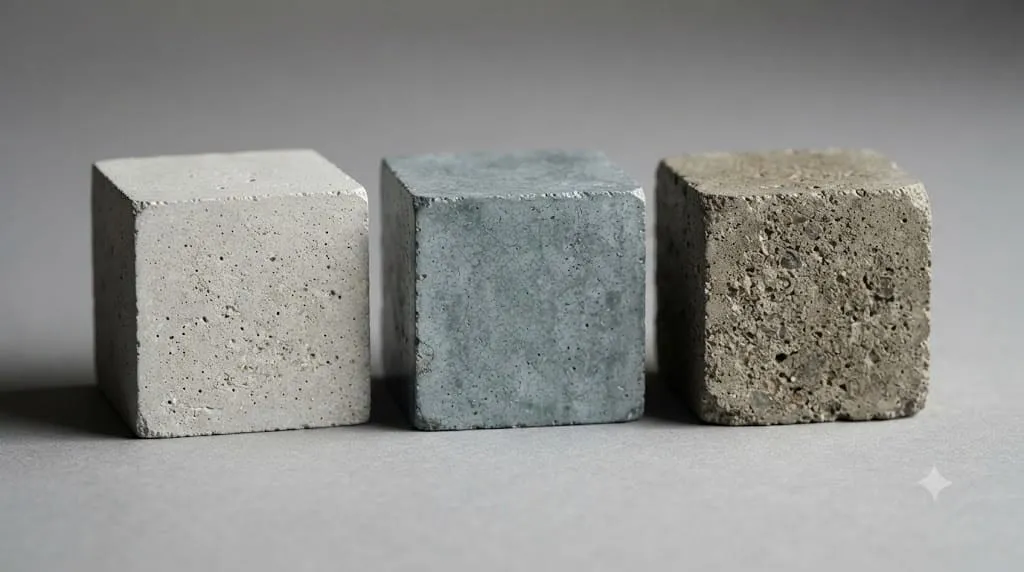
How cement type affects structural performance and project costs
For contractors and project owners, the difference between cement types becomes particularly important when construction schedules, ground conditions, and long-term durability requirements place different demands on the concrete. A cement may satisfy the specified strength class yet still be unsuitable for the required early-strength development, sulfate exposure, or temperature conditions.
Understanding these effects helps you evaluate the material before approving a purchase, rather than discovering a mismatch during construction or after the structure enters service.
Risks of using the wrong cement type
Choosing the right cement type helps prevent delays, unnecessary costs, and durability problems—but the decision must reflect the entire concrete mix and its intended application.
Three issues deserve particular attention:
- Construction delays: Different Portland, slag, and pozzolanic cement formulations can develop early strength at different rates. If strength development does not match the construction schedule, formwork removal or subsequent loading may need to be delayed. Review the approved mix’s strength-development results before relying on planned striking dates.
- Cracking and placement problems: Cement composition influences heat generation, setting behavior, and interaction with admixtures. For large concrete pours, unsuitable material selection or inadequate temperature control can increase thermal-cracking risks. Changes in setting or workability can also disrupt placing and finishing operations.
- Premature deterioration: Concrete exposed to aggressive soil or groundwater needs a cementitious system suited to the environmental conditions. An unsuitable combination can increase vulnerability to chemical attack, while inadequate compaction, curing, or crack control can compromise durability even when the specified cement is used.
At Qiwaa Advance, we help contractors and project owners assess cement supply options against their project’s technical specifications and intended applications. This helps address material suitability and supporting documentation before procurement, while the responsible engineering team retains authority over mix design and concrete acceptance.
How cement affects sulfate resistance and water and salt ingress
Sulfate resistance of cement concerns the cementitious system’s ability to withstand harmful reactions caused by sulfates in soil or groundwater. Water and chloride ingress present related but different durability risks: they depend heavily on the concrete’s pore structure, cracking, and exposure conditions.
For foundations, underground structures, water infrastructure, and other exposed elements, the selection process should address three questions.
1. What do the soil and groundwater conditions require?
The severity of sulfate exposure should be established through relevant site investigations and the project’s technical specifications. Under ASTM C150, Type V Portland cement is intended for applications requiring high sulfate resistance.
Blended cements classified as Type IS or Type IP under ASTM C595 may offer useful durability properties, but those designations alone do not establish sulfate resistance. Where required, check for an applicable MS or HS designation or other test evidence accepted by the project specification.
2. Will the concrete mix adequately limit water and chloride ingress?
Cement selection is only part of the answer. The water-to-cementitious materials ratio, mixture proportions, compaction, curing, and crack control influence how water and dissolved salts move through concrete. Chloride ingress can increase the risk of reinforcement corrosion, even when the cementitious system provides adequate sulfate resistance.
3. What supporting evidence is needed before material approval?
Review the manufacturer’s technical data, applicable compliance certificates, and relevant test results against the approved specification. Where the concrete formulation or material source changes, additional mix trials or performance verification may be necessary.
Through our cement and building-material supply activities, Qiwaa Advance can help project teams identify suitable product options, review available technical documentation, and coordinate procurement requirements. Cement selection must still form part of an approved concrete design, including any waterproofing or protective measures required for the exposure conditions.
Total project cost and cement selection
The lowest cement price does not necessarily produce the lowest construction cost. A cheaper product may require different mix proportions, additional admixtures or testing, or more time before subsequent construction activities can proceed. Conversely, a higher-priced cement is not automatically the better choice unless its performance offers a measurable benefit to the project.
When comparing the types of cement available for your project, evaluate the cost of achieving the specified concrete performance, including:
- Material and testing costs: Cement consumption in the approved mix, admixture requirements, trial mixes, and quality-control testing.
- Construction costs: Strength-development time, curing arrangements, formwork cycles, labor, and equipment utilization.
- Supply costs: Transport, delivery sequencing, storage conditions, material handling, and continuity of supply.
- Long-term costs: Durability-related maintenance and potential repairs associated with inadequate performance under the expected exposure conditions.
The appropriate comparison is therefore the cost of compliant, in-place concrete, with long-term durability considered where it materially affects the project’s economics.
For contractors working with tight schedules or demanding specifications, procurement decisions also need to account for product availability and delivery reliability. At Qiwaa Advance, we connect cement sourcing with the project’s required specifications, quantities, and supply schedule, helping buyers assess suitable options before placing orders.
If you are sourcing cement for foundations, infrastructure, industrial facilities, or large concrete pours in Syria, contact Qiwaa Advance with your project specifications, estimated quantities, and delivery requirements. We can discuss suitable cement supply options and the technical documentation needed for procurement.
Read also: Concrete Admixtures in Syria: Improve Ready-Mix Quality
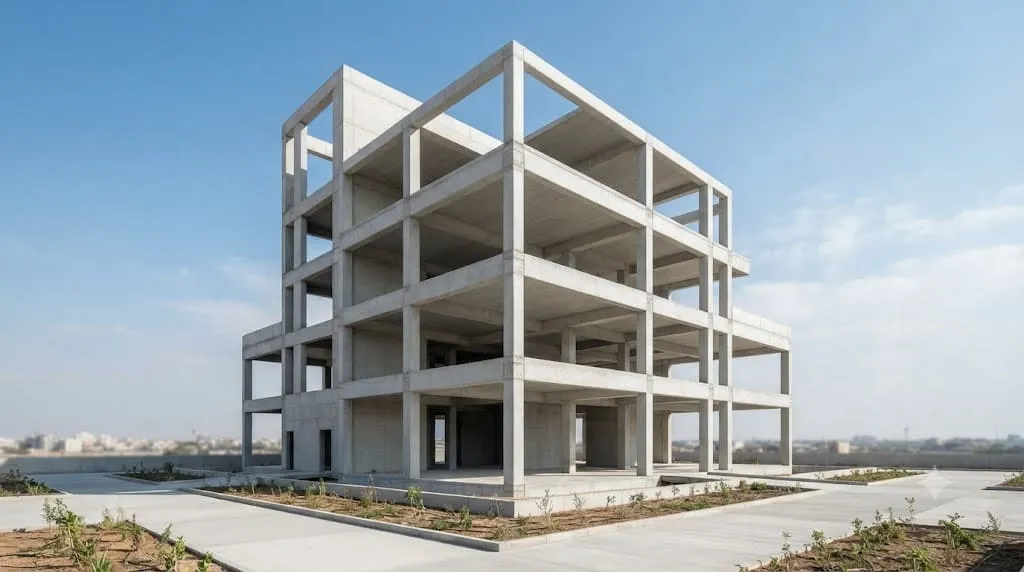
How to choose the right Cement type for your project
Choosing between the types of cement available in Syria requires more than comparing strength grades and prices. A cement suitable for a residential slab may not meet the durability requirements of a foundation exposed to sulfate-rich groundwater or the temperature-control requirements of a large concrete pour.
Before selecting a product, assess the following factors against your project’s specifications:
- Soil and Water Exposure: Review laboratory results for sulfates in the soil and groundwater, and assess chloride exposure separately where reinforcement corrosion is a concern. The cement and concrete mix must meet the durability requirements of the actual exposure conditions.
- Strength and Construction Schedule: Check the strength required at each critical stage, particularly for formwork removal, loading, and subsequent construction activities. Compare these requirements with the product’s documented strength development.
- Pour Size and Site Temperature: Large concrete elements may require control of heat generation, while hot or cold weather can affect setting, strength development, and curing requirements.
- Concrete Mix Compatibility: Confirm that the cement works with the specified aggregates and chemical admixtures. Control the water-to-cementitious materials ratio and assess alkali-silica reaction risks where relevant through appropriate testing.
- Technical Compliance: Request the complete cement designation, applicable conformity documents, and relevant test reports. Use trial mixes to confirm performance where the project specifications require them.
- Supply and Project Cost: Consider product consistency, storage conditions, delivery reliability, and total concrete production costs—not just the cement price per tonne.
These checks help narrow the options before comparing Portland, slag-blended, and pozzolanic cements for specific applications.
When is Slag Cement a better fit than Portland Cement?
Slag-blended cement can be a suitable alternative to ordinary Portland cement when your project prioritizes temperature control during large pours or requires a concrete mix designed for low permeability and long-term durability.
It is particularly worth evaluating for:
- Mass concrete foundations and thick structural elements, where reducing heat generation may help control temperature differences and the associated risk of thermal cracking.
- Water-retaining structures and infrastructure exposed to aggressive conditions, where the tested concrete mix demonstrates the required permeability and durability performance.
- Projects with sufficient curing time, where the construction schedule accommodates the cement’s actual strength development.
However, slag content alone does not establish sulfate resistance or guarantee improved durability. The product must satisfy the specified performance requirements.
Where early formwork removal, rapid loading, or cold-weather construction is critical, compare the tested early-age strength and setting characteristics with those of an appropriate Portland cement. If the slag-blended mix cannot meet the construction schedule, it should not be selected solely for its potential long-term benefits.
When do we use Portland-Pozzolan Cement (Type IP)?
Portland-pozzolan cement (Type IP) is another option for projects requiring controlled heat development and durable concrete. Its performance depends on the properties and reactivity of the pozzolanic material, the cement composition, and the complete concrete mix.
Type IP may be appropriate for:
- Large concrete pours, where a verified mix design helps manage heat development.
- Foundations and water-exposed structures, where testing confirms the required resistance to permeability and environmental exposure.
- Concrete requiring long-term durability, including mixes designed to reduce alkali-silica reaction risks when the selected pozzolan has demonstrated that capability.
The Type IP designation, as defined under ASTM C595, identifies a category of blended cement; it does not independently guarantee sulfate resistance, low permeability, or suitability for every structural application. Verify the product’s complete technical designation, strength development, and compatibility with the specified admixtures before approval.
At Qiwaa Advance, we help contractors and project owners align cement and cementitious-material supply with technical specifications, required quantities, and construction schedules. Final cement selection and concrete mix approval must remain consistent with the project’s engineering requirements and verified test results.
Get in touch to review your project requirements and identify the most suitable cement for each structural element.

Qiwaa Advance: The best partner for cement selection and supply in Syria
Selecting the right cement type is only part of the decision. For contractors and project owners in Syria, the next challenge is sourcing a product that matches the approved specifications, comes with the necessary technical documentation, and can be delivered in the quantities required by the construction schedule. A mismatch at this stage can lead to rejected materials, additional costs, or delays to concrete works.
At Qiwaa Advance, we help bridge the gap between technical requirements and material procurement. Through Qiwaa Trading, we support the sourcing and supply of cement, clinker, and cementitious materials, including GGBS and pozzolana. Our contracting and infrastructure capabilities also give us a practical understanding of how material specifications, quantities, and delivery schedules affect construction activities.
For projects requiring Portland, slag, or pozzolanic cement, we can support your procurement process through:
- Matching specifications to supply options: Reviewing the cement type, strength class, applicable standard, and performance requirements specified for the project to identify suitable sourcing options.
- Supporting technical verification: Requesting relevant manufacturer data sheets, certificates of conformity, and available test documentation so the responsible engineer or consultant can assess the proposed product before approval.
- Planning quantities and deliveries: Coordinating material quantities, packaging, transport, and delivery schedules with the project’s construction phases and site storage conditions.
- Managing proposed substitutions: Identifying differences in product type, classification, or source and referring proposed alternatives for technical approval before they are adopted.
Our role is to support informed purchasing and organized supply, while the project’s designer or supervising consultant remains responsible for approving material suitability and any changes to the specified cement.
If you are comparing the types of cement available in Syria for a new construction, rehabilitation, or infrastructure project, share your approved specifications, estimated quantities, project location, and delivery schedule. We can discuss sourcing options and the technical documentation relevant to your requirements.
Contact Qiwaa Advance to discuss cement supply options that meet your project’s approved specifications and execution needs.
Read also: Importing Building Materials to Syria and Key Customs Procedures in 2026

FAQs about choosing cement types
Can different cement types be used in the same construction project?
Yes. Different structural elements may require different cement properties depending on their exposure conditions, strength requirements, and construction specifications. Each concrete mix should be approved for its intended application, with clear material identification and storage controls to prevent accidental substitution. A change in cement type should also be reviewed against the approved mix design before use.
Which cement type is suitable for coastal construction in Syria?
Coastal projects require an assessment of chloride exposure, sulfate conditions, and the durability requirements of each concrete element. Sulfate-resistant cement, such as ASTM Type V, addresses sulfate attack but does not, by itself, prevent chloride-induced reinforcement corrosion. Cement selection must therefore be considered alongside concrete permeability, reinforcement cover, curing, and the applicable structural specifications.
Is pozzolanic cement more cost-effective than ordinary Portland cement?
It depends on the project’s concrete requirements, local supply prices, and construction schedule. A lower cement price does not necessarily reduce total project costs. Compare delivered material costs, required mix proportions, admixtures, testing, curing, and the effect of strength development on construction activities before selecting the more economical option.
What should you check before accepting a cement delivery?
Check the cement designation, applicable standard, and declared strength class against the approved project specifications. Review the technical data sheet and available manufacturer test certificates for relevant properties, including setting time and any specified sulfate-resistance classification. Verify the delivery’s product identification and batch traceability, inspect storage conditions, and confirm that the supplied cement matches the approved material.
Sources
- American Cement Association — Types of Cement
- ASTM C150/C150M-24 — Standard Specification for Portland Cement
- Federal Highway Administration — Sulfate Exposure and Permeability Guidance
- ASTM C595/C595M-25 — Standard Specification for Blended Hydraulic Cements
- Federal Highway Administration — Ground Granulated Blast-Furnace Slag Guidance