Not every Turkish or Russian commercial agreement in Syria represents an investment ready for execution. Turkish involvement includes signed project agreements and proposed developments, while Russian economic activity spans commodity supplies, ongoing negotiations, and legacy contracts. For investors, contractors, and suppliers, understanding these differences is essential to identifying credible business opportunities rather than relying on announcements alone.
This guide examines Turkish and Russian investment in Syria in 2026, comparing major projects, participating companies, and their documented progress. It also distinguishes direct investment from trade and preliminary agreements, explores potential contracting and supply opportunities, and explains the risks and market-entry considerations your company should assess before making a commercial commitment.
Turkish and Russian investment in Syria in 2026
Turkish and Russian investment in Syria follows different patterns. Turkish companies participate in signed infrastructure concessions and proposed industrial projects, while Russia’s documented economic presence relies more heavily on commodity trade, cooperation talks, and agreements inherited from earlier years.
The following comparison shows the nature and documented status of major activities, based on information available through October 2026.
| Project or Activity | Type of Involvement | Documented Status |
|---|---|---|
| Türkiye – Tartus shipyard | Direct investment by Kuzey Star under a BOT agreement | A 30-year contract was signed in January 2026; implementation arrangements were discussed in June. |
| Türkiye – Damascus International Airport | Participation by Kalyon and Cengiz in an international consortium | Final concession agreements were signed in November 2025, with initial redevelopment works announced. |
| Türkiye – Eight power plants (5,000 MW) | Kalyon Energy and Cengiz Energy participating in a UCC-led consortium | Final concession agreements signed in November 2025; preparatory engineering work documented. |
| Türkiye – Idlib free zone and dry port | Proposed BOT investment by BOMACO | Memorandum of understanding signed in May 2026; no final concession verified. |
| Türkiye – Phosphate and mining | Cooperation involving MTA and MTAIC | Memorandum signed in August 2026; commercial investment arrangements remain to be established. |
| Türkiye – Banking | Proposed market entry by Ziraat Bankası and Aktifbank | Applications were reported in April 2026; subsequent operating status requires confirmation. |
| Türkiye – Regional railway connection | Proposed transport infrastructure investment | Planning and financing discussions; no comprehensive execution agreement verified. |
| Azerbaijani gas via Türkiye | Cross-border energy supply | Deliveries began in August 2025; this is not, by itself, Turkish direct investment in Syria. |
| Russia – Oil and wheat | Commercial trade and commodity supply | Documented shipments; not evidence of Russian ownership of Syrian production assets. |
| Russia – Railway and energy cooperation | Proposed infrastructure participation | Official discussions reported; no final project-specific construction agreement verified. |
| Russia – Tartus logistics facilities | Proposed commercial activity and subsequent restructuring | Following disputed logistics-hub reports, an August 2026 agreement placed the fourth commercial berth under Syrian management. |
| Russia – Former Tartus port concession | Legacy commercial agreement | Cancellation of the previous Russian operating contract was reported in January 2025. |
| Russia – Phosphate agreements | Legacy mining arrangements | Current contractual rights and operating status require separate verification. |
The comparison highlights the main distinction: a signed concession may establish commercial obligations, while a memorandum, supply arrangement, or cooperation announcement does not necessarily represent an investment underway. For contractors and suppliers, the next step is to identify which projects have funded, defined work packages rather than assuming every announcement creates an immediate procurement opportunity.
What counts as investment, trade or an MoU in Syria?
Not every Turkish or Russian commercial activity in Syria qualifies as foreign direct investment. The distinction depends on the company’s rights, financial commitments, and role in the project.
- Direct investment or operating concession: A company commits capital to a business or obtains contractual rights to develop or operate an asset. A concession does not necessarily give the operator ownership of the asset.
- Consortium investment: Turkish or Russian companies participate alongside other investors. The total project value should not be attributed to one country unless its contribution is separately documented.
- Commercial trade and supply: Delivering oil, wheat, gas, machinery, or construction materials represents commercial activity. Even a long-term supply contract does not automatically establish direct investment.
- Memorandum of understanding (MoU): Records proposed cooperation or preliminary commitments. It does not, by itself, confirm project financing, construction, or commercial operation.
- Legacy agreements: Contracts signed under previous arrangements must be checked against current legal and contractual records before being classified as active investments.
For an accurate assessment, examine who controls or operates the asset, what obligations have been signed, whether financing is available, and what implementation has actually begun. This separates genuine investment commitments from commercial relationships and projects that remain under discussion.
Why are Turkish and Russian investors interested in Syria?
Turkish and Russian economic interests in Syria reflect different commercial strengths. Türkiye’s geographic proximity and industrial capacity support equipment supply, construction, and infrastructure projects, while Russia’s established trade in commodities and previous involvement in energy and transport shape its current opportunities.
Why Turkish companies are investing in Syria
Türkiye’s proximity allows manufacturers and contractors to supply equipment, construction materials, and spare parts through overland routes, with easier access for installation and maintenance teams. Its industrial base in steel, machinery, cement, and building products also supports opportunities in local distribution and manufacturing.
Infrastructure connections offer another commercial advantage. Proposed rail and logistics routes through Syria could strengthen access to neighboring markets, although their value depends on completing the necessary transport links and securing operating arrangements.
Russia’s economic interests in Syria
Russia’s commercial presence is more closely associated with oil and wheat supplies, alongside potential projects in rail transport, energy, and mining. Existing trade relationships provide a basis for continued activity, but commodity deliveries do not constitute direct investment in Syrian assets.
New Russian investment would depend on securing valid agreements, financing, and workable logistics. Russia-related sanctions and banking restrictions add considerations that differ from those facing Turkish companies.
These differences help explain why Turkish investment in Syria includes several signed project agreements, while Russian commercial activity requires closer separation between trade, proposed investments, and legacy contracts.
Turkish investment projects in Syria in 2026
Turkish investment in Syria includes direct infrastructure investment, participation in international consortia, and projects still under negotiation. The following developments illustrate which agreements have reached the contractual or implementation stage and which remain preliminary.
Contracted Turkish investment projects in Syria
Tartus Shipbuilding and Repair Yard – Kuzey Star
Türkiye’s Kuzey Star signed a 30-year build-operate-transfer (BOT) agreement in January 2026 to establish and operate a shipbuilding and repair yard at Tartus Port. The agreement commits the company to investing at least $190 million over five years, covering docks, equipment, warehouses, and operational facilities.
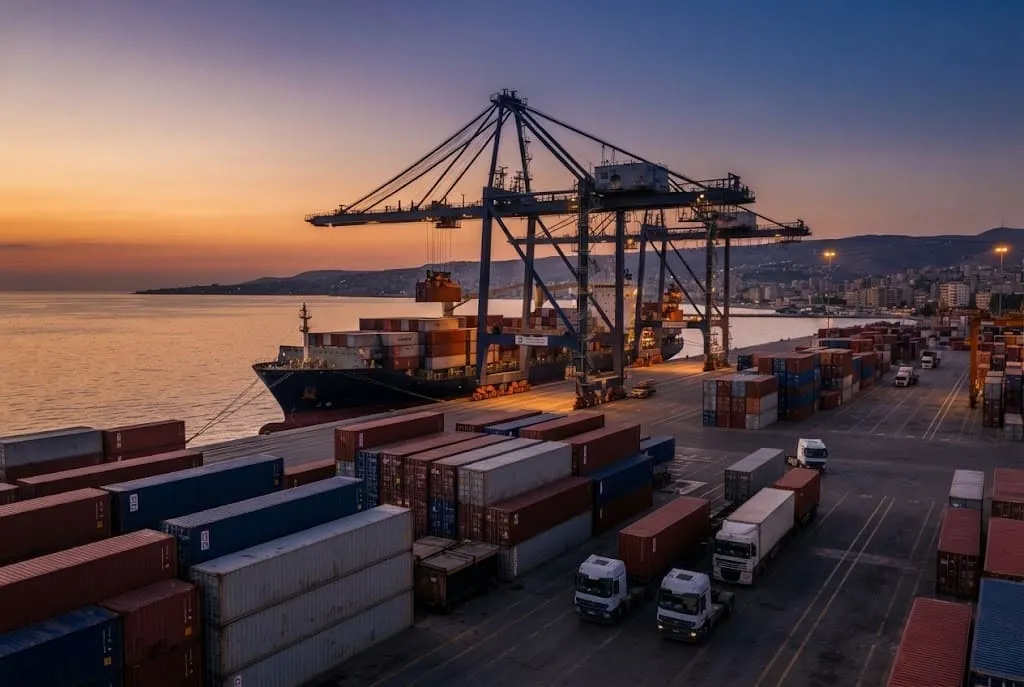
It is a signed investment contract, with implementation arrangements under discussion in June 2026. The proposed works involve marine infrastructure, industrial facilities, utilities, and specialized equipment, but subcontracting opportunities must be confirmed through the project’s procurement arrangements.
Damascus International Airport – Kalyon and Cengiz
Turkish contractors Kalyon İnşaat and Cengiz İnşaat are participating in an international consortium led by Qatar’s UCC Holding to develop and operate Damascus International Airport.
The consortium signed final concession agreements in November 2025 for a project valued at approximately $4 billion. UCC also reported the start of initial works involving Terminal 2, the former airport hotel, and access roads.
It is a signed concession agreements and initial implementation activities. The $4 billion figure represents the consortium’s overall project, not a separately disclosed Turkish investment.
Power Generation Projects – Kalyon Energy and Cengiz Energy
Kalyon Energy and Cengiz Energy are members of a UCC Holding-led consortium developing eight power plants with a combined planned capacity of 5,000 MW: four gas-fired plants totaling 4,000 MW and four solar projects totaling 1,000 MW.
The consortium signed final concession agreements on November 6, 2025, following technical studies and site surveys.
Project status: Final concession agreements and documented preparatory engineering. Potential work packages include civil construction, electrical infrastructure, equipment installation, and grid connections, subject to the consortium’s procurement plans.
Turkish projects under development
Idlib Free Zone and Dry Port – BOMACO
The Turkish company BOMACO signed a memorandum of understanding in May 2026 to develop and operate a free zone and dry port in Idlib under a proposed BOT model.
It is a preliminary agreement. The final investment obligations, financing, execution schedule, and operating terms require confirmation before the project can be treated as a contracted investment.
Phosphate and Mining Cooperation – MTA and MTAIC
On August 19, 2026, Türkiye’s MTA and MTAIC signed a mining cooperation memorandum with Syrian authorities. The proposed cooperation covers phosphate development, potential industrial processing, and related transport infrastructure.
It is a Memorandum of understanding. The parties have outlined potential activities, but separate commercial agreements are needed to establish investment amounts and execution obligations.
Turkish Banks Entering Syria – Ziraat Bankası and Aktifbank
According to Reuters, Ziraat Bankası and Aktifbank had submitted applications to establish a presence in Syria as of April 2026.
Their entry could expand trade finance, letters of credit, and payment services for Turkish-Syrian commercial activity.
It is applications reported; operational licenses and the launch of banking services require updated confirmation.
Türkiye–Syria–Gulf Railway Connection
Türkiye and Saudi Arabia have discussed a regional railway connection linking Türkiye, Syria, Jordan, and Saudi Arabia. The proposal includes approximately $100 million for rehabilitating the route toward Aleppo, while substantial infrastructure gaps and financing arrangements remain unresolved.
It is a regional planning and financing discussions, not a confirmed construction contract for the full corridor.
For companies evaluating these developments, signed agreements provide a stronger basis for commercial assessment than preliminary proposals, but an investment contract does not automatically mean that supply or subcontracting opportunities are available.
Through Qiwaa Contracting and Qiwaa Trading, Qiwaa Advance provides infrastructure contracting and construction or industrial supply solutions for projects in Syria. Companies with defined technical requirements can contact our team to discuss the relevant contracting or supply scope.
What supports Turkish companies operating in Syria?
Turkish companies benefit from established manufacturing capabilities, overland access to Syria, and growing commercial cooperation. Beyond direct investment agreements, three developments support their participation in reconstruction and industrial supply:
- Energy supply through Türkiye: Azerbaijani natural gas began flowing into Syria through Türkiye in August 2025, initially supplying around 3.4 million cubic meters per day to support electricity generation. This improves access to energy for Syrian facilities but represents cross-border supply rather than Turkish direct investment in Syrian gas assets.
- Cross-border transport: Overland routes allow Turkish manufacturers to deliver construction materials, machinery, and spare parts to Syrian projects. August 2026 discussions between Syrian and Turkish authorities also addressed border-crossing improvements, customs procedures, and freight movement.
- Industrial cooperation: Turkish companies participated in Damascus’s Buildex 2026 exhibition, where agreements involving Turkish firms covered industrial supplies, equipment, engineering, and logistics. These arrangements support commercial partnerships but should not automatically be classified as direct investment.
For contractors and suppliers, these factors can improve access to materials and technical services. However, delivery costs and timelines still depend on the specific shipment and customs requirements.
Companies planning to source equipment or construction products from Türkiye can review Importing Building Materials to Syria and Key Customs Procedures in 2026 before arranging procurement and transport.
Russian investment in Syria in 2026
Russian investment in Syria must be distinguished from commodity trade, proposed infrastructure projects, and agreements inherited from previous years. Oil and wheat shipments demonstrate continuing commercial activity, while the status of several potential investments remains less certain.
Russian oil and wheat trade with Syria
- Oil supplies: According to Reuters, Syria received approximately 16.8 million barrels of Russian oil in 2025, with imports estimated at nearly 60,000 barrels per day in the early months of 2026. These deliveries represent commodity trade, not Russian investment in Syrian oilfields or refineries.
- Wheat imports: A July 2026 Reuters investigation cited Syrian customs data showing approximately 2.9 million tonnes of wheat imports for the 2025–2026 season, around 85% of which originated from Russia and Russian-occupied Crimea. This reflects a substantial supply relationship rather than ownership of Syrian agricultural or processing assets.
Both activities may create demand for transport, storage, and handling services, but such demand should not be confused with confirmed Russian capital investment.
Proposed Russian investment projects in Syria
- Railway rehabilitation: In February 2026, Syrian and Russian officials discussed railway modernization, including signaling systems, locomotives, maintenance, and connections to Tartus Port and phosphate production sites. Financing models were also considered, but the announcement did not confirm a final execution contract.
- Energy and infrastructure: Russian participation has also been discussed in energy and reconstruction. These proposals require project-specific agreements, financing, and defined implementation responsibilities before they can be classified as contracted investments.
- The distinction matters to engineering companies and equipment suppliers: discussions may indicate future demand, but they do not establish an available construction or supply contract.
Russian Contracts and Commercial Facilities in Tartus and phosphate
- Tartus commercial logistics hub: Reuters reported plans in July 2026 for a Russian commercial hub at the port. However, an August 9 agreement provided for the transfer of civilian facilities, including commercial berth No. 4, to Syrian management. The berth resumed commercial operations under Syrian control on August 11. The earlier proposal therefore cannot be presented as a confirmed Russian operating concession.
- Former port concession: Reuters reported in January 2025 that Syria had canceled the 2019 commercial port management agreement with Russia’s STG Stroytransgaz. This contract is separate from the subsequent discussions concerning Russian facilities on the coast.
- Phosphate and fertilizer agreements: Earlier Russian-linked arrangements require updated verification of contractual rights, operating responsibilities, and asset status. Without current documentation, they should not be counted as active Russian investments.
For investors, contractors, and suppliers, the distinction is essential: Russian trade flows demonstrate existing commercial relationships, but confirmed investment opportunities depend on valid contracts, defined assets, financing, and implementation plans.
Key sectors for Turkish and Russian investment in Syria
Opportunities for Turkish and Russian investment in Syria differ according to each country’s commercial presence and industrial capabilities. Turkish companies have a stronger position in construction materials, equipment supply, and contracted infrastructure projects, while Russian participation is more closely associated with energy, commodity trade, mining, and proposed transport developments.
The main sectors and their potential commercial opportunities include:
- Electricity and gas: Turkish participation in power-generation projects creates potential demand for civil works, substations, transmission equipment, and control systems. Russian companies may pursue energy-related projects, but each requires confirmed financing and contractual commitments.
- Ports and shipbuilding: Türkiye’s contracted Tartus shipyard project involves marine construction, workshops, cranes, utilities, and specialized equipment. Russian port-related proposals require separate verification before being treated as active investment opportunities.
- Rail, logistics, and industrial zones: Proposed railway links, dry ports, and free zones could require track rehabilitation, handling facilities, warehouses, and industrial infrastructure. Most remain dependent on final agreements and financing.
- Construction materials and industrial equipment: Turkish manufacturers can supply steel, cement, machinery, and construction systems. Additional opportunities may arise through local distribution, maintenance, assembly, or manufacturing arrangements.
- Grain storage and food processing: Russian wheat exports create commercial links with Syria, while investment in silos, mills, storage facilities, or processing plants would require separate capital commitments and operating arrangements.
- Oil and mining: Potential activities include oilfield services, phosphate processing, industrial equipment, and supporting infrastructure. Turkish mining cooperation remains preliminary, while the status of earlier Russian agreements requires verification.
Banking and trade finance are another important consideration. Expanded financial services could support imports, letters of credit, and contractor payments, but proposed banking operations should not be treated as available services until officially authorized and operational.
These sectors represent potential investment, contracting, and supply opportunities—not confirmed tenders. Companies should assess each opportunity against its project status, financing, and procurement requirements.
For a broader comparison of investment models and sector requirements, read Foreign Investment in Syria: How to Enter the Syrian Market Step by Step.
Key risks for Turkish and Russian companies investing in Syria
Although Syria’s regulatory environment has become more open to foreign business, Turkish and Russian companies must still address risks affecting payments, contracting, equipment delivery, and project execution.
Legal and compliance risks
The United States ended its comprehensive Syria sanctions program in July 2025, and the EU lifted broad economic sanctions in May 2025. However, targeted restrictions remain, while Russia-related sanctions must be assessed separately.
Before contracting, verify the companies involved, beneficial owners, banks, carriers, and applicable export restrictions. Under OFAC’s 50 Percent Rule, an entity may be considered blocked when sanctioned persons hold a combined direct or indirect ownership interest of 50% or more.
Financial and banking risks
A legally permitted transaction does not guarantee bank acceptance or available financing. Confirm the payment channel, financing source, contract currency, guarantees, and responsibility for exchange-rate changes or payment delays before committing funds or equipment.
Technical and execution risks
Check site access, land status, utility availability, and the technical requirements of the proposed works. Imported machinery must also match local operating conditions, with maintenance support and spare parts available when needed.
Logistics and supply risks
Turkish suppliers must account for border procedures, inland transport, and customs classification. Russian shipments may face additional banking, insurance, or shipping restrictions. Confirm the delivery route, costs, responsibilities, and alternatives for critical equipment before finalizing the supply contract.
Local partner and contractual risks
Select partners based on verified experience, operational capacity, financial standing, and clearly defined responsibilities. Contracts should establish deliverables, payment milestones, quality requirements, and dispute-resolution procedures rather than relying on preliminary assurances.
For investors, contractors, and suppliers, project feasibility depends on more than commercial demand. Financing, regulatory clearance, technical readiness, and a capable local partner must support the proposed scope before execution begins.
How can Turkish and Russian companies enter the Syrian market?
Turkish and Russian companies can enter Syria through equipment supply, specialist contracting, local manufacturing, or direct investment. The appropriate model depends on the company’s capabilities, the project’s contractual stage, and the commercial commitments involved.
The main options are:
- Supply and distribution: Suitable for manufacturers and suppliers entering through a defined buyer or project. Confirm product specifications, quantities, delivery terms, and after-sales requirements before signing.
- Specialist contracting: Allows engineering and construction companies to undertake specific work packages within larger projects, based on approved drawings, a defined scope, and agreed payment milestones.
- Local manufacturing or assembly: May suit companies with sustained demand for their products. Establish the required investment, production capacity, utilities, and operating costs before committing to a facility.
- Joint ventures and concessions: Appropriate for larger commitments where asset rights, partner responsibilities, financing, and expected revenues are clearly established.
Turkish companies may benefit from established overland supply routes and manufacturing relationships, while Russian companies must also account for applicable Russia-related restrictions when evaluating commercial arrangements.
Before choosing a model, identify a specific customer or project, confirm the company’s intended role, and establish the contractual and payment requirements. A limited supply or work package may offer a practical starting point where the opportunity does not yet justify a larger investment.
How Qiwaa Advance supports Turkish and Russian companies in Syria
For Turkish and Russian companies pursuing opportunities in Syria, successful project delivery depends on matching technical requirements with suitable contractors, materials, equipment, and local execution capabilities.
At Qiwaa Advance, we provide relevant solutions through four business sectors:
- Qiwaa Contracting: EPC contracting and infrastructure solutions, including water networks, treatment facilities, concrete structures, and specialized construction systems.
- Qiwaa Trading: Construction and industrial material supply, specialized equipment, and sourcing through international manufacturers and authorized distribution relationships.
- Qiwaa Industrial: Industrial initiatives and products related to cement, concrete additives, and construction material production.
- Qiwaa Mining: Mining and raw-material activities covering extraction, supply, marketing, and export.
Our role depends on the project’s actual requirements. A Turkish equipment manufacturer may need a local supply or distribution arrangement, while an infrastructure developer may require a defined EPC or material supply package.
To discuss cooperation, share your project location, intended scope, available drawings or specifications, required materials or equipment, and expected schedule.
Contact Qiwaa Advance to discuss the contracting, industrial, mining, or supply solutions relevant to your project in Syria.
Read also: Syria Reconstruction Projects 2026: How to Read Opportunities and Costs Before Investing
FAQs about Turkish and Russian investment in Syria
What are the main confirmed Turkish investments in Syria?
Kuzey Star signed a 30-year agreement to develop and operate a shipyard in Tartus, committing at least $190 million over five years. Turkish companies Kalyon and Cengiz also participate in major infrastructure projects through international consortia.
Is the $7 billion power project entirely a Turkish investment?
No. The announced $7 billion covers the entire power-generation project led by Qatar’s UCC Holding, alongside Turkish companies Kalyon Energy and Cengiz Energy and US-based Power International. The Turkish investment share has not been separately disclosed.
Have Turkish banks started operating in Syria?
Ziraat Bankası and Aktifbank submitted applications to enter Syria, according to April 2026 reports. In June, Turkish officials said the regulatory framework was still being developed. Their operational launch requires updated confirmation.
Do Russian oil and wheat exports count as investment in Syria?
No. Oil and wheat shipments represent commercial trade, not direct investment. Russian ownership of, or qualifying investment in, Syrian facilities would require separate evidence.
Is the Russian logistics hub at Tartus Port operational?
A Russian logistics-hub proposal was reported in July 2026. However, Syria assumed management of Tartus Port’s fourth commercial berth in August, and the berth began operating under Syrian control. The earlier proposal should not be presented as a confirmed Russian-operated investment.
Main sources for verification and updates
- SANA – Tartus shipbuilding and repair yard contract
- UCC Holding – Final concession agreements for the power plants
- SANA – Idlib free zone memorandum
- Reuters – Turkish banks in Syria
- Reuters – Rail link between Turkey, Syria, Jordan and Saudi Arabia
- Reuters – Azerbaijani gas supply via Turkey
- Reuters – Syria’s reliance on Russian oil
- Reuters – Russian plan for a logistics hub in Tartus
- SANA – Rail development talks with Russia
- Reuters – Cancellation of the former Tartus port management contract
- US Department of the Treasury – Termination of the Syria sanctions program
- Council of the EU – Lifting of economic sanctions on Syria
- OFAC – The 50% ownership rule