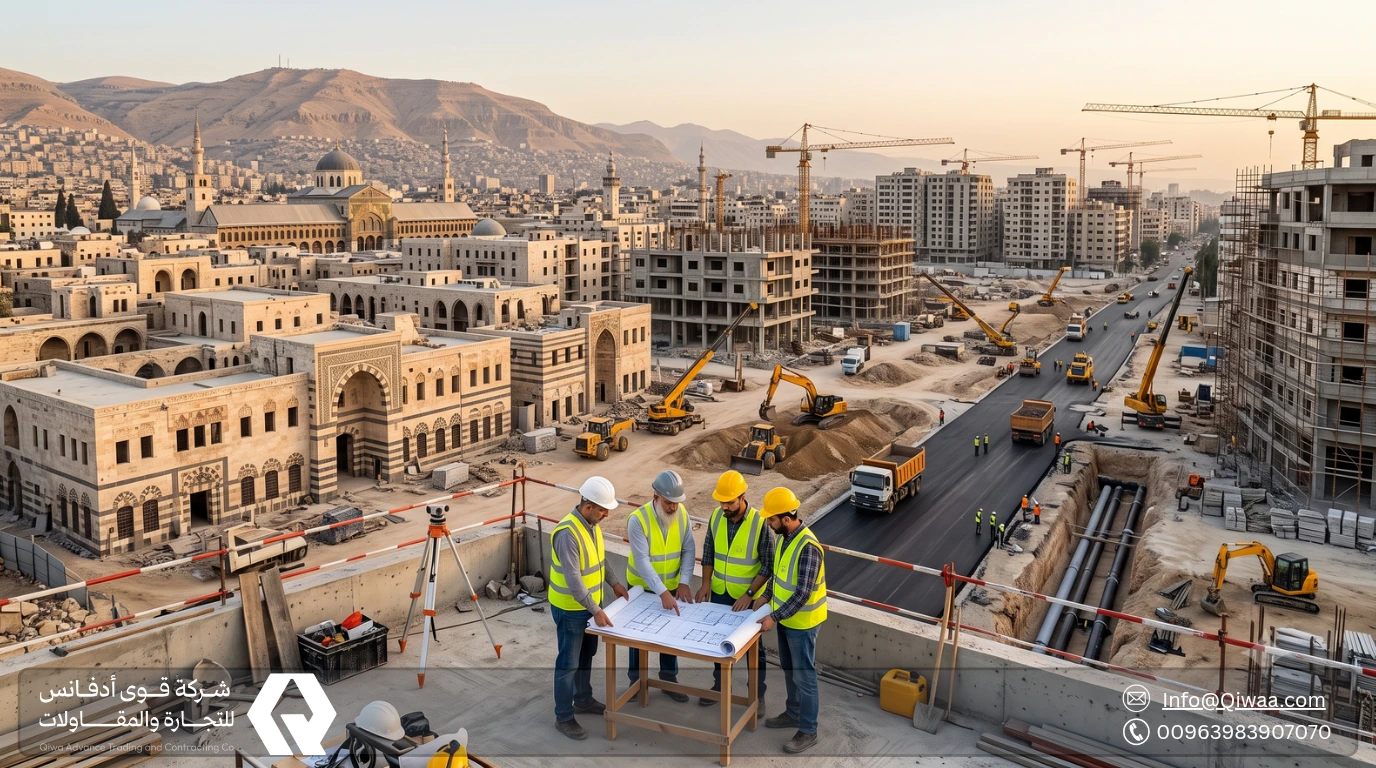


Aleppo reconstruction represents a huge path, because the city does not depend only on real estate and service demand.Aleppo combines industry, trade, historic markets, damaged neighborhoods, Sheikh Najjar Industrial City, and a major need for infrastructure and building materials. For this reason, investment in Aleppo in 2026 requires a reading that connects production, restoration, housing, services, and supply chains.
Aleppo’s importance also comes from the expected scale of reconstruction in Syria. In October 2025, the World Bank estimated the cost of rebuilding damaged physical assets in Syria at around 216 billion USD, distributed across infrastructure, residential buildings, and non-residential buildings. Coverage of the report also indicated that Aleppo and Damascus countryside are among the areas requiring the highest levels of reconstruction investment.
In this article, we review where Aleppo reconstruction opportunities appear, which real projects reflect the city’s direction, and how an investor or contractor can begin.
Why Are Aleppo Reconstruction Opportunities Different?
Aleppo is a industry and production city before being only a real estate market. Its industrial and commercial history makes its opportunities connected to restarting factories, rehabilitating industrial zones, supporting crafts and workshops, restoring old markets, and improving services in damaged neighborhoods.
This means that Aleppo reconstruction opportunities appear in more than one direction:
- Rehabilitation of industrial zones
- Building materials, concrete, and finishing projects
- Infrastructure in damaged neighborhoods
- Restarting workshops and factories
- Restoration of markets and heritage buildings
- Housing linked to labor and industrial activity
- Warehouses and logistics services
- Water, wastewater, and road projects
Read more: Best Interior Design Services Company in Yaafour, Damascus: From Concept to Execution
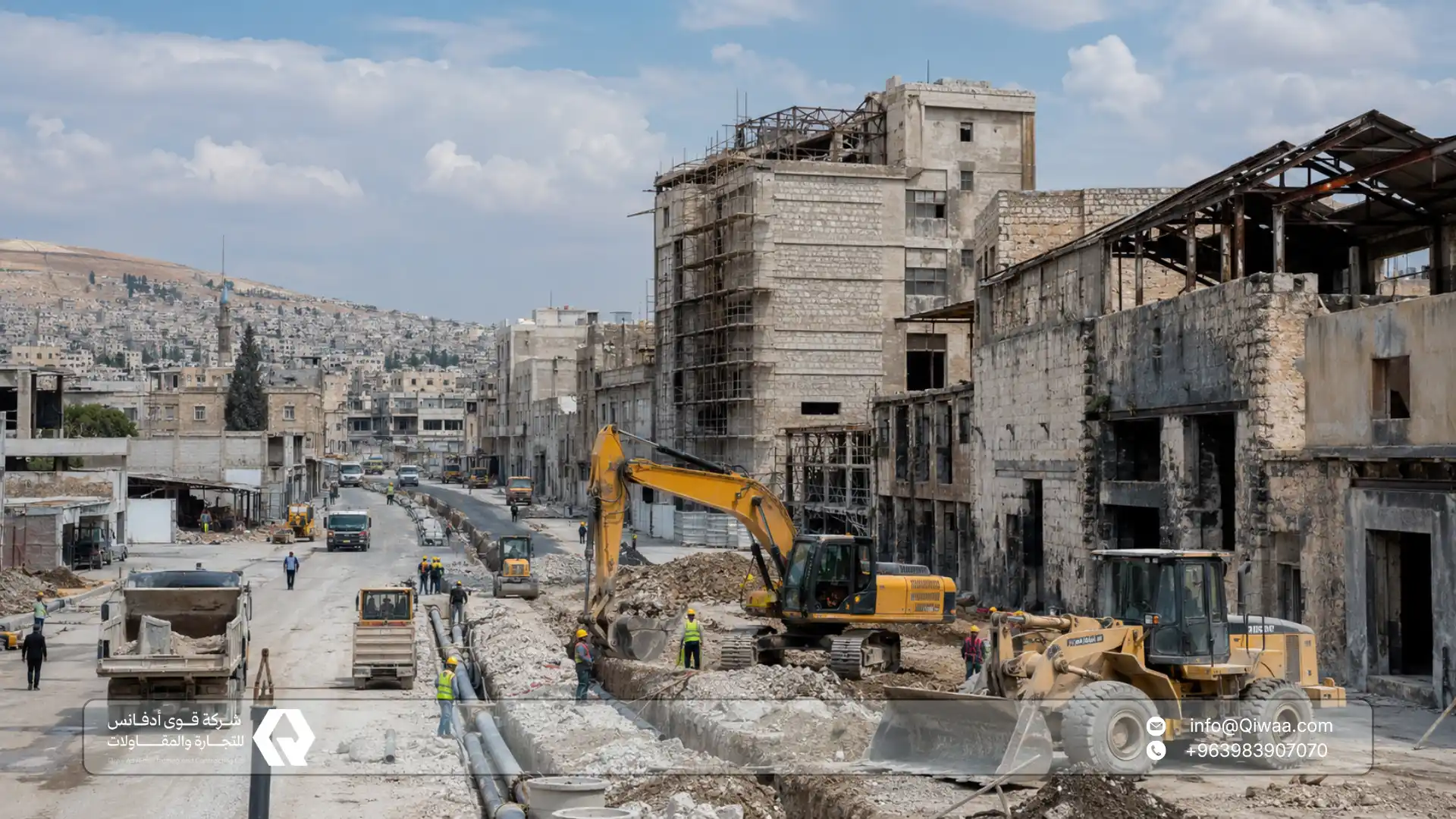
Greater Aleppo and Infrastructure as the Entry Point to Reconstruction
In December 2025, the Minister of Public Works and Housing discussed with the Governor of Aleppo ways to support rehabilitation and reconstruction projects in damaged areas and improve services.
The meeting addressed the assessment of basic needs, the state of infrastructure, damage to residential and service facilities, debris removal, urban planning, new master plans, and social housing.
SANA also indicated that Aleppo Governorate launched the “Greater Aleppo” vision in September 2025 to modernize infrastructure, rehabilitate damaged neighborhoods, establish organized housing projects, and improve public spaces while preserving the city’s historical character.
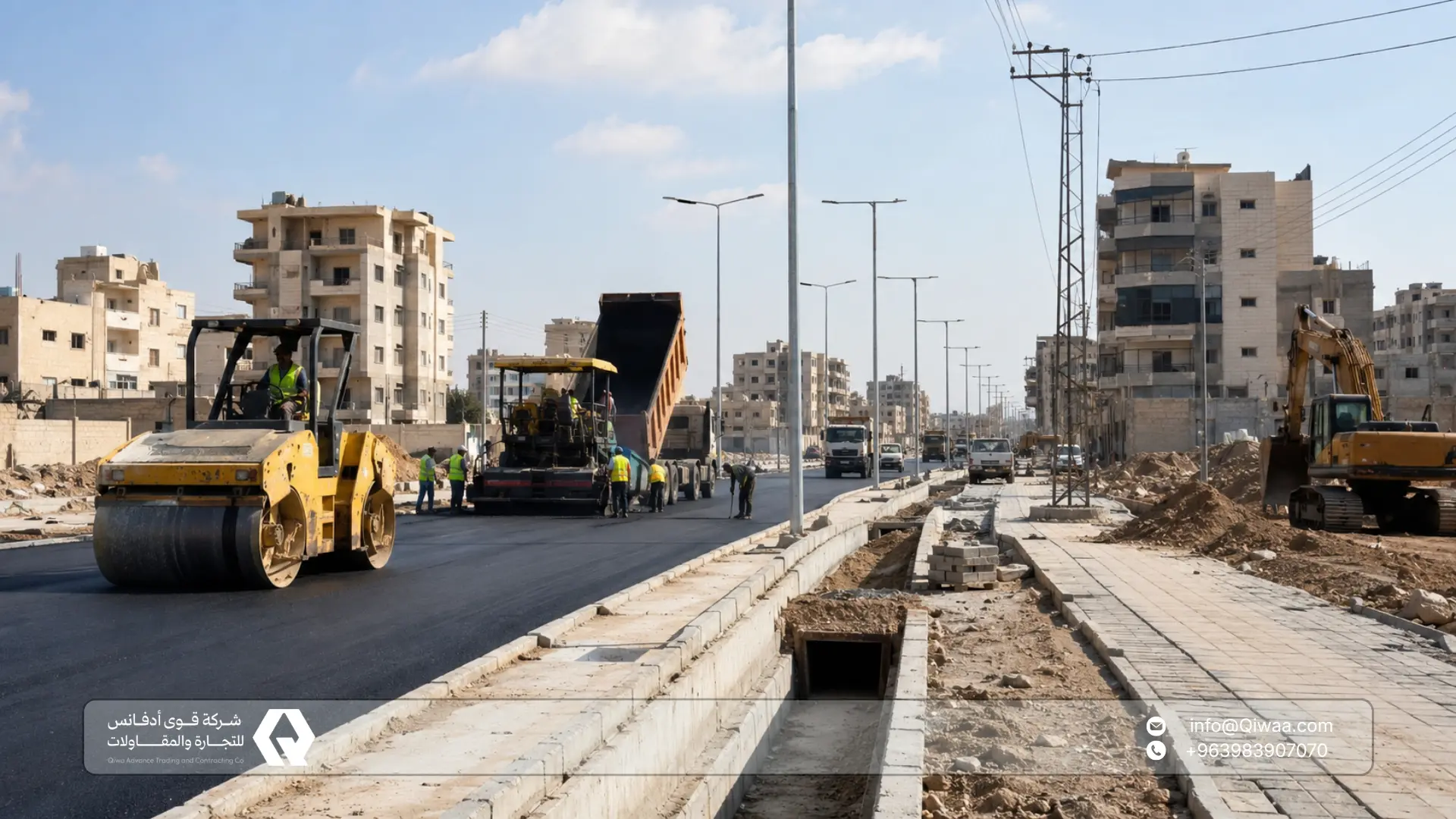
This point is important for investors and contractors because Aleppo reconstruction 2026 begins with basic infrastructure before any real estate or industrial expansion. A residential neighborhood needs roads, water, wastewater, and electricity. An industrial zone needs networks, services, and logistics. The old market needs careful restoration and safe movement routes.
Opportunities appear here in:
- Supplying pipes, valves, and water network components
- Executing or supporting wastewater and infrastructure works
- Supplying road, pavement, and lighting materials
- Debris removal and site rehabilitation works
- Social housing and organized development projects
- Services related to improving damaged neighborhoods
Read more: Phosphate Value Chain in Syria: From Raw Material to Manufacturing and Investment in 2026
Sheikh Najjar: The Heart of Industrial Investment in Aleppo
Sheikh Najjar Industrial City is a key point in any discussion about investment in Aleppo in 2026. It is not only an existing industrial zone. It is also a platform for expanding production, attracting investors, and developing industries related to textiles, food, chemicals, engineering industries, and building materials.
In June 2025, Aleppo Industrial City announced the opening of subscription for industrial plots and set prices at 35 USD per square meter for one-time payment and 41 USD per square meter for payment in installments over five years. These figures give investors a practical indicator of the entry cost for industrial plots compared with other opportunities.
In March 2026, the Minister of Economy and Industry inspected Sheikh Najjar Industrial City, reviewed the subscription process and services provided to investors and industrialists, and discussed ways to strengthen the industrial environment and address challenges facing productive facilities. He also emphasized that Aleppo, with its economic and industrial weight, remains an economic artery and a pillar of recovery and reconstruction.
These factors make Sheikh Najjar suitable for several project types:
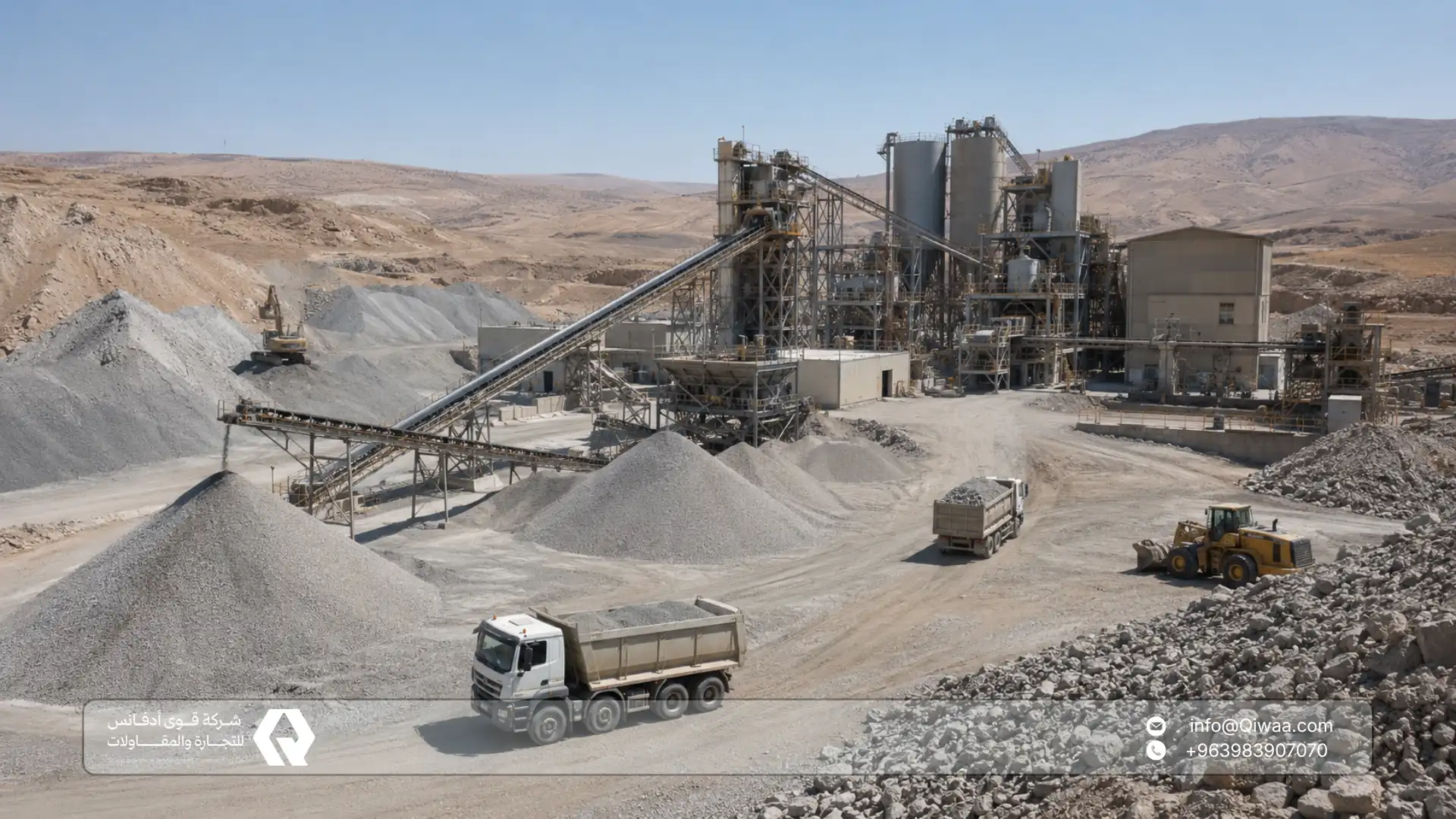
- Building materials and cement product factories
- Metal workshops and factories
- Warehouses and distribution centers
- Textile, food, chemical, and engineering industries
- Supply projects for industrial zones
- Factory maintenance and operation services
- Industrial water and wastewater solutions
At Qiwaa, we can support these projects by supplying industrial materials, building materials, water and wastewater solutions, metal components, pipes, valves, cementitious materials, and chemical admixtures for concrete according to the nature of each project.
Read more: Guide to Investing Iron in Syria 2026: From Mining to Industry
Expansion of Industrial Zones in Aleppo
In February 2026, the Ministry of Economy and Industry signed four memoranda of understanding and cooperation protocols with investment entities to establish and develop industrial zones in Kamouna, Sheikh Najjar, and Jibreen, with total areas exceeding millions of square meters.
SANA stated that these models include multipurpose zones and sector-specialized zones, including an industrial zone specialized in furniture in Jibreen, along with projects linked to expanding Sheikh Najjar and encouraging the textile industry.
In April 2026, the Ministry of Economy discussed with investors in Sheikh Najjar Industrial City plans for development and strengthening its investment environment. The meeting included a presentation of the engineering and financial study for developing infrastructure in the second-category expansion area, raising the readiness of plots and improving services provided to investors.
SANA also indicates that the city extends over around 4,412 hectares and includes diverse sectors such as textile, food, chemical, and engineering industries.
This direction opens a wide door for projects that serve industry itself, such as:
- Infrastructure for industrial zones
- Water, wastewater, and electricity networks within plots
- Supplying steel structures and construction materials
- Ready-mix concrete solutions and on-site plants
- Warehouses for raw materials and finished products
- Internal transport, loading, and storage services
- Rehabilitation of workshops and industrial buildings
Read more: Cement Industry in Syria: Market Challenges and Investment Opportunities in 2026
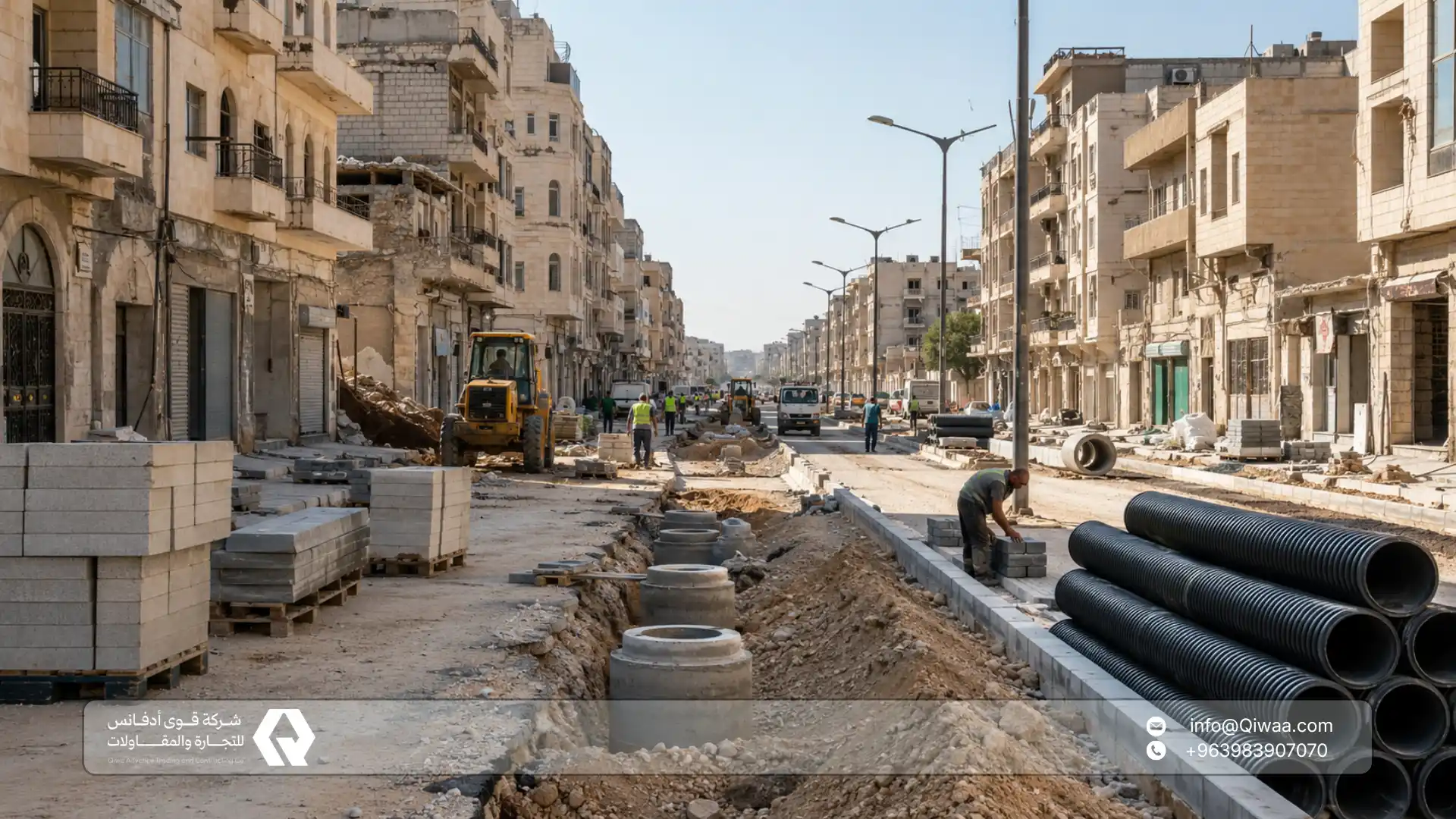
Damaged Neighborhoods and Rehabilitation Opportunities
Aleppo reconstruction cannot be discussed from the industrial angle alone. The city includes heavily damaged neighborhoods that need gradual interventions starting from infrastructure and debris removal to housing and services.
In August 2025, the “Green Job Opportunities” project was launched in the Qadi Askar sector as part of an urgent plan to revive infrastructure and create direct job opportunities in the most damaged neighborhoods.
SANA stated that the project targets 170 direct job opportunities and connects infrastructure rehabilitation with community aspects, with an estimated budget of 31 million USD. It also targets youth, women, and people with disabilities. The targeted neighborhoods included Halwaniya, Youth Housing, al-Maysar, al-Jazmati, Qaterji, Dahret Awad, Salah al-Din, and al-Ameriya.
This type of project reveals the nature of opportunities in Aleppo:
- Debris sorting and recycling works
- Road and service rehabilitation
- Support for local employment projects
- Supply of basic building materials
- Rehabilitation of homes and shops
- Small projects related to textiles and crafts
- Improvement of the urban environment inside damaged neighborhoods
For investors, these projects show that entering Aleppo can begin with medium-sized or phased projects, not necessarily with a large project from the start.
Learn more: Importing Building Materials to Syria and Key Customs Procedures in 2026
Old Aleppo: Restoration as an Economic and Cultural Opportunity
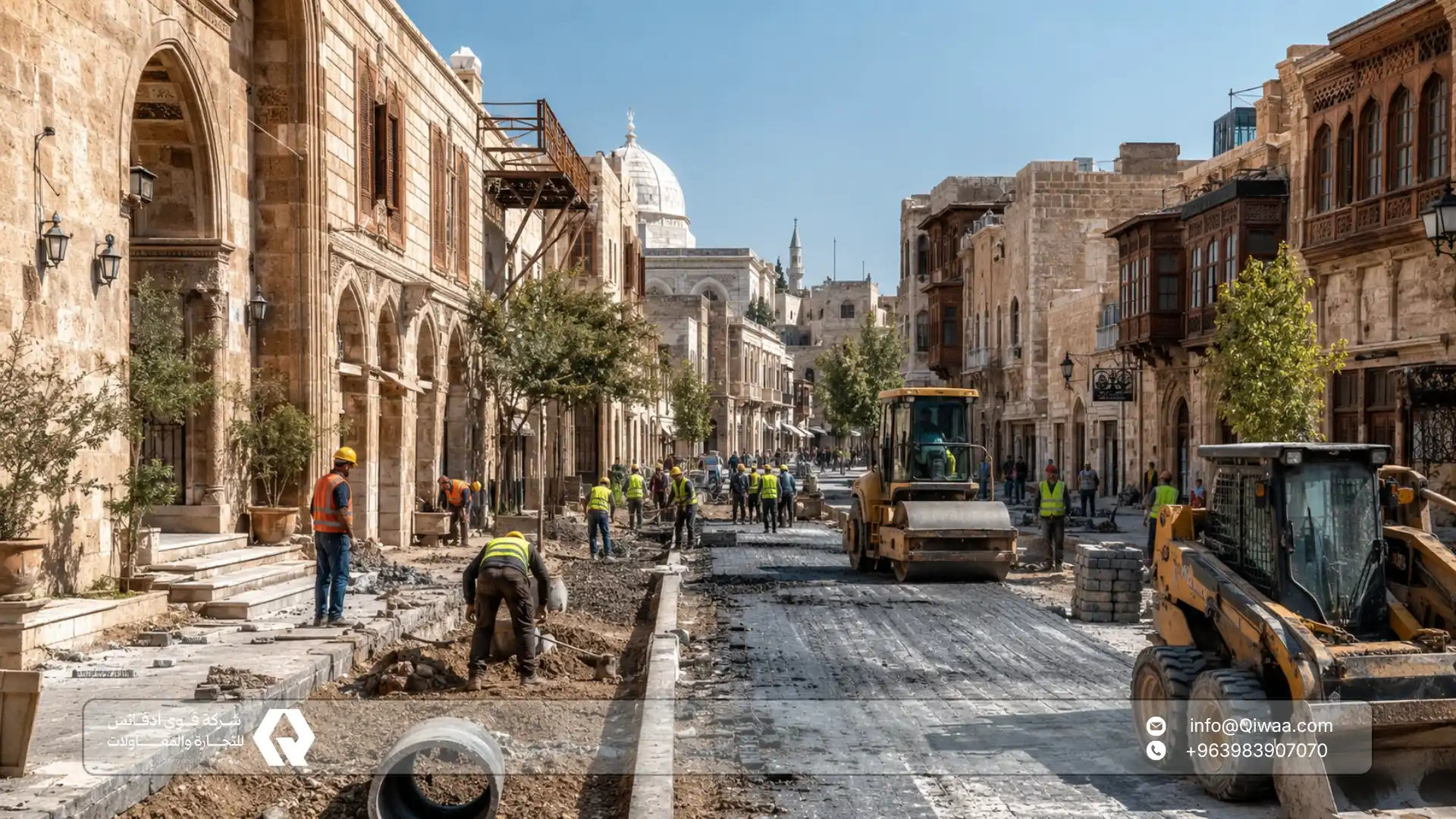
Old Aleppo holds special value in any reconstruction plan. It is a heritage and commercial city, and its markets are not just old buildings. They are part of the city’s economic, tourism, and craft activity.
UNESCO listed the Ancient City of Aleppo as a World Heritage Site. The rehabilitation project forOld Aleppo began in 1992, leading to the establishment of the Directorate of the Old City in 1999 to supervise planning, licensing, execution, and maintenance.
After the 2023 earthquake, UNESCO explained that a mission was deployed to Aleppo between February 24 and 27, 2023, and identified that part of the post-earthquake damage was linked to unsuitable shoring and weak rehabilitation techniques after years of conflict. This makes restoration in Old Aleppo a sensitive engineering task that requires experience in materials, structural support, documentation, and protection of original elements.
In October 2025, SANA discussed the rehabilitation and restoration of Souq al-Zarb in Old Aleppo as a return to life after destruction. These examples confirm that old markets can become restoration and operation opportunities, especially in shops, khans, restaurants, cafés, crafts, and heritage hospitality.
Opportunities in Old Aleppo appear in:
- Restoring markets and khans
- Rehabilitating commercial shops
- Traditional stone and flooring works
- Water and wastewater networks inside heritage environments
- Heritage lighting and commercial façades
- Fit-out of restaurants, cafés, and craft shops
- Restoring buildings suitable for tourism or service use
At Qiwaa, we can support this path through the supply of building and finishing materials, water and wastewater solutions, stone, marble, granite, and restoration and rehabilitation works according to site condition and consultant requirements. Contact us now and request a consultation for your project.
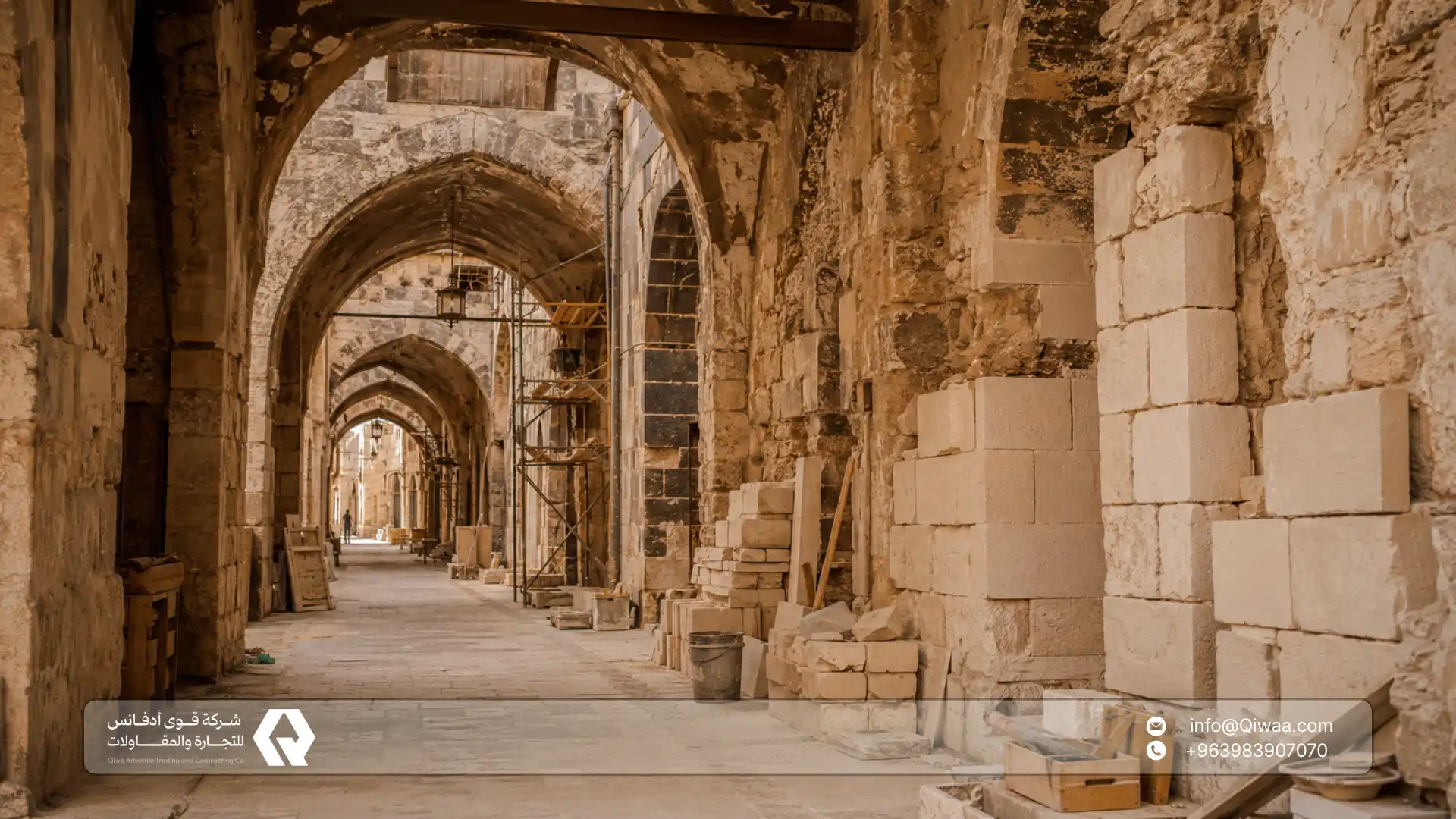
Tourism Investment in Aleppo
Although Aleppo has a clear industrial character, tourism and heritage open another investment path. The old city, the citadel, the markets, and the khans make Aleppo suitable for hospitality, restoration, and operation projects connected to history and identity.
In September 2025, the Ministry of Tourism presented several tourism projects for investment during Syrian-Emirati discussions, including the Aleppo Citadel Hotel project, in addition to other projects in Damascus and Latakia.
This type of project is not only about modern hotels. It requires:
- Architectural and structural restoration
- Interior fit-out suitable for hospitality
- Safe water, wastewater, and electrical networks
- Finishing materials compatible with the urban character
- Operational management and a maintenance plan
- Connecting the project with visitor movement and old markets
Tourism investment opportunities in Aleppo should be read together with restoration and infrastructure, because any hospitality project inside the city or near heritage sites needs an operating environment, not an isolated building only.
Read also: Qiwa Advance: Amiantit Agent in Syria | Water Infrastructure Partnership
Real Estate Opportunities in Aleppo 2026
Real estate opportunities in Aleppo differ from Damascus in terms of the nature of demand. In Aleppo, real estate should be linked to industrial movement, population return, workshop operation, and neighborhood rehabilitation. For this reason, some of the strongest real estate opportunities may appear in labor-related housing, buildings near industrial zones, and projects that serve commercial and productive activity.
Real estate opportunities in Aleppo include:
- Rehabilitation of damaged residential buildings
- Mid-range housing for workers and professionals
- Commercial buildings near markets and active areas
- Warehouses and distribution centers
- Housing linked to the industrial city or transport corridors
- Restoration of heritage buildings for commercial or tourism uses
Before investing in real estate in Aleppo, it is necessary to examine ownership, infrastructure condition, damage level, restoration cost, proximity to economic activity, and accessibility.
Building Materials and Supply in Aleppo
Aleppo reconstruction will create continuous demand for building materials and industrial supply, especially with the activity of industrial zones and the rehabilitation of neighborhoods and markets. This includes cement, cementitious materials, steel, pipes, valves, stone, marble, granite, ceramic, porcelain, chemical admixtures for concrete, and water and wastewater network components.
The importance of supply in Aleppo appears because the city needs multiple projects running in parallel:
- Industrial plots that need infrastructure
- Damaged neighborhoods that need rehabilitation
- Industrial buildings that need construction or restoration
- Old markets that need specialized materials
- Water and wastewater projects that need pipes and network components
- Workshops and factories that need operating and maintenance materials
In this type of market, material availability is not enough. Materials must arrive on time, with the right specifications, and in quantities connected to the execution schedule.
How to Start Investing in Aleppo Reconstruction
Entering Aleppo requires a practical path because the city offers broad opportunities across multiple sectors. You can begin with these steps:
1. Define the Type of Opportunity
Are you targeting industry, real estate, restoration, infrastructure, building materials, or logistics services? Choosing the path defines the location, licenses, materials, and suitable partner.
2. Choose the Location Based on the Activity
An industrial project fits Sheikh Najjar or the new industrial zones. A restoration project fits the surroundings of the old city and markets. A housing project needs a study of demand, services, and roads.
3. Examine Infrastructure Before Price
In Aleppo, a site price may look attractive, but weak water, wastewater, electricity, or road services can increase project costs later. Services must be evaluated before making a decision.
4. Review Licensing and Ownership
Industrial, real estate, and heritage projects require clear review of ownership, licensing, use, and required approvals.
5. Calculate Supply and Execution Costs
The cost of materials, transport, storage, and labor can change project feasibility. An execution study is needed, not only a financial study.
6. Start With a Measurable Phase
In Aleppo, it is possible to begin with a warehouse, production line, one building, a restoration axis, supply for a specific project, or a limited execution contract, then expand after measuring results.
Risks That Should Be Studied in Aleppo
Aleppo’s opportunities are large, but they require clear risk management. The most important points include:
- Infrastructure conditions vary from one neighborhood to another
- Some buildings need structural evaluation before purchase or rehabilitation
- Some restoration works in the old city are complex
- Clear ownership documentation is necessary
- Material and transport prices may change
- Specialized technical labor may be needed
- Coordination with local entities and consultants is required
- Bringing equipment into some old sites may be difficult
- The project must be connected to a real market or existing industrial activity
Successful investment in Aleppo requires realism. A good project is one connected to real demand, a suitable location, available materials, and manageable execution.
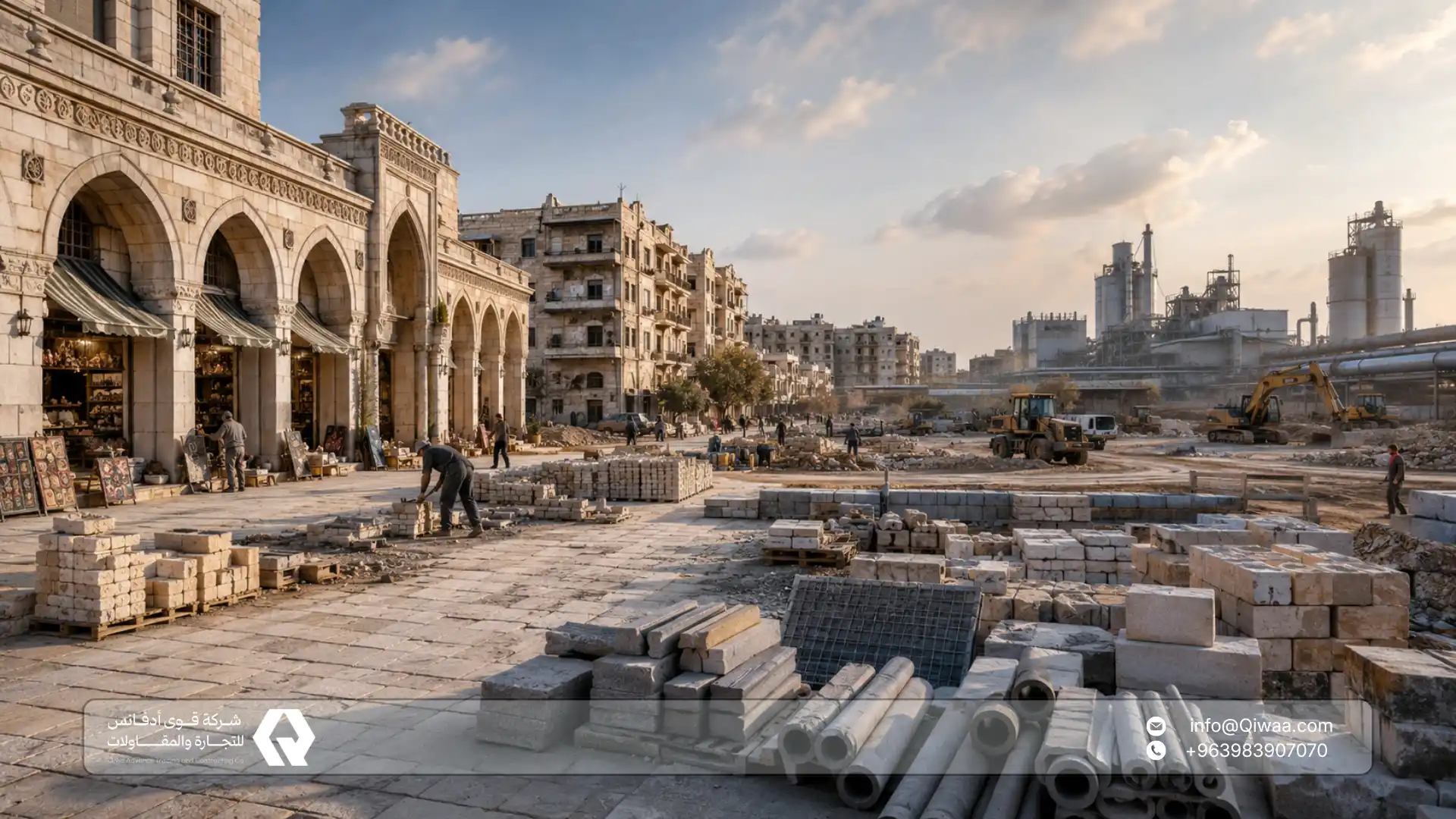
Qiwaa: A Strong Contracting Company in Aleppo and Syria for Supporting Investment Projects
At Qiwaa, we can support investors, contractors, and project owners in Aleppo reconstruction projects by combining supply, contracting, building materials, infrastructure, water, finishing, and industry.
Our Services in Aleppo
- Supplying building materials and industrial materials for real estate and industrial projects
- Supplying pipes, valves, and water and wastewater network components
- Supporting infrastructure, water, and treatment projects
- Providing finishing materials such as stone, marble, granite, ceramic, and porcelain according to specifications
- Supporting industrial zone, workshop, and warehouse projects
- Supporting restoration and rehabilitation works in old buildings
- Studying project needs in terms of materials, quantities, and supply schedule
- Connecting the investor or contractor with a practical execution route inside Aleppo
Where Does qiwaa Add Value?
- In Sheikh Najjar and industrial zone projects that need materials and infrastructure
- In damaged neighborhoods that need phased supply and execution
- In water and wastewater projects that need reliable network components
- In restoring markets and old buildings that need suitable materials
- In housing, warehouse, and finishing projects that require coordination between supplier and contractor
We look at Aleppo as both a production and reconstruction market. This is why we help clients understand their projects from the perspective of materials, location, execution, supply, and real market need.
Aleppo Reconstruction Starts With Industry and Infrastructure
Aleppo offers important opportunities in restarting industry, developing industrial zones, rehabilitating neighborhoods, restoring old markets, housing projects, and infrastructure projects. What distinguishes the city is that it needs solutions that connect production with urban recovery: a factory needs a network and warehouse, a neighborhood needs roads, water, and wastewater, and an old market needs restoration and operation.
Successful investment in Aleppo starts with choosing the right sector, studying the location, understanding infrastructure, defining materials, and working with a local partner capable of supply, execution, and follow-up.
If you are studying an opportunity in Aleppo reconstruction or investment in Aleppo in 2026, contact Qiwaa to review your project needs in supply, infrastructure, building materials, finishing, restoration, or execution, and to define the most suitable path to begin.
Frequently Asked Questions About Aleppo Reconstruction Opportunities 2026
1. What are the main Aleppo reconstruction opportunities in 2026?
The main Aleppo reconstruction opportunities are concentrated in infrastructure, industrial zones, rehabilitation of damaged neighborhoods, restoration of old markets, housing projects, and building materials.
The city is becoming more important because reconstruction reports indicate that Aleppo is among the areas that need major investment during Syria’s recovery phase.
2. Why is Sheikh Najjar Industrial City important for investors in Aleppo?
Sheikh Najjar is one of the most important entry points for industrial investment in Aleppo because it includes multiple industrial sectors and receives projects linked to production, storage, services, and building materials. Industrial plots and investment opportunities have also been offered with announced prices, making it suitable for investors looking for scalable industrial or logistics projects.
3. Are there real estate opportunities in Aleppo after the war?
Yes, there are real estate opportunities in Aleppo, but they are often linked to rehabilitation and housing connected to industrial and commercial activity. Stronger opportunities appear in buildings that can be restored, warehouses, small commercial centers, and housing near work and production areas.
4. What is the difference between investment in Aleppo and investment in Damascus?
Aleppo tends toward opportunities in industry, workshops, building materials, warehouses, industrial zones, and restoration of old markets. Damascus is more focused on services, hospitality, administrative real estate, and projects connected to government and commercial centrality.
5. Is Old Aleppo suitable for tourism or commercial investment?
Old Aleppo is suitable for commercial and tourism restoration projects, especially markets, khans, restaurants, cafés, and traditional crafts. UNESCO identifies the Ancient City of Aleppo as a World Heritage Site, and actual restoration projects such as Souq al-Zarb support the idea of gradually reactivating historical markets.
6. Do infrastructure projects in Aleppo create opportunities for contractors?
Yes. Infrastructure projects in Aleppo create opportunities for contractors and suppliers in water networks, wastewater, roads, lighting, debris removal, and facility rehabilitation. Official sources have discussed the “Greater Aleppo” vision, which includes modernizing infrastructure, rehabilitating damaged neighborhoods, and organized housing projects.