

Fuel station construction in Syria is no longer limited to civil works, tanks, pumps, and canopies. A modern fuel station is an integrated engineering project that combines site planning, fuel systems, electrical and mechanical works, safety requirements, monitoring tools, and operational readiness.
As the market moves toward smarter fuel stations, owners and investors need more than a contractor who can build the physical structure. They need a technical partner who understands how each system affects daily operation, safety, service speed, maintenance, and long-term performance.
In this guide, Qiwa Advance explains how modern fuel station construction differs from traditional execution, what systems add real operational value, and how to manage design, supply, and implementation challenges in the Syrian market.
Fuel Station Design and Execution in Syria
Building a fuel station today requires a coordinated engineering approach. The goal is not simply to complete construction items, but to deliver a station that is ready to operate safely, efficiently, and consistently.
A modern fuel station project should connect three main layers:
- Fuel storage, pumping, and measurement systems
- Monitoring, control, and safety systems
- Civil, mechanical, and electrical infrastructure
When these layers are treated separately, the project becomes exposed to technical conflicts, delayed commissioning, rework, and weak operational performance after opening.
At Qiwa Advance, we approach fuel station construction as one connected project, where every civil, mechanical, electrical, and operational element is aligned from the early planning stage.
Key Engineering Standards for Fuel Station Construction
The success of a fuel station depends on decisions made before construction starts. Site planning, underground infrastructure, tank areas, traffic movement, drainage, electrical routing, safety systems, and future maintenance access must all be considered as part of one engineering plan.
Site Planning and Vehicle Movement
Fuel station site planning is not only about placing pumps, tanks, and service areas on a drawing. It is about organizing how vehicles, customers, fuel trucks, staff, and emergency access routes move inside the site.
A weak layout can lead to:
- Internal traffic congestion
- Slow customer service
- Poor use of key operational areas
- Conflict between customer movement and fuel delivery operations
- Limited flexibility for future expansion or modification
A well-planned fuel station supports smooth circulation, safer movement, easier service flow, and better long-term operational control.
Civil Works and Tank Infrastructure
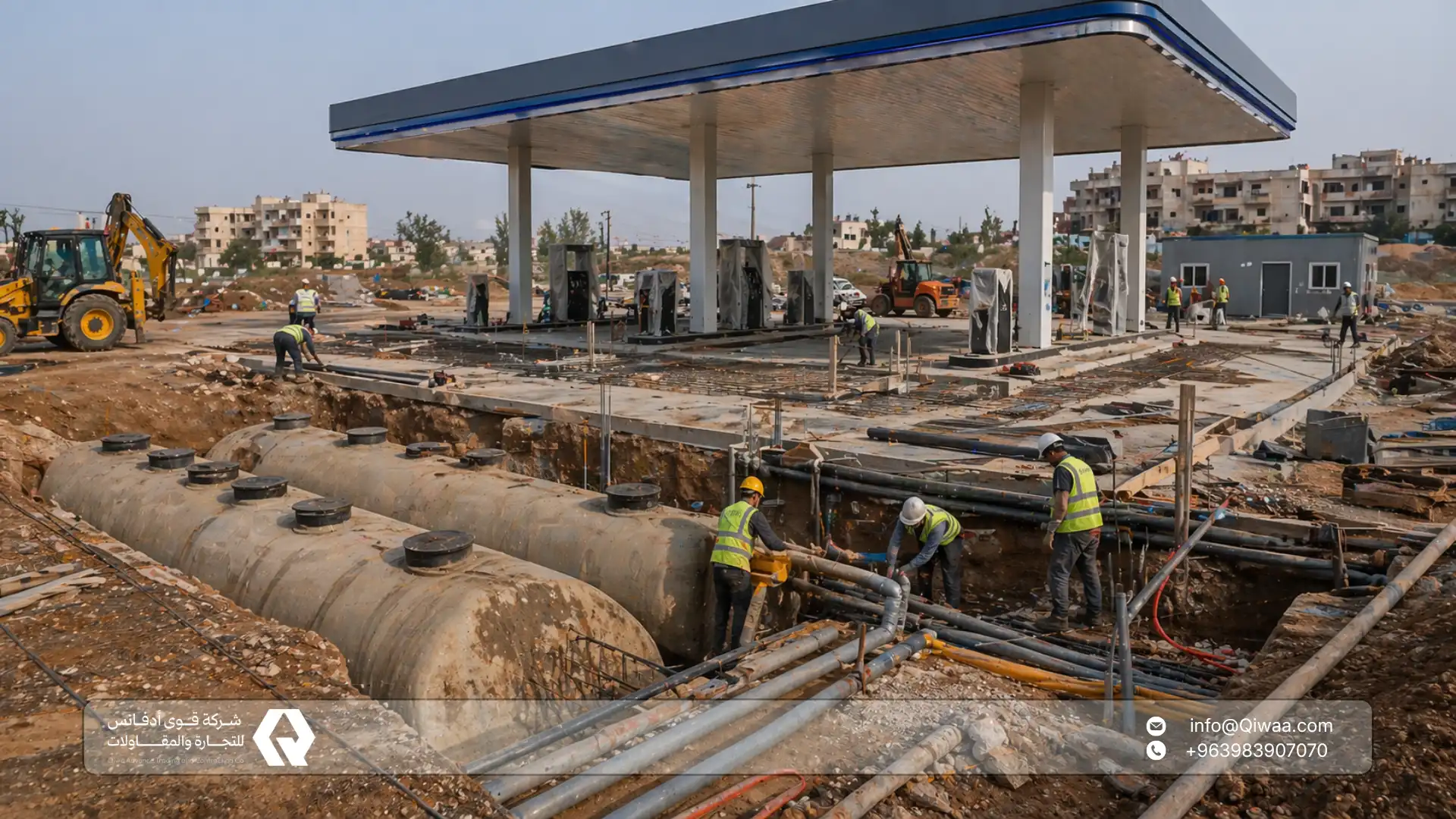
Civil works in fuel station projects are directly connected to fuel systems and operational safety. Foundations, levels, tank areas, pump islands, canopy bases, drainage paths, and underground networks must be designed and executed with future operation in mind.
This stage usually includes:
- Preparing tank areas according to technical requirements
- Executing foundations for pumps, canopies, and service zones
- Adjusting levels for drainage, movement, and accessibility
- Coordinating concrete works with underground networks
- Avoiding conflicts between hidden works and later installation stages
Mistakes in this phase are often difficult and expensive to correct after the station is opened. That is why Qiwa Advance focuses on accurate coordination before and during execution.
Electrical, Mechanical, and Safety Systems
Electrical and mechanical systems are central to the stability of any fuel station. They should not be added later as separate components. They must be integrated into the original design and execution plan.
Important systems include:
- Electrical supply and control networks
- Fuel pumping and ventilation systems
- Detection and monitoring systems
- Firefighting and emergency systems
- Control panels and operational system connections
When these systems are coordinated properly, the station becomes easier to operate, monitor, maintain, and hand over.
Planning a new fuel station in Syria? Contact Qiwa Advance to discuss your site, systems, and execution requirements before construction begins.
Read more: Tunnel Formwork System in Syria for Repetitive Building Projects
Smart Fuel Station Systems That Add Operational Value
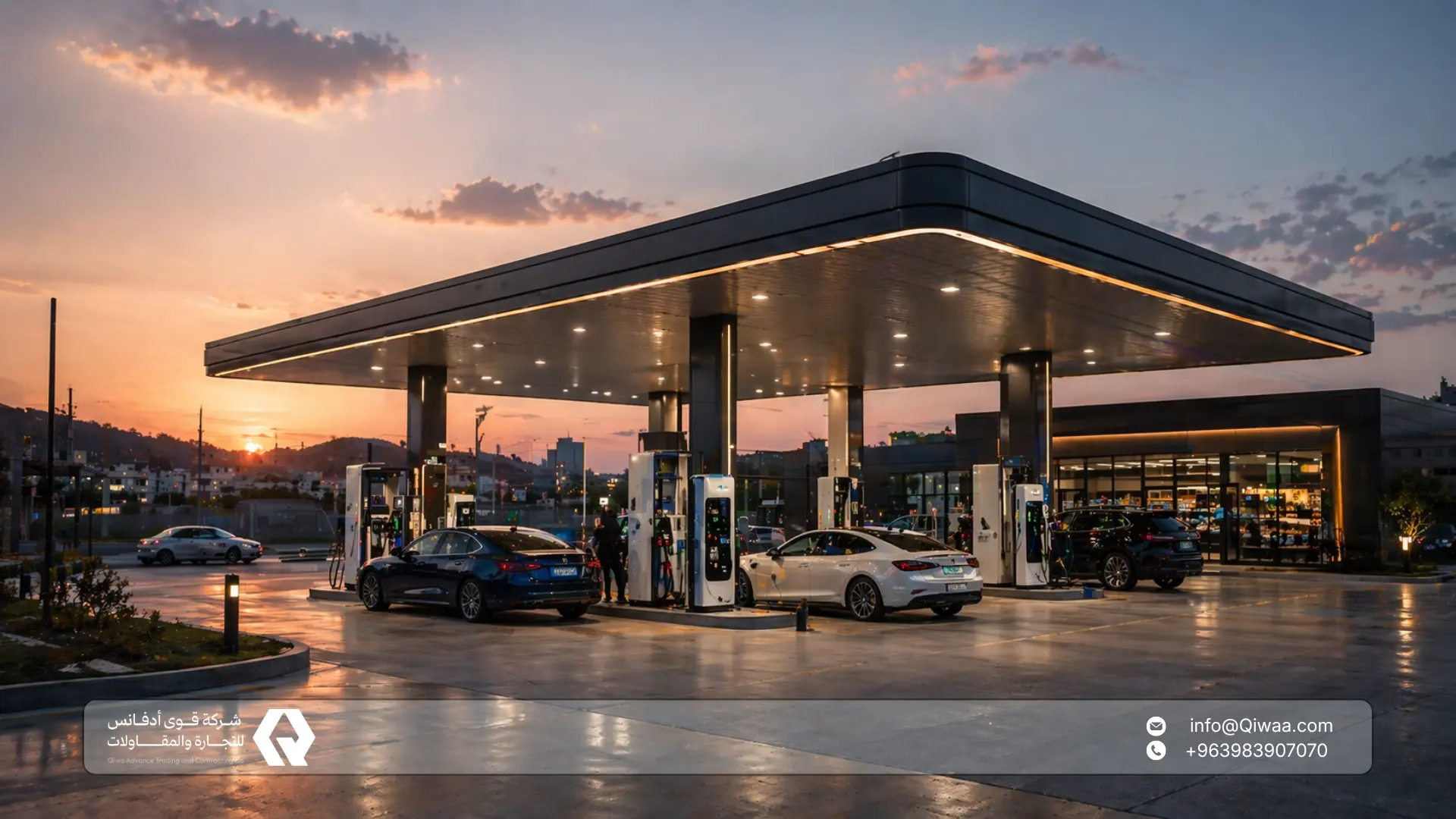
A smart fuel station is not defined by technology alone. It is defined by how technology improves control, reduces loss, improves safety, and supports better daily management.
The most valuable smart station systems are the ones that connect directly to operational performance.
Tank Management, Measurement, and Monitoring
Tank management systems are a key control point inside modern fuel stations. They help owners and operators monitor fuel movement more accurately and reduce blind spots in daily operation.
These systems can support:
- Accurate fuel level monitoring
- Tracking tank status and fuel quantities
- Better planning for refilling and supply
- Daily operational decision-making
- Detecting irregularities, leakage, loss, or unexpected variance
For fuel station owners, this improves accountability and gives management a clearer view of what is happening inside the station.
Payment, Operation, and Control Systems
Modern fuel stations need systems that connect fueling, sales, payment, staff activity, and service-point management. These systems help reduce manual errors and improve service speed.
Their operational value appears in:
- Faster service cycles
- Shorter customer waiting times
- Fewer manual accounting mistakes
- Better daily supervision
- Improved control over service points and employees
For busy stations, these systems can have a direct impact on customer experience and operational efficiency.
Monitoring, Safety, and Emergency Response
Monitoring and safety systems are not optional additions in modern fuel station construction. They are part of the core structure of a safe and reliable station.
They help with:
- Improving site safety
- Monitoring sensitive areas
- Reducing emergency response time
- Supporting safety and operational compliance
- Giving management better visibility over the site
At Qiwa Advance, we help clients select and integrate systems that create real operational value, not unnecessary technical complexity.
Need to choose the right systems for a smart fuel station? Qiwa Advance can help you connect technology choices with safety, performance, and operational readiness.
Also Check: Water Desalination Plants in Syria by EPC Model
Modern Fuel Stations vs. Traditional Stations
The main difference between a traditional station and a modern fuel station is not only the appearance of the building. The real difference is how the project is planned, integrated, tested, and prepared for operation.
Integrated Civil, Mechanical, and Electrical Execution
In traditional projects, each discipline may work separately. In modern fuel station construction, this approach creates risk.
A modern execution process requires:
- Early coordination between disciplines
- Reviewing technical conflicts before site work begins
- Connecting execution drawings across all systems
- Controlling hidden works before later stages start
- Treating the station as one connected operational system
This reduces delays, improves quality, and limits costly corrections during the final stages.
Construction Linked to Operational Readiness
A successful fuel station is not measured only by completed construction items. It is measured by how ready the station is to operate after handover.
This requires:
- Linking execution with testing and commissioning
- Ensuring systems work together as one unit
- Solving technical notes before handover
- Evaluating the project based on post-opening performance
Operational readiness should be part of the project from the first stage, not a final checklist at the end.
Fewer Conflicts and Better Handover
Clear coordination reduces:
- Rework
- Technical clashes
- Testing problems
- Post-opening defects
- Delays in commissioning
With Qiwa Advance, fuel station owners can reduce late-stage technical issues by aligning execution, supply, installation, and system readiness from the start.
If you want a modern fuel station that is ready for real operation, contact Qiwa Advance to build your project with integrated engineering coordination.
Check: Marble and Granite Supply in Syria for Luxury Projects
Building Modern Fuel Stations in Syria: Supply and Execution Challenges
In Syria, the success of a modern fuel station project depends not only on technical design. It also depends on managing the arrival, approval, installation, and integration of sensitive equipment within a realistic execution schedule.
Materials, Equipment, and Sensitive Systems
Modern fuel stations depend on components that require careful supply planning, including:
- Tanks and pumps
- Measurement systems and control panels
- Safety components
- Electrical and mechanical equipment
The main challenge is not only sourcing these elements. It is making sure they arrive at the right time, match the approved drawings, and can be installed without delaying other site activities.
Coordination Between Suppliers and Specialties
Fuel station projects involve multiple suppliers, contractors, systems, and technical teams. The executing company must manage these relationships in a structured way.
This includes:
- Setting clear priorities
- Coordinating civil, mechanical, and electrical interfaces
- Checking site readiness before delivery and installation
- Preventing conflicts between site activities
- Keeping all parties aligned with one execution schedule
Without this coordination, even high-quality materials can create delays if they arrive before the site is ready or after the installation window has passed.
Maintaining Quality in Local Market Conditions
The challenge in the local market is not only applying engineering standards. It is maintaining those standards despite changes in supply, availability, timing, or site conditions.
This requires:
- Selecting materials and systems based on clear technical criteria
- Avoiding random component replacement
- Following testing and approval sequences
- Controlling hidden works before covering or closing them
- Solving technical notes before they become operational problems
Qiwa Advance helps turn supply and execution challenges into a controlled process that protects quality, schedule, and operational stability.
Facing supply or execution challenges in a fuel station project? Talk to Qiwa Advance to organize procurement, installation, and site readiness within one practical plan.
Read more: HDPE Pipe Supply in Syria for Water Networks
How to Choose a Fuel Station Construction Company in Syria?
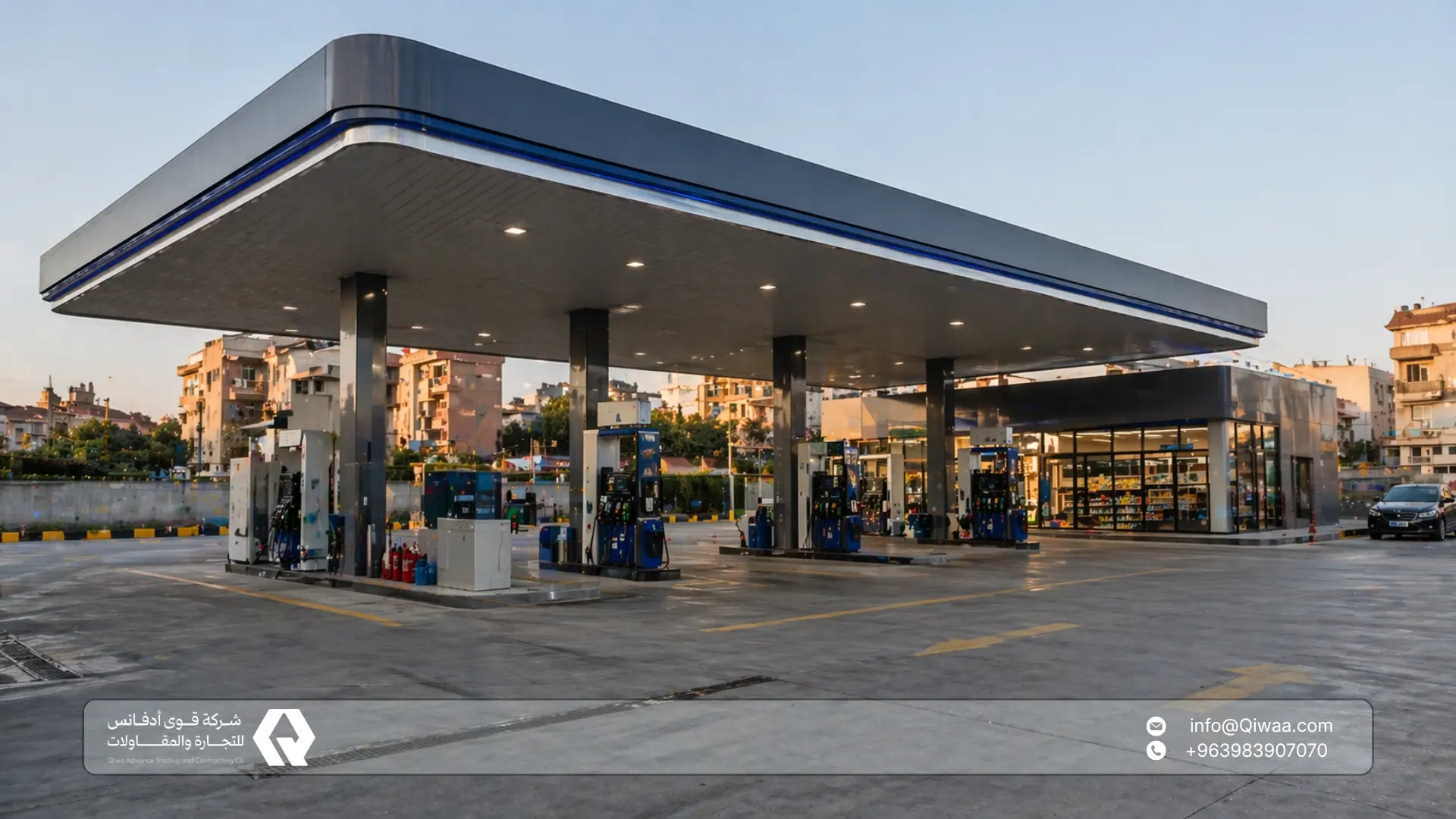
Choosing the right fuel station construction company should not be based only on civil works or price. A fuel station is a sensitive operational facility connected to fuel, safety, traffic movement, monitoring, and service continuity.
Here are the main criteria to consider.
Experience in Sensitive Operational Projects
A fuel station contractor should understand the nature of operational facilities where errors can affect safety, service, and future performance.
Look for a partner with:
- Experience in technically sensitive facilities
- Understanding of the relationship between different systems
- Ability to manage hidden and high-risk works
- A track record in projects where accuracy and timing are critical
This type of experience is important because fuel station issues are often discovered after opening, when correction becomes more difficult and more costly.
Ability to Manage Integrated Execution
The right company should manage all disciplines within one execution sequence.
This means:
- Connecting daily site work with the actual technical schedule
- Coordinating teams to avoid discipline conflicts
- Responding to site changes without losing quality control
- Maintaining a clear project path from start to handover
Integrated management is especially important in projects that involve underground works, fuel systems, safety networks, control panels, and commissioning requirements.
Clear Scope, Schedule, and Handover Process
Before signing a contract, fuel station owners should make sure the scope of work is clear and measurable.
The agreement should define:
- Work packages and responsibilities
- Approved execution stages
- Supply and installation schedule
- Testing and inspection procedures
- Partial and final handover process
- How modifications or unexpected site issues will be handled
Qiwa Advance provides fuel station execution with clear coordination, defined responsibilities, and a structured handover process that supports operational stability.
Before starting your fuel station project, request an engineering consultation from Qiwa Advance to review scope, schedule, and execution requirements.
Qiwa Advance’s Role in Modern Fuel Station Projects in Syria
In modern fuel station construction, civil experience alone is not enough. The success of the project depends on the ability to integrate tanks, pumps, networks, electrical and mechanical works, safety systems, control systems, and commissioning requirements within one coordinated path.
Qiwa Advance supports fuel station projects in Syria through an engineering approach that connects planning, supply coordination, multidisciplinary execution, and operational readiness.
Our goal is not only to complete the building. Our goal is to help deliver a station that is ready to work.
What Qiwa Advance Provides?
Integrated execution
We connect civil, mechanical, electrical, safety, and operational systems under one execution plan to reduce conflicts and improve project control.
Supply coordination
We align procurement and delivery with site readiness, so materials and systems arrive when they can actually be installed.
Operational readiness
We connect execution stages with testing, commissioning, safety requirements, and real operational needs.
Control of sensitive works
We focus on hidden works, system interfaces, and technical points that are difficult to modify after opening.
Execution flexibility
We manage projects while considering supply conditions, multiple vendors, site limitations, and quality requirements.
Clear scope of work
We define responsibilities, execution stages, approval points, and handover procedures so the project moves with clarity.
When planning a modern fuel station in Syria, Qiwa Advance gives you an engineering path that connects construction, supply, coordination, and final operational readiness.
Contact Qiwa Advance today to start planning your smart fuel station project with a clear technical and execution strategy.
FAQs About Smart Fuel Station Construction in Syria
What affects the timeline of a fuel station construction project?
The timeline is not determined by civil works alone. It is also affected by site readiness, drawing approvals, tank and pump supply, system delivery, installation sequencing, and coordination between disciplines. In many projects, delays happen because supply, execution, and installation are not connected properly.
What is the difference between a traditional fuel station and a smart fuel station?
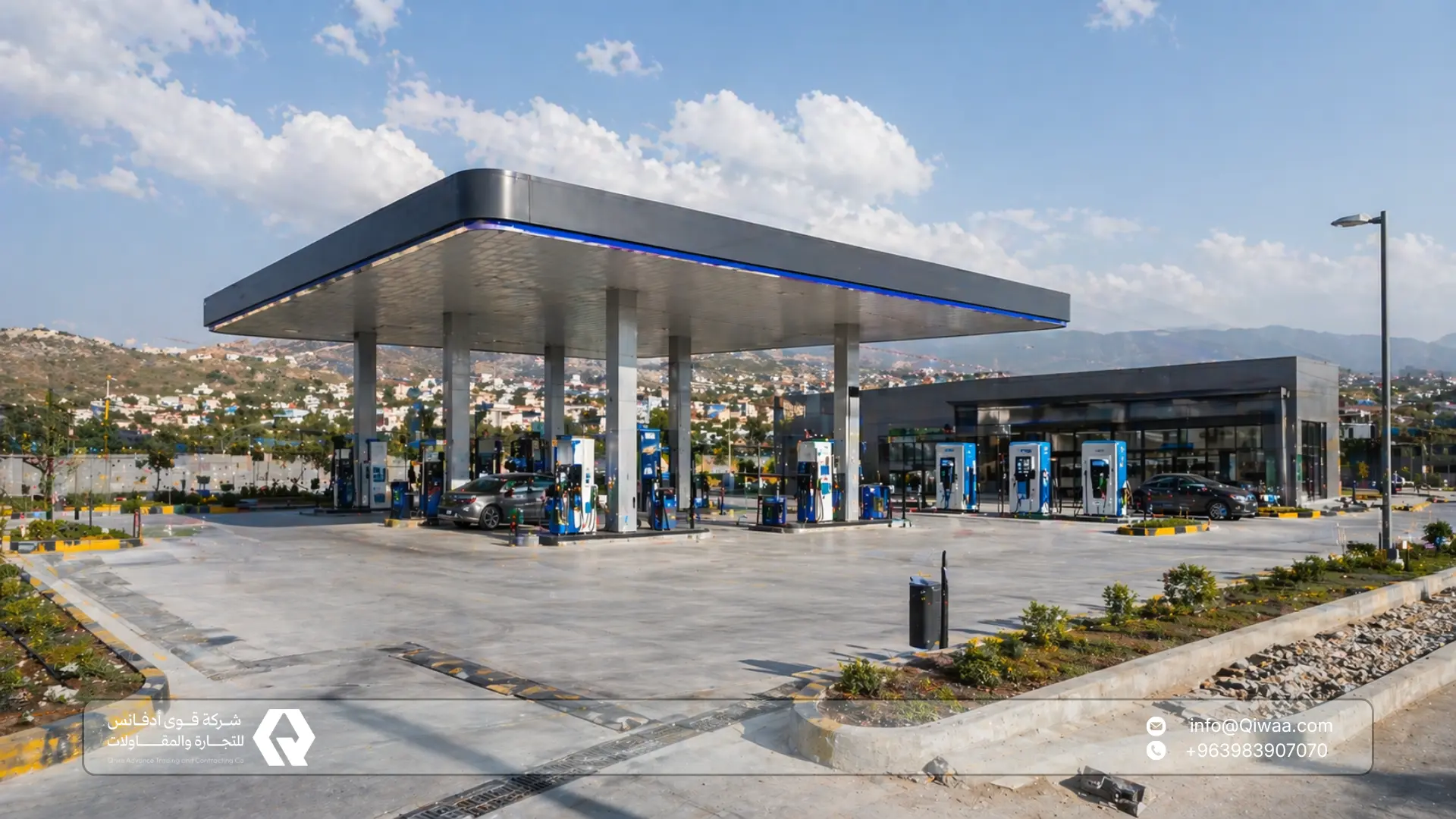
A traditional fuel station focuses mainly on storage, fueling, and basic service infrastructure. A smart fuel station adds stronger integration between monitoring, control, tank management, inventory measurement, pump operation, payment systems, safety tools, and operational reporting.
Can a traditional fuel station be upgraded into a smart station?
In some cases, yes. It depends on the condition of the existing infrastructure, the electrical and mechanical readiness, the possibility of integrating monitoring and control systems, and the flexibility of the current layout. Some stations can be upgraded partially, while others need wider redesign to make the new systems work efficiently.
What is the real indicator of a successful fuel station project?
The real indicator is not the opening date alone. A successful station should operate steadily, reduce technical issues, support smooth service, provide clear monitoring and safety control, and avoid immediate post-handover corrections. Operational stability after opening is the strongest sign of a well-executed project.
Planning to build or upgrade a fuel station in Syria? Qiwa Advance can help you move from concept to execution with integrated engineering, supply coordination, safety system planning, and operational readiness.
Contact Qiwa Advance today to request a technical consultation for your fuel station project.