


For contractors, suppliers, and project owners pursuing wastewater treatment projects in Syria, identifying funded opportunities is only part of the challenge. Selecting treatment technologies that can operate reliably under local power supply, budget, and maintenance constraints is equally important.
This guide examines Syria’s wastewater infrastructure, major construction and rehabilitation projects, and their funding and procurement status. It also compares treatment technologies and pipe materials and outlines the technical and contractual requirements to consider before requesting quotations.
The State of Wastewater Treatment Infrastructure in Syria
Rebuilding Syria’s wastewater infrastructure requires restoring the treatment capacity of existing plants, developing new facilities, and upgrading wastewater collection and conveyance networks.
According to a World Bank announcement published on April 23, 2026, approximately 70% of Syria’s wastewater treatment plants had suffered severe damage, highlighting the scale of rehabilitation required across the sector.
How Many Wastewater Treatment Plants Does Syria Have?
On September 20, 2026, Syria’s Energy Minister announced that the country had 123 wastewater treatment plants, with plans to construct five additional facilities across several governorates and rehabilitate the Adra wastewater treatment plant, according to the Syrian Arab News Agency (SANA).
| Indicator | Reported Figure | Source Date |
|---|---|---|
| Total wastewater treatment plants | 123 plants | September 2026 |
| Planned new treatment plants | 5 plants | September 2026 |
| Plants affected by severe damage | Approximately 70% | April 2026 |
These figures indicate the scale of infrastructure rehabilitation needs but do not establish the current operational capacity of individual treatment plants.
For contractors and engineering consultants evaluating wastewater treatment projects in Syria, plant-specific assessments are essential to determine the condition of civil structures, electromechanical equipment, treatment performance, and associated sewer networks.
Adra Wastewater Treatment Plant Rehabilitation
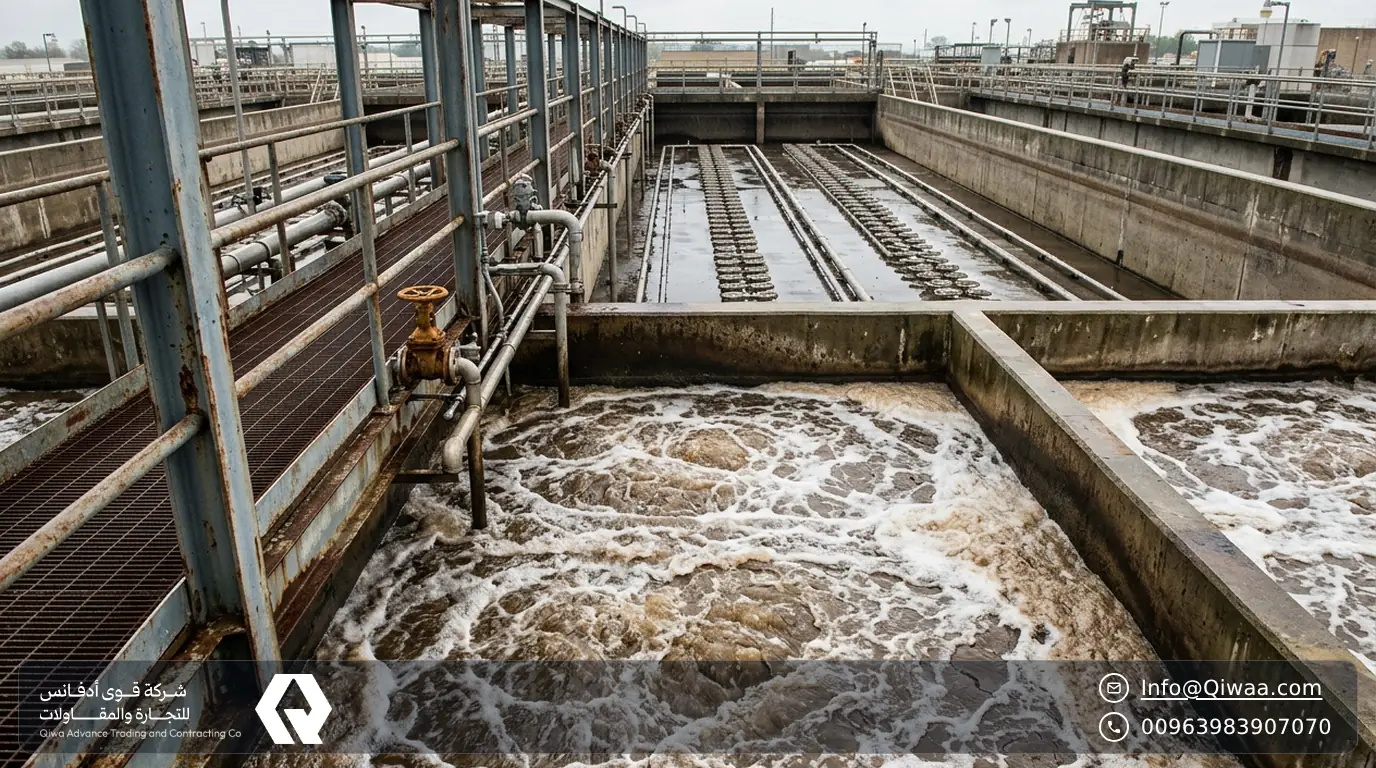
The Adra wastewater treatment plant in Rural Damascus illustrates the gap between design capacity and operational capacity at existing wastewater facilities in Syria.
According to Ministry of Energy data published on November 24, 2025, the plant’s reported technical and financial indicators were as follows:
| Indicator | Reported Figure |
|---|---|
| Design capacity | 485,000 m³/day |
| Reported operational throughput | 270,000 m³/day |
| Operational throughput relative to design capacity | Approximately 56% |
| Treatment capacity shortfall | 215,000 m³/day |
| Damaged equipment | More than 50% |
| Estimated rehabilitation cost | Approximately USD 60 million |
| Agricultural land associated with the plant’s treated water services | Approximately 18,000 hectares |
These figures highlight the importance of conducting a detailed condition assessment before defining the scope of wastewater treatment plant rehabilitation. Such assessments should examine existing treatment tanks, pumps, aeration systems, electrical equipment, control systems, and associated pipelines.
Project owners should also distinguish between restoring the original design capacity, expanding treatment capacity, and improving effluent quality. Each objective involves different engineering requirements, capital costs, procurement needs, and contractual responsibilities.
Wastewater Treatment Projects in Syria
Syria’s wastewater infrastructure recovery includes the rehabilitation of large treatment plants, the construction of decentralized facilities, and the upgrading of sewer networks and sludge treatment systems.
For contractors, consultants, and suppliers, identifying procurement opportunities requires distinguishing between funded rehabilitation works, preparatory studies, open procurement notices, and completed projects.
The following table summarizes selected wastewater treatment projects and related procurement notices documented as of November 24, 2026.
| Project or Procurement Notice | Funding or Contracting Authority | Scope of Work | Procurement Status and Reference |
|---|---|---|---|
| Adra Wastewater Treatment Plant | Ministry of Energy and World Bank | Rehabilitation to restore a treatment capacity of 485,000 m³/day | Rehabilitation included in Project P515199 |
| Sheikh Saied Wastewater Treatment Plant, Aleppo | Ministry of Energy and World Bank | Assessments and procurement preparation for future rehabilitation to approximately 350,000 m³/day | Preparatory activities included in Project P515199 |
| Homs Wastewater Treatment Plant | UNICEF | Rehabilitation of the sludge treatment facility, Phase 2 | LRPS-2026-9204387 – submission deadline passed on July 11, 2026 |
| Talbiseh Wastewater Network | UN-Habitat through UNON | Sewer network rehabilitation, pipeline installation, and pumping station connection | EOIUNON23694 – EOI deadline passed on June 25, 2025 |
| Zibdeen Wastewater Treatment Plant | UNDP and Adaptation Fund | Decentralized treatment facility with USD 4.89 million in project funding | Inaugurated on November 27, 2025 |
| Deir Al-Asafir Wastewater Treatment Plant | Damascus Water Supply and Sewerage Establishment | Construction of a treatment plant with a capacity of 1,200 m³/day | Construction launched on June 4, 2026 |
Inclusion in a funded program does not necessarily mean that construction or supply contracts are open for bidding. Contractors and suppliers should verify individual procurement packages, eligibility requirements, and submission deadlines before preparing proposals.
Adra and Aleppo Wastewater Treatment Plant Rehabilitation
On April 23, 2026, the World Bank approved a USD 150 million grant for the Syria Emergency Water Security and Resilient Services Project (P515199), covering water supply infrastructure, wastewater rehabilitation, water resource management, and institutional development.
The wastewater infrastructure component identifies two major priorities:
- Adra Wastewater Treatment Plant: Rehabilitation works to restore its treatment capacity and improve sanitation services for approximately 2.2 million people.
- Sheikh Saied Wastewater Treatment Plant in Aleppo: Technical assessments and procurement preparation for future rehabilitation, with an intended service population of approximately two million people.
The distinction is important for companies evaluating wastewater treatment projects in Syria. Adra’s rehabilitation is included in the funded project scope, whereas the documented activities for Sheikh Saied focus on preparing for future rehabilitation rather than financing its full construction and rehabilitation works.
In September 2026, Syria’s Energy Minister estimated the cost of rehabilitating Aleppo’s wastewater treatment plant at USD 400 million and confirmed that efforts were underway to secure financing through international institutions, according to SANA.
International contractors, engineering consultants, and infrastructure suppliers should monitor the World Bank procurement plan published on October 19, 2026 to identify relevant consulting, construction, equipment, and material supply packages as procurement progresses.
Wastewater Procurement Opportunities and Completed Projects
Recent and completed wastewater projects demonstrate the range of contracting and supply requirements across Syria:
- Homs: The UNICEF sludge facility rehabilitation tender illustrates the importance of technical compliance and financial readiness. Its procurement documents included technical specifications, a bill of quantities (BOQ), performance security requirements, and a minimum bid validity period of 120 days.
- Talbiseh: The network rehabilitation scope included pipeline installation, excavation, cleaning 4,251 meters of an existing sewer line, and constructing a treatment basin, demonstrating the combined civil engineering and material supply requirements of sewer network projects.
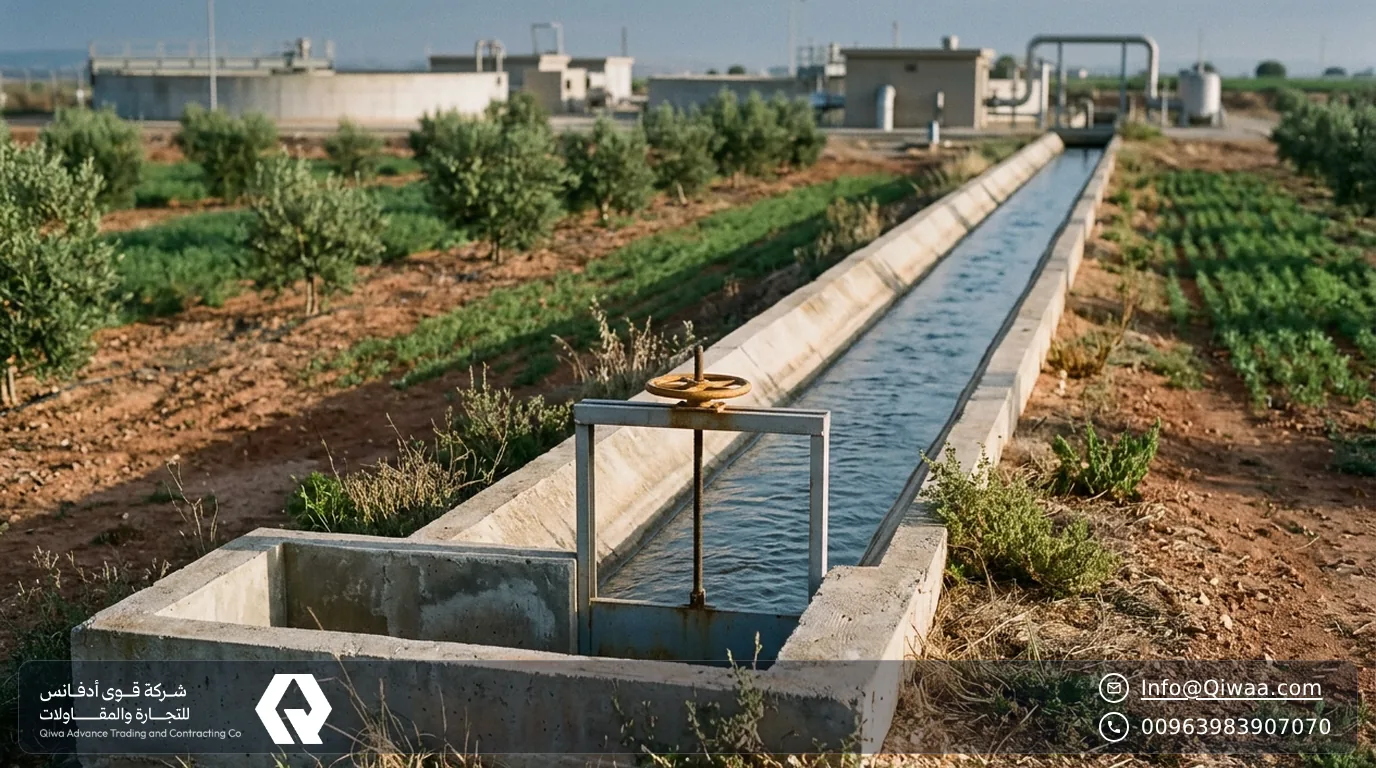
- Zibdeen: The decentralized treatment plant demonstrates how wastewater infrastructure can support agricultural water reuse. A November 2026 government announcement reported a treatment capacity of 4,400 m³/day. However, its project funding should not be treated as a standard construction cost for comparable facilities without assessing the full scope of work.
These examples provide insight into procurement requirements and project delivery models, but they are not currently open tenders.
As of November 24, 2026, the International Organization for Migration (IOM) had also published an Expression of Interest (SCU-EOI-2026-005) covering potential water, sanitation, and hygiene (WASH) procurement across Syria, with a stated submission deadline of November 30, 2026.
The notice seeks to identify eligible suppliers and contractors for possible future procurement activities. It is not a construction tender, a request for quotations, or a commitment to purchase.
To identify new opportunities, monitor the United Nations Global Marketplace (UNGM), World Bank procurement plans, and relevant contracting authority announcements.
Read more: UN Tenders in Syria and Procurement Requirements.
Comparison of Wastewater Treatment Systems
Selecting a wastewater treatment technology requires balancing treatment performance with land availability, energy consumption, maintenance requirements, and long-term operating costs.
For wastewater treatment projects in Syria, unreliable electricity supply, equipment availability, and local maintenance capabilities are particularly important considerations.
| Treatment System | Land Requirements | Energy Requirements | Main Technical Advantage | Operational Considerations |
|---|---|---|---|---|
| Conventional Activated Sludge (CAS) | Aeration tanks and secondary clarifiers require space | Aeration and sludge recirculation are major energy demands | Established biological treatment process with configurable nutrient removal | Requires monitoring of biological processes, sludge settling, and recirculation |
| Sequencing Batch Reactor (SBR) | Can reduce footprint by combining treatment and settling in the same reactor | Depends on aeration cycles and operating conditions | Flexible treatment cycles for varying loads and treatment objectives | Requires reliable cycle control, automation, and decanting equipment |
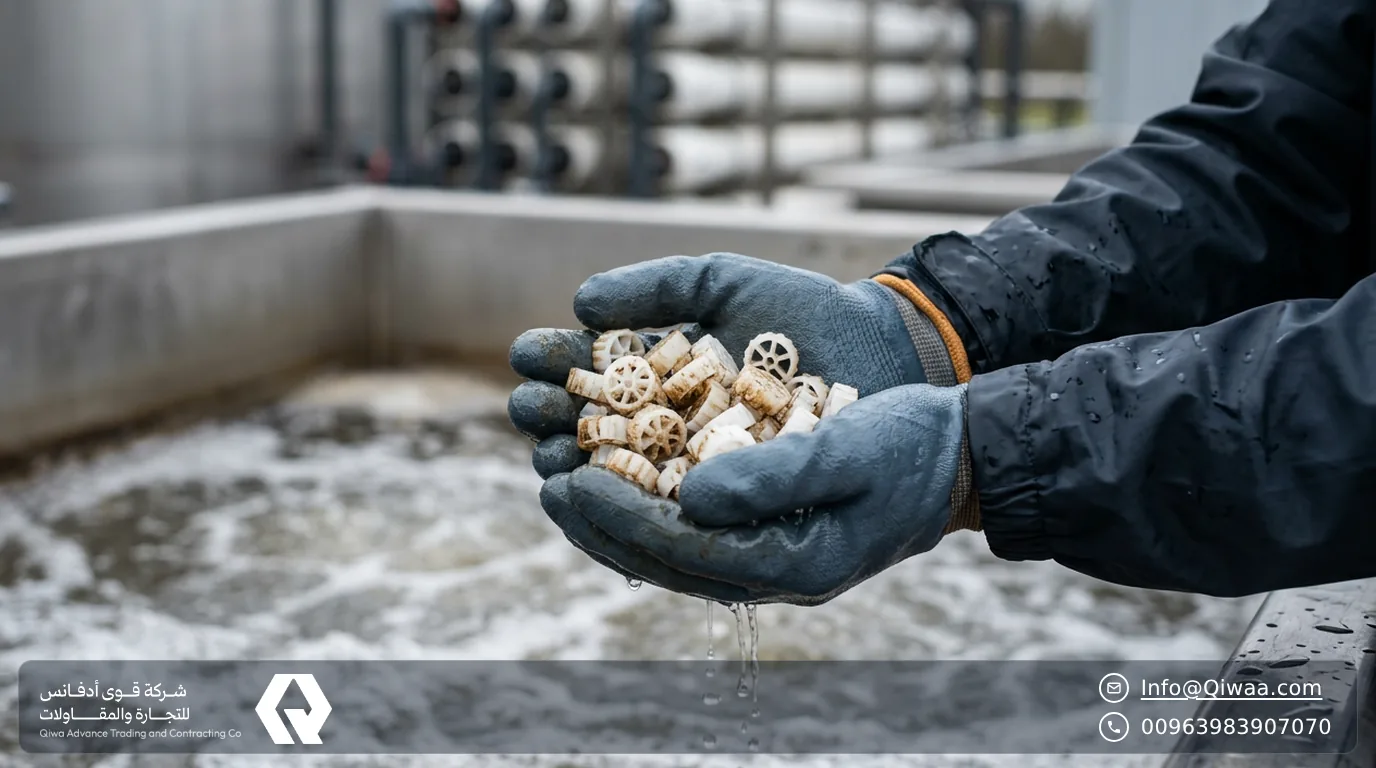
| Moving Bed Biofilm Reactor (MBBR) | Can increase biological treatment capacity within a limited footprint | Requires aeration or mixing, depending on the treatment stage | Potential for upgrading existing plants without extensive additional tank construction | Requires carrier retention, process monitoring, and downstream solids separation |
| Membrane Bioreactor (MBR) | Compact configuration without conventional secondary clarifiers | Can be relatively high due to aeration and membrane operation | Efficient suspended solids removal and high-quality effluent for further reuse treatment | Requires membrane cleaning, fouling control, and periodic replacement |
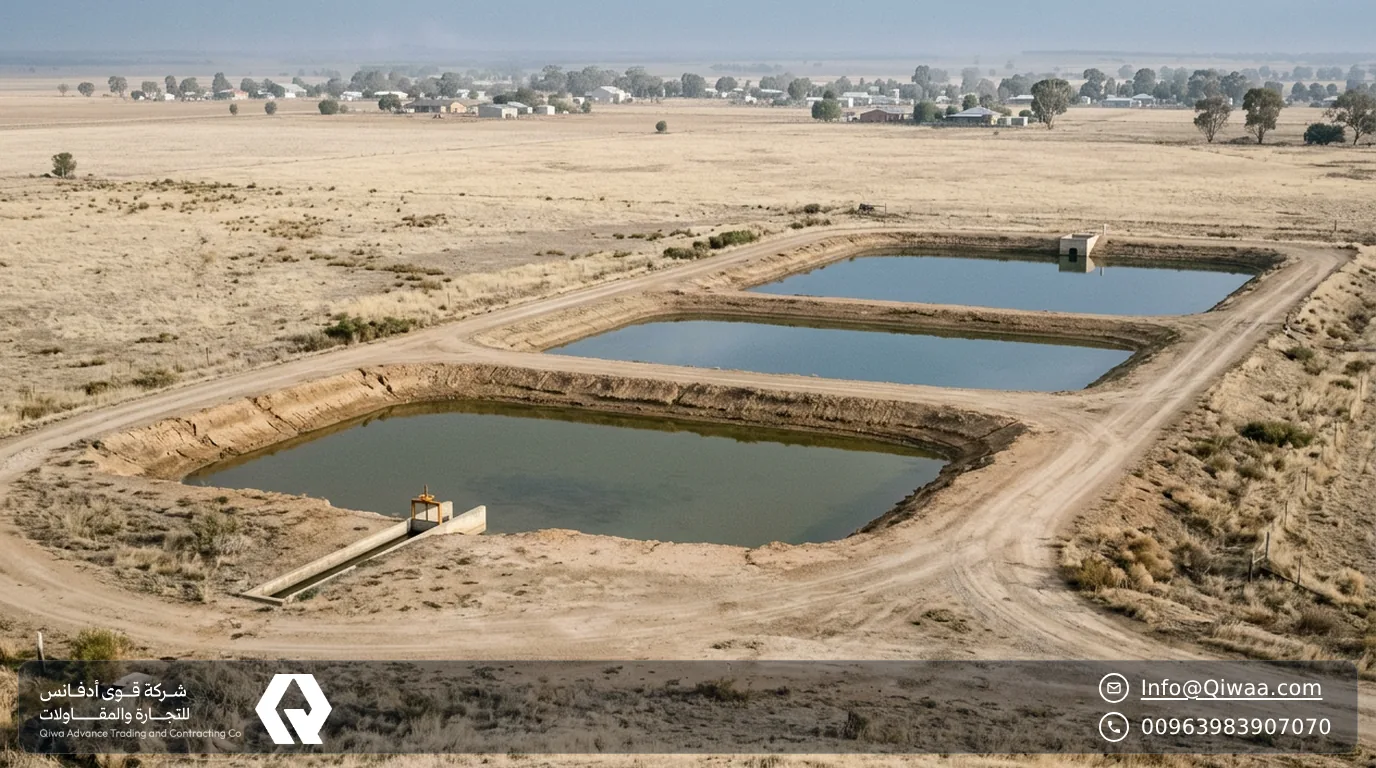
| Waste Stabilization Ponds | Generally require substantial land area | Relatively low for non-mechanically aerated systems | Low mechanical complexity where site and climate conditions are suitable | Performance depends on temperature, retention time, sludge accumulation, and effluent requirements |
This comparison draws on technical guidance from the US Environmental Protection Agency on sequencing batch reactors, membrane bioreactors, and lagoon treatment systems, as well as Ontario’s biological wastewater treatment design guidelines.
When evaluating competing treatment technologies, request comparable estimates for energy consumption in kWh/m³, maintenance costs, consumables, equipment replacement, sludge production and management, and compliance with target effluent standards.
A system with lower initial construction costs may become more expensive over its operating life if it requires substantial backup power, frequent equipment replacement, or specialized maintenance. Technology selection should therefore consider life cycle cost (LCC) rather than capital expenditure (CAPEX) alone.
Choosing Wastewater Treatment Systems and Pipes
Successful wastewater treatment projects in Syria require more than selecting a technology that meets effluent quality requirements. Project teams must also consider whether the facility can operate reliably under local power supply, maintenance, and budget constraints, and whether the associated sewer networks can meet their hydraulic and structural requirements.
Wastewater Treatment Technology Selection Criteria
Before selecting conventional activated sludge, SBR, MBBR, MBR, or waste stabilization ponds, evaluate seven factors that influence treatment performance and long-term operational viability:
- Design flows and organic loading: Consider average daily flow, peak flow, seasonal variations, and pollutant concentrations, including BOD, COD, and TSS.
- Effluent quality requirements: Determine the treatment objectives based on discharge requirements or the intended agricultural or industrial reuse of treated wastewater.
- Land availability: Limited space may favor compact treatment systems, while larger sites may accommodate lower-energy alternatives such as waste stabilization ponds.
- Power supply reliability: Assess the energy requirements of aeration, pumping, and control systems, together with the cost of maintaining critical processes during power outages.
- Local operation and maintenance capabilities: Evaluate the availability of qualified personnel, replacement equipment, spare parts, membranes, and consumables.
- Sludge management: Consider the technical and financial requirements of sludge treatment, dewatering, transportation, and safe disposal.
- Future expansion: Assess whether treatment capacity can be increased in stages as wastewater flows, service populations, and available funding change.
For wastewater treatment plant rehabilitation projects, assess the condition and suitability of existing tanks, structures, and equipment before replacing the treatment process. Retrofitting an existing facility with MBBR, for example, may provide an opportunity to increase biological treatment capacity within the available footprint.
Syria’s electricity supply constraints also make operational resilience an important selection criterion. Technologies that depend on continuous aeration, pumping, or automated control should be evaluated against the availability and cost of backup power.
A 2008 sewerage development study by the Japan International Cooperation Agency (JICA) illustrates how treatment technology selection varies according to local conditions. The study proposed oxidation ditches for Banias, submerged attached-growth treatment for three facilities in Slunfeh, and constructed wetlands for Al-Thawra and Mzerib.
Although these historical proposals require reassessment against current conditions, they demonstrate why wastewater treatment projects in Syria should be evaluated individually rather than applying the same technology across different municipalities.
The World Bank’s guide to wastewater treatment and reuse similarly emphasizes selecting solutions that match local financial resources, institutional capacity, and service requirements.
GRP vs HDPE Pipes for Wastewater Networks
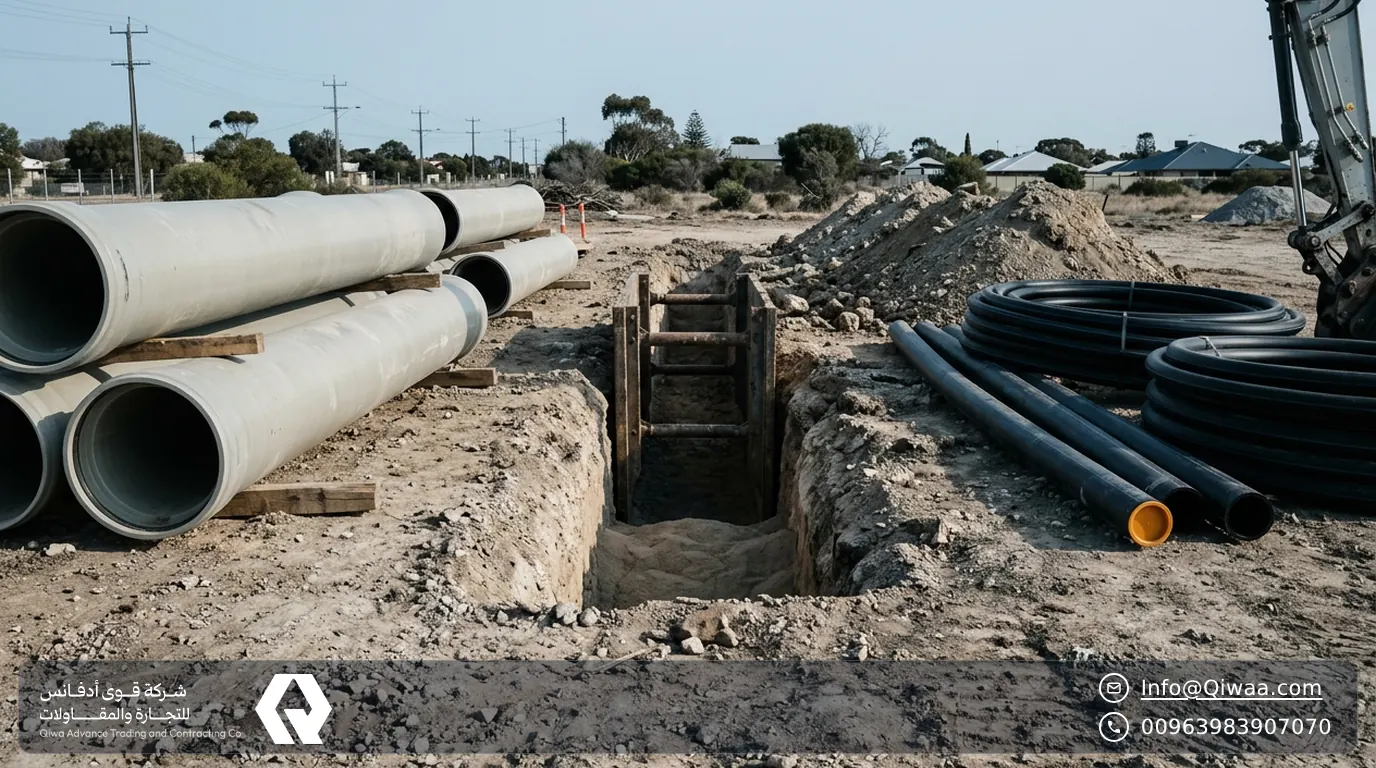
Both glass-reinforced plastic (GRP) and high-density polyethylene (HDPE) pipes are used in wastewater collection and conveyance networks. Suitable products are available for both gravity sewer and pressurized applications.
The choice should be based on hydraulic requirements, structural design, installation conditions, and long-term network performance rather than pipe diameter alone.
| Selection Factor | GRP Pipes | HDPE Pipes |
|---|---|---|
| Typical applications | Gravity sewers, pressure pipelines, and large-diameter trunk mains | Gravity sewers, sewer force mains, and networks requiring flexible installation |
| Chemical resistance | Depends on the resin system, internal liner, and wastewater characteristics | Depends on the polyethylene grade, operating temperature, and chemical exposure |
| Jointing methods | Typically gasketed couplings or application-specific joints | Butt fusion, electrofusion, or other approved connections depending on the product |
| Buried pipe performance | Depends on ring stiffness, bedding, backfill, and external loading | Depends on pipe geometry, wall thickness, soil support, and installation quality |
| Installation considerations | Suitable for large-diameter transmission and sewer networks where product specifications meet project requirements | Particularly relevant for flexible pipeline routes and suitable trenchless installation methods |
| Installed cost | Influenced by diameter, pressure and stiffness classes, fittings, transportation, and installation | Influenced by material grade, SDR, fittings, fusion equipment, and installation |
For gravity sewers, prioritize hydraulic capacity, internal diameter, pipeline gradient, ring stiffness, and buried pipe performance. For sewer force mains, assess maximum operating pressure, hydraulic transients, pressure rating, and joint integrity.
Both applications require consideration of groundwater conditions, burial depth, traffic loads, soil properties, bedding, backfill, and chemical exposure.
Technical guidance from Amiblu on GRP sewer pipes and the Plastics Pipe Institute (PPI) on HDPE sewer force mains supports these application-specific selection principles.
Before approving a pipe specification, verify the manufacturer’s product data, applicable standards, available diameters, pressure classifications, jointing systems, and installation requirements.
At Qiwaa Advance, we support wastewater treatment projects in Syria through GRP pipe solutions backed by our authorized agency with Saudi Arabia’s Amiantit Group, alongside HDPE pipe supply tailored to project specifications.
We help contractors and procurement teams coordinate pipe specifications, fittings, documentation, and supply requirements before material approval and ordering.
Read more: GRP Pipe Specifications and What to Verify Before Ordering.
13 Checks Before Requesting a Wastewater Project Quotation
Preparing accurate technical and commercial requirements before requesting quotations for wastewater treatment projects in Syria helps reduce unexpected costs, minimize scope changes, and compare contractor and supplier proposals on a consistent basis.
Wastewater Treatment Plant Requirements
- Design flows: Specify average daily flow, peak flow, current treatment capacity, and future expansion requirements.
- Influent characteristics: Provide laboratory analysis results, including BOD, COD, TSS, and other relevant pollutants.
- Effluent quality requirements: Define the required discharge or water reuse standards, including the intended agricultural or industrial applications.
- Site conditions and existing infrastructure: Provide site plans, available land area, and condition assessment reports for existing structures and equipment in rehabilitation projects.
- Power supply: Specify available electrical capacity, supply reliability, and backup power requirements.
- Sludge management: Define sludge treatment, dewatering, transportation, and safe disposal requirements.
- Technical and contractual requirements: Identify the scope of work, applicable standards, funding authority requirements, performance guarantees, commissioning procedures, and acceptance criteria.
Wastewater Network and Pipe Supply Requirements
- Network drawings: Provide pipeline routes, longitudinal profiles, pumping station locations, and manhole layouts.
- Bill of quantities (BOQ): Specify pipe diameters, lengths, quantities, fittings, and accessories.
- Flow conditions: Identify gravity sewers and sewer force mains, including design gradients where applicable.
- Pressure requirements: Specify operating pressure, maximum design pressure, anticipated hydraulic transients, and the required pressure class for pressurized pipelines.
- Ring stiffness: Specify the required ring stiffness class (SN), where applicable, based on structural design and installation conditions.
- Burial and installation conditions: Provide burial depths, soil characteristics, groundwater levels, traffic loads, and bedding and backfill requirements.
Before accepting a quotation, confirm its technical compliance, scope exclusions, delivery schedule, transportation costs, installation responsibilities, testing requirements, and warranties. Comparing prices without aligning these factors can result in misleading cost estimates and additional expenses during project execution.
Contact the Qiwaa Advance engineering team with your project drawings, BOQ, and technical specifications to discuss GRP and HDPE pipe supply requirements or EPC solutions for your wastewater treatment plant and associated sewer networks.
How Qiwaa Advance Supports Wastewater Treatment Projects in Syria
Delivering wastewater infrastructure projects requires effective coordination between engineering, material procurement, civil works, and electromechanical installation. In Syria, access to suitable infrastructure materials, technical documentation, and reliable supply channels is particularly important for both local and international contractors.
At Qiwaa Advance, we address these requirements through two complementary business sectors:
- Qiwaa Contracting: Integrated Engineering, Procurement, and Construction (EPC) solutions for wastewater treatment plants, water networks, and related infrastructure, helping project owners coordinate engineering, procurement, and construction within an agreed contractual framework.
- Qiwaa Trading: Supply of GRP and HDPE pipes, fittings, and related infrastructure materials according to approved technical specifications, bills of quantities, and project delivery requirements.
- As the authorized agent of Saudi Arabia’s Amiantit Group in Syria, we provide contractors and institutional buyers with access to infrastructure products, initial technical consultation, and coordination with manufacturers on technical and commercial offers.
Our local procurement and logistics capabilities also support import procedures, shipping, customs clearance, and delivery coordination.
Whether you are developing a new wastewater treatment plant, rehabilitating an existing facility, or executing a sewer network package, our services can be structured around integrated project delivery or standalone material supply requirements.
Read more: Water Desalination Plants in Syria by EPC Model.
EPC vs Design-Bid-Build for Wastewater Treatment Projects
The choice of contracting model influences project coordination, cost certainty, risk allocation, and responsibility for meeting treatment performance requirements.
| Selection Criterion | EPC | Design-Bid-Build (DBB) |
|---|---|---|
| Contractual responsibility | A single contractor is responsible for engineering, procurement, and construction within the agreed scope | Design and construction responsibilities are assigned under separate contracts |
| Project schedule | Design, procurement, and construction activities can overlap where appropriate | Detailed design is generally completed before construction bidding |
| Cost certainty | Earlier contractual price certainty may be possible when the scope and employer’s requirements are clearly defined | Construction costs become clearer after detailed design and competitive bidding |
| Design control | The owner defines functional and performance requirements, while the EPC contractor develops the design | The owner retains greater direct control over design through its engineering consultant |
| Risk allocation | The EPC contractor assumes the risks allocated under the contract | Risks are distributed among the owner, designer, and construction contractor |
| Performance testing | Acceptance can be linked to defined contractual performance criteria | Requires clear coordination between design responsibilities, construction quality, and performance testing |
| Project coordination | Fewer contractual interfaces for the owner to manage | Greater owner involvement in coordinating separate consultants and contractors |
EPC may be appropriate when project owners seek consolidated contractual responsibility and integrated project delivery. Design-Bid-Build may be preferable when owners require greater control over detailed design or need further investigations before finalizing the construction scope.
For wastewater treatment plant rehabilitation, incomplete records and uncertainty about existing structures or equipment can complicate risk allocation. A detailed condition assessment should therefore precede the selection of the contracting model.
Regardless of the delivery method, contracts should clearly define influent design conditions, treatment capacity, effluent quality requirements, commissioning procedures, performance tests, and acceptance criteria.
Long-term operation and maintenance (O&M) responsibilities must also be specified separately, as they are not automatically included in every EPC contract.
Discuss Your Wastewater Project with Qiwaa Advance
Whether you are an international contractor seeking local supply and execution support or a project owner evaluating EPC solutions in Syria, we can discuss your requirements based on your project documentation and approved technical specifications.
Contact the Qiwaa Advance team on WhatsApp with your project drawings, BOQ, specifications, and delivery schedule to discuss EPC solutions or request a quotation for GRP and HDPE pipe supply.
FAQs About Wastewater Treatment Projects in Syria
How many wastewater treatment plants does Syria have?
Syria has 123 wastewater treatment plants, with five additional facilities planned, according to the Energy Minister’s announcement on September 20, 2026, reported by SANA. However, the total number of plants does not establish their current operational capacity or individual rehabilitation requirements.
How much does it cost to build a wastewater treatment plant in Syria?
Construction costs depend on design capacity, treatment technology, influent characteristics, effluent quality requirements, site conditions, and the scope of civil and electromechanical works. Project owners should also consider long-term energy, maintenance, equipment replacement, and sludge management costs when evaluating investment requirements.
How much will it cost to rehabilitate the Adra Wastewater Treatment Plant?
Syria’s Ministry of Energy estimated rehabilitation costs at approximately USD 60 million in November 2025, when the plant was treating about 56% of its design capacity. Rehabilitation is included in World Bank Project P515199, which aims to restore the plant’s treatment capacity of 485,000 m³/day.
What is the difference between MBR and MBBR wastewater treatment systems?
MBBR uses moving carriers that support biological growth, while MBR combines biological treatment with membrane filtration. MBBR may be suitable for increasing biological treatment capacity in existing facilities, whereas MBR provides efficient suspended solids removal. Selection depends on effluent requirements, energy consumption, maintenance capabilities, and life cycle costs.
When are waste stabilization ponds suitable for wastewater treatment projects in Syria?
Waste stabilization ponds may be suitable for communities with sufficient land and limited access to reliable electricity, particularly when non-mechanically aerated systems can meet treatment requirements. Their suitability depends on wastewater characteristics, climate, retention time, environmental conditions, and target effluent quality.
Where can contractors find wastewater treatment tenders in Syria?
Contractors and suppliers can monitor the United Nations Global Marketplace (UNGM), World Bank procurement plans, and announcements from relevant Syrian contracting authorities. Verify procurement status, eligibility requirements, technical specifications, and submission deadlines before committing resources to bid preparation.
Does Qiwaa Advance provide EPC services for wastewater treatment projects?
Yes. Through Qiwaa Contracting, we provide Engineering, Procurement, and Construction (EPC) solutions for wastewater treatment plants and related infrastructure. Through Qiwaa Trading, we also supply GRP and HDPE pipes according to project specifications and procurement requirements.
Moving Wastewater Treatment Projects from Planning to Execution
Successful wastewater treatment projects in Syria require more than securing funding or selecting an advanced treatment technology. They require solutions that match local operating conditions, compliant infrastructure materials, manageable life cycle costs, and clearly defined contractual responsibilities.
Sources
- Energy Minister on 123 treatment plants and five new ones, SANA, 20 September 2026
- Ministry of Energy on the Adra plant, SANA, 24 November 2025
- Press release on US$225 million financing for water and health services in Syria, including $150m for project P515199, World Bank, 23 April 2026
- LRPS-2026-9204387 Restoration of sludge treatment facility in Homs sewage treatment plant (phase 2), UNICEF via UNGM, 11 June 2026
- EOIUNON23694 Restoration of the Wastewater Network in Talbiseh City, UN Office at Nairobi for UN-Habitat via UNGM, 10 June 2025
- Model wastewater treatment plant launched in Rural Damascus, UNDP, 27 November 2025
- Wastewater Technology Fact Sheet: Sequencing Batch Reactors, EPA 932-F-99-073, US EPA, September 1999
- The Study on Sewerage System Development in the Syrian Arab Republic, Summary Report, JICA, March 2008


