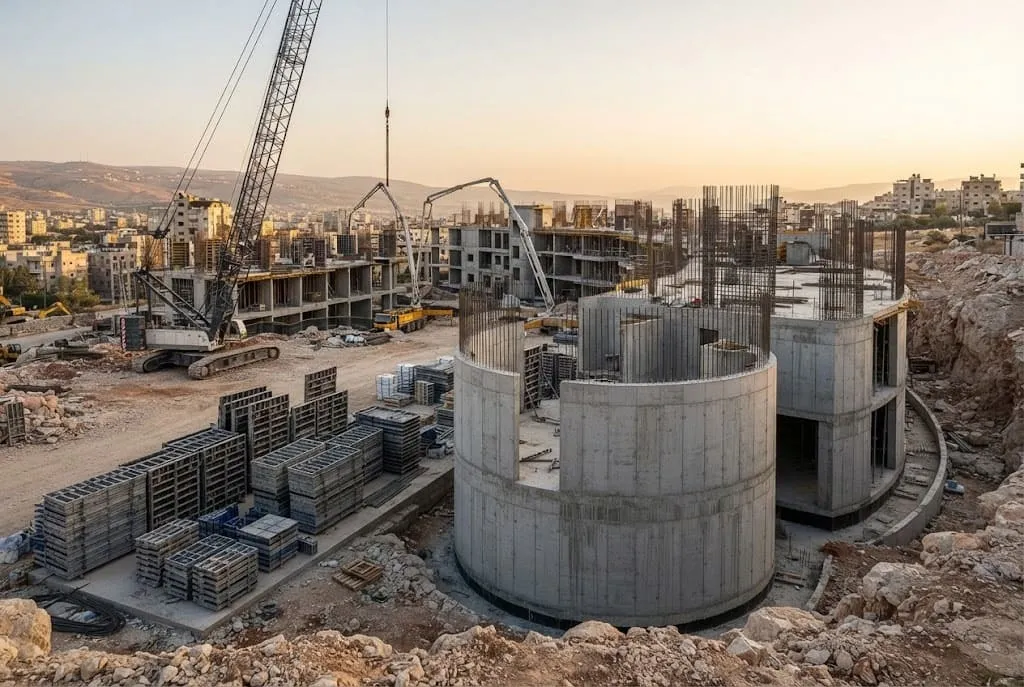


Three suppliers quote rebar at USD 600, USD 640, and USD 615 per tonne. The procurement officer initially favours the USD 600 offer. But it is priced Ex Works (EXW), leaving the buyer responsible for additional costs. Once the example’s freight, unloading, and advance-financing charges are included, its evaluated cost rises to USD 643.60 per tonne.
All prices and calculations in this article are hypothetical. They illustrate quotation comparison methods, not actual market prices or verified final delivery costs.
This guide explains how buyers can request construction materials quotations, check technical compliance, and compare offers on a consistent cost basis. It also shows suppliers how to prepare complete, comparable quotations that reduce clarification requests and help buyers evaluate their offers.
How to make construction materials quotations comparable
Construction materials quotations are comparable only when suppliers quote against the same technical requirements and their commercial terms can be evaluated on a common basis.
Before comparing prices, procurement teams should verify that each offer meets the required specifications, quantities, delivery schedule, and documentation requirements. They can then standardise delivery costs, currency, payment terms, and other applicable charges to calculate the total evaluated cost per unit.
A lower quoted price does not necessarily mean a lower procurement cost or a technically acceptable offer.
10 essential terms in a construction materials quotation
A complete quotation should address the following terms so buyers can identify technical differences, calculate costs, and assess supply risks before awarding an order.
- Material specifications: State the applicable standard, grade, dimensions, and other requirements from the BOQ and technical specifications. Identify any proposed alternatives or deviations separately.
- Manufacturer and origin: Identify the manufacturer, country of origin, and product source where relevant. For materials requiring traceability, specify how delivered batches will be linked to their supporting documentation.
- Quantity and unit of measurement: Quote quantities using the RFQ’s specified units, such as tonnes, cubic metres, or linear metres. Where different units are used, provide a documented conversion basis.
- Delivery terms and location: Specify the agreed delivery rule, exact named place, and edition of Incoterms where applicable, such as DAP Project Site, Homs, Syria, Incoterms 2020. Clarify any loading, unloading, or handling costs not included in the price.
- Delivery schedule: State the available quantities, lead times, and delivery dates for each batch. Confirm whether the proposed schedule meets the project’s procurement and installation requirements.
- Quotation validity: Provide a clear expiry date and identify any conditions affecting price validity. Buyers must know whether the offer will remain valid through their approval process.
- Currency and exchange terms: State the quotation and payment currencies. If conversion is required, identify the agreed exchange-rate source, applicable date, and calculation method.
- Payment terms: Specify advance payments, instalments, and the documented event triggering each payment. Identify any required payment guarantees so buyers can assess financing costs and exposure.
- Quality and conformity documents: List the certificates, inspection reports, and test records required by the RFQ or contract. Confirm which documents accompany the quotation and which will be supplied with each delivery batch.
- Warranty and contractual remedies: Define the applicable warranty scope and period, together with any required delay penalties, liability limits, or defect remedies. These provisions must be consistent with the proposed supply contract and applicable law.
These terms make quotations easier to evaluate, but they do not automatically create a binding supply contract. Acceptance, contractual obligations, and remedies depend on the agreed terms and applicable law.
Why unit price is not enough to compare supplier quotations
Comparing supplier quotations by unit price can produce a misleading ranking when suppliers use different delivery terms.
For example, an EXW offer excludes transportation to the project site. Under Incoterms 2020, the seller is not required to load the goods onto the collecting vehicle. The buyer must therefore check loading, freight, destination unloading, and any applicable insurance, clearance, or other charges before comparing the offer with a delivered price.
An offer that includes delivery to the project site may appear more expensive initially but require fewer additional payments from the buyer.
Procurement teams should first screen quotations for technical compliance, then compare eligible offers using the same unit, currency, destination, and cost assumptions. Payment terms and delivery risks should also be evaluated before selecting the supplier.
This gives compliant suppliers a fairer comparison and helps buyers avoid choosing an apparently cheaper offer with higher overall costs.
Read more: Rebar Supply in Syria: What to Check Before You Buy?

How to calculate landed cost for construction materials
Landed cost is the purchase price plus the additional costs the buyer must bear to bring construction materials to the agreed delivery point. For a project-site comparison, these may include loading, freight, insurance, unloading, customs duties, and applicable non-recoverable taxes, provided they are not already included in the supplier’s price.
Financing costs, such as the cost of funding advance payments, should be assessed separately when calculating the total evaluated cost of each quotation.
To compare supplier quotations accurately, procurement teams need the delivery rule and exact location, a consistent unit of measurement and currency, and clearly stated payment terms. Quotation validity and any excluded charges must also be checked before selecting an offer.
For construction materials supplied locally or imported into Syria, the objective is the same: calculate what each technically compliant offer will cost at the same project delivery point, without double-counting included charges.
EXW, FCA, DAP and DPU Incoterms 2020 explained
The International Chamber of Commerce (ICC) publishes Incoterms 2020, which define the allocation of delivery responsibilities, transport costs, and risk between buyers and sellers.
For construction materials procurement, the distinction is particularly important when comparing quotations that include different levels of transport and handling.
| Rule | When risk transfers to the buyer | Transport to project site | Unloading at project site |
|---|---|---|---|
| EXW | When goods are placed at the buyer’s disposal at the named location, before loading. | Buyer arranges and pays. | Buyer. |
| FCA | When goods are delivered to the buyer’s nominated carrier or person at the named place, according to the applicable FCA delivery conditions. | Seller to the named FCA point; buyer thereafter. | Buyer, if the site is beyond that point. |
| DAP | When goods reach the named destination and are placed at the buyer’s disposal, ready for unloading. | Seller arranges and pays. | Buyer. |
| DPU | After goods are unloaded and placed at the buyer’s disposal at the named destination. | Seller arranges and pays. | Seller. |
Under EXW, the seller is not obliged to load the goods at origin. Under FCA, loading responsibilities depend on the named delivery location: the seller loads at its own premises, but is not required to unload its arriving vehicle when delivery occurs at another named location.
The difference between DAP and DPU is especially relevant for heavy construction materials. A DAP quotation may leave the buyer responsible for arranging cranes, forklifts, or other unloading equipment. Under DPU, the seller must arrange unloading at the agreed destination.
Every quotation should specify the rule, precise delivery point, and edition, for example:
DAP project site, Homs, Syria, Incoterms 2020
Incoterms do not determine the selling price, payment schedule, transfer of ownership, or contractual remedies. These must be addressed separately in the quotation and supply contract. Import clearance, duties, and insurance requirements must also be checked under the chosen rule and applicable agreement.
Before comparing prices, confirm which costs each supplier has included and add only the buyer’s remaining costs. This allows procurement teams to assess EXW, FCA, DAP, and DPU quotations on a consistent project-site cost basis.
Also read: Importing Building Materials to Syria and Key Customs Procedures in 2026

How quotation validity, currency and payment terms affect cost
Three commercial terms can change the evaluated cost of a construction materials quotation even when its unit price remains unchanged.
Quotation validity determines how long the supplier’s offer remains open for acceptance. If a quotation expires before procurement approval, the buyer must obtain written confirmation or an updated offer. A seven-day validity period may therefore be insufficient for a project requiring several approval stages.
Currency and exchange terms determine how the quoted amount is converted into the payment currency. When the quotation and payment currencies differ, the parties should agree on the exchange-rate source, applicable date, and buying or selling rate before placing the order. For transactions involving Syrian pounds, quotations should also clearly identify the applicable currency denomination, particularly where older financial documents are involved.
Payment terms affect working capital and financing costs. An advance payment requires the buyer to commit funds before receiving the materials, while payment on delivery reduces that exposure. Procurement teams should evaluate these differences alongside the quoted price.
A supply quotation may link payments to the following milestones, depending on the agreement:
- Advance payment: Payable after the purchase order or contract becomes effective, against an advance payment guarantee where required.
- Shipment or readiness: Payable against the agreed shipping documents or readiness confirmation, potentially through a letter of credit for imported materials.
- Delivery and acceptance: Payable against signed delivery records and the required conformity documentation.
- Retention release: Applicable only where retention is agreed, with the release conditions and timing stated in the contract.
The payment structure should reflect the material type, order value, delivery schedule, and contractual risks. There is no standard percentage split suitable for every construction materials purchase.
How to compare three rebar supplier quotations
Consider the three rebar quotations introduced earlier. All figures are hypothetical and illustrate the comparison method; they are not actual market prices or supplier offers.
For a consistent comparison, assume all three offers cover the same rebar specification, quantity, and project destination. The example also assumes:
- Offer A requires a 30% advance two months before delivery; Offers B and C are payable on delivery.
- Offer A’s USD 35 transport allowance includes loading at the supplier’s warehouse and freight to the project site.
- Site unloading costs USD 5 per tonne where not included in the quotation.
- The financing cost of Offer A’s advance is calculated at an illustrative simple rate of 1% per month.
- Other applicable taxes, insurance, and charges are assumed equal or not applicable for this simplified comparison.
| Offer | Quoted Price (USD/t) | Delivery Rule | Cost at Site (USD/t) | Financing Cost (USD/t) | Total Evaluated Cost (USD/t) |
|---|---|---|---|---|---|
| A | 600 | EXW warehouse | 640.00 | 3.60 | 643.60 |
| B | 640 | DPU project site | 640.00 | 0.00 | 640.00 |
| C | 615 | DAP project site | 620.00 | 0.00 | 620.00 |
Offer A — EXW
The buyer adds USD 35 for loading and freight and USD 5 for site unloading:
USD 600 + USD 35 + USD 5 = USD 640 per tonne
The supplier also requires a 30% advance, equivalent to USD 180 per tonne, two months before delivery.
At the assumed financing rate:
USD 180 × 1% × 2 months = USD 3.60 per tonne
Total evaluated cost = USD 640 + USD 3.60 = USD 643.60 per tonne.
Offer B — DPU
The quoted USD 640 per tonne includes delivery and unloading at the named project site. With payment on delivery and no additional costs under the example’s assumptions, its total evaluated cost remains USD 640 per tonne.
Offer C — DAP
The supplier delivers the material to the named project site, but unloading remains the buyer’s responsibility.
USD 615 + USD 5 = USD 620 per tonne.
Under the assumed payment terms, no additional financing cost is included.
Which supplier should the buyer choose?
Cost alone does not settle the decision. The buyer must also verify quotation validity and technical compliance.
| Offer | Validity | Required Batch Inspection Certificate | Evaluation |
|---|---|---|---|
| A | 30 days | Confirmed | Compliant under the stated assumptions, but highest evaluated cost |
| B | 30 days | Confirmed | Compliant and lower evaluated cost than A |
| C | 7 days | Not confirmed | Lowest evaluated cost, but clarification is required before acceptance |
Offer C is USD 20 per tonne cheaper than B on the evaluated cost basis. However, its seven-day validity may expire before procurement approval, and the required inspection certificate has not been confirmed.
The buyer should request written confirmation that Offer C will remain valid through the approval process and that the supplier can provide the required certificate for each batch.
If C satisfies both requirements, it becomes the lowest-cost compliant offer under these assumptions. If it cannot meet an essential requirement, Offer B is the lowest-cost compliant alternative, at USD 640 per tonne.
The decision should be recorded in a quotation comparison sheet showing technical compliance, delivery terms, cost adjustments, quotation validity, and the reason for selecting or rejecting each offer.
For construction and infrastructure materials sourcing in Syria, contact Qiwaa Advance with your BOQ, specifications, required quantities, delivery location, and schedule to discuss the supply options available through Qiwaa Trading.

How to prepare an RFQ for construction materials
A construction materials RFQ should give every supplier the same technical requirements, delivery conditions, and evaluation criteria. Otherwise, procurement teams may receive quotations that require additional assumptions or clarification before prices can be compared.
A practical RFQ process follows five steps:
- Define the requirements. Extract the materials, specifications, quantities, and delivery schedule from the Bill of Quantities (BOQ) and approved project documents.
- Issue a standard RFQ. Provide invited suppliers with consistent requirements, submission deadlines, and instructions. Communicate relevant clarifications consistently.
- Receive structured quotations. Require suppliers to complete the requested commercial and technical fields and identify any deviations.
- Check technical compliance. Evaluate offers against the mandatory specifications and documentation requirements before ranking them by price.
- Compare eligible offers. Calculate the total evaluated cost using consistent delivery, currency, payment, and other applicable cost assumptions.
The RFQ should also explain how non-compliant offers, alternative products, and missing information will be handled during evaluation.
Required fields in a construction materials RFQ
The following example illustrates the information a buyer could request when procuring reinforcing steel for a construction project in Syria.
| RFQ Field | Illustrative Requirement |
|---|---|
| Material specifications | Reinforcing steel to ASTM A615/A615M Grade 60, with the applicable standard edition and bar sizes specified in the approved project documents |
| Quantity and delivery schedule | 900 tonnes in three monthly deliveries of 300 tonnes |
| Delivery terms | DPU designated project delivery point, Hama, Syria, Incoterms 2020, with the exact location identified |
| Quotation currency | USD, with the payment currency and any required conversion method defined |
| Payment terms | State any required advance, payment milestones, guarantees, and supporting documents |
| Quality documentation | Manufacturer’s material test certificates and applicable origin or inspection documents as required by the project |
| Delivery lead time | Confirm the first available delivery date and ability to meet subsequent deliveries |
| Quotation deadline and validity | Submit within 10 days; quotation valid for at least 30 days |
| Included and excluded costs | Identify freight, unloading, insurance, duties, taxes, and other applicable charges |
| Technical alternatives | State deviations from the specified material, manufacturer, standard, or delivery requirements separately |
All quantities and commercial conditions are illustrative. The actual requirements must come from the project’s approved documents and procurement procedure.
The most important comparison rule is to request prices against the same specification, unit of measurement, delivery point, and commercial assumptions. Any proposed alternative should be evaluated separately rather than treated as an equivalent offer without technical approval.
How suppliers should respond to a construction materials RFQ
Suppliers should respond to each RFQ requirement directly and identify anything they cannot meet. This allows procurement teams to distinguish a compliant quotation from one requiring technical or commercial clarification.
Before submitting a quotation:
- Follow the RFQ structure. Reference each requested item and provide the corresponding price, quantity, unit, and delivery conditions.
- Disclose exclusions. Identify any transport, unloading, insurance, customs, or other costs not included in the quoted price.
- Confirm validity and availability. State when the offer expires, the available stock or production lead time, and any conditions affecting delivery or price.
- Identify supporting documents. Confirm which certificates and test reports are available immediately and which will accompany delivery.
- Declare deviations separately. List alternative specifications, substitutions, payment conditions, or other exceptions so they can be assessed without affecting the original offer.
A quotation should not leave buyers to infer missing costs or technical compliance. If a supplier cannot meet a mandatory requirement, it should state the limitation and propose an alternative only where the RFQ permits one.
19 checks before signing a construction materials supply contract
Before issuing a purchase order or signing a supply contract, verify that the final terms reflect the quotation evaluated and approved by the procurement team.
- Material specifications: Do the agreed standard, grade, dimensions, and product descriptions match the approved BOQ, drawings, and technical specifications?
- Manufacturer and origin: Are the approved manufacturer, country of origin, and required traceability documents identified?
- Delivery terms: Is the agreed Incoterms 2020 rule stated with the exact named delivery point?
- Unloading responsibilities: Who provides the required equipment, labour, and access for unloading at the project site?
- Transport insurance: Which party must arrange insurance, what risks are covered, and what is the insured value?
- Price validity: Is the accepted price still valid, and are any adjustments after acceptance expressly regulated?
- Currency and exchange: Are the quotation currency, payment currency, conversion source, and applicable exchange-rate date agreed?
- Payment milestones: Is each payment linked to a defined event, required supporting documents, and any applicable guarantee?
- Quality certificates: Which manufacturer certificates, inspection reports, or test records are required, and when must they be submitted?
- Quantity tolerance: What over-delivery or under-delivery tolerance is permitted, and how will variations be priced?
- Delivery delays: Are delivery deadlines, applicable delay damages or penalties, their calculation basis, and any agreed caps defined?
- Warranty obligations: Are the warranty period, coverage, exclusions, and procedure for reporting defects specified?
- Material rejection: What constitutes non-conformity, and who pays for replacement, removal, or return of rejected materials?
- Acceptance testing: Who performs sampling and testing, which standards apply, and who bears the testing costs?
- Transfer of ownership: When does title pass to the buyer, independently of the Incoterms risk-transfer point?
- Price adjustments: For longer supply periods, is there an agreed adjustment mechanism, including its reference, triggers, and limits?
- Document precedence: If the contract, purchase order, RFQ, and quotation conflict, which document takes priority?
- Force majeure and delays: Are the notification procedure, qualifying events, and consequences for delivery obligations defined?
- Governing law and disputes: Are the governing law and dispute resolution procedure clear, including the competent court or, where arbitration is agreed, the seat, rules, and language?
Check the final contract against the approved quotation comparison before acceptance. Changes to payment terms, delivery obligations, warranties, or specifications can alter the basis on which the supplier was selected.
An accepted quotation may itself create binding obligations, depending on its terms and the applicable law. The parties should therefore agree on the intended contractual documents and obtain legal review before making a binding commitment.

Construction materials quotations from Qiwaa Advance in Syria
Through Qiwaa Trading, we, at Qiwaa Advance, coordinates construction and infrastructure material sourcing in Syria through its international manufacturing partnerships and authorized agencies.
Buyers can submit project specifications, quantities, and delivery requirements to assess suitable products and request a project-specific supply proposal.
Relevant product categories include:
- Amiantit Group: GRP fiberglass pipe systems for water transmission, wastewater networks, desalination, and treatment infrastructure.
- Vişne Madencilik / Öztüre Holding: Quicklime and hydrated lime for construction and industrial applications.
- Variant Factory: Tunnel formwork, concrete formwork, and related construction systems.
For procurement teams, the value of a manufacturer-linked supply channel lies in the ability to clarify product specifications, coordinate technical requirements, and establish the documents and commercial terms needed for evaluation.
However, an authorized agency does not automatically guarantee the lowest price, shortest lead time, or compliance with every project requirement. These must be established in the actual quotation.
Authorized agents vs open-market suppliers for construction materials
Both authorized agents and independent suppliers can provide suitable construction materials. The better procurement route depends on the technical requirements, documentation, delivery schedule, and total evaluated cost.
| Evaluation Criterion | Authorized Agent | Open-Market Supplier |
|---|---|---|
| Product origin | Manufacturer-linked sourcing may facilitate origin verification. | Manufacturer and product origin must be verified for the offered batch. |
| Conformity documents | Required certificates may be coordinated with the manufacturer, subject to availability. | Certificates can also be supplied, but their validity and connection to the delivered product must be checked. |
| Technical support | May facilitate direct clarification of specifications with the manufacturer. | Depends on the supplier’s technical capabilities and manufacturer access. |
| Warranty and defects | Manufacturer support may be available through the agency arrangement, subject to agreed terms. | Warranty coverage and remedies depend on the seller’s commitments and applicable manufacturer support. |
| Delivery availability | Depends on production capacity, shipment arrangements, and local stock. | Available stock may support urgent purchases, depending on quantity and specification. |
| Total evaluated cost | Must include the quoted price and applicable delivery, payment, and other costs. | Must be assessed on the same technical and commercial basis. |
For specialized materials or phased infrastructure supply, access to manufacturer documentation and technical coordination may be particularly valuable. For standard materials needed urgently, a verified independent supplier with available stock may offer a suitable alternative.
The procurement decision should depend on documented compliance, delivery capability, warranty terms, and total evaluated cost—not agency status alone.
How to request a construction materials quotation from Qiwaa Advance
To assess the materials and supply options relevant to your project, send Qiwaa Advance the following information:
- BOQ and material specifications: Item descriptions, applicable standards, grades, dimensions, and approved technical requirements.
- Quantities: Required amounts and measurement units, including any planned delivery batches.
- Project location: Delivery city, exact site location, and any relevant unloading or access requirements.
- Delivery schedule: Required dates, quantities per shipment, and project milestones affecting supply.
- Commercial requirements: Preferred quotation and payment currencies, quotation validity, payment conditions, and delivery terms.
- Quality documentation: Required manufacturer certificates, test reports, origin documents, and inspection requirements.
Some products require additional technical information:
- GRP pipes: Nominal diameter (DN), pressure class (PN), stiffness class (SN), joint specifications, and pipeline quantities.
- Concrete formwork systems: Structural drawings, typical floor layouts, casting sequences, and required system configurations.
- Quicklime and hydrated lime: Intended application, required chemical or physical specifications, quantities, and packaging requirements.
Based on the submitted information, Qiwaa Advance can assess the relevant sourcing options and coordinate product-specific technical and commercial proposals.
The final written quotation should confirm the offered product and scope, quantity, price, delivery terms, validity, payment conditions, applicable certificates, and any exclusions.
Send your BOQ and project requirements to Qiwaa Advance to discuss suitable construction and infrastructure materials for your project in Syria.
Manufacturers and suppliers interested in working with Qiwaa Advance can also use the supplier registration form.
FAQs about construction materials quotations
What should a construction materials quotation include?
A construction materials quotation should specify the material grade and standard, manufacturer, quantity, unit price, currency, delivery terms, lead time, payment schedule, quotation validity, and required quality certificates. Any exclusions or deviations from the RFQ should be clearly identified so buyers can assess technical compliance and compare total costs.
How Do You Compare Construction Materials Quotations?
First, check each quotation against the mandatory technical specifications and documentation requirements. Then compare compliant offers using the same units, currency, delivery point, and cost assumptions. Add excluded freight, unloading, duties, and other applicable costs, and assess financing charges separately. The lowest quoted price is not necessarily the lowest evaluated cost or the best compliant offer.
How long should a construction materials quotation remain valid?
The validity period should cover the buyer’s expected evaluation and approval process. There is no universal period suitable for every material or project. Buyers should specify a minimum validity period in the RFQ, while suppliers should state a clear expiry date. If approval takes longer, obtain written confirmation that the price and other terms remain valid before acceptance.
What Is the difference between DAP and DPU under Incoterms 2020?
Under DAP, the seller delivers the goods to the named destination ready for unloading, but the buyer is responsible for unloading. Under DPU, the seller is responsible for delivery and unloading at the named destination. When comparing quotations, include the buyer’s unloading costs under DAP and verify that both offers refer to the same delivery point.
Which currency should construction materials quotations in Syria use?
The quotation should clearly state its pricing currency, payment currency, and any agreed exchange-rate mechanism, subject to applicable law. If payment involves Syrian pounds, use the correct currency denomination. Syria introduced its new pound on January 1, 2026, at a conversion ratio of 100 old pounds to one new pound under Decree No. 293 of 2025. For currency conversions, identify the agreed rate source, applicable date, and calculation method.
Can a supplier quotation become a binding contract?
Yes. Depending on its terms and the applicable law, acceptance of a sufficiently definite supplier quotation may create binding obligations without a separate signed supply contract. Buyers and suppliers should therefore confirm the specifications, price, delivery conditions, payment terms, warranties, and applicable contractual documents before acceptance.
Sources
- Incoterms 2020, International Chamber of Commerce, accessed 11 October 2026
- Know Your Incoterms, US International Trade Administration, accessed 11 October 2026
- Syria launches its new currency without two zeros (in Arabic), CNBC Arabia, 28 December 2025