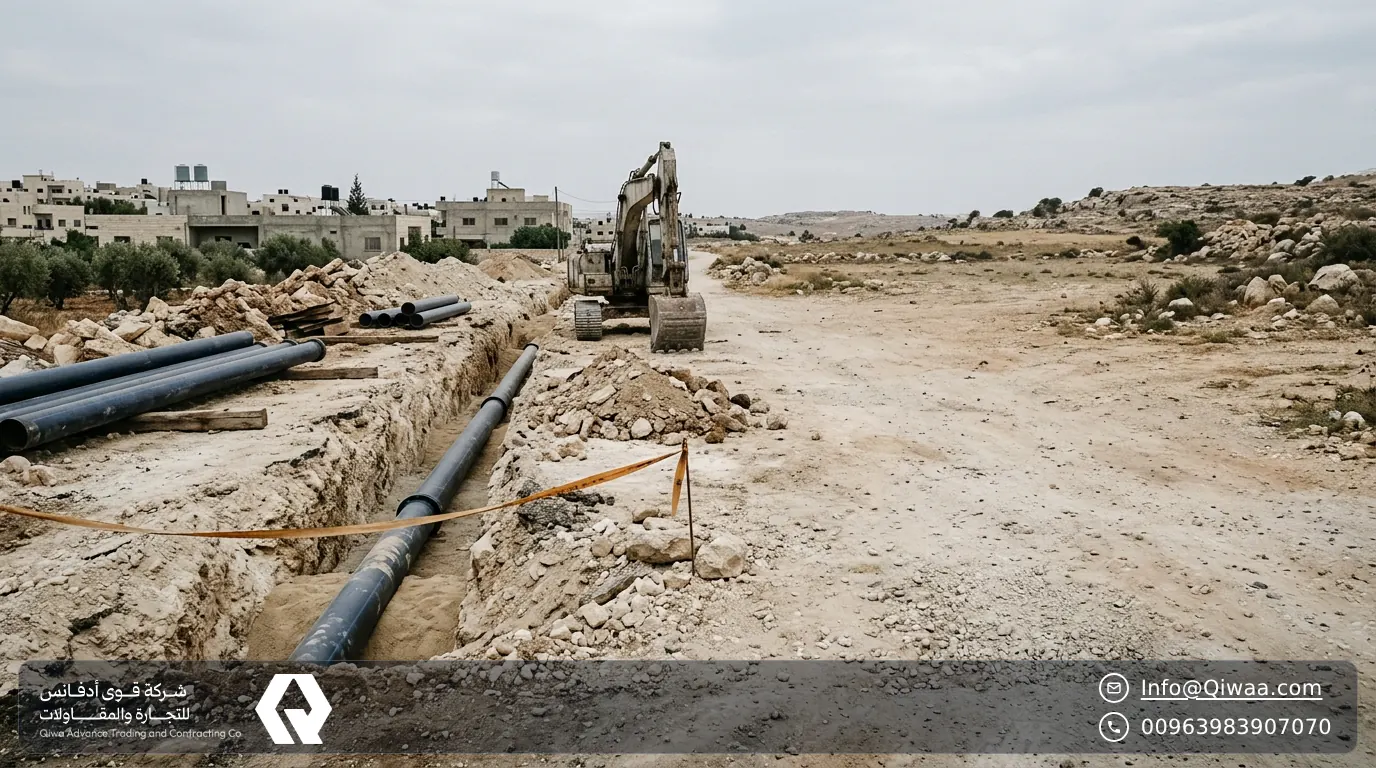


For contractors, Syria’s vast rubble clearance needs do not automatically mean contracts are available for bidding. The key questions are who procures the work, how removal quantities are measured, and which site risks must be included in the price.
This guide to rubble removal in Syria examines procurement channels, equipment requirements, and pricing considerations, helping contractors assess opportunities and avoid costly mistakes before submitting a bid.
Scale of Rubble Removal in Syria
Official estimates show the scale of Syria’s debris clearance challenge, although reported totals vary.
In September 2026, Minister of Emergency and Disaster Management Raed al-Saleh estimated approximately 50 million m³ of rubble nationwide, with around 3 million m³ removed during the first eight months of 2026.
A subsequent ministry update reported on 22 October 2026 estimated the national total at 40 million m³, of which approximately 3.5 million m³ had been removed.
These are estimates reported at different dates, not a single reconciled national inventory.
The distribution also varies significantly. The September report estimated more than 8 million m³ in Homs and approximately 10 million m³ in Deir ez-Zor city, highlighting substantial clearance requirements in both locations.
However, rubble volume is not the same as the value of available contracts. Contractors still need to identify funded work packages, authorized procurement entities, and the quantities covered by each contract.
Rubble Clearance Targets Through 2028
In September 2026, the government stated its goal of making Syria rubble-free by mid-2028.
Using the September estimates, the scale of the challenge can be illustrated as follows:
- Estimated remaining volume: 50 million − 3 million = 47 million m³.
- Approximate time to mid-2028: 22 months.
- Average clearance rate required: 47 million ÷ 22 = approximately 2.1 million m³ per month.
- Reported average for January–August 2026: 3 million ÷ 8 = 375,000 m³ per month.
- Illustrative increase required: approximately 5.7 times the earlier reported rate.
This calculation assumes a constant remaining volume and evenly distributed clearance activity. It is not an official implementation forecast or an estimate of contracts available to private companies.
The October ministry update also outlined a nearer-term target of removing more than 8 million m³ during the remainder of 2026 and through the end of 2027.
The ministry did not provide a comprehensive budget for these planned works. It identified equipment availability, transport distances, fuel costs, explosive hazards, and site conditions as factors affecting implementation costs.
For contractors, the announced targets indicate substantial operational requirements, but commercial opportunities depend on how individual projects are funded, structured, and procured.
Risks in Rubble Removal Contracts
Three issues require particular attention before contractors price rubble removal work:
- Procurement arrangements: Government authorities, international agencies, and implementing organizations may use different tendering procedures. Contractors must establish who issues and awards the specific contract.
- Measurement and payment: A price per cubic meter or tonne is meaningful only when the contract defines how quantities will be measured, verified, and paid.
- Site and disposal risks: Explosive remnants of war, hazardous materials, restricted access, haulage distances, and ownership of recovered materials can materially affect costs and responsibilities.
These factors determine whether a clearance project can be executed safely and priced reliably. The relevant opportunity is a defined, funded work package with clear contractual responsibilities—not simply a large volume of rubble awaiting removal.

Rubble Removal Tenders in Syria
Rubble removal contracts in Syria may be issued by public authorities, UN agencies, or organizations implementing donor-funded projects. The organization financing a project is not necessarily the one responsible for procurement or contract award.
Contractors should identify the authorized buyer and submission procedure before treating a clearance project as a bidding opportunity.
| Procurement Route | Who Controls Procurement? | Funding Arrangements | Where to Look |
|---|---|---|---|
| Public authorities | Relevant municipality, administrative unit, or authorized public body | Public funding or project-specific arrangements; rubble sales may be governed by applicable law | Official authority notices and procurement announcements |
| UN agencies | UNDP, UN-Habitat, or another agency issuing the solicitation | Agency programmes supported by government or institutional donors | UNGM, agency procurement pages, and the submission platform specified in each notice |
| Donor-funded implementing partners | The organization authorized to procure works, which may differ from the implementing partner | Donor grants and recovery programmes, including projects supported by the Aid Fund for Syria | Implementing organizations’ procurement notices, donor announcements, and partner websites |
The key distinction is between a funding announcement, an implementation agreement, and an actual procurement notice. Only the latter establishes bidding instructions and eligibility requirements.
For broader opportunities, see our guide to Syria reconstruction projects.
Law No. 3 of 2018 and Rubble Contracts
Law No. 3 of 2018 establishes procedures for identifying, removing, and disposing of rubble from damaged buildings within areas designated under its provisions.
The published English translation addresses several issues relevant to contractors:
- Authorized removal: Administrative units may arrange rubble removal directly or contract eligible public or private companies under specified conditions.
- Rubble ownership: The law provides procedures for documenting ownership claims and handling property associated with damaged buildings.
- Auctions and proceeds: Certain rubble may be sold through public auction, with proceeds and removal costs handled according to the applicable provisions.
- Disposal and recycling: Article 12 addresses arrangements for removal, disposal, and recycling under the conditions specified in the law.
These provisions do not mean that every rubble removal project automatically falls under Law No. 3 or that contractors acquire ownership of materials they remove.
Before pricing a municipal clearance contract, confirm the applicable legal framework, the authority issuing the work, and who retains ownership of rubble, recovered metals, and recyclable materials.
Any contract involving disputed ownership, auction proceeds, or compensation should undergo a qualified legal review.
UNDP Rubble Removal Tenders
UN-funded rubble removal offers documented examples of formal construction and clearance procurement in Syria.
Through the Republic of Korea-funded REVIVE initiative, UNDP reported that its first phase had cleared more than 570,000 tonnes of debris across Aleppo, Homs, Deir ez-Zor, and Rural Damascus by June 2026.
In August 2026, UNDP announced REVIVE Phase II, with a planned 450,000 tonnes of additional debris clearance across Aleppo, Deir ez-Zor, and Idlib.
The programme’s funding and clearance targets do not identify which contracts remain available. However, several UNDP solicitations published in October 2026 demonstrate actual procurement routes:
- Deir ez-Zor debris removal and cash-for-work: Published on 15 October 2026, with a submission deadline of 5 November.
- Idlib debris removal and equipment supply: Published on 19 October 2026, with a deadline of 3 November.
- Aleppo debris removal in two lots: Published on 21 October 2026, with a deadline of 4 November.
All three deadlines had passed by 23 November 2026. These notices are procurement examples, not currently open opportunities.
An important distinction is that these UNDP opportunities were published on UNGM, but bids had to be submitted through the Quantum supplier portal, following the instructions in each notice.
Contractors should therefore check both the published solicitation and its required submission platform, including registration, eligibility, clarification procedures, and deadlines.
Award records can also help companies understand the types of contracts previously procured. For example, UN-Habitat awarded a $68,760 rubble removal contract covering Aleppo and Homs on 17 April 2025.
However, an awarded contract’s value does not reveal its equipment requirements, quantities, or profitability. Those depend on the specific scope and tender documents.
Rubble Recycling Costs and Revenue
Rubble recycling can change the economics of a clearance contract, but only when processing requirements, material quality, and ownership rights are defined.
A June 2026 UNOPS report estimated that recycling may initially cost 27% more than landfill disposal, while revenue from recovered materials could make net costs 18–48% lower in the scenarios assessed.
These are general estimates, not verified cost or profitability figures for Syrian projects.
For contractors, the relevant questions are:
- Processing scope: Does the contract require sorting, crushing, screening, testing, or storage?
- Material ownership: Who owns recovered aggregate, metals, and other reusable materials?
- Revenue rights: Can the contractor sell recovered materials, or do the proceeds belong to the project owner?
- Material acceptance: Are there approved specifications and buyers for recycled products?
- Cost allocation: Who pays for processing, transport, testing, and disposal of unsuitable material?
Recycling is commercially attractive only when the expected value of usable materials justifies the additional processing and handling costs.
Contractors should not deduct assumed recycling revenue from their bid price unless ownership, sale rights, material acceptance, and payment arrangements are confirmed in writing.
These considerations should feed directly into the contract’s unit pricing, equipment selection, and risk allowances discussed in the next section.
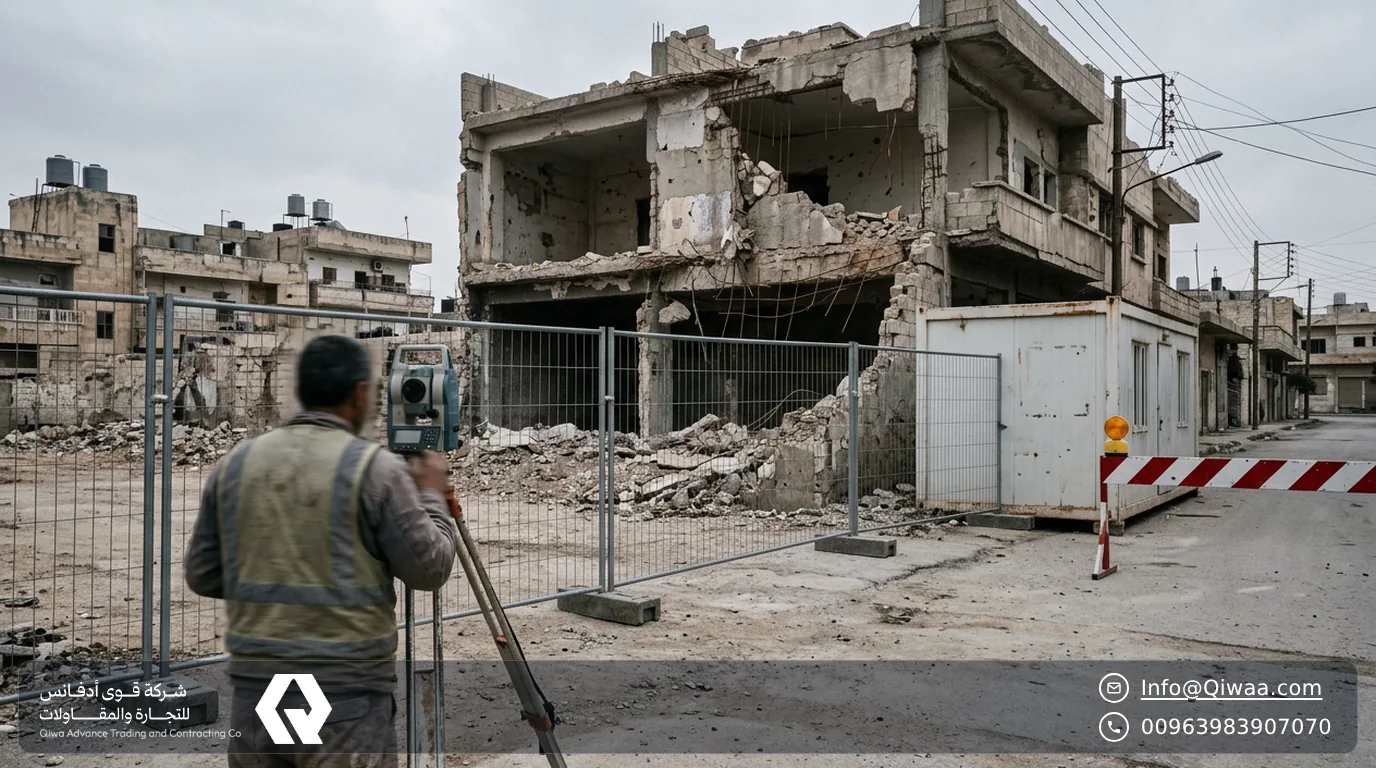
How to Price Rubble Removal in Syria
Pricing a rubble removal contract requires more than estimating excavation and truck hire. Contractors must define the payable quantity, select equipment for the actual site conditions, and account for loading, transport, processing, disposal, and contractual risks.
The following approach connects equipment selection with the costs that should appear in a commercial proposal.
Rubble Removal Equipment by Work Stage
Equipment requirements depend on whether the contract covers existing debris clearance, demolition, recycling, or a combination of these activities.
| Work Stage | Typical Equipment | Main Cost Considerations |
|---|---|---|
| Site preparation and demolition | Excavators, demolition attachments, loaders, and suitable specialist equipment | Structural stability, approved demolition methods, safe site access, and equipment mobilization |
| Loading and haulage | Excavators, wheel loaders, tipper trucks, and skips | Loading productivity, vehicle payload, haul distance, travel time, and fuel consumption |
| Sorting and separation | Screening equipment, picking stations, and suitable mechanical separators | Debris composition, contamination, labor requirements, and sorting productivity |
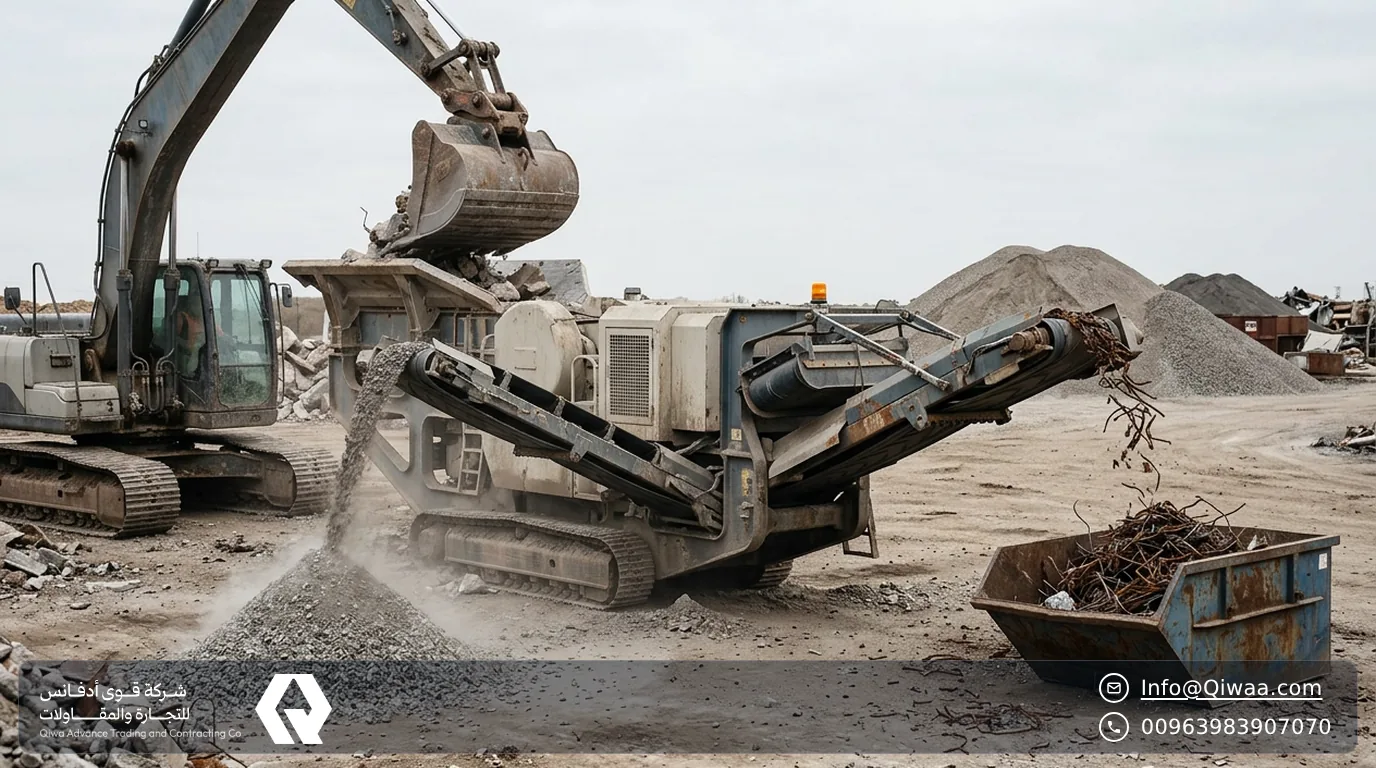
| Crushing and recycling | Mobile or stationary crushers, screening units, and magnetic separators | Processing capacity, equipment relocation, material testing, and required recycled-product specifications |
| Stockpiling and disposal | Loading equipment, designated storage areas, transport vehicles, and measurement facilities | Storage capacity, dust control, disposal fees, and approved destination sites |
These equipment categories follow the general approach described in the MSB/UNDP Debris Management Guidelines. They are not equipment specifications for any particular Syrian tender.
Contractors should select machinery according to verified quantities, site accessibility, haulage requirements, and expected productivity. Demolition and recycling equipment should not be included automatically when the contract covers only loading and removal of existing debris.
Before operations begin, explosive ordnance risks must be assessed and managed through an appropriate safety plan involving qualified specialists. The UNDP Debris and Explosive Ordnance Guide, published in April 2026, provides a risk-based framework for these operations.
Pricing Rubble Removal by Cubic Meter or Tonne
The first pricing decision is to establish how the contract measures and pays for removed material.
A cubic-meter rate may refer to debris measured in its original position, loose material loaded onto trucks, or another defined measurement basis. These quantities are not necessarily equal.
A tonne-based contract depends on verified weight, while a volume-based contract may require pre- and post-clearance surveys or an agreed measurement procedure.
The contract should therefore specify:
- Payable unit: Cubic meters or tonnes, including the precise measurement basis.
- Quantity verification: Site surveys, weighbridge records, or another approved measurement method.
- Material density: A verified conversion factor where weight and volume must be reconciled.
- Volume changes: How bulking during excavation and loading affects transport quantities without changing the agreed payment basis.
In its Syria recovery reporting, UNDP described more than 2.1 million m³ of rubble as approximately 3.15 million tonnes, implying an average of about 1.5 tonnes per m³ for that reported quantity.
This is not a universal conversion factor. Actual density depends on debris composition, voids, moisture, and how the material is measured.
Consider a hypothetical contract covering 1,000 m³ of rubble:
| Indicator | Initial Estimate | Heavier Debris |
|---|---|---|
| Payable volume | 1,000 m³ | 1,000 m³ |
| Assumed density | 1.5 tonnes/m³ | 1.8 tonnes/m³ |
| Total weight | 1,500 tonnes | 1,800 tonnes |
| Truckloads at 15-tonne net payload | 100 | 120 |
This example assumes trucks are limited by weight rather than available loading volume.
The contractor would need 20 additional truckloads, increasing the number of trips by 20% while receiving payment for the same 1,000 m³.
This does not mean total project costs automatically rise by 20%. The financial impact depends on which costs vary with truckloads, including transport, fuel, driver time, and vehicle utilization.
Calculating the Rubble Removal Unit Price
Once the measurement basis is established, contractors can calculate a proposed unit rate using estimated project costs.
Bid unit price = (Direct costs + Site overheads + Risk allowance + Target profit) ÷ Payable quantity
Direct costs should cover the actual contracted activities, including equipment operation, labor, fuel, loading, transport, processing, and disposal. Site overheads may include mobilization, supervision, temporary facilities, safety measures, and measurement costs.
For example, consider a hypothetical project with 1,000 payable m³:
| Pricing Component | Illustrative Amount |
|---|---|
| Equipment, labor, and loading | $1,700 |
| Transport and fuel | $2,100 |
| Sorting, disposal, and site controls | $700 |
| Mobilization and site overheads | $1,500 |
| Estimated project costs | $6,000 |
| Risk allowance | $600 |
| Target profit | $900 |
| Proposed bid value | $7,500 |
| Proposed unit price | $7.50/m³ |
All figures are hypothetical and are not quotations, verified Syrian market rates, or published tender prices.
The calculated rate should then be tested against changes in material density, haul distance, equipment productivity, fuel costs, and payment delays. A competitive price is not commercially viable if it depends on quantities or conditions that the contractor cannot verify.
For context, Syria’s Ministry of Emergency and Disaster Management reported rubble removal and transport costs of approximately $2.50–$6 per m³ in October 2026, depending on location and operating conditions.
This is a general reported cost range, not a contract rate or a ceiling for commercial bids. It does not establish that demolition, hazardous-material handling, recycling, and other specialized requirements are included.
Rubble Removal Risks to Price or Exclude
Before submitting a fixed-price offer, contractors must establish how the contract allocates three particularly significant risks:
- Explosive remnants of war: Confirm who is responsible for hazard assessment, specialist support, work suspension, and the costs of delays. Suspected explosive items must be handled only through authorized specialist procedures, not by ordinary debris crews.
- Asbestos and hazardous materials: Determine whether specialist identification, removal, transport, and approved disposal are included in the work scope. Do not assume that contaminated rubble can enter ordinary crushing or recycling operations.
- Rubble ownership and recovery rights: Establish who owns the debris, recovered metals, and recycled aggregates, and whether the contractor has any right to sell or reuse them.
Where these responsibilities cannot be priced reliably, request written clarification and appropriate contractual provisions before committing to a fixed rate.
The most reliable rubble removal bid is based on an agreed measurement method, verified site conditions, realistic equipment productivity, and clearly allocated risks—not a national average cost per cubic meter.
Rubble Removal Contract Checklist
Before signing a rubble removal contract in Syria, contractors should verify that the scope, payment conditions, site responsibilities, and risk allocation are clearly documented.
Use these 16 checks to identify unresolved issues before accepting contractual obligations.
- Contracting authority: Confirm who awards the contract, provides funding, certifies completed work, and authorizes payments.
- Scope of work: Establish whether the contract covers demolition, loading, transport, sorting, recycling, disposal, or only selected activities. Verify the site boundaries and exclusions.
- Payment unit: Confirm whether payment is based on cubic meters, tonnes, or a lump sum. For volume-based contracts, specify whether quantities refer to in-situ or loose material.
- Quantity verification: Agree on how completed work will be measured and certified, including site surveys, weighbridge records, or approved load measurements.
- Density and volume conversion: Establish who determines conversion factors, how bulking is treated, and whether adjustments are permitted when actual material characteristics differ.
- Haulage and disposal: Confirm approved transport routes, disposal locations, haul distances, tipping charges, and responsibility for additional transport costs.
- Explosive ordnance risks: Identify who arranges hazard assessments and specialist support, authorizes safe working conditions, and bears the contractual consequences of discoveries or work stoppages. Follow the UNDP debris and explosive ordnance guidance.
- Hazardous materials: Clarify responsibility for identifying, removing, transporting, and disposing of asbestos or other contaminated materials. Specify specialist work that is included or excluded.
- Site access and ownership: Verify legal access, site handover, demolition authorization where applicable, and any unresolved property claims that could delay operations.
- Recovered material rights: Establish who owns the rubble, scrap metal, and recycled aggregates, and who is entitled to revenue from their sale or reuse.
- Permits and environmental compliance: Confirm the approvals required for demolition, transport, temporary storage, recycling, and disposal, including which party obtains and pays for them.
- Equipment and site constraints: Verify access for heavy machinery, working-hour restrictions, loading areas, and any conditions affecting equipment productivity.
- Schedule and variations: Confirm completion milestones, procedures for additional quantities, and entitlement to time extensions or additional payment when conditions change.
- Payment and currency: Review contract currency, exchange-rate provisions, advance payments, interim certificates, retention, and payment deadlines.
- Insurance and guarantees: Verify required insurance coverage, liability limits, performance bonds, advance-payment guarantees, and conditions for their release.
- Applicable law and disputes: Confirm the governing legal framework, dispute-resolution procedures, and contractual remedies. Where Law No. 3 of 2018 applies, obtain legal review of ownership, auction, compensation, and removal provisions.
Before signing, request written clarification of any unresolved issue affecting payment, site safety, material ownership, or contractual liability. If the contracting entity cannot establish an agreed measurement method or allocate major risks clearly, reassess the bid before committing equipment and resources.

Qiwaa Advance Solutions After Rubble Removal
Rubble clearance prepares damaged sites for reconstruction, but rebuilding requires separate engineering, infrastructure, and material supply decisions.
At Qiwaa Advance, we support the reconstruction phase through Qiwaa Contracting and Qiwaa Trading. Our capabilities include EPC delivery for water and wastewater infrastructure, GRP pipe solutions through our authorized partnership with Amiantit, and concrete formwork systems through Variant Factory LLC.
Our role begins with evaluating the approved reconstruction scope and site readiness. Rubble removal and hazardous-material clearance are not among our advertised services.
Separate Clearance and Reconstruction Contracts
Project owners may procure rubble removal and subsequent reconstruction under separate contracts or combine both stages within a wider contract. The appropriate structure depends on site conditions, contractor qualifications, and how responsibilities are allocated.
| Criterion | Separate Contracts | Combined Clearance and Reconstruction Contract |
|---|---|---|
| Responsibility | Different contractors manage clearance and reconstruction under their respective scopes | One main contractor coordinates both stages within the agreed scope |
| Site handover | Requires defined clearance completion criteria and formal handover to the reconstruction contractor | Requires documented internal acceptance before rebuilding begins |
| Schedule management | The owner coordinates interfaces and potential delays between contractors | The main contractor coordinates both stages, but clearance delays can still affect construction |
| Recovered materials | Ownership, quality requirements, and transfer between contracts must be defined | Reuse may be coordinated within one contract, subject to ownership rights and approved specifications |
| Contractual risk | Responsibilities are divided, but interface disputes may arise | Broader responsibilities are concentrated in the main contract |
Neither arrangement guarantees lower costs or faster completion. The decision should account for site safety, contractual interfaces, financing, and the qualifications required for each stage.
Qiwaa Advance’s relevant scope is the subsequent infrastructure and construction work, whether that work is procured independently or forms a defined package within a larger project.
Water Networks and Formwork After Clearance
Once the site is ready for reconstruction, we help contractors assess suitable infrastructure materials and construction systems against approved project requirements.
- Water and wastewater infrastructure: Through Qiwaa Contracting, we evaluate EPC requirements for water networks, treatment facilities, and related infrastructure. Our Amiantit partnership supports GRP pipe supply where the approved design specifies suitable applications.
- Concrete structures and formwork: Through Variant Factory LLC, we support contractors evaluating tunnel formwork and other concrete formwork systems for residential and structural projects. System selection depends on structural layouts, repetition, and construction requirements.
- Construction material supply: Through Qiwaa Trading, we review material sourcing requirements based on approved BOQs, specifications, quantities, and delivery schedules.
For water network projects, contractors should provide pipeline drawings, lengths, diameters, pressure and stiffness classes, and applicable standards.
For structural projects, the essential inputs include approved drawings, typical-floor dimensions, structural layouts, and expected formwork repetition.
The reconstruction schedule should also identify when the site will be handed over following clearance, since unresolved site conditions can affect material deliveries and construction commencement.
For more information about integrated water infrastructure delivery, see our guide to water desalination plants under the EPC model.
Planning reconstruction work after rubble clearance? Send your approved BOQ or drawings, project location, technical specifications, and required delivery schedule to Qiwaa Advance on WhatsApp. We’ll review the requirements and discuss suitable contracting, pipe supply, or formwork solutions.

FAQs about Rubble Removal in Syria
How much does rubble removal cost per cubic meter in Syria?
In October 2026, Syria’s Ministry of Emergency and Disaster Management reported removal and transport costs of approximately $2.50–$6 per m³, depending on location and conditions. This is a general cost estimate, not a tender rate. Actual bids depend on haulage, equipment, disposal, and site risks.
Can equipment owners work as rubble removal subcontractors?
Yes, where the main contract and procurement rules permit subcontracting or equipment rental. Equipment owners should confirm contractor approval, machinery requirements, insurance, operator responsibilities, and payment terms before committing their equipment.
What records are needed to verify rubble removal quantities?
The contract determines the required evidence. This may include signed site surveys, weighbridge tickets, approved haulage records, and disposal receipts. Contractors should confirm which records the supervising engineer accepts for payment certification.
What if actual rubble quantities or haul distances exceed the estimates?
Additional payment is not automatic. Contractors should document the differences, notify the contracting authority within the contractual deadlines, and obtain written instructions or an approved variation where required. Entitlement depends on the agreed measurement and variation clauses.
Who pays when unexploded ordnance stops rubble removal?
Responsibility depends on the contract’s risk allocation and suspension provisions. Work must stop in the affected area, and suspected explosive items must be referred to authorized specialists. Contractors should establish their rights to time extensions and additional costs before signing.
Sources
- Rubble in Syria: a plan to remove eight million cubic metres by the end of 2027 (in Arabic), Enab Baladi, 22 October 2026
- Report on rubble volume, clearance pace and the rubble-free Syria goal, SANA, 29 September 2026
- UN support to remove 570,000 tonnes of rubble in Syria, Enab Baladi, 25 July 2026
- 2.1 million cubic metres of rubble removed in Syria, Enab Baladi, 15 April 2026
- Aims and risks of Law No. 3 of 2018 on removing rubble of damaged buildings (opinion), Enab Baladi, 24 August 2020
- Civil Defence ends a rubble removal campaign in Aleppo, Enab Baladi, 6 November 2025
- Contract award notice: Debris and Rubble Removal in Aleppo and Homs cities, UNGM, 17 April 2025
- Clearing the way for Syria’s recovery, UNDP, 22 July 2026
- Press release on the rubble management report, UNOPS, June 2026
- Debris Management Guidelines, draft version 3.1, MSB and UNDP, January 2010