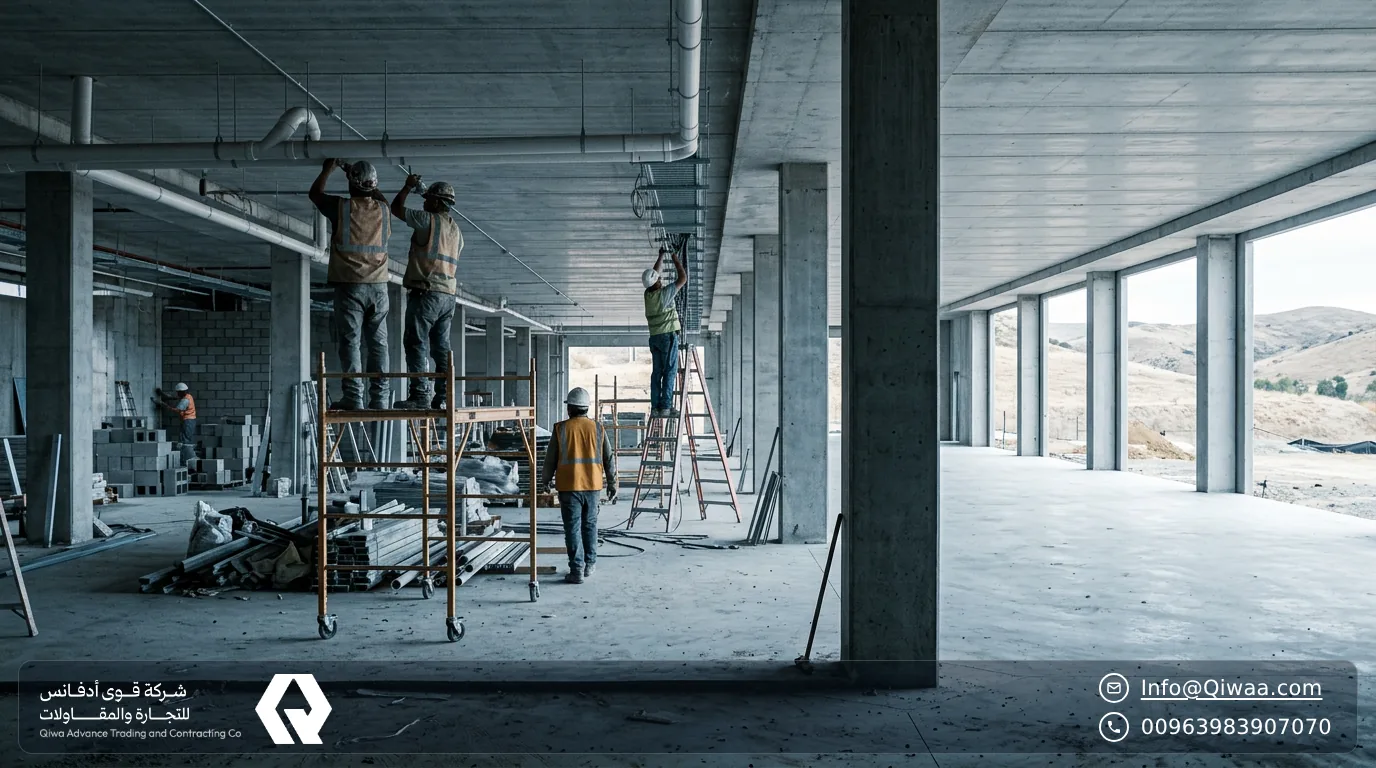


Hospital construction in Syria involves both new facilities and the rehabilitation of existing hospitals, some of which must continue treating patients during construction. For contractors, working in an operating hospital affects site surveys, temporary services, shutdown planning, infection control and commissioning. A rehabilitation agreement covering 14 public hospitals, signed in August 2026, illustrates these requirements.
This guide examines documented projects and funding, the technical requirements of medical gas and critical building systems, and how contractors can plan and deliver rehabilitation work while protecting essential services.
Hospital rehabilitation projects and construction challenges in Syria
Hospital rehabilitation is a significant part of Syria’s healthcare reconstruction programme. In August 2026, SARH Holding and InterHealth Canada signed an agreement to rehabilitate and modernize 14 public hospitals, covering buildings, medical equipment and operational systems.
New hospital construction is also being planned. Arada’s New Damascus development includes a proposed 300-bed hospital, according to the developer’s September 2026 announcement. We examine the wider development in our article on the Arada Damascus project. Contractors should distinguish planned facilities from signed rehabilitation agreements and active tenders; each represents a different stage of potential work.
Unlike a new-build project, rehabilitation of an operating hospital requires the construction programme to accommodate clinical activity. Existing medical gas, ventilation and electrical systems may serve departments outside the work area, making service isolation, temporary connections and phased commissioning critical to the programme.
What WHO hospital data means for construction planning
The WHO’s December 2025 report, drawing on HeRAMS data from the third quarter of 2025, provides the following picture of public hospital functionality:
| Indicator | Figure |
|---|---|
| Public hospitals monitored | 118 |
| Fully functioning | 67 |
| Partially functioning | 34 |
| Not functioning | 17 (calculated from WHO figures) |
Separately, a Syrian Ministry of Health official estimated that 48–55% of health facilities needed full or partial rehabilitation, as reported in September 2025.
These figures indicate substantial rehabilitation needs, but they do not establish the construction scope of individual hospitals. Partial functionality can reflect shortages of personnel, equipment, medicines or utilities, as well as infrastructure problems. Before pricing a project, contractors therefore need a condition survey identifying structural defects, the state of existing MEP networks and the systems requiring repair or replacement. Functionality statistics alone cannot establish a bill of quantities.
Rehabilitating hospital departments without closure
For the 14-hospital rehabilitation programme, Ministry of Health official Wasel al-Jarak stated in August 2026 that hospitals would remain open, with departments renovated in successive phases.
That approach requires more than dividing the building into work zones. Before pricing each phase, the contractor and hospital team need to establish which clinical services must remain available, which departments share medical gas and electrical networks, where patients can be relocated if necessary, and which shutdowns require temporary supplies.
Infection-control measures must also reflect the work and the patients at risk. The CDC’s healthcare construction guidance recommends a pre-construction infection-control risk assessment, appropriate containment barriers, and controls on construction traffic and ventilation.
These requirements affect the construction schedule and cost. Each phase needs an agreed isolation and shutdown plan, approved temporary-service arrangements where necessary, and defined testing and acceptance requirements before the renovated department returns to clinical use.
Medical gas pipeline systems in hospital projects
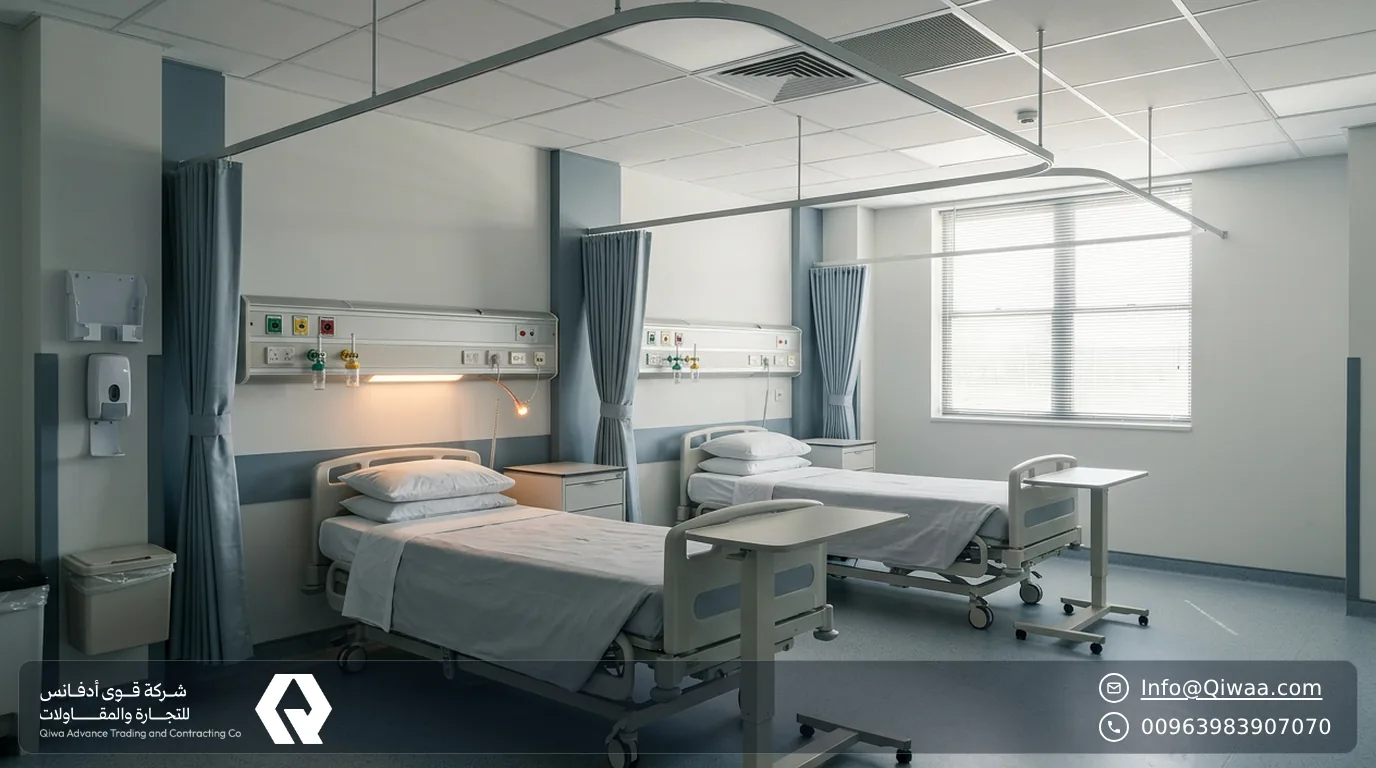
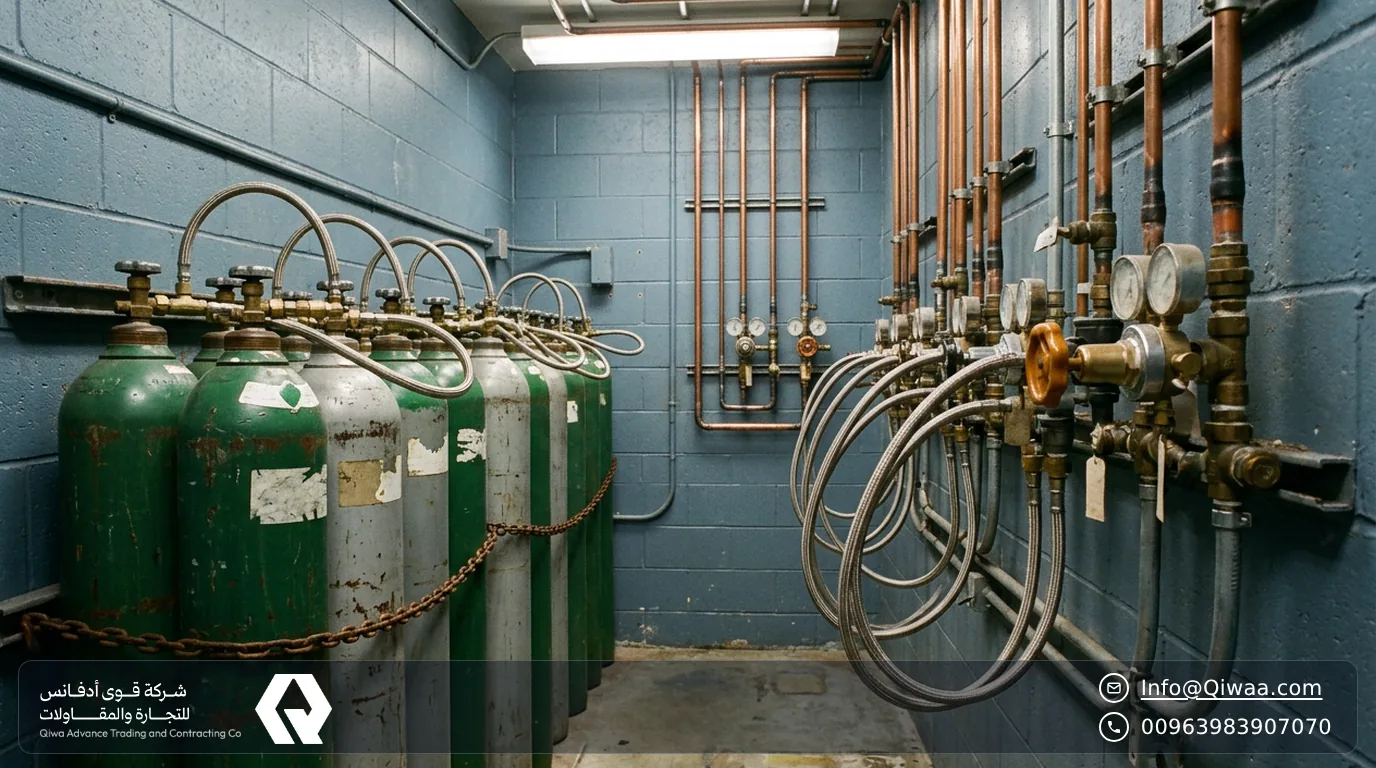
Medical gas pipeline systems are a critical part of hospital construction and rehabilitation. Before pricing their installation or replacement, contractors need to establish the applicable standards, design responsibilities, required gas flows, supply redundancy and testing procedures. Missing any of these requirements can lead to specification conflicts, additional work or delays in returning departments to service.
The following references provide technical benchmarks for reviewing hospital tender documents. They are not a substitute for the project’s approved design or applicable regulatory requirements.
| Design requirement | Reference value or standard | What contractors should verify |
|---|---|---|
| Oxygen pressure | 400 kPa nominal under HTM 02-01 Part A (2026), Table 2 | Required pressure and flow at terminal units |
| Pipeline pressure drop | 5% from supply source to terminal outlet at specified test flows, HTM 02-01, §4.7 | Whether pipe sizing accounts for peak demand and permitted pressure loss |
| Supply redundancy | Primary, secondary and tertiary sources under HTM 02-01, §2.23 | Source capacity, reserve arrangements and response to supply failure |
| System risk classification | Four categories based on consequences of failure, NFPA 99 | Applicable risk category and corresponding system requirements |
| Operating room ventilation | 15 total air changes/hour, including 3 outdoor air changes, CDC Appendix B | HVAC requirements under the project’s adopted ventilation standard |
| Airborne infection isolation | 12 total air changes/hour, including 2 outdoor air changes, CDC Appendix B | Directional airflow, exhaust arrangements and pressure control |
| PSA oxygen concentration | 93% ±3, with an alarm below 90%, WHO (2020) | Oxygen quality monitoring and compatibility with the proposed supply system |
| Pipeline design and verification | ISO 7396-1:2016, including its published amendment | Adopted edition, commissioning tests and acceptance documentation |
Reference note: The CDC ventilation figures come from a table reproduced from older healthcare ventilation guidance. They should not be treated as universal current design minima. The project’s adopted ventilation standard determines the applicable requirements.
Applying HTM 02-01 and NFPA 99 to hospital tenders
The 2026 edition of HTM 02-01 Part A addresses medical gas pipeline design, installation, validation and verification. Its requirements cover matters such as supply continuity, pipeline performance and terminal-unit testing. Contractors using this reference need to verify that the specified pressures, flows and reserve sources are consistent with the approved design.
NFPA 99 classifies healthcare systems according to the consequences of failure. Its current edition is 2027, and Chapter 5 addresses medical gas and vacuum systems. Contractors should confirm both the adopted edition and the project’s risk classifications rather than assuming that requirements from another edition apply.
ISO 7396-1:2016 covers the design, installation, testing, commissioning and documentation of medical gas pipeline systems. ISO lists a fourth edition as under publication, so tender specifications must identify which edition and amendments govern the project.
Before submitting a bid, contractors should obtain the approved system drawings, design flow requirements, equipment schedules, responsibility matrix and acceptance criteria. If the specification references multiple standards, the consultant and client should clarify their respective scopes and how conflicts will be resolved.
These details affect material selection, subcontractor qualifications, testing costs and commissioning schedules. Resolving them before pricing reduces the risk of variations and disputed acceptance requirements.
Choosing PSA oxygen generators for hospitals
Pressure swing adsorption (PSA) plants produce medical oxygen from ambient air and can reduce dependence on delivered cylinders or liquid oxygen. However, installing a generator does not automatically provide a reliable hospital oxygen supply.
The WHO technical specifications for PSA oxygen plants specify oxygen concentration of 93% ±3 and an alarm when concentration falls below 90%. They also require a reliable energy supply and consideration of compatibility with backup power.
For a hospital evaluating PSA generation, the main decisions concern:
- Demand and capacity: Determine required oxygen flows from clinical departments, equipment needs and the design’s demand assumptions.
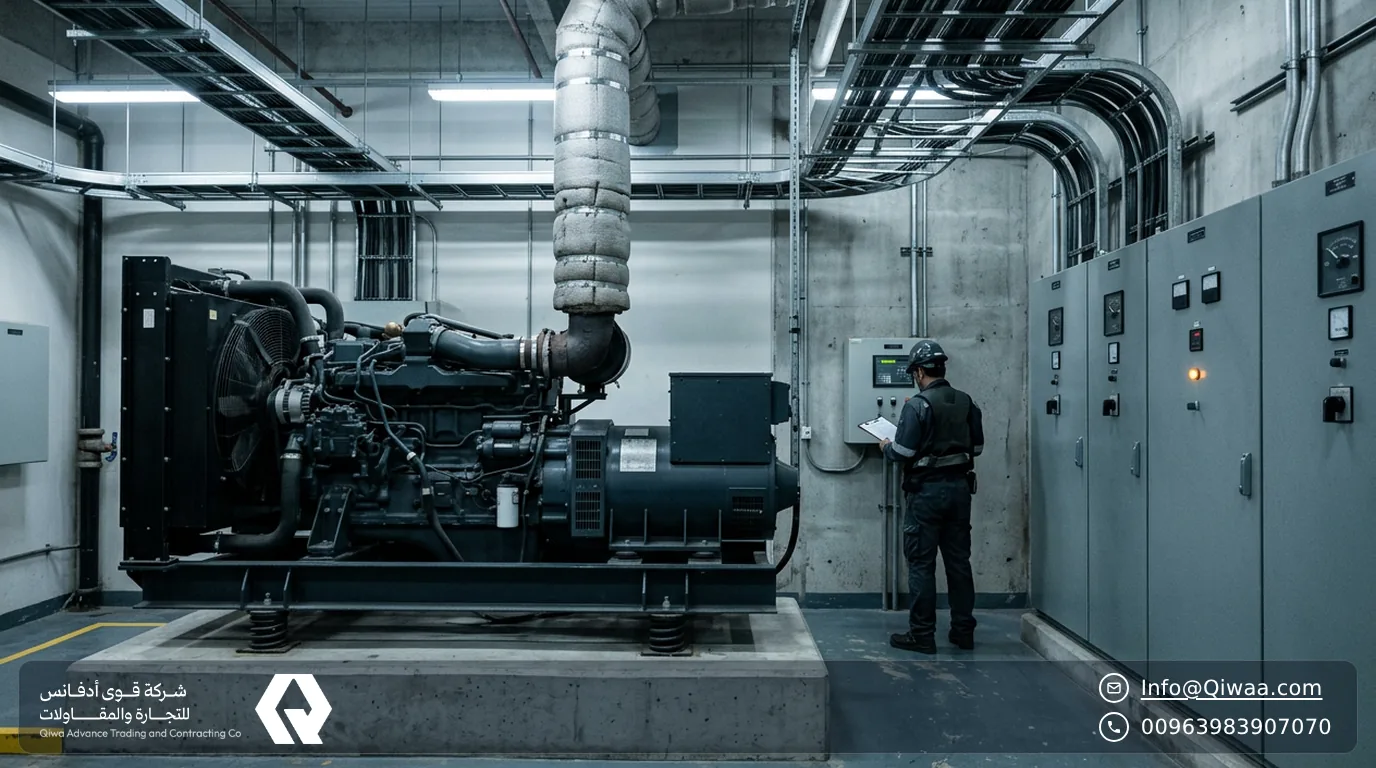
- Power continuity: Verify electrical capacity, generator compatibility and arrangements for maintaining oxygen production during outages.
- Backup supply: Establish the reserve source, its capacity and the conditions under which it must take over.
- Oxygen quality: Confirm continuous monitoring, alarm functions and compliance with the applicable medical oxygen requirements.
- Maintenance: Assess access to spare parts, trained technicians, servicing arrangements and support during equipment failure.
A PSA plant may reduce routine deliveries but introduce additional power, maintenance and equipment dependencies. Hospitals should compare it with cylinder and bulk liquid oxygen supply based on demand, reliability, replenishment logistics and total operating costs. The approved system design must address the selected arrangement and its reserve capacity.
Through its agency relationship with Wosta Gases, Qiwaa Advance supports the assessment of medical gas supply options in Syria, including cylinders, tanks and generator-based arrangements. The hospital’s appointed specialists remain responsible for approving the clinical and engineering requirements.
For a wider comparison of supply methods, see our guide to industrial and medical gases in Syria.
Funding for hospital construction and rehabilitation in Syria
Hospital construction and healthcare rehabilitation projects in Syria are supported through government initiatives, development financing and international partnerships. However, an announced project or approved financing package does not necessarily mean that construction contracts are available for bidding.
The following four initiatives illustrate the different project and funding arrangements announced in 2026.
| Initiative | Confirmed scope and financial information | Project status or procurement relevance |
|---|---|---|
| SARH Holding and InterHealth Canada | Rehabilitation and modernization of 14 public hospitals; 24-month programme; contract value not disclosed | Agreement signed in August 2026, covering six implementation phases |
| World Bank project P513704 | US$75 million to strengthen healthcare delivery in 150 primary healthcare centres | Financing approved 23 April 2026; procurement governed by project arrangements |
| Deir ez-Zor oncology hospital | New specialist hospital, with an announced estimated cost of approximately US$21 million | Foundation stone laid 10 August 2026; the estimate is not an awarded contract value |
| Ministry of Health–UNDP programme | EUR 30 million in German funding through KfW for five referral hospitals over 36 months | MoU signed in February 2026; phased rehabilitation and procurement arrangements |
The SARH Holding–InterHealth Canada agreement covers planning, technical studies, construction, procurement, commissioning and operational support. Contractors should not interpret the agreement’s total scope as evidence that individual construction packages have been publicly tendered.
The World Bank’s Syria Health System Recovery and Strengthening Project focuses on primary healthcare centres rather than hospital construction. It forms part of a broader US$225 million financing package for health and water services. Contractors interested in the project should review its published procurement plan to identify relevant works, goods or consulting packages.
For the Deir ez-Zor oncology hospital, the US$21 million estimate was publicly announced in August 2026, followed by the foundation-stone ceremony. Contractors still need to verify the procurement authority, project specifications and tender status before treating the project as a bidding opportunity.
The UNDP–Ministry of Health programme covers five referral hospitals in Hama, Homs, Idleb, Dara’a and Deir ez-Zor. Its scope includes rehabilitation of buildings and internal networks, electricity, water and sanitation systems, backup energy and medical equipment. UNDP has indicated that implementation will be phased to minimise disruption to healthcare services.
For contractors, the practical distinction is between funding approval, project preparation, published procurement and contract award. Each stage requires a different response. Reviewing technical specifications, qualification criteria and the procurement timetable is more useful than relying on investment announcements alone.
Our guide to donor-funded projects in Syria explains procurement requirements, while our article on UN tenders in Syria covers supplier registration and tender access.
Phased hospital rehabilitation in Syria without full closure
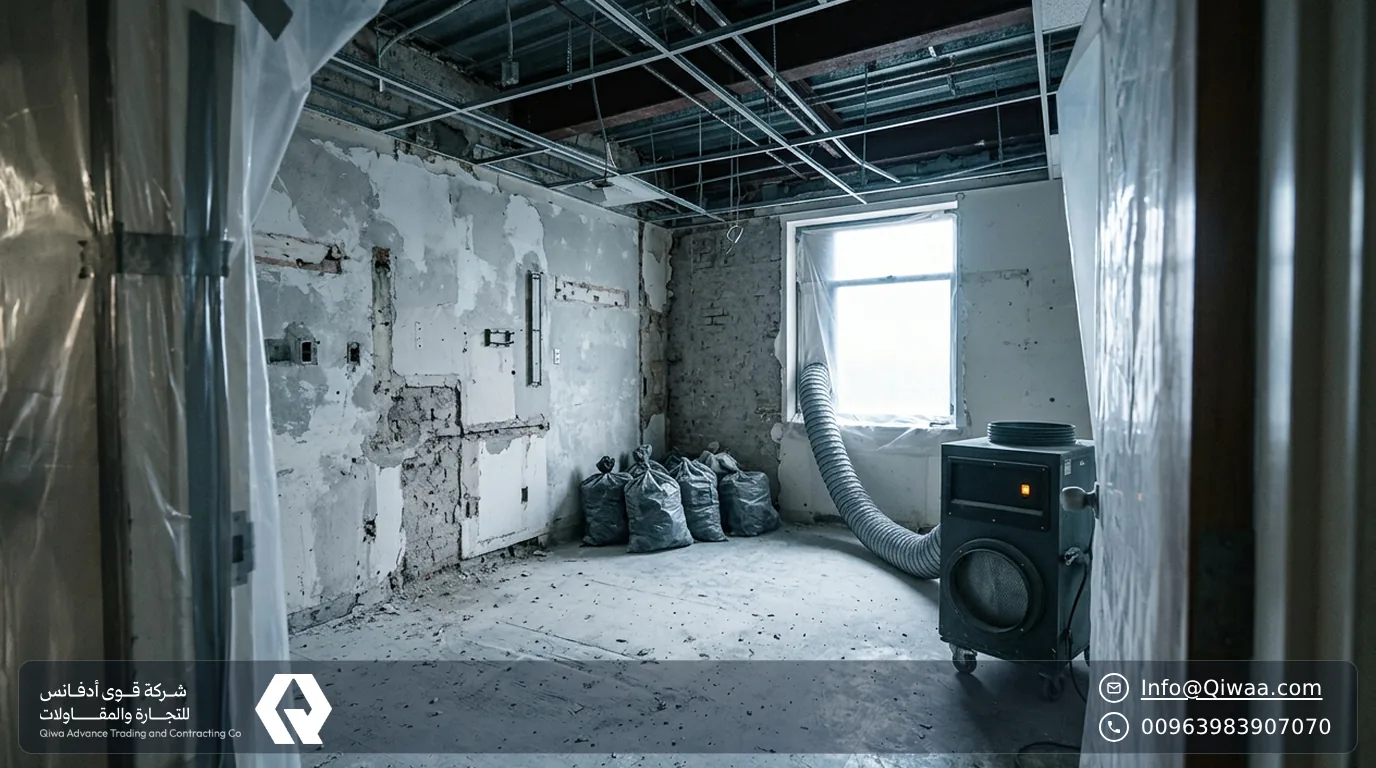
Rehabilitating an operating hospital requires contractors to coordinate construction activities with clinical services that cannot be interrupted without an approved contingency plan. The main challenge is not simply dividing work between departments, but identifying which building systems they share and how each phase affects patients, staff and adjacent areas.
Before work begins, the contractor, consultant and hospital management should agree on department availability, service shutdowns, temporary arrangements and acceptance requirements. These decisions determine the rehabilitation sequence, programme duration and costs that must be included in the contract.
Sequencing hospital rehabilitation in active facilities
- Survey existing systems and their dependencies. Inspect medical gas, electrical, HVAC, water and drainage networks before finalising the scope and pricing. Confirm which systems serve multiple departments, identify isolation points and document discrepancies between existing drawings and site conditions.
- Agree on construction phases and clinical continuity. Coordinate department access, temporary relocation needs, permitted shutdown windows and the services that must remain operational. Establish the responsibilities and approvals required before each phase starts.
- Implement infection-control measures. Conduct an infection-control risk assessment (ICRA) with the hospital’s responsible team. Establish appropriate dust barriers, construction access routes and airflow controls, including negative pressure in work zones where required. The CDC’s construction guidance provides measures for protecting occupied patient-care areas.
- Plan and authorise medical gas interruptions. Verify the outlets and departments affected by each proposed isolation. Obtain the required permits and clinical approvals, and establish temporary or backup supplies where necessary before interrupting service. The hospital’s authorised personnel must coordinate isolation and reinstatement under the adopted medical gas procedures.
- Complete and verify critical building services. Install or rehabilitate the affected medical gas, ventilation, electrical and water systems. Include checks of essential power and backup arrangements, and verify the required ventilation performance under the project’s adopted standards.
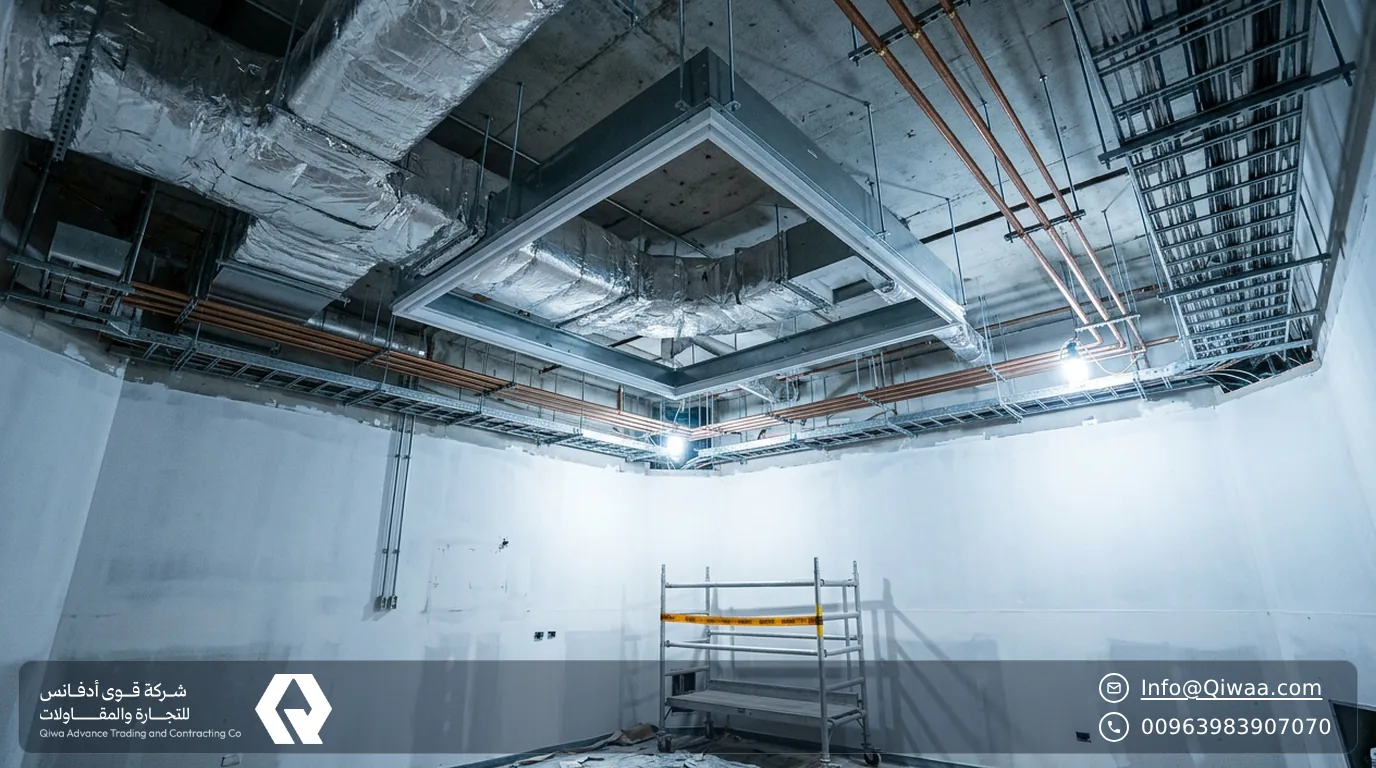
- Inspect concealed services before closing ceilings. Complete the required inspections and intermediate tests of pipework, connections, supports and other concealed installations before suspended ceilings and finishes prevent access. Record approvals and outstanding defects before proceeding.
- Complete commissioning and clinical handover. Perform the required medical gas leakage, identity, quality and alarm tests, together with applicable HVAC and electrical verification. Complete infection-control cleaning, close outstanding defects and submit test records and as-built documentation. Return the department to clinical use only after the required technical and hospital approvals.
This sequence should be reflected in the construction programme and inspection and test plans. Each phase needs defined approval points, particularly before service isolation, concealment of critical systems and return to clinical use. Without them, a physically completed department may still be unavailable because its systems have not passed verification.
Common mistakes in hospital rehabilitation projects
- Closing ceilings before inspecting and testing concealed networks. Undetected defects can require completed finishes to be removed, creating additional costs and delaying handover. Schedule inspections and required tests before closing access to the installations.
- Isolating medical gas services without confirming downstream dependencies. A valve may serve outlets beyond the department under renovation. An incorrect isolation can interrupt clinical services outside the work zone. Verify valve coverage, affected outlets and backup arrangements with the hospital’s authorised personnel before approving the shutdown.
- Deferring system verification until final handover. Late identification of gas quality, alarm, ventilation or power-system faults can prevent a completed department from reopening. Incorporate testing and acceptance milestones into each phase, allowing time for corrections and retesting before clinical handover.
19 checks for hospital construction in Syria
Before committing to a hospital construction or rehabilitation project in Syria, contractors should verify the requirements that affect pricing, clinical continuity and system acceptance. The following checklist covers three stages: contract review, preparation for work in an operating hospital, and departmental handover.
Before contract signing
- Confirm the governing medical gas standards. Identify the applicable standards, editions and amendments in the tender specifications, including any project-specific requirements.
- Define design and approval responsibilities. Establish who prepares, reviews and approves medical gas designs, who performs verification, and who authorises the systems for clinical use.
- Verify funding and payment terms. Confirm the contracting authority, funding arrangements, payment milestones and conditions affecting payment for completed work.
- Review the phased rehabilitation plan. Identify departments that must remain operational, temporary relocation arrangements and the clinical services affected by each construction phase.
- Verify existing building conditions. Review structural and MEP surveys, identify missing information and assess its impact on the bill of quantities and pricing assumptions.
- Check completion and delay provisions. Confirm contractual warranties, performance obligations, delay penalties and the milestones governing departmental handover.
- Resolve specification conflicts. Where multiple standards are referenced, clarify their scope, precedence and procedures for resolving conflicting requirements before submitting the bid.
Before starting each construction phase
- Approve infection-control measures. Complete an infection-control risk assessment (ICRA) and agree on dust containment, construction access and airflow controls with the hospital’s responsible team.
- Agree on permitted working and shutdown periods. Document noise restrictions, service interruption windows, notification requirements and emergency escalation procedures.
- Verify medical gas isolation arrangements. Identify every outlet and clinical area affected by the proposed isolation, and confirm authorised shutdown procedures and approved temporary supplies where necessary.
- Check essential power continuity. Verify backup generator capacity, critical loads and the approved testing arrangements for power changeover before modifying affected electrical systems.
- Verify medical gas personnel competence. Review relevant qualifications, experience, assigned responsibilities and any permit-to-work requirements under the adopted procedures.
- Approve materials before installation. Check certificates of conformity, specifications and traceability records for medical gas pipes, valves, terminal units and other critical components.
Before Departmental Handover
- Verify pipeline integrity and gas identity. Complete the required pressure, leakage and cross-connection tests, including gas identity verification at affected terminal units, according to the approved test procedures.
- Confirm medical gas quality. Obtain the required gas quality test results and approval from the designated verification or acceptance authority.
- Test medical gas alarms. Verify relevant local and plant alarm functions, record the results and resolve deficiencies before returning the affected system to service.
- Verify critical ventilation performance. Document required airflow rates, air changes and room pressure differentials against the adopted design criteria.
- Complete handover documentation. Submit as-built drawings, commissioning records, test certificates, operating manuals and outstanding-defect records required by the contract.
- Confirm operational readiness. Document staff training on relevant isolation valves and emergency procedures, close required safety checks and obtain the hospital’s authorisation before patients return.
The checklist should be applied against the project’s approved specifications and applicable requirements. The NHS HTM 02-01 guidance provides references for medical gas installation, verification and operational management, while the CDC’s environmental infection-control guidance addresses construction precautions and ventilation commissioning. Neither automatically establishes the mandatory requirements for a project in Syria.
How Qiwaa Advance supports hospital gas and water supply
Hospital construction and rehabilitation projects in Syria require medical gas supply arrangements that match clinical demand, approved specifications and continuity requirements. Through our agency with Wosta Gases, we help hospitals and contractors assess suitable gas supply options and coordinate sourcing, delivery and documentation.
Wosta Gases’ portfolio includes oxygen, nitrogen, nitrous oxide and carbon dioxide. For healthcare applications, the required medical grade, product specifications and quality documents must be verified before procurement. The World Health Organization distinguishes medical oxygen from industrial oxygen and requires medicinal oxygen to meet authorised quality specifications.
At Qiwaa Advance, Our role focuses on gas sourcing and supply coordination. Medical gas pipeline design, system verification and clinical acceptance remain the responsibilities of the qualified parties designated under the project.
Healthcare facilities may also require water treatment, distribution and wastewater management. Through Qiwaa Contracting, we undertake EPC projects involving water networks, desalination and wastewater treatment. These services can be assessed against a hospital’s infrastructure requirements, while specialised clinical applications, such as dialysis water, must meet their own applicable quality standards and approval procedures.
Our article on water desalination plants in Syria explains how we approach water infrastructure through the EPC model.
Contracted medical gas supply compared with spot rurchasing
Choosing between a recurring supply agreement and individual purchases affects how a hospital manages delivery schedules, documentation, inventory and supply interruptions.
| Criterion | Contracted supply | Spot purchasing |
|---|---|---|
| Delivery planning | Quantities, delivery frequency and lead times can be defined contractually | Availability and delivery terms are confirmed with each order |
| Quality documentation | Required certificates, product specifications and traceability records can be specified in the agreement | The buyer must verify the required documents for each purchase |
| Reserve stock | Replenishment arrangements can be coordinated with the hospital’s approved reserve requirements | Reserve levels depend on internal stock management and individual orders |
| Supply interruptions | Emergency deliveries, response times and supplier obligations can be agreed in advance | Alternative availability and response times must be established when needed |
| Cost control | Enables evaluation of agreed prices, transport, cylinder handling and other contractual charges | Unit prices and additional costs may vary between purchases |
A supply contract does not automatically guarantee uninterrupted delivery, just as spot purchasing does not necessarily mean lower quality. Both require verified medical-grade products, appropriate handling and a workable contingency plan.
For hospitals with intensive care units, operating theatres and central medical gas networks, a documented supply arrangement can make replenishment responsibilities and emergency procedures easier to manage. The decision should reflect actual demand, supplier capabilities and the hospital’s approved backup arrangements.
How Qiwaa Advance helps hospitals plan medical gas supply
We begin by reviewing the hospital’s requirements with its procurement and technical teams. The information needed includes:
- Clinical demand: Departments served, bed numbers, operating theatres, ICU capacity and available demand calculations.
- Existing infrastructure: Medical gas outlets, pipeline arrangements, storage facilities and current supply sources.
- Technical specifications: Required gas grades, quality documentation and the standards adopted for the project.
- Supply logistics: Project location, delivery access, expected replenishment times and available storage capacity.
- Continuity requirements: Existing backup sources, reserve arrangements and risks affecting power or deliveries.
Using this information, we help compare cylinder supply, bulk liquid oxygen and on-site generation arrangements in coordination with the project’s specialists. The assessment considers supply availability, replenishment logistics, documentation and backup requirements. Final system sizing, source configuration and technical approval remain with the responsible engineering and clinical authorities.
Our role through Wosta Gases is to help translate the approved requirements into a practical sourcing and supply arrangement, with delivery conditions and responsibilities defined before procurement.
Planning a hospital construction or rehabilitation project in Syria? Send us the project city, departments served, existing oxygen supply arrangement and available demand information via WhatsApp. Our team can review the supply requirements with you and identify the information needed to evaluate suitable options.
FAQs about hospital construction in Syria
How many public hospitals are functioning in Syria?
According to WHO HeRAMS data for Q3 2025, 101 of Syria’s 118 monitored public hospitals were functioning: 67 fully and 34 partially. The remaining 17 were non-functioning.
Which standards govern medical gas pipeline systems?
Common references include ISO 7396-1, HTM 02-01 and NFPA 99. The applicable standards, editions and approval requirements depend on the project’s specifications and regulatory framework.
How many air changes does a hospital operating room require?
The CDC’s environmental infection-control guidance lists 15 air changes per hour, including 3 outdoor air changes. Final requirements depend on the project’s adopted ventilation standard.
Can a PSA oxygen generator operate without reliable electricity?
PSA generators require continuous electrical power. The WHO specifications call for reliable electricity and compatibility with backup power. Hospitals also need an approved alternative oxygen supply during interruptions.
Sources
- WHO Syria annual output indicators 2025 (HeRAMS Q3 2025 data), World Health Organization, Regional Office for the Eastern Mediterranean, 2025
- Statement by the Ministry of Health’s Director of Planning and International Cooperation on facilities needing rehabilitation (Arabic), Enab Baladi, 31 August 2025
- Signing of a contract to develop and rehabilitate national hospitals in the governorates (Arabic), SANA, 3 August 2026
- Syria Hospital Upgrade: Will Care Remain Free?, Enab Baladi English, 4 August 2026
- Syria: World Bank Approves US$225 Million Financing to Restore Water and Health Services, World Bank, 23 April 2026
- New health projects in Deir ez-Zor and Homs (Arabic), Al-Araby Al-Jadeed, 10 August 2026
- With EUR 30 million in support from Germany, the Ministry of Health and UNDP sign agreement to rehabilitate public hospitals across Syria, UNDP Syria, 3 February 2026
- UAE developer Arada to build $7 billion mixed-use project in Syria, The National, 1 September 2026
- Health Technical Memorandum 02-01: Medical gas pipeline systems, publication page, NHS England, 19 August 2026
- Health Technical Memorandum 02-01: Medical gas pipeline systems, Part A, 2026 edition, NHS England, August 2026
- ISO 7396-1 fourth edition, stage 60.00 (under publication), International Organization for Standardization, 23 September 2026
- Applying NFPA 99 to health care facilities, Consulting-Specifying Engineer, 30 June 2017
- Experts detail 2027 updates to NFPA health care facilities code, Facilities Dive, 11 August 2026
- Guidelines for Environmental Infection Control in Health-Care Facilities, Appendix B, Air, CDC, page updated 11 January 2024
- Technical specifications for Pressure Swing Adsorption (PSA) Oxygen Plants, World Health Organization, 8 June 2020