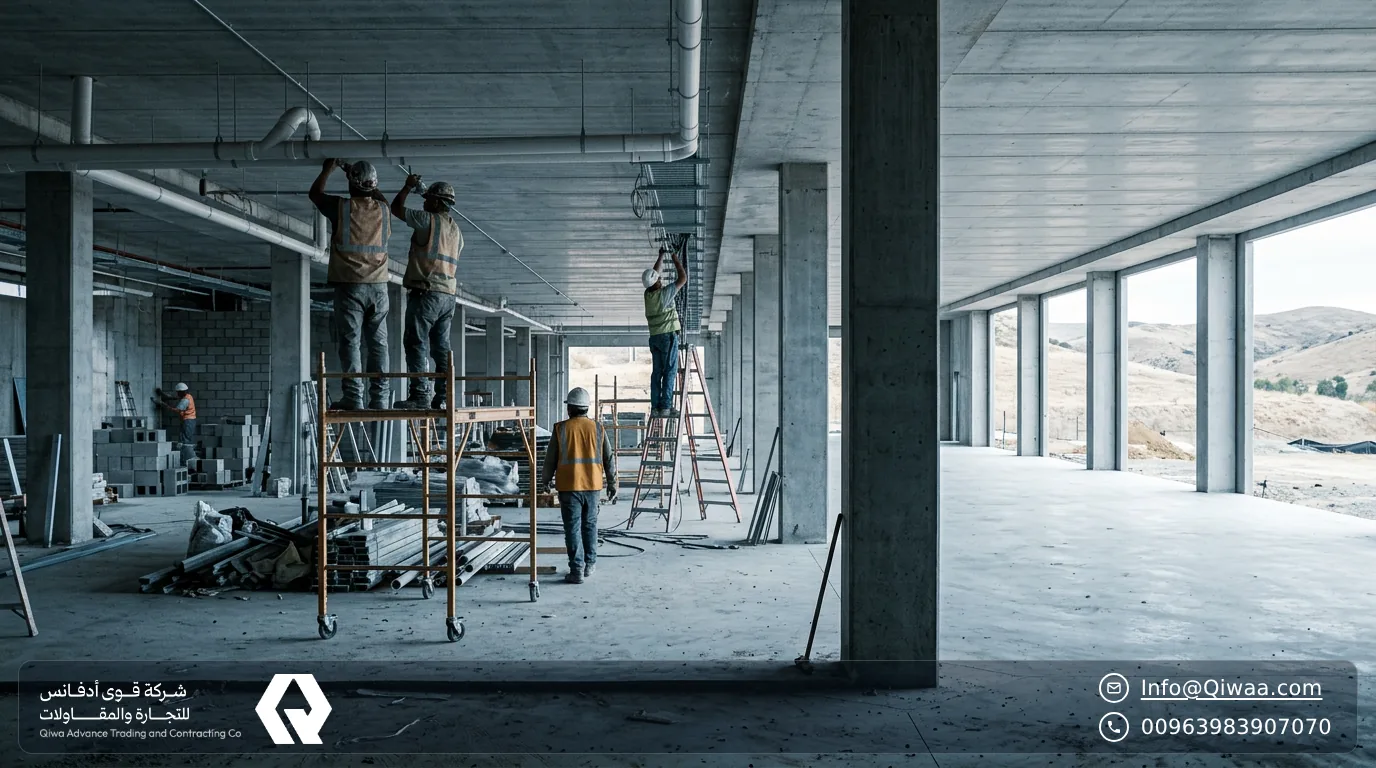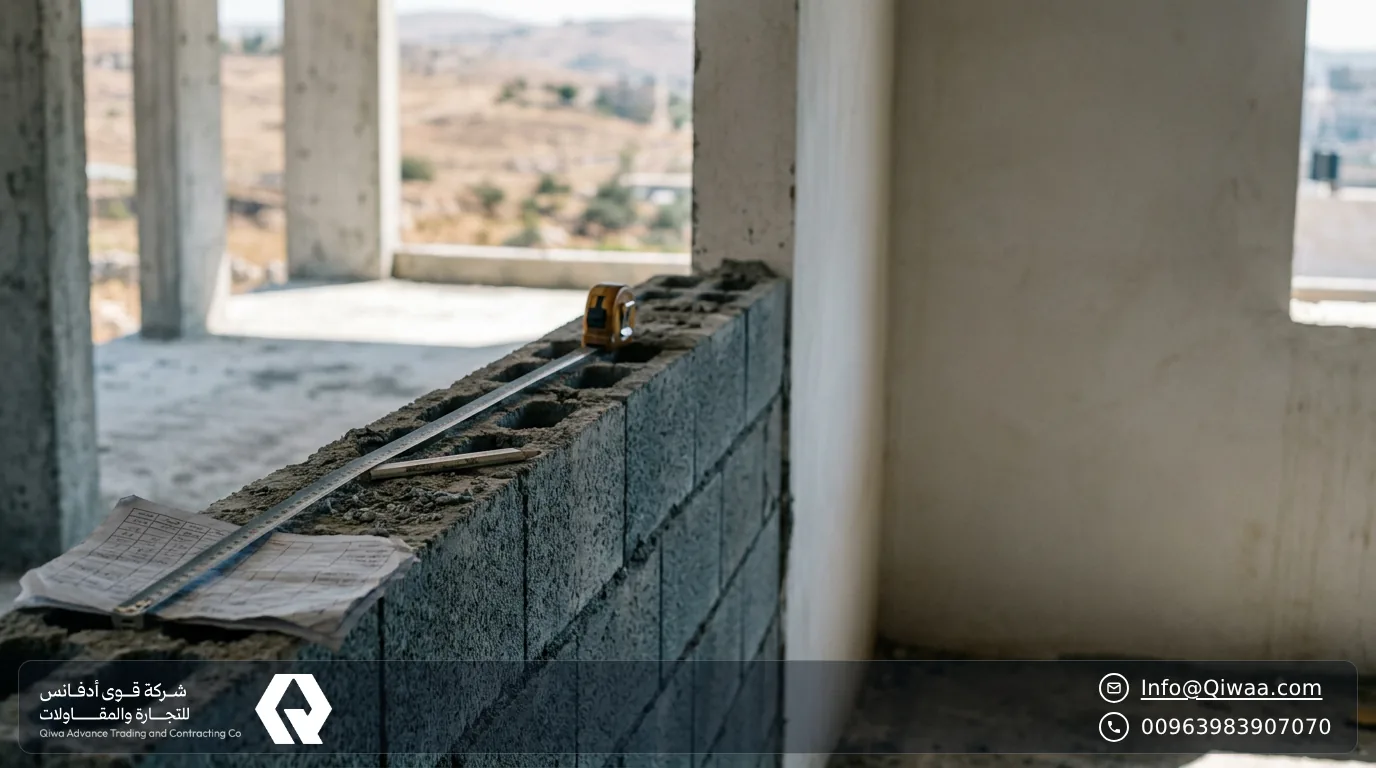


School rehabilitation in Syria covers projects ranging from essential repairs to structural rehabilitation and classroom expansion, each with different technical requirements, procurement conditions and pricing risks. UNICEF reported nearly 8,000 non-functional schools in its 2025 annual report, published in 2026, but this figure does not represent a pipeline of funded contracts.
For contractors, the challenge is identifying suitable projects, understanding their scope and submitting bids that meet the funder’s requirements. This guide examines school rehabilitation project types, funding programmes, documented 2026 tenders and the compliance checks that can prevent otherwise competitive bids from reaching financial evaluation.
How many schools need rehabilitation in Syria?
On 9 June 2025, Syrian Education Minister Mohammad Turko reported that 7,215 schools needed urgent repair. Separately, UNICEF’s 2025 annual report, published in 2026, identified nearly 8,000 non-functional schools.
These figures measure different conditions and should not be treated as interchangeable. A school may be non-functional because of structural damage, damaged utilities, displacement-related occupancy or other operational constraints. Neither figure identifies how many buildings have an approved rehabilitation scope or an available construction budget.
Rehabilitation is also progressing. In September 2026, Ministry of Education school buildings director Mohammad Hanoun reported that approximately 1,680 school buildings had returned to service, while another 465 were undergoing routine maintenance.
A UNICEF update from February 2026 also reported 259 schools being used as shelters in the context of displacement across northern and northeastern Syria.
For contractors assessing school rehabilitation opportunities, these indicators establish the scale and diversity of needs, not the scope of individual tenders. Pricing and resource planning must start from each school’s condition assessment, approved drawings, bill of quantities (BOQ) and required completion schedule.
School Rehabilitation Project Types in Syria
School rehabilitation tenders in Syria vary considerably in scope. Distinguishing minor repairs from structural rehabilitation, WASH upgrades and new classroom construction is essential before selecting subcontractors, estimating quantities or assessing project risks.
| Project type | Typical scope of works | What contractors should verify before pricing |
|---|---|---|
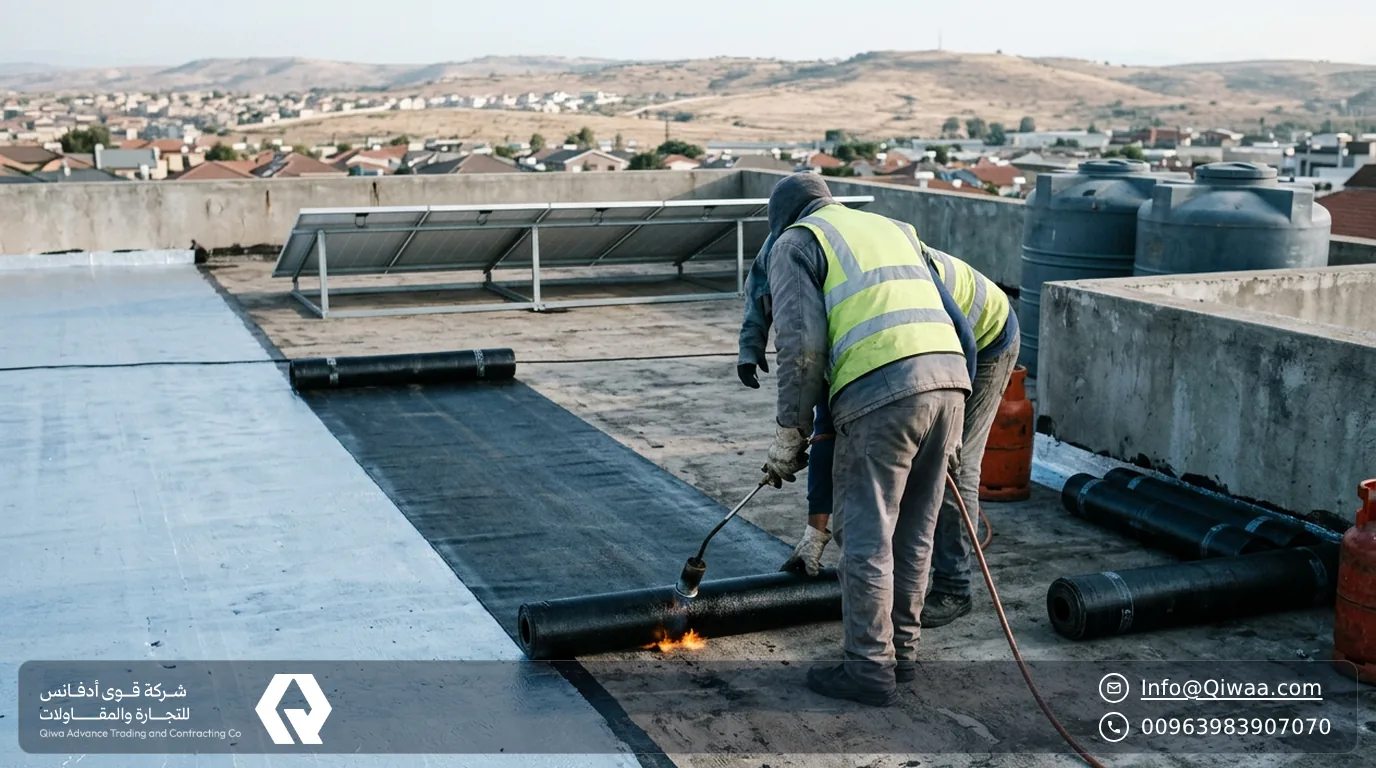
| Urgent repairs | Roof waterproofing, damaged doors and windows, plaster, finishes, and limited electrical or plumbing repairs | Existing defects, quantities, access restrictions and whether additional repairs are excluded or provisionally allowed |
| Comprehensive rehabilitation | Structural assessment, approved strengthening where required, extensive repairs and replacement of damaged building services | Structural reports, approved designs, demolition requirements, testing obligations and unforeseen-work provisions |
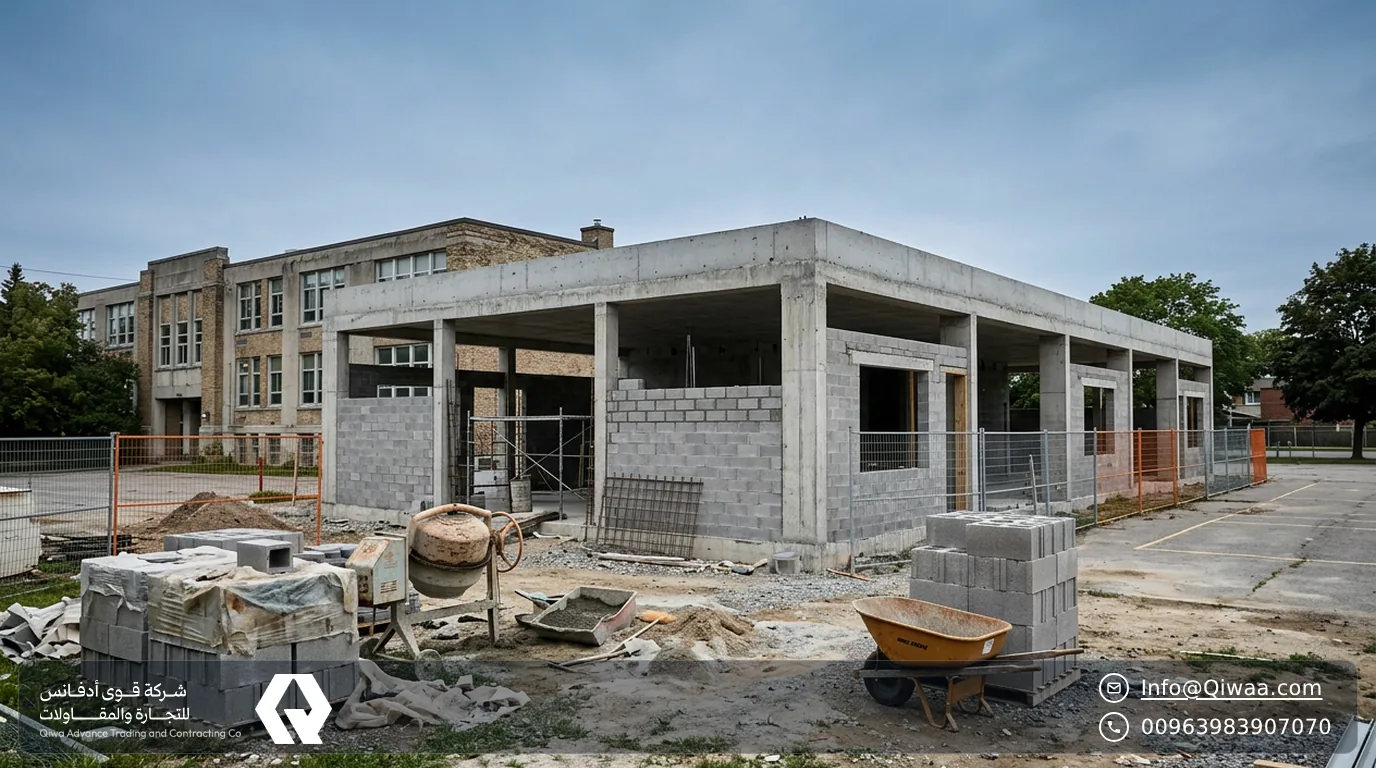
| Classroom extensions and new facilities | Additional classrooms, prefabricated units, extensions or new educational buildings | Approved drawings, foundation requirements, site access, utility connections and whether construction must proceed during school operations |
| Water, sanitation and accessibility upgrades | Toilets, water storage, pumps, drainage, handwashing facilities and accessible routes | Existing network capacity, water availability, drainage connections and accessibility requirements |
Funding eligibility also depends on project scope. For example, the World Bank’s proposed Syria Integrated Education Recovery Project (P515981) focuses its planned civil works on rehabilitation of existing schools without new construction or expansion beyond their existing footprints.
By contrast, ICESCO’s February 2026 agreement with Azerbaijan and Syria includes rehabilitating 100 schools and constructing 10 new educational facilities.
Contractors should therefore distinguish rehabilitation packages from extensions and new-build contracts rather than assuming they fall under the same funding or procurement arrangements.
Why school rehabilitation tenders in Syria get rejected
A competitive price does not compensate for failure to meet mandatory tender requirements. Depending on the solicitation, a bid may be ruled non-responsive because of an incorrect submission channel, missing documents, an invalid bid form or failure to separate technical and financial information.
The requirements differ between agencies. For example, UNDP tender UNDP-SYR-00694 required submission through its Quantum supplier portal. By contrast, UNICEF tender 9206745 for rehabilitating 33 schools required separate technical and financial emails, signed and stamped bid forms, and a minimum bid validity of 120 days.
These are documented requirements from specific 2026 tenders, not evidence that administrative errors account for most rejected bids.
Before preparing a school rehabilitation bid, contractors must identify which requirements are mandatory, which documents establish eligibility and which technical conditions affect responsiveness. The detailed bidding section below examines these checks and how to avoid preventable submission errors.
Funding for school rehabilitation in Syria in 2026
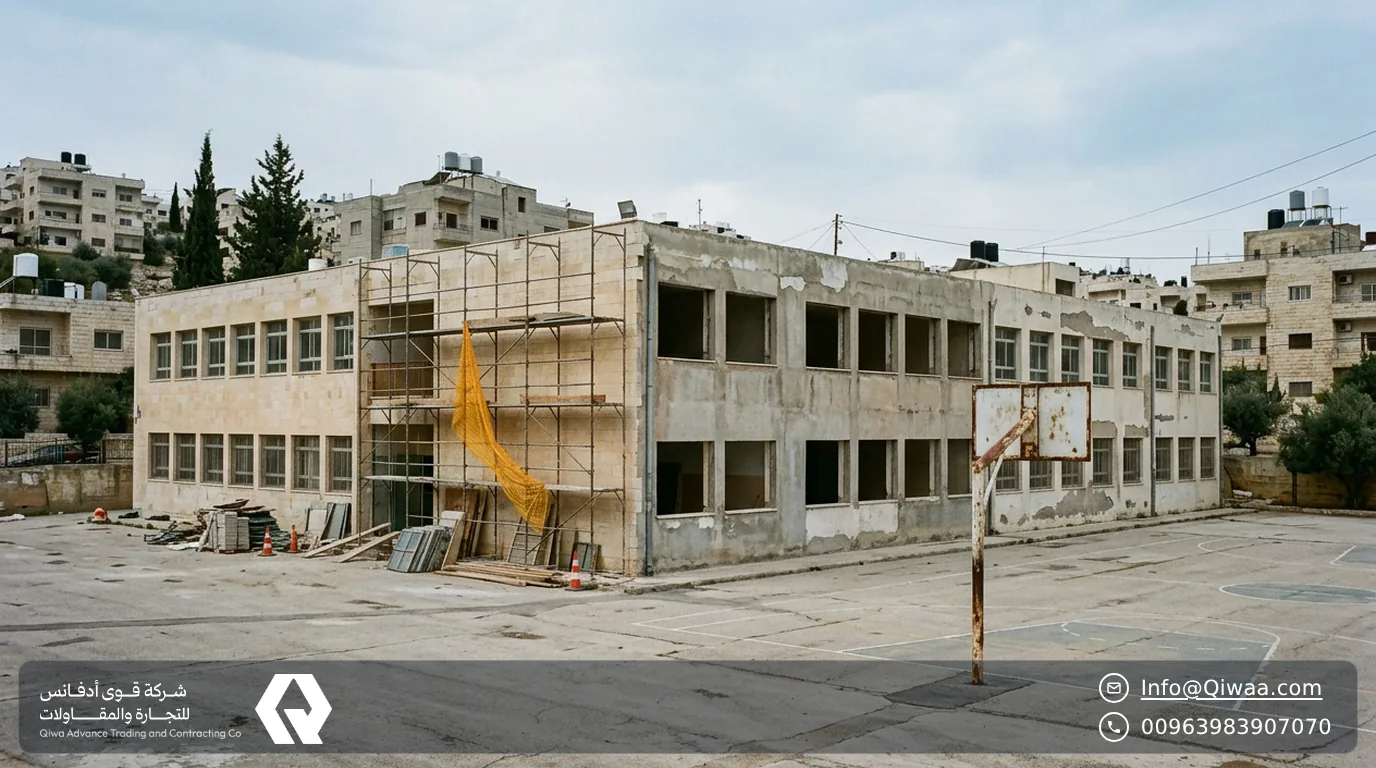
School rehabilitation in Syria is supported by development financing, international partnerships and humanitarian programmes. However, funding announcements do not automatically translate into open construction tenders. Contractors need to distinguish projects awaiting approval, signed programme agreements and works already under implementation.
The following initiatives illustrate the main funding arrangements announced or active in 2026.
| Funder or programme | Funding | School rehabilitation scope | Status as of November 2026 |
|---|---|---|---|
| World Bank – P515981 | Proposed USD 65 million IDA grant for the overall education project | Minor rehabilitation of approximately 150 existing schools, including WASH improvements | At appraisal stage; approval estimated for 17 December 2026 |
| ICESCO – Azerbaijan partnership | USD 30 million | Rehabilitation of 100 damaged schools and construction of 10 educational facilities | Agreement signed 17 February 2026, extending to December 2030 |
| KSrelief – Educational Assets Restoration Programme | Total programme value not disclosed | School repairs, equipment, sanitation facilities, solar systems and classroom units | 49 schools reported rehabilitated in October; subsequent programme coverage reported at 62 schools |
The ICESCO agreement identifies Azerbaijan as the funding partner and ICESCO as the organisation overseeing implementation in cooperation with Syrian authorities. Individual construction packages and procurement procedures must still be verified separately.
For KSrelief, the October 2026 reports show that programme coverage has expanded beyond the 48 schools cited in May. The number of schools covered by an initiative should not be confused with the number completed or available for bidding.
For contractors evaluating school rehabilitation projects in Syria, the relevant question is not only how much funding has been announced, but who manages procurement, which packages are planned and whether participation is still possible.
Our guide to Syria reconstruction projects in 2026 places education within the wider reconstruction programme, while our article on donor-funded projects in Syria explains the procurement arrangements contractors may encounter.
World Bank school rehabilitation project P515981
The World Bank’s September 2026 appraisal document describes the proposed Syria Integrated Education Recovery Project, with an overall IDA grant of USD 65 million and an estimated approval date of 17 December 2026.
The planned civil works focus on minor rehabilitation and refurbishment of approximately 150 existing schools, including improvements to water, sanitation and hygiene (WASH) facilities. New school construction and expansion beyond existing building footprints are excluded from this component.
This distinction matters when assessing potential contracts. Contractors specialising in refurbishment, waterproofing, building services and sanitation works may find the planned scope more relevant than firms focused exclusively on new school construction.
The project’s environmental and social appraisal documents also identify substantial social risks associated with implementation. Contractors should review the applicable requirements for site safety, worker management, safeguarding, waste handling and reporting when procurement documents become available.
The proposed grant amount is not a construction budget allocated entirely to school rehabilitation. Nor does the estimated approval date establish when contracts will be advertised. Contractors should verify project approval, procurement responsibility and published tender packages before committing estimating resources or treating the programme as secured work.
School construction and classroom expansion in Syria
School rehabilitation is not the only infrastructure need. According to Ministry of Education figures reported in September 2026, enrolment increased from approximately 4.126 million students in 2025 to 5.291 million in 2026, with projections approaching 6 million in 2027. The ministry also reported overcrowding and temporary double-shift arrangements in some schools.
These pressures create a need to assess classroom capacity alongside the condition of existing school buildings. Possible responses include rehabilitating unused classrooms, improving existing facilities, introducing temporary units or constructing additional classrooms where approved.
For contractors, the distinction determines the construction scope. Extensions require separate consideration of foundations, structural connections, utilities and access, while temporary classrooms involve different installation and servicing requirements.
The proposed World Bank project excludes new construction under its school rehabilitation component. By contrast, the ICESCO–Azerbaijan agreement explicitly includes new educational facilities.
Contractors should therefore identify whether each opportunity concerns repair, expansion or new construction before assessing eligibility, estimating costs or selecting subcontractors.
School Rehabilitation Tenders in Syria from UNDP and NGOs
Recent school rehabilitation tenders in Syria demonstrate how procurement requirements vary between agencies. The following four notices had closed by 10 November 2026 and are included as documented examples, not current bidding opportunities.
| Agency and project | Reference | Closing date | Submission requirement |
|---|---|---|---|
| UNDP – Schools in Hama and health centres in Deir ez-Zor | UNDP-SYR-00694 | 25 October 2026 | Submission through Quantum |
| UNDP – Schools and health centres in Aleppo and coastal areas | UNDP-SYR-00664,1 | 8 September 2026 | Submission through Quantum |
| NRC – Rehabilitation of five schools in Aleppo and Idlib | Five-school tender, September 2026 | 21 September 2026 | Submission through NRC’s electronic tender box |
| Orange NGO – Sheryan Al-Hayat School and Al-Masri Mosque | PR002038ORN26 | 2 March 2026 | Sealed proposals delivered to designated offices |
These notices reveal several differences that contractors must address before preparing a school rehabilitation bid.
Submission channels and registration
The UNDP notices required offers to be submitted through the Quantum supplier portal. UNGM listed the required registration level as Basic, but registration information on UNGM does not replace the procedures for accessing and submitting bids through Quantum.
NRC used its electronic tender box and required bidders to register company details to access the tender documents. Its notice also required firms to be duly registered in Syria and did not accept emailed bids.
Orange NGO required sealed proposals delivered to designated offices. Its Arabic notice explicitly required separating the technical offer from the financial offer.
Clarifications and amendments
Deadlines for clarification questions can precede bid submission. NRC’s published notice set 15 September 2026 as the clarification deadline, six days before bids closed.
UNDP-SYR-00664 also demonstrates why contractors must monitor amendments. Its returnable forms were revised on 26 August 2026, after the notice was first published. Submitting an outdated form could create a compliance problem if the amended document is mandatory.
For UNDP-SYR-00694, the official notice recommended creating a draft response in Quantum to receive notifications of tender amendments. Its UNGM deadline was displayed as 25 October 2026 at 08:00 GMT−4, illustrating why bidders must follow the notice’s stated time zone rather than assume local Syrian time.
What contractors should take from these examples
The submission method, registration requirements, clarification process and mandatory forms must be established from each individual tender notice and its latest documents.
A contractor can meet the technical requirements of a school rehabilitation project yet still submit a non-compliant offer by using the wrong channel, missing an amendment or failing to follow document-separation rules.
Before preparing an offer, identify the mandatory administrative requirements, the approved submission channel and the latest tender documents. Our guide to UN tenders in Syria explains registration and notice tracking in greater detail.
How to bid on school rehabilitation tenders in Syria
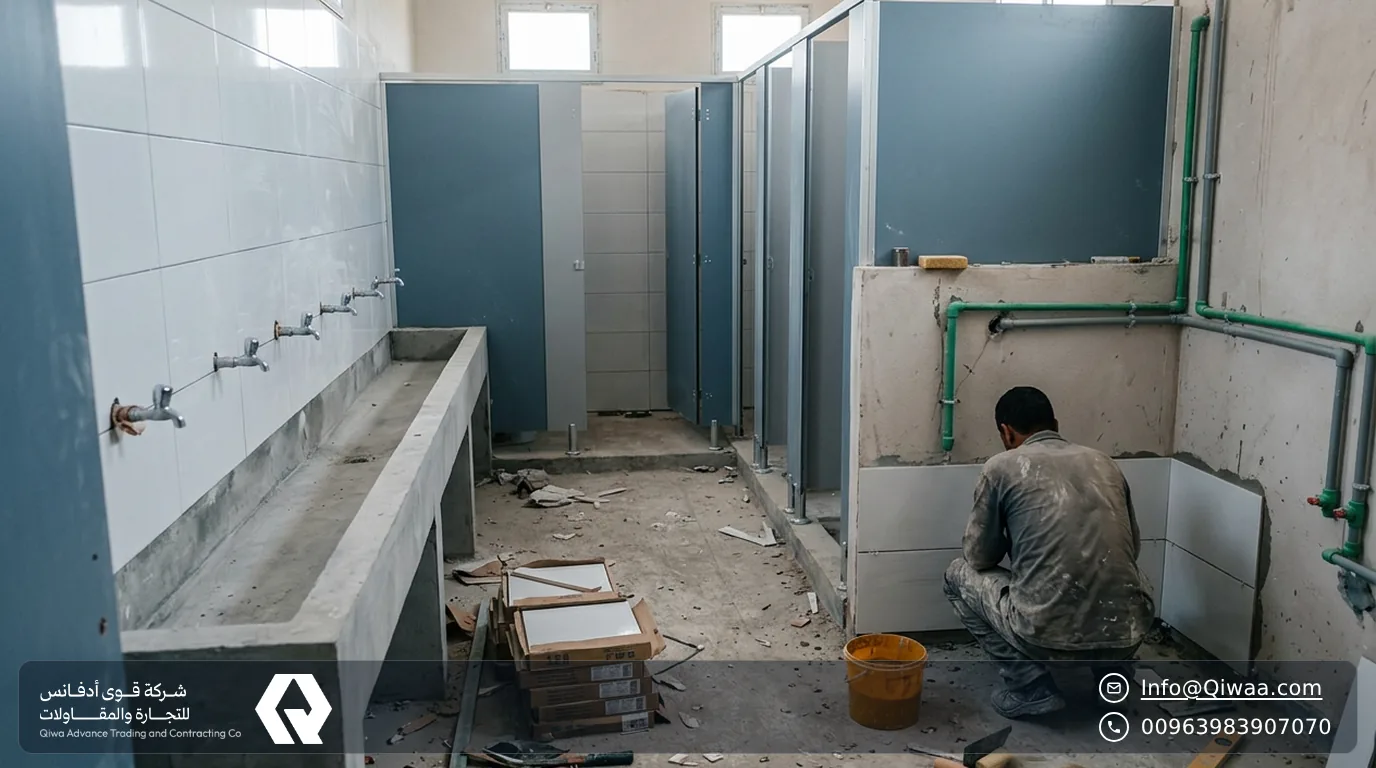
Submitting a compliant bid for school rehabilitation in Syria requires more than completing the bill of quantities (BOQ). Contractors must satisfy the issuing agency’s eligibility, documentation, technical and submission requirements before their price can be considered.
The evaluation method depends on the solicitation. For example, UNDP distinguishes between ITBs and RFPs, with different approaches to technical and financial evaluation. Contractors should review the stated evaluation criteria rather than assume that the lowest bid will win.
The following steps focus on preparing a compliant submission. Detailed BOQ pricing and guarantee requirements are covered in our guides to bill of quantities preparation and performance bonds in Syria.
School Rehabilitation Bid Documents and Submission Requirements
- Verify eligibility before preparing the offer. Check company registration, relevant project experience, financial capacity and any lot-specific qualification criteria. For UNDP tenders, confirm access to the Quantum supplier portal; other agencies may use different registration and submission systems.
- Review the complete tender package. Download the instructions, technical specifications, BOQ, contract conditions and required forms. Monitor amendments and clarification notices. For example, UNDP-SYR-00664 issued revised returnable forms on 26 August 2026, after the original notice.
- Preserve the required BOQ format. Complete the issued pricing schedule without altering item descriptions, units or quantities unless expressly permitted. Raise discrepancies through the designated clarification channel and follow the tender’s instructions for alternatives or qualifications.
- Account for contractual and site obligations. Review required safety measures, child safeguarding provisions, reporting, site inspections and progress documentation. Include their costs in the permitted pricing structure, avoiding omissions or double counting.
- Separate technical and financial information as instructed. Upload documents to their designated sections or submit separate files or emails where required. For example, UNICEF tender 9206745 required separate technical and financial emails and prohibited prices in the technical submission.
- Submit and verify the final response. Check the deadline and stated time zone, validate all required fields and attachments, and submit sufficiently early to address technical problems. Confirm successful submission through the system status or acknowledgement rather than assuming that uploading files completes the process.
Before submission, compare the final offer against the latest tender documents and mandatory evaluation criteria. A technically suitable proposal may still be rejected if it fails a compulsory submission or eligibility requirement.
Pricing school extensions and additional classrooms in Syria
School construction and classroom extension projects require pricing against the approved BOQ, drawings and site conditions rather than relying solely on a cost-per-square-metre estimate.
For extensions to existing schools, contractors should verify foundation and structural connection requirements, existing utility capacity, site access and the need to maintain school operations. These conditions can change the construction method, programme and cost even when classroom layouts are similar.
- Working in an operational school may require restricted work areas, separate construction access and agreed periods for disruptive activities. Contractors should establish these constraints through the tender documents and site assessment rather than assume identical restrictions at every school.
- Multi-school contracts introduce additional costs. Transport, site mobilisation, supervision, material storage and repeated deliveries depend on the number and location of schools. A single material rate may not reflect the cost of supplying several remote sites.
Contractors should also assess cash-flow exposure against payment milestones, certification periods, retention and supplier payment terms. Any resulting financing or overhead costs must be allocated in accordance with the tender’s pricing instructions, without duplicating amounts already covered by separate BOQ items or preliminaries.
The final estimate should reflect the approved quantities, construction sequence, delivery programme and contractual obligations. For broader budgeting comparisons, see our guide to construction cost per m² in Syria.
13 checks before submitting a school rehabilitation bid in Syria
Before submitting a school rehabilitation tender in Syria, use this checklist to verify compliance with the latest solicitation documents. Requirements vary by agency, and failure to meet a mandatory condition can result in rejection.
- Submission method: Confirm whether the agency requires Quantum, another portal, separate emails or sealed envelopes.
- Technical and financial separation: Keep pricing out of the technical offer and follow the required file, email or envelope structure.
- BOQ compliance: Use the prescribed bill of quantities without altering descriptions, units or quantities unless expressly permitted.
- Project obligations: Account for required safety, child safeguarding, reporting and site-management costs in the permitted pricing structure.
- Supplier registration: Complete the required registration and verify access to the tender documents and submission system.
- Bid security: Where required, verify the amount, accepted format, issuing institution and validity period.
- Performance security and retention: Review post-award guarantees, retention percentages and their financial implications before pricing.
- Bid validity: Confirm the required offer validity and any additional validity period specified for bid security.
- Document language: Submit documents and certified translations in the languages and formats required by the solicitation.
- Company eligibility: Verify registration, licences, financial qualifications and relevant experience required for the selected lots.
- Forms and signatures: Check every mandatory declaration, signature, stamp and field against the tender instructions.
- Tender amendments: Incorporate the latest annexes, revised forms, BOQ updates and official clarification responses.
- Capacity across multiple lots: Confirm that staffing, equipment, working capital and supply arrangements can support all lots awarded simultaneously.
Complete the final review against the latest tender documents, then verify successful submission before the stated deadline. For UNDP tenders using Quantum, follow the official supplier guidance to confirm the response has been submitted, not merely saved.

Qiwaa Advance supply for school rehabilitation in Syria
Contractors working on school rehabilitation projects in Syria need construction and finishing materials that meet the approved specifications, fit the project budget and reach each school according to the work schedule. For multi-school contracts, differences in site locations, delivery quantities and documentation requirements can complicate procurement.
Through Qiwaa Trading, we help contractors source construction and finishing materials against their bill of quantities (BOQ) and technical specifications. Our support covers pre-bid material quotations and supply coordination after contract award, allowing contractors to assess procurement costs and delivery requirements before committing to a programme.
For projects involving water or drainage infrastructure, we, at Qiwaa Adavace, can also review suitable pipe solutions through our agency with Amiantit, including GRP pipes where specified. Product selection must follow the approved network design, pipe specifications and installation requirements.
Scheduled material supply vs spot purchasing for school projects
Contractors can source materials through a planned supply agreement or individual market purchases. The appropriate approach depends on project duration, quantities, delivery locations and contractual requirements.
| Criterion | Scheduled material supply | Spot market purchasing |
|---|---|---|
| Specification consistency | Approved product specifications can be maintained across planned deliveries | Each purchase requires verification against the approved specifications |
| Pricing | Agreed prices and adjustment terms provide a basis for cost planning | Prices are confirmed for individual purchases and may change |
| Multi-site deliveries | Quantities and delivery dates can be coordinated with each school’s work schedule | Transport and delivery arrangements are organised for individual orders |
| Conformity documentation | Required product and delivery documents can be specified in the agreement | Documents must be verified with each supplier and applicable delivery |
| Quantity flexibility | Best suited to forecast quantities, with changes governed by agreed terms | Can accommodate small purchases or urgent shortages, subject to availability |
Neither approach automatically guarantees lower costs, compliant materials or timely delivery. A scheduled agreement provides clearer contractual arrangements, while spot purchasing may offer greater flexibility for urgent or limited quantities.
For school rehabilitation contractors managing multiple sites, the decision should consider total delivered cost, material approval requirements, storage capacity and the risk of delays. A combination of scheduled supply for predictable quantities and spot purchasing for approved shortfalls may also be appropriate.
How Qiwaa Advance supports school rehabilitation contractors
Material procurement for multi-school rehabilitation contracts should reflect actual site requirements, not only the total quantities in the BOQ. Delivering materials to one central warehouse can involve different costs and responsibilities from supplying several schools in separate locations.
To assess a contractor’s requirements, we review:
- BOQ and specifications: Required materials, quantities, technical specifications and any approved brands or alternatives.
- School locations: Delivery destinations, site access and unloading requirements.
- Delivery programme: Required quantities and dates for each construction phase.
- Compliance documents: Product certificates, technical data and other records specified by the contract.
Based on this information, we can prepare a project-specific supply quotation covering the proposed materials, quantities, commercial terms and delivery arrangements. Availability, lead times and documentation commitments are confirmed as part of the quotation and subsequent supply agreement.
This helps contractors compare procurement costs with their bid estimates and coordinate deliveries with the approved construction programme.
Preparing a school rehabilitation bid or managing an awarded project in Syria? Send Qiwaa Advance your BOQ, technical specifications and school locations on WhatsApp to request a material supply quotation and discuss delivery arrangements.
FAQs about school rehabilitation in Syria
How many schools in Syria need rehabilitation?
In June 2025, Syria’s education minister reported 7,215 schools needing urgent repair. UNICEF’s 2025 annual report identified nearly 8,000 non-functional schools. These figures measure different conditions and do not represent confirmed rehabilitation contracts.
Where can contractors find school rehabilitation tenders in Syria?
School rehabilitation tenders are published through agency procurement channels, including UNGM and UNDP’s Quantum portal. Contractors should verify eligibility, registration requirements, submission instructions and deadlines for each notice.
Does the World Bank fund new school construction in Syria?
The proposed World Bank project P515981 covers minor rehabilitation of approximately 150 existing schools, excluding new construction and expansion. Its September 2026 appraisal document lists a proposed USD 65 million grant and an estimated approval date of 17 December 2026.
Can subcontractors participate in school rehabilitation projects in Syria?
Yes, where the tender and contract permit subcontracting. Prior approval or disclosure may be required, and the main contractor retains its contractual responsibilities. Review the relevant clauses before agreeing to work. See our guide to subcontracting in Syria.
Sources
- Ministry of Education announces completion of repairs to 531 schools (Arabic), Enab Baladi, 23 September 2025
- Education in Syria: Challenges Beyond School Doors, Enab Baladi, 26 September 2026
- ICESCO, Azerbaijan and Syria Sign USD 30 Million Strategic Partnership Agreement to Rehabilitate 100 Damaged Syrian Schools, ICESCO, 17 February 2026
- Saudi aid agency boosts Syria recovery efforts with new school rehabilitation agreements, Arab News, 9 May 2026
- Appraisal Project Information Document: Syria Integrated Education Recovery Project (P515981), World Bank, 22 September 2026
- Project P515981 page, World Bank, accessed 31 October 2026
- Rehabilitation of Schools & Health Centers in Hama and Deir Ezzor, 2 lots (UNDP-SYR-00694), UNGM, 28 September 2026
- Rehabilitation of Schools & Health Centers in Aleppo & Costal Area, 4 lots (UNDP-SYR-00664), UNGM, 13 August 2026
- Rehabilitation works of five schools in Aleppo & Idleb Governorates, Norwegian Refugee Council, 1 September 2026
- PR002038ORN26 Full Rehabilitation of Al-Masri Mosque and Sheryan Al-Hayat School, Orange NGO, 18 February 2026