

Not every Western-backed project announced in Syria is ready for investment or execution. Some initiatives have reached operating concessions or supply contracts, while others remain at the memorandum, technical review, or negotiation stage. For contractors, suppliers, and investors, understanding these differences is essential to identifying credible business opportunities.
This guide examines Western investment in Syria through the companies, projects, and sectors involved, distinguishing confirmed commercial commitments from preliminary announcements. It also explores how financing, sanctions, and operational requirements affect project readiness, helping your company evaluate potential partners and identify realistic opportunities in contracting, equipment supply, and investment.
Western investment in Syria by country in 2026
Western investment in Syria spans port operations, energy exploration, industrial equipment supply, digital infrastructure, and financial services. However, the nature and stage of commercial involvement vary considerably by country.
The main developments are:
- France: CMA CGM operates the Latakia container terminal under a 30-year concession and has signed agreements covering dry ports in Adra and Aleppo. French involvement also includes proposed bridge rehabilitation projects.
- United States: American companies are pursuing opportunities in energy and financial services. Chevron signed an offshore exploration memorandum, while Visa and Mastercard launched initial international card transactions in August 2026.
- Germany: Siemens Energy signed manufacturing-capacity reservation agreements for power-generation equipment intended for Syrian projects led by a regional consortium. This represents industrial supply involvement rather than direct German ownership of the projects.
- Spain: Barcelona-based Medusa signed an agreement with Syria Telecom to connect Syria to its submarine cable network. The agreement represents a digital infrastructure initiative, not evidence that the Syrian connection is already operational.
- United Kingdom: British engagement includes trade and potential investment opportunities in Syria. The UK government’s market guidance identifies opportunities for British goods, services, and commercial partnerships while highlighting the risks of market entry.
- European Union: The EU has expanded its cooperation with Syria and announced a €620 million financial support package for 2026–2027. This covers recovery, humanitarian, and institutional assistance rather than direct private investment.
These developments show why the type of commercial commitment matters as much as the country involved. A concession, equipment supply agreement, or exploratory memorandum carries different implications for companies evaluating potential contracting, procurement, and investment opportunities.
Read also: Syria Reconstruction Projects 2026: How to Read Opportunities and Costs Before Investing
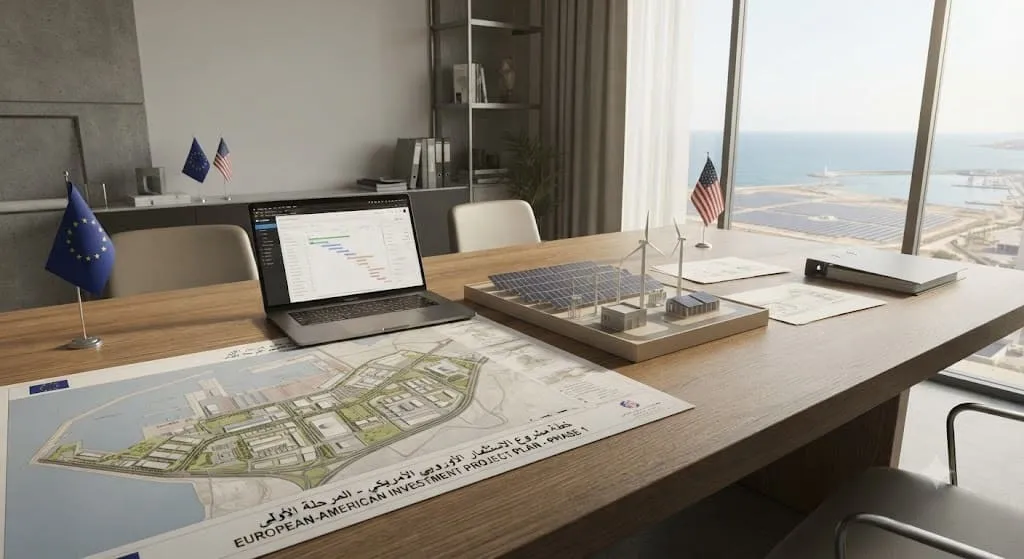
How to distinguish actual investment from preliminary agreements
Not every agreement involving a Western company represents foreign direct investment in Syria or confirms that a project has entered execution. To assess Western investment in Syria, companies must distinguish between the nature of the commercial commitment and the project’s actual progress.
| Type of Involvement | What It Establishes | What Still Needs Verification |
|---|---|---|
| Operating concession | Contractual rights and obligations to develop or operate an asset | Whether operations or construction have started |
| Supply agreement | A company’s role in providing equipment, materials, or technology | Contract scope, financing, delivery, and installation |
| Memorandum of understanding (MoU) | A framework for cooperation, studies, or negotiations | Final contracts, financing, and execution commitments |
| Technical studies or negotiations | Preliminary assessment of project feasibility or commercial interest | Whether the project will proceed at all |
| Development assistance | Financial or institutional support, including grants | Whether the funding creates any private investment opportunity |
Before treating an announcement as an actionable opportunity, verify the project owner, contractual status, financing, defined scope, and evidence of implementation. These factors provide a more reliable indication of project readiness than announced investment values alone.
Major Western investment projects in Syria
Western investment projects in Syria cover ports, energy, infrastructure, telecommunications, and financial services. Their commercial significance differs according to the agreements signed and the progress documented for each project.
The following examples illustrate the main developments and their confirmed stages:
- Ports and logistics – CMA CGM (France): The group operates Latakia’s container terminal under a 30-year concession, with modernization work underway and further expansion planned. Agreements covering dry ports in Adra and Aleppo, alongside air cargo services at Damascus Airport, extend its logistics involvement. Status: Operating concession at Latakia; additional agreements require separate verification of operational progress.
- Bridge rehabilitation – Matière (France): Cooperation with the Syrian authorities covers the rehabilitation of damaged bridges. A June 2025 update discussed expanding the original 32-bridge program to 37 bridges, while subsequent discussions continued to address financing and contractual arrangements. Status: Cooperation and project preparation, without confirmed completion of the wider program.
- Offshore oil and gas – Chevron (United States): Chevron, the Syrian Petroleum Company, and Power International Holding signed a memorandum of understanding in February 2026 covering offshore exploration and potential development. Status: Preliminary cooperation and technical evaluation; the memorandum alone does not establish commercial production.
- Offshore exploration – TotalEnergies (France): TotalEnergies, QatarEnergy, and ConocoPhillips signed a separate May 2026 memorandum to review Syria’s offshore Block 3 and explore potential commercial arrangements. Status: Technical review and preliminary discussions.
- Power generation – Siemens Energy (Germany): A regional consortium led by UCC Holding signed manufacturing-capacity reservation agreements for equipment intended for the Zayzoun and Deir Ezzor power plants. The wider consortium has signed power-project concessions, while Siemens Energy’s documented role concerns equipment supply. Status: Concession agreements at the project level and manufacturing reservations for the German supplier.
- Solar energy – Solar Energe 20 (United States): A June 2025 memorandum proposed two solar installations with a combined capacity of 200 MW, including battery storage in part of the proposed development. Status: Announced MoU; financing and construction progress require further confirmation.
- Digital connectivity – Medusa (Spain): Medusa signed an agreement with Syria Telecom in October 2025 to establish a submarine cable landing point in Tartous. Status: Infrastructure agreement; the signing does not establish that the Syrian connection is operational.
- Digital payments – Visa and Mastercard (United States): The two payment networks completed initial international card transactions in Syria in August 2026, moving beyond preliminary announcements. Status: Initial live transactions, with broader payment-network availability still developing.
For contractors, equipment suppliers, and investors, these projects indicate different levels of potential demand. Operational assets and projects with signed execution commitments offer clearer grounds for commercial assessment than preliminary memoranda, but neither guarantees an available contract. Each opportunity still requires verification of procurement requirements, financing, and access to the relevant decision-makers.
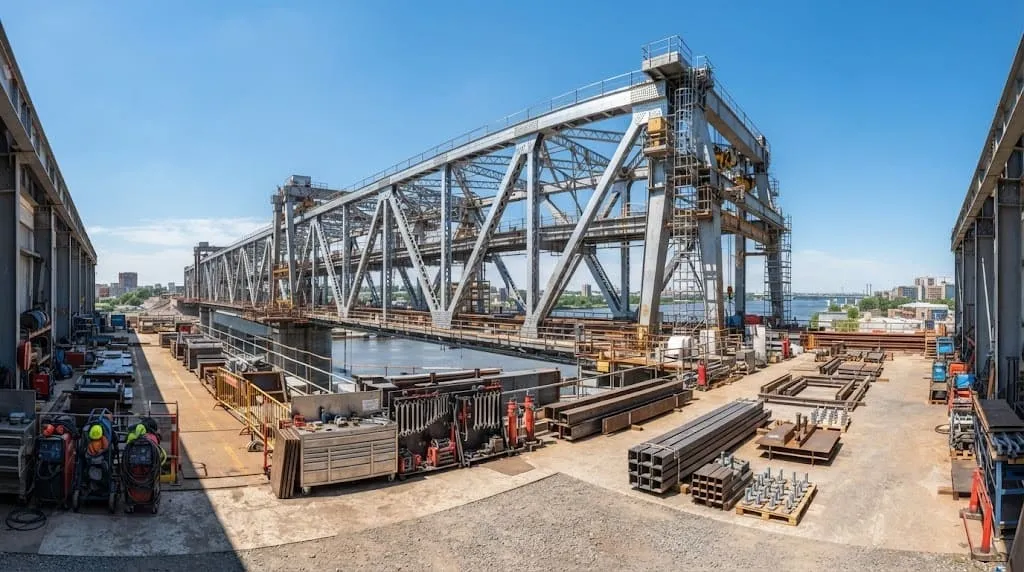
Why Western companies are interested in the Syrian market
Western companies see different commercial opportunities in Syria depending on their expertise and business models. Port operators assess logistics assets, energy companies examine long-term projects, and industrial suppliers respond to demand for specialized equipment and technical services.
Several factors help explain this interest:
- Reconstruction demand: Damaged infrastructure and industrial facilities create a need for replacement equipment, engineering services, and rehabilitation works. The World Bank’s electricity recovery project illustrates the scale of essential infrastructure requirements.
- Geographic position: Syria’s Mediterranean access and connections to neighboring markets create potential opportunities in port operations, freight transport, and regional logistics, subject to infrastructure readiness.
- Partnership opportunities: Large projects can bring together regional financing, local execution partners, and Western technology providers. This allows companies to participate through equipment supply, engineering, or operations without necessarily becoming direct investors.
- Market-entry potential: Technical studies, supply agreements, and limited commercial engagements allow companies to assess demand and establish local relationships before considering larger commitments.
These factors explain commercial interest but do not establish whether a particular project is ready for execution. That depends partly on the regulatory conditions, financing arrangements, and contractual requirements governing each transaction.
Sanctions, trade rules, and financing conditions in Syria
The regulatory environment for Western investment in Syria changed significantly during 2025 and 2026. Broad economic restrictions were removed, but companies must still distinguish between sanctions relief, export permissions, and the practical ability to finance and execute a transaction.
The main developments are:
- US sanctions relief: The United States terminated its comprehensive Syria sanctions program effective July 1, 2025. Targeted sanctions remain applicable to designated individuals, entities, and activities under OFAC’s current framework.
- Caesar Act repeal: The legislation was repealed on December 18, 2025, removing the mandatory secondary sanctions previously associated with certain transactions involving Syria. Other applicable sanctions and compliance requirements remain in force.
- Removal of Syria’s terrorism designation: On August 24, 2026, the United States formally rescinded Syria’s designation as a State Sponsor of Terrorism, ending the restrictions specifically associated with that designation.
- US export controls: The Bureau of Industry and Security eased restrictions on many civilian exports in September 2025. However, controlled equipment and technology may still require export authorization, depending on their classification, end use, and recipient.
- European Union measures: The EU lifted its broad economic sanctions in May 2025 while retaining targeted and security-related restrictions. In May 2026, the Council also restored the full application of the EU–Syria Cooperation Agreement, strengthening the framework for economic and trade relations.
- European recovery funding: The EU allocated €620 million for 2026–2027 to humanitarian assistance and socioeconomic recovery. This funding should not be classified as private foreign direct investment.
For investors, contractors, and suppliers, these changes create a broader framework for commercial engagement, but sanctions relief does not automatically ensure export authorization, bank acceptance, or project financing. These conditions must be verified for the specific parties, equipment, and transaction involved.
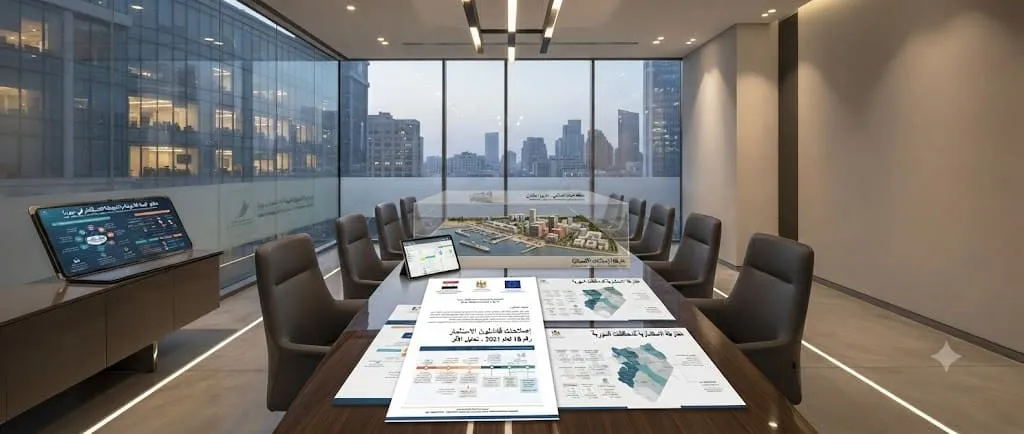
Key sectors and opportunities for Western investment in Syria
Western investment in Syria is concentrated around infrastructure recovery, energy development, industrial rehabilitation, and the restoration of essential services. For European and US companies, these sectors present different opportunities depending on whether they provide financing, construction expertise, technology, or specialized equipment.
The main areas of commercial interest include:
- Ports and logistics: Container-handling equipment, warehouse development, dry-port infrastructure, freight facilities, and associated maintenance services.
- Power and renewable energy: Gas turbines, power-generation equipment, transmission networks, solar installations, battery storage, and grid-connection systems.
- Oil and gas: Exploration services, field equipment, pipeline rehabilitation, technical surveys, and supporting infrastructure.
- Water and civil infrastructure: Pumping stations, water treatment facilities, distribution networks, roads, bridges, and structural rehabilitation works.
- Telecommunications: Fiber-optic networks, submarine cable infrastructure, data connectivity, and specialized network equipment.
- Financial technology: Payment processing, digital banking infrastructure, transaction security, and related technology services.
- Industrial rehabilitation: Production equipment, automation systems, replacement components, and engineering works required to restore damaged industrial facilities.
These sectors reflect potential investment, contracting, and supply opportunities, not necessarily projects currently open for bidding. Before pursuing a specific opportunity, companies should identify the project owner, procurement requirements, financing status, and the scope available to external contractors or suppliers.
Key challenges for Western companies entering Syria
Despite improvements in the regulatory environment, Western companies entering Syria must address financial, contractual, and operational risks that can affect project delivery.
The main challenges are:
- Counterparty verification: Confirm the ownership, authority, and compliance status of local partners, project owners, and intermediaries before entering contractual commitments.
- Project financing and payments: Verify available funding, acceptable banking channels, payment milestones, and currency arrangements before committing equipment or resources.
- Export and procurement compliance: Check whether equipment, software, or technology requires export authorization and whether the intended end user and application are permitted.
- Site and infrastructure readiness: Assess property rights, site access, permits, and the availability of electricity, water, transport, and other services required for execution.
- Contractual responsibilities: Define delivery obligations, technical standards, warranties, change-order procedures, and responsibility for delays or additional costs.
- Long-term operational support: Confirm the availability of spare parts, maintenance arrangements, technical training, and local support for imported systems and equipment.
For investors, contractors, and suppliers, a commercially attractive project must also be legally workable, financially supported, and technically executable. Addressing these requirements before signing helps companies assess whether a proposed engagement is viable under actual market conditions.
Read also: Reconstruction Companies in Syria 2026: How to Choose a Reliable Reconstruction Firm
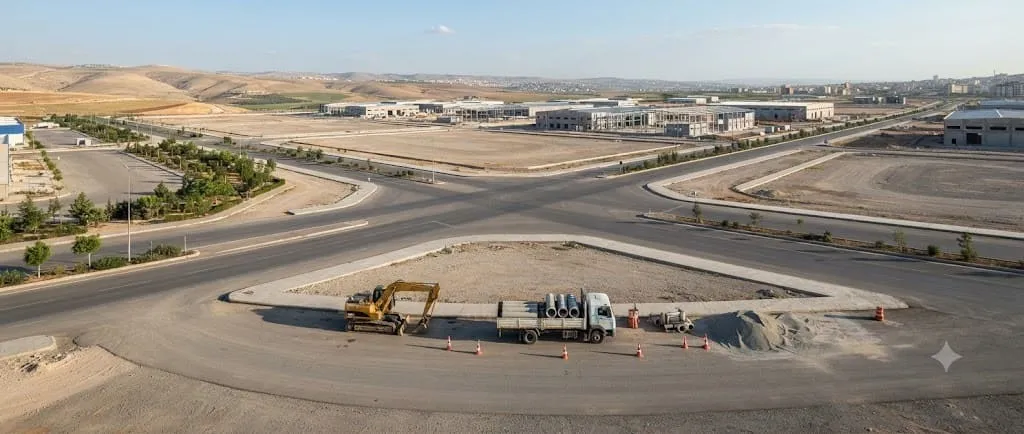
Step to enter Western companies the Syrian market
For European and US companies, entering Syria requires choosing a commercial role that matches the opportunity’s actual stage of development. Western investment in Syria may involve asset ownership, operating concessions, equipment supply, or specialized contracting, each with different financial and execution commitments.
A practical market-entry process involves five stages:
- Identify a viable opportunity: Establish the project owner, decision-makers, financing status, and procurement requirements before allocating resources.
- Select an entry model: Determine whether the company will invest directly, supply equipment, provide technical services, or undertake a defined construction package.
- Verify execution feasibility: Assess the legal requirements with qualified advisers, available payment channels, site conditions, technical specifications, and delivery arrangements.
- Define an initial commitment: Where appropriate, begin with a quotation, technical assessment, equipment supply agreement, or limited works package to evaluate the proposed commercial relationship.
- Proceed to larger commitments: Expand participation when contractual responsibilities, financing, permits, and implementation requirements have been established.
The appropriate entry model depends on the company’s capabilities and the project’s readiness, not simply on the size of the announced investment.
How to choose a local partner for investment projects in Syria
A local partner should provide capabilities relevant to your project’s scope, whether the requirement involves infrastructure construction, equipment supply, installation, or ongoing operations. Assess prospective partners against the following criteria:
- Relevant experience: Verify completed projects, client references, and experience with comparable technical requirements.
- Technical and operational capacity: Assess the personnel, equipment, engineering resources, and supplier relationships needed for the proposed work.
- Legal and commercial standing: Verify company registration, ownership, contractual authority, and financial capacity appropriate to its responsibilities.
- Local execution capabilities: Confirm the partner’s ability to coordinate site access, material availability, utilities, and other requirements within its agreed scope.
- Contractual accountability: Establish responsibilities, deliverables, payment milestones, quality requirements, and procedures for resolving performance issues.
Before selecting a partner, request evidence of relevant experience and a proposal that clearly identifies what the company will deliver, under which conditions, and within what schedule.
How Qiwaa Advance supports Western investment projects in Syria
For European and US companies pursuing construction and infrastructure opportunities in Syria, moving from a commercial agreement to project delivery requires suitable contracting capabilities, reliable material sourcing, and alignment with site requirements.
At Qiwaa Advance, we support these needs through two complementary business sectors:
- Qiwaa Contracting: Engineering, procurement, and construction (EPC) solutions for infrastructure projects, including water networks, treatment and desalination facilities, concrete structures, and specialized construction systems.
- Qiwaa Trading: Sourcing construction and industrial materials, specialized equipment, and supply solutions through international manufacturing and supplier relationships.
Our contribution depends on the project’s technical requirements and the contracting or supply scope involved. For example, an infrastructure project may require an EPC solution, while another development may need construction materials, equipment, or a defined supply package.
To discuss potential cooperation, share your project’s location, sector, current stage, available drawings or technical specifications, required materials or works, and expected schedule.
Contact Qiwaa Advance to explore the contracting and supply solutions relevant to your project in Syria.
Read also: Infrastructure Contracting in Syria: Choosing the Right Contractor
FAQs About Western Investment in Syria
Have Western companies moved beyond investment announcements in Syria?
Yes. France’s CMA CGM operates the Latakia container terminal under a 30-year concession, while Visa and Mastercard completed initial international card transactions in August 2026. However, other Western-backed projects remain at the agreement or evaluation stage.
Is the EU’s €620 million support package direct investment in Syria?
No. The EU’s €620 million package for 2026–2027 supports humanitarian assistance and socioeconomic recovery. It is public financial support, not private foreign direct investment.
Has Syria been removed from the US State Sponsors of Terrorism list?
Yes. The United States formally removed Syria from the list on August 24, 2026. However, targeted sanctions, export controls, and transaction-specific compliance requirements still apply.
How can companies identify contracting and supply opportunities in Western-backed projects?
Start by verifying the project owner, financing, contractual stage, and procurement process. A signed investment agreement does not necessarily mean that construction tenders or equipment supply contracts are available. Confirm actual procurement requirements before committing resources.