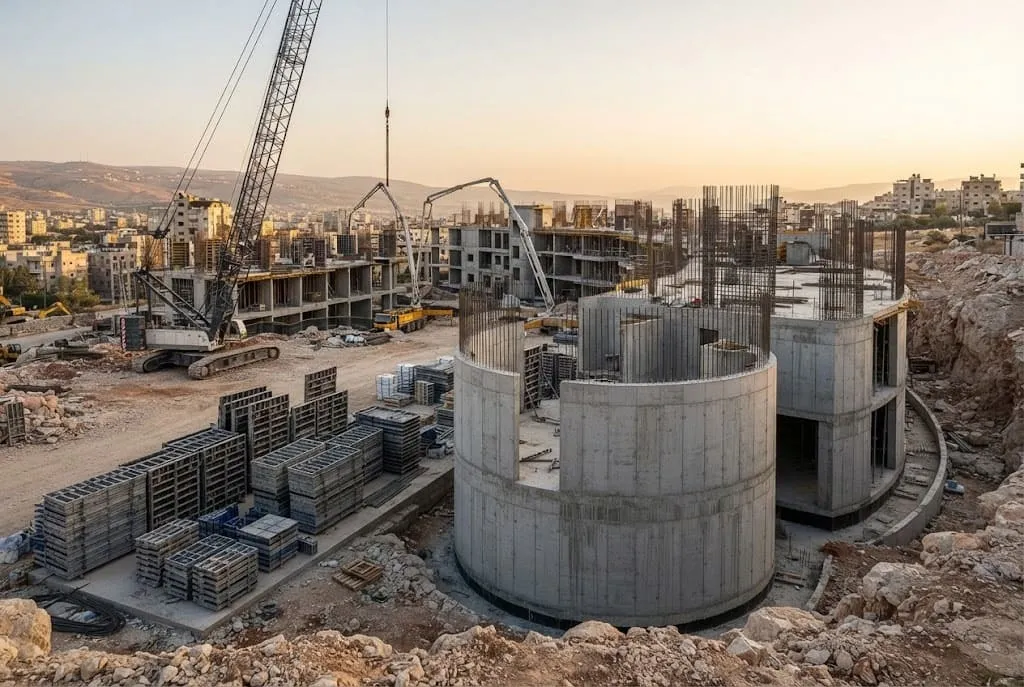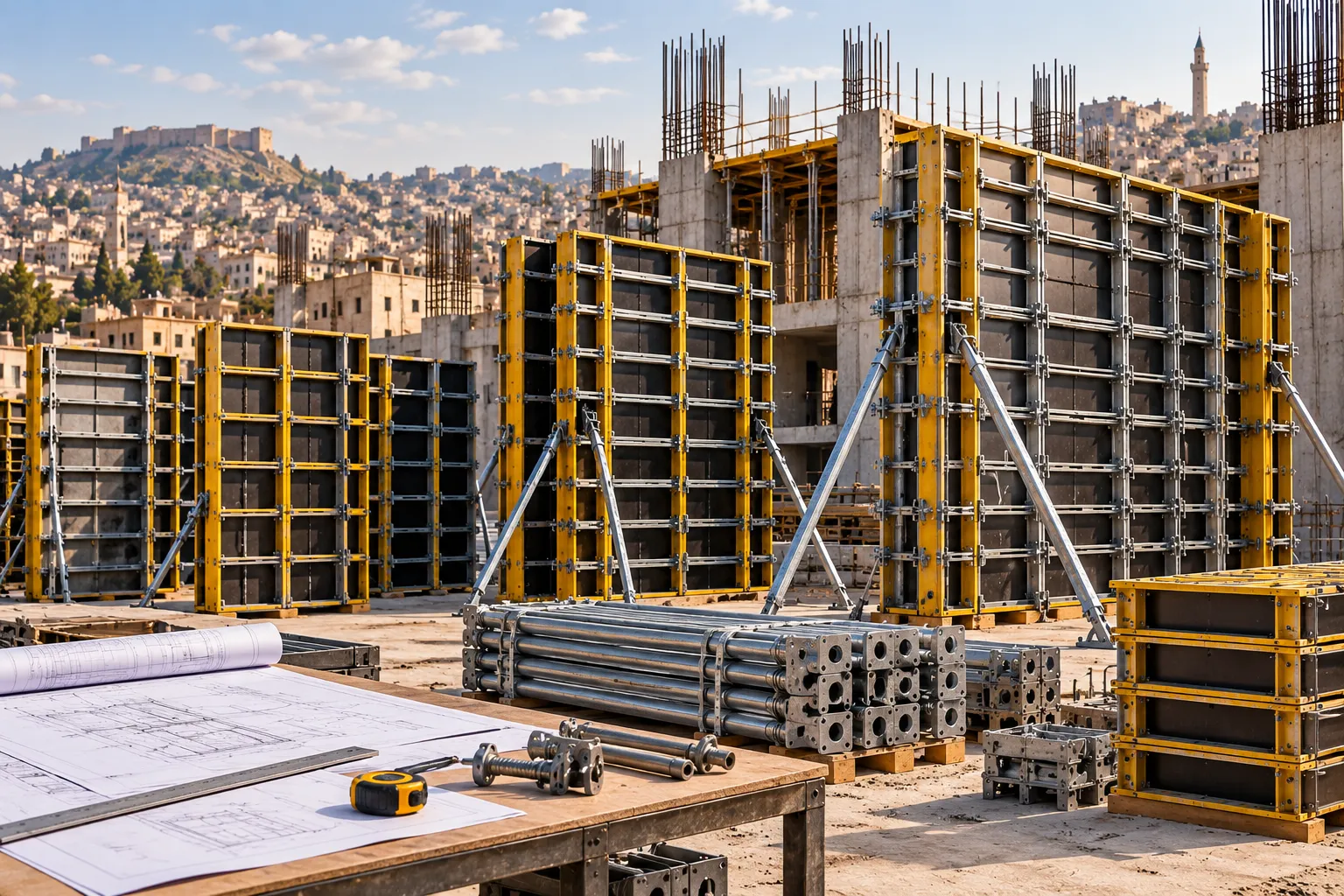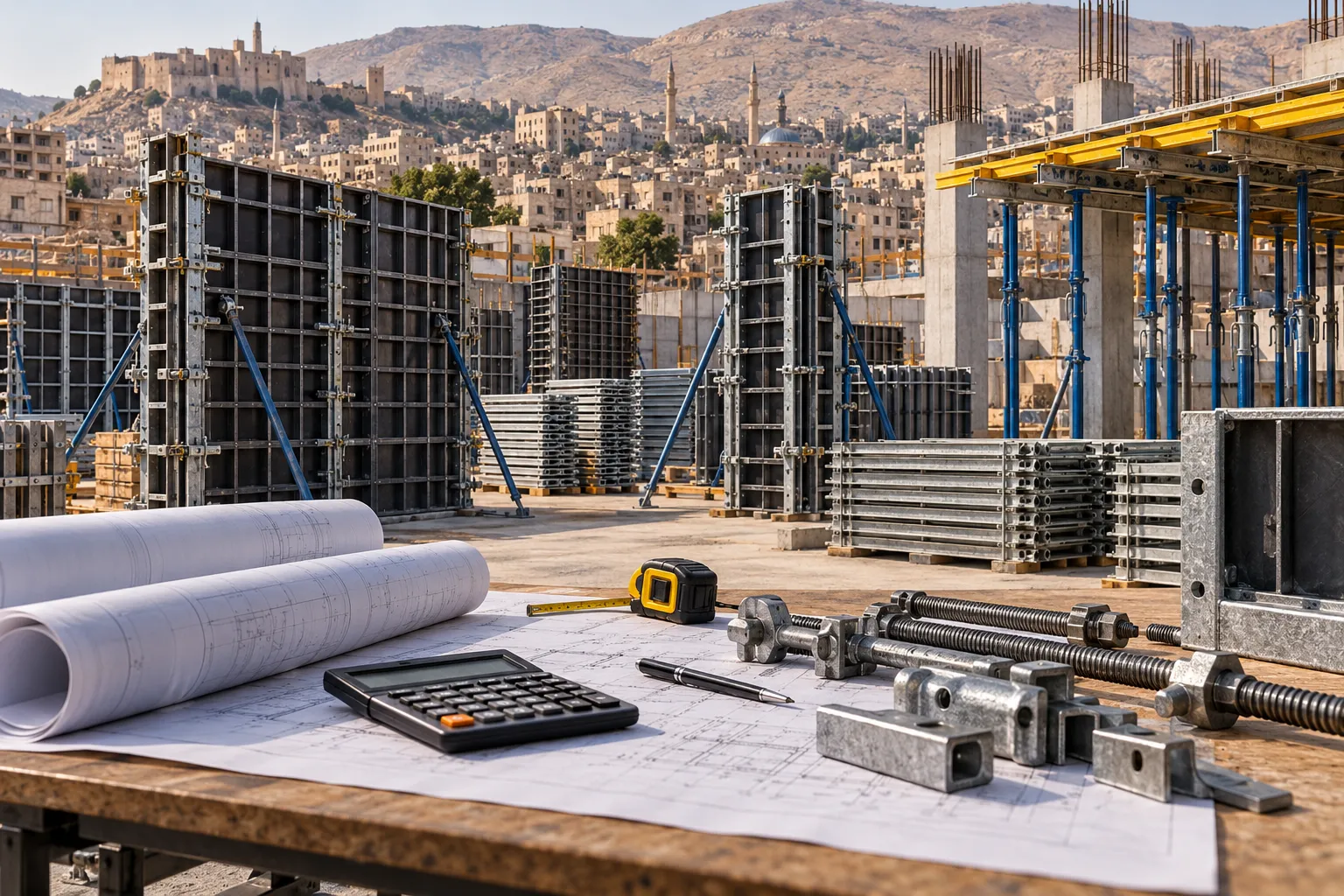


Reconstruction projects in Syria face two major challenges: managing large volumes of demolition rubble and securing aggregates and other construction materials. Construction waste recycling offers a way to address both, but its economic viability depends on processing costs, material quality, transport distances, and potential applications.
For investors, contractors, and project owners, the key is determining whether recovered materials can meet project requirements at a competitive cost. In this Qiwaa Advance article, we examine the factors that influence this decision, including:
- The role of the circular economy in Syria’s reconstruction.
- Investment opportunities in demolition rubble recycling.
- Processing methods and quality standards for recycled aggregates.
- Project feasibility, operating costs, and potential challenges.
- How Qiwaa Advance can support recycling projects through its contracting and supply capabilities
How much demolition waste does Syria actually have?
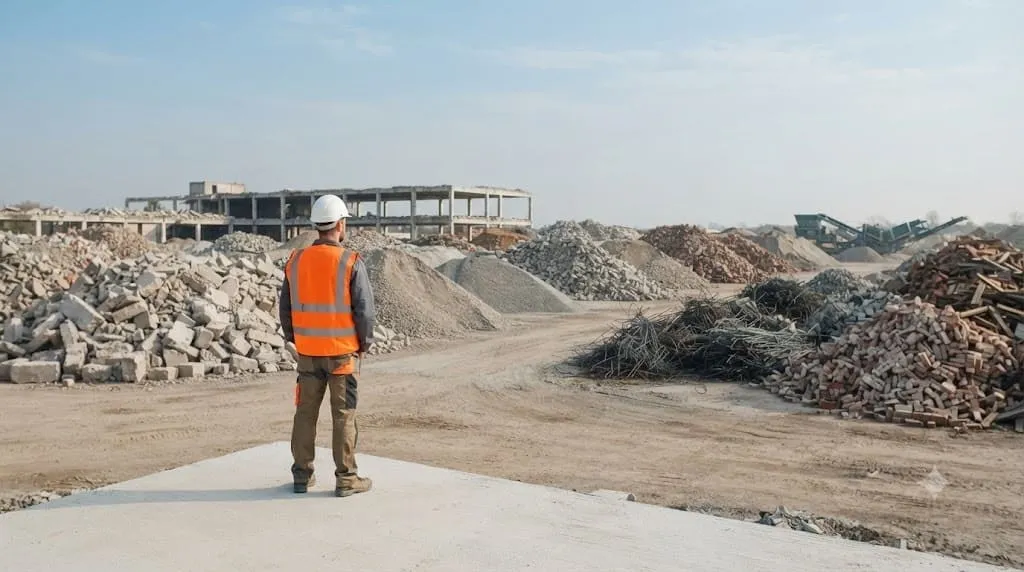
Syria has substantial volumes of demolition rubble, but published estimates do not establish how much is accessible, recoverable, or suitable for construction waste recycling. No comprehensive, up-to-date national inventory is available, making location-specific assessments essential before planning processing capacity or investment.
Rubble volume indicators and field results
Available assessments provide three useful indicators, each with a different scope:
- 2022 conflict damage: The World Bank estimated 17.6–28.3 million tons of rubble from damaged housing across 14 Syrian cities. This remote assessment covers selected locations, not the total volume of construction waste in Syria.
- February 2023 earthquake: A subsequent World Bank assessment estimated approximately 58 million tons of rubble across six affected governorates, including detailed assessments of nine cities. This figure should not be added to the 2022 estimate because their geographic coverage, damage baselines, and methodologies differ.
- Completed recovery projects: UNDP reported removing more than 2.1 million cubic meters of rubble across Syria over ten years. In northwest Syria, 257,000 metric tons were recycled for rehabilitation work, including roads and public squares.
These figures indicate the scale of rubble management needs, but not the volume commercially available for recycling. Before determining processing capacity, a project assessment should establish:
- Rubble location and accessibility: Concentration of materials, site conditions, and available transport routes.
- Material composition: Proportions of concrete, masonry, metals, soil, and other materials, including contamination risks.
- Recoverable quantities: The share that can be safely separated and processed into usable products.
- Transport requirements: Distances between demolition sites, processing facilities, and potential customers.
- Market demand: Expected demand for recycled aggregate that meets the specifications of intended construction applications.
Demolition waste management costs and challenges
Demolition rubble generally has low value before processing, making collection, handling, and transport costs critical to project feasibility. Effective reconstruction waste management requires several operations:
- Collection and preparation: Loading rubble, reducing oversized pieces where necessary, and separating recoverable materials.
- Safety assessment: Identifying hazardous substances and potential explosive remnants of war before handling or processing.
- Transport and processing: Moving suitable materials to processing facilities for crushing, screening, and separation.
- Quality control and disposal: Testing recovered materials and safely disposing of fractions that cannot be reused or recycled.
Project costs increase when site conditions or material characteristics complicate these operations. Key challenges include:
- Hazardous materials: Asbestos and other contaminants requiring specialized assessment and handling.
- Mixed rubble: Gypsum, soil, wood, and other impurities that increase sorting requirements and reduce recoverable output.
- Site accessibility: Restricted access, difficult loading conditions, and long transport distances.
- Explosive hazards: Suspected unexploded ordnance requiring assessment and clearance by qualified specialists before affected work proceeds.
- Low recovery rates: A high proportion of unsuitable materials increases disposal requirements and reduces usable output.
For investors and contractors, the critical distinction is between the estimated rubble volume and the quantity that can be safely processed into marketable materials. Establishing this difference through site-specific data is essential before committing to equipment capacity, operating plans, or financial projections.
The business case for construction waste recycling in Syria
Recycling demolition rubble can reduce construction material consumption and waste disposal costs, but these benefits depend on the quality of recovered materials, processing expenses, and local demand. For reconstruction projects in Syria, the economic value lies in whether recycled products can meet technical specifications at a competitive total cost.
How recycling affects project feasibility
The feasibility of demolition waste recycling depends on comparing the total costs of recycling with conventional material supply and rubble disposal. This assessment should cover two alternatives:
- Recycling: Collection, sorting, transport, crushing, screening, testing, storage, delivery, and disposal of non-recoverable materials, alongside equipment and operating costs.
- Conventional supply: Purchasing and transporting natural aggregates of equivalent specifications, plus the cost of removing and disposing of demolition rubble.
Recycling becomes more economically attractive when:
- Rubble sources, processing facilities, and construction sites are within economical transport distances.
- Recoverable materials are available in sufficient quantities and consistent quality.
- Recycled aggregates meet project specifications and have reliable demand.
- Savings from avoided disposal and conventional material purchases offset processing and operating costs.
However, extensive sorting, contamination, low recovery rates, or repeated handling can eliminate these advantages. Each project therefore requires a site-specific cost comparison, including the investment needed for equipment and the expected output of usable materials.
Reducing resource consumption by reusing construction aggregate
Using recycled aggregate in suitable construction applications can reduce demand for newly quarried materials and divert recoverable rubble from disposal. Its environmental benefits depend on:
- Replacing natural aggregates: Using tested recycled materials where they meet the technical requirements of the intended application.
- Reducing disposal volumes: Recovering usable concrete and masonry rather than transporting all demolition rubble to disposal sites.
- Optimizing transport: Locating processing operations and end users strategically to limit unnecessary hauling and associated fuel consumption.
These benefits should be assessed alongside the energy and resources required for processing, since recycling does not automatically result in lower environmental impacts under every operating condition.
Investment opportunities in reconstruction waste management
Construction waste recycling creates investment opportunities across several activities, including mobile crushing and sorting units, centralized processing facilities, metal recovery, and material testing services. The suitable business model depends on rubble availability, processing requirements, and demand for the resulting products.
Before investing in equipment or establishing a recycling facility, investors should establish:
- Material supply: Is there sufficient, accessible rubble with a lawful and reliable supply arrangement?
- Processing feasibility: Can the material be safely separated and processed at an acceptable recovery rate?
- Market demand: Are there identified buyers and approved applications for the recycled products?
- Financial viability: Can expected revenue and avoided costs cover capital investment, operating expenses, testing, and residual waste disposal?
Once these requirements are defined, investors can determine the facility’s infrastructure, equipment, and procurement needs. Through its contracting and trading capabilities, Qiwaa Advance can discuss the EPC works and equipment-sourcing requirements relevant to the proposed project, subject to an agreed scope.
Contact Qiwaa Advance to discuss the construction and supply requirements of your recycling investment.
Read also: Investment in Syria 2026: Practical Opportunities
Technical standards for construction waste recycling operations
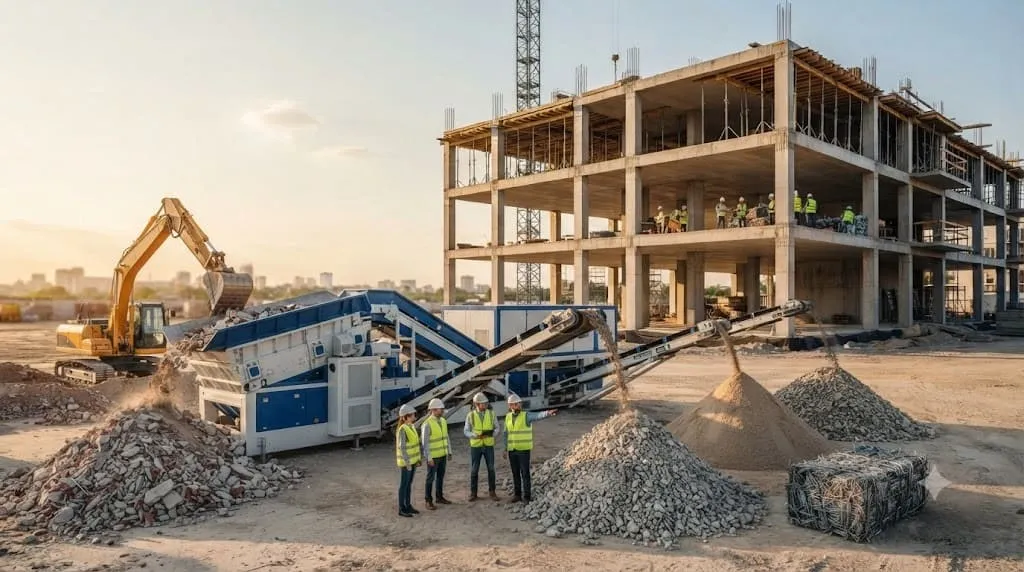
The quality of recycled aggregate depends on more than crushing and screening. Construction waste recycling requires controlled material separation, processing, and testing to produce aggregates that meet the specifications of their intended applications. The main stages include:
- Site assessment: Identify rubble composition, recoverable materials, and potential contamination. Hazardous materials and suspected explosive remnants must be assessed and addressed by qualified specialists before affected materials are handled.
- Sorting and preparation: Separate concrete and masonry from metals, gypsum, wood, and other unsuitable materials before processing.
- Crushing and metal separation: Reduce concrete and masonry to the required sizes while removing reinforcing steel and other metallic components.
- Screening and grading: Classify aggregates by particle size, using additional crushing where necessary to achieve the required gradation.
- Laboratory testing: Evaluate material composition, physical properties, and relevant chemical characteristics against the specifications of the intended use.
- Storage and traceability: Keep material grades and batches identifiable, with records linking test results to their approved applications.
Construction applications of recycled aggregate
The suitability of recycled aggregate depends on its composition, processing quality, and engineering requirements. The main applications include:
- Fill and road construction: Suitable processed aggregates can be used for engineered fill, road base layers, and site leveling, provided they meet the required grading, compaction, and performance criteria.
- Concrete production: Selected recycled concrete aggregates may replace part of the natural aggregate when permitted by the project specifications. Residual mortar can increase water absorption, while contaminants such as gypsum may introduce harmful sulfates that affect concrete durability.
For concrete applications, the acceptable replacement proportion must be established through mix design and testing, considering the required strength, exposure conditions, and whether the concrete is reinforced. A single replacement ratio cannot be applied to every project.
Acceptance criteria for recycled aggregate
Before recycled materials are approved for construction, their quality must be verified against the applicable project specifications. The main acceptance criteria cover:
- Material origin and composition: Document the rubble source and identify the proportions of concrete, masonry, asphalt, and other constituents.
- Cleanliness and contamination: Control gypsum, wood, plastics, metals, and other impurities, while excluding hazardous materials from conventional processing.
- Particle grading and fines: Verify aggregate size distribution and fine-particle content against the requirements of the intended application.
- Physical and mechanical properties: Assess density, water absorption, and resistance to fragmentation or abrasion where relevant.
- Chemical properties: Check sulfate, chloride, and other potentially harmful constituents according to material origin and exposure requirements.
- Performance and quality control: Verify suitability through application-specific testing, including trial concrete mixes where required, and maintain appropriate batch records and sampling procedures.
Meeting these criteria determines whether processed rubble can be accepted for a specific construction application. Material that qualifies for road base or fill does not automatically meet the requirements for structural concrete.
Read also: Ready-Mix Concrete Plant in Syria: A Guide for Contractors and Investors
How can Qiwaa Advance support construction waste recycling projects
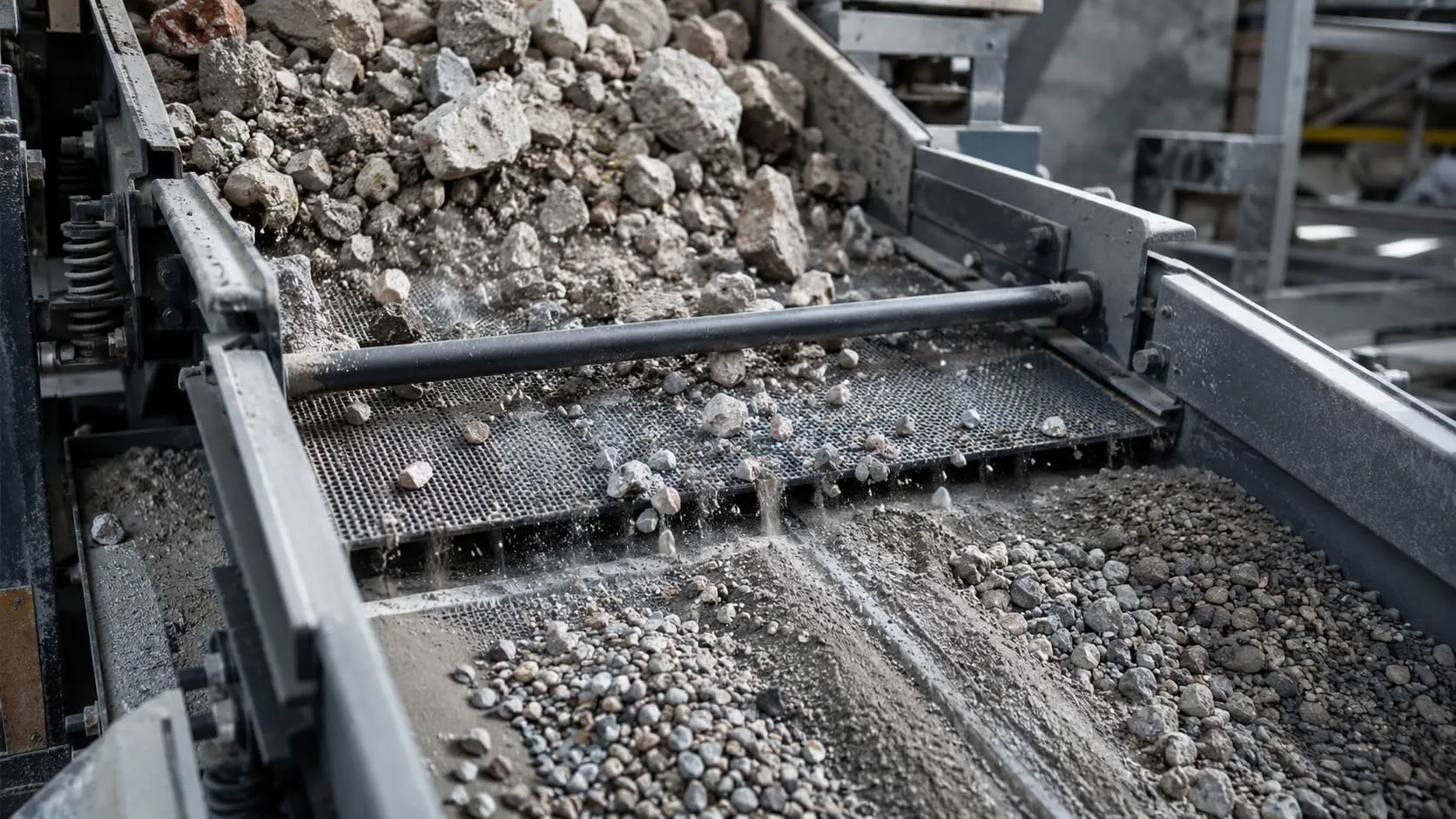
Developing a construction waste recycling facility requires more than selecting processing equipment. Once the available rubble, target products, and required capacity have been assessed, the next step is translating these requirements into a practical construction and procurement plan.
At Qiwaa Advance, we combine EPC contracting, equipment sourcing, and industrial solutions to support the construction and supply requirements of investment projects in Syria.
Qiwaa Advance’s execution and supply capabilities
Depending on your project’s technical requirements and agreed scope, our services can contribute to:
- Facility construction and infrastructure: Supporting the engineering, procurement, and construction requirements of the proposed facility through Qiwaa Contracting.
- Equipment sourcing: Exploring suitable sourcing options for crushing, screening, and material-handling equipment through our international supplier network.
- Supply chain coordination: Organizing the procurement and delivery of agreed equipment and materials according to project specifications and implementation schedules.
- Concrete production requirements: Discussing relevant production and material-supply solutions when recycled aggregates are intended for concrete applications, subject to the required engineering approvals and testing.
The appropriate scope depends on the facility’s intended output, approved technical specifications, and project requirements. Specialized rubble assessment, hazardous-material clearance, and recycled aggregate certification must be handled by appropriately qualified parties.
If you are planning a recycling facility in Syria, contact Qiwaa Advance to discuss your project’s infrastructure, equipment, and supply requirements and identify how our capabilities can support its implementation.
Read also: Construction Companies in Syria 2026: How to Choose a Reliable Contractor for Your Project

FAQs about construction waste recycling in Syria
Is recycled aggregate safe for structural concrete?
Yes, provided it meets the applicable engineering specifications and passes the required material and concrete mix tests. Its suitability depends on aggregate composition, contaminants, water absorption, strength requirements, and the intended structural application.
What limits the expansion of demolition waste recycling in Syria?
Key barriers include incomplete rubble inventories, mixed or contaminated materials, limited processing and testing capacity, and uncertain demand for recycled aggregates. Transport distances and recovery rates also affect commercial feasibility.
What regulations apply to construction waste recycling in Syria?
Under Syrian Law No. 49 of 2004, construction waste generators must transport rubble to designated sites (Article 5), while waste processing and recycling facilities require prior licensing from the relevant ministry and local administrative unit (Article 55). As the law is under review, investors should verify current requirements before proceeding.
What is the difference between construction waste reuse and recycling?
Reuse preserves materials or components with little or no processing, such as salvaged stone or tiles. Recycling processes waste into new construction inputs, such as crushing and screening demolished concrete to produce recycled aggregate.
Sources
-
- UNDP: Rubble Removal and Recycling Work in Syria
- Syrian Law No. 49 of 2004 on Public Cleanliness (FAOLEX copy)
- UNDP: Model Facilities for Processing Earthquake Debris in Türkiye, 2024
- World Bank: Joint Damage Assessment of Selected Cities in Syria, 2022
- World Bank: Rapid Damage and Needs Assessment Following the Syria Earthquake, 2023
- European Commission Joint Research Centre: Recycled Aggregates and Their Use in Concrete