

Building material prices in Syria can look straightforward in a price bulletin—until a supplier’s quotation arrives. The published price for a ton of rebar or cement may not include transport to your site, unloading, or currency adjustments. For project owners and procurement teams, these differences can turn an apparently competitive price into a more expensive purchase.
This guide explains how to read building material prices in Syria in 2026, compare quotations in US dollars and Syrian pounds, and evaluate material costs on consistent terms. You’ll also learn what to check in supplier quotations, from specifications and delivery conditions to price validity, so you can make purchasing decisions based on the actual cost to your project.
Why is there no single price for building materials in Syria today?
Building material prices in Syria vary because published figures do not always refer to the same product or purchasing conditions. A bulletin may show a wholesale price, a warehouse pickup price, or a price based on a specific order volume. Material grades, specifications, and payment terms can also affect the amount quoted.
This means two prices for cement or rebar are not necessarily comparable, even when they appear in the same bulletin. Understanding the basis of each price is essential before using it to estimate a project’s material budget.
What makes building material prices differ from one city to another?
A material available near a production facility or distribution warehouse may cost more to deliver to a construction site in another governorate. These differences are particularly relevant for heavy materials such as cement, concrete blocks, sand, and gravel.
The main factors behind regional price differences include:
- Distance from the supply source: Transport costs depend on the location of the factory, warehouse, quarry, or import entry point relative to the project.
- Road access and delivery conditions: Route accessibility, vehicle requirements, unloading arrangements, and site restrictions can increase the delivered cost.
- Local availability: Limited stock or a shortage of nearby suppliers may require materials to be sourced from another city, adding transport costs and delivery time.
- Order volume and delivery frequency: Large or consolidated orders may reduce transport costs per unit, while small or repeated deliveries can be more expensive.
For contractors managing projects across several Syrian governorates, comparing prices on a delivered-to-site basis provides a more useful picture than comparing supplier prices alone.
Why do building material prices in Syria rise or fluctuate?
Changes in construction material prices in Syria reflect shifts in production costs, market supply, demand, and import conditions. Exchange-rate movements can affect imported materials and inputs, while energy costs and production capacity influence locally manufactured products.
Market reports from 2026 illustrate why these movements should be assessed separately for each material:
- Cement: In April 2026, Al Arabiya reported that factory-gate cement prices in Syria had fallen to approximately USD 100–120 per ton, compared with USD 165–170 in previous years. Transport costs remained an additional expense for buyers.
- Rebar: According to the Arab Iron and Steel Union, Turkish rebar was quoted at USD 620–630 per ton FOB on October 3, 2026. This is an export-market reference, not a delivered price in Syria; shipping, import-related charges, and inland transport must be considered separately.
These examples show why material prices cannot be interpreted without their date, market, and delivery basis. A change in an international benchmark may affect Syrian supplier quotations, but it does not determine the final local price on its own.
How to read building material prices in Syria today
A building materials price bulletin in Syria helps you compare market quotations, but each figure needs context. Before using a published price, check its date, unit of measurement, material specification, currency, and delivery basis. A warehouse price and a delivered-to-site price may refer to the same material but represent different costs for your project.
Use the bulletin to identify price movements and plan your purchases, then confirm the relevant figures with suppliers. The following sections explain which materials deserve closer monitoring and how to interpret the pricing information in a daily bulletin.
Which building materials need frequent price monitoring?
Not every material requires daily monitoring. For construction projects in Syria, the frequency of price checks should depend on market volatility, purchase volume, and how soon the material is needed on site.
Prioritize the following material groups:
- Steel and cement: Rebar, Ordinary Portland cement, and sulfate-resistant cement, particularly when large quantities are scheduled for procurement.
- Concrete and aggregates: Ready-mix concrete, concrete blocks, hollow slab blocks (hourdi), sand, and gravel, where local availability and transport costs can significantly affect quotations.
- Infrastructure materials: Pipes, valves, and related components, especially when projects require imported products or specialized specifications.
- Insulation and finishing materials: Insulation systems, electrical installation materials, basic finishes, marble, and granite. Monitor these according to procurement milestones and quotation validity periods.
- Construction systems and additives: Timber, formwork, and concrete admixtures, where availability, technical compatibility, and delivery schedules may be as important as the price.
During active procurement, check high-value or price-sensitive materials more frequently. For materials required in later construction phases, schedule updates closer to the purchasing date. Track availability alongside price to avoid selecting materials that cannot be delivered when needed.
Daily building materials price bulletin template
A practical price bulletin should show how each material is quoted, which factors affect its price, and what needs to be verified before purchasing. It should also identify the quotation date, currency, and applicable exchange rate.
The following table explains how building material prices in Syria can be recorded and compared. It does not present fixed market prices; the amounts depend on current supplier quotations, specifications, and purchasing conditions.
| Material | Unit | Price in USD | Price in SYP | Pre-purchase notes |
|---|---|---|---|---|
| Rebar | Ton | Based on the supplier’s current quotation | Converted at the agreed exchange rate | Check diameter, grade, origin, and conformity certificate |
| Local cement | Ton | Based on the supplier’s current quotation | Converted at the agreed exchange rate | Check cement type, production date, and storage conditions |
| Imported cement | Ton | Based on the supplier’s current quotation | Converted at the agreed exchange rate | Check origin, specifications, and transport costs |
| Concrete blocks | Piece | Varies by size and specification | Converted at the agreed exchange rate | Check dimensions, density, and delivery location |
| Sand | Cubic meter | Varies by source and quality | Converted at the agreed exchange rate | Check cleanliness, impurities, and delivery costs |
| Gravel | Cubic meter | Varies by grading and source | Converted at the agreed exchange rate | Check aggregate size, grading, and source |
| Ready-mix concrete | Cubic meter | Depends on strength class and delivery distance | Converted at the agreed exchange rate | Check mix specifications, haul time, and pumping costs |
| Insulation materials | Square meter or roll | Depends on material type and thickness | Converted at the agreed exchange rate | Check technical data sheets, coverage, and application requirements |
| Pipes | Linear meter or piece | Depends on diameter, material, and pressure rating | Converted at the agreed exchange rate | Check specifications, fittings, and pressure requirements |
| Finishing materials | Item or square meter | Depends on grade, brand, and origin | Converted at the agreed exchange rate | Check grade, color, dimensions, and spare quantities |
Important: The SYP column illustrates conversion when the supplier’s original quotation is in US dollars. If the supplier quotes directly in Syrian pounds, record that amount without an additional conversion. Any conversion must identify the agreed exchange rate, its effective date, and whether the amount refers to new or old Syrian pounds.
For reliable comparisons, record the supplier, project location, quotation date, price validity period, stock availability, and delivery terms alongside each price. This allows the procurement team to compare quotations on consistent terms rather than relying on isolated figures.
Read also: Syria Reconstruction Projects 2026: How to Read Opportunities and Costs Before Investing
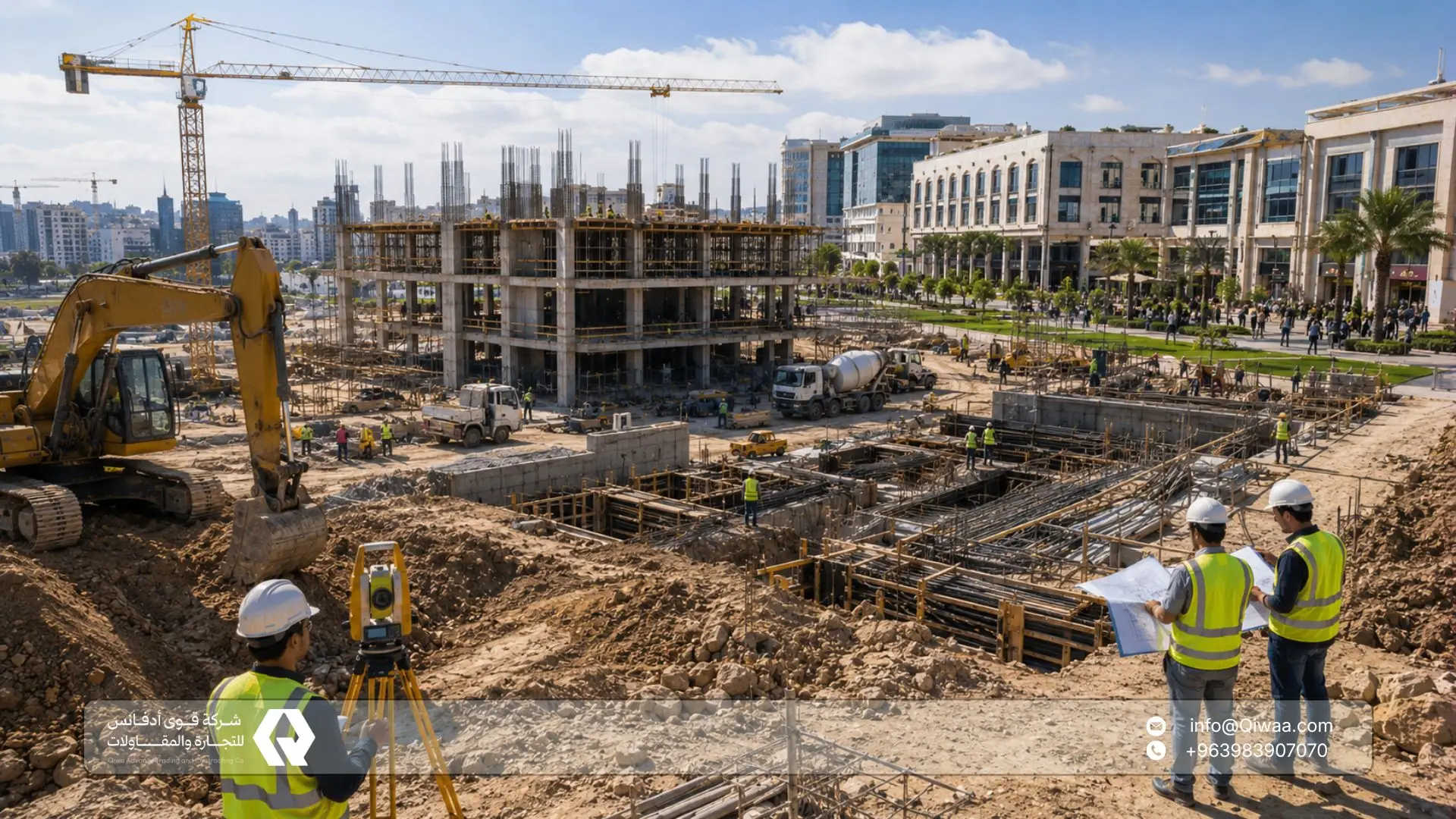
Building material prices in Syria: USD to SYP conversion
When comparing building material prices in Syria, first establish the currency used in the supplier’s quotation and the currency required for payment. A supplier may quote in US dollars and specify how the amount will be converted into Syrian pounds, while another may offer a fixed SYP price valid for a limited period.
The Central Bank of Syria publishes official exchange-rate bulletins, which can serve as a reference when checking currency conversions. However, the quotation must identify the applicable exchange rate, its effective date, and whether the supplier has agreed to fix the rate or apply it at payment.
How to convert material [rices from USD to SYP
When a material is quoted in US dollars and payment is calculated in Syrian pounds, use the following formula:
Material price in new SYP = Material price in USD × Agreed exchange rate (new SYP per USD)
For example, if a supplier quotes USD 1,000 for a material and the agreed exchange rate is 120 new Syrian pounds per dollar, the converted price is 120,000 new SYP. This is an illustrative calculation, not a current market quotation.
Before confirming the purchase, check four details:
- Quotation currency: Is the original price in USD or new SYP?
- Exchange-rate reference: Which published or contractually agreed rate will apply?
- Conversion date: Will the exchange rate be fixed when the quotation is issued or determined on the payment date?
- Price validity: How long will the quoted amount and agreed conversion terms remain valid?
If the supplier quotes a fixed price directly in Syrian pounds, no dollar conversion is needed unless the agreement specifically provides for one.
Understanding Syria’s new and old pound
Syria introduced its new currency on January 1, 2026, under Decree No. 293 of 2025, removing two zeros from the old pound. The official conversion is:
100 old Syrian pounds = 1 new Syrian pound
The distinction remains important when reviewing older price bulletins, supplier records, or contracts issued during the currency transition. A historical price of 1,000,000 old SYP, for example, is equivalent to 10,000 new SYP.
Since July 31, 2026, old Syrian banknotes have no longer been valid for ordinary financial transactions. Current quotations should therefore identify amounts in the new Syrian pound, while historical figures must be converted to the same denomination before prices are compared.
For construction procurement, specifying the currency denomination and conversion terms in writing helps prevent pricing errors and disagreements between project owners, contractors, and suppliers.
Rebar, cement, and concrete prices in Syria
Comparing building material prices in Syria requires more than checking the quoted amount per ton or cubic meter. Rebar, cement, concrete blocks, and ready-mix concrete have different technical specifications that affect their cost and suitability for construction.
The following checks help project owners and procurement teams compare each material against the approved project requirements.
How to compare Rebar prices in Syria
When comparing rebar prices in Syria, start with the steel specification rather than the price per ton alone. Two quotations may appear similar but refer to different grades, diameters, or manufacturing standards.
Check four key details:
- Steel grade and dimensions: Confirm the required grade, diameter, bar length, and whether the specification calls for deformed or plain bars.
- Origin and quality documentation: Verify the manufacturer, applicable standards, and mill test certificates required for the project.
- Quantity and pricing basis: Compare quotations using the same unit of weight, required quantity, and any applicable minimum order.
- Stock and supply capacity: Confirm whether the required diameters are available and whether the supplier can deliver them according to the construction schedule.
For projects requiring large quantities, phased deliveries can reduce storage pressure and keep material supply aligned with site progress, provided the supplier can maintain the agreed specifications and schedule.
How to compare Cement prices in Syria
A lower price per ton does not necessarily make one cement offer more suitable than another. Cement prices in Syria should be compared using the cement type, technical requirements, packaging, and condition of the material.
Before choosing a supplier, verify:
- Cement type and standard: Confirm whether the project requires Ordinary Portland cement, sulfate-resistant cement, or another specified product.
- Origin and delivery form: Identify the manufacturer and whether the quotation covers bagged or bulk cement.
- Production date and storage: Check how the cement has been stored and whether moisture or deterioration could affect its suitability.
- Supply consistency: Confirm the supplier’s capacity to provide the required quantities without disrupting scheduled work.
For structural and infrastructure projects, the specified cement type and its condition must take priority over small differences in the quoted price.
Comparing concrete block and ready-mix prices
Concrete blocks and ready-mix concrete are priced differently, so each requires its own comparison criteria:
- Concrete blocks: Compare prices per piece using the same dimensions, block type, density, and required compressive strength. Account for breakage and the number of usable blocks delivered to the site.
- Ready-mix concrete: Compare prices per cubic meter using the specified strength class, workability requirements, mix design, and delivery arrangements. Check whether pumping, waiting time, and other applicable services are included.
For projects requiring frequent concrete pours or operating far from reliable suppliers, an on-site batching plant may be worth evaluating against external ready-mix delivery. The decision should consider total concrete demand, installation and operating costs, site space, quality control, and the construction schedule.
Through Qiwaa Industrial’s ready-mix concrete plant solutions, we support projects that require on-site concrete production. Choosing this approach should follow a comparison of its technical and operating requirements with the cost and reliability of external supply.
Read also: Ready-Mix Concrete Plant in Syria: A Guide for Contractors and Investors
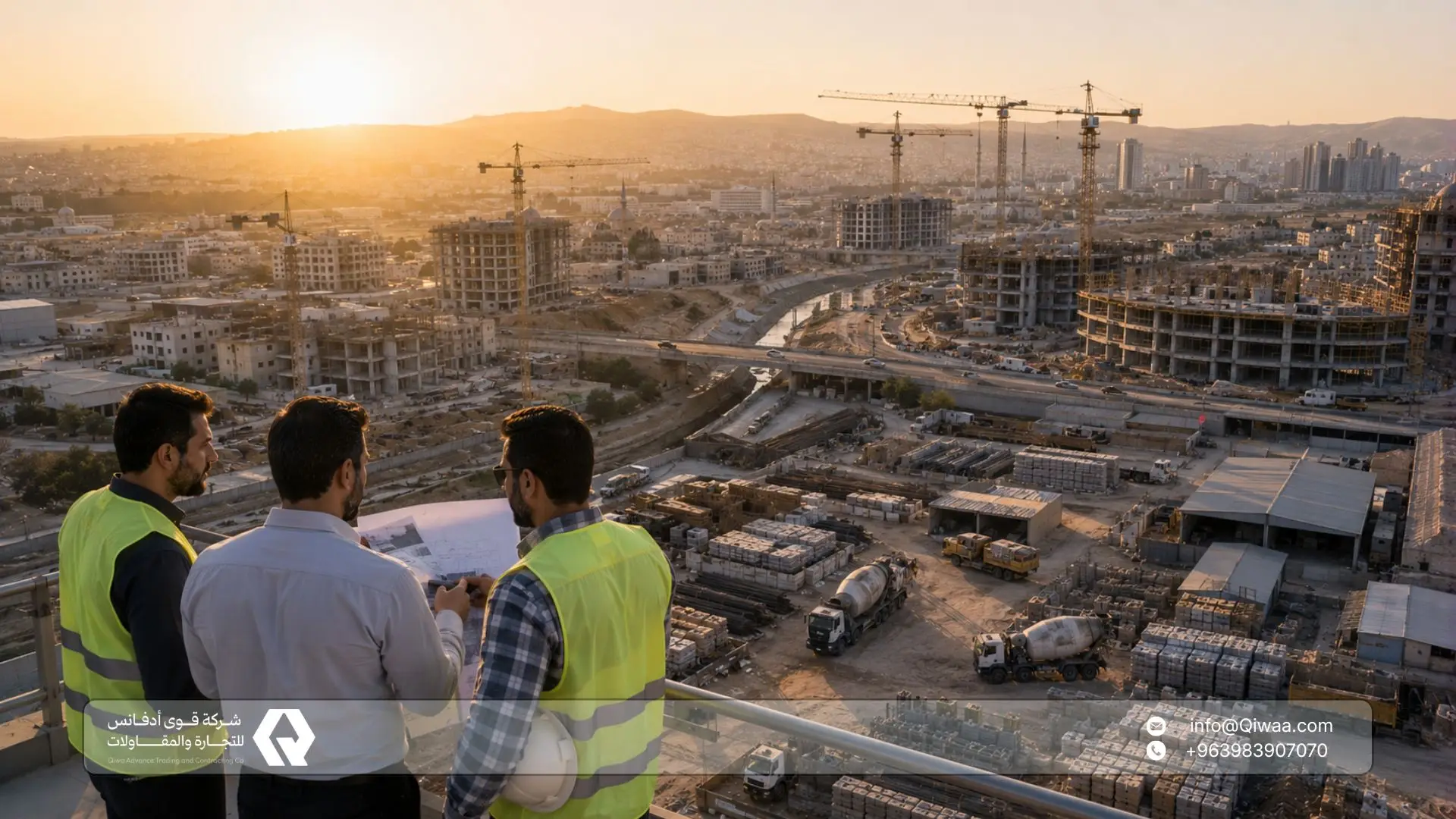
Buying building materials in Syria: Price vs. quality
The lowest quoted price is not always the most economical choice. For contractors and project owners comparing building material prices in Syria, the priority is to find materials that meet the approved specifications, arrive when needed, and stay within the project’s procurement budget.
A reliable comparison starts with requesting the same specifications and purchasing conditions from each supplier. Two decisions are particularly important: preparing a clear quotation request and choosing the right source of materials.
Requesting building material quotations in Syria
A clear request for quotation (RFQ) helps building materials companies in Syria provide offers that can be evaluated on equal terms. Instead of requesting a general price for cement, steel, or other materials, send suppliers a defined set of technical and commercial requirements.
Include the following information:
- Material specifications: State the required type, grade, dimensions, strength class, or applicable technical standard, using the approved project documents.
- Quantities and delivery schedule: Specify the total quantity, required delivery dates, and whether supplies will be delivered in batches.
- Delivery location and responsibilities: Identify the project site and clarify whether transport, loading, unloading, and other delivery-related costs should be included.
- Commercial terms: Request the quotation currency, exchange-rate basis where applicable, payment conditions, taxes or fees, and offer validity period.
- Quality documentation: Identify any required certificates of conformity, test reports, technical data sheets, or manufacturer documentation.
Once quotations arrive, compare them against the same requirements. An offer that excludes delivery or specifies a different material grade should not be treated as directly comparable to one that includes both.
Local vs. imported building materials
A nearby supplier can be useful when delivery speed, smaller orders, or regular replenishment matter. Imported materials may be appropriate when the project requires specialized products, particular technical standards, or specifications that local sources cannot readily meet.
However, a local supplier may also distribute imported products. The real comparison is between available supply options, not simply between domestic and foreign companies.
The following factors help determine which option fits the project:
| Comparison criterion | Locally produced materials | Imported materials |
|---|---|---|
| Delivery time | May be available sooner if local stock is sufficient | Depends on stock location, shipping, and customs clearance |
| Technical specifications | Must be checked against the approved project requirements | May offer specialized specifications, subject to verification |
| Total cost | Includes material price and domestic delivery costs | Includes applicable shipping, clearance, duties, and inland transport |
| Availability | Depends on local production and distributor stock | Depends on manufacturer capacity, import lead times, and existing stock |
| Quality documentation | Verify manufacturer records and required certificates | Verify equivalent standards, certificates, and import documentation |
| After-sales support | Depends on the supplier’s local service capabilities | Confirm local technical support, warranties, and replacement arrangements |
For standard materials needed frequently, reliable local stock may simplify procurement. For specialized construction or infrastructure products, access to international manufacturers can expand the available options.
Through Qiwaa Trading, we work with international manufacturers and suppliers to source construction, industrial, and infrastructure materials. This gives project teams another supply option to evaluate against their technical specifications, procurement schedules, and delivered costs.
The final choice should be based on specification compliance, total delivered cost, availability, and supply reliability, rather than material origin or quoted price alone.
Why construction costs rise despite stable material prices
Stable building material prices in Syria do not necessarily mean stable construction costs. A contractor may secure rebar or cement at the expected price, yet spend more than planned on transporting, handling, installing, or replacing materials. For project owners, these additional expenses can increase the cost of completed work without any change in the original material price.
The main sources of additional construction costs include:
- Transport and delivery: Freight, loading, unloading, and site access requirements can increase the cost of getting materials to the project.
- Storage and material losses: Poor storage conditions, breakage, damage, and wastage can increase the quantity that must be purchased.
- Labor, equipment, and quality control: Installation work, machinery, testing, and corrective work following rejected materials or failed inspections add to execution costs.
- Delays and financing: Late deliveries, extended equipment use, financing charges, and payment-related exchange-rate exposure can increase overall project expenditure.
For accurate budgeting, compare the total cost of materials delivered and incorporated into the work, not just their purchase price. This means accounting for the resources needed to turn purchased materials into completed, accepted construction work.
For imported products, customs clearance and inland logistics also affect the final cost. Our guide to importing building materials to Syria in 2026 explains the documentation, customs procedures, and delivery considerations involved.
Common mistakes when buying building materials in Syria
Buying building materials in Syria based on price alone can lead to rejected deliveries, additional costs, and construction delays. Even a competitive quotation may become costly if the purchasing process overlooks technical requirements, material availability, or site readiness.
The most common procurement mistakes occur at six stages:
- Purchasing against incomplete specifications: Ordering materials without approved technical requirements can result in products that fail inspection or require replacement.
- Comparing quotations on different terms: Selecting the lowest offer without accounting for delivery responsibilities, payment conditions, or currency terms can distort the actual cost comparison.
- Accepting materials without verification: Failing to check product identification, required certificates, and delivery condition can allow unsuitable materials onto the site.
- Ordering without considering site readiness: Purchasing too early can increase storage losses, while ordering too late may interrupt scheduled construction activities.
- Approving substitutions without technical review: Replacing specified materials with cheaper alternatives without the required approval can create quality problems or lead to rejected work.
- Skipping delivery and quantity checks: Failing to reconcile delivered quantities and material conditions with purchase orders can result in shortages, disputes, and avoidable replacement costs.
For project owners and procurement teams, preventing these mistakes requires coordination between purchasing, engineering, and site operations. Technical approval, delivery inspection, and documented acceptance should form part of the procurement process—not be left until problems appear during construction.
Tracking building material prices in Syria
Tracking construction material prices in Syria becomes more useful when you can identify what has changed, how much it affects your project, and whether the purchasing plan needs to be adjusted. Rather than collecting isolated prices, maintain a project-specific record that connects market updates with upcoming material requirements.
A practical monitoring process follows four steps:
- Establish a price baseline: Record the latest verified quotation for each critical material, using consistent specifications, quantities, currency, and delivery terms.
- Update prices from reliable sources: Compare supplier quotations with market bulletins, relevant international commodity trends, and published exchange rates. Record the date and source of each update.
- Identify meaningful changes: Track increases or decreases against previous quotations, alongside changes in stock availability, delivery lead times, and quotation validity.
- Review the impact on procurement: Prioritize materials required for upcoming construction activities. If a significant change affects the budget or delivery schedule, review purchasing quantities, delivery timing, or alternative supply options.
This approach gives procurement teams a clearer view of building material price trends in Syria and helps project owners make purchasing decisions based on documented changes rather than isolated market figures.
How Qiwaa Advance Supports Building Material Supply in Syria
At Qiwaa Advance, we support contractors, developers, and project owners in sourcing building materials for construction, reconstruction, and infrastructure projects in Syria. Through our Qiwaa Trading division, we work with international manufacturers and suppliers to provide construction and industrial materials that meet project requirements.
Our supply capabilities cover steel and metal products, cement and cementitious materials, pipes and valves, concrete admixtures, and selected finishing materials. We also support procurement coordination when projects require multiple materials, specialized specifications, or deliveries aligned with different construction stages.
To help us assess your supply requirements and discuss an appropriate quotation, share the following information:
- Project details: Location, project type, and intended application of the materials.
- Materials and specifications: Required products, technical standards, and available drawings or bill of quantities.
- Quantities and delivery schedule: Total quantities, delivery milestones, and any phased supply requirements.
- Commercial requirements: Preferred quotation currency, delivery arrangements, and relevant payment conditions.
With these details, we can review suitable sourcing options and discuss material availability, supply arrangements, and pricing terms based on your project’s requirements.
Contact Qiwaa Advance to discuss your building material requirements and request a quotation tailored to your project’s specifications, quantities, and delivery schedule.
FAQs about building material prices in Syria
What are building material prices in Syria today in US dollars?
Building material prices in Syria vary by product, specification, quantity, and delivery location. There is no single verified national price for rebar, cement, or other materials. For current USD prices, compare dated supplier quotations that specify the material grade and delivery terms.
How do I convert building material prices from US dollars to Syrian pounds?
Multiply the USD price by the agreed exchange rate, expressed in Syrian pounds per dollar. Since Syria introduced its new currency in January 2026, confirm that the rate and quoted amount use the same denomination. One new Syrian pound equals 100 old Syrian pounds.
Are building material prices in Syria still rising in 2026?
Not all materials follow the same price trend. Rebar, cement, aggregates, and concrete products respond differently to changes in supply, production costs, transport, and exchange rates. Compare dated quotations for each material rather than assuming prices are rising across the entire market.
What is the best way to get a wholesale price for building materials?
Request quotations for a clearly defined quantity, technical specification, and delivery schedule. Bulk purchasing may improve pricing, but discounts depend on supplier capacity, stock availability, payment terms, and whether deliveries can be consolidated.
Is a local price better than an imported one?
Not necessarily. Locally produced materials may offer shorter delivery times, while imported products may provide specifications unavailable from domestic manufacturers. Compare quality compliance, availability, total delivered cost, and supply reliability before choosing.
Where can I find a real-time building materials price bulletin?
Check dated market bulletins and current quotations from building material suppliers in Syria. Because prices and stock availability can change, a published bulletin is not a guaranteed live purchase price. Confirm the latest amount, currency, and delivery conditions directly with the supplier.
Can building material prices be fixed for an entire project?
Yes, if the supplier agrees to fixed pricing under clearly defined contractual terms. For longer projects, phased deliveries or agreed price-adjustment mechanisms may be more practical when quantities, exchange rates, or supply conditions are uncertain.