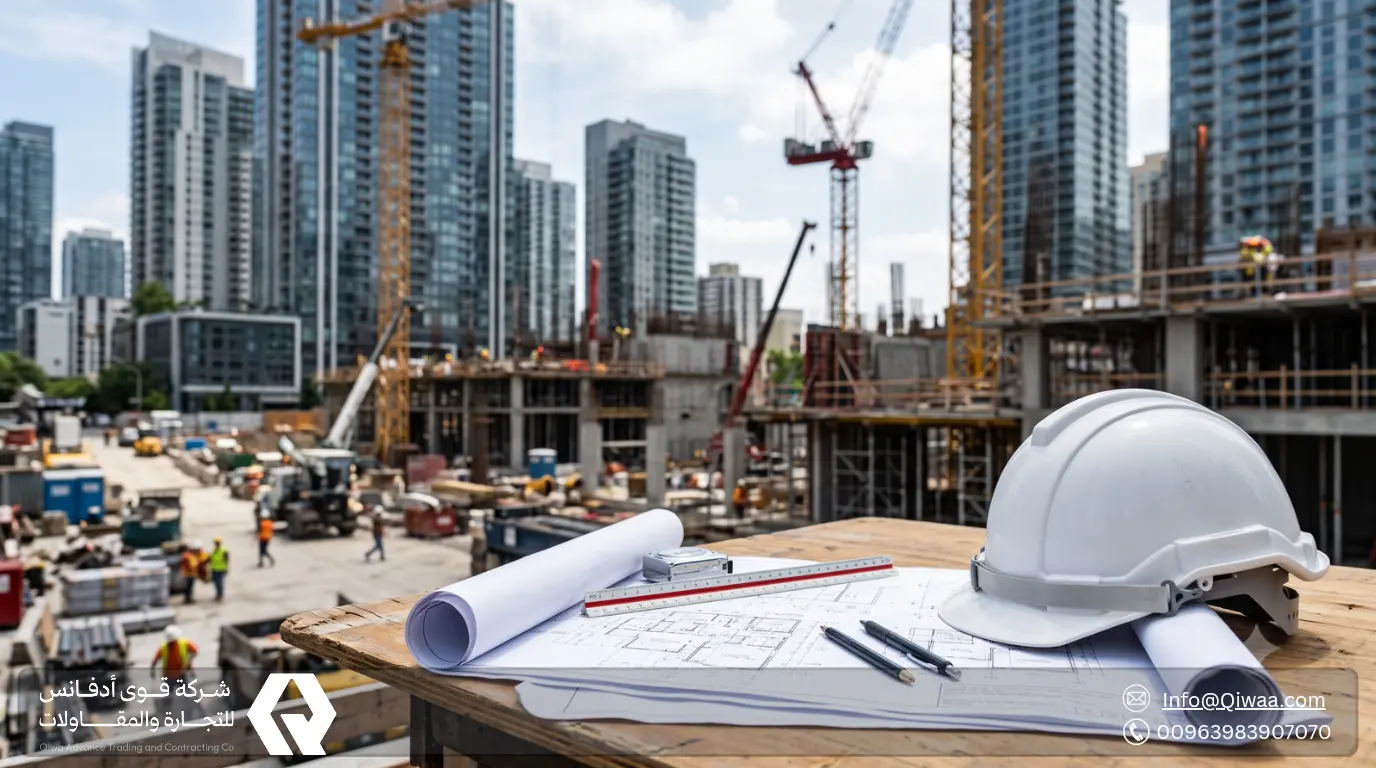


Choosing between reconstruction companies in Syria involves more than comparing prices. Restoring damaged buildings and infrastructure requires careful assessment, coordinated construction work, and reliable access to materials and utilities. The World Bank estimates Syria’s physical reconstruction costs at USD 216 billion, while the United Nations Development Programme highlights extensive damage to housing and essential services. For project owners and investors, choosing a company with the right technical capabilities is essential to managing these challenges.
This guide explains the services offered by reconstruction contractors in Syria, from building rehabilitation and infrastructure restoration to project planning and execution. You’ll learn how reconstruction projects progress from initial assessment to handover, what to look for in a contractor, and how to evaluate proposals and contract terms before making your decision.
The role of reconstruction companies in Syria
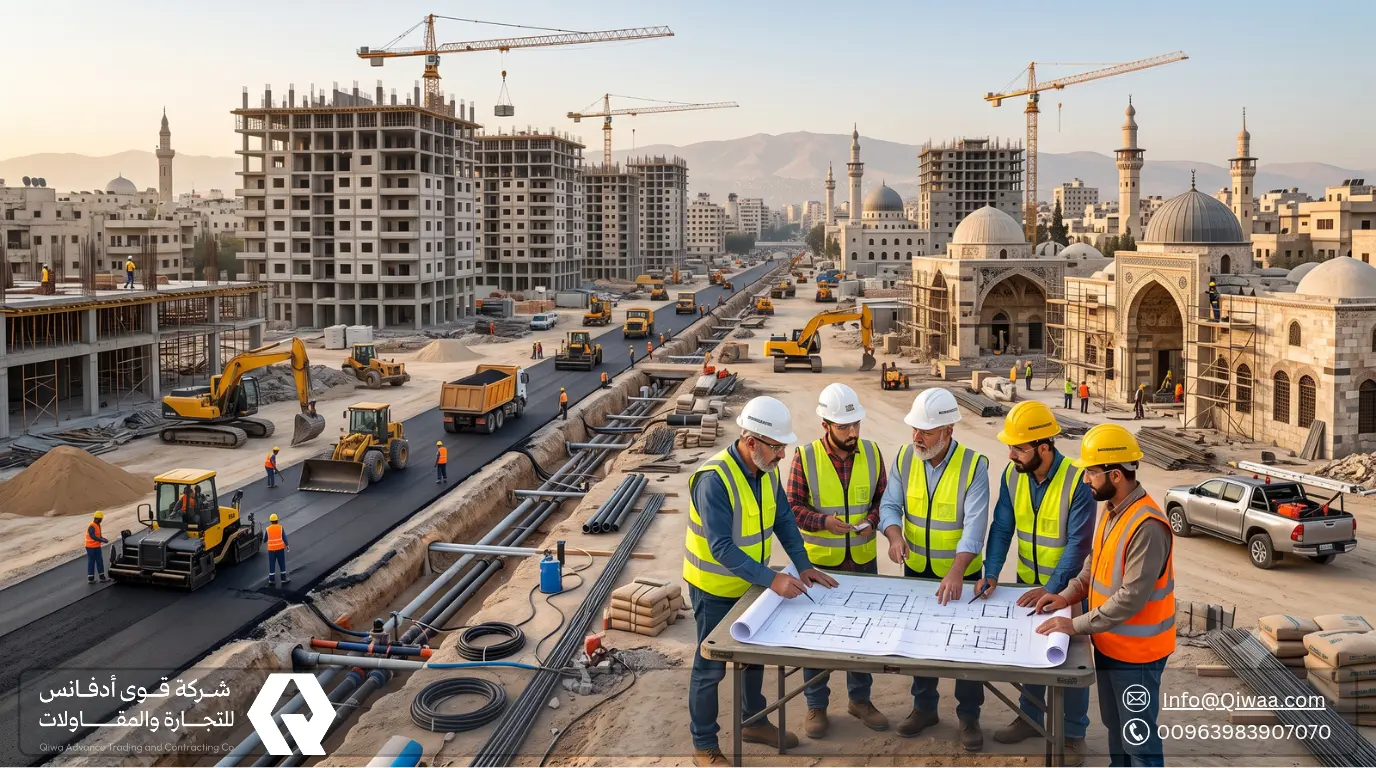
Reconstruction companies in Syria work on damaged buildings, infrastructure, and sites that need to be repaired, rehabilitated, or rebuilt. Unlike projects starting on undeveloped land, reconstruction often involves assessing existing structures, dealing with debris, restoring damaged utilities, and working around facilities that may still be in use.
As efforts to restore housing, infrastructure, and economic activity continue, these projects require contractors capable of managing complex site conditions and coordinating different construction activities. Depending on their specialization and contractual responsibilities, reconstruction firms may carry out the work directly or manage engineering teams, suppliers, and specialist contractors.
Key reconstruction sectors in Syria
Reconstruction involves restoring damaged buildings, infrastructure, and essential services to a condition suitable for their intended use. It may include repairing existing assets, adapting them to new requirements, or replacing structures that cannot be safely restored.
Reconstruction projects in Syria generally cover the following sectors:
- Residential and commercial buildings: Structural repairs, building rehabilitation, and rebuilding damaged properties.
- Water and sanitation infrastructure: Restoration of water supply networks, drainage systems, pumping stations, and wastewater treatment facilities.
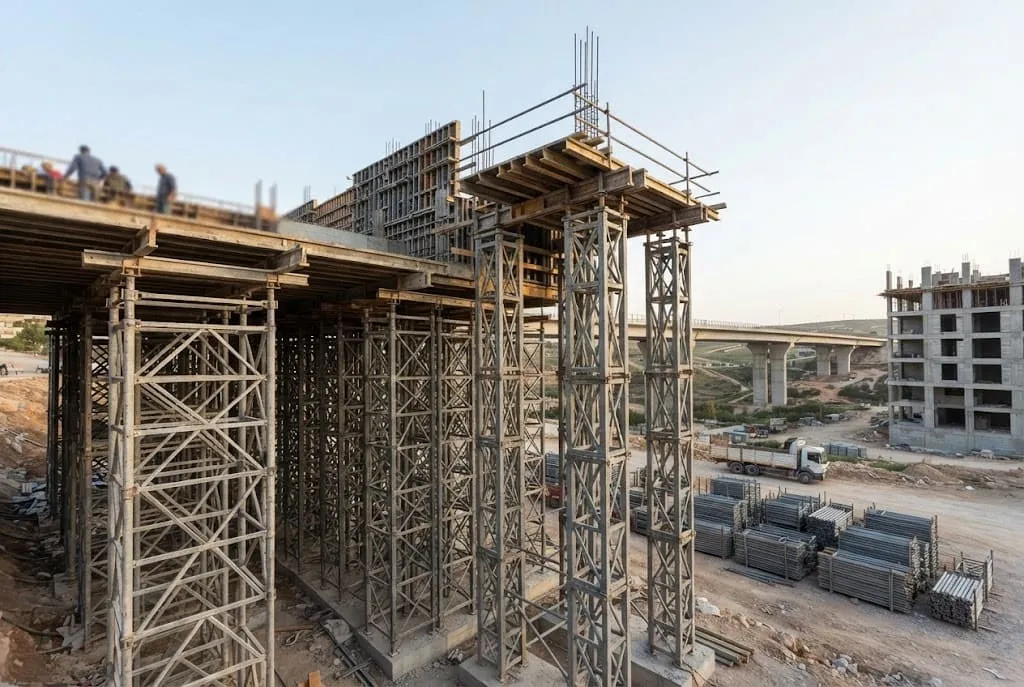
- Transport infrastructure: Rehabilitation of roads, bridges, access routes, and public spaces.
- Energy and communications: Repair and upgrading of electricity distribution, street lighting, and telecommunications infrastructure.
- Public and industrial facilities: Rehabilitation of schools, hospitals, factories, warehouses, and commercial markets.
- Historic and cultural buildings: Restoration of heritage structures using techniques appropriate to their architectural and structural conditions.
Damage assessment, site preparation, and safe debris removal may be required across several of these sectors. The extent of the work depends on the asset’s condition, its intended future use, and the findings of the technical assessment.
Coordinating reconstruction projects in Syrian cities
Reconstruction companies help turn engineering plans into coordinated construction activities. Their role is particularly important when several systems must be restored together and one team’s work affects another’s schedule.
For example, during infrastructure reconstruction in Syria, underground water and sewer networks generally need to be completed and inspected before final road surfacing. Similarly, rehabilitated buildings require their essential systems to be inspected and tested before handover.
Effective project coordination involves:
- Construction sequencing: Planning activities in the right order to reduce conflicts and unnecessary rework.
- Technical coordination: Aligning engineering drawings with actual site conditions and resolving conflicts between disciplines.
- Procurement management: Coordinating material specifications, supplier deliveries, and construction requirements.
- Specialist contractor management: Defining responsibilities and coordinating teams working on different parts of the project.
- Quality and handover: Documenting inspections, approved changes, system tests, and completion records.
For project owners, this coordination provides clearer visibility into responsibilities and helps reduce the risk of delays, duplicated work, and unexpected costs. The specific responsibilities of each party should be established in the project contract.
Learn more: Construction Companies in Syria 2026: How to Choose a Reliable Contractor for Your Project
What services do reconstruction companies in Syria provide?
Reconstruction companies in Syria provide services ranging from building rehabilitation and infrastructure restoration to commercial and industrial facility upgrades. Depending on their expertise, some focus on specialized restoration work, while others manage engineering, procurement, and construction (EPC) under an integrated contract.
For project owners and investors, the priority is to identify which services their project actually needs and whether the contractor has the technical resources and experience to deliver them.
Residential reconstruction in Damascus and Aleppo
Residential reconstruction in Damascus and Aleppo begins with assessing the condition of damaged buildings and determining whether they can be safely repaired, strengthened, or need replacement. Qualified engineers must evaluate structural damage and the condition of essential building systems before defining the required works.
Residential building rehabilitation in Syria may involve four main areas:
- Structural assessment: Documenting damage, evaluating foundations and load-bearing elements, and identifying safety risks.
- Repair and reconstruction: Designing structural strengthening, replacing damaged components, or preparing rebuilding plans where necessary.
- Building services: Restoring water, wastewater, electrical, insulation, and ventilation systems according to the building’s requirements.
- Finishing and handover: Repairing damaged interiors, completing required inspections, and verifying that the building meets the applicable conditions for occupancy.
Local conditions can also affect the scope. In Aleppo, a debris-removal project launched in June 2025 across 16 neighborhoods illustrates how site clearance and safe access may need to precede residential rehabilitation. In older neighborhoods of Damascus, construction planning may also need to account for adjoining buildings and the surrounding urban fabric.
Before accepting a quotation, request a documented assessment that identifies the proposed repairs and any areas requiring further investigation. This helps establish a more reliable scope and reduces the risk of unexpected changes during construction.
How do infrastructure projects help Syrian cities function again?
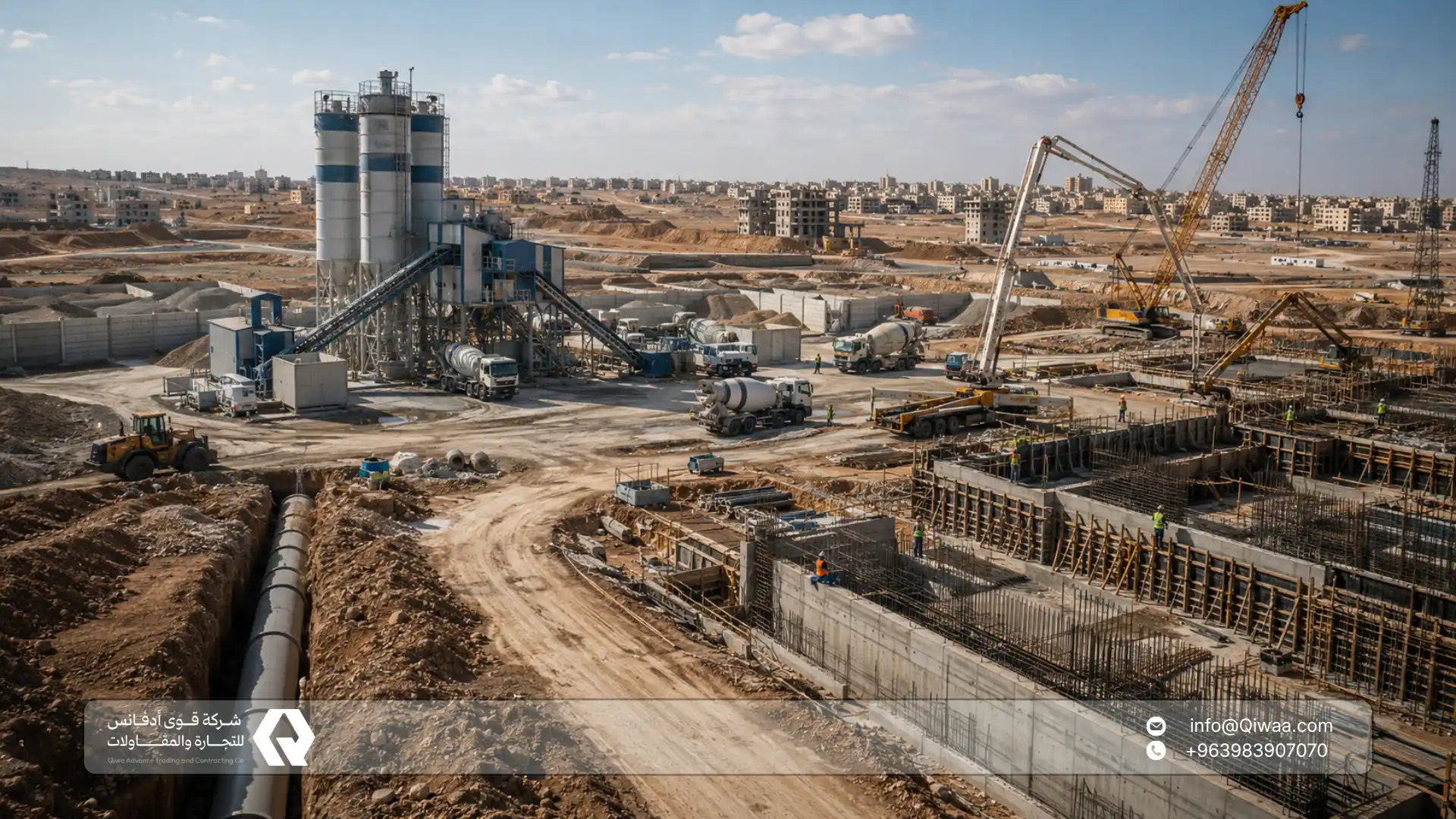
Restoring buildings alone is not enough if the surrounding roads and utility networks remain damaged. Infrastructure reconstruction in Syria focuses on returning essential services to residential neighborhoods, commercial areas, and industrial facilities.
The main areas of work include:
- Water and wastewater systems: Repairing distribution networks, drainage systems, pumping stations, and treatment facilities.
- Roads and public access: Rehabilitating damaged streets, access routes, sidewalks, and public spaces.
- Power and lighting: Restoring electrical distribution infrastructure and public lighting where required.
- Utility connections: Replacing damaged pipes, valves, manholes, and service connections, followed by the necessary inspections and testing.
Recent projects illustrate these needs. In 2025, infrastructure rehabilitation in Old Damascus included utility network upgrades and road works while addressing the area’s historic character. In April 2026, Aleppo Governorate began rehabilitation works on damaged streets and major routes to improve urban access and services.
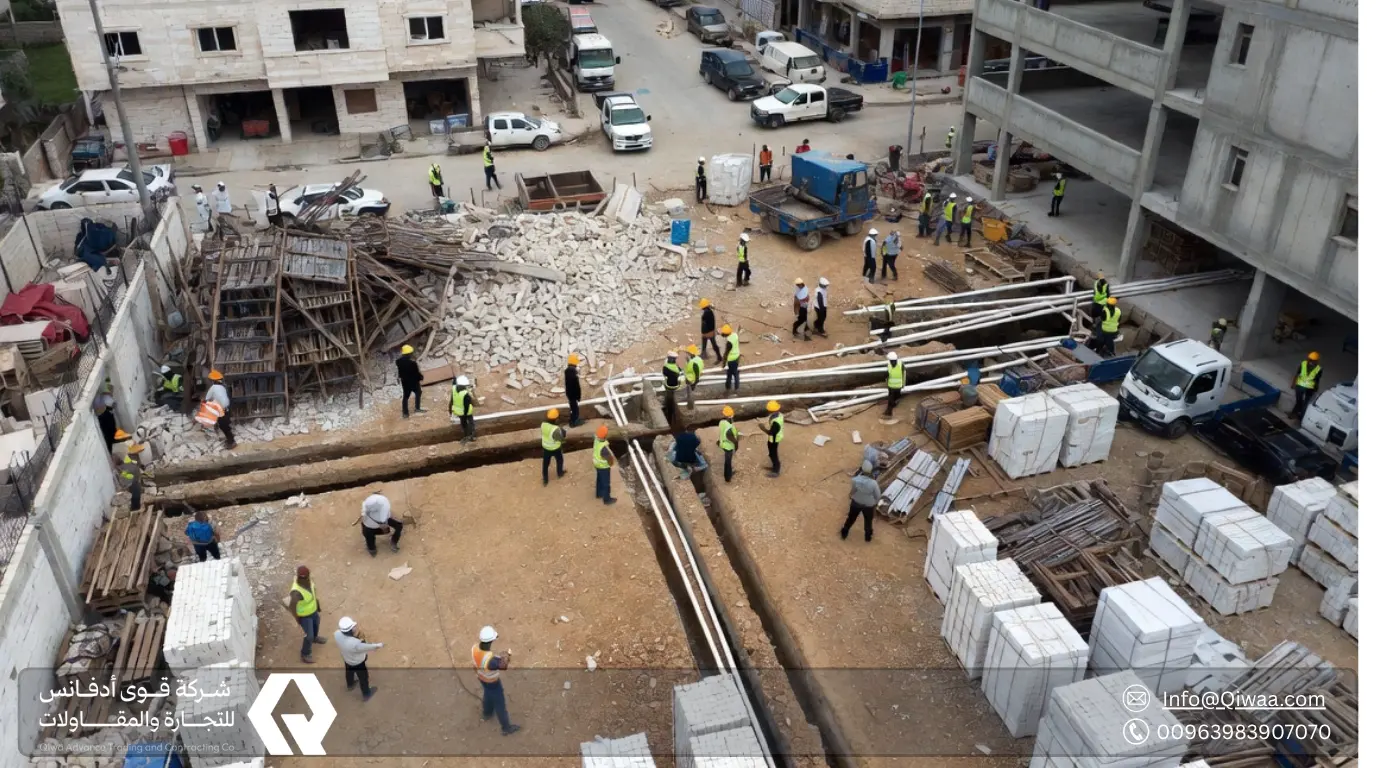
For project owners, coordinating utility repairs with road construction is particularly important. Underground networks should be installed and inspected before final surfacing, while pipes, valves, and construction materials must arrive in line with the execution schedule to avoid unnecessary rework and delays.
Commercial and industrial facility rehabilitation
Commercial and industrial reconstruction has a different objective from residential rehabilitation: restoring facilities so they can support their intended business operations. A structurally repaired building may still require substantial work before employees, customers, or production equipment can return.
Commercial rehabilitation commonly involves:
- Property restoration: Repairing offices, shops, hotels, restaurants, and other commercial premises.
- Building upgrades: Modernizing facades, interiors, HVAC, electrical systems, and plumbing.
- Safety and accessibility: Upgrading fire protection, access routes, and building systems to meet the project’s operational requirements.
Industrial facility rehabilitation in Syria may require:
- Production infrastructure: Repairing equipment foundations, industrial floors, and production areas.
- Warehousing and logistics: Rehabilitating warehouses, loading yards, internal roads, and storage facilities.
- Utilities and services: Restoring industrial water, drainage, power distribution, and ventilation systems.
- Structural works: Repairing or replacing damaged steel structures and other load-bearing components.
For industrial projects, involve the operations team when defining the rehabilitation scope. Equipment loads, production workflows, vehicle access, and maintenance requirements should inform the design before construction begins.
This is particularly relevant to industrial recovery in Aleppo, where restoring production facilities depends on supporting infrastructure and reliable material supply. For more context, explore Aleppo Reconstruction Opportunities 2026.
Read also: Aleppo Reconstruction Opportunities 2026: How to Identify the Best Investment Opportunities
Reconstruction project stages in Syria
Reconstruction projects in Syria typically progress through site assessment, engineering design, construction, quality inspections, and final handover. Unlike new developments, rehabilitation work may reveal hidden structural damage or deteriorated utility networks that require adjustments to the original plan.
For project owners, a reliable delivery approach should define responsibilities, required approvals, and expected outputs at each stage. Understanding how these stages connect helps you assess whether a reconstruction company in Syria can manage the project’s technical requirements and uncertainties.
What does the study and engineering design phase involve?
The assessment and design phase establishes what can be repaired, what needs replacement, and which engineering solutions are suitable for the site’s condition and intended use. Depending on its contractual role, the reconstruction company may conduct or coordinate the necessary investigations with qualified specialists.
The main activities include:
- Site and damage assessment: Reviewing existing drawings, documenting visible deterioration, and arranging structural inspections and testing where necessary.
- Ground and utility investigations: Conducting topographic surveys, assessing soil and foundations where required, and identifying damaged or existing service networks.
- Engineering design: Defining repair, strengthening, or reconstruction solutions based on the assessment findings and the project’s intended use.
- Cost and execution planning: Preparing drawings, technical specifications, a bill of quantities (BOQ), preliminary cost estimates, and construction phases.
- Approvals and documentation: Identifying required permits, technical submissions, and the responsibilities of the owner, designers, and relevant authorities.
The outcome should be a technically defined scope that contractors can price and execute, with unresolved site conditions identified before work begins.
Construction management and site supervision
Construction moves forward once the necessary approvals, execution drawings, and site arrangements are in place. The contractor coordinates labor, equipment, materials, and specialist teams while protecting existing structures and utilities that must remain intact.
Effective reconstruction project management in Syria involves:
- Site preparation and mobilization: Securing work areas, organizing access and storage, and arranging any required debris removal.
- Resource and procurement coordination: Scheduling labor, equipment, and material deliveries according to construction priorities.
- Progress and safety monitoring: Tracking completed work, schedule milestones, site conditions, and safety requirements.
- Technical coordination: Resolving conflicts between construction activities and existing structures or utility networks.
- Change management: Documenting unforeseen conditions and obtaining the required approvals for changes affecting scope, cost, or schedule.
The contractor manages its construction activities, while the owner’s appointed consultant or supervisor oversees compliance and approvals according to the contract.
If hidden damage or unexpected site conditions emerge, the responsible technical team should assess their implications before the affected works continue. This helps prevent unapproved changes and avoidable rework.
What quality assurance standards do reconstruction companies apply?
Quality control in reconstruction projects requires more than checking completed work. Materials, construction methods, and critical activities must be inspected against the approved specifications throughout execution.
A documented quality-control process should cover:
- Inspection and test planning: Defining inspection stages, acceptance criteria, testing responsibilities, and required approvals.
- Material verification: Checking approved samples, technical specifications, and applicable certificates before materials are incorporated into the works.
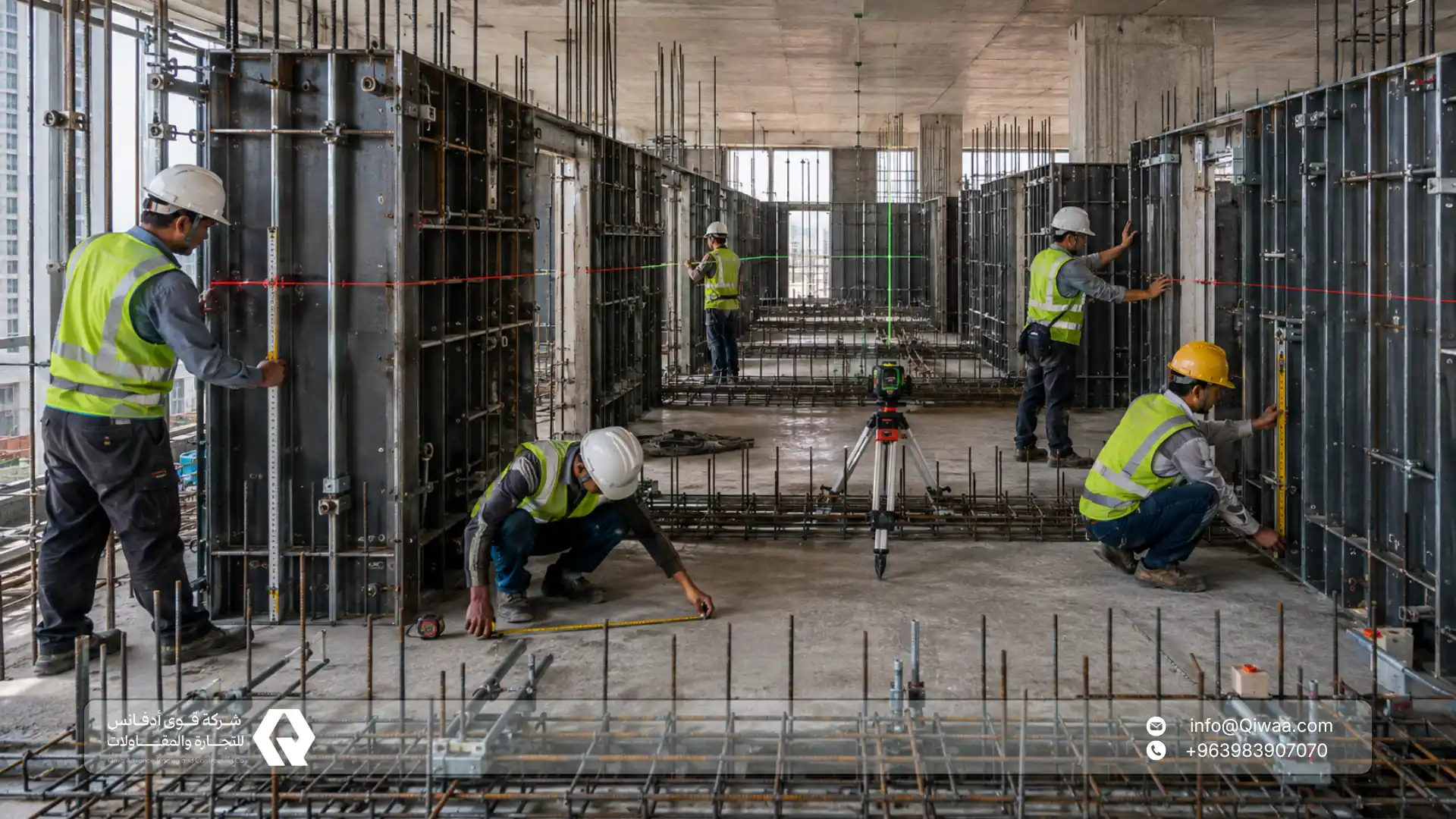
- Construction inspections: Inspecting structural elements, reinforcement, waterproofing, and concealed utilities before they are covered, with relevant concrete, soil, or welding tests where required.
- Non-conformance management: Recording rejected work, corrective actions, and reinspection results before acceptance.
- Testing and handover: Completing required system tests and commissioning, preparing as-built drawings, and providing the agreed operation, maintenance, and handover records.
The applicable technical standards and inspection requirements depend on the project specifications and contractual obligations. Rather than relying on a general promise of quality, project owners should request documented acceptance criteria and evidence that critical works have passed the required inspections.
What has changed in managing reconstruction projects in 2026?
In 2026, greater attention is being directed toward how reconstruction projects in Syria are assessed, prioritized, and funded. In September, Syria’s Planning and Statistics Authority discussed standardizing building assessments to support national recovery planning. This followed a cost engineering conference in Damascus in November 2025, which highlighted project planning, cost control, and infrastructure governance.
For project owners and investors, these developments reinforce four priorities when planning reconstruction work:
- Evidence-based budgeting: Use documented damage assessments and realistic quantities to distinguish confirmed costs from work that requires further investigation.
- Funding and procurement coordination: Align available financing with construction phases, critical materials, and procurement lead times.
- Safe debris management: Identify site-clearance requirements, assess potential hazards, and establish appropriate removal, disposal, or recycling arrangements before affected works begin.
- Phased recovery: Prioritize sections that can safely return to use, with measurable completion and handover requirements for each phase.
Debris clearance remains a major practical challenge. In June 2026, the United Nations Development Programme reported that its REVIVE initiative had supported the removal of more than 570,000 tonnes of debris and the rehabilitation of over 10 km of roads in Syria.
For owners evaluating reconstruction companies in Syria, the priority is to establish which risks and site conditions must be resolved before committing to major construction work.
For a closer look at local investment opportunities and project preparation, explore our guide to Damascus Reconstruction in 2026.
How do you choose a reliable reconstruction company in Syria?
Choosing between reconstruction companies in Syria requires more than reviewing past projects and comparing quotations. A contractor may have extensive experience in new construction but limited expertise in rehabilitating damaged structures, protecting existing utilities, or working on sites with uncertain conditions.
For project owners and investors, the evaluation should focus on three areas: the company’s qualifications for reconstruction work, its approach to pricing known and uncertain conditions, and the contractual arrangements for managing unexpected discoveries.
Which documents should you check before signing?
Before shortlisting a reconstruction contractor in Syria, request evidence that the company is legally established and has the technical resources to undertake rehabilitation work similar to your project.
The prequalification documents should cover:
- Legal and professional credentials: Commercial registration, applicable professional licenses or classifications, and details of the legal entity responsible for the contract.
- Relevant reconstruction experience: Completed rehabilitation projects, client references, and evidence of work involving damaged structures or existing infrastructure.
- Qualified technical team: Details of the proposed project manager, engineers, supervisors, and specialist subcontractors.
- Assessment and execution capability: The proposed approach to damage investigations, structural repairs, protection of existing facilities, and construction sequencing.
- Resources and supply arrangements: Available equipment, critical material sources, and procurement arrangements relevant to the project.
- Quality and safety procedures: Documented inspection arrangements, site safety measures, and procedures for handling unexpected conditions.
Verify the documents with their issuers or relevant authorities where appropriate. A company’s ability to build new structures does not automatically establish its competence in rehabilitating damaged ones.
How do you compare prices without falling for the cheapest bid?
Comparing reconstruction project costs in Syria requires particular attention to work that cannot be fully quantified before detailed investigation. Hidden structural damage, deteriorated utilities, and inaccessible areas can affect the final scope and price.
Provide bidders with the same available condition assessment, drawings, technical specifications, and bill of quantities (BOQ). Then examine how each proposal accounts for:
- Repair and strengthening works: The extent of structural repairs, replacement materials, and necessary temporary supports.
- Site clearance and protection: Debris removal, access arrangements, and measures to protect structures or utilities that must remain in place.
- Uncertain quantities: Provisional sums, assumptions, exclusions, and the method for pricing additional work discovered during execution.
- Procurement and logistics: Material availability, equipment mobilization, transportation, and delivery constraints.
- Testing and reinstatement: Required inspections, system testing, restoration of affected areas, and handover requirements.
A substantially lower bid may reflect an efficient approach, but it may also exclude work that other contractors have included. Ask bidders to explain these differences and identify which costs remain provisional.
The aim is to compare the expected cost of completing the required rehabilitation work, not simply the initial contract price.
What are the essential clauses in a reconstruction contract?
Reconstruction contracts in Syria should clearly address the uncertainties associated with damaged buildings, existing networks, and sites where the full condition may not be known before construction begins.
Before signing, review the following provisions:
- Existing conditions and assessment responsibilities: Identify the available damage surveys, known defects, required investigations, and the party responsible for conducting or commissioning further assessments.
- Site preparation and protection: Define responsibilities for debris removal, temporary supports, site access, and protecting existing structures, utilities, or occupied areas.
- Design and scope of work: Reference the approved drawings, specifications, BOQ, and the responsibilities for design changes. Clearly identify exclusions and provisional work.
- Unforeseen conditions and variations: Establish how previously unidentified damage will be reported, technically assessed, priced, and approved, including procedures for urgent safety measures.
- Payments and project milestones: Link payments to measurable progress and define how approved changes affect the contract price and completion schedule.
- Testing, handover, and defect liability: Specify inspection requirements, acceptance criteria, applicable test records, as-built documentation, and responsibilities for correcting defects after handover.
These provisions help project owners and contractors establish how unexpected conditions will be handled without relying on informal agreements. For significant projects, have the contract reviewed by a qualified legal professional familiar with applicable Syrian law.
Learn more: Syria Infrastructure Sector 2026: Market Size, Competitive Gap, & Investment Opportunities
Reconstruction companies in Syria to compare
When evaluating reconstruction companies in Syria, look for firms whose documented capabilities match the type of rehabilitation or infrastructure work your project requires. Some specialize in restoring damaged buildings, while others focus on civil construction, engineering, or infrastructure rehabilitation.
The following companies have publicly available information about construction or reconstruction-related activities in Syria. They are presented for comparison, not as a ranking of the best contractors. Published services do not, by themselves, establish current licensing, availability, or proven experience in every type of reconstruction project.
| Company | activities | What to verify |
|---|---|---|
| Qiwaa Advance | EPC contracting, water and wastewater infrastructure, concrete structures, heritage restoration, and construction material supply | Relevant project experience, technical capabilities, and scope of contracting or supply support |
| Syrian Establishment for Building and Construction (SEBCO) | Public infrastructure construction and rehabilitation, including roads, bridges, and public facilities | Applicable procurement procedures, project scope, and eligibility |
| Al-Mabna Construction and Contracting | General construction, engineering studies, design, and project execution | Rehabilitation experience, qualified engineers, and comparable projects |
| Axon Syria | Building rehabilitation, heritage restoration, civil construction, infrastructure, and industrial facilities | Responsible contracting entity, local project references, and specialist resources |
| Station for Contracting & Trading | Building restoration, concrete repair, waterproofing, specialized contracting, and construction services | Syrian operating entity, relevant restoration projects, and technical capacity |
| Combined Group Contracting Company | Infrastructure construction and road rehabilitation, including the Nassib–Damascus Highway contract awarded in 2026 | Contracting entity, local execution arrangements, and relevant infrastructure experience |
| Tamkeen Engineering and Contracting | Engineering and contracting, with a project-management cooperation agreement announced in 2026 | Actual reconstruction contracts, local technical team, and delivery capabilities |
| Alnaser General Contracting | General construction, building restoration, concrete works, and utility installations, according to its published services | Registration, completed rehabilitation projects, and current resources |
Use this list as a starting point rather than a final shortlist. For each firm, verify its legal standing, relevant rehabilitation experience, and ability to manage the specific site conditions before requesting a detailed proposal.
How to start a reconstruction project in Syria
Before approaching reconstruction companies in Syria, establish what needs to be restored, the condition of the site, and the project’s intended use. A clear starting plan helps you identify the required engineering work, anticipate major constraints, and avoid requesting quotations based on incomplete information.
The following steps provide a practical starting point:
- Confirm the site’s legal and physical status: Gather available ownership or authorization documents, verify site access, and identify the approvals required for the proposed work.
- Arrange a technical damage assessment: Have qualified engineers examine the existing structures, utility networks, and site conditions to identify safety concerns and areas requiring further investigation.
- Define the project’s objectives and priorities: Determine what must be restored, whether rehabilitation or rebuilding is appropriate, and which facilities or services need to return to use first.
- Prepare the initial project scope: Develop the necessary drawings, specifications, preliminary cost estimates, and bill of quantities (BOQ), identifying any work that cannot yet be accurately measured.
- Plan resources and execution phases: Consider material availability, site access, utility connections, procurement lead times, and the sequence of work required for each phase.
- Approach qualified reconstruction contractors: Share the same project information with suitable companies and arrange site visits so they can assess the required work before preparing their proposals.
These steps give you a clearer basis for discussing the project with potential contractors and determining which technical, financial, and logistical requirements must be resolved before construction begins.
How Qiwaa Advance supports reconstruction projects in Syria
At Qiwaa Advance, we understand that rebuilding a damaged property or restoring essential infrastructure involves more than construction work alone. Project owners and contractors also need suitable materials, reliable procurement arrangements, and coordination between engineering requirements and site execution.
Through our contracting and trading activities, we support reconstruction projects in Syria with solutions that address these interconnected needs:
- EPC contracting and infrastructure: Engineering, procurement, and construction solutions for water networks, treatment facilities, and related infrastructure projects.
- Building and structural works: Concrete structures, specialized formwork systems, and solutions supporting construction and rehabilitation requirements.
- Heritage restoration: Restoration and rehabilitation solutions for historic buildings, supported by specialized expertise and project-appropriate materials.
- Construction material supply: Sourcing building and industrial materials, pipes, water network components, and finishing materials according to project specifications.
Our role is to help connect the services and materials we provide with your project’s technical requirements and execution priorities. The appropriate scope depends on the condition of the site, the approved design, and the work involved.
To discuss your project with us, share its location, intended use, available drawings or assessment reports, material requirements, and expected schedule. This information helps us identify the contracting, infrastructure, restoration, or supply solutions relevant to your needs.
Contact Qiwaa Advance to discuss how we can support your reconstruction project in Syria.
FAQs about reconstruction companies in Syria
\What are some reconstruction companies in Syria?
Examples of reconstruction companies in Syria include Qiwaa Advance, the Syrian Establishment for Building and Construction (SEBCO), and Axon Syria. Their published activities cover areas such as infrastructure rehabilitation, engineering, civil construction, and building restoration.
These companies have different specializations. Review their documented project experience and current capabilities before including them in your shortlist.
How do I choose a reliable reconstruction company in Syria?
Choose a reconstruction contractor in Syria with verifiable experience in projects involving similar damage, structural conditions, and infrastructure requirements.
Check its qualifications, technical team, assessment approach, and ability to manage unforeseen site conditions. The proposal should clearly distinguish confirmed work from items requiring further investigation.
What reconstruction work is underway in Damascus and Aleppo?
Reconstruction projects in Damascus and Aleppo include road rehabilitation, utility restoration, damaged-building repairs, and public-service infrastructure.
In September 2026, Syria signed a contract to rehabilitate the Nasib–Damascus highway, while Aleppo Governorate announced 119 infrastructure and public-service projects. These announcements do not necessarily indicate open contracting opportunities. Check current tender notices with the responsible authorities.
Does Qiwaa Advance work in all Syrian governorates?
At Qiwaa Advance, we assess project inquiries according to their location, technical scope, and contracting or supply requirements.
Share your project location, site conditions, and required services with our team so we can confirm the support available for your specific project.
What is the difference between a construction company and a reconstruction company?
A construction company undertakes building or infrastructure works, while a reconstruction company focuses on restoring, rehabilitating, or rebuilding damaged assets.
Reconstruction often requires additional assessment, protection of existing structures, and restoration of essential services. These activities are not exclusive to a separate category of firms; a qualified contractor may undertake both new construction and reconstruction.
Can reconstruction projects in Syria be completed in phases?
Yes. Reconstruction projects in Syria can be delivered in phases to align construction priorities with available funding and site readiness.
Each phase should have a defined scope, budget, and handover requirements. Planning the connections between phases from the beginning helps prevent later work from disrupting completed sections.