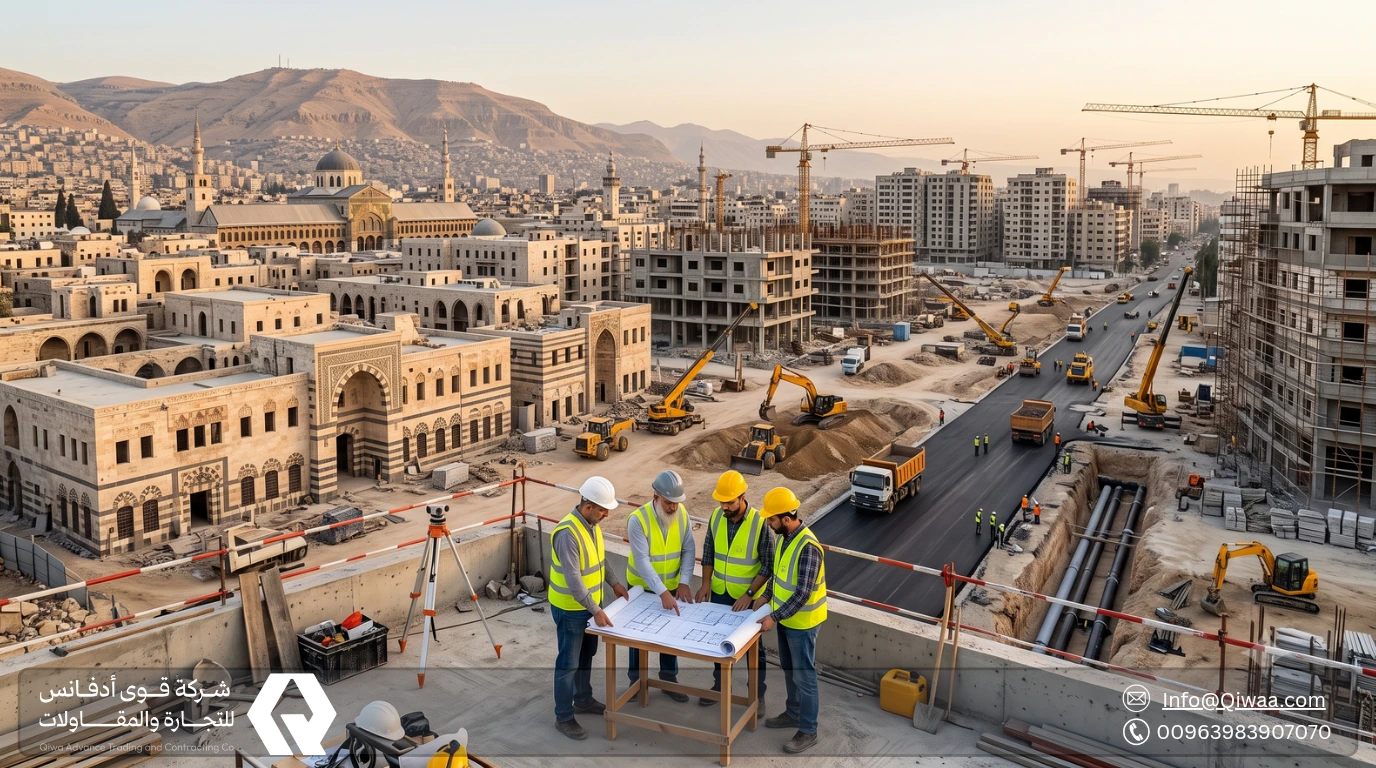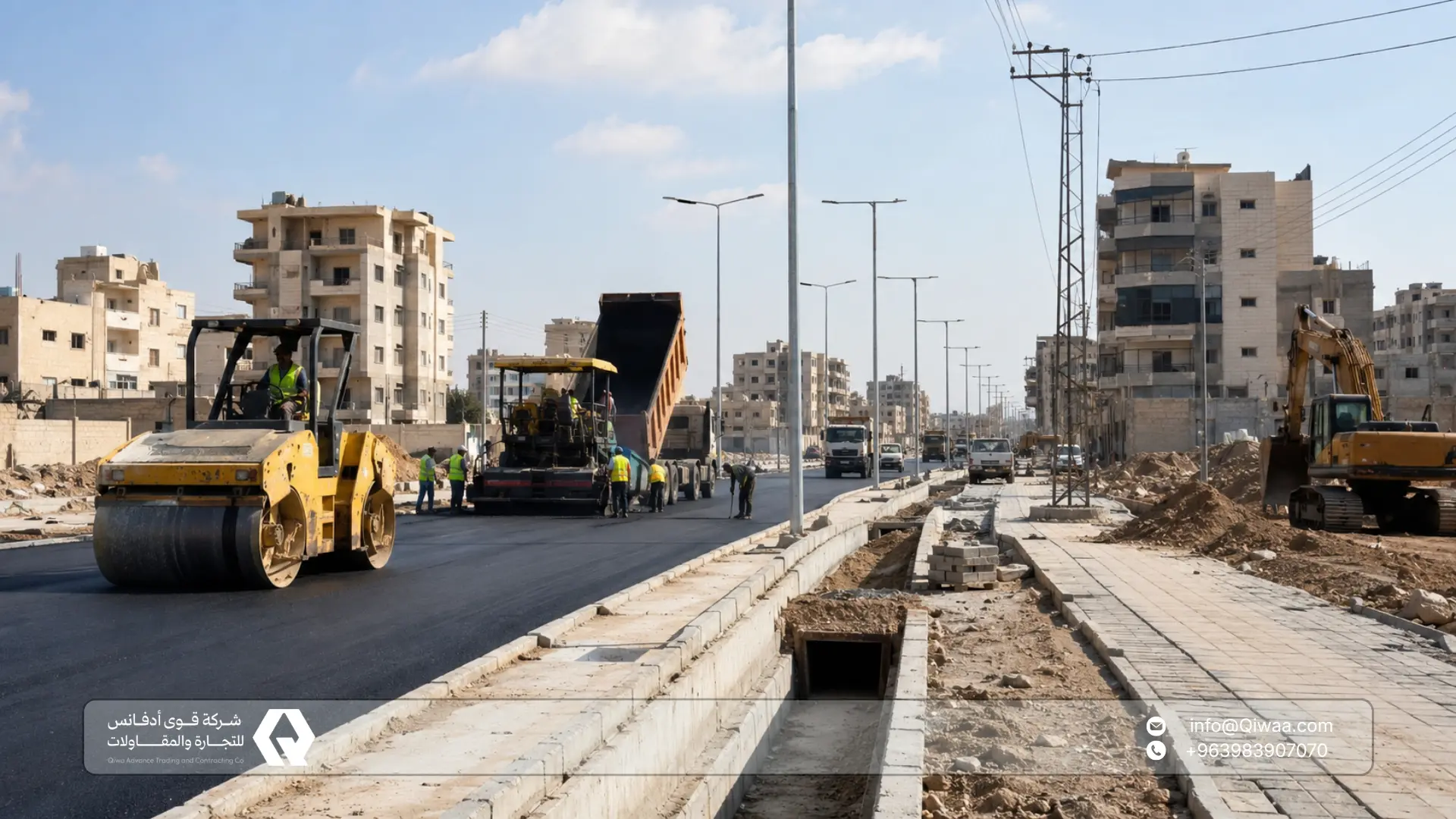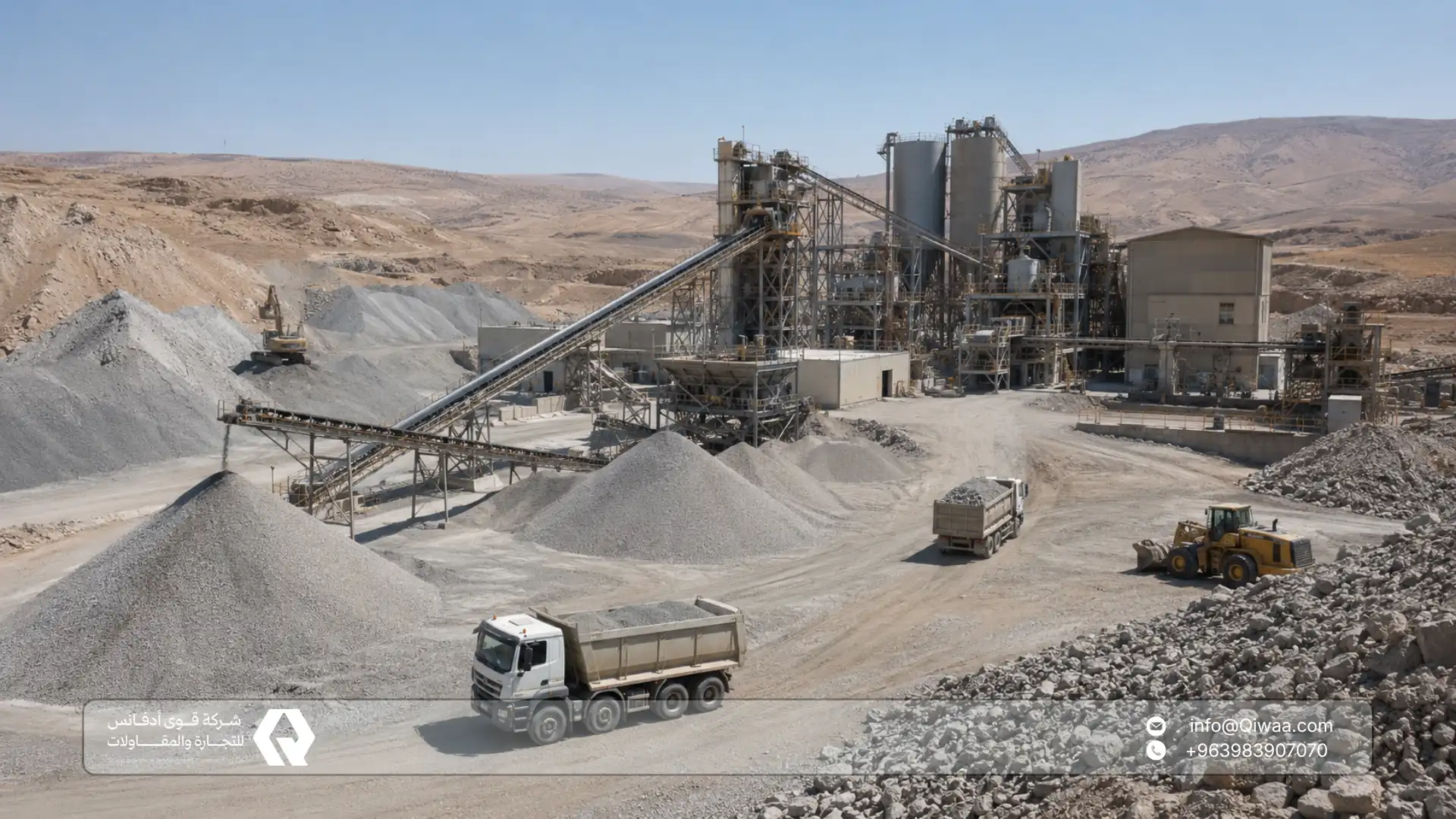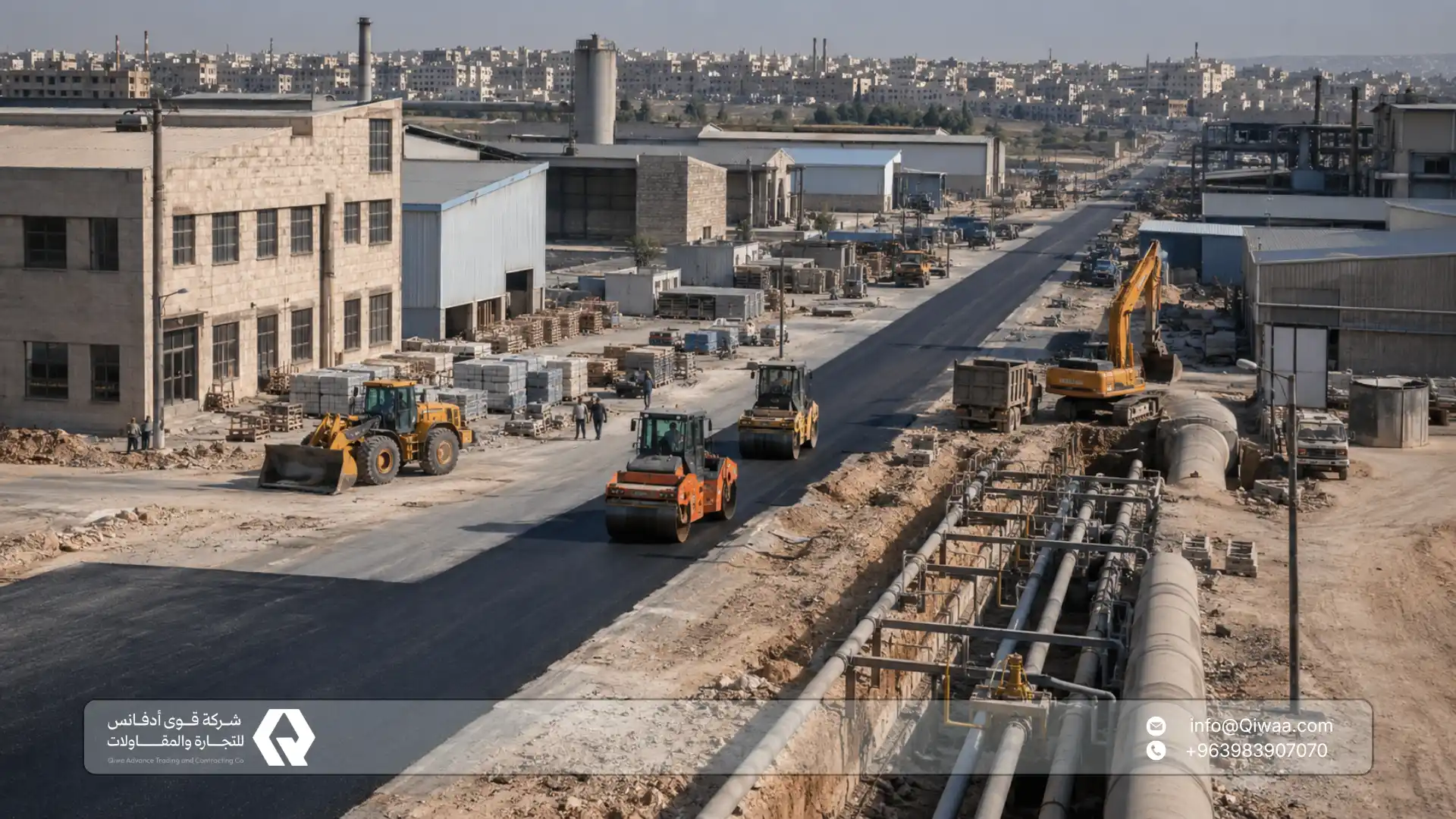


The Damascus reconstruction phase represents one of the most important investment opportunities in Syria in the coming period. The capital combines residential demand, commercial activity, heritage value, services, tourism, and projects linked to infrastructure. For this reason, investors should not look at Damascus as a real estate market only, but as a city that needs rehabilitation, operation, and development across multiple sectors.
Damascus is becoming more important within the wider reconstruction landscape in Syria. In October 2025, the World Bank estimated the cost of rebuilding damaged physical assets in Syria at around 216 billion USD, distributed across 75 billion USD for residential buildings, 59 billion USD for non-residential buildings, and 82 billion USD for infrastructure. These figures provide a clear background for the expected demand for building materials, contracting, water, wastewater, finishes, restoration, and engineering services.
In this article, we review where Damascus reconstruction opportunities appear, and how an investor, contractor, or project owner can start in a practical way. We also explain the role of Qiwaa in supporting supply, infrastructure, finishing, water, and restoration projects inside Damascus.
Why Are Reconstruction Opportunities Concentrated in Damascus?
Damascus has administrative, commercial, tourism, and heritage weight. This makes investment in the capital different from cities that depend only on industry or agriculture. Demand in Damascus comes from several directions: residents who need rehabilitated housing, shops and offices that need fit-out and operation, hotels and tourism facilities looking for rehabilitation, and an old city that needs infrastructure that preserves its historical character.
At the national level, a UNDP report indicates that damage to housing and social infrastructure has been extensive, with around 325,000 homes completely lost and between 600,000 and one million homes partially damaged, in addition to major damage to social and service infrastructure.
This context shows that rehabilitation, housing, and service opportunities in major cities, including Damascus, are connected to real demand, not only to a temporary real estate movement.
Therefore, investment opportunities during the Damascus reconstruction phase can be divided into four main paths:
- Rehabilitation of residential and commercial buildings
- Development of hospitality, hotel, and service projects
- Restoration of Old Damascus and heritage-value areas
- Modernization of infrastructure: water, wastewater, roads, lighting, electricity, and operational services
Read more: Aleppo Reconstruction Opportunities 2026: How to Identify the Best Investment Opportunities
Key Infrastructure Projects in Damascus That Investors Can Watch
One of the most important practical indicators in Damascus is that some rehabilitation projects have already started inside the old city. These projects reveal the types of needs that are likely to repeat in other locations: water networks, sewage, electricity, telephone lines, fire hydrants, sidewalks, roads, and lighting.
In August 2025, Damascus Governorate announced an integrated project to rehabilitate infrastructure across four vital axes inside the Old City, including Bab Touma, the Qishleh area, Bab Sharqi Road, and the area around the Mariamite Church. The governorate explained that the project came in response to road subsidence and drops that caused infrastructure damage and cracks in some residential buildings, especially with the deterioration of water and sewage networks. The project also includes rehabilitating water, wastewater, electricity, telephone, and fire hydrant networks, as well as restoring sidewalks and roads while preserving the Damascene urban character.
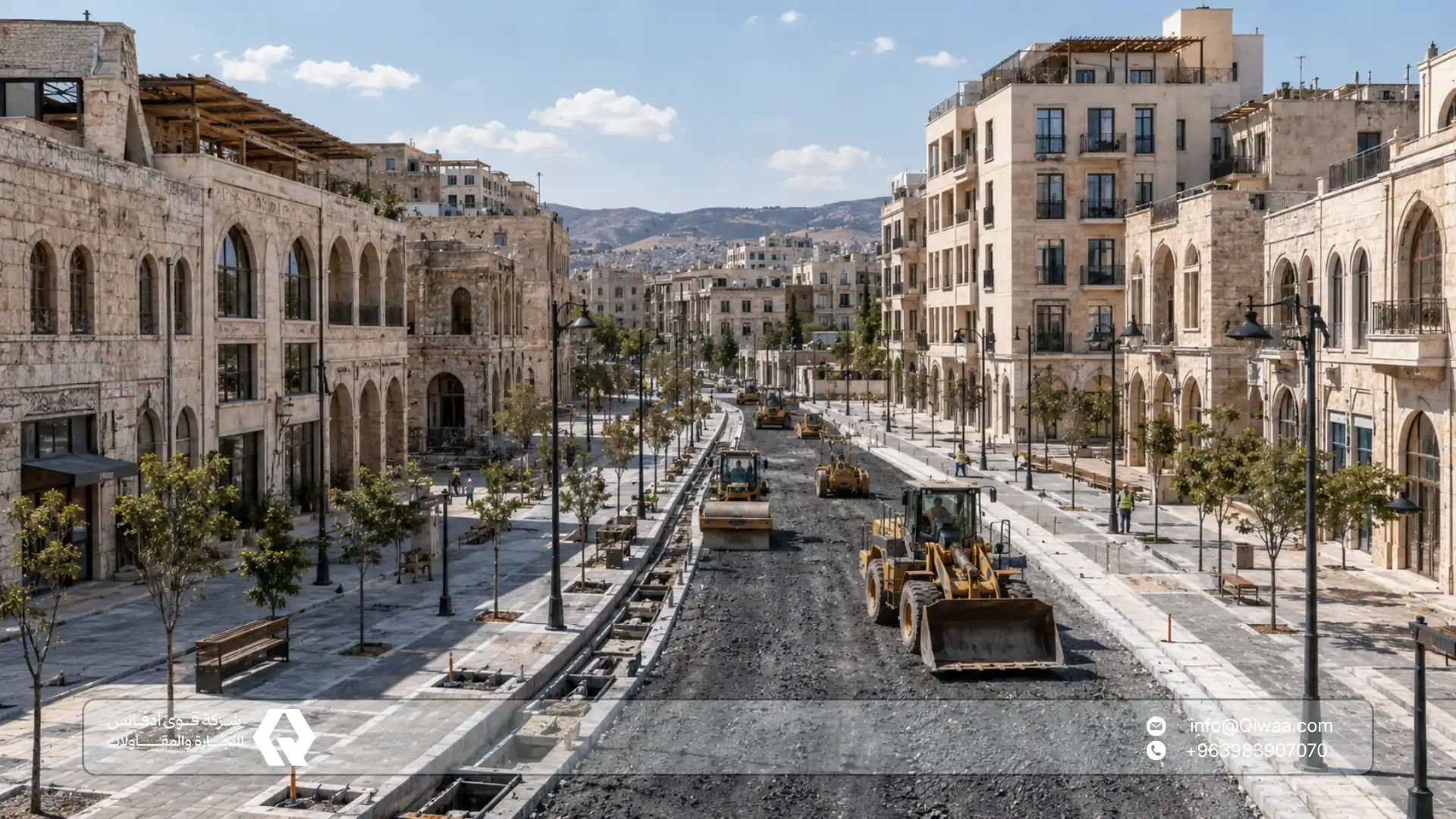
In December 2025, Damascus Governorate continued rehabilitation works on al-Kallaseh Road in the Old City, from the entrance of Damascus Citadel toward al-Asrouniyeh and up to the first entrance of the Umayyad Mosque square. The works include a new sewage network, inspection chambers, stormwater drainage, road leveling, a reinforced concrete layer, reinstalling laboun stone, sidewalk rehabilitation, adding a fire protection network, and installing new lighting with lanterns and columns that suit the heritage character.
These projects give investors and contractors a clear signal: opportunities in Damascus are not concentrated only in new construction. They also appear in rehabilitating infrastructure inside existing areas, especially historical and commercial locations that require careful intervention while preserving the city’s architectural identity.
Read more: Best Interior Design Services Company in Yaafour, Damascus: From Concept to Execution
Restoring Old Damascus: An Engineering, Tourism, and Commercial Opportunity
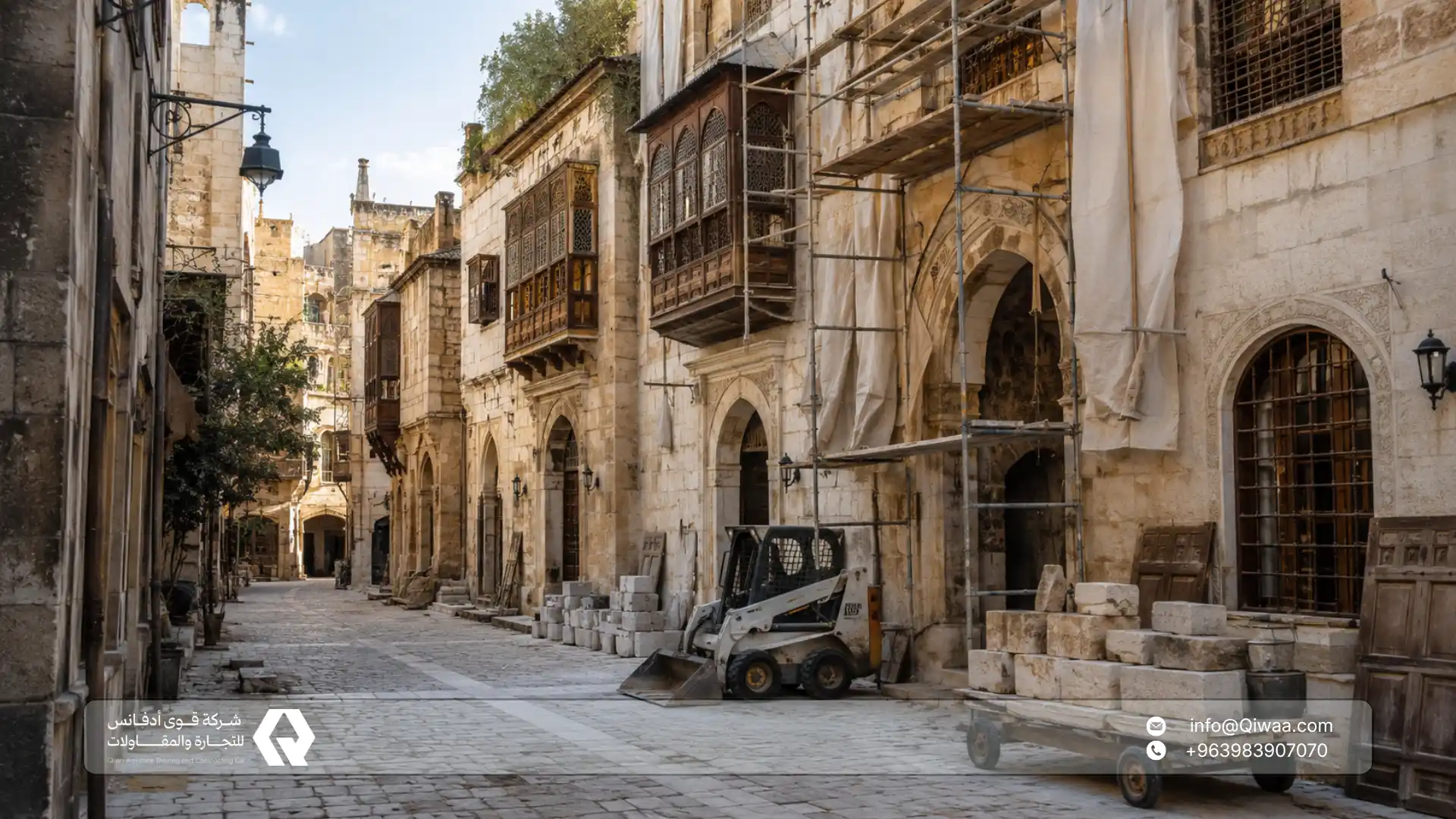
Old Damascus is one of the areas that needs the strongest balance between restoration, infrastructure, and identity preservation. Any project inside this area requires a different understanding from modern projects, because the work is not only about the façade. It also includes water and wastewater networks, lighting, sidewalks, pedestrian movement, safety, shopfronts, and the protection of the urban fabric.
In May 2025, the Ministries of Tourism and Culture discussed proposals to develop and rehabilitate areas including Damascus Citadel, Souq al-Hamidiyah, Marjeh Square, andTakiyya Sulaymaniyah. The proposals included restoring the entrance of Souq al-Hamidiyah, adding lighting and decorative elements with artistic value that match the heritage character, and restoring Marjeh Square and rehabilitating building façades in phases.
This type of project opens several fields for investors and contractors:
- Restoration of historical façades
- Traditional stone and flooring works
- Heritage lighting and exterior decorative works
- Water and wastewater networks inside sensitive urban environments
- Fit-out of shops, restaurants, and cafés with heritage character
- Converting existing buildings into tourism or service uses
At Qiwaa, we can support this type of project by supplying building and finishing materials, supporting infrastructure works, providing water and wastewater solutions, and executing or supporting rehabilitation works according to the site’s nature and consultant requirements. Contact us to learn more about our services.
Learn more: Phosphate Value Chain in Syria: From Raw Material to Manufacturing and Investment in 2026
Tourism Investment in Damascus: Hotels, Hospitality, and Reoperation
The tourism sector in Damascus provides an important indicator of the reconstruction direction, because hotels, restaurants, cafés, and historical areas need restoration, interior fit-out, electrical and HVAC systems, water and wastewater, finishes, fixed furniture, and operational compliance.
In its 2025 annual review, the Syrian Ministry of Tourism stated that it reopened four hotel facilities after rehabilitation, including Royal Semiramis, Art House, and Dunes Boutique in Damascus, in addition to another facility in Slenfeh. This reflects the actual return of some hotel rehabilitation projects inside the capital.
In November 2025, the Assistant Minister of Tourism also stated that Syria’s tourism sector needs 25,000 hotel rooms, while only about 4,000 rooms are currently available. Although this figure refers to the Syrian tourism sector as a whole, Damascus, due to its administrative, commercial, and heritage position, is one of the main cities likely to benefit from this demand, especially in hotels, serviced apartments, heritage hospitality, meeting facilities, and service spaces.
This opens a clear path for investors in Damascus reconstruction through:
- Rehabilitating existing hotels
- Developing heritage houses into hospitality spaces or restaurants
- Fitting out halls, restaurants, and tourism cafés
- Executing fit-out works for hotels and service facilities
- Supplying finishing materials, porcelain, stone, marble, glass, and supporting systems
- Developing water, wastewater, and HVAC infrastructure inside existing facilities
Why Is Execution More Important Than Announcement in Tourism Contracts?
In September 2025, the Ministry of Tourism announced that total tourism investments signed through direct contracts or memoranda of understanding reached around 1.5 billion USD. These investments include developing existing tourism facilities, building hotels, resorts, and entertainment cities, in addition to projects for rehabilitating historical areas.
However, in April 2026, the Ministry of Tourism announced the termination, by mutual agreement, of the contract for redeveloping, rehabilitating, and investing in a major hotel in Damascus due to contractual violations. The ministry mentioned violations related to providing guarantees, executing a model room and suite, submitting the timeline, and proving a contract with a contracting company that has engineering experience and financial capacity.
This point is important for any investor studying investment in Damascus in 2026. A good project needs more than signing a contract or having an idea. It needs a timeline, a qualified execution company, financial capacity, clear specifications, and a supply and operation plan that can actually be implemented.
Learn more: Guide to Investing Iron in Syria 2026: From Mining to Industry
Where to Invest in Damascus: Key Investment Opportunities During Reconstruction
Investment opportunities in Damascus reconstruction can be divided into clear paths according to project type and capital size.
1. Rehabilitation of Residential and Commercial Buildings
There is an opportunity in rehabilitating existing buildings, especially those that need limited structural works, new installations, finishes, elevators, façades, insulation, or internal reorganization. These projects suit investors looking for a faster return than building from zero.
The required works usually include:
- Structural evaluation of the building
- Updating electricity, water, and wastewater systems
- Restoring façades
- Executing interior finishes
- Improving insulation and ventilation
- Preparing shops, offices, or apartments for use
2. Real Estate Opportunities in Damascus
Strong real estate investment opportunities in Damascus appear in mid-range housing, serviced apartments, building rehabilitation, offices, retail shops, and mixed-use projects. Damascus is powerful because it combines residential and commercial demand, making location analysis inside the city a decisive factor.
Before entering any real estate project, the following should be studied:
- Ownership and documents
- Infrastructure condition in the neighborhood
- Restoration or construction cost
- Purchasing or rental power of the target segment
- Access, parking, and services
- Ability to operate the project after handover
3. Restoration of Heritage Buildings
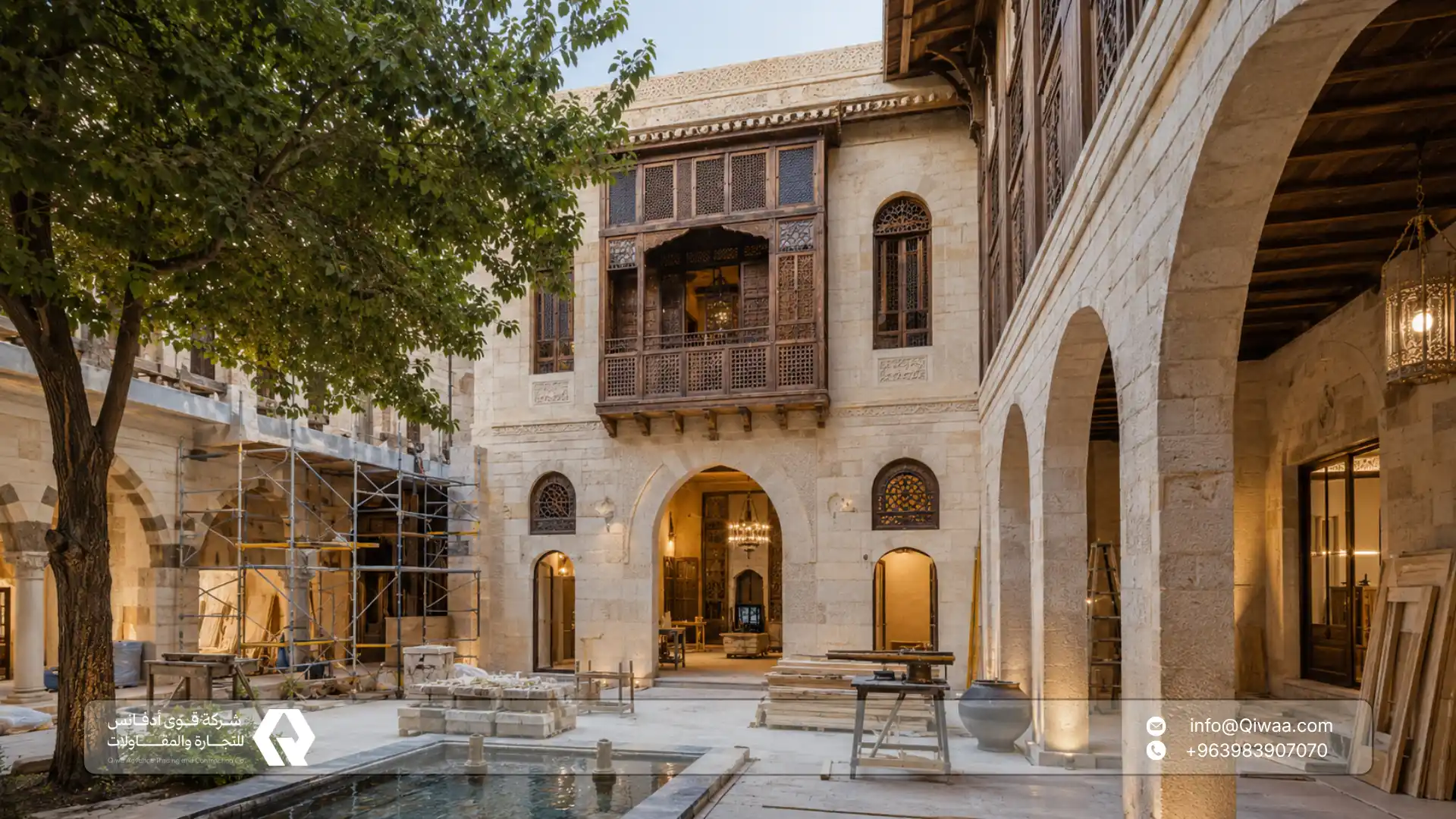
Restoring heritage buildings in Damascus suits investors targeting hospitality, restaurants, cafés, cultural centers, or heritage-style shops. This type of project needs careful study of materials, façades, moisture, lighting, wastewater, and modern services.
This path is directly linked to ongoing works in Old Damascus, including infrastructure, road, and heritage-axis rehabilitation projects such as Bab Touma, Qishleh, Bab Sharqi Road, the area around the Mariamite Church, and al-Kallaseh Road.
4. Tourism and Hospitality Investment
Damascus is suitable for small hotels, serviced apartments, restaurants, cafés, meeting halls, and the conversion of heritage houses into hospitality spaces. Data related to the reopening of hotel facilities in Damascus and the tourism sector’s need for additional rooms makes this one of the most important Damascus reconstruction paths.
5. Infrastructure Projects Inside the City
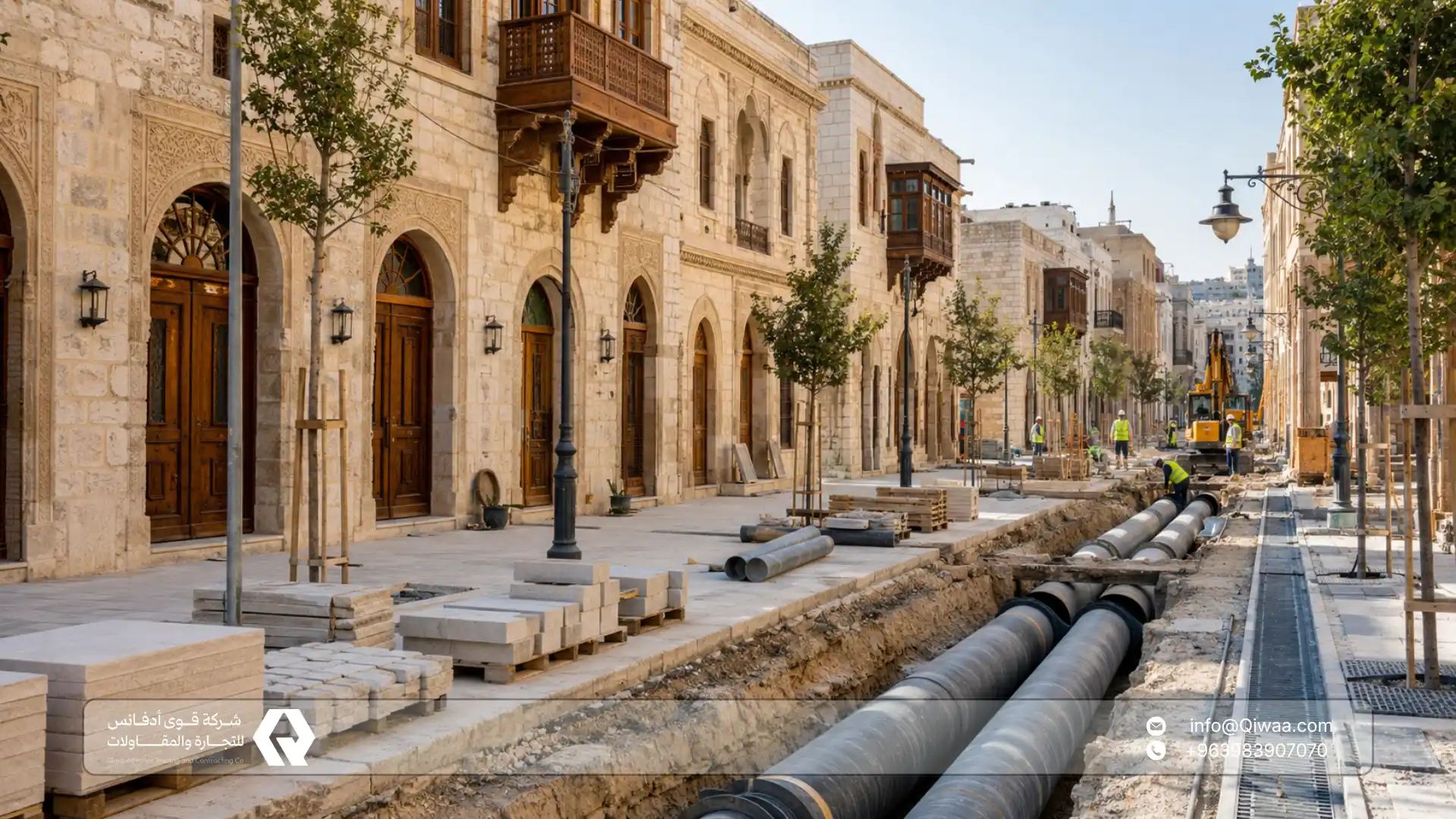
Any real estate, tourism, or commercial project in Damascus needs supporting infrastructure: water, wastewater, electricity, lighting, roads, fire hydrants, and service entrances. Recent Damascus Governorate projects inside the Old City reveal the level of need for contractors and suppliers capable of working with old networks and sensitive locations.
At qiwaa, we can support these projects through pipe solutions, valves, water network components, building materials, finishing materials, and contracting works related to infrastructure, water, and treatment.
Read also: Cement Industry in Syria: Market Challenges and Investment Opportunities in 2026
How to Use the Damascus Reconstruction Phase to Start a Successful Project
Starting correctly reduces risk and makes the investment decision clearer. An investor or contractor can follow these steps:
1. Define the Type of Opportunity
Start by defining the right path: real estate, hotel, restoration, interior fit-out, commercial project, infrastructure, or material supply. Each path needs a different study.
2. Inspect the Site Before the Price
Infrastructure, street condition, water and wastewater networks, equipment access, surrounding area, licensing potential, and building condition must be inspected.
3. Review Ownership and Licensing
Any project inside the city, especially in old or commercial areas, needs clear legal review of ownership, licensing, permitted use, and required approvals.
4. Calculate the Full Rehabilitation Cost
Project cost includes more than buying the property or executing the finishes. It should include restoration, installations, systems, materials, wages, transport, storage, testing, and potential delays.
5. Choose a Local Execution Partner
Working in Damascus requires a party that understands the market, suppliers, labor, site conditions, and existing-building projects. A strong local partner reduces random decisions during execution.
6. Start With a Measurable Phase
In real estate or tourism projects, investors can start with a defined phase: one building, a hotel wing, a restoration axis, a showroom, or a limited interior fit-out project, then expand after measuring results.
Contact the Qiwaa team now and request a consultation to help you start your project in Damascus.
Risks to Study Before Investing in Damascus
The opportunities in Damascus are important, but they need a realistic reading of risks. The main points to study include:
- Clarity of ownership and documents
- Condition of surrounding infrastructure
- Actual rehabilitation cost
- Difficulty of working inside old areas
- Availability of building and finishing materials in required quantities
- Need for contractors specialized in restoration or sensitive sites
- Compliance with approvals and licenses
- Ability of the project to operate after execution
- Existence of a maintenance plan after handover
- Clear contracts with suppliers and contractors
The termination of one hotel investment contract in Damascus due to contractual violations shows the importance of commitment to timelines, execution models, financial capacity, and contractor experience before entering major projects.
How Qiwaa Helps With Damascus Reconstruction Projects
At Qiwaa, we can support investors, contractors, and project owners in Damascus reconstruction projects by combining supply, contracting, building materials, infrastructure, water, finishes, and restoration.
Our Services in Damascus and Syria
- Supplying building materials and industrial materials for real estate and commercial projects
- Supplying pipes, valves, and water and wastewater network components
- Supporting infrastructure, water, and treatment projects
- Providing finishing materials such as stone, marble, granite, ceramic, and porcelain according to specifications
- Supporting fit-out works for offices, showrooms, restaurants, and hotels
- Supporting restoration projects for heritage buildings and existing buildings
- Studying project needs in terms of materials, quantities, and supply schedule
- Connecting the investor or contractor with a practical execution route inside Damascus
Why Choose qiwaa in Syria?
- We work in sectors that directly support reconstruction: supply, contracting, infrastructure, water, building materials, and finishes.
- We understand the nature of projects inside existing cities and sensitive areas.
- We can support investors during study, supply, execution, and follow-up.
- We connect project needs with the right materials, not only with what is available in the market.
- We help reduce site disruption caused by weak supply or poor coordination.
Damascus Reconstruction Starts With Reading the Site and Choosing the Right Partner
Damascus offers important opportunities in real estate rehabilitation, tourism, restoration, infrastructure, and commercial fit-out. Actual projects inside the Old City, the reopening of hotel facilities, and plans to develop heritage locations all indicate that the capital is moving toward a new phase of reoperation and development.
Successful investment in Damascus starts with choosing the right location, studying infrastructure, understanding licensing, calculating rehabilitation cost, selecting suitable materials, and working with a local partner who understands execution details inside the city.
If you are studying an opportunity in Damascus reconstruction, contact Qiwaa to review your project needs in supply, infrastructure, building materials, finishes, restoration, or execution, and to define the most suitable path to begin.
Frequently Asked Questions About Damascus Reconstruction
1. What are the main Damascus reconstruction opportunities in 2026?
The main Damascus reconstruction opportunities are concentrated in rehabilitating residential and commercial buildings, restoring Old Damascus, developing hotels and hospitality, and renewing water, wastewater, lighting, and road networks.
This comes within a wider national need, as the World Bank estimated the cost of rebuilding Syria’s physical assets at around 216 billion USD.
2. Why is Damascus important for reconstruction investors?
Damascus is an administrative, commercial, and tourism center. It has continuous demand for housing, offices, hotels, restaurants, retail shops, and services. This makes its opportunities different from industrial cities because it combines real estate, restoration, tourism, and urban services.
3. Are there actual projects to rehabilitate Old Damascus?
Yes. In August 2025, Damascus Governorate announced a project to rehabilitate infrastructure in four axes inside the Old City, including Bab Touma, Qishleh, Bab Sharqi Road, and the area around the Mariamite Church, with works covering water, wastewater, electricity, telephone, fire hydrants, sidewalks, and roads.
4. Why is al-Kallaseh Road important in Old Damascus rehabilitation projects?
Al-Kallaseh Road is one of the vital axes near Damascus Citadel and the Umayyad Mosque. Damascus Governorate is rehabilitating it to improve movement and services inside the Old City. The works include a new sewage network, stormwater drainage, laboun stone, sidewalks, a fire protection network, and lighting that suits the heritage character.
5. Is tourism investment in Damascus suitable now?
Tourism investment in Damascus is suitable for projects based on rehabilitation and operation, such as small hotels, serviced apartments, restaurants, cafés, and heritage houses.
In 2025, the Ministry of Tourism announced the reopening of hotel facilities after rehabilitation, including Royal Semiramis, Art House, and Dunes Boutique in Damascus.
6. What are the best types of real estate projects in Damascus?
The best real estate opportunities in Damascus are often in rehabilitating existing buildings, developing residential or serviced apartments, fitting out offices and shops, and restoring buildings that can be converted into commercial or tourism uses. The decision should start with checking ownership, building condition, infrastructure, and rehabilitation cost.