

Investing iron in Syria is different from supplying rebar. It starts with studying the ore, its source, and its quality. The decision also includes extraction potential, concentration, processing, transport, and the most suitable industrial use.
This topic is becoming more important as reconstruction needs continue to expand. The World Bank estimated the cost of rebuilding Syria’s physical assets at around USD 216 billion, including 75 USD billion for residential buildings, 59 USD billion for non-residential buildings, and 82 USD billion for infrastructure. These figures create wide demand for iron and steel products, but they also raise a more important question: can local iron ore in Syria become a real industrial opportunity inside the country?
In this article, we review the main locations and opportunities for iron investment in Syria, the possible industrial paths, and the role of Qiwaa Advance in supporting investors and contractors.
Why Is Iron in Syria an Important Investment File?
Iron is a core material in construction, infrastructure, industry, equipment, metal structures, bridges, warehouses, and production projects. USGS indicates that around 98% of iron ore worldwide is used in steelmaking, which directly connects iron ore to construction and industrial supply chains.
In Syria, the opportunity is not only about demand. It is also about the gap between three elements: reconstruction’s need for iron, the presence of local iron ore deposits that require study, and the market’s reliance on imports or external supply across large parts of the iron and steel chain. This is why iron ore investment in Syria requires accurate technical and commercial evaluation, not just a decision based on the presence of deposits.
Read more: Cement Industry in Syria: Market Challenges and Investment Opportunities in 2026
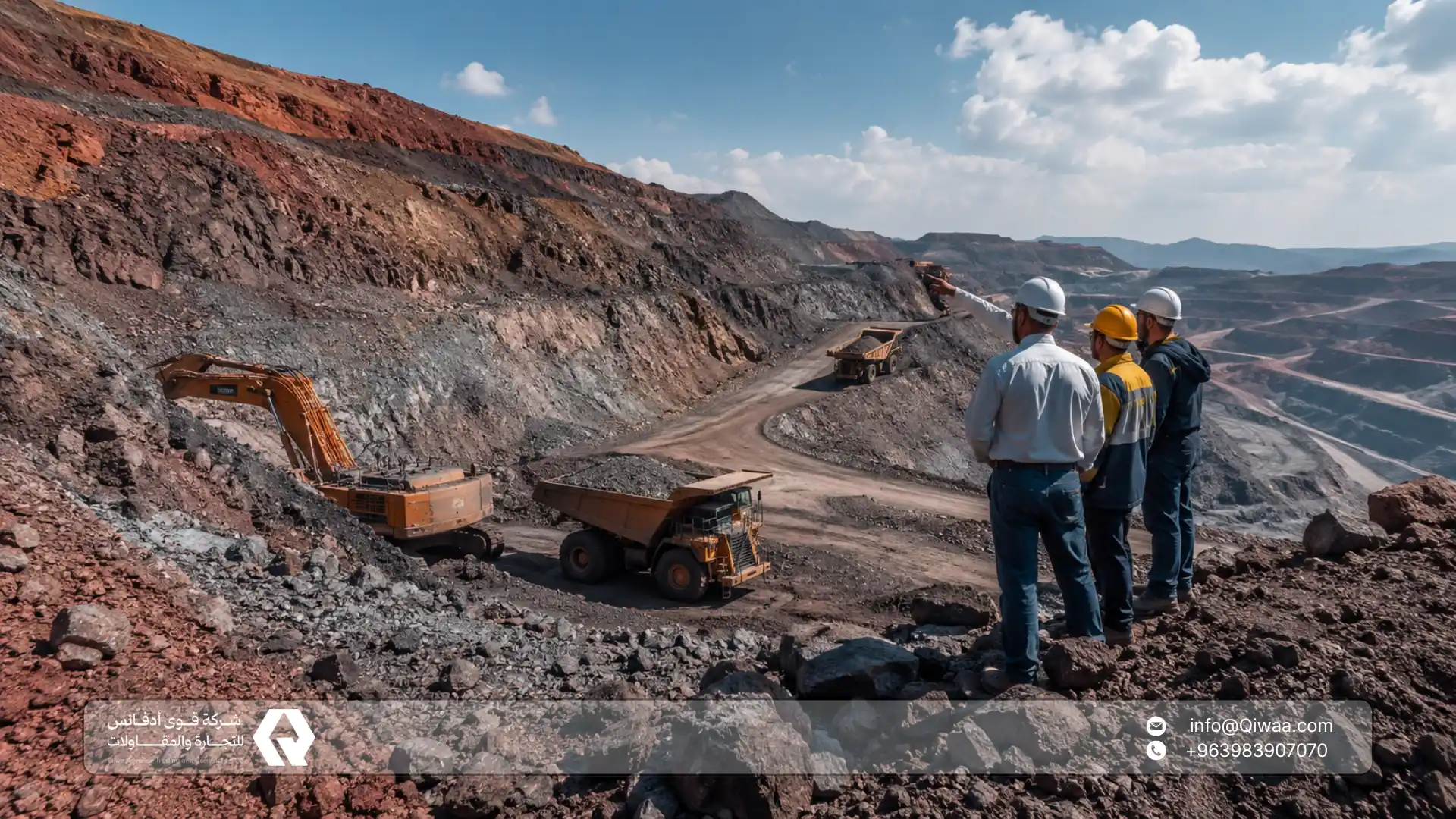
What Does Iron Investment in Syria Mean?
Iron investment does not necessarily mean building a huge steel plant from the beginning. It can start with smaller and more realistic stages, then expand according to test results and feasibility studies.
The main investment paths include:
- Exploring and evaluating iron ore deposits: studying locations, taking samples, analyzing iron content and impurities, and determining feasibility.
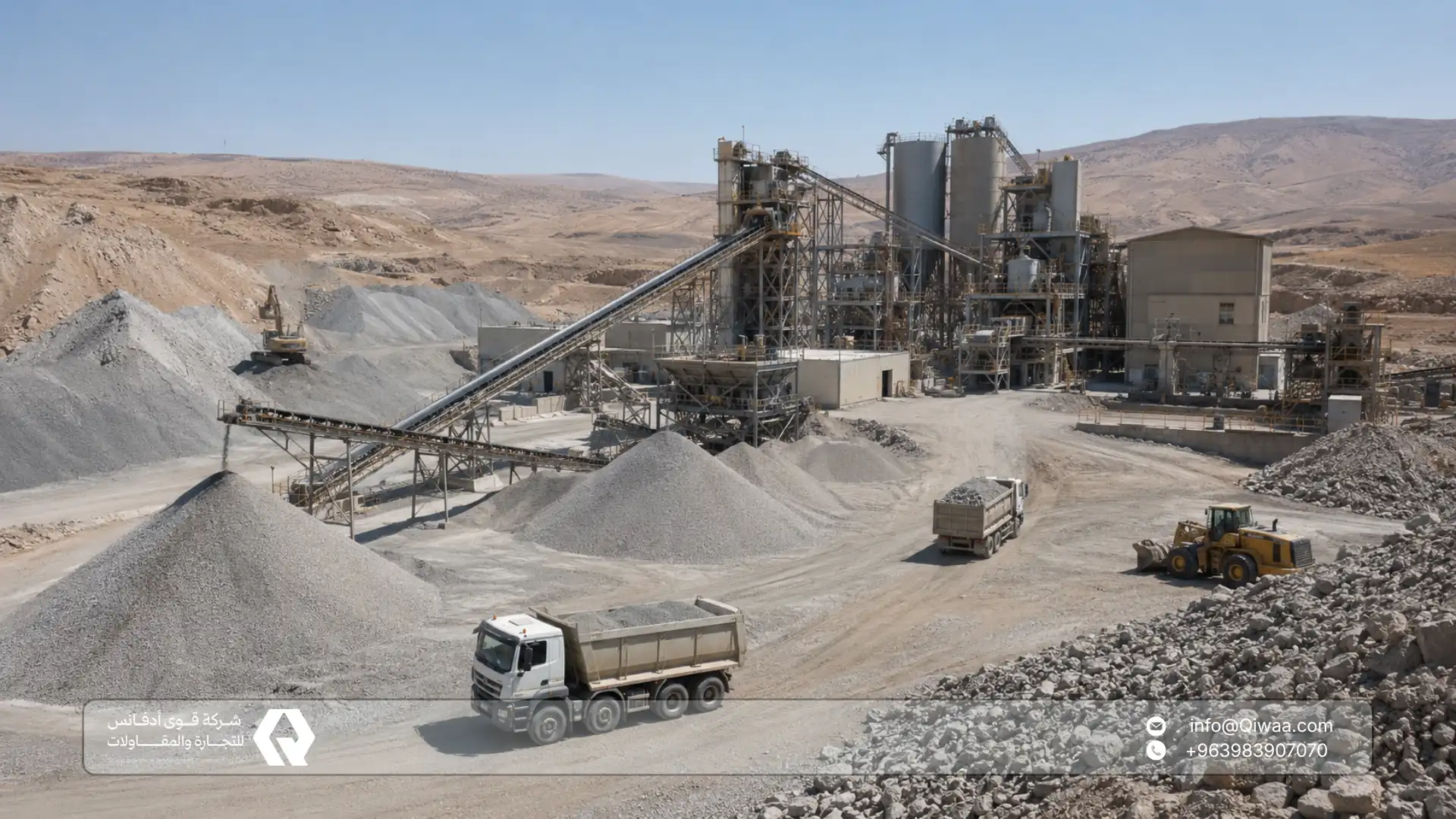
- Extracting ore from mines or surface quarries: when quantities, location, and ore characteristics are suitable.
- Beneficiating low-grade iron ore: increasing iron content through processing before sale or manufacturing.
- Using iron ore in cement manufacturing: some iron ores can be used as auxiliary materials in the cement industry.
- Producing iron oxide pigments: some deposits may suit industrial uses outside steelmaking.
- Establishing an iron and steel project: a larger path that requires stable ore, energy, water, technology, and financing.
- Supplying ore or metal products: connecting local or imported ore with the needs of factories and contractors.
This distinction is important because some iron ores in Syria are described as low-grade or in need of beneficiation. Successful investment therefore begins with testing and preparation before considering smelting or steel production.
Where Can Iron Be Invested in Syria?
When answering where iron can be invested in Syria, it is important to distinguish between the presence of iron deposits and the presence of a mine ready for commercial production. Available data points to several areas associated with iron ore, but each site needs updated studies to determine quality, investable reserves, extraction method, and processing cost.
Local reports based on studies in the mineral resources sector mention that iron ore in Syria is distributed across areas such as Zabadani, Kurd Dagh, Qadmous, and iron ore occurrences southwest of Beit Jinn and Majdal Shams, as well as in the Palmyride belt and south of Masyaf. The same reports also indicate that available quantities exceed 300 million tons. However, this figure should be treated as an indicator that requires updated technical verification before making an investment decision.
In terms of locations discussed for investment, Jdeidet Yabous and Rajo–Afrin appear clearly in published reports and news. A local study indicated that the quantities that could be invested through surface quarries in Jdeidet Yabous are around 51.5 million tons, which could be sufficient for 26 years of investment according to the assumptions mentioned in the study.
Read more: Importing Building Materials to Syria and Key Customs Procedures in 2026
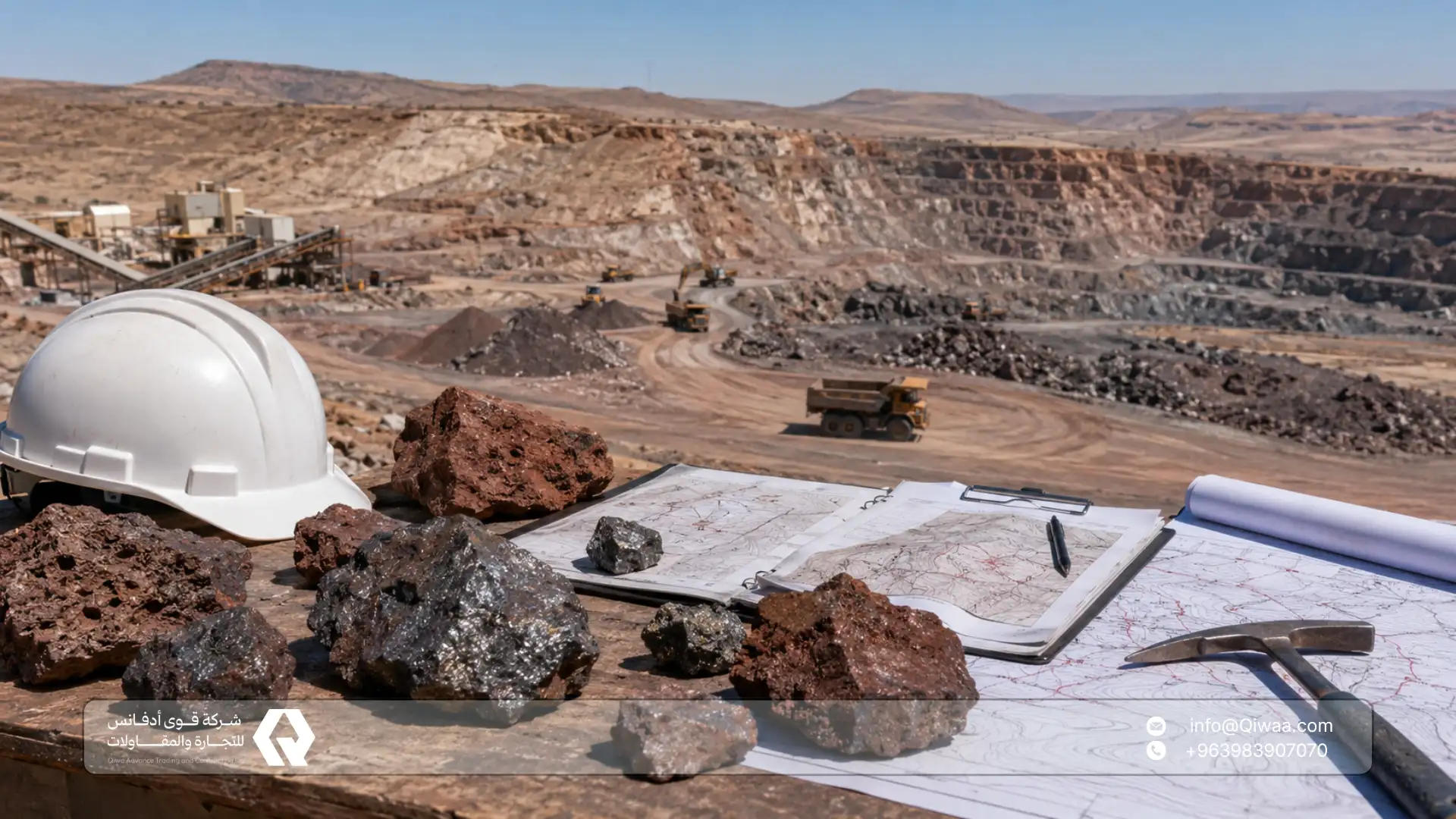
Is Iron Invested in Syria Through Mines?
Yes, iron can be invested in Syria through mines, deposits, and potential surface quarries. However, the more accurate wording is that iron ore in Syria needs detailed evaluation before being considered ready for production. Some locations may be suitable for surface extraction, some may fit specific industrial uses, and others may require beneficiation and processing to become economically viable.
In February 2026, a team from the General Establishment of Geology and Mineral Resources carried out a field visit to iron ore deposit sites in Rajo–Afrin, with the participation of experts from Tin Energy. The goal was to observe geological extensions and collect preliminary data as preparation for detailed studies. This step shows that the file still requires exploration and evaluation, and that the investment decision should be based on updated data rather than site names alone.
Rajo and Jdeidet Yabous: Why Do They Matter to Investors?
Rajo appears as one of the important locations in the iron ore file, especially because of discussions around using its ore as an auxiliary material in cement manufacturing and iron oxide pigments, not only as raw material for steel. This opens a different investment angle: not every iron ore must go into a smelting furnace. In some cases, its economic value may be easier to capture in other industrial applications.
Jdeidet Yabous, on the other hand, appears in reports as a location that may be suitable for investment through surface quarries, with an estimated quantity of around 51.5 million tons. This type of site requires an economic study covering ore quality, extraction method, proximity to roads, transport cost, and the ability to connect the site with a factory or industrial customer.
Comparing Iron Investment Paths in Syria
| Investment Path | Suitable For | Complexity Level | Key Requirements | Investment Notes |
|---|---|---|---|---|
| Ore exploration and evaluation | Investors and mining companies | Medium | Samples, analyses, maps, reserve study | Essential stage before any major decision |
| Surface quarry extraction | Mining and quarry companies | Medium | License, equipment, roads, transport | Suitable when reserves and access are clear |
| Beneficiation of low-grade iron ore | Industrial investors | High | Processing technology, water, energy, laboratory | Increases ore value if initial grade is low |
| Use in cement manufacturing | Cement plants and suppliers | Lower than steel | Stable specifications, regular supply | Suitable for some ores that are not ideal for steel |
| Iron oxide pigment production | Building materials and paint factories | Medium | Sorting, grinding, purity, stable color | A specialized market that needs consistent quality |
| Iron and steel project | Large investors | Very high | Ore, energy, technology, water, capital | Requires long study and a stable market |
| Supplying iron and steel products | Contractors and suppliers | Medium | Purchasing sources, quality, logistics | Linked to reconstruction and does not require mining |
This table shows that investing iron in Syria does not follow one path only. The opportunity may be in the mine, ore beneficiation, supplying auxiliary raw materials to cement plants, later steel production, or connecting reconstruction needs with stable supply chains.
Learn more: Tunnel Formwork System in Syria for Repetitive Building Projects
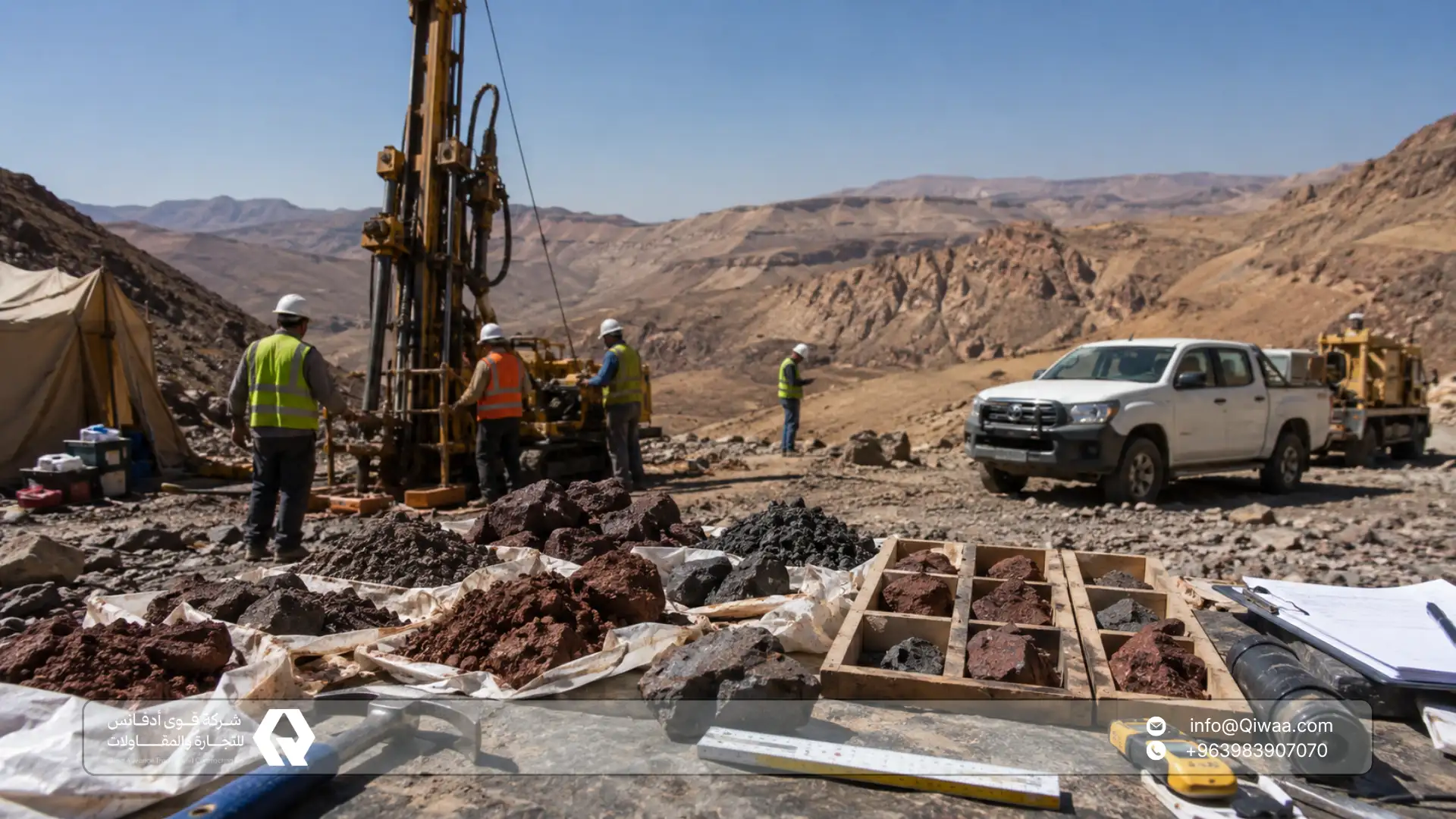
What Should Be Studied Before Investing in Iron Ore?
Before entering any project related to iron in Syria, several technical and commercial factors must be studied. The presence of ore in a certain area is not enough to determine feasibility.
The most important points to examine include:
- Iron content Fe: the first indicator of ore value and whether beneficiation is needed.
- Impurities: such as silica, alumina, phosphorus, sulfur, and moisture.
- Extractable reserve size: the general quantity is not enough without knowing the economically investable portion.
- Extraction method: surface quarrying, drilling, or more complex operations.
- Proximity to roads and factories: transport can change the profitability of the entire project.
- Need for beneficiation: some ores are not suitable for direct smelting or industrial sale.
- Availability of energy and water: a critical factor for any beneficiation or manufacturing project.
- Final use: steel, cement, pigments, or other industrial products.
- Target market: local market, regional market, or supply to a specific factory.
- Technical partner: especially when the project requires beneficiation or processing lines.
Local reports confirm that advances in the concentration and processing of low-grade iron ores may open the door to investing in Syrian iron ore through partnerships based on providing raw materials and infrastructure in exchange for technology and operating costs.
Where Are the Largest Iron Investment Opportunities in Syria?
The largest opportunities appear in the distance between the ore and the market. In other words, the opportunity lies in turning iron ore from a geological material into a product or industrial input that is actually needed.
1. Beneficiating Low-Grade Iron Ore
This path may be one of the most important opportunities because some ores need higher iron content and lower impurities before becoming suitable for industrial use. The investor here does not sell the ore as it is, but increases its value through processing.
2. Supplying Iron Ore to Cement Manufacturing
Some iron ores can be used in cement manufacturing as an auxiliary material. This path may be faster than building a steel plant because it serves existing plants or expansion projects in building materials.
3. Producing Iron Oxide Pigments
Some ores rich in iron oxides can be used in pigments for building materials, paints, and certain construction products. This field requires homogeneous ore and stable color quality.
4. Studying an Iron and Steel Complex
Establishing a large iron and steel complex requires major investment and a long feasibility study. Local reports have mentioned a study for a complex with an initial capacity of one million tons, with expectations that iron and steel consumption will increase during the reconstruction phase.
5. Mining and Supply Services
Companies that do not want to operate a mine can enter the sector through equipment, transport, storage, supply, testing, or connecting investors with factories and contractors.
Learn more: Supplying Marble and Granite in Syria: Global Quality for Premium Finishing Projects
The Difference Between Investing in Iron Ore and Supplying Rebar
It is important to separate this article from a rebar supply article. Supplying rebar serves contractors and construction projects directly, while investing in iron starts from ore, mines, preparation, and manufacturing.
| Comparison | Iron Ore Investment | Rebar Supply |
| Starting point | Ore, mines, and quarries | Ready products for sale |
| Main customer | Investor, factory, mining company | Contractor, developer, construction project |
| Key factor | Ore quality and feasibility | Specification, price, and delivery |
| Risks | Geological, technical, and operational | Commercial and logistical |
| Return period | Medium to long term | Usually faster |
| Role of Qiwa Advance | Studying the path, supply, and partners | Securing the product and serving the project |
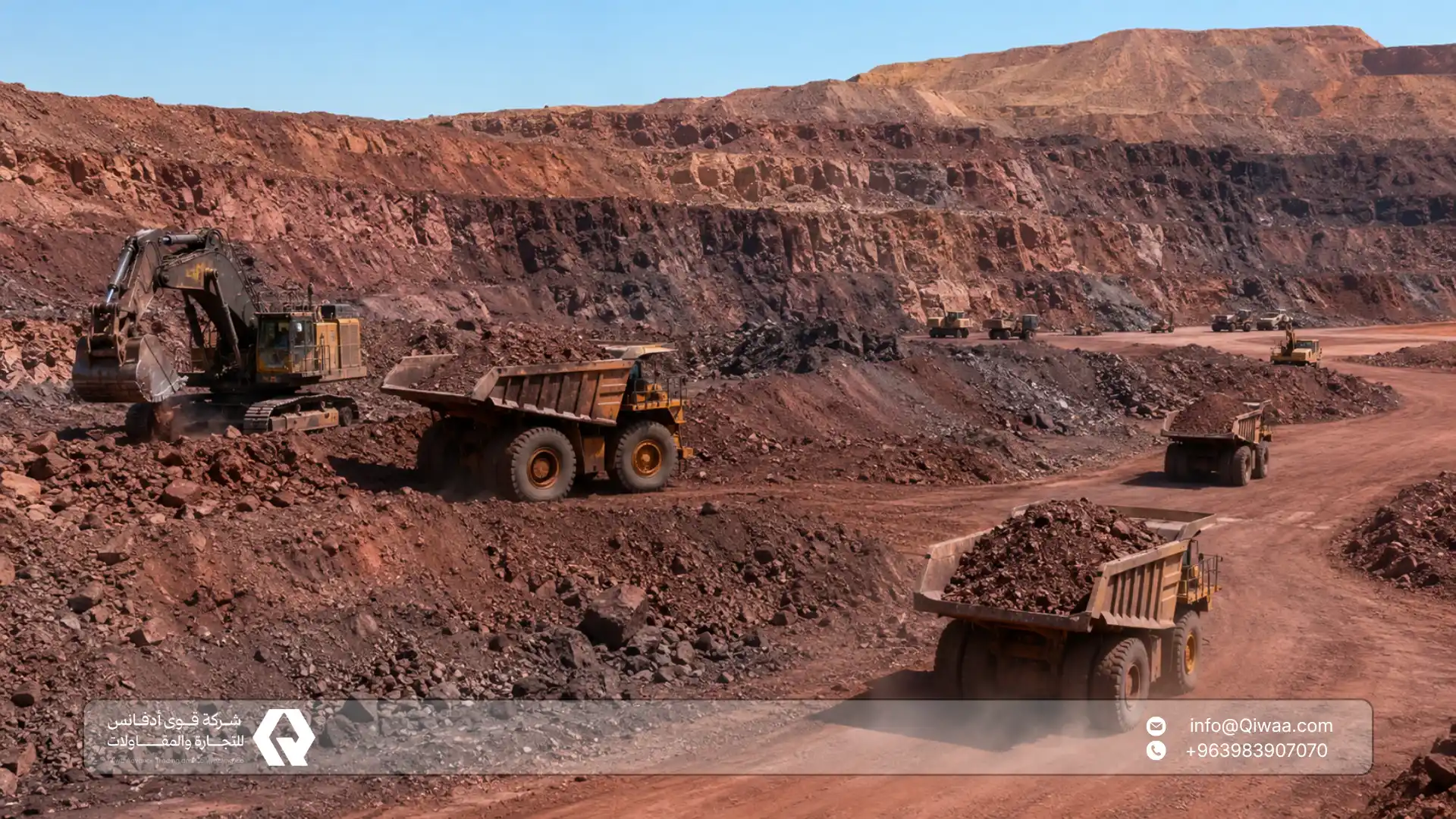
How Qiwaa Advance Supports Iron Investment in Syria
Qiwaa Advance supports iron projects in Syria by combining experience in supply, building materials, industry, infrastructure, and partner networks. Our role does not start from selling a material only. It begins with understanding the project need and identifying the most suitable path.
Qiwaa Advance can support investors or contractors in:
- Studying project needs for iron ore or iron products.
- Reviewing the best use of the ore: steel, cement, pigments, or industrial supply.
- Connecting investors with suitable technical partners and suppliers.
- Supporting infrastructure requirements for quarries and industrial sites.
- Supplying materials and components that serve mining and processing projects.
- Organizing supply chains for factories or reconstruction projects.
- Supporting rebar and metal product supply projects for contractors.
- Helping investors compare different paths: mining, beneficiation, manufacturing, or supply.
In iron projects, the right decision does not start only with the question “how much ore exists?” It starts with a broader question: what is the best economic use of this ore, and what value chain can be built around it?
If you are studying a project related to iron in Syria, contact Qiwaa Advance to review the type of ore or product required, study the supply or investment path, and identify the right partners and services for your project.
Frequently Asked Questions About Iron Investment in Syria
1. Where can iron be invested in Syria?
Iron can be invested in Syria through areas and ore deposits that require technical evaluation. The most commonly mentioned locations in public sources include Rajo, Jdeidet Yabous, Qadmous, Kurd Dagh, and Zabadani, along with other occurrences in areas such as Beit Jinn, Majdal Shams, the Palmyride belt, and south of Masyaf. Each site must be tested before being treated as a project ready for production.
2. Is iron invested in Syria through mines?
Yes, iron can be invested in Syria through potential mines and surface quarries. However, some locations still need detailed exploration. Reserves, ore quality, impurities, transport cost, and the need for beneficiation must be studied before investment begins.
3. Is iron in Syria invested from mines ready for steel production?
Not always. Some iron ores in Syria may require beneficiation and processing, while others may be more suitable for uses such as cement manufacturing or iron oxide pigments. The final use must therefore be defined before the investment decision is made.
4. Why are Rajo iron ores important in Syria?
Rajo is one of the locations that appeared in recent reports and geological follow-up, where a reconnaissance visit was carried out in 2026 to study iron ore deposits. Local reports also mentioned that Rajo ore may be used as an auxiliary material in cement manufacturing and iron oxide pigments.
5. Does iron investment mean establishing an iron and steel factory?
An iron and steel factory can be one investment path, but it is not the only one. Investment can also be made in exploration, ore extraction, low-grade iron ore beneficiation, supplying ore to cement manufacturing, pigment production, or supporting supply projects for contractors and factories.