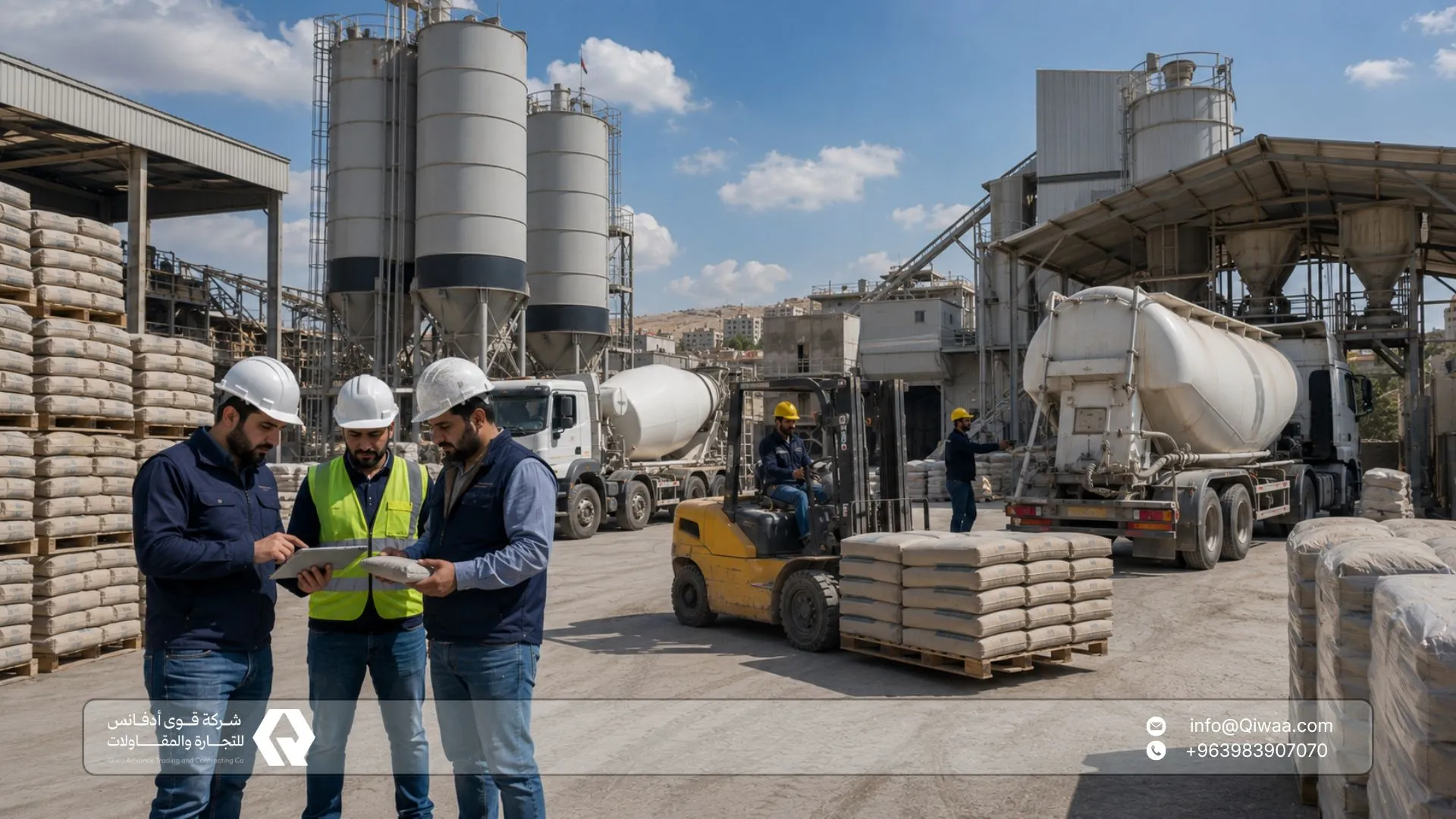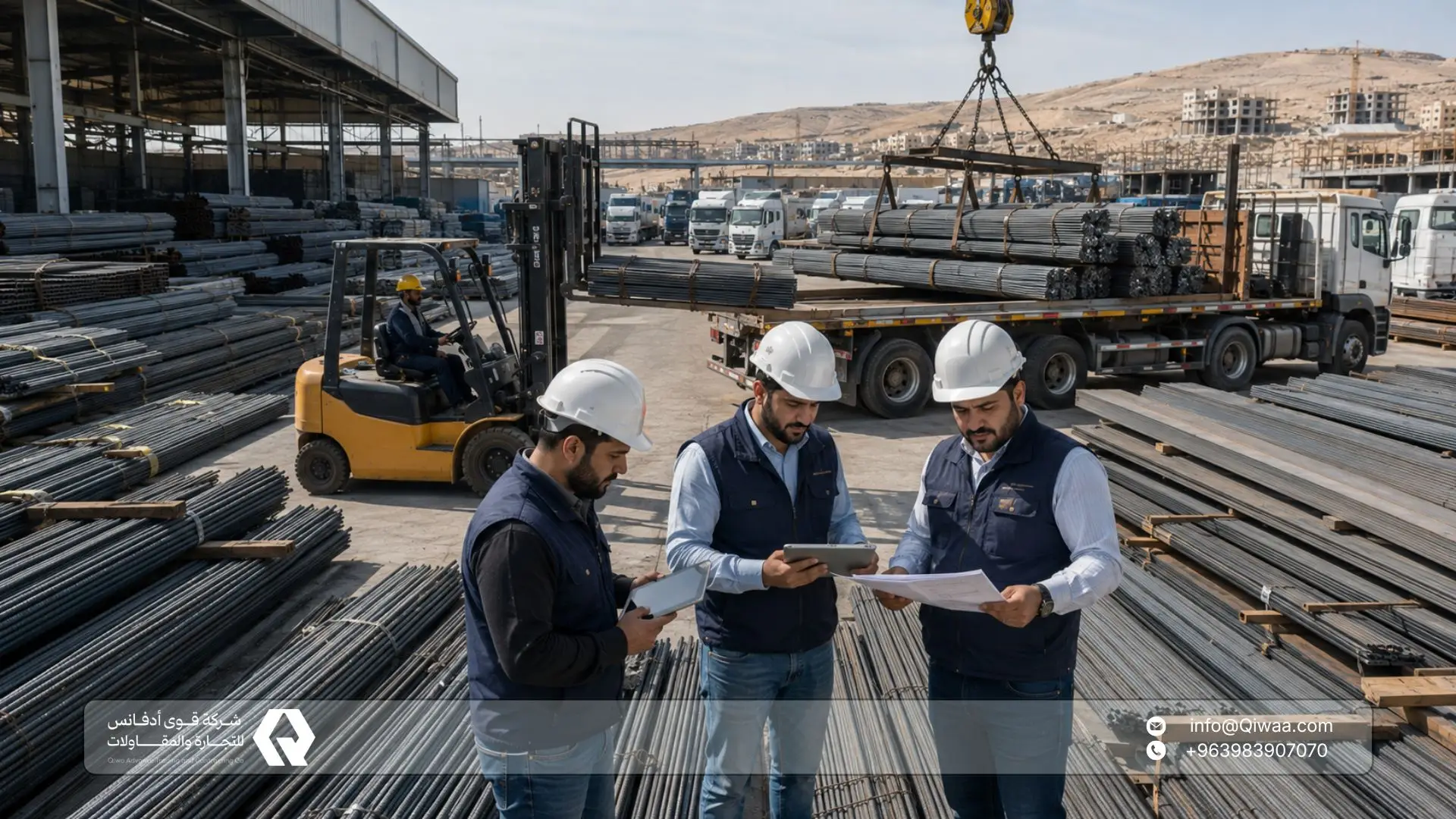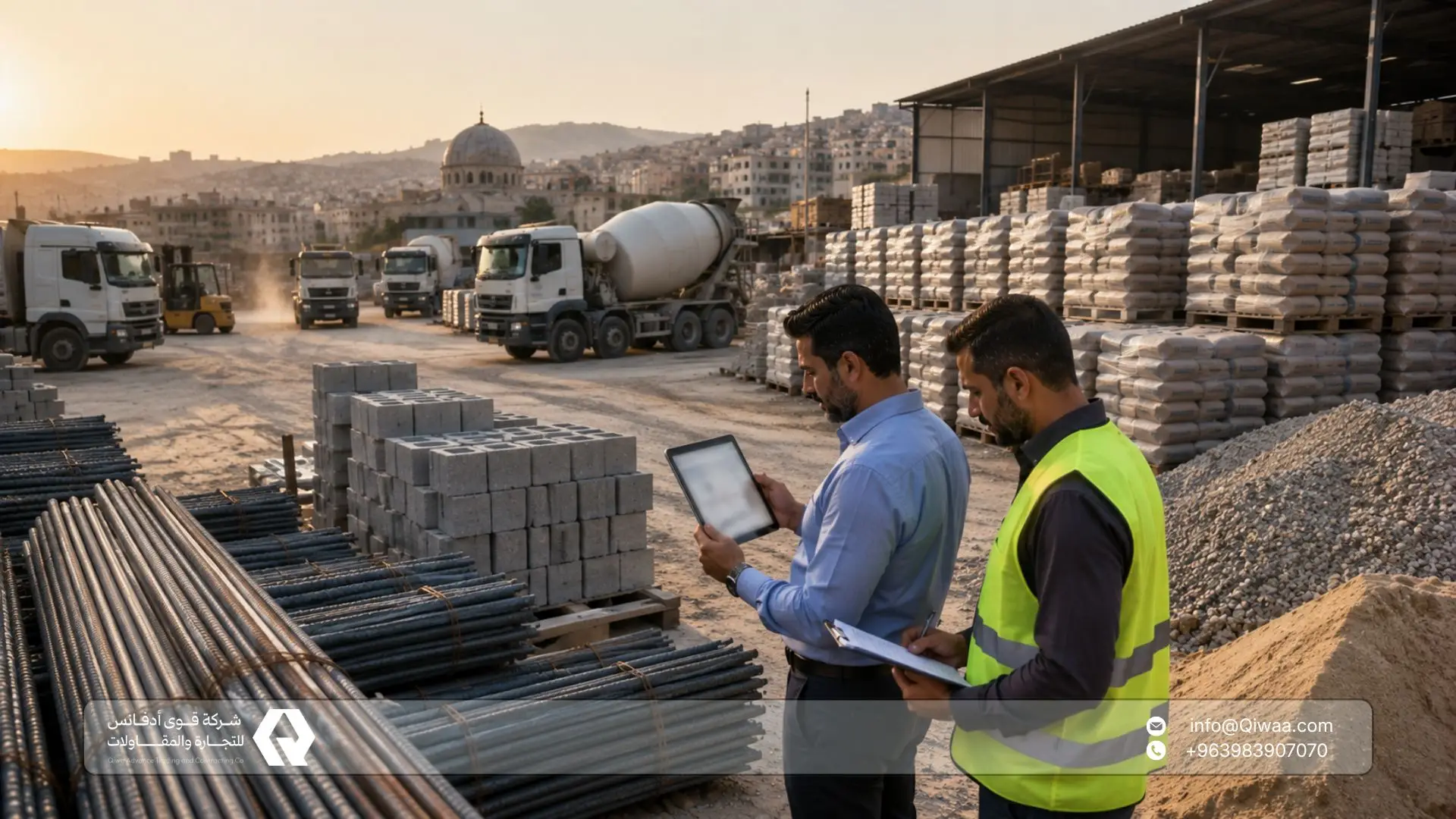


When sourcing quicklime or hydrated lime in Syria, the issue is not only product availability. What matters is choosing the right type for the application, securing the right supply format, and making sure the material can be handled, stored, and used without creating avoidable operational problems.
At Qiwaa Advance, we help projects and industrial buyers make that decision more clearly. In this guide, we explain the practical difference between quicklime and hydrated lime, where each one is used, what to review before approval, and how to choose the supply format that best fits your project or operating line.
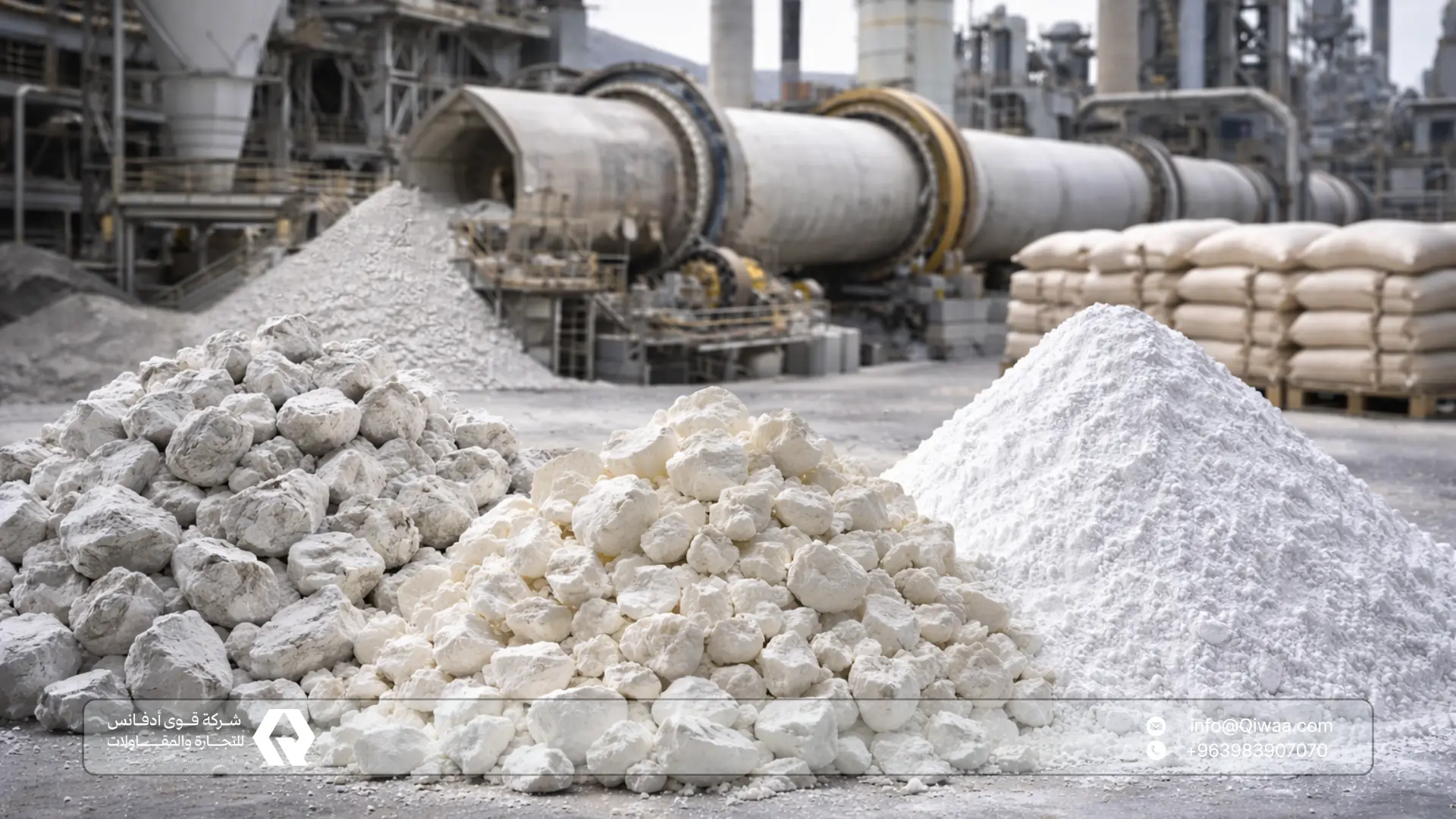
Quicklime vs. Hydrated Lime
The right choice depends on how the material will be used, handled, stored, and fed into the project or operating line.
| Comparison Point | Quicklime | Hydrated Lime |
| Reaction speed | Higher and faster | More controlled and stable |
| Handling | Requires greater care | Easier to handle |
| Storage sensitivity | More sensitive to moisture | Easier to store |
| Safety requirements | Higher | Lower |
| Best suited for | Soil treatment, active industrial uses | Water treatment, mortar, controlled dosing |
| Better choice when | Fast reaction is the priority | Ease of use and operating stability matter more |
In practical terms, quicklime is usually the better option when the application depends on stronger reaction and faster treatment. Hydrated lime is more suitable when the priority is easier handling, safer operation, and more controlled day-to-day use.
At Qiwa Advance, we help clients choose the more suitable type based on the application, operating method, and required supply format.
Read more: Qiwa Advance: Amiantit Agent in Syria | Water Infrastructure Partnership
Where Is Lime Used in Construction Projects in Syria?
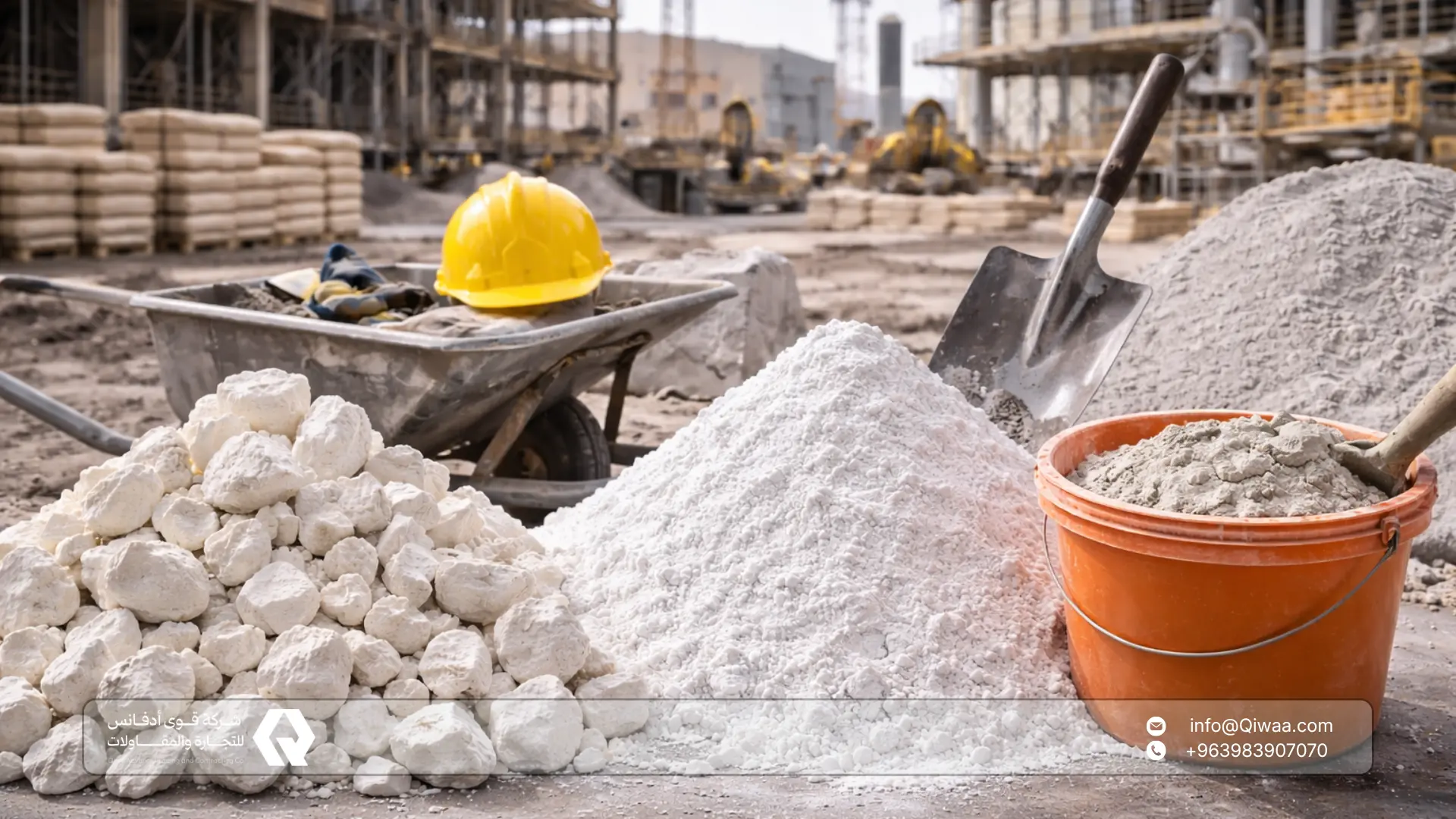
Lime is used in construction projects in Syria in applications where its role is directly linked to soil improvement, mix performance, and the production of specific building materials. Its value does not appear in availability alone, but in whether the right type and supply format are matched to the actual use on site or in production.
1. Soil Stabilization
One of the most practical uses of lime is the treatment of weak or plastic soils before road layers, earthworks, or certain foundation zones are executed.
In this application, lime helps to:
- reduce high soil plasticity
- improve compaction
- increase soil bearing capacity
- reduce the effect of moisture on layer stability
This makes it especially useful in roads, yards, fill areas, and ground preparation works where the original soil is not suitable for direct execution.
2. Mortar and Plaster
Lime is also used in some mortar and plaster mixes when the goal is to improve workability and make the mix easier to spread and finish.
Its benefits here include:
- improving mortar workability
- increasing ease of application over surfaces
- improving uniformity within the mix
- supporting selected plastering and finishing works
This use should remain linked to the mix design and the required specification, not to uncontrolled addition on site.
3. Blocks and Specialized Products
Lime is also used in the manufacture of certain building materials and specialized products, such as:
- some types of blocks
- lime-sand bricks
- selected cement-based products that require controlled ingredients
- production applications related to treated or compressed building materials
Here, lime is not only a site material. It is a production input that requires suitable purity, stable product form, and regular feeding inside the manufacturing line.
4. Wet Soil Treatment
On sites with high moisture or sticky clay soils, lime can be a practical solution for preparing the ground before execution begins.
Its role here includes:
- drying the soil more quickly
- reducing cohesion that hinders operation
- improving machinery movement on site
- improving execution conditions in the early stages
This is especially useful in route preparation, fill zones, and temporary working layers before permanent works begin.
At Qiwa Advance, we support construction projects with lime supply solutions matched to the actual application, whether the need is soil stabilization, building materials production, or on-site soil treatment.
Industrial Uses of Quicklime and Hydrated Lime: Which Type Fits Each Application?
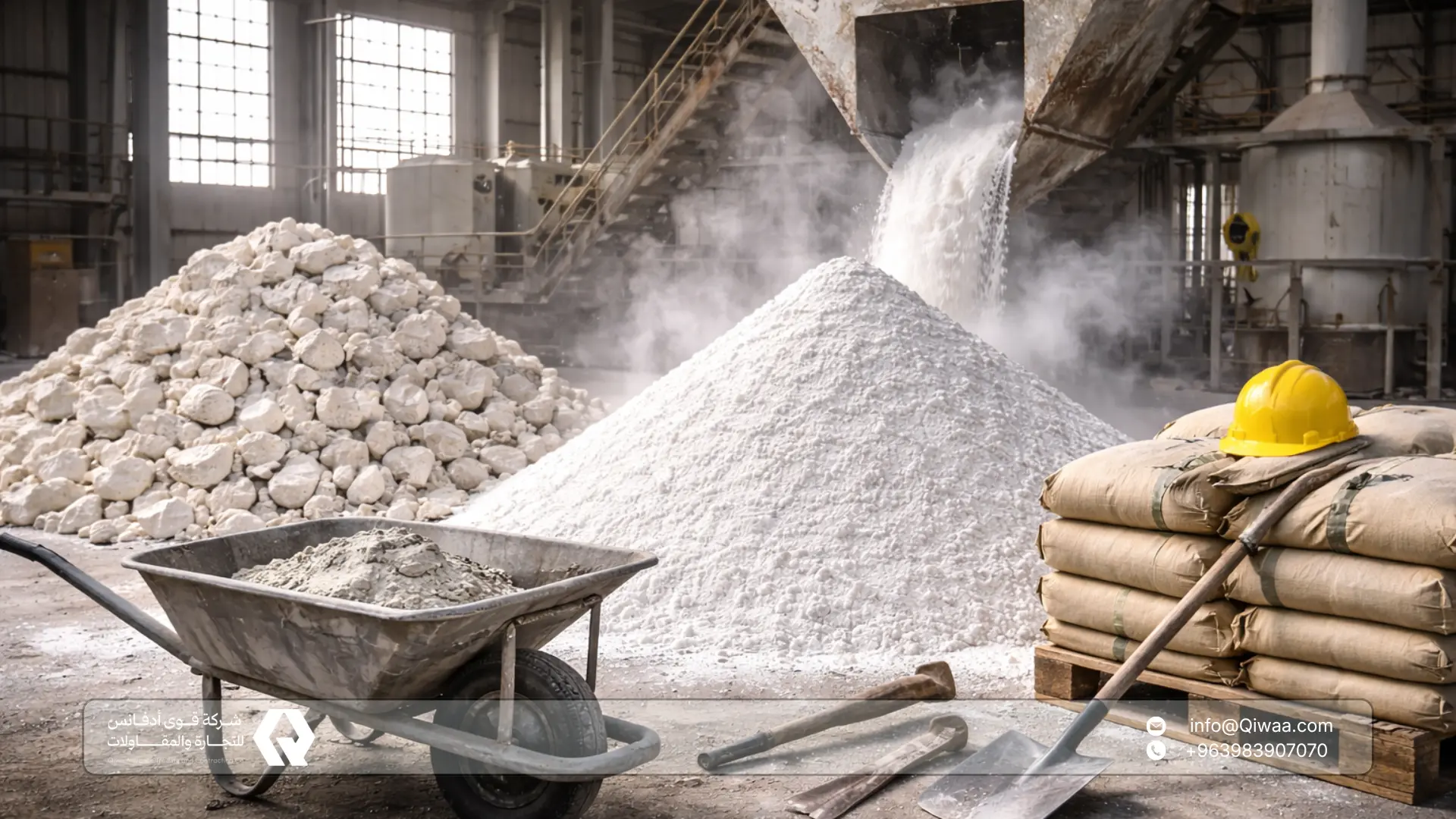
Quicklime and hydrated lime are used in a range of industrial and operating applications in Syria, not only because they are available materials, but because they play a direct role in treatment, reaction control, pH adjustment, and process efficiency. The practical difference matters here: some applications require the stronger reactivity of quicklime, while others are better served by hydrated lime because it is easier to handle and more stable in operation.
1. Water and Wastewater Treatment
One of the most common industrial uses of lime is water and wastewater treatment, whether in utility stations or industrial systems that require chemical adjustment before discharge or reuse.
In this application, lime is used to:
- raise and control pH
- precipitate certain impurities and metals
- reduce acidity in water or sludge
- improve the efficiency of treatment stages
In many of these systems, hydrated lime is often the more suitable option when the priority is controlled dosing, regular feeding, and easier day-to-day operation.
2. Iron, Steel, and Metal Processing
Lime also plays an important role in iron, steel, and some metal-processing operations, where it supports treatment and thermal processes.
Its role here includes:
- helping remove certain impurities from molten material
- improving reaction conditions in some thermal processes
- supporting stages of metal purification and treatment
- serving applications that require a highly reactive alkaline material
In these cases, quicklime is often the preferred option when stronger reaction and higher active content are required.
3. Chemical, Food, and Environmental Applications
Lime is also used in a number of chemical and food industries, as well as some environmental applications, because its alkaline nature supports treatment, adjustment, and control processes.
Its uses here may include:
- chemical treatment within some industrial processes
- adjustment or treatment in selected food applications
- gas and waste treatment in environmental systems
- neutralizing acidic media or helping control their characteristics
In these sectors, the choice between quicklime and hydrated lime depends on the process itself, the method of addition, safety requirements, and the level of control needed during operation.
4. Agriculture and Soil Improvement Outside Construction
In agriculture, lime is used to improve soil properties in non-construction applications, especially when there is a need to modify soil chemistry or improve productivity.
Its role may include:
- adjusting soil acidity
- improving selected chemical properties of agricultural soils
- supporting the performance of some soil types
- entering seasonal or specialized treatment programs
Here, the right choice depends on soil type, required reaction speed, method of addition, and the practicality of field application.
At Qiwa Advance, we help industrial and operational clients choose the most suitable lime type according to the actual application, handling method, and required supply format.
Also read: Qiwa Advance: Official Vişne Madencilik Agent in Syria
What Should You Review Before Approving Lime Supply?
When purchasing lime for industrial or construction use, the key issue is not only the product name or country of origin. What matters is whether the material actually fits the application, because differences in purity, fineness, and product form can directly affect operating efficiency, material consumption, and ease of handling on site or inside the plant.
1. Purity and Active Content
The first point to review is the actual purity of the material, because lime performance depends directly on its active content.
- For quicklime, the main indicator is usually CaO content
- For hydrated lime, the key indicator is Ca(OH)₂ content
This affects:
- reaction efficiency in the application
- the quantity needed to achieve the result
- consistency of performance between batches
- the real operating value of the purchase, not just its nominal price
In practical terms, it is not enough to know whether the product is quicklime or hydrated lime. You need to know the percentage of active material you are actually buying.
2. Fineness and Product Form
Product form is not a secondary detail. It directly affects feeding, mixing, unloading, and storage inside the site or the plant.
Before approval, review:
- whether the product is powder, granular, or lump
- the actual particle size distribution
- whether the fineness suits the intended use
- whether the product form is compatible with your storage, feeding, or mixing system
For example:
- powder may be more suitable where faster mixing or finer distribution is needed
- granular material may be more practical in some feeding systems
- lumps may suit specific applications or equipment, but not all uses
The right choice is the form that fits your equipment and operating method, not simply the form that happens to be available.
3. Reactivity and Handling Requirements
Another important point is to review the product from an operating perspective, not only from a chemical one.
Ask these questions before approval:
- do you need faster reaction?
- or do you need easier storage and handling?
- can the site or plant handle a more reactive product safely?
- are there sensitivities related to moisture, storage, or operating safety?
Some products may offer stronger reaction, but require more care in storage and handling. Others may be easier and more stable in daily use, which can make them more suitable in practice even if they are not the cheapest option.
4. Technical Data and Certificates
Do not rely on the commercial description alone. Ask for clear technical data that allows you to evaluate the product properly before approval.
The key documents and data to request include:
- technical data sheet
- chemical analysis
- CaO or Ca(OH)₂ percentage
- fineness or particle size distribution
- product form and packaging
- available compliance or quality certificates
- confirmation of consistency between batches if supply is phased
The clearer the product data, the more accurate the approval decision becomes, and the lower the risk of buying a product that is suitable in name but unsuitable in operation.
Also Read: Qiwa Advance and Variant Factory in Syria: Advanced Formwork Partnership
How Do You Choose the Right Lime Supply Format for Your Project?
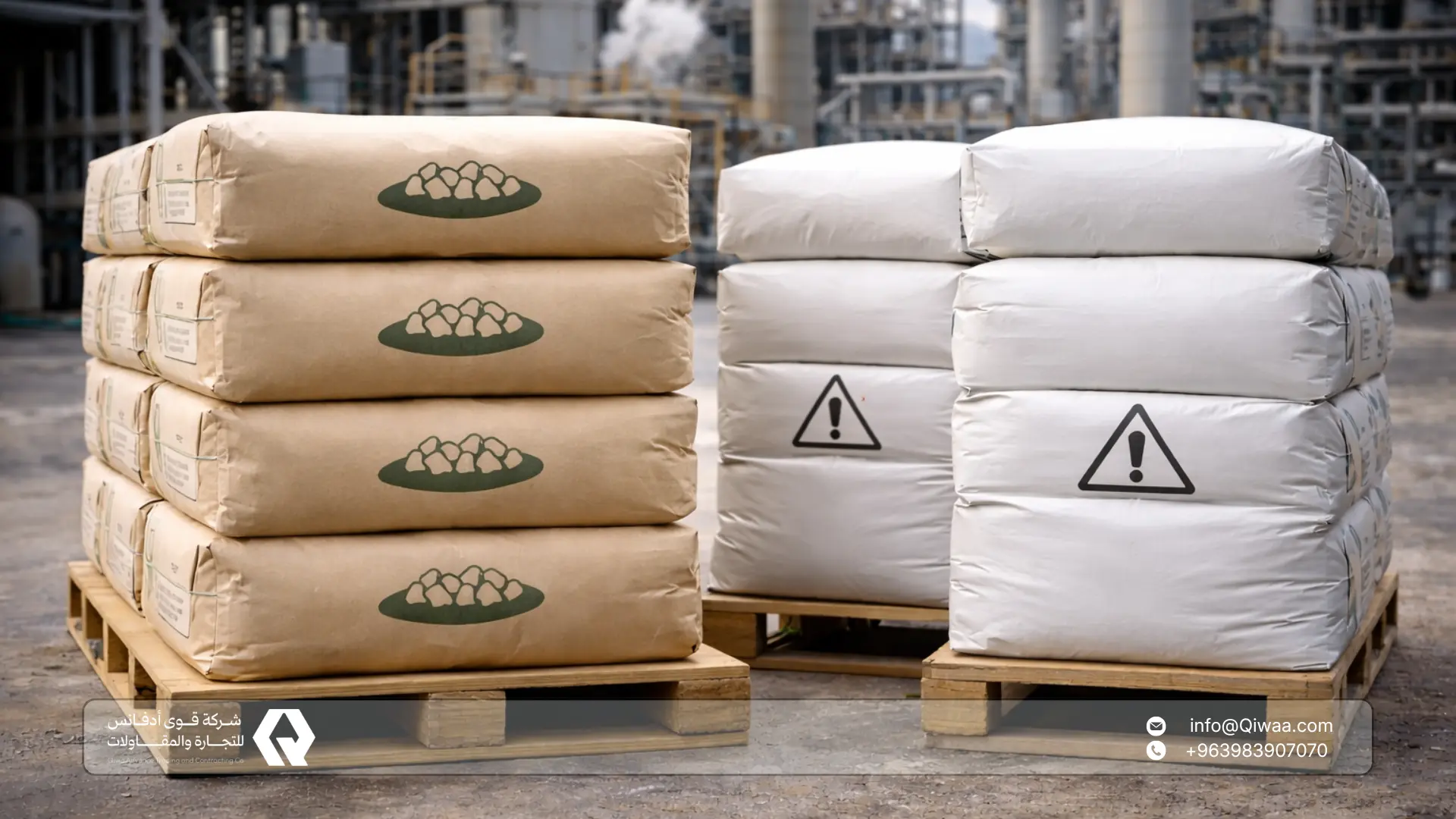
Choosing the right lime type is only part of the decision. You also need a supply format that fits your consumption pattern, site or plant equipment, storage conditions, and handling method. In many cases, the wrong delivery format increases operating cost, waste, and handling difficulty even when the product itself is technically suitable.
Bulk or Bagged Supply?
The right choice depends mainly on volume and operating method.
- Bulk supply is usually more suitable when consumption is high and regular, and when the site or plant has silos, feeding systems, or suitable unloading equipment.
- Bagged supply is more suitable when consumption is lower, phased, or when the site needs more flexibility in transport, unloading, and storage.
In practical terms, bulk is usually more efficient for continuous consumption, while bagged supply is easier to manage when demand is limited or intermittent.
When Is Each Delivery Format More Suitable?
Choose the delivery format based on how the material will actually be received, stored, and used.
Tanker
A tanker is usually the better option when:
- daily or weekly consumption is high
- silos or unloading systems are available
- reducing manual handling is a priority
- the goal is to reduce loss during transfer
- the operation is already set up for bulk materials
Bags
Bags are more suitable when:
- the required quantity is limited or moderate
- the site is not equipped for bulk unloading
- distribution inside the site needs more flexibility
- consumption happens in smaller or irregular batches
Big Bags
Big Bags are often suitable when:
- you need a middle option between bulk and small bags
- you want to reduce the number of handling units
- suitable lifting equipment is available
- storage needs to be more organized than standard bags allow
What Should a Lime Supply Offer Include?
A serious supply offer should not stop at the product name and price. It should clearly state:
- lime type: quicklime or hydrated lime
- product form: powder, granules, or lumps
- supply format: bulk, bags, or Big Bags
- quantity
- fineness or particle size distribution, where relevant
- basic analysis or specification
- delivery point
- whether transport is included
- delivery period
- payment terms
- how delay, damage, or replacement will be handled
The clearer the offer, the easier it becomes to compare suppliers properly and avoid buying a product that appears suitable in theory but creates problems in operation.
Read more: Qiwa Advance and Ariane in Syria: Professional Porcelain Partnership
What Should You Review Before Choosing the Supply Format?
Before approval, review the practical conditions around use:
- sensitivity to moisture, because lime requires dry and organized storage
- unloading method, whether automated or manual
- available storage space
- safety and handling requirements, especially for finer or more reactive forms
- number of handling points, because more handling often means more loss and less control
- distance and transport conditions, since some formats become less efficient when logistics are weak
In many cases, the right supply format saves more in handling, storage, and operating efficiency than the nominal difference in price alone.
At Qiwa Advance, we help projects and industrial buyers choose not only the right lime type, but also the supply format that best fits actual consumption, storage conditions, and operating requirements.
Quicklime or Hydrated Lime: Which Is the Better Fit for Your Use?
The right choice between quicklime and hydrated lime should not be based on product name or price per ton alone. It should be based on how the material will actually be used inside the project or plant, because the practical difference appears in reaction speed, ease of handling, safety requirements, method of addition, and total operating cost.
When Quicklime Is the Better Option?
Quicklime is usually the better choice when the application depends on stronger reaction and faster treatment, especially in field or industrial work where material activity is a key part of performance.
It is commonly more suitable for:
- soil stabilization in roads and earthworks
- fast treatment of wet soils and reduction of plasticity
- industrial applications that require highly active lime
- uses where active CaO content directly affects the result
At the same time, quicklime requires:
- greater care in storage
- stricter handling precautions
- clearer safety control during use
- suitable equipment when quantities are large or operating conditions are sensitive
When Hydrated Lime Is the Better Option?
Hydrated lime is usually the better choice when the priority is easier handling, more stable operation, and better control during dosing or daily use.
It is often more suitable for:
- water and wastewater treatment
- applications that require controlled dosing
- some mortar and plaster uses
- facilities that need a material that is easier to store, transport, and handle
- operations where continuity and ease of use matter more than immediate reaction intensity
In practical terms, if the application needs a product that is easier to handle and more stable in day-to-day operation, hydrated lime is often the more suitable option.
Why Operating Cost Matters More Than Price Per Ton?
One of the most common mistakes is to compare quicklime and hydrated lime only by the quoted price per ton. In practice, the better decision depends on total operating cost, not nominal price alone.
Before choosing, review:
- the actual quantity needed to achieve the result
- ease of storage and handling
- expected loss during transport or use
- safety requirements and equipment needs
- method of addition or feeding
- execution speed or treatment time required
In some cases, the product with the lower price per ton becomes more expensive in practice because it is harder to handle, creates more loss, or requires additional equipment. In other cases, the product with the higher nominal price may be more economical because it is easier to operate and better suited to the application.
The right decision starts with the nature of the use, the operating method, and the real cost of getting the required result, not the ton price alone.
At Qiwa Advance, we help projects and industrial buyers choose the more suitable lime type and delivery format based on actual use, operating conditions, and required supply method.
Qiwa Advance for Lime Supply and Bulk Orders in Syria
When sourcing lime for a construction project or an industrial application, availability alone is not enough. What matters is getting the right type, in the right format, and in quantities that match actual operation.
At Qiwa Advance, we help projects and industrial buyers organize lime supply more clearly by linking the product to the real use, the required delivery format, and the actual consumption pattern.
How We Support Projects and Industrial Buyers?
1. Matching the Product to the Application
We do not treat lime as one product for every use. If the application requires faster reaction and stronger field or industrial treatment, we help clients choose quicklime in the most suitable form. If the priority is easier handling, operating stability, and more controlled dosing, we help them select hydrated lime based on the actual work environment.
This is especially relevant for uses such as:
- soil stabilization
- water and wastewater treatment
- metal industries
- selected building material applications
- specialized agricultural and industrial uses
2. Supporting Bulk and Project-Based Orders
For projects and facilities with regular or large-volume demand, we help structure supply in a way that fits real operation, not just estimated demand.
This includes:
- choosing between bulk, bags, or Big Bags based on site or plant conditions
- aligning delivery format with storage and handling capability
- linking quantities to actual consumption and withdrawal needs
- helping clients request the product in the form that best supports use on site or inside the plant
At Qiwa Advance, the goal is not simply to provide lime. It is to provide a supply solution that fits the application, the operating method, and the scale of demand more effectively.
What Should You Check Before Contracting with a Lime Supplier in Syria?
Before approving any lime supplier, do not compare offers by price or availability alone. The more reliable decision depends on whether the supplier can provide the right product, under clear specifications, and in a delivery format that supports actual operation.
1. Confirm the Right Lime Type
Start by confirming whether the application requires quicklime or hydrated lime. The decision should be based on:
- the nature of the application
- required reaction speed
- method of addition or mixing
- operating conditions on site or inside the plant
2. Review Product Quality and Form
Before approval, check:
- material purity
- CaO or Ca(OH)₂ content
- product form: powder, granules, or lumps
- fineness or particle size distribution
- packaging method
These points directly affect reaction efficiency, ease of feeding, handling loss, and suitability for your equipment.
3. Review the Supply Offer Properly
Do not approve an offer that does not clearly define:
- lime type
- product form
- supply format: bulk, bags, or Big Bags
- delivery point
- whether transport is included
- storage and handling requirements
- how delay, damage, or replacement will be handled
Any gap in these points can later turn into an operating issue or an avoidable cost.
4. Link Quantity to Actual Use
Do not base the order on a broad estimate alone. Quantities should be linked to:
- the execution program
- actual plant consumption
- available storage capacity
- withdrawal speed
This helps reduce waste, limit storage pressure, and improve cash-flow control.
If you need a clearer approach to lime supply in Syria, Qiwa Advance helps you choose the right type, the right delivery format, and the right quantity for the way your project or operating line actually works.
Frequently Asked Questions About Quicklime and Hydrated Lime in Syria
1. What Is the Practical Difference Between Quicklime and Hydrated Lime?
In practical terms, the difference is not only in the product name. It is in how the material behaves during use.
If your application needs faster reaction and stronger treatment effect, quicklime is often the better choice. If your priority is easier handling, more stable dosing, and smoother day-to-day operation, hydrated lime is usually more suitable.
2. Is It Better to Buy Bulk or Bagged Lime?
The better option depends on how much you consume and how your site or plant is equipped to receive the material.
If your consumption is high and regular, and you have suitable unloading and storage systems, bulk supply is usually more efficient. If your quantities are lower, phased, or easier to manage in smaller units, bags or Big Bags are often the more practical option.
3. What Should You Request from the Supplier Before Approving Lime Supply?
Before approval, ask for the technical and commercial details that affect actual use, not just the product name and price.
At minimum, request the lime type, technical data sheet or analysis, CaO or Ca(OH)₂ percentage, product form, particle size or fineness data where relevant, packaging format, delivery conditions, and any available certificates or standards. These details help you judge whether the product fits the application in practice.
4. When Is Quicklime More Suitable Than Hydrated Lime?
Quicklime is usually more suitable when the application depends on faster reaction, direct field treatment, or stronger performance in some soil and industrial uses.
If your priority is easier handling, safer day-to-day use, and more stable operation, hydrated lime is usually the better choice. The right decision depends on the application itself, the way the material will be added or handled, and the operating conditions around it.
5. How Do You Choose the Right Type for Your Project?
Start with the application, not the product name. Ask yourself: do you need faster reaction or easier handling? Is the material being used in soil treatment, water treatment, industrial processing, or building materials? The clearer the use case, the easier it becomes to choose the right type and the right supply format.