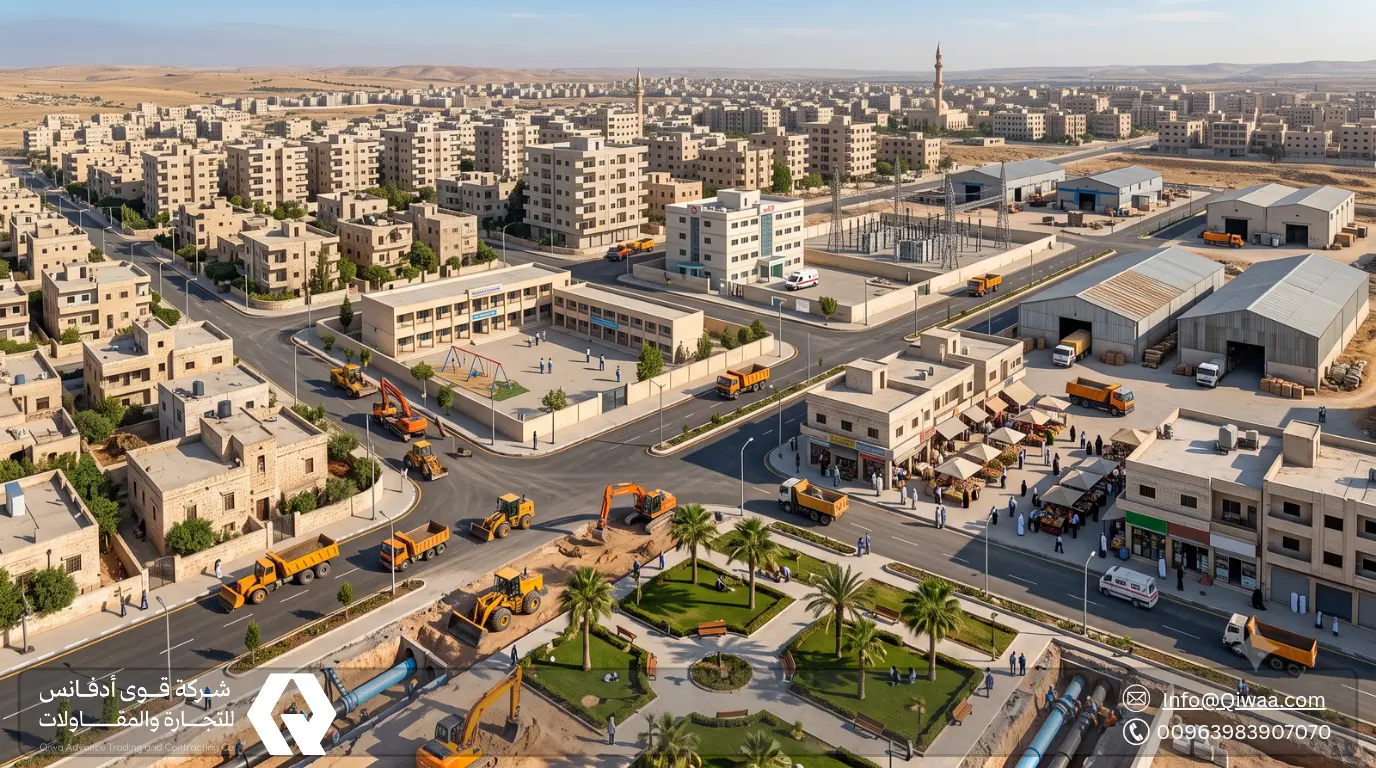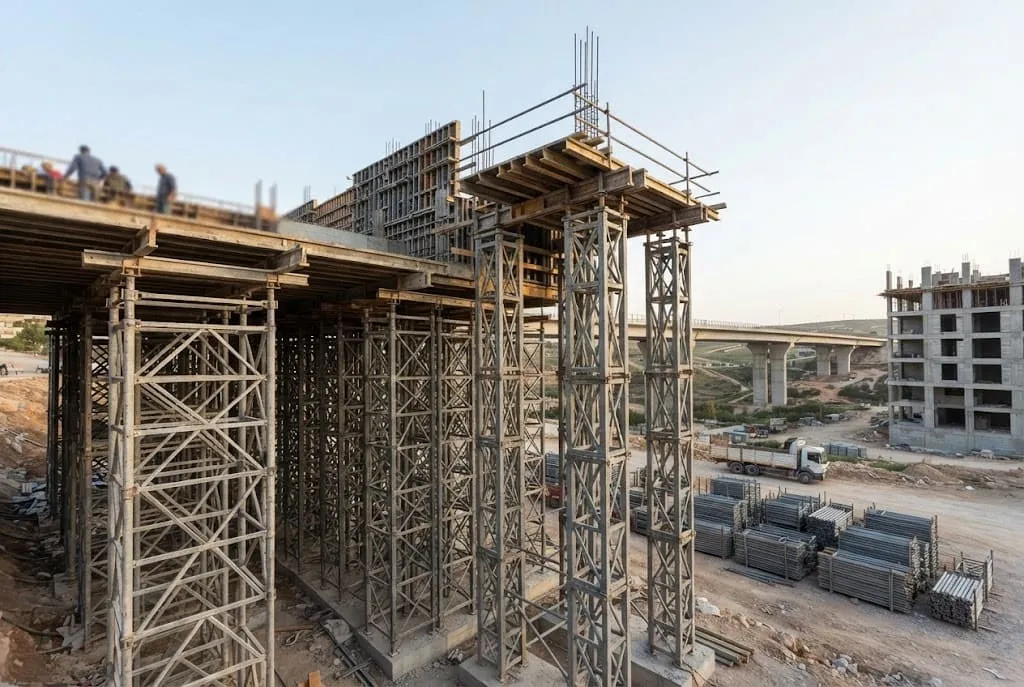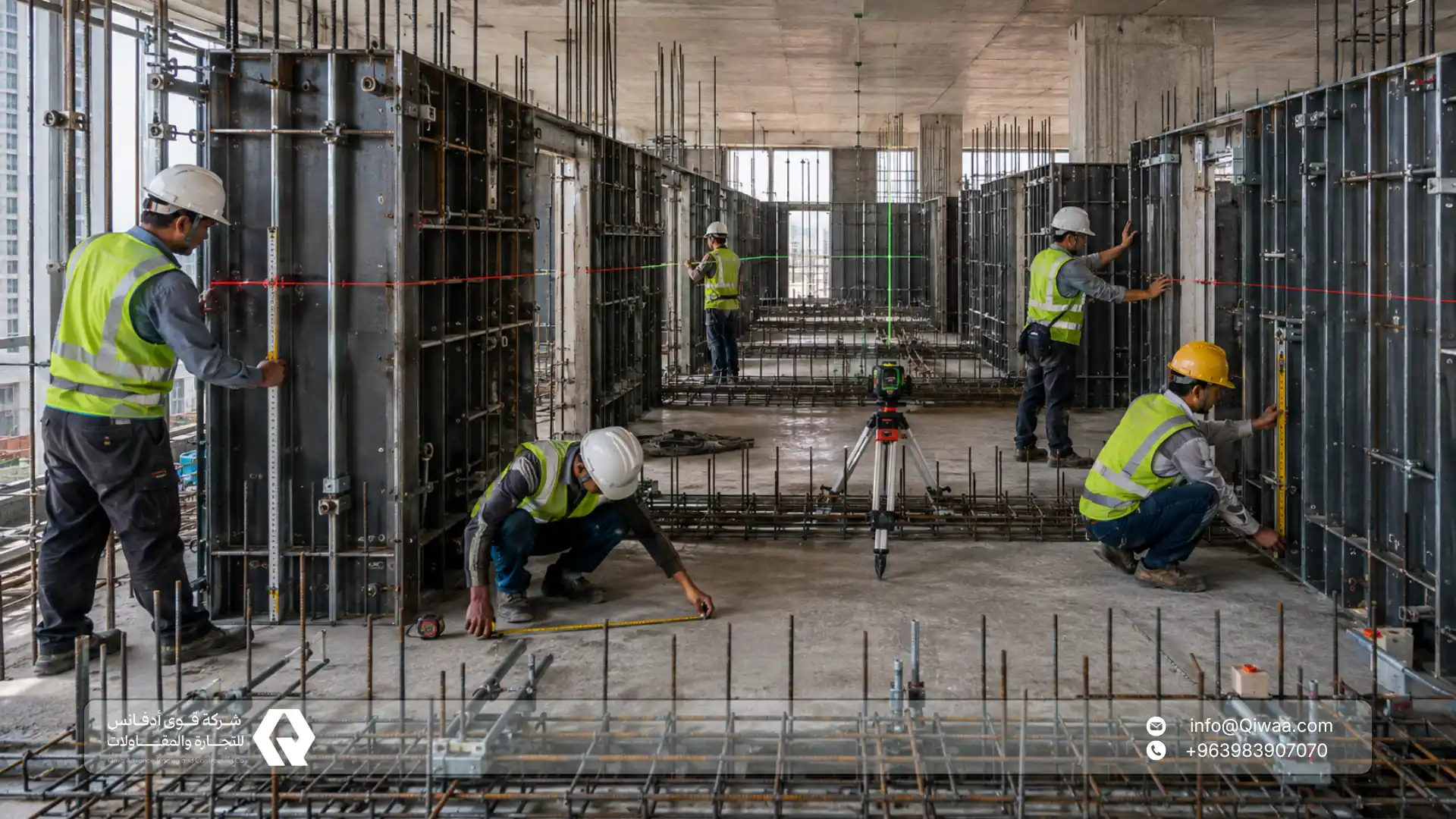


In reconstruction and infrastructure projects across Syria, ready-mix concrete is one of the most important execution materials because it directly affects work speed, structural quality, casting consistency, and final project cost. As the need expands to rehabilitate residential buildings, service facilities, roads, water stations, and industrial facilities, managing concrete supply becomes a core factor in project success.
The importance of this solution is increasing in Syria because of the scale of reconstruction expected in the coming years. In October 2025, the World Bank estimated Syria’s reconstruction cost at around USD 216 billion, distributed across USD 82 billion for infrastructure, USD 75 billion for residential buildings, and USD 59 billion for non-residential buildings. These figures reflect the expected demand for building materials and concrete in housing, services, infrastructure, and public facility projects.
In this article, we explain when setting up a ready-mix concrete plant in Syria inside the project site becomes a suitable option, and how it affects cost, concrete quality, and the supply chain. We also explain the role of Qiwa Advance in supporting ready-mix concrete plant projects.
Why Do Reconstruction Projects in Syria Need More Stable Concrete Solutions?
Construction and reconstruction projects in Syria face practical challenges related to material availability, transportation, inconsistent supply quality, and the distance between some sites and production centers. These factors make full reliance on concrete delivered from external plants a sensitive option in large projects, because any supply delay directly affects execution teams, equipment, testing, and casting schedules.
Infrastructure and essential service sectors are also entering a phase that requires faster and more organized execution. In June 2025, the World Bank approved a USD 146 million grant for an emergency project aimed at improving electricity supply in Syria and supporting sector recovery by rehabilitating damaged transmission lines and substations. This type of project shows the scale of construction and service works that depend on stable building materials and supply chains.
For this reason, a ready-mix concrete plant in Syria becomes a practical option for projects that need stronger control over quantities, quality, and casting schedules, especially when the project is far from supply centers or linked to a compressed timeline.
Also Read: Commercial Fit-Out in Syria for Malls, Showrooms, and Car Showrooms
Why Does Concrete Control Project Cost and Schedule?
In reconstruction and infrastructure projects inside Syria, concrete becomes a direct factor in managing time and cost. The expected demand is large. In October 2025, the World Bank estimated the cost of reconstructing Syria’s physical assets at around USD 216 billion, including USD 82 billion for infrastructure, USD 75 billion for residential buildings, and USD 59 billion for non-residential buildings.
This means that housing projects, roads, water stations, service facilities, and industrial facilities will need large and regular quantities of concrete in the coming years.
Concrete cost is linked to the price per cubic meter, transportation, waiting time, waste, mix-quality variation, and work stoppage when casting is delayed. As an official regional indicator, Saudi Arabia’s General Authority for Statistics recorded the average ready-mix concrete price at SAR 209.89 per m³ in March 2025, while 350 kg resistant concrete reached around SAR 224.49 per m³, and 250 kg resistant concrete reached around SAR 204.43 per m³. These numbers show that even a small difference in transport, waste, or delay becomes significant when a project handles hundreds or thousands of cubic meters.
Concrete is also a time-sensitive material. NRMCA states that ASTM C94 usually requires concrete to be discharged on site within 90 minutes and before 300 revolutions after water is added to cement. This makes the distance between the concrete plant and the casting point an important factor in quality and scheduling.
The impact of waste is also clear in recent studies. A 2024 study indicates that around 3% of ready-mix concrete production may become waste because of factors such as slump loss during transport, overproduction, or rejected loads due to exceeding discharge time. In a project requiring 10,000 m³ of concrete, this percentage means around 300 m³ of potential waste, which is enough to affect cost and execution schedule.
That is why setting up a ready-mix concrete plant in Syria inside the project site becomes important for large projects or sites far from supply sources. The closer production is to the casting point, the easier it becomes to control time, quantity, quality, and waste.
Also Read: Tunnel Formwork in Syria: Benefits for Residential Tower Construction
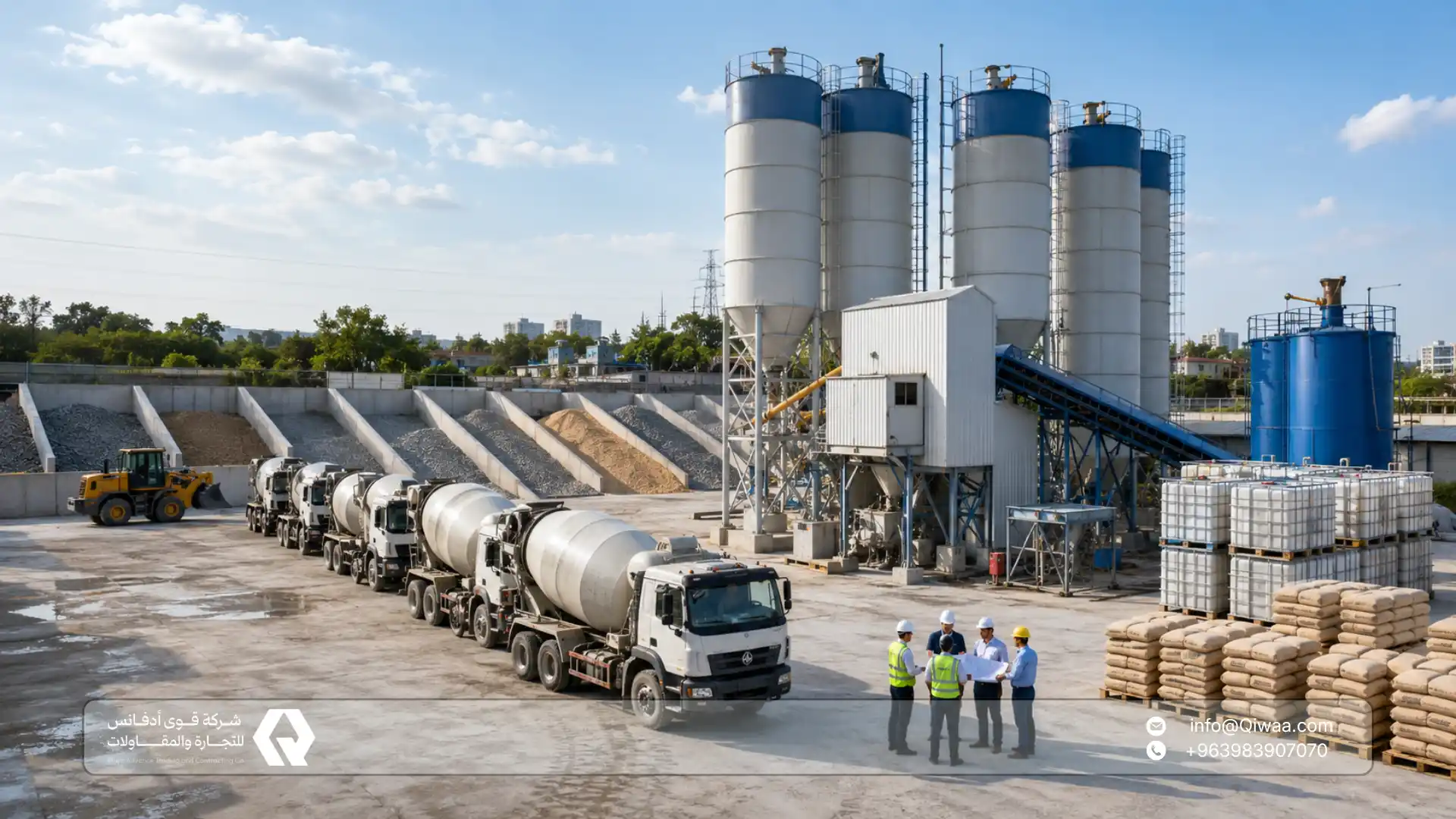
The Importance of an On-Site Plant in Syrian Infrastructure Projects
Infrastructure projects in Syria require large volumes of concrete with different specifications, especially in water works, sewage, treatment plants, channels, manholes, foundations, walls, and precast elements. With renewed attention to essential service projects, concrete becomes a direct factor in accelerating the reactivation of facilities.
An on-site concrete plant helps by:
- Producing multiple mixes according to each concrete element.
- Supporting repeated casting in more than one project area.
- Reducing dependence on suppliers far from the site.
- Adjusting quantities according to work progress.
- Responding faster to consultant modifications.
- Supporting water, sewage, and treatment projects that require precise concrete execution.
A ready-mix concrete plant in Syria is especially valuable when infrastructure projects need stable production rather than irregular deliveries from external sources.
When Is an On-Site Ready-Mix Concrete Plant Suitable for Projects in Syria?
An on-site ready-mix concrete plant in Syria is suitable for projects that depend on repeated casting and large quantities, projects located far from ready-mix suppliers, or projects that require faster execution within reconstruction and infrastructure works. In these cases, producing concrete close to the casting point affects cost, quality, and the execution program.
This solution is suitable in cases such as:
- Large housing projects and residential complexes.
- Water, sewage, and treatment plants.
- Road, bridge, and infrastructure projects.
- Industrial facilities and large warehouses.
- Rehabilitation projects in damaged cities and areas.
- Sites far from reliable concrete plants.
- Projects that require daily or near-daily casting.
- Works that require special mixes or strict quality control.
Read more: Foreign Investment in Syria: How to Enter the Syrian Market Step by Step
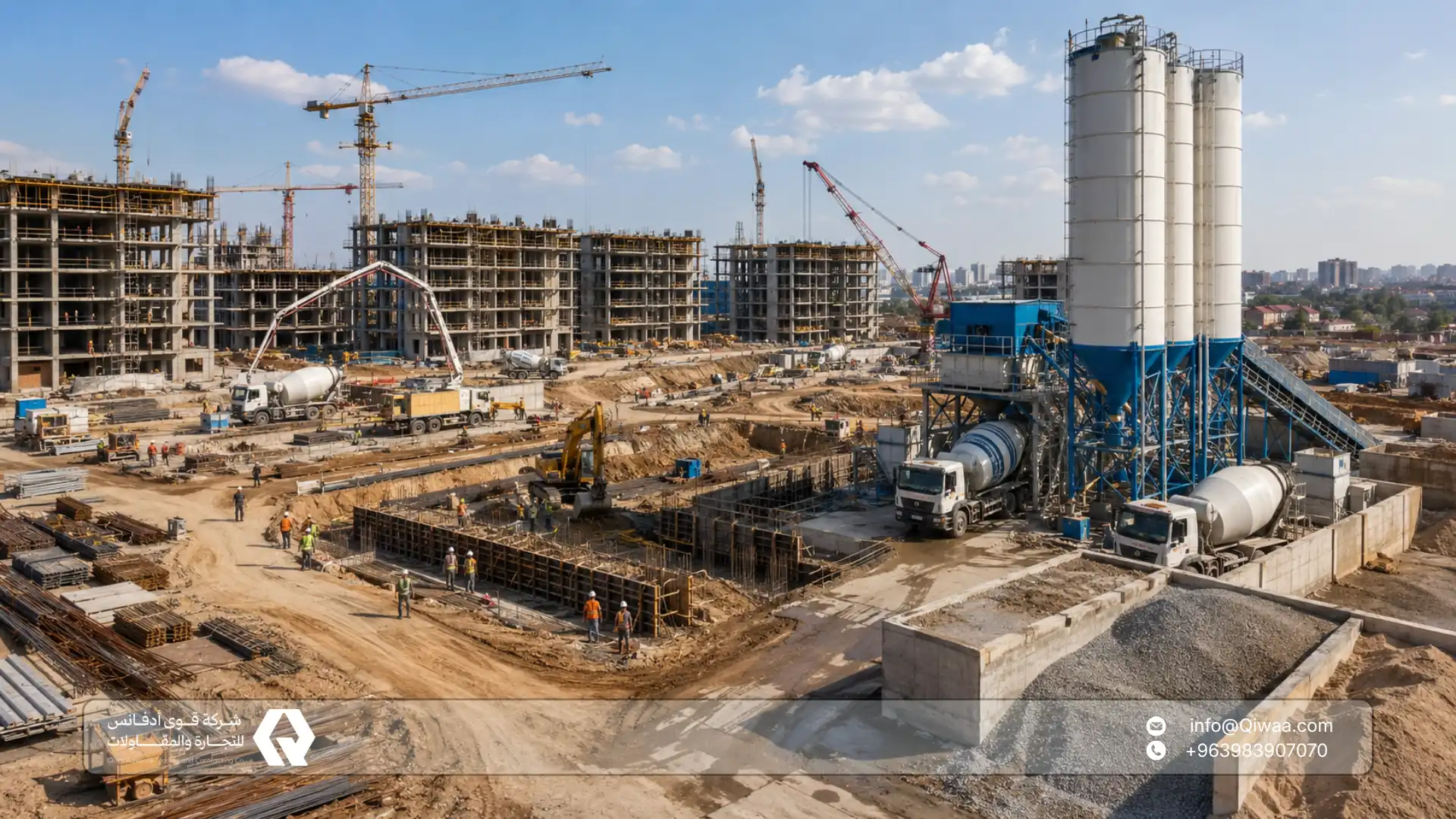
When Is an On-Site Plant Unnecessary and External Supply Better?
The decision to establish a ready-mix concrete plant in Syria inside the site requires study, because some projects located inside cities or close to reliable ready-mix plants may achieve better results through organized external supply.
The cost of setting up and operating the plant must be compared with the cost of buying ready-mix concrete, while calculating transportation, waiting time, waste, and delay risks.
Before approving an on-site plant, the following should be studied:
- Total concrete quantity required.
- Project duration and casting intensity.
- Distance to the nearest reliable concrete supplier.
- Road condition and transport routes.
- Availability of enough space inside the site.
- Availability of water and electricity or alternative operating sources.
- Ease of bringing cement, aggregates, sand, and admixtures into the site.
- Laboratory and quality-control requirements.
- Consultant and owner conditions.
- Operating cost compared with external supply.
If quantities are large, the site is far, and the schedule is compressed, an on-site plant becomes a strong economic and operational option. For small projects or sites close to reliable suppliers, external supply may be more suitable when schedules and quality are managed strictly.
Also Check: Ceramic and Porcelain Tiles in Syria: Import Sources and Best Options
What Does an On-Site Ready-Mix Concrete Plant Need?
For a concrete plant inside the site to operate efficiently, it must be treated as a complete production facility, not just a large mixer. The plant needs organized space, raw materials, a laboratory, an operating team, and clear movement routes connecting production with execution teams.
The main requirements include:
- Suitable space for plant installation and movement routes.
- Storage areas for aggregates, sand, and cement.
- A suitable water source for mixing and cleaning.
- Stable electricity or operating energy.
- Accurate weighing and mixing system.
- Internal transport equipment or mixer trucks.
- Concrete pumps when required.
- A laboratory or approved testing system.
- Operating team and specialized technicians.
- Equipment maintenance plan.
- Documentation system for quantities, mixes, and tests.
Water planning is also important. One ScienceDirect study indicates that producing one cubic meter of ready-mix concrete may require approximately 175 liters of water for mixing, in addition to water used to wash mixers and equipment. This makes water source and wash-water waste management part of the study for any on-site plant.
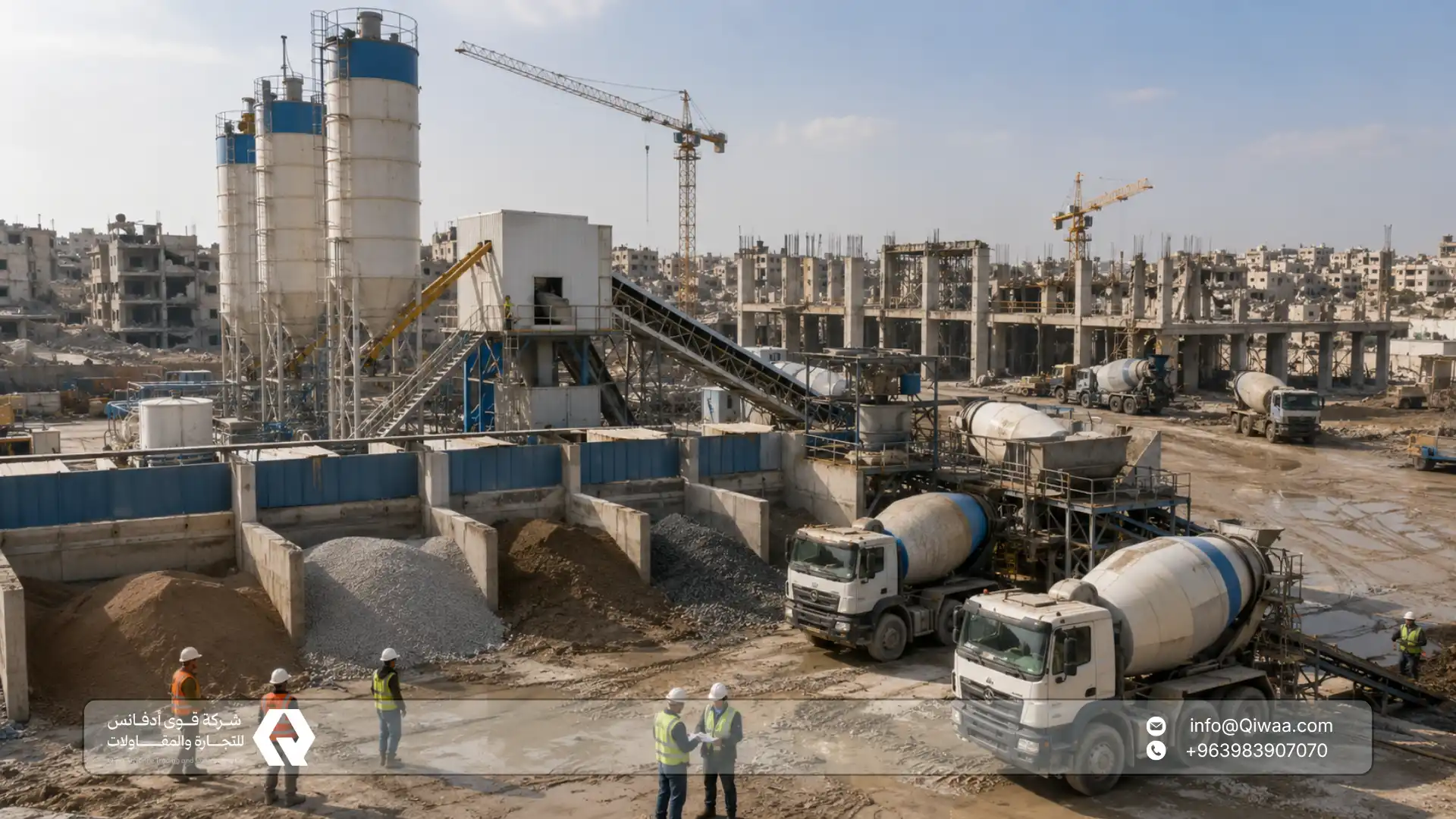
How Does a Concrete Plant Reduce Execution Cost in Syria?
In the Syrian market, concrete cost does not appear only in the cubic meter price. It also appears in transportation, waiting time, equipment stoppage, delayed work teams, and rejected nonconforming loads.
Therefore, controlling concrete production inside the site becomes a way to reduce indirect costs that accumulate during execution.
An internal plant helps reduce cost through:
- Reducing concrete transportation cost over long distances.
- Reducing waiting time for mixer trucks and pumps.
- Producing the required quantity according to the actual casting volume.
- Reducing waste caused by delays or poor coordination.
- Reducing the impact of price fluctuations during the project period.
- Improving the use of labor and equipment on site.
- Controlling casting schedules away from external supplier pressure.
According to a study related to the 90-minute rule for ready-mix concrete, around 3% of total concrete production may become waste because of rejected loads, exceeded discharge time, or operational issues. In a project that requires 10,000 m³, this equals around 300 m³ of potential waste, which is a significant number for both cost and schedule.
A ready-mix concrete plant in Syria can therefore support cost control when the project volume justifies the setup and operation.
Read Also: Industrial and Medical Gases in Syria: Safe Supply for Steel Plants and Hospitals
A Supply Chain Closer to the Project Site
The concrete supply chain starts before mixing. It includes cement, aggregates, sand, water, chemical admixtures, storage, mixing, internal transport, casting, and curing.
In Syria, managing this chain becomes more important when the project is in a remote area, roads are congested, or execution depends on large quantities over a short period.
Having a plant inside the site helps by:
- Monitoring raw material stock daily.
- Scheduling cement, aggregate, and admixture supply in advance.
- Reducing the gap between mixing time and casting time.
- Adjusting the production plan according to work progress.
- Documenting quantities, mixes, and tests.
- Reducing risks caused by delayed mixer trucks from outside the site.
The importance of production close to the casting point is clear because ready-mix concrete is linked to time. NRMCA explains that ASTM C94 refers to discharging concrete on site within 90 minutes and before 300 revolutions after water is added to cement, with possible adjustment according to technical conditions.
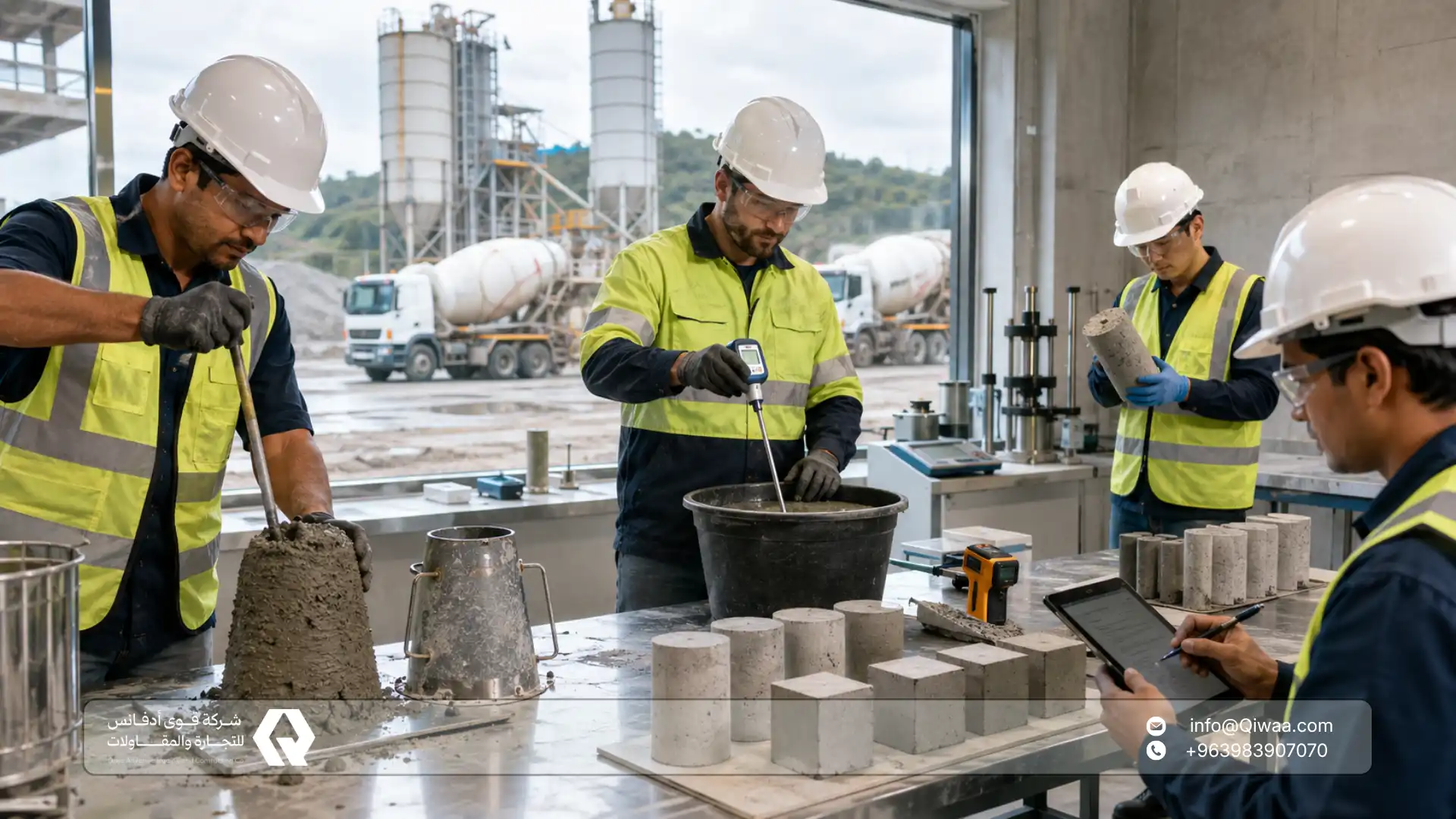
Concrete Quality Starts with Mix Control
A ready-mix concrete plant in Syria does not create real value unless it is connected to a clear quality-control system. The goal is to produce concrete that matches the required specifications for each structural element, not only to produce large quantities.
Mix requirements differ according to use. Foundations may need different specifications from columns, while slabs, walls, tanks, or infrastructure elements may require special mixes in terms of strength, workability, setting time, permeability, or resistance to environmental conditions.
Key elements must be controlled, including:
- Cement type and source.
- Aggregate grading and cleanliness.
- Water-to-cement ratio.
- Type and dosage of chemical admixtures.
- Mixing time.
- Concrete temperature during casting.
- Workability.
- Sampling and testing.
- Quality documentation for each pour.
NRMCA states that basic concrete quality tests include strength, temperature, slump, air content, and unit weight, with a common testing frequency of once per 150 cubic yards in general cases.
The Role of Chemical Admixtures in Improving Concrete Performance
In modern projects, chemical admixtures have become an important part of controlling mix performance, especially when the project needs to improve workability, reduce water, control setting time, or improve casting efficiency under specific conditions.
When technically approved, admixtures may help achieve goals such as:
- Improving workability without increasing water.
- Reducing segregation and bleeding.
- Controlling setting time according to site conditions.
- Improving concrete performance in dense or repeated casting.
- Increasing the efficiency of mixes used in special elements.
- Supporting concrete quality in hot weather or internal transport conditions.
For a ready-mix concrete plant in Syria, admixture selection must remain linked to consultant approval, mix design, cement source, aggregate quality, and actual site conditions.
Reducing Delay Risks in Major Projects
In major projects, concrete delays can disrupt more than one activity at the same time. When a pour stops, pumps, steel-fixing teams, formwork teams, supervision, laboratory teams, equipment, and following activities may all be affected.
Having a plant inside the site reduces these risks because concrete production becomes closer to project management decisions. The production plan can be adjusted daily according to site status, one pour can be prioritized over another, production can increase on peak days, or production can be reduced when technical stoppages occur.
This is important in projects such as:
- Large residential complexes.
- Towers and multi-story structures.
- Water and sewage stations.
- Industrial projects.
- Roads and bridges.
- Infrastructure projects.
- Facilities that depend on repeated casting or large concrete quantities.
In these projects, each delayed day may create additional cost. Therefore, controlling concrete means controlling a major part of the execution program.
Qiwa Advance: A Strong Partner for Setting Up Ready-Mix Concrete Plants in Syria
At Qiwa Advance, we support projects that need on-site ready-mix concrete solutions from a practical perspective connected to execution realities in Syria.
We start by studying the project’s need, then connect quantities, materials, site conditions, quality, and the supply chain with an applicable execution plan.
We can support you in:
- Studying the feasibility of establishing a concrete plant inside the project site.
- Estimating concrete quantities according to execution phases.
- Securing concrete-related materials such as cement, cementitious materials, and chemical admixtures.
- Coordinating site needs for water, electricity, storage, and movement routes.
- Supporting contracting works related to the project.
- Connecting concrete production with the casting and execution schedule.
- Organizing the project’s material supply chain.
- Comparing the on-site plant option with organized external supply.
Through our experience in supply, contracting, industry, building materials, and construction projects, we treat the concrete plant inside the site as a solution that helps control cost, quality, and time, especially in reconstruction and infrastructure projects inside Syria.
Ready-Mix Concrete Plant in Syria: An Important Option for Reconstruction Projects
Setting up a ready-mix concrete plant in Syria inside the project site is an operational and investment decision that affects cost, execution speed, concrete quality, inventory management, and supply-chain stability.
This decision becomes more important in large or remote projects, or projects that require repeated casting within a compressed timeline.
The right decision depends on studying quantities, site location, material sources, casting plan, quality requirements, and operating cost compared with external supply.
Therefore, an internal plant must be treated as part of the project plan, not as a quick fix for a temporary supply problem.
Contact Qiwa Advance to study your project needs in Syria and define the most suitable solution, whether that means setting up a concrete plant inside the site, organizing external concrete supply, or building a supply chain that supports efficient execution.