

Phosphate investment in Syria is becoming one of the most important opportunities in the mining, industrial, agricultural, and export sectors. Syrian phosphate is not just an ordinary raw material. It is a strategic resource used in fertilizers, agricultural products, and chemical industries, and it is directly connected to food supply chains, industrial production, and foreign markets.
The importance of Syrian phosphate is increasing today with renewed attention to the mineral resources sector, the movement of exports through Tartus Port, and the signing of new agreements related to extraction, marketing, and export. However, the real value of phosphate investment in Syria is not achieved by extraction alone. It requires an integrated process that includes raw material study, organized extraction, preparation, testing, transport, marketing, and linking production with the needs of factories and importers.
In this article, we review phosphate investment in Syria from an investment perspective, starting with extraction areas, production, and exports, then moving to mining, processing, and export opportunities, while explaining the role of Qiwa Advance in supporting investors, factories, and importers.
What Is Phosphate Rock?
Phosphate rock is a mineral ore that contains phosphorus compounds. It is evaluated commercially and industrially according to several factors, mainly the percentage of phosphorus pentoxide, P₂O₅.
The clearer and more stable the specifications are, the more marketable and industrially usable the ore becomes.
The United States Geological Survey, USGS, explains that the commercial product of phosphate rock usually refers to phosphate ore that has been processed or upgraded to contain a suitable percentage of P₂O₅ for use in producing phosphoric acid or elemental phosphorus. Most phosphate extracted globally is used in producing phosphoric acids, which are later used to manufacture ammonium phosphate fertilizers and animal feed supplements.
This highlights an important point for factories and importers: phosphate is not one fixed product. Its value differs according to concentration, impurities, moisture, particle size, processability, and the cost of transport and preparation.
For anyone studying phosphate investment in Syria, understanding phosphate rock specifications is the first step before discussing extraction, pricing, supply, or export.
Also Read: Commercial Fit-Out in Syria for Malls, Showrooms, and Car Showrooms
Why Is Phosphate a Strategic Resource in Syria?
Phosphate is important because it is the main source of phosphorus, an essential element for plant growth and a key input in fertilizer production. This connects phosphate directly to food security and agricultural supply chains.
As demand for food and fertilizers increases, countries with phosphate resources capable of serving factories and agricultural and industrial markets become more important.
In Syria, phosphate has additional importance because it is not only an extractable raw material. It is a mining resource that can support several economic paths during the reactivation of production.
The most important Syrian phosphate areas have historically been concentrated in the Syrian Badia and eastern rural Homs, especially near Palmyra. This makes phosphate part of a wider economic system that includes mining, transport, preparation, export, and fertilizer production.
The strategic value of Syrian phosphate appears in several areas:
- Producing phosphate fertilizers that serve the agricultural sector.
- Producing phosphoric acid as an important input for chemical and fertilizer industries.
- Supporting agricultural supply chains inside Syria and nearby markets.
- Exporting to markets that need phosphate rock or phosphate-based products.
- Strengthening the economic value of Syria’s mining sector.
- Opening investment opportunities in preparation, transport, processing, and logistics.
For this reason, phosphate investment in Syria is not limited to mining. It can also extend to industrial processing, supply chains, logistics, and export development.
Also Read: Tunnel Formwork in Syria: Benefits for Residential Tower Construction
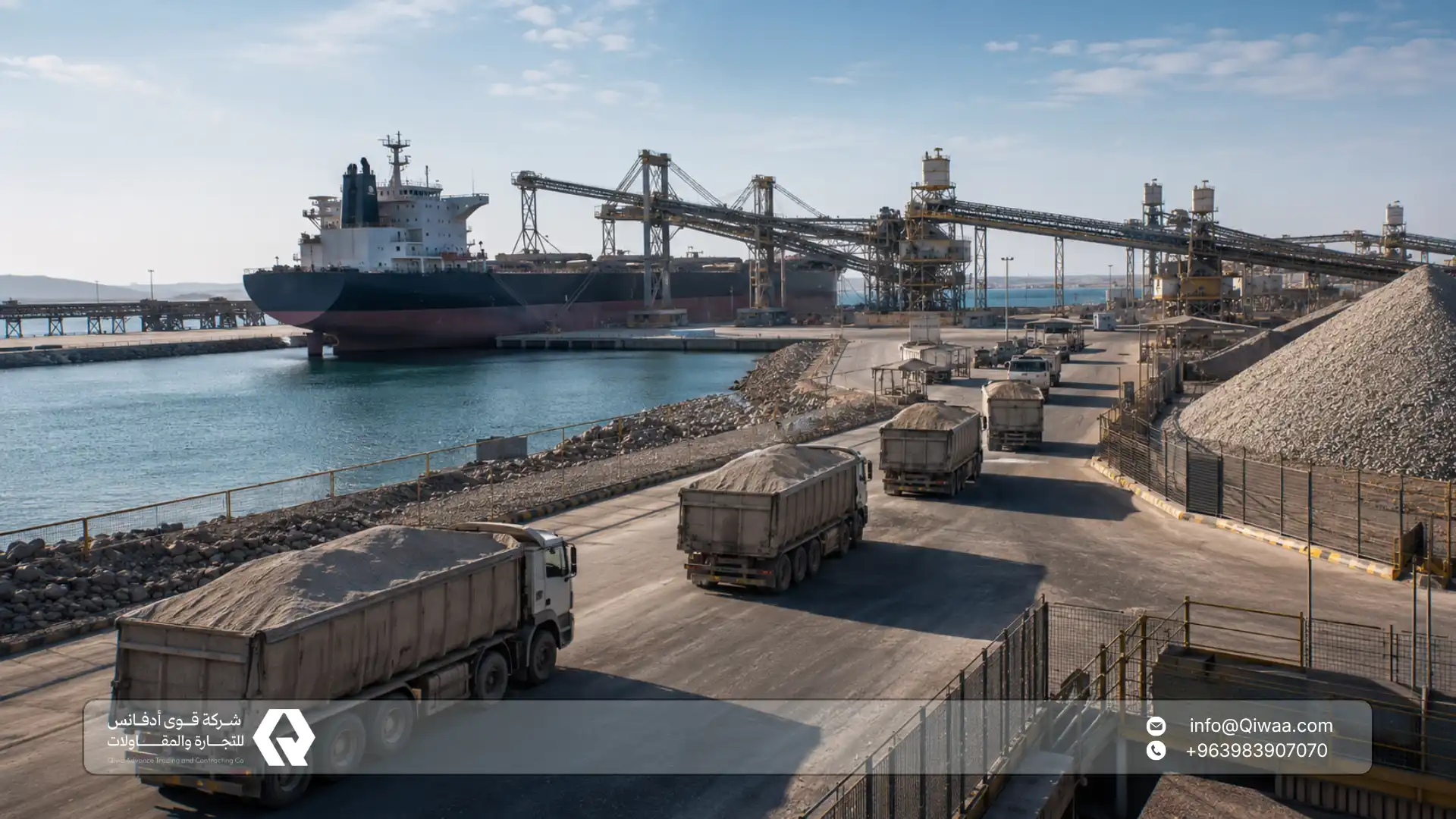
Phosphate Ore Quality: What Determines Its Market Value?
The value of phosphate ore depends on its technical specifications, especially when it is directed to fertilizer factories or chemical processing plants.
Before contracting, several elements should be reviewed, including:
- P₂O₅ Percentage: The most important indicator of ore quality and commercial value.
- Moisture: Affects weight, storage, transport, and processing efficiency.
- Particle Size: Determines how suitable the ore is for grinding, mixing, or shipping.
- Impurities: Their importance varies depending on the required industrial use.
- Processability: Includes whether the ore needs washing, grinding, screening, or drying.
Clear specifications are essential for successful phosphate investment in Syria because they reduce disputes, improve pricing, and help connect the ore with the right buyer or factory.
When specifications are unclear, phosphate investment in Syria becomes more exposed to pricing disagreements, shipment rejection, processing delays, or quality disputes after delivery.
Where Is Phosphate Extracted in Syria?
Phosphate extraction in Syria is concentrated mainly in eastern rural Homs and the Palmyra area, where the most important historically productive mines are located near transport routes toward Tartus Port.
USGS data indicates that Syrian phosphate production took place through the Khneifis, Al-Sharkiya A, and Al-Sharkiya B mines in the Palmyra area, and that shipments were transported to Tartus Port for export.
- Khneifis Mine: A major mine in the Palmyra area. USGS estimated its capacity at around 800,000 tons per year of phosphate ore in 2019 data.
- Al-Sharkiya A Mine: One of the most important phosphate mines in Palmyra. USGS states that its production capacity reached around 1.1 million tons per year of phosphate rock.
- Al-Sharkiya B Mine: Operates within the Al-Sharkiya mining area in Palmyra. Its estimated capacity, according to USGS, reached around 700,000 tons per year.
- Al-Sawana: Mentioned in recent reports related to export shipments from rural Homs, where ore is transported along with Khneifis and Al-Rakhim phosphate to Tartus Port to complete export procedures.
- Al-Rakhim: One of the sites mentioned within recent rural Homs phosphate shipments. Its importance appears within the supply and transport system toward Tartus Port.
- Tartus Port: Not an extraction area, but a key logistics point in the Syrian phosphate chain. USGS indicates that phosphate shipments passed through it after being transported from Palmyra mines.
This distribution makes Syrian phosphate a sector based on more than one stage: extraction from rural Homs and Palmyra mines, then transport, preparation, storage, and export through Tartus Port or supply to local and regional factories.
For investors, this means phosphate investment in Syria must be studied as a full chain, not only as mine access or raw material extraction.
Read more: Foreign Investment in Syria: How to Enter the Syrian Market Step by Step
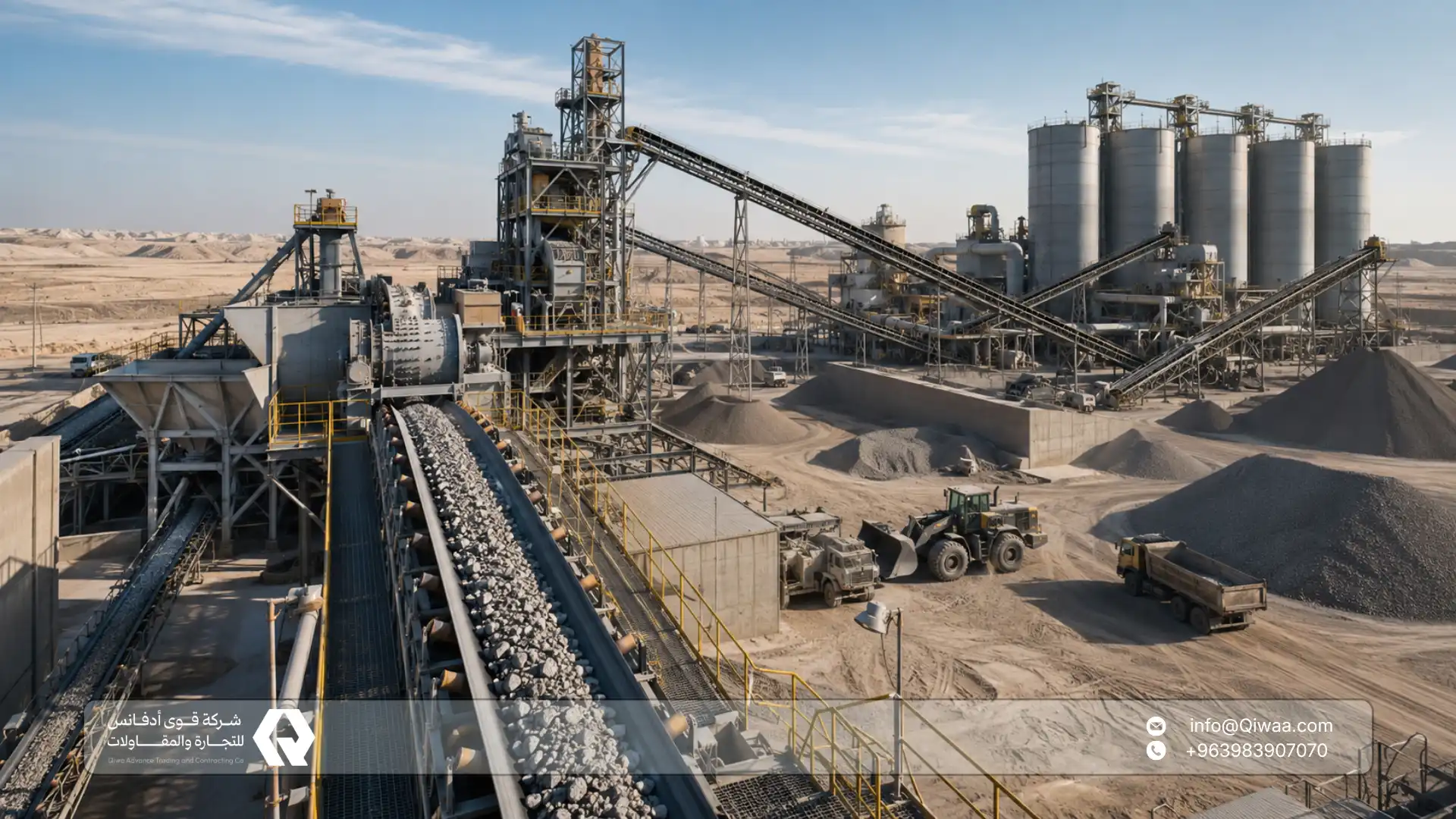
Production and Preparation: From the Mine to Tartus Port
The value of Syrian phosphate does not stop at extraction. The success of the sector depends on having a preparation and transport system capable of turning ore into a marketable product.
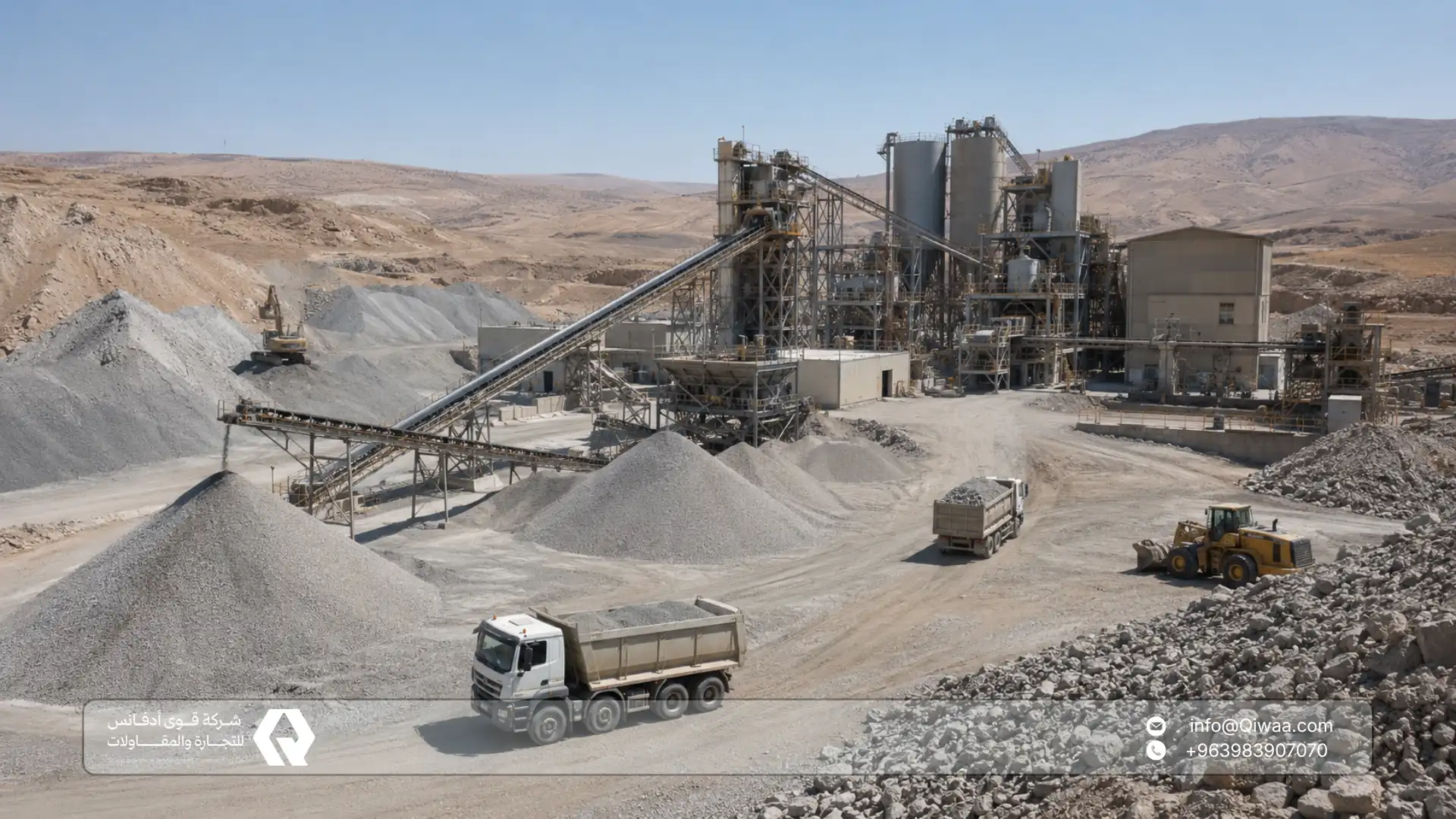
This system usually includes extracting ore from mines, sorting or preparing it, controlling moisture, storing it, and then transporting it to Tartus Port or to processing plants according to the intended use.
USGS data indicates that Syrian phosphate exports passed through Tartus Port after the ore was transported from mines. It also mentioned that the government had previously planned to raise production capacity to 6 million tons annually in the short term and 10 million tons annually in the long term by developing railway transport capacity between the mines and the export terminal in Tartus.
The efficiency of this chain depends on several elements:
- Preparing the ore according to market requirements.
- Controlling moisture and impurities before shipment.
- Organizing storage and loading.
- Connecting mines with effective transport routes.
- Reducing waiting time at the port.
- Matching shipments with buyer specifications.
This is where supply chain management becomes important. Any weakness in preparation, transport, or storage can affect ore quality, shipment regularity, and the competitiveness of Syrian phosphate in foreign markets.
Successful phosphate investment in Syria depends on controlling these stages together: extraction, preparation, storage, inland transport, port handling, and final export documentation.
Also Check: Ceramic and Porcelain Tiles in Syria: Import Sources and Best Options
Production and Export Volume: Signs of Activity Returning
Syrian phosphate production has changed clearly over the past years. USGS estimated phosphate rock production in Syria at around 350,000 tons per year between 2018 and 2020, then indicated that 2021 production rose to around 1.1 million tons by gross weight compared with 2020 estimates.
As for recent exports, SANA announced in July 2025 that total phosphate exports since the fall of the former regime had reached around 230,000 tons, with two shipments loaded from Tartus Port weighing 44,000 tons and 33,000 tons and heading to Romania and Egypt. This came as part of a regular export plan reflecting renewed activity in the mineral resources sector and Syrian ports.
These figures do not mean that the sector has reached full capacity. However, they provide an important indication that Syrian phosphate is gradually returning to export routes, and that Tartus Port remains a main station connecting Syrian mines with foreign markets.
This makes phosphate investment in Syria more relevant for investors who are studying mining, logistics, processing, or export opportunities.
Recent Contracts and Syria’s Direction to Expand the Phosphate Sector in 2026
During 2025 and 2026, the Syrian phosphate sector witnessed a clear direction toward signing new agreements related to extraction, marketing, and export.
In December 2025, the General Authority for Geological and Mineral Resources signed an agreement with TERYAQ, part of Serbia’s ELIXIR Group, to export 1.5 million tons of phosphate by 2026. The agreement also referred to the possibility of future cooperation in establishing factories related to phosphate processing and fertilizer production inside Syria.
In January 2026, SANA announced the signing of two new phosphate sector agreements. The first was with Sharkia Trading and Contracting Company to invest one million tons of phosphate from Syrian mines, including exploration, extraction, and export. The second was with Al-Hassan Holding Company to sell one million tons through land transport and 1.5 million tons through sea transport, aiming to expand marketing channels and increase revenues.
SANA also referred to an official ambition to raise annual production to 7 million tons in the near future, with plans for processing facilities and industrial investments related to the sector.
These contracts are important because they show that Syrian phosphate is not moving only toward selling raw material. It is also becoming connected to rebuilding export channels, attracting investors, and opening the door for downstream industries that can add higher value to the ore inside Syria.
This direction strengthens the case for phosphate investment in Syria in 2026, especially for companies looking at extraction, processing, fertilizer production, port logistics, or export partnerships.
Read Also: Industrial and Medical Gases in Syria: Safe Supply for Steel Plants and Hospitals
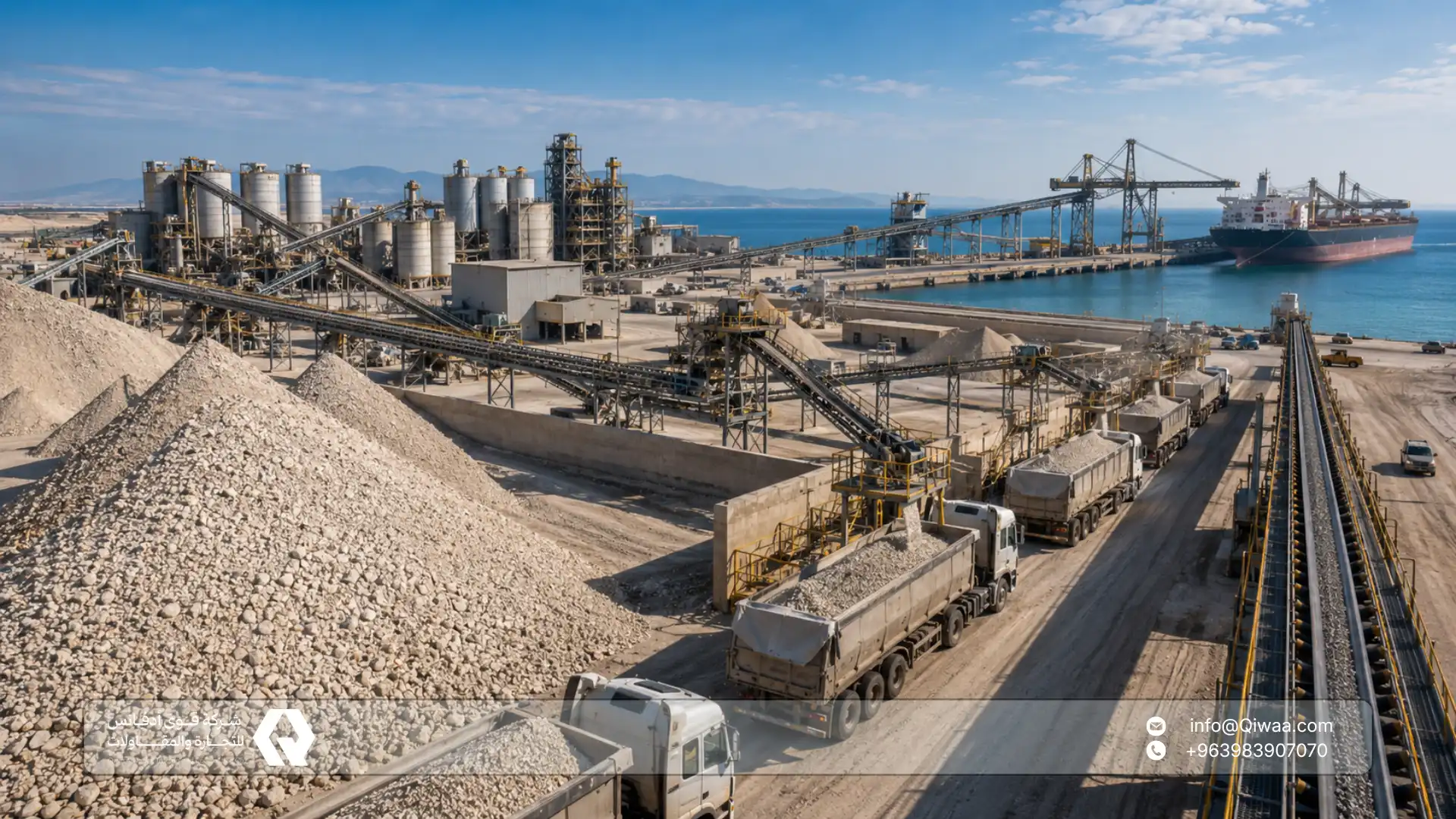
Future Opportunities for Phosphate in the Syrian Market
The return of activity to the phosphate sector in Syria opens several future opportunities that are not limited to direct mining.
The presence of major mines, an export port, regional and global demand for fertilizers, and an official direction to raise production all make phosphate a relevant field for investors, manufacturers, supply companies, and trading firms.
The main future opportunities include:
- Developing existing mines by improving extraction methods, reducing waste, and increasing operating efficiency.
- Rehabilitating preparation facilities such as drying, concentration, storage, and loading units.
- Improving transport and logistics, especially between rural Homs mines and Tartus Port.
- Expanding raw phosphate exports through more regular supply contracts with foreign markets.
- Investing in downstream industries such as phosphoric acid and phosphate fertilizers.
- Serving the local agricultural sector by connecting phosphate with fertilizer and agricultural input production.
- Attracting external industrial partnerships to use Syrian ore within value-added production chains.
These opportunities make the Syrian phosphate sector important for mining companies, fertilizer factories, transport and logistics firms, industrial investors, and export companies.
If you want to study an opportunity related to phosphate investment in Syria, contact Qiwa Advance to help you identify the most suitable option for your project.
Requirements and Conditions for Phosphate Export in Syria 2026
Exporting phosphate in Syria requires an organized path that starts with identifying the ore source and specifications, then preparing the sale or investment contract, completing approvals and customs documents, and finally arranging sea or land shipment according to the export destination.
The importance of this organization appears clearly in the recent contracts published by SANA, where phosphate agreements included investment, exploration, production, and export from the mine site, in addition to sale and export contracts through sea and land transport.
From a customs perspective, Syrian Customs Law No. 38 of 2006 states that any export connected to a permit, license, certificate, or special document must have its documents completed before the customs transaction is finalized.
Practical requirements for phosphate export usually include:
- A clear sale or investment contract defining quantity, specifications, buyer, transport method, and delivery port or crossing.
- Approval from the competent mineral resources authority when the shipment is connected to a mine, investment contract, or official production agreement.
- An export customs declaration according to Syrian customs procedures. The Syrian Customs ASYCUDA guide includes more than one type of export declaration, including direct ordinary export and export under investment law.
- A commercial invoice that includes exporter and importer details, material type, quantity, weight, value, and customs tariff code.
- A certificate of origin issued through the relevant chamber and certified according to required procedures before being used in the export file.
- Shipping and transport documents, such as a sea bill of lading or land transport document, with weight or loading statement according to shipment type.
- A certificate of analysis or technical specifications showing P₂O₅ percentage, moisture, impurities, and particle size when requested by the buyer or importing authority.
- Logistics coordination with the port or carrier to control loading, unloading, storage, and final document issuance dates.
In this way, phosphate export becomes a process linked to both ore readiness and document readiness.
The clearer the specifications are, and the more complete the contracts and commercial and customs documents are, the more organized the shipment becomes and the less exposed it is to delays or specification disputes upon receipt.
For companies studying phosphate investment in Syria, export readiness is a critical factor because it connects mining production with real market access.
Qiwa Advance: Phosphate Mining and Supply Company in Syria
Qiwa Advance supports phosphate projects in Syria by connecting mining with supply, marketing, and export, while focusing on technical specifications, quantity stability, and organizing the commercial path from the mine to the buyer.
Our role in phosphate investment in Syria is to help investors, factories, and importers understand the practical path from resource availability to usable or exportable product.
Our Services in the Phosphate Sector in Syria
- Mining and Operation: Managing phosphate extraction operations efficiently, while reducing waste and improving production stability.
- Phosphate Ore Supply: Providing ore according to factory and buyer requirements, while considering P₂O₅ percentage, moisture, impurities, particle size, and shipping method.
- Matching Ore with Use: Determining whether phosphate is suitable for fertilizer production, chemical processing, export, or industrial use.
- Marketing and Export: Organizing quantities, preparing commercial requirements, and coordinating with shipping channels and target markets.
- Investor Support: Studying investment opportunities in phosphate extraction, preparation, export, or conversion into higher-value products.
Why Choose Qiwa Advance?
- Experience in mining and industrial raw materials.
- Understanding of phosphate opportunities inside the Syrian market.
- Ability to connect ore with factories, importers, and markets.
- Attention to required technical specifications before supply.
- Support in defining quantities, shipping method, and the right export option.
- Experience in supply, trading, and supply chains.
Who Do We Serve in Syria?
- Fertilizer Factories: To secure suitable phosphate ore for production.
- Trading and Import Companies: To obtain an organized supply source.
- Mining Investors: To study extraction, preparation, and export opportunities.
- Industrial Entities: To use phosphate in processing or manufacturing.
- Agricultural Input Companies: To benefit from phosphate within fertilizer and agricultural product chains.
Qiwa Advance helps you choose the most suitable path in the phosphate sector in Syria, whether mining, supply, export, or processing. Contact us now to study your project.
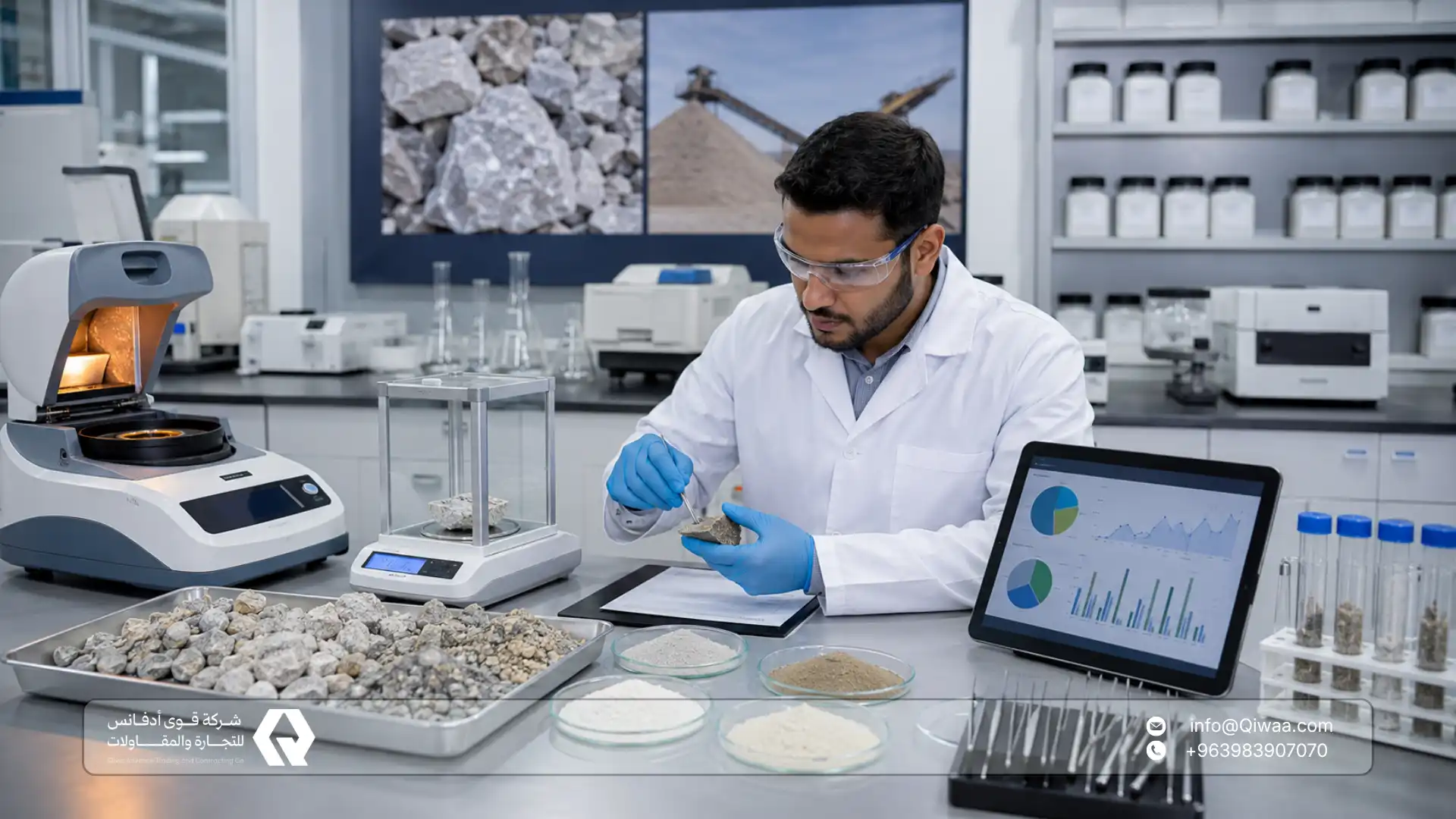
Phosphate Investment in Syria as an Industrial and Mining Opportunity for the Future
Syrian phosphate is a resource that combines mineral value with agricultural and industrial importance. It is used in fertilizer production, supports food supply chains, and gives the mining sector a real opportunity to expand if managed in an organized and economically viable way.
However, success in phosphate investment in Syria requires more than the existence of ore. It requires specification studies, organized extraction, quality testing, a clear supply plan, marketing and export channels, and a strong understanding of factory and market needs.
At Qiwa Advance, we put our experience in mining, supply, trading, and export at the service of phosphate projects in Syria, whether you are a factory looking for suitable ore, an importer seeking a reliable supplier, or an investor studying an opportunity in mining and processing.
If you are considering phosphate investment in Syria, Qiwa Advance can help you study ore requirements, define specifications and quantities, and choose the suitable supply or export mechanism for your industrial or commercial project in Syria.
Contact Qiwa Advance to study your phosphate ore needs and define the specifications, quantities, and supply or export method that best suits your project.