

In housing projects, residential towers, and multi-storey buildings, construction efficiency is not determined by the structural system alone. It also depends on how work is organized on site.
When units, walls, rooms, or floors are repeated, speed becomes valuable only when it is supported by accuracy, consistent quality, and a controlled execution cycle.
This is where the tunnel formwork system becomes highly relevant. It helps projects move faster, produce more uniform concrete elements, and organize site operations with greater discipline.
In this guide, Qiwa Advance explains what tunnel formwork is, how it works, when it is suitable for projects in Syria, and how our partnership with VARIANT supports faster and more reliable execution.
What Is Tunnel Formwork?
Tunnel formwork is a prefabricated steel formwork system that allows walls and slabs to be cast together in one cycle.
Instead of casting vertical and horizontal structural elements in separate stages, tunnel formwork creates a repeated construction cycle where the main walls and slab are poured at the same time.
This helps produce:
- More uniform concrete structures
- Better dimensional accuracy
- Fewer cold joints
- Faster execution cycles
- More consistent quality between floors
- Better control over repetitive units
The system is especially suitable for buildings where rooms, apartments, floors, or structural bays are repeated. In these projects, repetition becomes an advantage because the same formwork cycle can be used again and again.
Tunnel formwork is not simply a faster shuttering method. It is a construction system that works best when design, planning, lifting, reinforcement, services, concrete supply, and site logistics are coordinated from the beginning.
Read more: Concrete Admixtures in Syria: Improve Ready-Mix Quality
How Tunnel Formwork Works
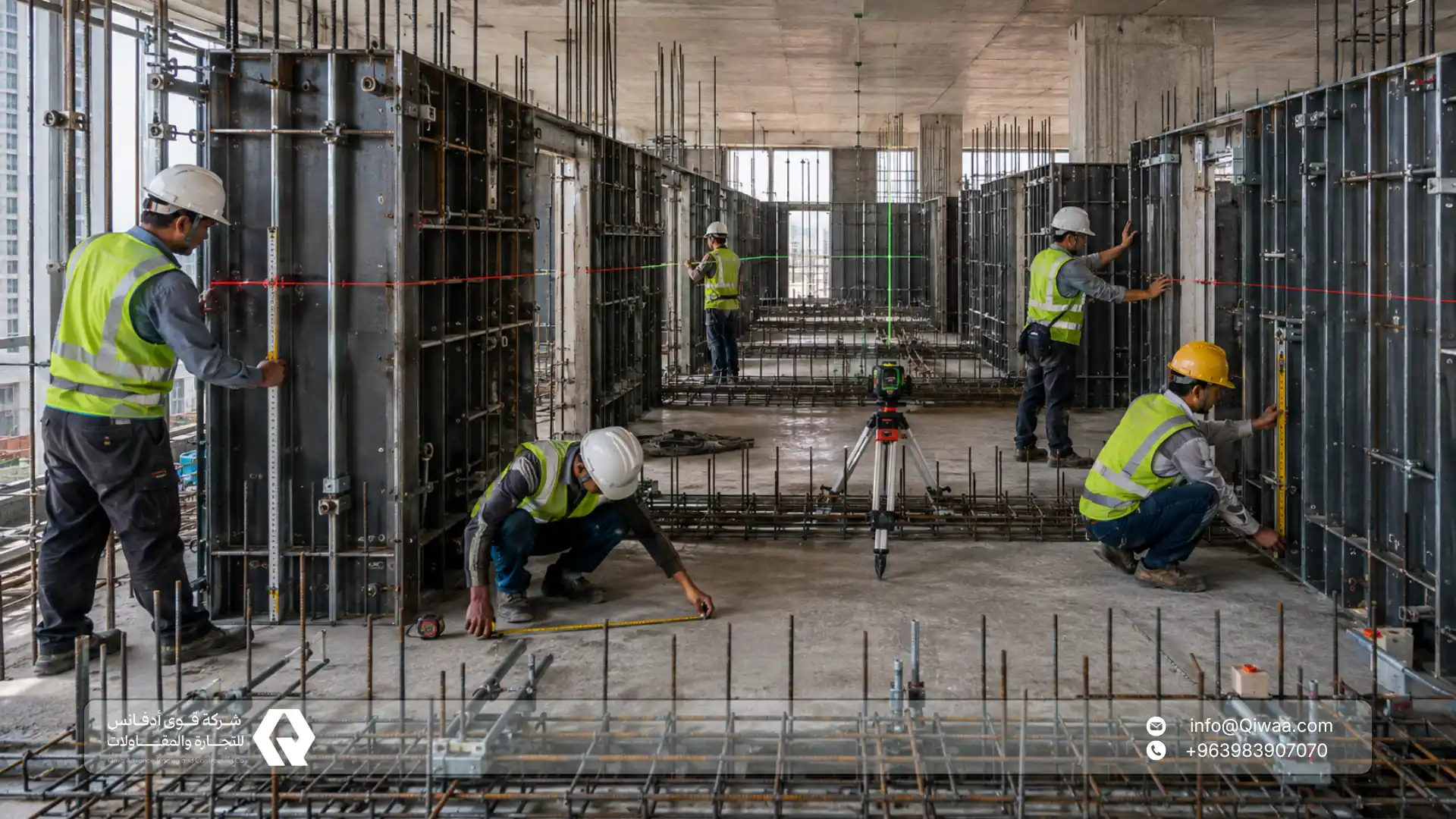
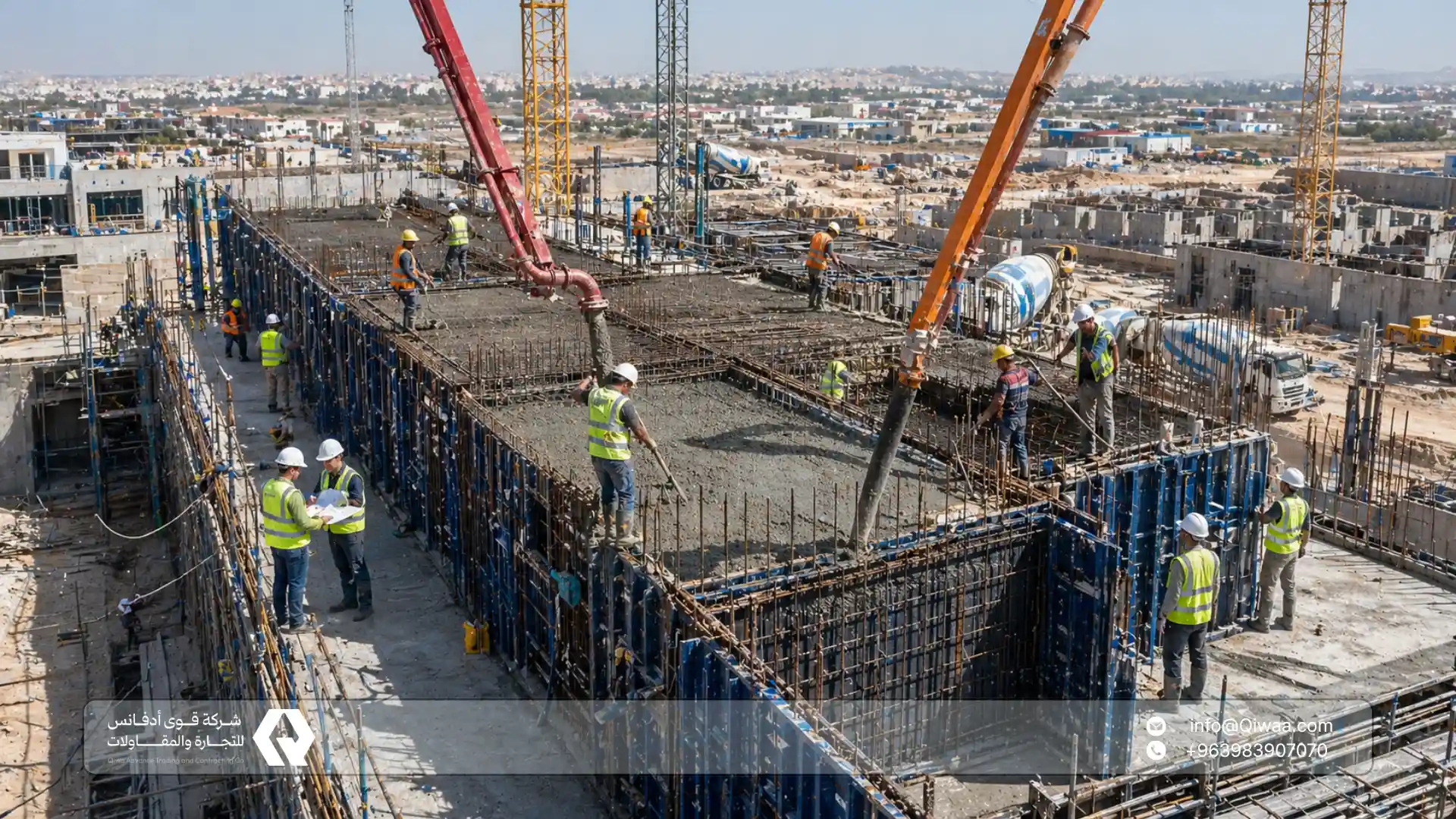
In a tunnel formwork system, tunnel-shaped steel form units are assembled to define the structural bay or unit to be cast.
The typical cycle includes:
- Positioning the tunnel form units
- Aligning axes and levels
- Installing reinforcement
- Fixing openings and embedded services
- Casting walls and slab in one pour
- Allowing the concrete to reach the required early strength
- Stripping the forms
- Moving them to the next bay or upper floor
This cycle is repeated in a controlled sequence across the project.
When the architectural layout is regular, the process becomes more efficient. The team can repeat the same cycle with better control over time, labor, concrete quality, and dimensional consistency.
The system’s productivity depends on how well the project is planned before site work starts. Openings, electrical and mechanical sleeves, service penetrations, lifting zones, storage areas, and concrete supply must all be coordinated early.
If your project in Syria includes repeated units or floors, Qiwa Advance can help you assess whether tunnel formwork is the right execution system.
Why Tunnel Formwork Matters for Reconstruction in Syria?
In Syria’s reconstruction phase, the challenge is not only to build. The challenge is to build faster, more consistently, and with controlled quality across large-scale housing and multi-storey projects.
Tunnel formwork can support this need when the project includes repetitive layouts and a clear execution sequence.
It is especially useful because it can help:
- Accelerate the construction of repeated housing units
- Improve quality consistency from floor to floor
- Reduce some finishing and rework requirements
- Improve site organization through a clear construction cycle
- Support large-scale residential and community projects
- Improve productivity where repetition is part of the project design
For Syria, where reconstruction requires scalable building methods, tunnel formwork can be a practical solution for projects that need speed without sacrificing quality.
However, the system should not be selected automatically. It must be evaluated based on layout repetition, project size, number of floors, architectural flexibility, lifting plan, concrete cycle, and site organization.
Need a faster construction method for a repetitive housing or tower project in Syria? Contact Qiwa Advance to request a technical review or quotation.
Read more: Investment in Syria 2026: Practical Opportunities
Best Uses of Tunnel Formwork
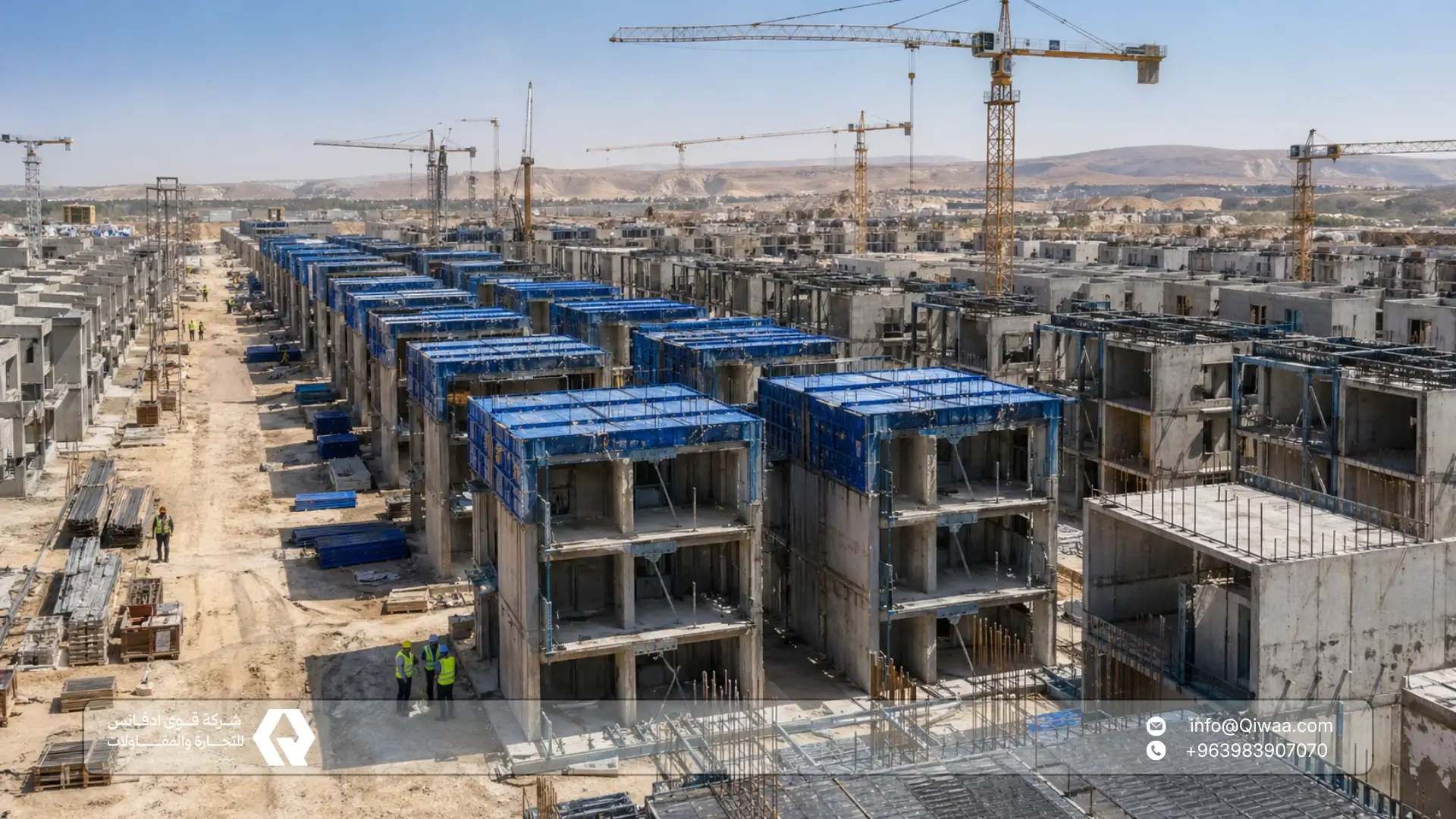
Tunnel formwork is not suitable for every project. It becomes more effective when layouts, rooms, bays, or floors repeat clearly.
The higher the repetition, the stronger the technical and economic value of the system.
Housing and Residential Compounds
Tunnel formwork is highly effective in housing projects because repeated apartment units improve formwork utilization and shorten the construction cycle.
It is suitable for:
- Residential compounds
- Apartment buildings
- Affordable housing projects
- Large-scale housing developments
- Repetitive floor plans
In these projects, the system helps create a steady production rhythm across floors and blocks.
Residential Towers and Multi-Storey Buildings
In towers and multi-storey buildings, repeated floors allow tunnel formwork to improve dimensional accuracy and structural consistency.
The system can help achieve:
- More regular wall and slab geometry
- Better alignment between floors
- Faster construction cycles
- Reduced variation from one level to another
- Better control over repeated elements
This is particularly useful when the building has a consistent structural and architectural layout.
Hotels, Staff Housing, and Student Housing
Tunnel formwork works well in buildings where rooms or units repeat.
This includes:
- Hotels
- Dormitories
- Student housing
- Staff accommodation
- Worker housing
- Repetitive hospitality buildings
In these cases, the repetition of room layouts supports faster execution and more consistent finish quality.
Selected Public Facilities
Tunnel formwork can also be useful in some hospitals, service buildings, or institutional projects when the layout includes repeated units or regular structural bays.
The key condition is that the architectural design must allow enough repetition to justify the system.
If your building has repeated rooms, units, or floors, Qiwa Advance can help you compare tunnel formwork with traditional formwork before you choose the execution method.
Also Read: Infrastructure Contracting in Syria: Choosing the Right Contractor
Tunnel Formwork vs. Traditional Formwork
Tunnel formwork and traditional formwork differ in speed, accuracy, repetition efficiency, and project suitability.
| Comparison Point | Tunnel Formwork | Traditional Formwork |
| Execution speed | Faster in repetitive projects | Slower due to more separate assembly and stripping stages |
| Best project type | Repetitive buildings and repeated units | More flexible for irregular or customized projects |
| Dimensional accuracy | Higher consistency between floors and units | Depends more on each execution stage |
| Concrete surface quality | Smoother surface and better initial finish | May require more correction and finishing |
| Finishing works | Can reduce some later finishing works | Often requires more treatment and finishing |
| Reuse efficiency | Higher in repetitive projects | Less efficient when cycles are not standardized |
| Site organization | Requires clear planning and controlled cycles | More adaptable but less cycle-driven |
| Early coordination | Critical before execution | More flexible for late changes |
Tunnel formwork is usually stronger when the project is repetitive and well planned. Traditional formwork remains useful for projects with irregular layouts, frequent design changes, or highly customized spaces.
Structural Features of Tunnel Formwork
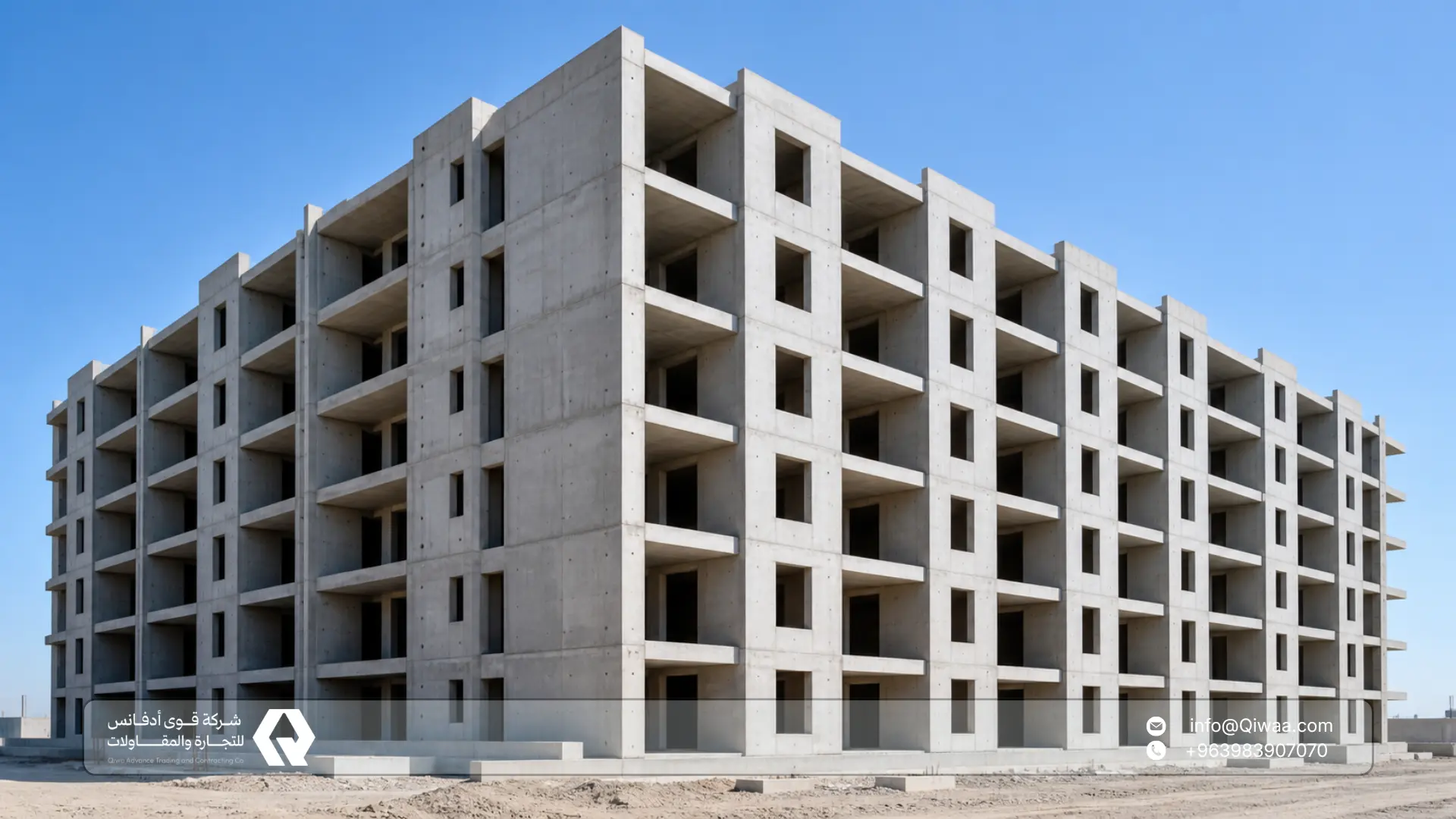
Buildings executed with tunnel formwork often rely on shear walls and flat slabs instead of the traditional column-and-beam frame system.
This creates a structural behavior where walls play a major role in carrying vertical and lateral loads.
The system can support:
- Stronger wall-slab continuity
- Fewer cold joints due to simultaneous casting
- Better monolithic behavior
- More consistent structural geometry
- Higher regularity in repeated floors
Because walls and slabs are cast together, coordination between structure, architecture, and services becomes essential. Any openings, sleeves, or service routes must be confirmed before casting.
This system is especially useful when the architectural layout accepts continuous walls and repeated units. It may be less suitable when the project requires wide open spaces or frequent internal layout changes.
Also Check: Qiwa Advance and Wosta Gases: Strategic Partnership in Syria
What Affects Tunnel Formwork Success?
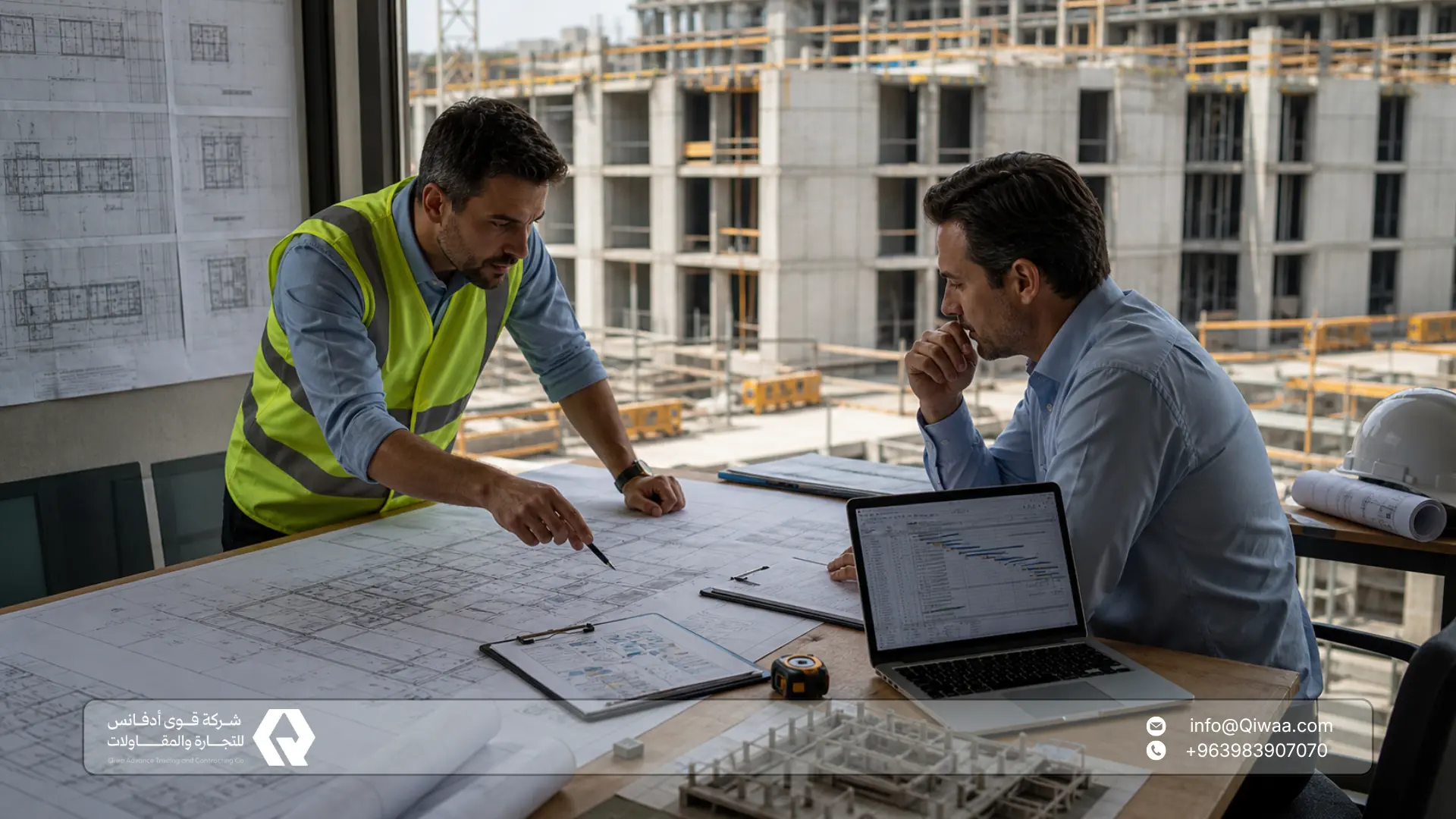
The success of tunnel formwork depends on the project’s suitability and the level of planning before execution.
Repetition Rate
The more repeated the project is, the more effective the system becomes.
Tunnel formwork performs best when:
- Units are similar
- Floors are repeated
- Structural bays are regular
- Openings are predictable
- Work cycles can be standardized
If every floor or unit is different, the technical and economic value of the system becomes weaker.
Architectural Flexibility
Tunnel formwork depends heavily on continuous walls and repeated layouts.
This may limit architectural flexibility in projects that require:
- Large open spaces
- Major layout variation
- Frequent wall changes
- Irregular room distribution
- Highly customized internal spaces
Before adopting the system, the design team must confirm that the architectural layout supports the structural logic of tunnel formwork.
Early Coordination With Services
Because the system works through fast and repeated cycles, late changes can create serious delays.
The following must be coordinated early:
- Electrical sleeves
- Mechanical penetrations
- Plumbing routes
- Door and window openings
- Embedded elements
- Service shafts
- Coordination with finishing requirements
Any missing or incorrect opening may be difficult to fix after casting and may affect both speed and quality.
Site Planning, Lifting, and Handling
Tunnel formwork requires a clear plan for moving, lifting, storing, and repositioning forms.
The project should define:
- Crane or lifting method
- Movement routes
- Temporary storage zones
- Stripping sequence
- Repositioning cycle
- Concrete supply timing
- Labor and reinforcement sequence
The formwork system cannot deliver its full value without a disciplined site plan.
What to Review Before Adoption
Before deciding to use tunnel formwork in a project in Syria, review these points carefully.
Project Layout
Ask whether the units are truly repetitive.
Check:
- Floor plan regularity
- Similarity between units
- Repeated walls and rooms
- Repeated structural bays
- Ability to reuse forms efficiently
If the layout is too irregular, the system may not deliver the expected productivity.
Project Size and Number of Floors
Tunnel formwork becomes more economical when the project has enough repetition and scale.
The larger the project and the higher the number of repeated floors or units, the better the formwork utilization.
Spans and Architectural Details
Tunnel formwork must be checked against the project’s spans and architectural requirements.
Long or irregular spans may require additional solutions, adjustments, or a different construction method.
The design should be reviewed carefully before choosing the system.
Openings and Service Requirements
All openings and embedded services must be defined early.
Review:
- Door and window openings
- Electrical boxes and sleeves
- Plumbing penetrations
- Mechanical routes
- Embedded anchors
- Service shafts
- Coordination drawings
Tunnel formwork works best when these details are finalized before casting.
Daily Execution Cycle
Tunnel formwork depends on a clear daily work rhythm.
The project should define:
- Reinforcement sequence
- Form positioning
- Concrete supply
- Casting cycle
- Stripping time
- Lifting and repositioning
- Labor organization
- Quality control steps
Without a controlled cycle, the system loses much of its advantage.
Before adopting tunnel formwork, contact Qiwa Advance for a practical assessment of your project layout, repetition rate, lifting plan, and execution cycle.
Check: Smart Fuel Station Construction in Syria: From Traditional to Modern Stations
Qiwa Advance and VARIANT Partnership
At Qiwa Advance, we work through a strategic partnership with VARIANT, a Ukrainian manufacturer specialized in formwork and scaffolding systems.
This partnership allows us to provide tunnel formwork solutions for projects in Syria where repeated units, floors, or structural bays can improve execution speed and quality control.
Through this cooperation, Qiwa Advance supports:
- Residential towers
- Apartment buildings
- Housing compounds
- Multi-storey buildings
- Projects with repetitive layouts
- Reconstruction projects that require faster execution
VARIANT’s tunnel formwork solutions are designed to support simultaneous wall and slab casting, improving construction speed and concrete surface quality.
For Qiwa Advance, this partnership combines specialized manufacturing experience with our understanding of project needs in Syria. This helps clients choose a system that fits the building layout, execution strategy, and site conditions.
Contact Qiwa Advance to learn how our VARIANT tunnel formwork solutions can support your project in Syria.
How Qiwa Advance Supports Tunnel Formwork Projects?
Qiwa Advance provides tunnel formwork as part of a clear technical and execution process, not only as an equipment supply.
Project Suitability Assessment
We review the project to determine whether tunnel formwork is suitable.
This includes:
- Repetition rate
- Number of floors
- Floor plan regularity
- Structural system
- Site conditions
- Openings and services
- Lifting and handling requirements
This helps avoid selecting a system that does not match the project.
Connection With the Execution Plan
Our role includes linking the system with the project’s work cycle.
We help review:
- Casting sequence
- Site organization
- Lifting plan
- Labor rhythm
- Reinforcement sequence
- Concrete supply
- Stripping and repositioning cycle
This ensures that the system is integrated into the daily execution plan.
Manufacturing Partnership Support
Our partnership with VARIANT gives the project a stronger technical foundation.
It supports access to specialized tunnel formwork solutions and helps align the selected system with the project’s execution requirements.
Focus on Final Results
Our goal is not only to provide formwork. Our goal is to help the project achieve:
- Faster execution
- Better dimensional accuracy
- Improved concrete surface quality
- More consistent results
- Better site control
- More predictable cost and time planning
If you are working on a repetitive building project in Syria, contact Qiwa Advance to request a consultation or quotation for tunnel formwork.
FAQs About Tunnel Formwork
What structural requirements should be checked before using tunnel formwork?
You should check floor plan regularity, unit repetition, continuity of load-bearing walls, span limits, openings, service routes, and whether the structural design supports walls and slabs cast together in one cycle.
How does early concrete strength affect tunnel formwork efficiency?
Early concrete strength directly affects when the forms can be stripped and reused in the next cycle. When the concrete mix is designed correctly and reaches the required early strength on time, the execution rhythm becomes easier to maintain.
Why is lifting and handling planning important?
Lifting and handling are essential because the system’s efficiency depends on moving and repositioning the forms safely and quickly. The project must define lifting equipment, movement routes, temporary storage zones, and the transfer sequence between floors before execution starts.
How do openings and embedded services affect execution?
All openings, sleeves, service routes, and embedded elements must be fixed before casting. Late changes are more difficult in tunnel formwork and can affect both concrete quality and execution speed. Early coordination between structural, architectural, electrical, mechanical, and plumbing teams is critical.
Is tunnel formwork suitable for every building project?
No. Tunnel formwork is best for projects with repeated layouts, repeated rooms, and regular floor plans. It may not be the best choice for buildings with large open spaces, irregular layouts, or frequent design changes.
Need a faster and more controlled construction method for housing, towers, or repetitive building projects in Syria?
Qiwa Advance provides tunnel formwork solutions through its partnership with VARIANT, helping projects improve speed, accuracy, concrete quality, and site execution control.
Contact Qiwa Advance today to request a technical consultation or quotation for your tunnel formwork project.