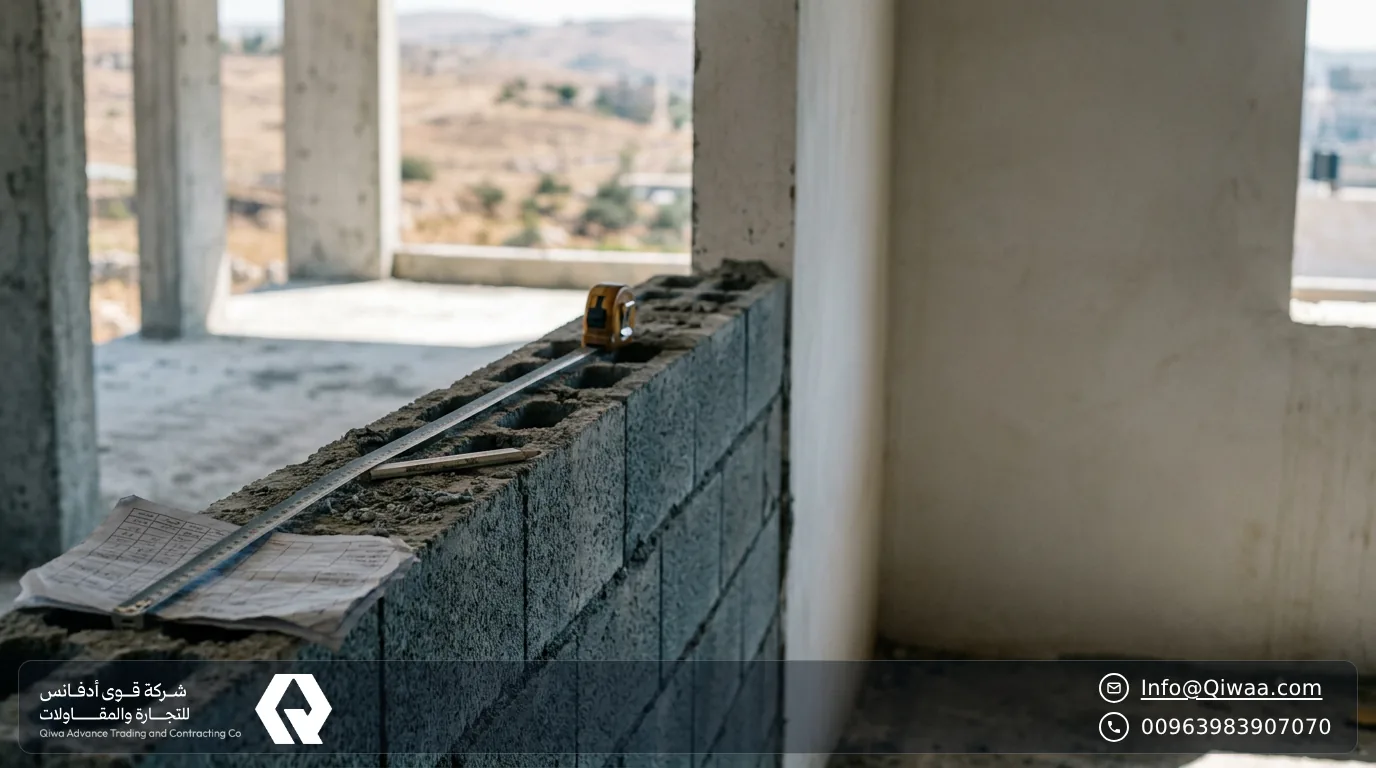


Registering on UNGM does not automatically deliver UN tenders in Syria to your inbox or provide access to every agency’s bidding system. For example, UNDP’s sewage-network tender UNDP-SYR-00691,1 was published on 14 September 2026 and closed on 29 September.
This guide helps contractors find relevant opportunities, verify registration and eligibility requirements, follow agency-specific submission procedures and understand how World Bank-funded procurement differs.
Who issues international organization tenders in Syria
UN agencies, including UNDP, UNOPS, UNICEF, UNHCR and WFP, publish opportunities for construction works, goods and services through UNGM and their procurement platforms.
UNGM provides access to notices, but the issuing agency manages the procurement and specifies how bids must be submitted. For example, UNDP uses its Quantum Supplier Portal for electronic tender submissions.
World Bank-financed projects follow a different route. Under the Bank’s procurement framework, the borrower or designated implementing agency carries out the procurement. Contractors must identify that agency and follow the relevant project’s bidding instructions rather than submit offers directly to the World Bank.
UNGM registration in Syria and tender notifications
UNGM is a shared supplier registration and opportunity-discovery platform for participating UN organizations. Registration and access to published opportunities are free.
However, registration does not guarantee invitations or automatically notify suppliers of new tenders.
Contractors can monitor opportunities for free by filtering the UNGM notice page by country, agency and relevant UNSPSC goods-and-services codes. They should also check the issuing agency’s procurement platform for solicitation documents and amendments.
Alternatively, UNGM Pro offers paid alerts for matching opportunities. This is optional and does not replace checking the latest solicitation instructions.
Why UN tender submissions in Syria become non-compliant
A supplier may find a suitable tender but still submit a non-compliant offer because of missing eligibility documents, an incorrect submission channel, outdated forms or failure to follow mandatory instructions.
For example, UNDP-SYR-00691,1 listed Basic UNGM registration but instructed suppliers to submit through its linked procurement system. It also advised suppliers to subscribe to the tender within that system to receive amendment notifications.
Before preparing a technical or financial offer, contractors should confirm the required registration level, access to the submission platform, qualification criteria, deadline and time zone, and latest tender amendments.
Registration alone does not establish eligibility. Agency-specific declarations, applicable sanctions restrictions and other compliance requirements must also be checked against the current solicitation.
The first decision is whether the company can meet the tender’s requirements and submit a compliant bid—not simply whether the project matches its capabilities.

Where to find UN tenders in Syria by agency
UNGM is a common source for discovering UN tenders in Syria, but it is not the submission platform for every agency. Contractors must distinguish between UNGM supplier registration, access to solicitation documents and the system used to submit offers.
| Agency | Bidding platform or submission channel | UNGM registration | What contractors should verify |
|---|---|---|---|
| UNDP | Quantum Supplier Portal | Basic | Access to Quantum, submission instructions and tender amendments |
| UNOPS | eSourcing through UNGM | Basic | UNOPS vendor registration and access to the specific procurement event |
| UNICEF | The notice specifies whether e-submissions or another method applies | Basic; Level 1 or 2 may be required | Required registration level and submission instructions |
| UNHCR | Supplier portal or another channel specified in the solicitation | Basic; Level 1 or 2 may be required | Portal access, required forms and the permitted submission method |
| WFP | Submission channel specified in the solicitation | Basic; Level 1 or 2 may be required | Registration requirements, supplier eligibility and invitation procedures |
These differences are documented in actual procurement notices. For example:
- UNDP-SYR-00664,1 required submission through Quantum.
- UNOPS RFI/2026/64453 required access to eSourcing through UNGM. It was a market-capability assessment, not a request for priced construction bids.
- A 2026 UNHCR Syria solicitation required submission through its online supplier portal.
The registration level displayed on UNGM does not replace the agency’s qualification criteria or submission instructions. Contractors should verify both before preparing an offer.
UNGM Registration Levels for Syrian Suppliers
UNGM registration has three levels. Basic is the starting requirement, while additional levels apply where an agency or procurement opportunity requires them.
| Level | Registration requirements | What contractors should prepare |
|---|---|---|
| Basic | Supplier details, countries of operation, UNSPSC classifications, acceptance of the Supplier Code of Conduct and eligibility declaration | Accurate company information and relevant goods-and-services classifications; no supporting documents required |
| Level 1 | Basic registration, certificate of incorporation or equivalent, contact details of three independent references, ownership information and details of relevant intermediaries | Legal registration document, certified English translation where required, client contacts and ownership details |
| Level 2 | Basic and Level 1, at least three years since establishment, three recent independent client reference letters and three years of audited or certified financial documents | Reference letters and financial records, with certified translations where required |
Registration at every level is free of charge.
Two details matter when preparing company documentation:
Level 1 requires reference contact details, while Level 2 requires written reference letters and financial documents. The requirements are not interchangeable.
Uploading a document is not enough. Documents added to My Documents must also be attached to the relevant registration form for UN staff to access them.
Companies established for less than three years cannot complete Level 2. They should confirm whether an opportunity requires that level before investing time in preparing a bid.
The UNGM registration guidance provides the full requirements.
UNDP Syria Tender Methods and Procurement Thresholds
UNDP uses different procurement methods according to the estimated contract value and nature of the requirement.
Its official How We Buy guidance identifies the following thresholds:
| Estimated value | Procurement method | Typical response period |
|---|---|---|
| Below USD 15,000 | Micro-purchasing | Normally completed within 1–2 days |
| USD 15,000–299,999 | Request for Quotation (RFQ) | Usually 3–10 business days |
| USD 300,000 or more | Invitation to Bid (ITB) for clearly defined requirements | Normally 10–15 business days or more |
| USD 300,000 or more | Request for Proposal (RFP) where technical approaches or services require broader evaluation | Normally 10–15 business days or more |
These are UNDP’s general procurement guidelines, not guaranteed submission periods. The actual deadline, qualification criteria and evaluation method come from the solicitation documents.
Two 2026 Syria notices demonstrate the differences:
- UNDP-SYR-00664,1 was an ITB for rehabilitating schools and health centres in Aleppo and coastal areas. Published on 13 August 2026, it closed on 8 September. Its returnable forms were revised on 26 August, showing why contractors must monitor amendments after downloading the tender documents.
- UNDP-SYR-00691,1 was an RFQ for sewage-network rehabilitation in Raqqa and Deir ez-Zor. Published on 14 September 2026, it closed on 29 September.
Both notices required Basic UNGM registration and specified electronic submission procedures. Both have closed and are included as examples, not current bidding opportunities.
For contractors, the procurement method helps identify how offers will be assessed, but the solicitation determines the actual qualification, technical and financial requirements.
World Bank tenders in Syria and implementing agencies
World Bank-financed projects follow a different procurement structure from UN agency tenders.
Under paragraph 3.2 of the World Bank Procurement Regulations for IPF Borrowers, September 2025, the borrower is responsible for conducting procurement, evaluating bids and awarding contracts. The World Bank provides financing and procurement oversight under its applicable framework.
Contractors should identify the borrower or implementing agency responsible for the specific package rather than assume that bids are submitted directly to the Bank.
The regulations distinguish between:
- General Procurement Notices (GPNs): Announce planned procurement under projects expected to involve open international competition.
- Specific Procurement Notices (SPNs): Advertise particular procurement opportunities. The borrower publishes them through the channels specified in paragraph 5.22, while international competitive notices are also published through the World Bank under paragraph 5.23.
Two Syrian projects illustrate why identifying the implementing agency matters.
The USD 146 million Syria Electricity Emergency Project, approved in June 2025, identifies the Public Establishment for Transmission and Distribution of Electricity as its implementing agency.
In April 2026, the World Bank approved USD 225 million for water and health projects, comprising USD 150 million for water and USD 75 million for health services. The funding announcement alone does not establish which individual works packages are open for bidding.
Before allocating estimating resources, contractors should identify the implementing agency, locate the specific procurement notice, verify the project’s procurement requirements and confirm that the opportunity remains open.
Our guide to internationally funded projects in Syria provides further context on donor-funded reconstruction programmes.
How to bid on UN tenders in Syria
Before preparing an offer for UN tenders in Syria, contractors should confirm that the opportunity matches their capabilities and that they can meet the agency’s eligibility, documentation and submission requirements.
Follow this process:
- Identify suitable opportunities. Monitor UNGM and agency procurement platforms, checking the project scope, location, lots and deadline.
- Confirm eligibility and platform access. Verify the required UNGM registration level, agency-specific qualifications and access to the bidding system.
- Review the solicitation package. Check the technical specifications, evaluation criteria, required forms, securities, commercial terms and published amendments.
- Request clarifications. Submit questions through the designated channel before the clarification deadline and incorporate official responses.
- Prepare the offer. Complete the required technical and financial documents, following the prescribed formats and separation rules.
- Submit and verify. Upload the final response before the deadline and confirm successful submission. A saved draft is not necessarily a submitted bid.
How to screen UNDP and UNOPS tender notices
Before committing estimating resources, check six items in the notice and confirm them against the solicitation documents:
| Check | What contractors need to establish |
|---|---|
| Deadline and time zone | The exact closing time converted to Damascus time |
| Submission platform | Where the response must be submitted and whether the company can access it |
| Registration and eligibility | Required UNGM level, agency registration and mandatory qualifications |
| Scope and location | Work or supply requirements, governorates and available lots |
| Procurement method | Whether the notice is an RFQ, ITB, RFP or a non-bidding request for information |
| Commercial requirements | Bid validity, required securities and other conditions affecting participation |
Treat an unmet mandatory requirement as a go/no-go issue. If it can be resolved before the deadline, assess the time and resources required. If the company cannot satisfy it, avoid committing further estimating resources.
Deadlines and requirements can change after publication. For example, UNOPS RFI/2026/64453, a 2026 assessment of Syrian construction contractors’ capabilities, moved its deadline from 10 September to 8 September through an amendment. It was a request for information, not a priced construction tender.
The example illustrates why contractors must monitor amendments and distinguish market assessments from actual bidding opportunities.
Sanctions and eligibility checks for UN tenders in Syria
The repeal of the Caesar Act does not remove every compliance requirement for Syrian companies participating in international procurement.
According to the US Treasury’s OFAC guidance, comprehensive US sanctions on Syria ended on 1 July 2025. The Caesar Act was repealed on 18 December 2025, and Syria’s State Sponsor of Terrorism designation was rescinded on 24 August 2026.
However, targeted sanctions remain in effect, and applicable export controls, UN supplier eligibility rules and agency-specific restrictions must still be considered.
Before bidding, contractors should verify three areas:
- Supplier eligibility. Complete the UNGM declaration of eligibility accurately and review any additional supplier declarations, ownership disclosures or exclusion criteria required by the agency.
- Restricted parties and goods. Where applicable, assess the company, relevant owners, partners and subcontractors against the sanctions and exclusion lists governing the transaction. Also verify any export-control requirements affecting the proposed materials or equipment.
- Payment arrangements. Confirm whether the intended banking channels can receive contract payments and support supplier transactions. Changes to sanctions do not automatically establish that a particular bank will process a payment.
Our guide to letters of credit and bank transfers in Syria examines related payment arrangements.
These checks should be documented before submitting the offer. Where restrictions or ownership issues create uncertainty, obtain specialist compliance advice rather than assuming that registration on UNGM establishes full eligibility.
This section reflects official US guidance reviewed on 10 November 2026 and does not replace transaction-specific legal or compliance advice.
20 checks before bidding on UN tenders in Syria
Before submitting an offer for UN tenders in Syria, use this checklist to verify eligibility, technical and financial compliance, and successful submission against the latest solicitation documents.
- Opportunity type: Confirm whether the notice is an RFQ, ITB, RFP, prequalification or request for information. Not every notice requests a priced bid.
- Eligibility: Check company registration, legal status and any agency-specific qualification or exclusion requirements.
- UNGM registration: Verify the required Basic, Level 1 or Level 2 registration and your company’s status with the issuing agency.
- Submission platform: Confirm the permitted submission channel and test access to Quantum, eSourcing or the designated system.
- Deadline and time zone: Convert the official closing time to Damascus time and allow sufficient time for submission.
- Scope and lots: Confirm the works or supplies required, project locations and eligibility for each lot.
- Experience requirements: Match the stated financial, technical and project-experience criteria against supporting records.
- Evaluation criteria: Identify mandatory requirements and how technical and financial offers will be assessed.
- Tender amendments: Use the latest specifications, BOQ, forms and clarification responses. Check again before submission.
- Clarification deadline: Submit unresolved questions through the authorised channel and retain official responses.
- Technical compliance: Check specifications, drawings, product documentation, required method statements and site-visit obligations.
- Pricing format: Use the prescribed financial forms, quantities, unit rates and lot structure without unauthorised changes.
- Document separation: Keep technical and financial submissions separate wherever the solicitation requires it.
- Currency and payment terms: Verify bid and payment currencies, taxes, delivery costs and any permitted price adjustments.
- Bid validity: Compare the required validity period with supplier and subcontractor quotations and their conditions.
- Delivery and execution: Confirm lead times, transport, site access and completion schedules for every delivery or work location.
- Bid and performance securities: Verify whether guarantees are required, including amounts, accepted issuers, formats and validity periods.
- Declarations and screening: Complete required eligibility and integrity declarations, and check relevant parties and goods against applicable restrictions.
- Banking arrangements: Verify payment requirements and whether the intended banking channels can support the transaction.
- Final submission: Check signatures, attachments, translations, file formats and upload limits. Submit through the required channel and verify receipt or successful submission status before the deadline.
Complete this review using the issuing agency’s current solicitation documents. UNGM registration, accessing a tender and saving a draft response do not by themselves constitute a valid bid submission.

Qiwaa Advance supply support for UN tenders in Syria
Contractors bidding on UN and donor-funded projects in Syria need supplier quotations that reflect the approved specifications, required documentation, delivery locations and commercial terms. An attractive unit price may still leave important costs or compliance requirements unresolved.
Through Qiwaa Trading and our authorized partnerships, we support construction and infrastructure material sourcing, including Amiantit piping systems and Variant Factory formwork and shoring systems. Qiwaa Contracting also undertakes EPC infrastructure works, including water networks and treatment facilities.
Manufacturer-linked vs multiple supplier quotations
For tenders requiring specialized materials or deliveries across several locations, contractors should compare supplier offers on a consistent technical and commercial basis.
| Criterion | Manufacturer-linked written quotation | Separate supplier quotations |
|---|---|---|
| Technical compliance | Identifies the proposed product and specifications for review | Each proposed product must be checked against the same requirements |
| Product documentation | Manufacturer documents can be requested for the quoted product | Document availability must be confirmed with each supplier |
| Price validity | States the quotation period and applicable adjustment terms | Validity periods and conditions may differ |
| Delivery arrangements | Can define delivery points, lead times and responsibilities for the quoted items | Delivery costs and schedules must be reconciled across suppliers |
| Commercial responsibility | Identifies the supplier responsible for the quoted scope | Responsibilities depend on each supplier’s agreement |
Neither approach automatically guarantees lower prices, compliant products or timely delivery.
For specialized items, a manufacturer-linked quotation can simplify technical review and documentation. Multiple suppliers may be more suitable when the package contains different material categories or requires flexible local sourcing.
The deciding factor is whether the quotations cover the specified scope, documentation, total delivered cost and required supply schedule—not simply the number of suppliers involved.
How Qiwaa Advance supports tender supply pricing
At Qiwaa Advance, we review relevant BOQ items and technical specifications to assess suitable supply options and coordinate project-specific quotations.
For GRP piping, contractors should provide the required pipe diameter (DN), pressure class (PN), stiffness class (SN), applicable standards, jointing requirements and installation conditions. Product selection must follow the approved design and technical requirements.
For formwork and shoring systems, relevant drawings, structural loads, casting sequences and project schedules help determine suitable equipment and quantities.
To request a quotation, send us:
- BOQ and specifications: Items, quantities, applicable standards and required product documentation.
- Delivery requirements: Project locations, delivery stages and target dates.
- Tender deadlines: Submission date and required bid validity period.
- Supporting drawings: Relevant technical details for specialized piping or formwork systems.
Based on these documents, we can review suitable options and coordinate a written quotation identifying the proposed products, quantities, pricing basis, validity and delivery terms. Availability, supporting documentation and delivery commitments are subject to confirmation.
Preparing a supply package for a UN or donor-funded tender in Syria? Send your BOQ, specifications and deadline to Qiwaa Advance on WhatsApp to discuss technical requirements and request a quotation.
FAQs about UN tenders in Syria
Is UNGM registration free for Syrian companies?
Yes. Basic, Level 1 and Level 2 registration are free. UNGM Pro is an optional paid service for tender alerts and enhanced search features.
Will UNGM automatically notify me of new tenders?
No. Registration alone does not activate tender alerts. Contractors can search UNGM opportunities for free or subscribe to UNGM Pro for matching email notifications.
Can Syrian companies bid on UN tenders despite sanctions?
Yes, where they meet the applicable eligibility and compliance requirements. OFAC no longer maintains comprehensive US sanctions on Syria, but targeted restrictions remain. Contractors must also check agency-specific requirements and applicable transaction restrictions.
Where do I submit UNDP and UNOPS tenders in Syria?
UNDP generally uses Quantum, while UNOPS uses eSourcing. UNGM registration may be required, but the solicitation specifies the submission channel and instructions.
Sources
- What are the requirements for registration on UNGM, UNGM Help Centre, accessed 11 October 2026
- article 360013220820 on registration levels required by each organization, UNGM Help Centre, accessed 11 October 2026
- How to get started on UNGM, UNGM Help Centre, accessed 11 October 2026
- UNGM Pro, UNGM, accessed 11 October 2026
- How we buy, UNDP, accessed 11 October 2026
- UNDP-SYR-00664 Rehabilitation of Schools and Health Centers in Aleppo and Coastal Area, UNGM, 13 August 2026
- UNDP-SYR-00691 Rehabilitation of Sewage Networks in Raqqa and Deir Ez-Zor, UNGM, 14 September 2026
- UNDP-SYR-00674 Prequalification for potential Suppliers for Infrastructure and Rehabilitation, UNGM, 20 August 2026
- UNOPS RFI/2026/64453 Market Capability Assessment of Syrian Civil Works and Construction Contractors, UNGM, 30 August 2026
- E-submissions instructions to bidders, UNICEF, accessed 11 October 2026
- tender notice with a 2021 deadline, UNHCR Syria
- Procurement Regulations for IPF Borrowers, Seventh Edition, World Bank, September 2025
- Syria: World Bank US$146 Million Grant to Improve Electricity Supply and Support Sector Development, World Bank, 25 June 2025
- Syria: World Bank Approves US$225 Million Financing to Restore Water and Health Services, World Bank, 23 April 2026
- Syria-Related Sanctions, US Treasury OFAC, accessed 31 October 2026
- Recent Actions, US Treasury OFAC, 23 December 2025
- Rescission of the State Sponsor of Terrorism Determination Regarding Syria, Public Notice 13114, US Department of State, 24 August 2026