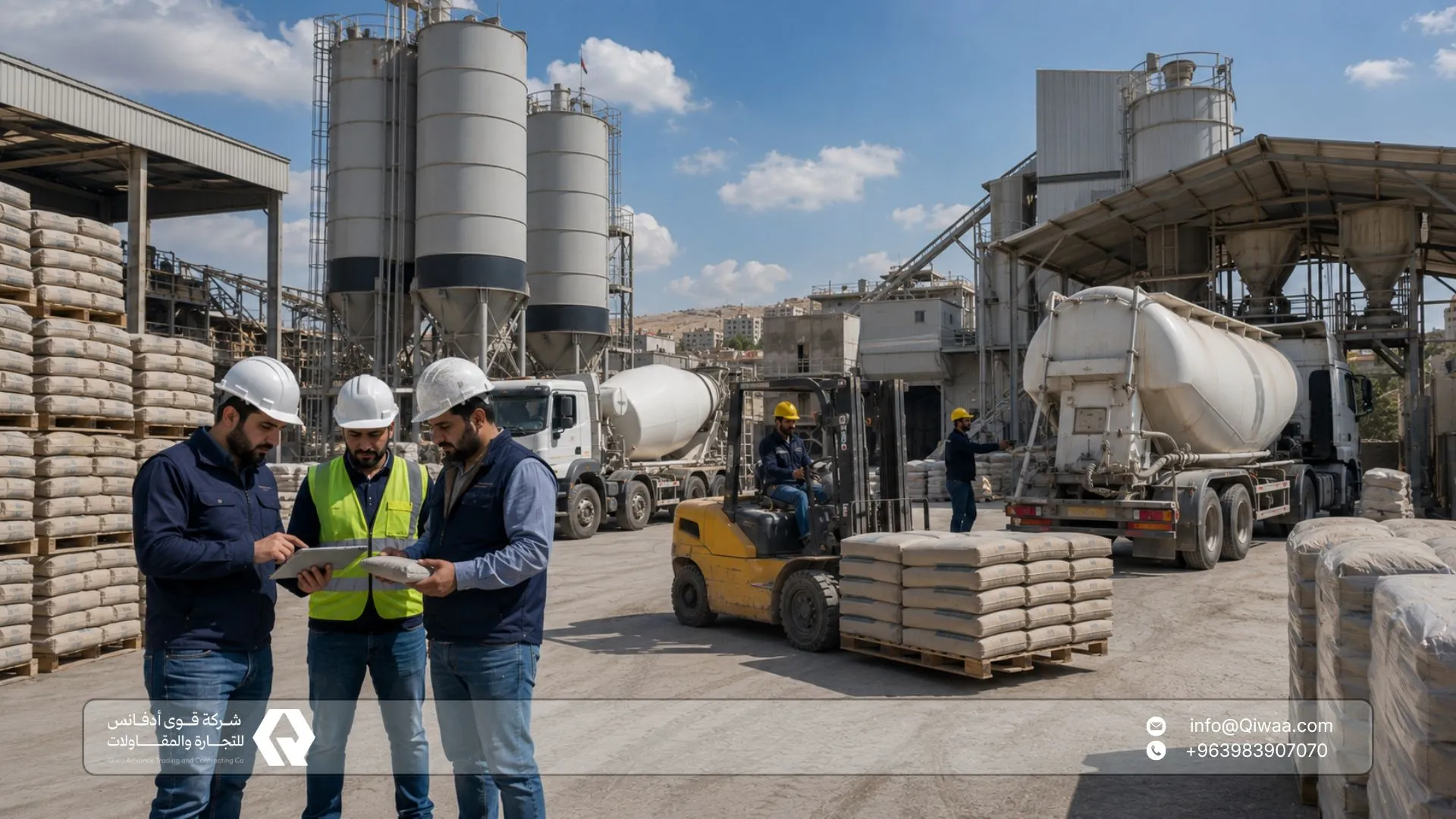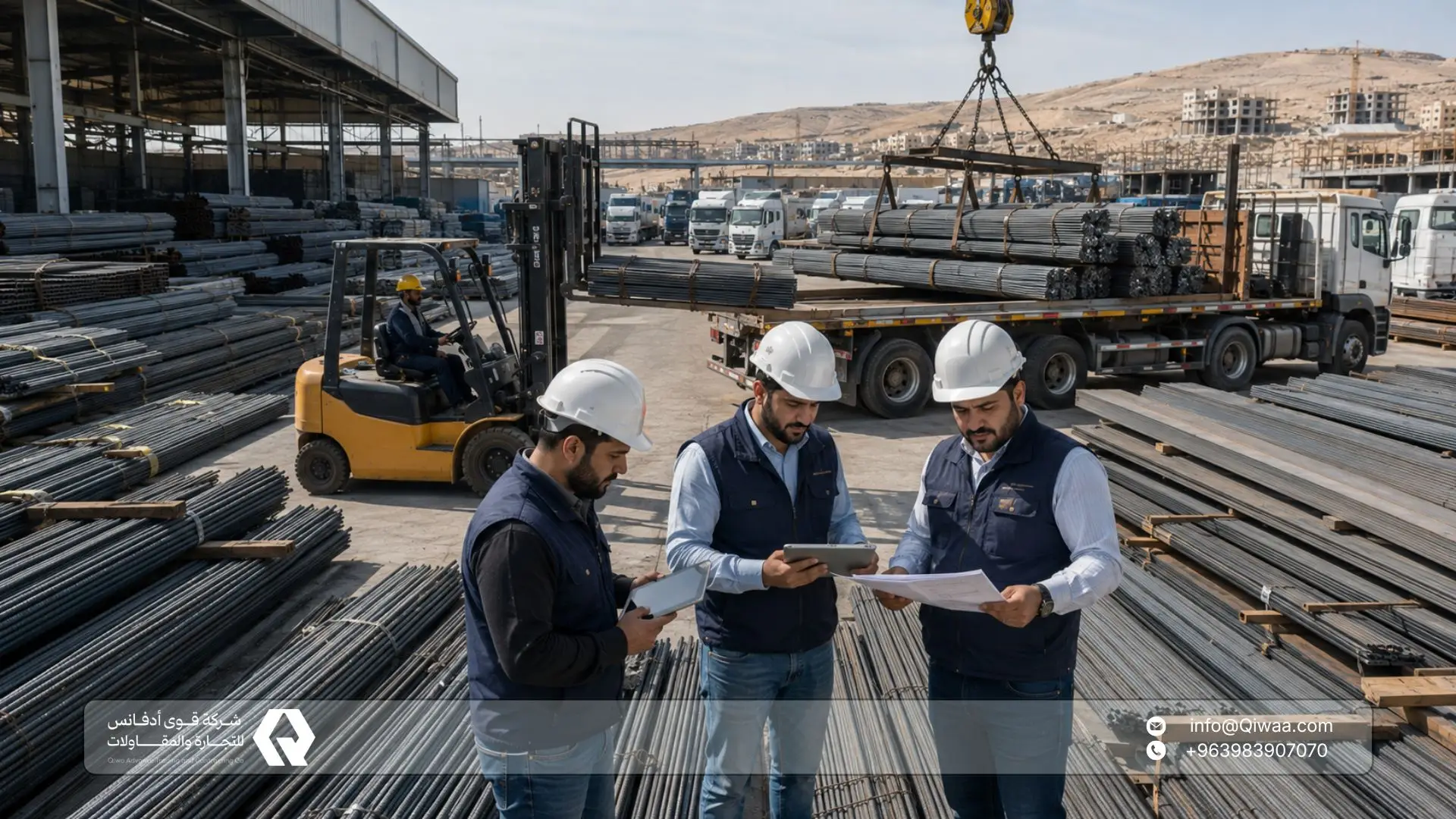


When searching for live building material prices in Syria, the real challenge is finding a price you can actually buy at. A published price for rebar or cement may apply to a different city, quantity, or delivery arrangement—and it could change before you place an order. For contractors and project owners, relying on an unverified figure can lead to inaccurate purchasing budgets and unexpected costs.
This guide does not provide live price feeds or fixed market prices. Instead, it shows you how to find and verify current quotations for steel, cement, concrete blocks, sand, and gravel, check the applicable exchange rate, and calculate the actual cost of delivery to your project. You’ll also learn which sources to consult and what to confirm with suppliers before making a purchasing decision.
Why do live building material prices in Syria keep changing?
Live building material prices in Syria can change between the time a market price is published and the moment a supplier prepares a quotation. These movements do not affect every material equally. Rebar is sensitive to international steel prices and import conditions, cement to production and energy costs, while concrete blocks, sand, and gravel are particularly affected by local supply and transport.
The main factors behind these price fluctuations include:
- Exchange-rate movements: Changes in the USD/SYP exchange rate can affect the local cost of imported materials and production inputs, even when their dollar prices remain unchanged.
- Production and energy costs: Changes in fuel, electricity, and manufacturing input costs can influence the prices offered by cement plants, steel producers, and other manufacturers.
- Supply and transport disruptions: Shipment delays, limited production, or higher freight costs can reduce availability and increase the cost of supplying materials to the market.
- Changes in demand and stock availability: Increased construction activity or limited supplier inventories can put upward pressure on prices, while improved availability may ease it.
However, a difference between two quotations does not always indicate a market price change. Prices may vary on the same day because the materials have different specifications, order quantities, or delivery conditions.
To identify a genuine price movement, compare quotations for the same material, specification, unit, and location, using clearly dated prices. This helps contractors and procurement teams distinguish market fluctuations from differences in purchasing terms before making a decision.
How the USD exchange rate affects material prices in Syria
The USD/SYP exchange rate affects the local cost of imported building materials and products manufactured using imported inputs. When more Syrian pounds are needed to buy one US dollar, the price of a material quoted in dollars may increase in Syrian pounds, even if its original dollar price remains unchanged.
For contractors checking current building material prices in Syria, the key is to distinguish the published exchange rate from the rate used in an actual supplier quotation. The Central Bank of Syria provides official exchange-rate information, but the purchasing agreement must clearly establish the applicable rate and conversion terms.
To calculate and verify a material’s price in Syrian pounds, follow these steps:
- Check the current exchange-rate reference: Consult the latest official bulletin and note its publication date and the rate applicable to the transaction.
- Confirm the supplier’s pricing currency: Establish whether the original quotation is in US dollars or Syrian pounds.
- Verify the conversion terms: If the price is quoted in USD and converted to SYP, confirm the exchange rate, the date on which it applies, and whether the rate is fixed for the quotation period.
- Calculate the converted price: Multiply the USD amount by the agreed exchange rate expressed in Syrian pounds per dollar.
Material price in new SYP = Quoted USD price × Applicable exchange rate (new SYP per USD)
Since Syria introduced its new currency in January 2026, the denomination also matters. Under the currency reform introduced by Decree No. 293 of 2025, 100 old Syrian pounds equal one new Syrian pound. When reviewing older quotations or exchange-rate records, make sure both figures use the same denomination before calculating or comparing prices.
If the supplier quotes a fixed price directly in new Syrian pounds, no USD conversion is needed unless the contract specifies otherwise.
The result is a currency-adjusted material price, not necessarily the final delivered cost. Transport, handling, and other charges should be assessed separately according to the quotation terms.
How to collect and verify live building material prices in Syria
Finding live building material prices in Syria requires more than checking a published price list. A reliable price bulletin should identify the material, its unit of measurement, the supplier’s confirmed quotation, and when that price was verified.
The following table is a practical reference for collecting current prices for commonly used construction materials. It is not a live price feed or a list of fixed market prices. The USD and SYP amounts should be obtained from suppliers and recorded with the actual confirmation date.
| Material | Pricing unit | Price in USD | Price in SYP | Last verified | What to confirm |
|---|---|---|---|---|---|
| Rebar | Ton | Current supplier quotation for the specified grade and diameter | Direct SYP quotation or agreed-rate conversion | Record actual date and time | Steel grade, diameter, origin, stock, and delivery point |
| Cement | Ton or bag | Current quotation for the required cement type | Direct SYP quotation or agreed-rate conversion | Record actual date and time | Cement type, bag weight, production date, and delivery terms |
| Concrete blocks | Piece or 1,000 pieces | Current quotation for the specified block dimensions | Direct SYP quotation or agreed-rate conversion | Record actual date and time | Block type, dimensions, strength, and delivery conditions |
| Sand | Cubic meter or truckload | Current quotation from the supplier or aggregate source | Direct SYP quotation or agreed-rate conversion | Record actual date and time | Material source, cleanliness, volume measurement, and transport |
| Gravel | Cubic meter or truckload | Current quotation for the required aggregate grading | Direct SYP quotation or agreed-rate conversion | Record actual date and time | Aggregate size, grading, source, and delivery location |
| Ready-mix concrete | Cubic meter | Current quotation for the specified concrete mix | Direct SYP quotation or agreed-rate conversion | Record actual date and time | Strength class, workability, delivery time, and pumping arrangements |
To use this bulletin, obtain a current quotation for the required material and replace the pricing instructions with the actual amount confirmed by the supplier. Record the supplier’s name, quotation date and time, currency, location, and price validity period alongside the entry.
When converting a USD quotation into Syrian pounds, use the exchange rate agreed for that transaction and specify the currency denomination. If the supplier quotes directly in SYP, record that price without assuming it was converted from dollars.
The result is a project-specific price record, allowing procurement teams to distinguish verified current quotations from outdated or unconfirmed market figures before proceeding with a purchase.
Read also: Building Material Prices in Syria Today 2026: How to Read the Price Bulletin Before You Buy
Steel prices
Checking steel prices in Syria today starts with identifying the type of steel your project needs. For reinforcing steel (rebar), the grade, diameter, and country of origin all matter. A published price per tonne may not apply to the exact material required for your project.
The London Metal Exchange (LME) provides an international reference through its LME Steel Rebar FOB Turkey (Platts) futures contract. It can help you follow international rebar price trends, but it does not represent the price charged by a supplier in Syria. Local availability, import costs, and delivery arrangements must still be considered.
To establish a reliable current steel price, follow these steps:
- Identify the required rebar specifications: Confirm the steel grade, diameter, applicable technical standard, and quantity from the project’s approved requirements.
- Check international price movements: Use the LME reference to understand broader market trends, without treating its quoted value as a Syrian selling price.
- Confirm local availability and pricing: Request a current price per metric tonne for the specified rebar, including its origin, available stock, and whether the offer is ex-warehouse or delivered to site.
- Verify the quotation’s validity: Record when the supplier confirmed the price and how long the offer remains valid, particularly before ordering large quantities.
Once the supplier confirms the delivered price, calculate the material cost using:
Rebar material cost = Confirmed delivered price per tonne × Required tonnage
This gives the cost of the quoted steel quantity under the agreed delivery terms, before any additional charges excluded from the quotation. It also helps procurement teams distinguish a useful market indicator from a price they can actually purchase at.
Cement prices
When checking cement prices in Syria today, first identify the cement type and whether it is supplied in bags or in bulk. A quoted price per bag cannot be compared directly with a price per tonne unless the bag weight and cement specifications are confirmed.
Published market reports can provide useful context. For example, an April 2026 report by SANA citing Omran Company discussed factory-gate cement prices and how transport affects the final cost. However, historical reports cannot replace a current supplier quotation for your project.
To establish a reliable cement price, follow these steps:
- Confirm the required cement specifications: Identify the cement type, strength class, and applicable standard from the project’s approved requirements.
- Standardize the pricing unit: If the supplier quotes per bag, confirm its net weight and convert the price to a per-tonne equivalent. For 50 kg bags, one metric tonne equals 20 bags.
- Check the available stock: Verify the production date, packaging condition, and storage environment to ensure the quoted cement is suitable for use.
- Request a current delivery quotation: Confirm the quantity available, whether the price is ex-factory or delivered to site, and when the supplier can fulfill the order.
For bagged cement, calculate the equivalent tonne price using:
Price per tonne = Price per bag × (1,000 ÷ Bag weight in kg)
This calculation allows procurement teams to assess prices using a consistent unit. However, the comparison is meaningful only when the cement type and technical requirements are equivalent.
The objective is to obtain a verified current cement price for the material your project actually needs, rather than relying on a published market figure that may no longer apply.
Concrete Block, Sand and Gravel prices
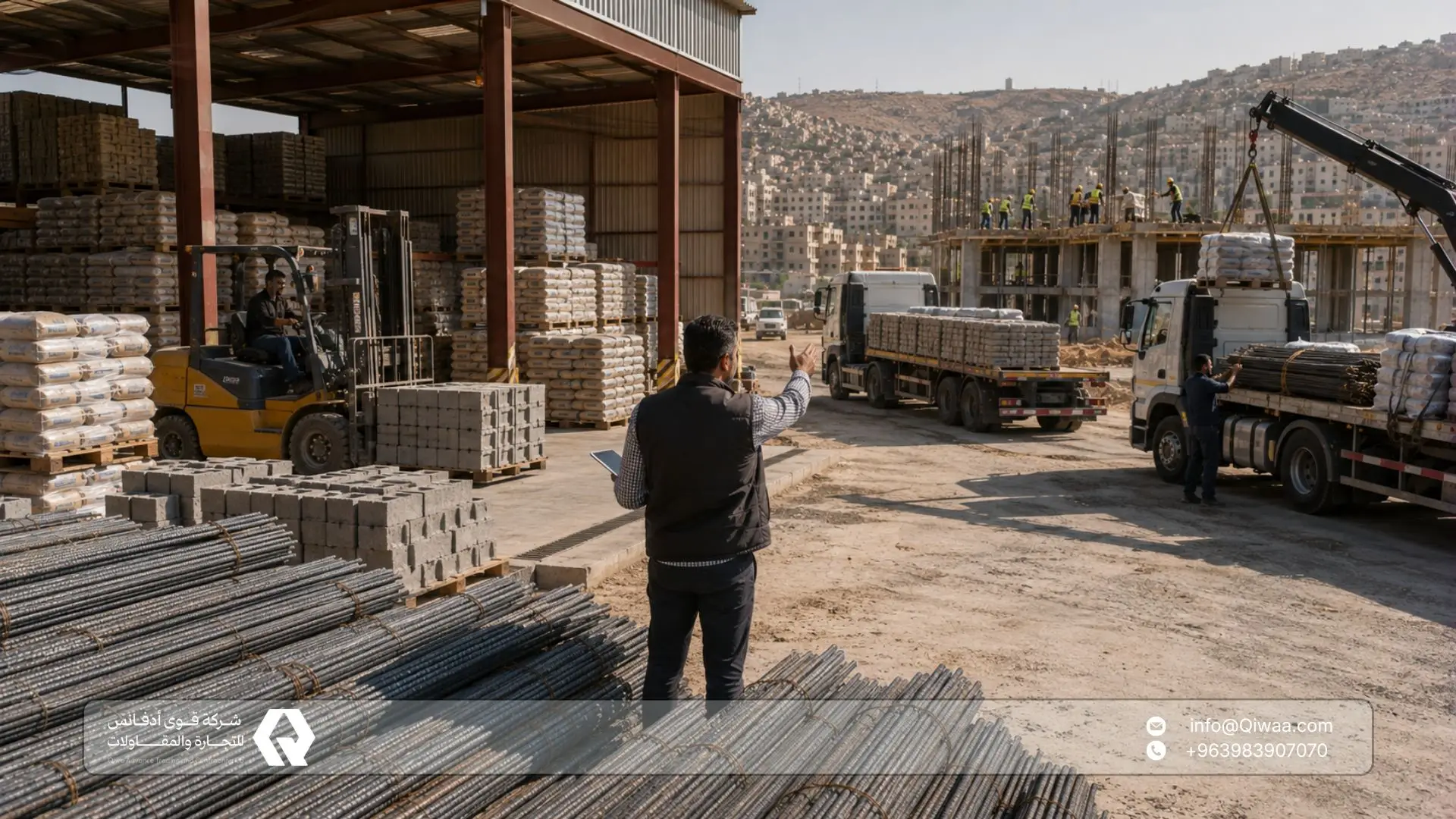
When checking concrete block prices in Syria today, the price per piece tells only part of the story. Block dimensions, intended use, and the number of usable units delivered can affect the actual cost. For sand and gravel, the main challenge is confirming how much material a quoted truckload contains.
To verify concrete block prices:
- Confirm the required specifications: Match the block dimensions, type, and strength requirements to the project’s approved specifications.
- Establish the pricing unit: Request the price per piece or per 1,000 blocks, with the quantity included in each delivery clearly stated.
- Account for damaged blocks: Clarify whether broken or defective units will be replaced or excluded from the amount charged.
Where the buyer bears the cost of damaged units, calculate the effective price using:
Cost per usable block = Total cost of delivered blocks ÷ Number of blocks accepted for use
To verify current sand and gravel prices:
- Confirm the material requirements: Specify the sand type and cleanliness requirements, or the gravel size and grading needed for the work.
- Check the measurement method: Establish whether the supplier quotes per cubic meter or truckload, and how the delivered volume will be measured.
- Verify the delivered quantity: Request a delivery record showing the agreed volume, particularly when moisture, loading methods, or truck capacity may affect the quantity received.
For truckload quotations, calculate the equivalent unit price as follows:
Price per cubic meter = Delivered truckload price ÷ Confirmed delivered volume (m³)
These calculations help contractors and procurement teams evaluate current sand and gravel prices in Syria using measurable quantities rather than advertised truckload or unit prices alone. The resulting cost should reflect the material accepted on site and the delivery conditions agreed with the supplier.
How to track current building material prices in Syria accurately
Finding a current price is only the first step. For contractors and procurement teams, the challenge is keeping that information reliable as market conditions change. Tracking current building material prices in Syria requires comparing verified quotations over time, rather than relying on a price published once or circulated without a clear date.
A practical price-monitoring process follows these steps:
- Establish a verified starting price: Use the quotation record from the previous section as your baseline. Keep the supplier, material specifications, quoted amount, currency, and confirmation date together.
- Set a review frequency: Check prices according to the project’s purchasing schedule. Materials needed soon or subject to frequent price changes may require more frequent verification than items planned for later stages.
- Compare prices on the same basis: Review new quotations against earlier ones for equivalent materials, quantities, currency, and delivery terms. Otherwise, a difference between offers may be mistaken for a market price change.
- Measure the actual change: Record whether the comparable price increased, decreased, or remained stable. Where useful, calculate the percentage change using:
- Price change (%) = [(New price − Previous price) ÷ Previous price] × 100
- Reconfirm prices before placing an order: Check whether the latest quotation is still valid, the required quantity remains available, and the supplier can meet the project’s delivery schedule.
A single supplier’s price change does not necessarily represent the entire Syrian market. Comparing recent quotations from multiple relevant sources helps procurement teams distinguish broader price movements from supplier-specific adjustments.
The goal is not to predict the lowest possible price, but to identify meaningful changes early enough to make purchasing decisions without relying on outdated figures.
Where to find reliable building material price information in Syria
Finding reliable information about current building material prices in Syria starts with knowing what each source can tell you. Official bulletins, industry reports, and international market indicators provide useful context, but they serve different purposes from supplier quotations.
The following sources can help you distinguish market information from prices available for an actual purchase:
| Source | Where to check | What it provides | What it cannot confirm |
|---|---|---|---|
| Official exchange-rate bulletins | Central Bank of Syria | Published USD/SYP exchange-rate references and bulletin dates | The selling price of building materials or the rate agreed with a supplier |
| Official economic and industry news | SANA Economic News | Announcements about cement production, energy, imports, and industrial activity | Current purchasing prices across Syrian cities |
| International steel market indicators | London Metal Exchange | International steel futures prices and market movements, including Turkish rebar references | Local Syrian steel prices, import costs, or delivered quotations |
| Market and industry reports | SP Today | Dated reports on Syrian market developments and selected material prices | Guaranteed same-day prices for specific quantities and project locations |
| Local manufacturers and suppliers | Cement producers, steel distributors, block manufacturers, and aggregate suppliers serving the project area | Current offers for specified materials, available quantities, and delivery arrangements | A uniform market price applicable to every supplier or location |
Published reports are useful for understanding market conditions, but a historical price should not be presented as today’s building material price in Syria. Always consider the report’s publication date and whether the figure represents a market estimate, a factory-gate price, or an actual supplier offer.
For a purchasing decision, a current written quotation from a supplier able to fulfill the project’s requirements remains the most relevant price reference. Official and market sources help put that quotation into context; they do not replace it.
Learn more: Building Materials in Syria 2026: How to Choose Materials and Read Prices by City
How to plan building material purchases when prices change daily
When building material prices in Syria change frequently, waiting for a lower price is not always the most economical decision. A delayed delivery of steel or cement can interrupt scheduled work, while purchasing materials too early may tie up capital and increase storage costs. The right timing depends on when the project needs each material and the financial impact of buying now versus waiting.
To plan purchases without relying on short-term price predictions, consider the following:
- Prioritize materials needed for upcoming work: Review the construction schedule and identify items whose late delivery could interrupt critical activities. Confirm their availability and lead times before deciding to postpone an order.
- Separate immediate requirements from future demand: Use the bill of quantities (BOQ) and planned work stages to determine what must be purchased now and what can wait.
- Evaluate the cost of buying early or delaying: Compare potential price savings with storage expenses, capital tied up in inventory, and the additional project costs that a delivery delay could cause.
- Consider phased purchasing and delivery: For large requirements, dividing orders into scheduled quantities may reduce storage pressure. Confirm that the supplier can meet each delivery date and whether prices are fixed or subject to adjustment.
- Set clear purchasing priorities: The project manager should establish budget limits and acceptable delivery risks, while the procurement team monitors verified quotations and coordinates orders against the approved schedule.
For example, securing steel needed for next week’s construction activities may be more important than waiting for an uncertain price reduction. Materials required several months later, however, may not justify immediate purchase if storage costs and available capital outweigh the potential savings.
An effective purchasing decision balances the current quoted price with project timing, supply reliability, and the total cost of delaying or advancing an order.
How to find suppliers offering verified building material prices in Syria
Not every supplier advertising current building material prices in Syria can confirm that those prices are still available. A published figure may be outdated, based on unavailable stock, or intended for a different quantity or delivery area. For contractors and procurement teams, the priority is identifying suppliers who can provide prices backed by a genuine, fulfillable offer.
When building a shortlist of suppliers, focus on four criteria:
- Relevant material availability: Contact manufacturers, distributors, or wholesalers handling the specific materials your project requires. Confirm that the requested quantities are available or can be supplied within the required timeframe.
- Verifiable price information: Prioritize suppliers who provide dated, written quotations identifying the material and commercial terms, rather than relying on forwarded price lists or informal messages.
- Consistent price updates: Establish whether the supplier can reconfirm prices when market conditions change, particularly for materials scheduled for purchase over several project stages.
- Ability to fulfill the quotation: Check whether the supplier can deliver the stated quantity under the quoted conditions. A low advertised price has limited value if the material is unavailable or delivery cannot be arranged.
Build a shortlist of two or three qualified suppliers for each major material category, rather than relying on a general ranking of companies. This gives the procurement team more than one source for confirming current material prices and identifying supply constraints before an order is approved.
The most useful supplier is not necessarily the one publishing the lowest price, but one whose quotation can be verified and fulfilled when the project needs the material.
How Qiwaa Advance supports building material quotes and supply in Syria
At Qiwaa Advance, we help contractors, developers, and project owners move from published market prices to practical supply decisions. Through our Qiwaa Trading division, we source construction and industrial materials through our supplier network, taking into account the technical requirements, quantities, and delivery schedules of each project.
Our supply capabilities cover steel and metal products, cement and cementitious materials, pipes, valves, and other construction and infrastructure materials. We work with clients to identify suitable sourcing options and coordinate supply arrangements based on project requirements. This helps turn general price information into a commercial quotation that reflects the materials and delivery conditions being requested.
To request a project-specific quotation, share your material specifications or bill of quantities (BOQ), required volumes, project location, and expected delivery dates. Our team can review the requirements and discuss available supply options, including the pricing and delivery terms that need to be confirmed before purchase.
Contact Qiwaa Advance to discuss your building material requirements and request a quotation based on your project.
FAQs About Live Building Material Prices in Syria
Where can I find live building material prices in Syria?
You can check market reports, local manufacturers, and building material suppliers. However, live building material prices in Syria are not necessarily available through a single continuously updated source. For a price you can purchase at, request a current quotation from a supplier serving your project location.
Is there a daily building material price bulletin for Syria?
Some market sources and suppliers publish material price updates, but their frequency, coverage, and accuracy may differ. Before relying on a daily building material price bulletin for Syria, check its publication date, covered materials, location, and whether the figures are estimates or confirmed selling prices.
Can I use 2025 building material prices to estimate project costs in 2026?
Historical prices can help identify market changes, but they should not determine a current purchasing budget. When comparing 2025 and 2026 figures, also account for Syria’s currency redenomination: 100 old Syrian pounds equal one new Syrian pound. Use current supplier quotations for purchasing estimates.
How often do building material prices change in Syria?
There is no fixed daily adjustment rate. Steel, cement, and aggregates may respond differently to market conditions, and suppliers may update quotations at different intervals. A price should be reconfirmed before ordering, even if it was published recently.
Does the USD exchange rate determine building material prices in Syrian pounds?
Not by itself. The exchange rate affects currency conversion, but the selling price also depends on the supplier’s commercial terms and material costs. For USD-based quotations, confirm the agreed conversion rate and whether the SYP amount refers to the new Syrian pound.
What information should I provide to get an accurate building material quotation?
Provide the material specifications, required quantities, project city, delivery location, and expected delivery date. For larger projects, a bill of quantities (BOQ) helps suppliers prepare a quotation based on defined requirements rather than a general market estimate.
Are building material prices the same across Syrian governorates?
No. Prices can differ between Damascus, Aleppo, and other governorates because of local availability, supply routes, and delivery costs. A quotation for one city should not be treated as the applicable price for another project location.
How can I manage the risk of price changes before materials are delivered?
Discuss price validity, scheduled deliveries, and possible price adjustments with the supplier before confirming an order. Depending on the agreement, fixed-price commitments or phased purchasing may help manage exposure to changing market prices.