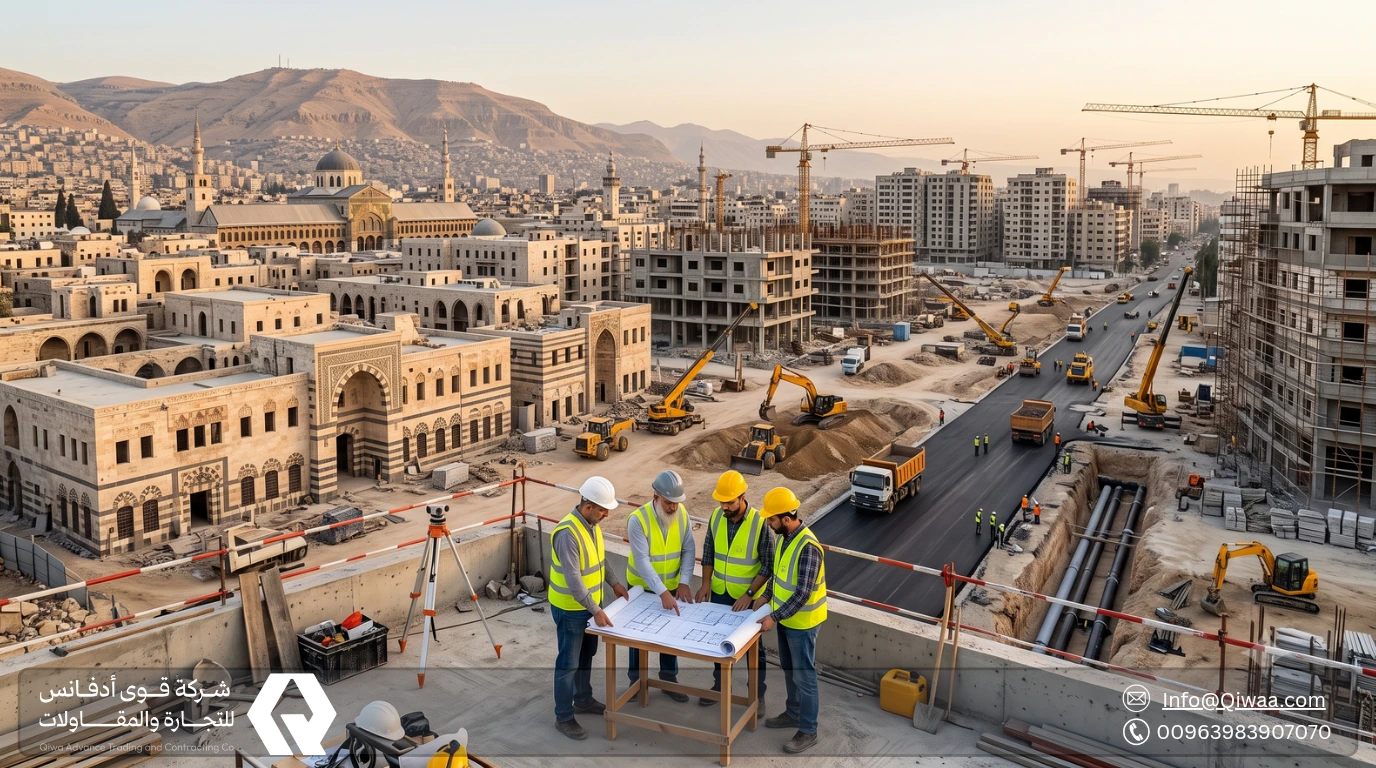


Syrian mineral resources represent one of the important economic files in the reconstruction phase, because they are directly connected to industry, building materials, and infrastructure projects. The value of minerals in Syria is not limited to extracting raw material and selling it. The greater value appears when raw materials are transformed into industrial products that can be used locally or exported.
This file is becoming more important in 2026 with renewed discussion around investment, production, and export, especially in the phosphate sector, and with the expected rise in demand for building materials due to reconstruction projects. The World Bank estimated the cost of rebuilding Syria’s physical assets at around 216 billion USD, including 82 billion USD for infrastructure, 75 billion USD for residential buildings, and 59 billion USD for non-residential buildings. This scale of reconstruction creates direct demand for construction raw materials, mineral products, and related industries.
In this article, we review the map of minerals in Syria from a practical angle. We explain the most important strategic raw materials, investment opportunities, the gap in the mining sector, and how Qiwaa can support investors, contractors, and industrial companies in Syrian mineral resource projects.
Why Are Syrian Mineral Resources an Important Economic Opportunity?
Syria has a wide range of metallic and non-metallic raw materials that can serve more than one sector. Phosphate serves fertilizers and chemical industries. Limestone, gypsum, basalt, marble, and sand serve building materials. Silica sand and some industrial raw materials can support glass, ceramics, and manufacturing industries.
The General Establishment of Geology and Mineral Resources indicates that geological and exploration studies in Syria have identified and estimated important reserves of natural metallic and non-metallic resources. Among the raw materials proposed for investment or manufacturing are phosphate, marble, asphalt, gypsum, sand, and rock salt, in addition to raw materials that serve phosphate fertilizer industries, cement, ceramics, glass, chemical industries, and building materials.
Read more: Damascus Reconstruction 2026: Where to Invest and How to Start
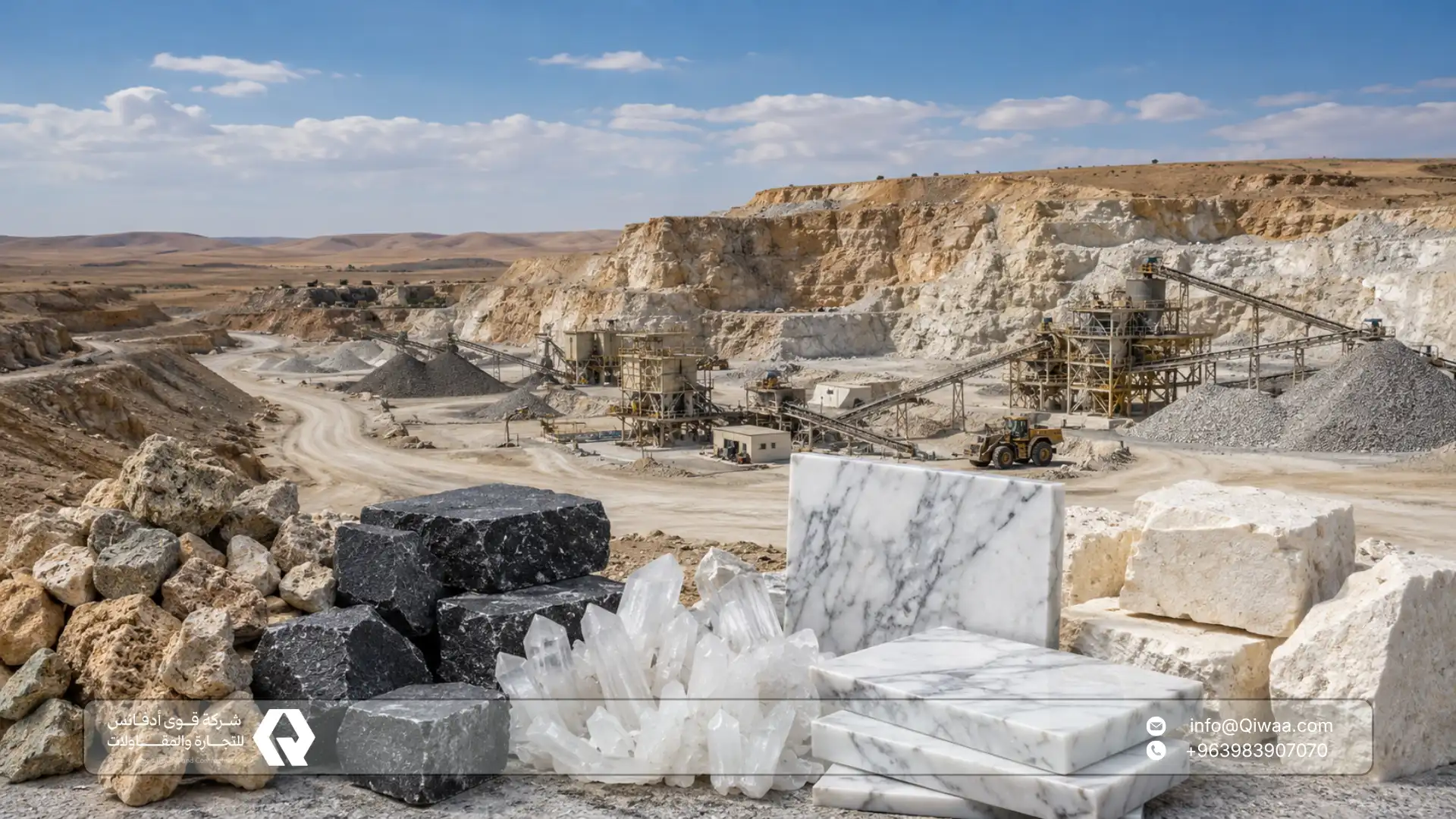
These indicators make investment in mineral resources in Syria connected to three main paths:
- Extracting and marketing raw materials
- Manufacturing value-added products
- Serving reconstruction, industry, agriculture, and infrastructure projects
The strongest market in the coming phase will not belong only to those who have access to raw materials. It will belong to those who can connect raw materials to a clear production chain, whether through a fertilizer plant, gypsum board factory, volcanic block line, glass factory, marble and stone facility, or regular supply for cement, concrete, and road projects.
What Are Strategic Minerals in Syria?
When discussing strategic minerals in Syria, the term should not be limited to rare minerals, lithium, or copper as it often is in global markets.
In the Syrian context, a strategic mineral or raw material is any material that can activate a broad economic sector or serve a direct need in reconstruction and production.
In this sense, strategic raw materials in Syria include:
- Phosphate for fertilizers, export, and chemical industries
- Limestone for cement, blocks, and building materials
- Gypsum for gypsum board, blocks, plastering, and some industrial uses
- Basalt for stone slabs, roads, paving, and some building products
- Marble and stone for finishes, façades, and flooring
- Silica and quartz sand for glass and sand-lime blocks
- Dolomite for some refractory and industrial uses
- Volcanic tuff for blocks and lightweight building materials
- Rock salt and natural asphalt for some industrial and construction uses
These raw materials do not have the same value in every location or project. Investment value depends on reserve size, raw material quality, proximity to roads and ports, availability of energy and water, manufacturing potential, and the scale of local or external demand.
Read more: Aleppo Reconstruction Opportunities 2026: How to Identify the Best Investment Opportunities
Map of Minerals in Syria by Industrial Use
The best way to read the map of minerals in Syria is to classify them by use, because investors are not looking for the name of the raw material only. They want to understand the final product and the target market.
1. Raw Materials for Fertilizers and Chemical Industries
Syrian phosphate comes at the top of this group because it is connected to phosphate fertilizers, phosphoric acid, animal feed, and some chemical industries. The importance of phosphate does not come from export only, but also from the possibility of building local downstream industries around it, especially if energy, water, transport, and suitable technologies are available.
USGS data shows that mining in Syria has historically focused on industrial minerals and mineral fuels, and that Syria produced raw materials and products in 2020 including cement, gypsum, marble, natural gas, crude petroleum, phosphate rock, pumice, salt, and urea.
2. Raw Materials for Construction and Reconstruction
This group is closest to the reconstruction phase. It includes limestone, aggregates, sand, gypsum, basalt, marble, volcanic tuff, and some rock types suitable for roads, blocks, concrete, and finishes.
The General Establishment of Geology and Mineral Resources indicates that raw materials such as aggregates, sand, building and decorative stone, and different types of aggregates are among the necessary inputs for construction works in Syria.
3. Raw Materials for Glass and Ceramics
Silica and quartz sand, along with some limestone and clay materials, can serve the glass, ceramics, sanitary ware, and sand-lime block industries. These industries need raw materials with stable quality, laboratory testing, stable energy, and a suitable location close to markets or transport centers.
4. Raw Materials for Energy and Industry
This group includes raw materials such as natural asphalt, oil shale, and some resources connected to energy and mineral fuels. These materials usually require specialized feasibility studies because they are linked to processing technologies and operating costs that are higher than traditional construction raw materials.
Syrian Phosphate: A Key Investment Focus in 2026
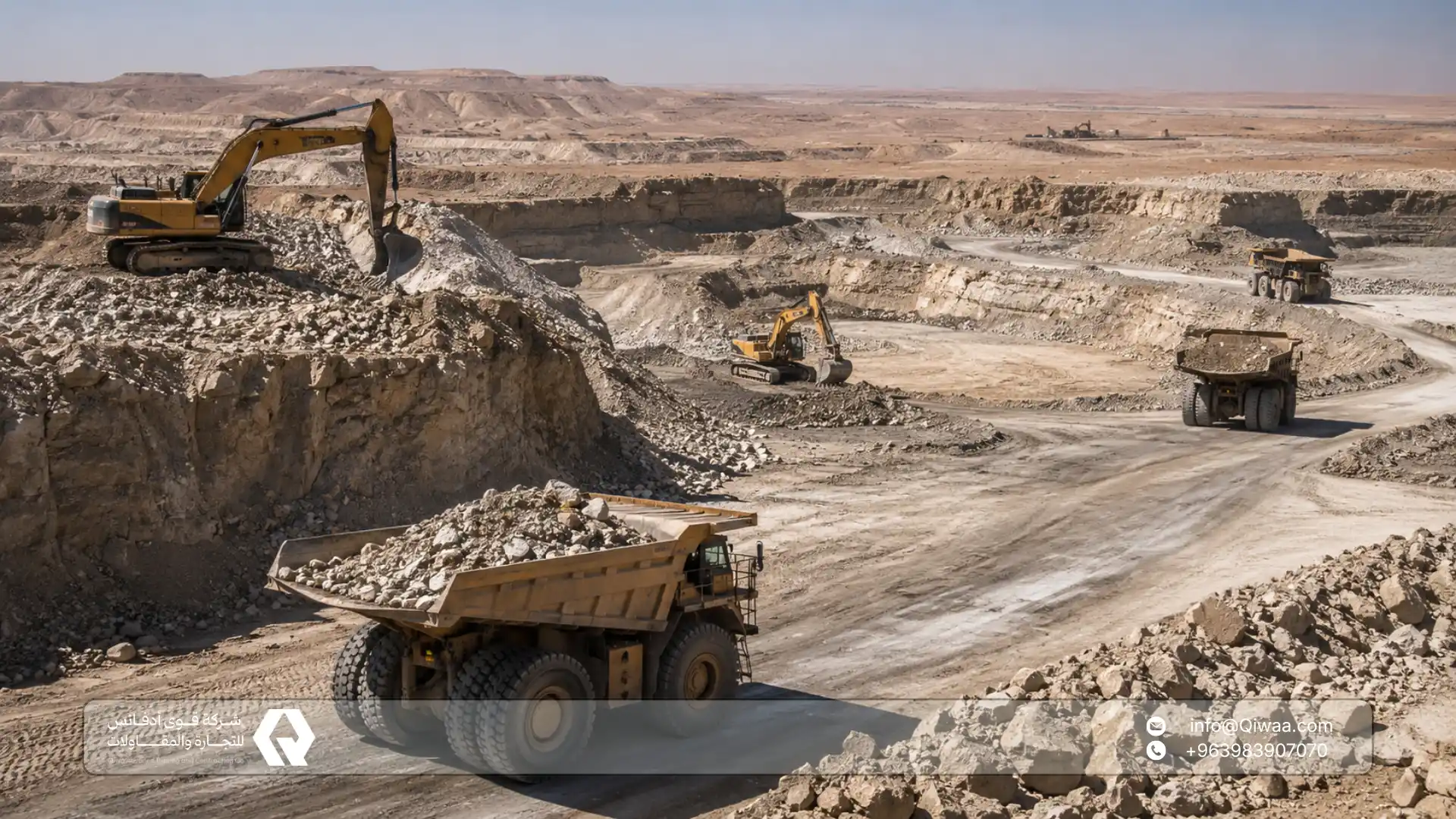
Syrian phosphate deserves special attention because it is the most visible raw material in investment and export discussions. USGS states that Syria’s main phosphate mines are located in the Palmyra area in eastern Syria, including Khneifis, Sharqiyah A, and Sharqiyah B, with nominal production capacities of about 1.1 million tons per year for Khneifis, 800,000 tons per year for Sharqiyah A, and 700,000 tons per year for Sharqiyah B. It also noted that phosphate exports were transported from the mines to Tartous Port before shipping.
In December 2025, the General Establishment of Geology and Mineral Resources signed an agreement with TERYAQ, a subsidiary of Serbia’s ELIXIR GROUP, to export 1.5 million tons of phosphate by 2026, with the possibility of expanding cooperation toward processing plants linked to phosphate industries. The Director-General of the establishment also stated that the plan aims to raise production to 5 million tons, with the possibility of reaching 7 or 8 million tons.
In January 2026, Syria’s Ministry of Energy signed two additional agreements to strengthen phosphate production and marketing. The first was with Al Sharqiya Trading and Contracting Company to invest one million tons of phosphate. The second was with Al Hassan Holding to sell one million tons by land transport and 1.5 million tons through sea routes. Official statements in the same report referred to the goal of raising annual production to 7 million tons in the coming phase.
These developments show that phosphate in Syria is moving toward a more organized phase in terms of export and marketing. However, they also reveal an important gap: the highest value is not achieved by selling raw material only, but through processing plants, phosphate fertilizers, phosphoric acid, chemical products, and export-related logistics services.
Gypsum, Basalt, and Marble: Key Construction Raw Materials in the Reconstruction Phase
Reconstruction projects in Syria will require large quantities of building and finishing materials. This is where gypsum, basalt, marble, limestone, aggregates, sand, and volcanic tuff become important.
1. Gypsum
Gypsum is used in finishing works, plastering, gypsum board, blocks, and some construction products. With rising demand for rehabilitating residential and commercial buildings, gypsum board and gypsum product factories may become a suitable opportunity if they are linked to good raw material, available energy, and a nearby market.
2. Basalt
Basalt is an important raw material in areas such as Sweida and some volcanic regions. It can be used in paving, basalt slabs, some building façades, outdoor flooring, and products connected to infrastructure. The establishment also presents projects related to cutting and sawing basalt to produce basalt slabs.
3. Marble and Stone
Marble and stone are linked to finishing projects, façades, flooring, stairs, hotels, commercial buildings, and medium- to high-end residential projects. In the reconstruction phase, extracting stone is not enough. Cutting and sawing facilities, sorting, surface finishing, packaging, and safe transport to project sites are also needed.
4. Volcanic Tuff
Volcanic tuff can be used in blocks and lightweight building materials. The General Establishment of Geology presents a project for establishing an integrated factory to produce volcanic tuff blocks, which is a clear example of converting local raw material into a manufacturable construction product.
Learn more: Best Interior Design Services Company in Yaafour, Damascus: From Concept to Execution
Silica Sand and Limestone: Investment Opportunities in Glass, Blocks, and Building Materials
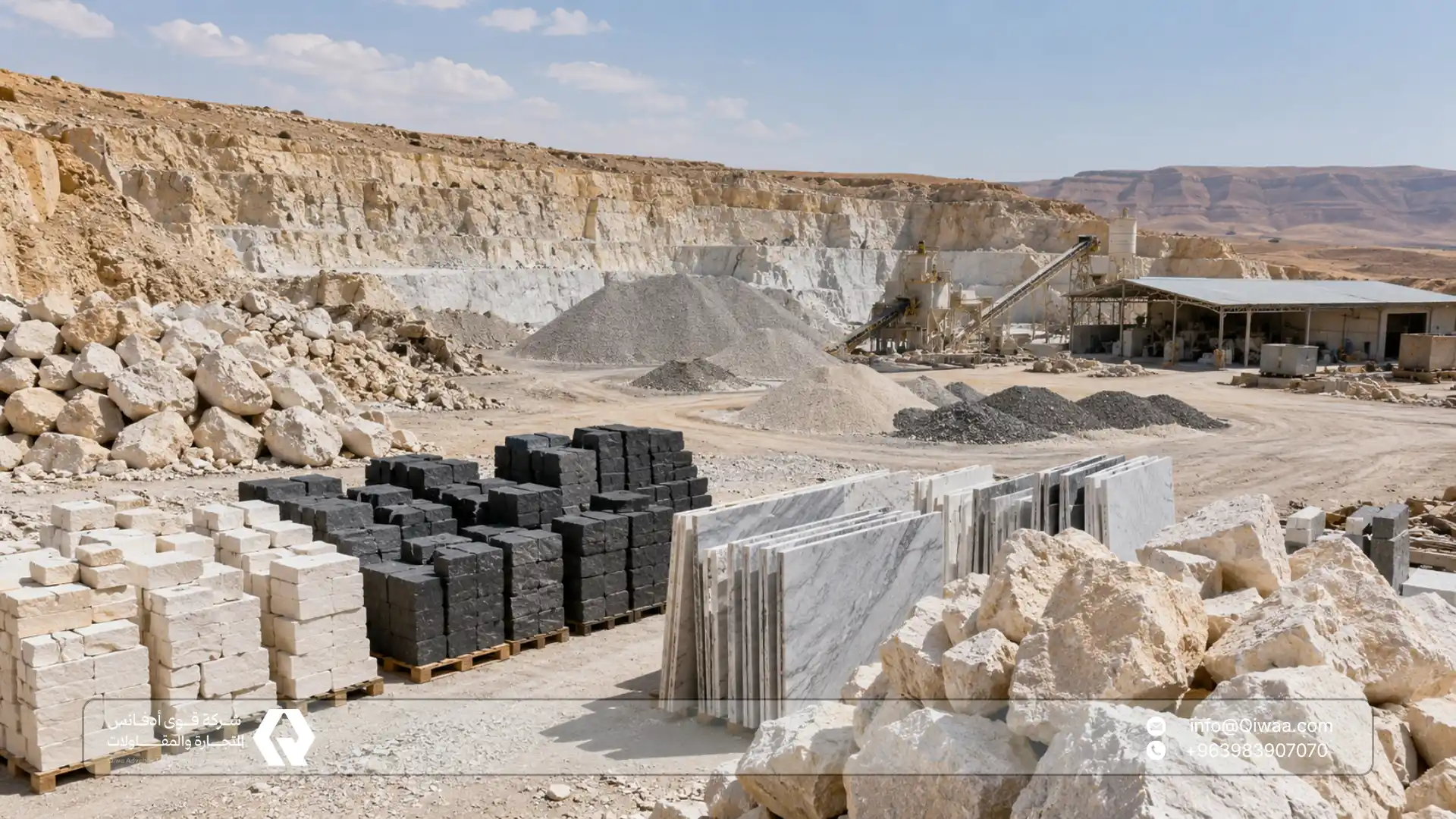
Silica sand, quartz sand, and limestone are especially important because they do not serve one sector only. They can be used in glass, sand-lime blocks, some building products, and some industries related to ceramics and sanitary ware depending on raw material specifications.
The General Establishment of Geology presents a project for investing in quartz sand and limestone to produce sand-lime blocks, which is an important example of manufacturing opportunities linked to local materials.
The value of these raw materials increases when they are handled according to accurate tests such as silica content, impurities, moisture, color, grain size, and suitability for glass, blocks, or ceramics. Any project in this group needs laboratories, clear specifications, and a plan to secure raw materials with stable quality.
Where Is the Investment Gap in Syria’s Mining Sector?
The gap in Syria’s mining sector is not only related to the existence of raw materials. The presence of a raw material does not automatically mean a successful project. Investors need a complete chain that starts with geological evaluation and ends with sale or export.
The investment gap appears in several areas:
1. Modern Exploration and Evaluation
Much geological data needs updating, especially when moving from a general discussion about the presence of raw material to an investment decision. Investors need samples, analyses, exploitable reserves, quality evaluation, and extraction cost estimates.
2. Equipment and Technology
Mining, cutting, and processing projects require crushers, screens, cutting lines, transport equipment, washing systems, laboratories, and safety equipment. Weak equipment leads to inconsistent raw material or a non-compliant product.
3. Transport and Logistics
A site close to a road, port, or industrial zone is different from a remote site that needs internal roads and high transport costs. In phosphate, for example, USGS data on exports shows the importance of connecting mines to Tartous Port.
4. Energy and Water
Many downstream industries linked to minerals require energy and water. Fertilizer plants, gypsum board, glass, ceramics, and block factories need stable operation, which makes infrastructure part of project feasibility.
5. Local Manufacturing
The largest gap appears between extracting raw materials and manufacturing them. Selling raw phosphate or raw stone creates limited value compared with producing fertilizers, stone slabs, gypsum board, blocks, glass, or chemical products.
6. Marketing and Export
Any exportable raw material needs specifications, contracts, transport, storage, documents, shipping, and compliance with target market requirements. This point creates opportunities for companies that understand supply, export, and supply chains.
What Are the Main Investment Opportunities in Syrian Mineral Resources?
Investment opportunities in Syrian mineral resources can be divided according to project type, capital size, and technical expertise.
1. Extracting Specific Raw Materials
These opportunities include investing in viable quarries and mines such as phosphate, gypsum, basalt, marble, limestone, sand, and aggregates. This type of project needs licensing, site study, equipment, and a clear sales plan.
2. Primary Processing Plants
These include crushers, screens, washing lines, drying units, sorting, packaging, and stone cutting. These plants serve the local market and support export when specifications are stable.
3. Downstream Industries
These include phosphate fertilizer plants, phosphoric acid, gypsum board, volcanic blocks, basalt slabs, marble products, glass, ceramics, and lime-based materials. These opportunities need larger capital, but they create higher added value.
4. Transport, Storage, and Export Services
The mineral sector needs trucks, warehouses, storage yards, loading facilities, sea or land shipping, and export documents. These services can become independent opportunities even for companies that do not want to operate a mine or factory.
5. Supplying Mining and Industrial Equipment
This includes heavy equipment, crushers, belts, screens, water pumps, laboratory equipment, cutting tools, production lines, and spare parts. This field suits companies that have regional supply relationships or industrial agencies.
6. Partnerships With Cement, Ceramic, and Glass Factories
Some raw materials do not achieve their best value when sold separately. Their value increases when supplied through long-term contracts to existing factories or new industrial projects. Here, raw material quality, quantity stability, and delivery speed become decisive factors.
Read more: Phosphate Value Chain in Syria: From Raw Material to Manufacturing and Investment in 2026
What Risks Should Be Studied Before Investing in Mining?
Despite the importance of Syrian mineral resources, entering the mining sector requires careful study. The most important risks to evaluate include:
- Clarity of licensing and exploitation rights
- Raw material quality and consistency from one site to another
- Size of the reserve that can be commercially invested
- Proximity of the site to roads, ports, and markets
- Transport, loading, and storage costs
- Availability of energy and water
- Type of equipment required and maintenance cost
- Environmental impact and waste management
- Ability to sell the raw material locally or export it
- Presence of a local partner capable of managing field details
- Changes in shipping, material, and energy prices
- Need for regular laboratory testing
Any mining project should start with a clear question: is the goal to sell the raw material, manufacture it, supply it to a factory, or export it? The answer determines the type of study, equipment, partners, and costs.
Read more: Guide to Investing Iron in Syria 2026: From Mining to Industry
How Qiwaa Supports Mineral Resource Projects in Syria
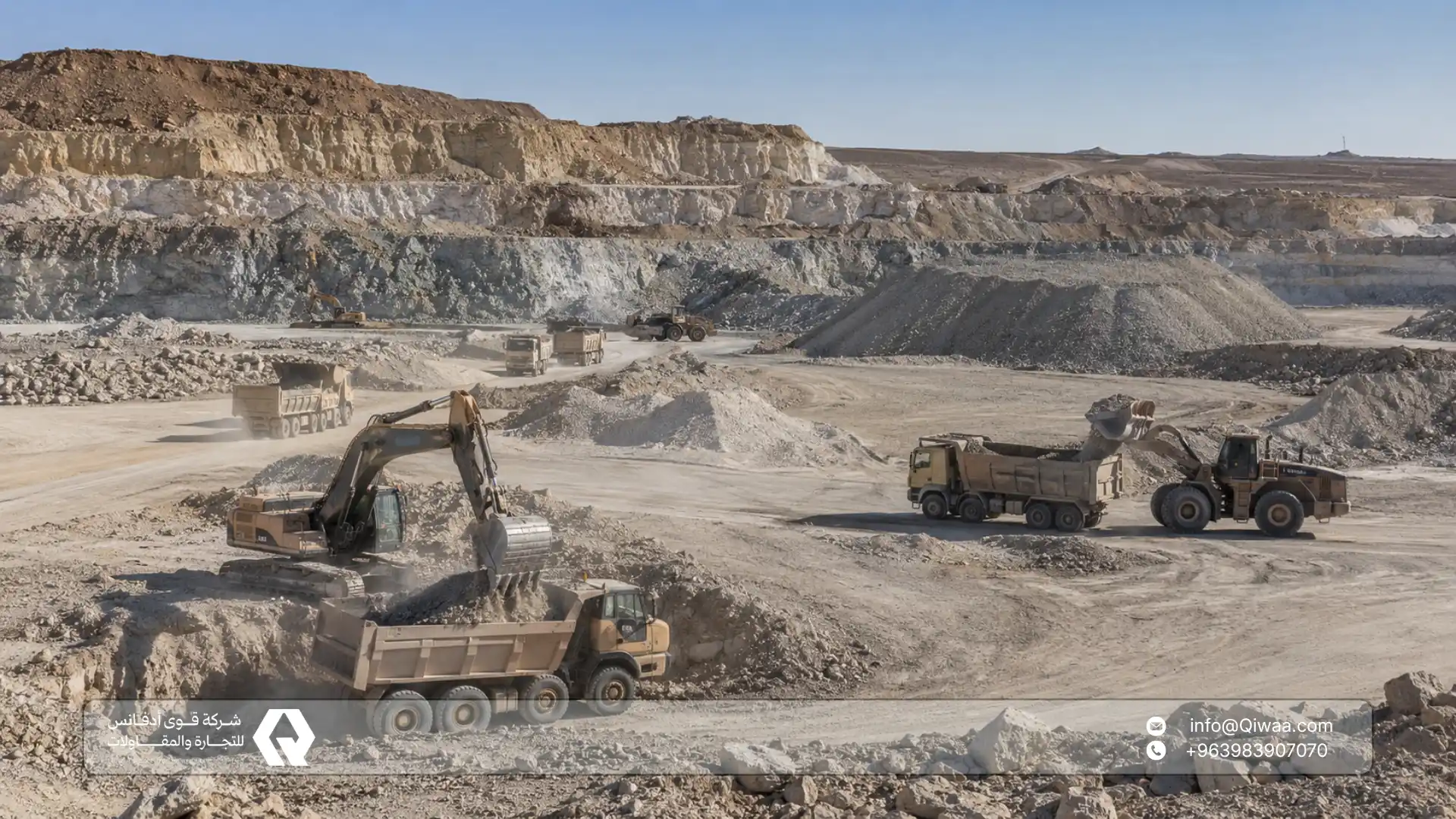
At Qiwaa, we support Syrian mineral resource projects through our experience in supply, industry, infrastructure, building materials, and contracting. We help investors, contractors, and industrial companies connect raw material with the right use, identify project needs in terms of materials, equipment, and partners, and organize supply or execution stages according to the nature of the project.
We can support projects such as:
- Supplying raw materials and industrial materials for production projects
- Supporting phosphate projects and related industries
- Supplying building materials and mineral raw materials
- Supporting gypsum, basalt, stone, and marble projects
- Organizing material supply for cement, block, and concrete factories
- Supporting infrastructure around mines and factories
- Connecting investors with suitable partners and agents
- Studying supply, transport, and storage needs
- Supporting export and supply opportunities for industrial projects
At Qiwaa, we view mineral resources as an integrated industrial opportunity that starts with raw material and ends with a product or project ready for operation. This is the difference between short-term investment in selling materials and long-impact investment in building a value chain inside the Syrian market.
If you are studying a project in the Syrian mineral resources sector, contact Qiwaa to review the type of raw material, supply opportunities, manufacturing requirements, suitable partners, and the market entry plan for Syria.
Frequently Asked Questions About Investing in Syrian Mineral Resources in 2026
1. What are the most important minerals and raw materials in Syria?
The most important raw materials in Syria include phosphate, gypsum, marble, basalt, limestone, sand, rock salt, natural asphalt, aggregates, and volcanic tuff. The importance of each raw material differs according to its industrial use. Some serve fertilizers, while others serve cement, building materials, glass, and finishing works.
2. Where are the biggest investment opportunities in Syrian minerals?
The biggest opportunities in Syrian minerals appear when raw materials are transformed into value-added products instead of being sold only as primary materials. The main opportunities include:
- Manufacturing phosphate fertilizers by using Syrian phosphate to produce agricultural and industrial products suitable for local marketing and export
- Producing gypsum board by transforming gypsum raw material into panels and finishing products needed in construction and reconstruction projects
- Cutting and sawing basalt and marble for façades, flooring, paving, stairs, and architectural projects
- Producing volcanic blocks by investing volcanic tuff in lightweight building materials suitable for some reconstruction projects
- Manufacturing glass using silica and quartz sand when suitable specifications are available
- Supplying construction raw materials such as limestone, aggregates, sand, gypsum, and basalt for housing and infrastructure projects
3. What should be studied before investing in mining in Syria?
Before investing in mining in Syria, several key factors should be studied:
- Licensing and exploitation rights: confirming the legal status of the site and whether it can be invested in
- Raw material quality: testing purity, impurities, consistency, and suitability for the required industrial use
- Reserve size: estimating the quantity of raw material that can be commercially extracted, not only the presence of the material in the site
- Raw material location: studying proximity to roads, ports, industrial zones, and consumption centers
- Transport and storage cost: calculating the impact of transport, loading, and storage on project profitability
- Energy and water availability: evaluating operating needs, especially if the project includes processing or manufacturing
- Required equipment: defining equipment type, operating cost, maintenance, and spare parts
- Environmental impact: studying waste, dust, water use, and safety requirements
- Sales market: defining whether the product targets the local market or export
- Project nature: deciding whether the investment is based on extracting raw material only, manufacturing it, or marketing and exporting it