

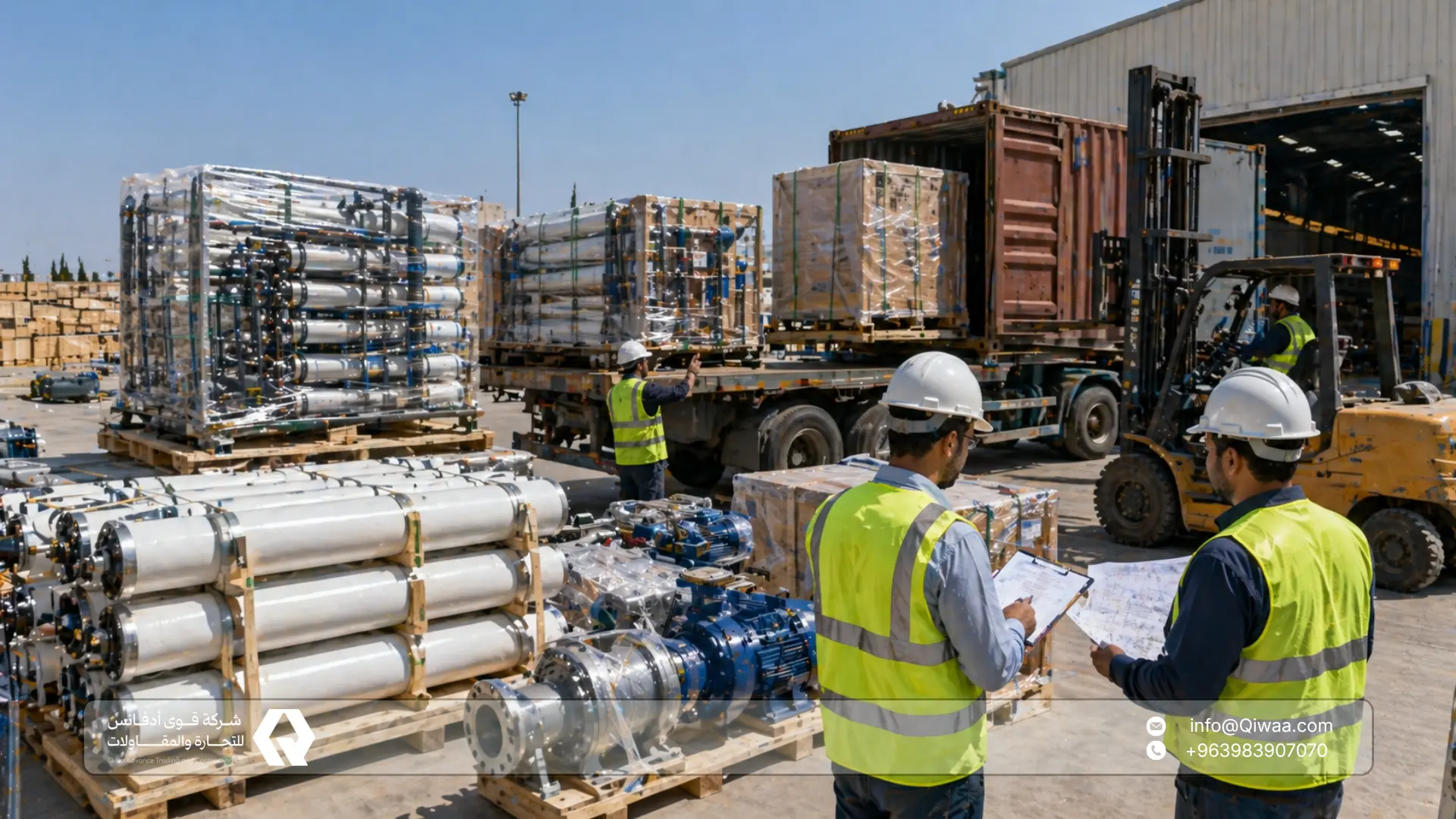
Water desalination plants in Syria are no longer separate technical units that can be treated in isolation from infrastructure, energy, distribution, and long-term operation.
Today, many projects need a reliable water source that can be designed, supplied, built, tested, and operated within one clear execution path. This is especially important in reconstruction, housing, coastal developments, industrial zones, hospitals, and service facilities that cannot depend on unstable water availability.
At Qiwa Advance, we deliver desalination plants through an integrated EPC model: Engineering, Procurement, and Construction. This approach connects design, supply, site execution, testing, commissioning, and operational readiness under one coordinated framework.
In this guide, we explain when desalination is the right option, how to compare desalination with treatment or hybrid systems, what to review before approval, and how the EPC model reduces risks in water projects in Syria.
Qiwa Advance’s EPC Model
Qiwa Advance uses the Engineering, Procurement, and Construction model as a practical framework for delivering water projects from concept to handover.
Instead of separating design, equipment supply, civil works, electromechanical execution, testing, and commissioning between several disconnected parties, the EPC model brings these stages into one managed path.
This helps improve:
- Design coordination
- Procurement control
- Site execution planning
- Interface management
- Testing and commissioning
- Final operational readiness
At Qiwa Advance, we apply this model in infrastructure projects, water networks, desalination plants, wastewater treatment plants, and industrial water systems.
The objective is not only to supply equipment. The objective is to deliver a working water system that matches the project’s real operating needs.
If your project needs a reliable water solution in Syria, Qiwa Advance can evaluate it through a complete EPC framework from design to operation.
Read more: Concrete Admixtures in Syria: Improve Ready-Mix Quality
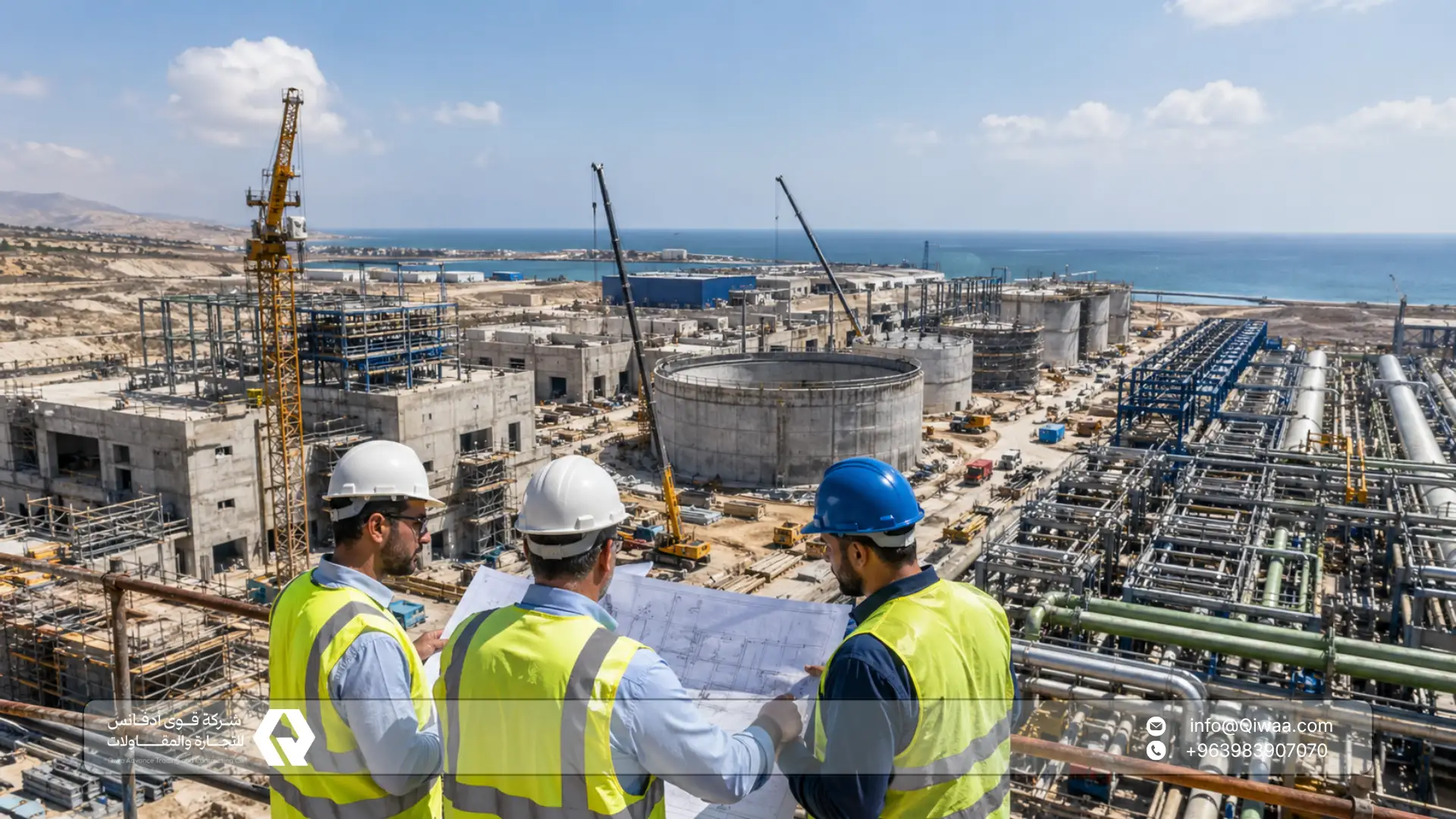
When Desalination Is the Right Solution?
The value of desalination is not the same in every project. It depends on the water source, salinity level, supply reliability, energy availability, and the project’s sensitivity to quality variation or interruption.
Desalination becomes more valuable when alternative sources are weak, unstable, or expensive to maintain.
Coastal Projects and Saline Water Sources
In coastal areas or locations with high-salinity water sources, conventional treatment may not be enough to produce stable water quality.
In these cases, desalination is often required when the project needs:
- Controlled water quality
- A reliable production source
- Better protection for equipment and networks
- A long-term alternative to unstable sources
- A solution connected to storage, pumping, and distribution
The decision should be based on water analysis, operating cost, pretreatment requirements, brine discharge, and long-term system reliability.
New Communities and Housing Projects
New communities and residential developments often require a water source that can operate independently from unstable networks.
For these projects, desalination can be a practical option when it is connected from the start with:
- Storage tanks
- Pumping systems
- Distribution lines
- Energy supply
- Future expansion planning
- Operation and maintenance requirements
A desalination plant should not be designed as a standalone unit. It should be part of a complete water system.
Read more: Investment in Syria 2026: Practical Opportunities
Industrial and Service Projects
Industrial and service facilities often cannot tolerate unstable water quality. Water variation can affect production, equipment, process efficiency, hygiene, and operational continuity.
Desalination or advanced treatment may be important for:
- Industrial facilities
- Hospitals
- Hotels and service buildings
- Food and beverage facilities
- Production sites
- Utility-dependent operations
In these projects, the cost of interruption may be higher than the cost of building a stable water system.
Qiwa Advance helps industrial, service, and infrastructure projects choose water solutions based on reliability, operating needs, and long-term cost.
Projects Replacing Temporary Water Solutions
In many cases, desalination becomes more economical when temporary solutions become a recurring burden.
Repeated water transport, unstable sources, limited treatment units, or emergency supply arrangements may look cheaper at first. Over time, they can create high operating costs, weak control, and constant planning pressure.
A properly designed desalination plant can provide:
- A stable water source
- More predictable operating cost
- Better control over quality
- Stronger planning for future demand
- Lower dependence on emergency supply routes
The real comparison should be between a stable system and a temporary solution that continues to drain the project budget.
Also Read: Infrastructure Contracting in Syria: Choosing the Right Contractor
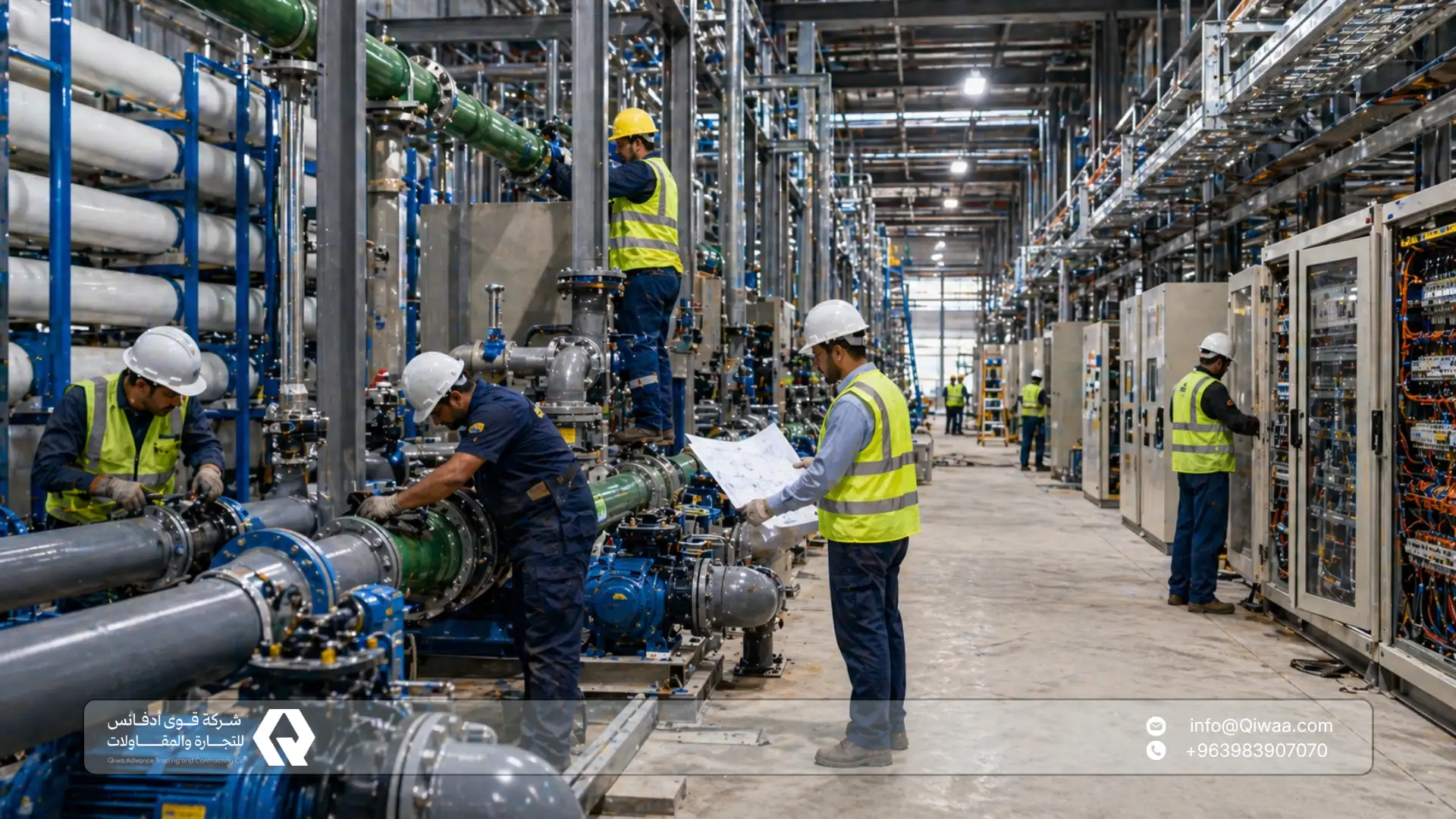
Desalination, Treatment, or Hybrid System?
The right water solution should not be chosen by the name of the plant alone. The decision depends on raw water quality, salinity, capacity, energy availability, operation requirements, and expansion plans.
Full Desalination
Full desalination is usually the right path when salinity is too high for conventional treatment or when the project needs an independent source with stable water quality.
Before approval, review:
- Water source type
- Salinity level
- Energy availability
- Operating cost
- Pretreatment needs
- Brine discharge method
- Required water quality
It may not be the best option when the existing source can be treated at a lower cost or when energy and operating costs exceed the project’s expected operational return.
Existing Source Treatment
Treatment of an existing source may be suitable when water quality needs improvement, but full desalination is not technically or economically necessary.
Before approval, check:
- Raw water characteristics
- Treatment limits
- Existing network condition
- Tank and pumping conditions
- Rehabilitation cost
- Final water quality requirements
This option may not be enough when salinity, pollution, or quality fluctuation exceeds the ability of conventional treatment to provide stable performance.
Hybrid Water Systems
A hybrid system becomes useful when one solution is not enough. This may include combining desalination, treatment, network rehabilitation, storage, pumping, and control systems.
Before approval, review:
- Load distribution
- Demand variation
- Operating scenarios
- Network connection
- Expansion flexibility
- Control coordination
- Energy requirements
A hybrid system may not be necessary for simple projects. Unnecessary complexity can increase cost and operational burden.
If you need to choose between desalination, treatment, or a hybrid system, Qiwa Advance can evaluate your project under an EPC approach.
Also Check: Qiwa Advance and Wosta Gases: Strategic Partnership in Syria
What to Review Before Approval
Before approving any desalination plant, do not rely only on nominal capacity or technology type. The success of the project depends on the technical basis behind the decision.
Raw Water Quality
The correct decision starts with the raw water itself.
You should confirm:
- Salinity
- Turbidity
- Seasonal variation
- Suspended solids
- Chemical characteristics
- Possible pollutants
- Source stability
Without accurate water analysis, technology selection becomes a general estimate rather than an engineering decision.
Capacity and Future Demand
Capacity should be linked to actual project demand, not only to a general daily production number.
Review:
- Current demand
- Peak demand
- Future growth
- Expansion phases
- Usage type
- Storage needs
- Distribution requirements
An undersized plant restricts operation. An oversized plant increases cost without clear benefit.
Pretreatment and Post-Treatment
A desalination plant does not succeed through the desalination unit alone. Stable performance depends on what happens before and after the main unit.
Pretreatment protects the system and improves efficiency. Post-treatment adjusts the produced water according to its intended use.
Review:
- Filtration requirements
- Chemical dosing
- Membrane protection
- Water stabilization
- Remineralization needs
- Final water quality requirements
Ignoring this stage can reduce equipment life and destabilize final water quality.
Energy Supply
Energy is one of the most critical factors in desalination projects.
Before approval, define:
- Electrical load
- Source stability
- Backup power needs
- Connection method
- Operating hours
- Energy cost
- Impact of outages on production
A weak energy plan can reduce the reliability of the whole plant.
Storage, Pumping, and Network Connection
A desalination plant should not be evaluated only by how much water it produces. It must also deliver water to the required points of use.
Review:
- Storage capacity
- Pumping requirements
- Pressure needs
- Network connection
- Distribution points
- Future expansion
- Hydraulic balance
A successful plant works as part of a complete system that produces, stores, pumps, and distributes water reliably.
Discharge, Losses, and O&M
Discharge and operation requirements should not be left until after approval.
Review:
- Brine or reject water disposal
- Water recovery ratio
- Operating consumables
- Maintenance requirements
- Spare parts
- Access to equipment
- Staff and operating procedures
These factors directly affect operating cost and long-term performance.
Testing and Commissioning Criteria
Testing and handover criteria should be defined before execution begins.
This includes:
- Performance testing
- Produced water quality
- Operating stability
- Flow rate verification
- Pressure verification
- Commissioning procedures
- Handover acceptance criteria
Clear criteria reduce disputes and make project acceptance more professional.
Before approving a desalination plant, contact Qiwa Advance to review capacity, water analysis, energy, storage, pumping, and commissioning requirements.
Check: Smart Fuel Station Construction in Syria: From Traditional to Modern Stations
How EPC Reduces Water Project Risks?
The EPC model reduces risks in water projects by bringing engineering, procurement, and construction into one coordinated responsibility.
In water projects, risks often appear when design, supply, and execution are handled separately. This can create delays, interface conflicts, missing items, and expensive late-stage changes.
One Technical Responsibility
When one team manages design, supply, and execution, responsibility becomes clearer.
This reduces:
- Delayed decisions
- Responsibility gaps
- Disputes between parties
- Slow technical coordination
- Confusion during commissioning
A single EPC path helps the project move with stronger control.
Fewer Civil and Electromechanical Conflicts
Water projects include several interfaces between civil, mechanical, electrical, control, storage, and network components.
EPC reduces conflicts by coordinating these interfaces earlier.
This helps avoid:
- Site clashes
- Late design changes
- Installation delays
- Rework
- Weak coordination between packages
Better Procurement Control
Critical equipment and materials affect the entire project schedule.
In EPC delivery, procurement is connected to the execution program, so equipment supply, site readiness, and installation sequence are planned together.
This reduces delays caused by late equipment or disconnected purchasing decisions.
Faster Testing and Commissioning
When the same framework manages the project from design through installation, testing and commissioning become smoother.
This improves:
- System readiness
- Troubleshooting speed
- Performance verification
- Handover clarity
- Operational start-up
The result is not just installed equipment, but a system closer to real operation.
Less Rework
EPC brings technical and execution decisions closer together.
This reduces the gap between drawings and site reality, lowering the risk of rework, late modifications, and cost increases.
Qiwa Advance uses EPC to reduce water project risks by linking design, procurement, construction, testing, and operational readiness within one managed path.
How Qiwa Advance Manages Water Projects?
At Qiwa Advance, water projects start with understanding the water source, project demand, site conditions, energy availability, and operating requirements.
Project Study and Water Analysis
We begin by reviewing the project technically and operationally.
This includes:
- Water source
- Water quality
- Salinity
- Capacity requirements
- Demand variation
- Site conditions
- Energy availability
This stage helps determine whether the project needs full desalination, treatment, or a hybrid system.
Technical Solution Development
After confirming the core data, we develop the technical solution based on the site and operating demand.
The solution considers:
- Current need
- Future demand
- Energy limits
- Operation requirements
- Storage and pumping
- Expansion potential
- Execution feasibility
The goal is to design a system that can be built and operated reliably.
Procurement and System Integration
We connect equipment and material selection with the design, execution sequence, and operating needs.
This improves compatibility between:
- Desalination units
- Pretreatment systems
- Post-treatment systems
- Pumps
- Tanks
- Electrical systems
- Control systems
- Network connections
Civil, Mechanical, and Electrical Works
We execute civil, mechanical, and electrical works with attention to the interfaces between them.
This is important for reducing site conflicts and moving smoothly from construction to operational readiness.
Network, Tank, and Pumping Connections
We connect the plant with storage, pumping stations, networks, and points of use according to the project’s operating requirements.
This ensures that produced water can be delivered under stable operating conditions.
Testing, Commissioning, and Handover
After execution, we move to testing and commissioning to confirm:
- System performance
- Produced water quality
- Operating stability
- Equipment readiness
- Network integration
- Handover compliance
This stage moves the project from construction completion to operational readiness.
Operation Support and Maintenance Planning
At handover, we focus on operating readiness, maintenance planning, consumables, spare parts, and technical support requirements.
This protects performance after delivery and helps the project operate more reliably over time.
If you need a water project partner in Syria, Qiwa Advance can manage the full path from study and design to commissioning and operational readiness.
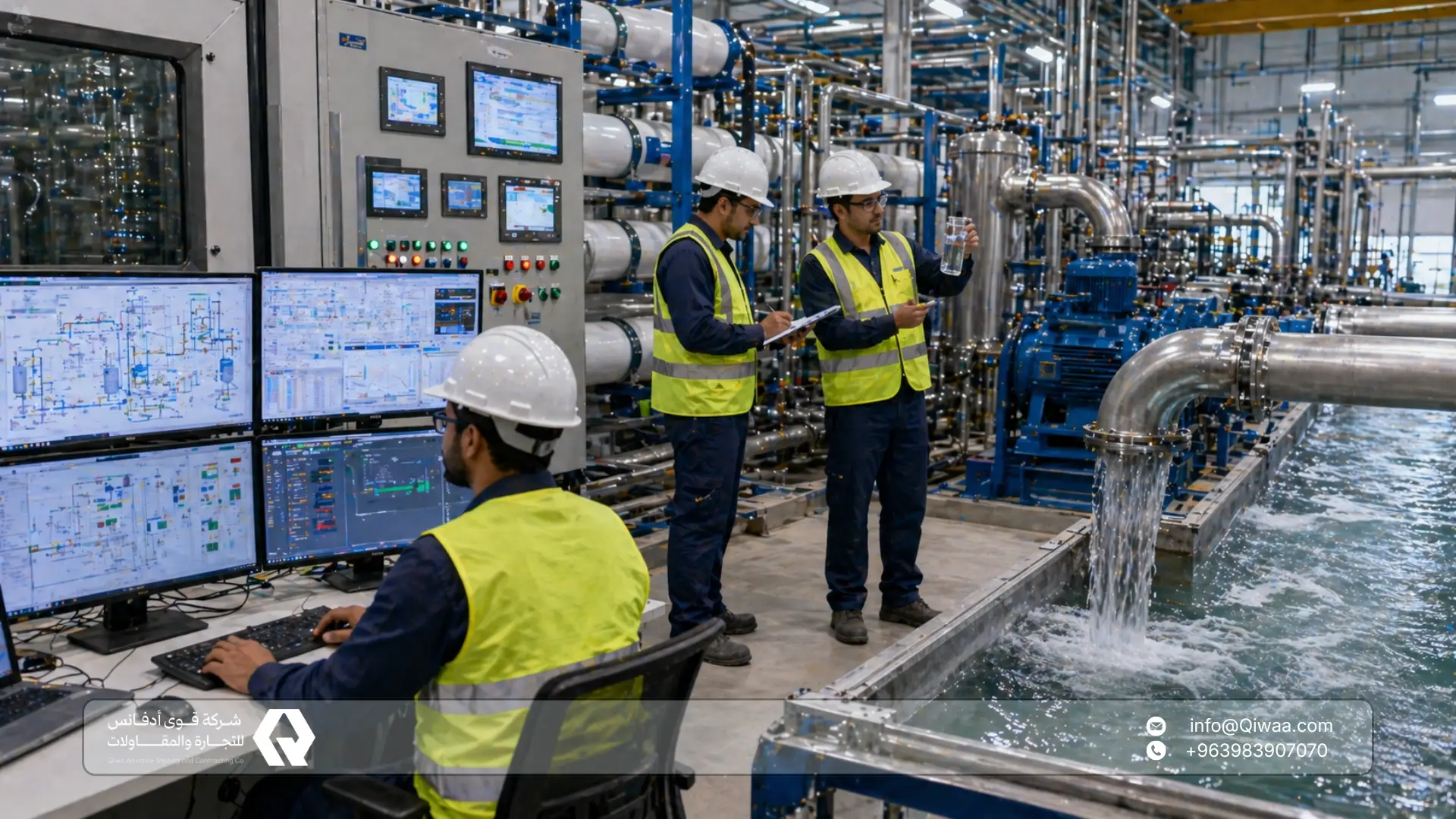
EPC Applications in Syria’s Reconstruction
The EPC model is especially valuable in projects that need reliable water supply, future expansion, and strong coordination between technical design and site execution.
Housing and New Communities
Housing projects need water systems that can operate reliably from the start and support future expansion.
EPC is useful when desalination or treatment must be connected with storage, pumping, and distribution networks in one coordinated design.
Hospitals and Service Facilities
Hospitals and service facilities need consistent water quality and reliable supply.
For these projects, water interruption can affect the continuity of essential services. EPC supports better coordination between design, supply, execution, testing, and commissioning.
Industrial Cities and Production Zones
Industrial cities and production facilities depend on stable water quality to protect operations, equipment, and production continuity.
EPC connects operating needs with the technical solution from the beginning, instead of solving problems after start-up.
Coastal and High-Salinity Sites
In coastal or saline areas, projects may require desalination, pretreatment, brine discharge, storage, pumping, and network connection.
EPC is valuable because these components must be coordinated as one system.
Projects With Phased Expansion
Some projects need to expand in stages without stopping operation.
EPC helps plan the system so future phases can be added with less disruption, better capacity planning, and clearer interface control.
Qiwa Advance supports reconstruction projects in Syria with EPC water solutions that can be built, expanded, and operated with stronger reliability.
EPC vs. Separate Supply
In sensitive water projects, risk increases when supply is separated from design and execution.
A desalination unit may look suitable as a product, but the real project may require additional civil works, electrical loads, pretreatment, pumping, storage, control systems, discharge planning, and commissioning.
Unified Responsibility
Separate supply can create delays when responsibility is divided between suppliers, contractors, and designers.
EPC creates one reference point, which helps speed up decisions and reduce disputes.
Better Link Between Design and Site Reality
A solution may work on paper but face problems on site because of space limitations, energy constraints, connection requirements, or incorrect assumptions.
EPC helps connect design with execution conditions from the start.
Procurement Connected to Schedule
In water projects, equipment delivery affects the full construction sequence.
EPC links procurement with the project schedule, reducing the risk of delays caused by late or disconnected purchasing.
From Equipment Supply to Operational Plant
The value of a water project is not achieved when equipment arrives. It is achieved when the plant operates, produces the required water quality, and connects successfully with the surrounding system.
EPC focuses on delivering a plant that is ready to operate, not just equipment that is ready to install.
If you are comparing equipment supply with an EPC solution, Qiwa Advance can help you evaluate the real difference in scope, risk, cost, and operational readiness
FAQs About Water Desalination Plants in Syria
What data should I prepare before requesting a desalination plant quotation?
You should prepare water source details, laboratory water analysis, required daily capacity, intended use, project location, required reliability level, available energy source, storage needs, and network connection requirements. Clear data leads to a more accurate quotation and a more realistic technical comparison.
How can I compare desalination plant offers professionally?
Do not compare offers by price only. Review scope of work, component quality, energy consumption, recovery ratio, pretreatment, post-treatment, O&M needs, installation, testing, commissioning, and handover scope. A cheaper offer may become more expensive later if it excludes critical items.
How long does it take to execute a desalination plant?
The timeline depends on plant capacity, civil and electromechanical complexity, procurement time for major equipment, network connection, storage, pumping, testing, and commissioning. A professional estimate should be based on a clear execution schedule, not a general duration.
Can a desalination plant be expanded later without stopping operation?
Yes, if phased expansion is considered during the design stage. This may include allowing space for future units, leaving planned reserve capacity in selected components, and organizing connections so new phases can be added with minimal disruption to existing operation.
Is desalination always better than treating an existing water source?
No. Desalination is best when salinity or source instability requires it. If the existing source can be treated reliably at a lower cost, treatment may be the better option. Some projects need a hybrid system that combines treatment, desalination, storage, pumping, and network rehabilitation.
Need a reliable water solution for a reconstruction, housing, industrial, coastal, or service project in Syria?
Qiwa Advance delivers water desalination plants through an integrated EPC model that connects engineering, procurement, construction, testing, commissioning, and operational readiness.
Contact Qiwa Advance today to request a technical consultation or EPC proposal for your water project.